Motor Oil
Pennzoil Motor Oil Showdown: Synthetic Blend vs Full Synthetic vs Platinum vs Ultra Platinum
We compared four Pennzoil 5W-30 motor oils across cold flow, wear protection, evaporative loss, and lab-tested additive content to see if the expensive oil is worth it.
Introduction
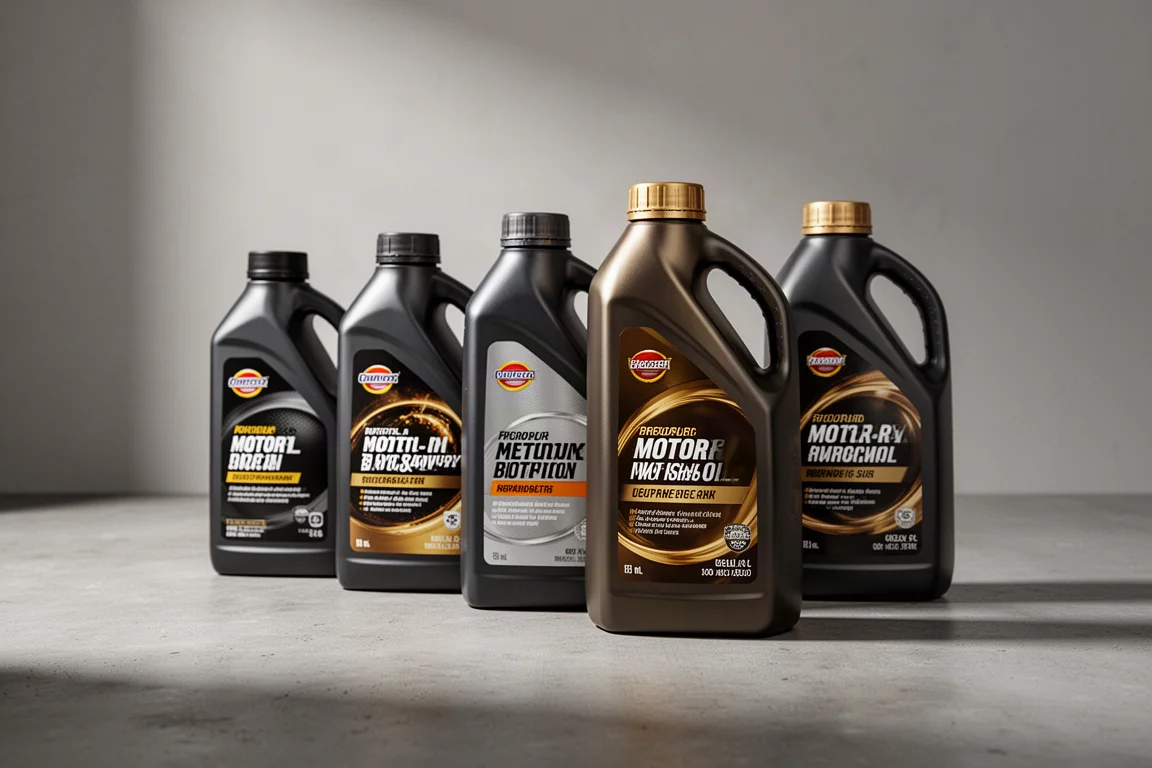
Oil is cheap and engines are expensive, so the question practically asks itself: is the inexpensive oil in a lineup really that much worse than the flagship? Pennzoil offers a clear ladder of 5W-30 options, from a $17 synthetic blend to the premium Ultra Platinum, and they all share the current API SP rating. To find out whether the upgrade is worth the money, all four oils went through a series of hands-on comparisons: cold flow at minus 40 degrees, wear protection on a lubricity tester, evaporation and thermal breakdown under high heat, plus independent lab analysis of each oil’s additive package.
How the Oils Were Tested
The lineup covers four products, all SAE 5W-30. The least expensive is the regular Pennzoil Synthetic Blend at $17 for 5 quarts. Next is the Pennzoil Full Synthetic at $20, followed by Pennzoil Platinum at $24. The Pennzoil Ultra Platinum is the most expensive of the group.
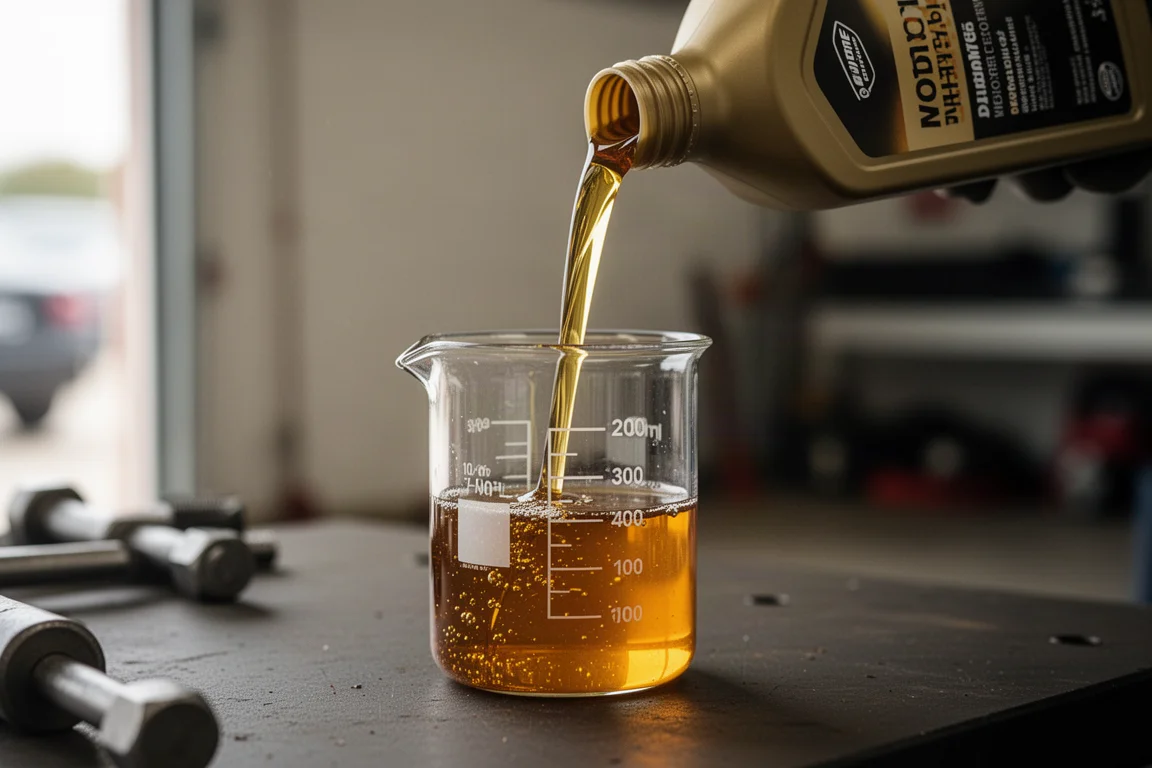
Each oil faced the same four tests. First, a cold flow test after 24 hours in a freezer set to minus 40 degrees Fahrenheit. Second, a wear protection test using a lubricity tester that measures wear scars on test bearings. Third, a heat exposure test with 200 g of oil cooked at around 365 degrees Fahrenheit for 2 hours to compare evaporative loss, a simplified stand-in for the Noack volatility test. Finally, every oil was sent to an oil analysis lab to check anti-wear additives, detergents and dispersants, viscosity, and total base number. Containers were shaken before sampling so settled additives stayed part of the picture.
Cold Flow Test at Minus 40 Degrees
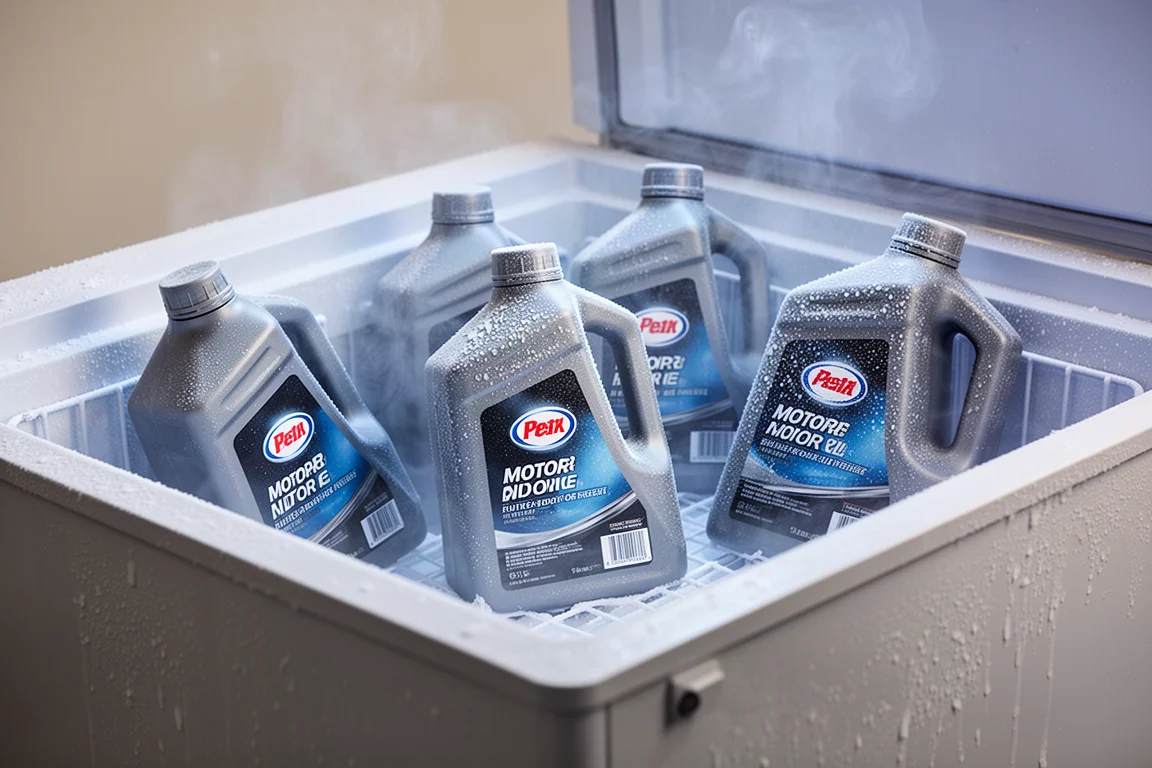
Synthetic oils generally flow better than conventional blends when extremely cold, which means moving parts get lubricated sooner on a cold start. All four oils were chilled for 24 hours at minus 40 degrees and then raced head to head.
The result was a clear win for the Pennzoil Ultra Platinum, which flowed out of the gate first and never gave up the lead. The synthetic blend and the full synthetic finished tied for second, while Pennzoil Platinum trailed far behind in fourth place.
The Ultra Platinum also stood out for a different reason: after heat exposure, it retained the highest viscosity at 210 degrees Fahrenheit while still flowing fastest at minus 40. That combination points to a very well-designed oil.
Wear Protection Test
The lubricity test compared film strength by measuring the size of wear scars on the test bearings after running heat-exposed oil through each trial. Smaller scars mean better wear protection.
The Pennzoil Ultra Platinum produced the smallest wear scar of the entire lineup at 7.1 mm. The full synthetic and Platinum were practically tied at 7.34 mm and 7.33 mm respectively, and the synthetic blend finished last at 7.57 mm. The Ultra Platinum also drew noticeably less friction energy during its test, and its scar measured 7% smaller than the synthetic blend’s. In short, the most expensive oil delivered clearly the best wear protection.
Heat and Evaporation Test
High engine temperatures evaporate oil and degrade its properties, so lower evaporative loss is a genuine quality marker. Each oil was weighed before and after two hours of heat exposure with 200 g samples.
Here the Ultra Platinum barely edged out the Platinum: 5 g of evaporation versus 5.28 g. The full synthetic did better than the synthetic blend at 6.5 g versus 7.52 g, meaning the Ultra Platinum evaporated about 33.5% less than the synthetic blend under the same conditions. The Platinum was the surprising runner-up here, beating the full synthetic despite sitting one price tier lower.
Lab Report: Additives and Wear Chemistry
The lab reports revealed meaningful differences that the price tags don’t advertise. On total detergents and dispersants, the synthetic blend measured 1,608 ppm and the full synthetic 1,893 ppm. Pennzoil Platinum had the least in the lineup at 1,278 ppm, while the Ultra Platinum led with 2,308 ppm.
Anti-wear additives, which matter enormously for engine life, followed a similar pattern: 1,393 ppm for the synthetic blend, 1,521 ppm for the full synthetic, 1,605 ppm for the Ultra Platinum, and the least for Platinum.

Total base number, the oil’s ability to neutralize acids, crowned the Ultra Platinum at 7.4, with the full synthetic at 6.6, the synthetic blend at 5.8, and Platinum at 5.2. All four oils showed normal viscosity, and none contained concerning metals: just one or two ppm of aluminum and iron, which is typical for fresh oil.
The Contamination Tests
Modern turbocharged and gasoline direct injection engines often see fuel diluted into the oil, especially over extended change intervals of 10,000 miles or more. Contaminating the Ultra Platinum with 5% gasoline changed the story dramatically: the lubricity tester produced an alarming sound, the oil thinned out as it heated, and the wear scar measured 7.7 mm, the worst of the entire test. The clean synthetic blend actually outperformed the expensive contaminated oil.
A second contamination test simulated antifreeze entering the oil after a head gasket failure. Oil and coolant can form a goo that fails to lubricate, and in severe cases the oil pump can struggle to pick it up, starving the engine of lubrication and cooling. The takeaway is blunt: keeping healthy oil in the crankcase matters, and contamination can cause serious damage quickly.
Buying Advice: Which Pennzoil Should You Choose?
The Pennzoil Ultra Platinum won the showdown with an average finish of first place across the tests, and previously finished second in an earlier oil comparison, beaten only by Amsoil Signature Series. If you want the best protection and can absorb the premium, it is the pick.
The Platinum has one unique selling point: it is made from natural gas rather than crude, and it carries a Dexos certification that the more expensive Ultra Platinum lacks. It also claims an extra level of protection in extreme temperatures, better fuel economy, horsepower protection, and cleaner pistons compared to the full synthetic. That said, its lab results were the weakest in the lineup, which makes it the most interesting value question of the four.
The full synthetic at $20 is the sensible middle ground, with a stronger additive package and better cold performance than the Platinum despite costing $4 less. The synthetic blend at $17 is the budget entry and met or exceeded ILSAC GF-6A, API SP, and all previous categories, but it lost every head-to-head against the Ultra Platinum.
One final caution: for turbocharged or gasoline direct injection engines, extended oil change intervals are risky. Fuel contamination shows up often in those engines and causes real wear, so shorter intervals are the safer bet.
Conclusion
Three of the four oils performed remarkably close to one another, but the Pennzoil Ultra Platinum was consistently the best across cold flow, wear protection, evaporation, and total base number. The full synthetic emerges as the strong value pick, the Platinum as a mixed result despite its natural gas base, and the synthetic blend as serviceable but clearly last. Whatever you choose, changing oil before contamination builds up will protect the engine more than any bottle on the shelf.
Product link
View more details for Pennzoil Synthetic Blend 5W-30
This product is mentioned in the review. Check the specifications, options, and compatibility before buying.
View more details for Pennzoil Synthetic Blend 5W-30Further reading
Related Reviews
Motor Oil
Best OEM Motor Oil Tested: Honda, Toyota, Ford, ACDelco, Mopar vs Mobil 1
Six SAE 0W-20 full synthetic motor oils put through cold-flow, wear, and thermal breakdown testing to see if any OEM brand can beat Mobil 1.
Motor Oil
Diesel vs Gasoline vs Aviation vs Motorcycle vs Marine Oil: Six Oils Put to the Test
Six motor oils, one independent lab report, cold-flow races, evaporation tests, and wear-scar measurements. The differences between oil types are bigger than most people expect.
Motor Oil
Pennzoil Platinum Full Synthetic Compared: 0W-16, 0W-20, 5W-20 and 5W-30 Tested
Four Pennzoil Platinum full synthetic viscosities put through cold-flow, heat stress and wear tests to see whether thinner oil really protects as well as thicker oil.