Motor Oil
Diesel vs Gasoline vs Aviation vs Motorcycle vs Marine Oil: Six Oils Put to the Test
Six motor oils, one independent lab report, cold-flow races, evaporation tests, and wear-scar measurements. The differences between oil types are bigger than most people expect.
Introduction
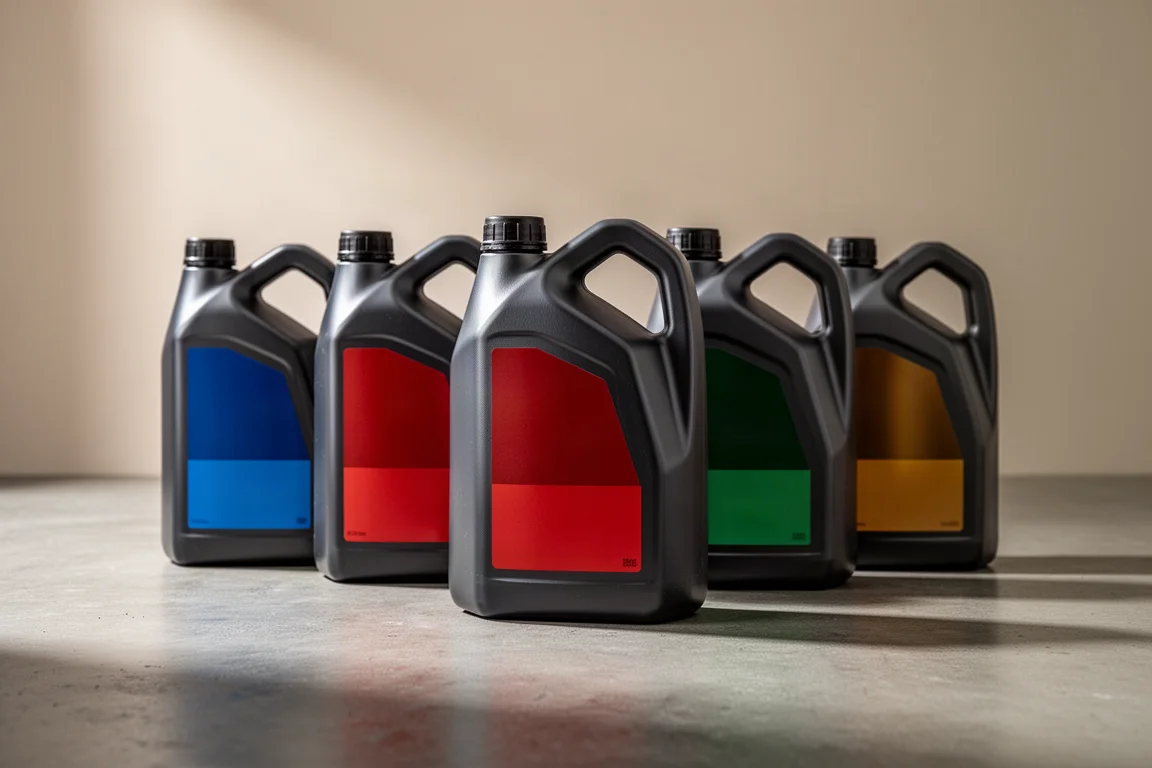
Are all motor oils basically the same, or is there a big difference between aviation, motorcycle, diesel, and gasoline engine oils? Short answer: they are not all the same. To find out how different, six widely available oils were run through a series of practical tests: cold-flow races at -40°C, a two-hour heat exposure to measure evaporative loss, a lubricity test to measure film strength, and an independent lab analysis of the additive packages.
The six contenders:
- Motorcraft 10W-30 Diesel Motor Oil
- Mobil 1 10W-30 Full Synthetic Motor Oil
- Mobil 1 0W-8 Motor Oil
- Phillips 66 20W-50 Aviation Oil
- Motul 10W-30 Motorcycle Oil
- Quicksilver 10W-30 Marine Oil
How the Oils Were Tested
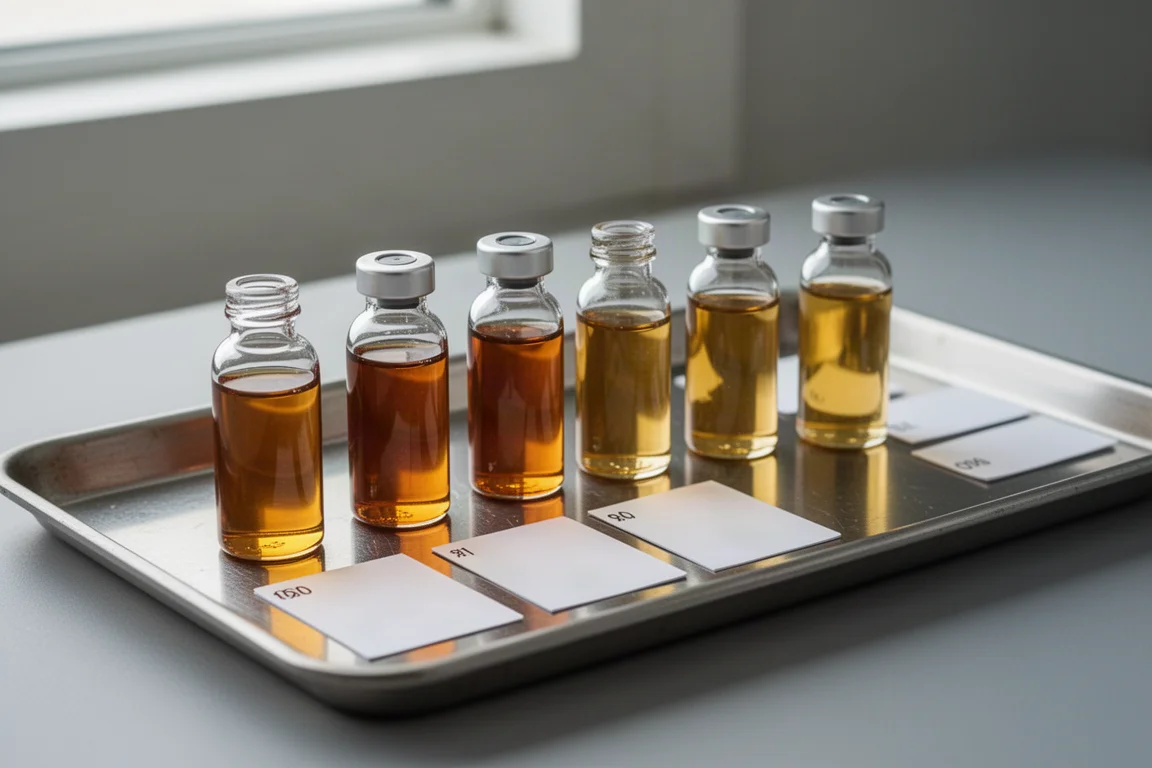
Before any testing, the oil containers were shaken in case part of the additive package had settled out of suspension, and each sample was labeled before being sent to an independent oil analysis lab.
Three main tests were run on every oil:
- Room-temperature flow test at roughly 85°F, showing how each oil moves in a warmed-up engine.
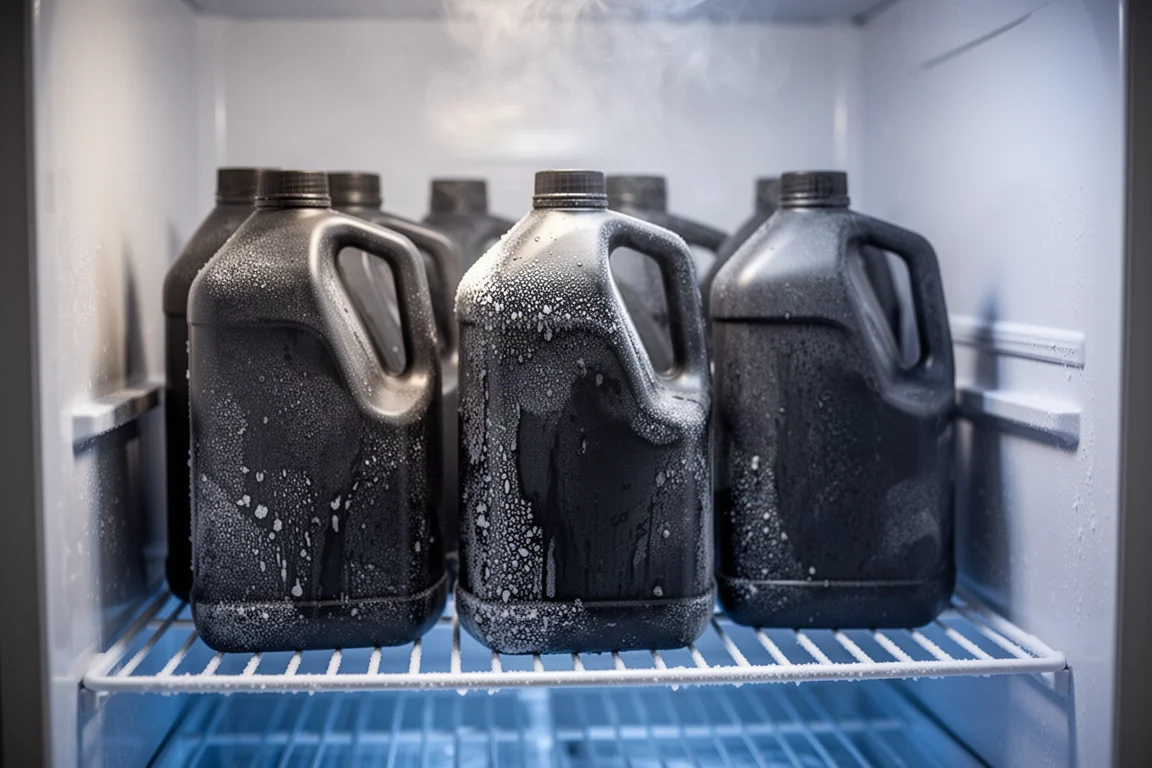
- Cold-flow test after 12 hours in a freezer at -40°C (which is also -40°F).
- Heat exposure test: 200 g of each oil held at around 400°F for two hours, then weighed to measure evaporative loss. This is a simplified version of the Noack volatility test, an ASTM standard that simulates conditions around the upper piston ring area. The cooked oil was then reused for additional testing.
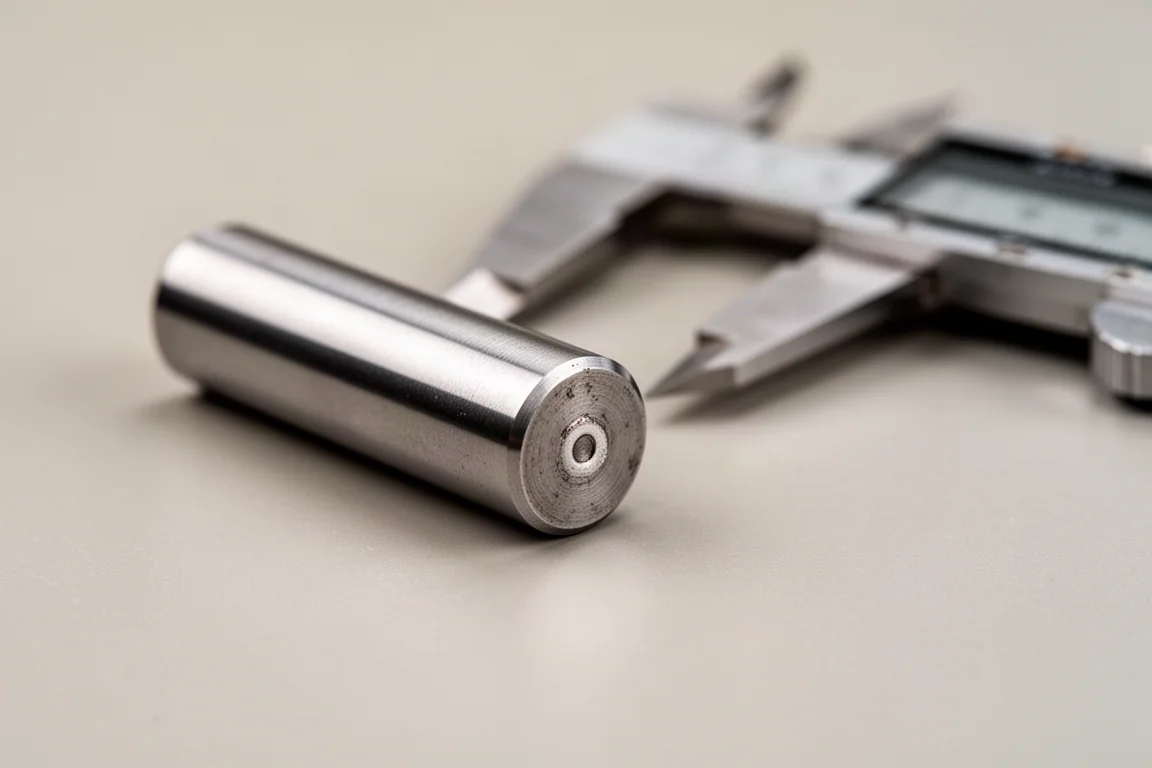
Finally, a lubricity test measured friction on a test wheel and pin, with wear scars measured under a microscope to judge film strength.
Motorcraft 10W-30 Diesel Motor Oil
Priced at $32, this SAE 10W-30 diesel oil claims more than 1,000 ppm of phosphorus for better wear protection. It is recommended for power stroke engines, and the label warns against using it in gasoline engines equipped with a catalytic converter. It is distributed by Ford Motor Company.
In the wear test it delivered a wear scar of only 5.57 mm, long the benchmark the other oils had to beat. The lab report showed 2,128 ppm of anti-wear additives, which helps explain that result. Diesel oils typically run higher ZDDP levels than oils designed for modern gasoline engines with catalytic converters.
Its weak point was heat: it lost 8.69 g to evaporation in the two-hour test, the most of any oil tested. Even so, after heat exposure its cold flow only slowed by 8%, one of the most stable results. At -40°C it finished the cold-flow run in about 1 minute 41 seconds, roughly 30 seconds slower than the Mobil 1 10W-30.
Mobil 1 10W-30 Full Synthetic Motor Oil
At $30, this advanced full synthetic is designed for automotive use, rated for 10,000-mile intervals, meets API service SP, and reportedly exceeds ILSAC GF-6A requirements. Mobil claims it extends engine life, provides 10 times more wear protection, and fights sludge. It is made in the USA.
It won the first evaporation test, losing only 5.26 g versus the Motorcraft’s 8.69 g, and flowed quickly at 1.58 seconds in the room-temperature race and 1 minute 11 seconds at -40°C. After heat exposure it slowed to 1 minute 38 seconds.
The trade-off showed up in the wear test: its 6.23 mm wear scar was about 12% larger than the diesel oil’s, consistent with lower ZDDP levels in catalyst-friendly gasoline oils. Its anti-wear additive content was roughly half that of the 0W-8.
Mobil 1 0W-8 Motor Oil
This extremely thin oil costs $28 for 5 quarts and claims to increase engine efficiency, improve startup protection, and fight sludge. It also meets API service SP and is made in the USA.
In flow, it was untouchable: it crossed the line in about 1 second at room temperature, about 15.5 seconds at -40°C, and even after heat exposure still finished in about 17.5 seconds, a 12% slowdown. In every cold-flow race it was first out of the gate and it was not close.
The surprise was wear protection. Despite being the thinnest oil tested, it posted a 6.56 mm wear scar, the largest of the group but not by a huge margin. The reason showed up in the lab report: a very aggressive 2,494 ppm of anti-wear additives, roughly twice the content of the Mobil 1 10W-30. The theory is that this robust package exists to compensate for the thin viscosity. It also carried about twice the detergent and dispersant content of the 10W-30.
Phillips 66 20W-50 Aviation Oil
At $53, this mineral-based ashless dispersant multigrade oil is designed for aviation piston engines. No 10W-30 aviation oil could be found, so this 20W-50 stands in. The claimed benefits include easier starting, quick lubrication at low temperatures, and high film strength for wear protection at high temperatures. It is made in the USA.
It was the clear winner on heat resistance, losing only 2.39 g to evaporation, less than half of most of the field. The thick 20W-50 viscosity did its job in the wear test too, with a 6.35 mm scar, and it clung to the test wheel visibly better than the thin oils.
The catches are cold flow and chemistry. At -40°C it took about 3 minutes 22 seconds to finish, and 4 minutes 20 seconds after heat exposure, far behind everything else. The lab report showed only trace levels of detergents and dispersants and a TBN (total base number, the oil’s ability to neutralize acids) of just 0.6, versus 6.9 to 7.8 for the other five. Aviation oils rely on viscosity rather than an aggressive additive package, and they are not meant for car or motorcycle engines.
Motul 10W-30 Motorcycle Oil
Priced at $53 per gallon, this oil is claimed to be 100% synthetic and may contain ester. It meets the JASO T903 motorcycle specification and is made in France.
It turned in the best wear result of the entire test: a wear scar of only 5.47 mm, edging past the Motorcraft diesel’s 5.57 mm. The lab report backed that up with a strong 2,052 ppm of anti-wear additives on top of a very good base oil. It also handled heat exceptionally well, losing only 2.62 g to evaporation, second only to the aviation oil.
Its weakness is extreme cold. At -40°C it looked lumpy and clumpy on the track and finished in 2 minutes 37 seconds, nearly a minute slower than the marine oil. After heat exposure it was even slower at 3 minutes 33 seconds. For engines that never see deep-freeze temperatures, that is a non-issue; for cold-weather storage and starts, it matters.
Quicksilver 10W-30 Marine Oil
At $30, this four-stroke marine oil claims to outperform automotive oils in marine applications, provide outstanding wear and corrosion protection, and eliminate thermal breakdown under extreme RPM, temperatures, and loads. It is blended in the US with foreign and domestic materials.
It was solidly mid-pack nearly everywhere. Its 5.98 mm wear scar was better than average but not enough to beat the Motorcraft or the Motul. Evaporative loss was 5.25 g, close to the Mobil 1 10W-30’s 5.26 g. At -40°C it finished in just under 1 minute 40 seconds, faster than the motorcycle oil both cold and after heat, with a 13% slowdown after cooking. Like the diesel, motorcycle, and boat oils, its lab report showed a high detergent and dispersant content compared with the automotive oils.
The Lab Report: What the Additives Revealed
The independent lab analysis put numbers behind the test results. Aluminum, iron, and tin, which are wear metals, appeared only at trace levels in all six samples, so the oils looked healthy.
- Detergents and dispersants (barium, boron, calcium, magnesium): the diesel, motorcycle, and marine oils carried far more than the automotive oils. The 0W-8 had about twice the content of the Mobil 1 10W-30. The aviation oil had only trace levels.
- Anti-wear additives: the 0W-8 led at 2,494 ppm, followed by the Motorcraft diesel at 2,128 ppm and the Motul at 2,052 ppm.
- TBN: all oils ranged from about 6.9 to 7.8 except the aviation oil at just 0.6, a reflection of its ashless aviation formulation.
One more angle: how heat exposure changed cold-flow performance. The Motorcraft diesel, despite heavy evaporative loss, flowed only 8% slower afterward. The 0W-8 slowed by 12% and the Quicksilver marine by 13%. Other oils changed much more dramatically, which is worth factoring in for engines that run hot.
Overall Buying Advice
Every oil here is engineered for a specific job, and the tests showed those jobs produce genuinely different products. The fastest-flowing oil is not automatically the most protective, and the most heat-stable oil is not the best choice for a cold morning start.
Match the oil to the engine and the conditions:
- Diesel engines (non-catalyst): the Motorcraft diesel is a strong all-rounder with excellent wear protection and stable post-heat flow, but expect more oil consumption from evaporation loss.
- Modern gasoline cars: the Mobil 1 10W-30 offers the best balance of evaporation resistance and quick flow, with wear protection that is good but not diesel-grade.
- Maximum cold starts and fuel efficiency: the Mobil 1 0W-8 flows like nothing else and carries a remarkably robust anti-wear package to compensate for its thin viscosity.
- Aviation piston engines only: the Phillips 66 oil is superb against heat, but its slow cold flow and minimal additive chemistry make it unsuitable for anything else.
- Motorcycles and high-rev use: the Motul posted the best wear protection of the entire field and handled heat superbly, with cold flow as its only real trade-off.
- Marine four-stroke engines: the Quicksilver is consistent across every test, with corrosion protection that automotive oils are not formulated to match.
Always follow your engine manufacturer’s specification first. These results show how the oils compare, not that one type can be swapped for another.
Conclusion
These oils are definitely not all the same. The Motul motorcycle oil took the wear-protection crown at 5.47 mm, the Phillips 66 aviation oil resisted heat better than everything else, the Mobil 1 0W-8 dominated cold flow, the Mobil 1 10W-30 balanced flow and evaporation resistance for cars, and the Motorcraft diesel combined strong wear protection with the most stable post-heat performance. The right oil is the one designed for your engine, and now the numbers show just how much those designs differ.
Further reading
Related Reviews
Motor Oil
Best OEM Motor Oil Tested: Honda, Toyota, Ford, ACDelco, Mopar vs Mobil 1
Six SAE 0W-20 full synthetic motor oils put through cold-flow, wear, and thermal breakdown testing to see if any OEM brand can beat Mobil 1.
Motor Oil
Pennzoil Motor Oil Showdown: Synthetic Blend vs Full Synthetic vs Platinum vs Ultra Platinum
We compared four Pennzoil 5W-30 motor oils across cold flow, wear protection, evaporative loss, and lab-tested additive content to see if the expensive oil is worth it.
Motor Oil
Pennzoil Platinum Full Synthetic Compared: 0W-16, 0W-20, 5W-20 and 5W-30 Tested
Four Pennzoil Platinum full synthetic viscosities put through cold-flow, heat stress and wear tests to see whether thinner oil really protects as well as thicker oil.