Outdoor Tech
PeakDo LinkPower Starlink Mini Battery Review: Reliable Off-Grid Power
A TSA-compliant 99Wh battery that clips directly onto the Starlink Mini dish, offering over four hours of run time and USB-C solar charging.
Introduction
When you spend time in remote areas, reliable communication can be the difference between a minor inconvenience and a serious emergency. Cell phone coverage often disappears miles from civilization, leaving you without a way to call for help if you break down, get injured, or end up stranded. Satellite internet has become the go-to solution for staying connected in these situations, and the Starlink Mini dish has made that capability more portable than ever.
The Starlink Mini has one notable limitation: it has no built-in power source. You are expected to plug it into AC power with the included adapter, which defeats the purpose of portability, or use DC power. The DC input range on the dish is 12 to 48 volts, but at the lower end of that range, many users report reliability issues. Plugging the Mini into a standard 12-volt battery often is not enough. When powered by USB-C power delivery, the dish automatically switches to 20 volts and uses up to 65 watts on startup, which is the recommended power level.
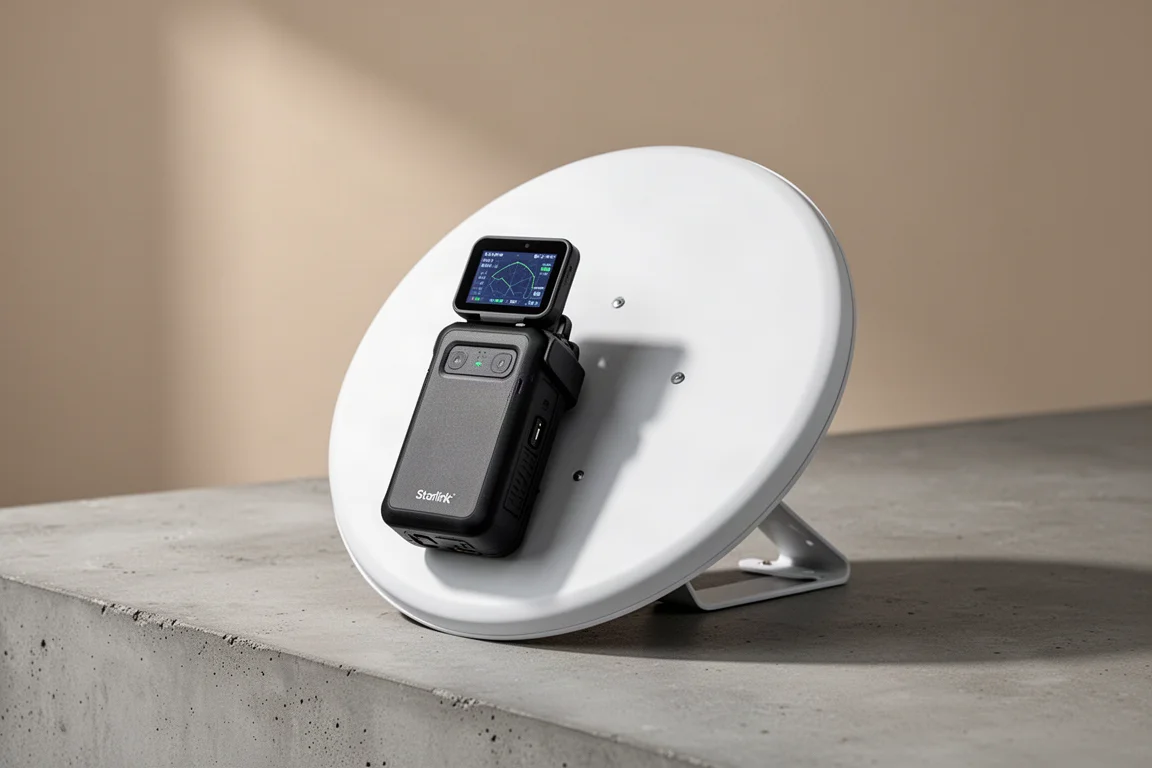
The PeakDo LinkPower Starlink Mini Battery solves this problem by clipping directly onto the dish and powering it without any external cables. This review looks at how well it performs, what it offers, and who it is best suited for.
Who This Product Is For
The PeakDo LinkPower is designed for anyone who needs dependable internet access away from cell towers. That includes hikers, off-road riders, campers, hunters, and fishermen who venture into areas where phone signals do not reach. It is also useful for people who simply want a reliable backup communication option stored in their vehicle.
The battery is 99 watt hours, which makes it fully TSA compliant. You can take it in your carry-on luggage on an airplane to virtually anywhere on the planet and have solid internet access. For those who travel frequently or spend time in remote locations, this portability is a significant advantage.
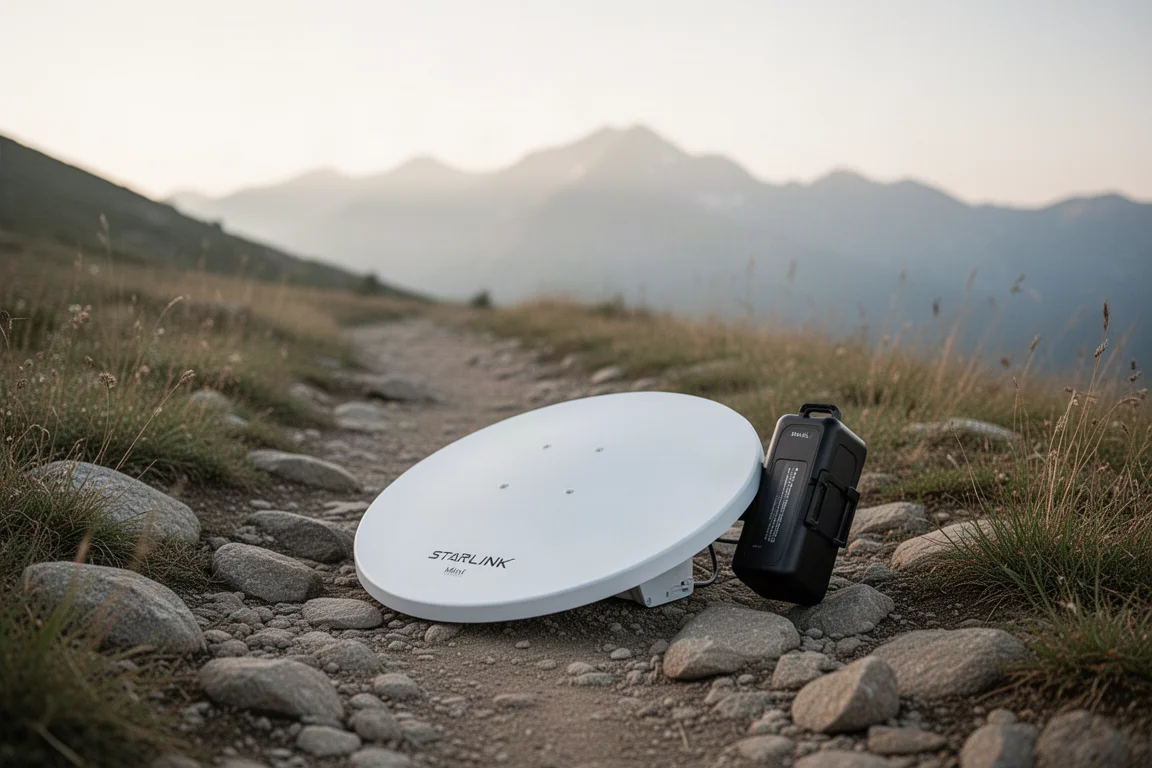
The battery is also well suited for emergency preparedness. It can sit in hibernation mode for up to five years while holding its charge, meaning you can store it in a bag or trunk and forget about it until you need it. When you power it up, it is ready to go in a few minutes. This makes it an excellent backup plan for anyone who drives or rides in areas with unreliable cell coverage.
Design and Build
The PeakDo LinkPower is a compact battery pack with a DC cable that comes off the back. The cable is waterproof, with small flanges that keep water from getting in. The battery clips onto the Starlink Mini dish and locks into place, and the included wire plugs directly into the bottom of the dish. No muss, no fuss.
The battery has a small 1.5-inch LCD screen that is easy enough to see up close, though it can be a challenge in very bright sunlight. Fortunately, there is not much to see there. You simply push the button to turn it on and hold it down to turn it off. When it is on and powering your Starlink, the light turns green and blinks slowly. If you hold the button down to turn it off, it shuts off DC mode, and after a few seconds the screen turns off as well.
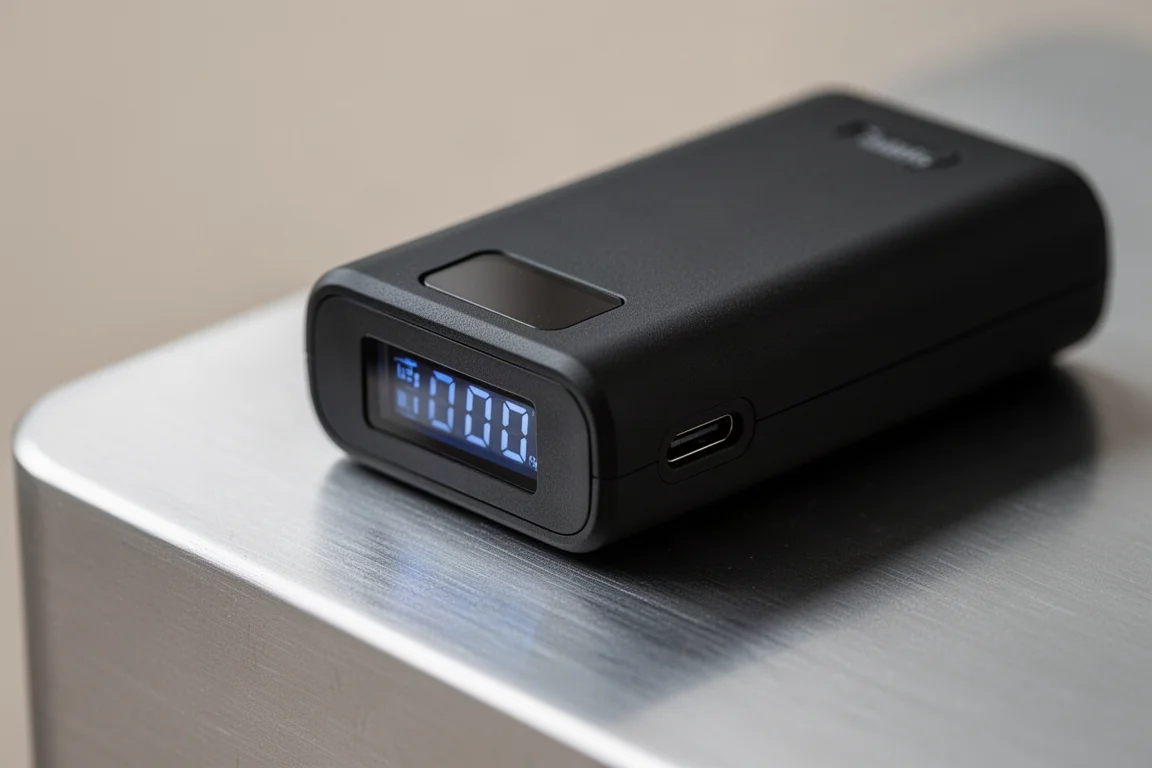
The battery is rated IPX4 water resistant, so it can handle light splashes and rain. It includes mounting holes on the bottom, with two holes in the corner designed for an optional suction cup mount. That mount allows you to attach the battery and dish to the center of your vehicle or windshield so you can use it while in motion.
Charging and Power Features
One of the standout features of the PeakDo LinkPower is that it can be charged from an external USB source while in use. This includes USB-C solar panels up to 28 volts and 100 watts. You can solar charge the battery while it is powering the dish, which opens up the possibility of keeping the system running indefinitely with a solar panel or power station.
There is an optional Bluetooth web app that lets you change some settings, including the charging and discharging speed of the USB port. The web app runs through the company’s website in your mobile browser, so there is nothing to install. It supports up to 140 watts of charging if you change the setting, but at that level the battery starts getting hot and throttles itself down. It is best to leave it at factory defaults.
The battery will discharge at temperatures as low as -4 degrees Fahrenheit. Like other lithium batteries, it will only charge above freezing. However, since the battery warms itself during use, there are probably only a few scenarios where it would get cold enough that you could not recharge it after it has been running for a few hours.
Performance and Run Time
PeakDo claims a 4-hour run time for the battery. In a real-world time-lapse test, it ran for about 4 hours and 40 minutes, including startup power, which typically uses a little more energy. That is a solid result for a battery of this size.
The Starlink Mini itself uses only about 20 to 30 watts while running, including powering the built-in wireless router. You can connect up to 128 wireless devices and share the Starlink connection, though for best performance you will want to keep it under 20 or 30 devices because this is a low-power device.
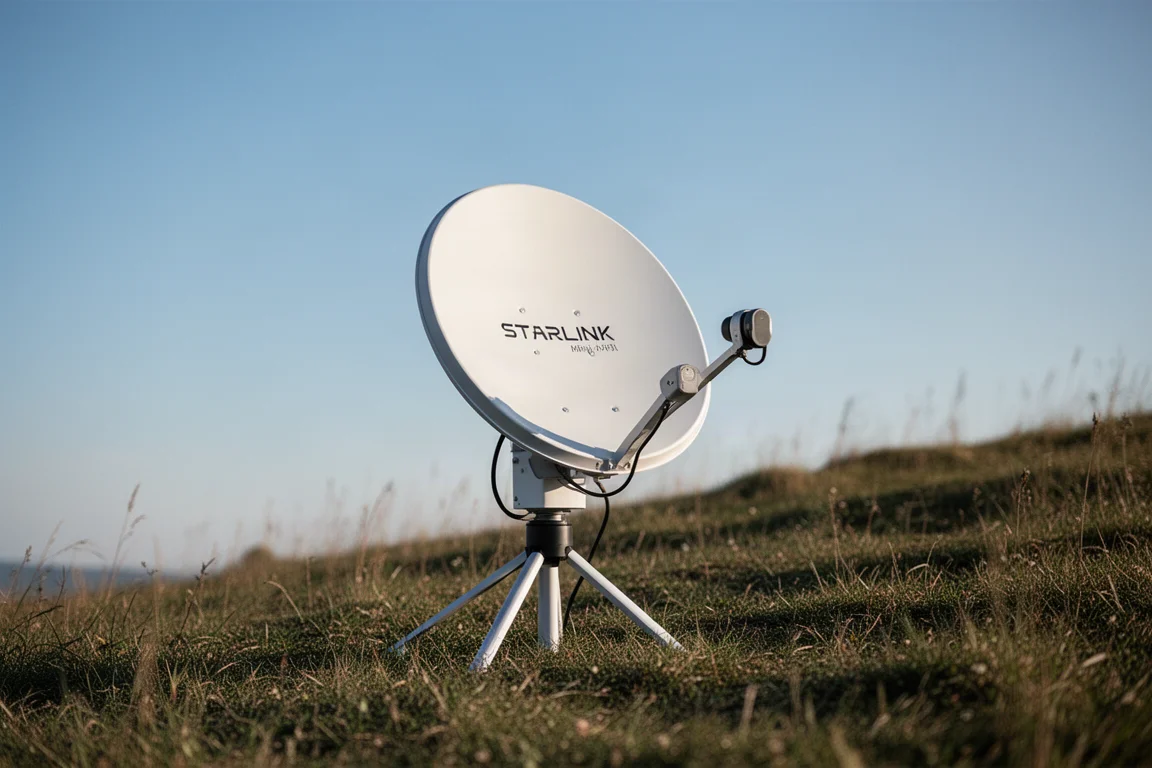
A speed test using the Mini dish powered by the PeakDo battery, with the dish properly aligned north per the app, showed download speeds over 200 megabits per second, upload speeds around 23 megabits per second, and a latency of 23 milliseconds. That is impressive for a small satellite dish powered by a battery. If you let the dish synchronize for about half an hour, you can expect even faster speeds. Speeds as fast as 350 megabits per second have been observed with the Mini, which is enough for multiple people to stream video simultaneously.
If you simply lay the dish flat on the ground without aiming it, you can expect speeds of about 50 to 100 megabits per second. For triple-digit speeds, you will want to use a tripod to align the dish north-facing, which the Starlink app guides you through.
Things to Consider Before Buying
The PeakDo LinkPower does not ship with a tripod, although you can purchase one as an add-on. You do not need a tripod to make an emergency call. You can simply turn it on, set it flat on the ground, and it will connect to whatever satellites it can find.
When you first unbox the battery, it is in sleep mode. Pressing the power button will do nothing until you apply USB-C power to the USB-C port, which wakes it up. Once awake, a single press of the power button starts it up and it begins powering the dish automatically. You can hold the button down to put it back into hibernation mode for long-term storage.
The battery is available on Amazon, but it does not ship from the local warehouse, so you may wait about three weeks for delivery. It is also full price with no discounts available. Ordering direct from the manufacturer’s site typically results in delivery in less than one week.
Buying Advice
The PeakDo LinkPower Starlink Mini Battery is a practical solution for anyone who wants to use the Starlink Mini away from AC power. Its 99 watt-hour capacity keeps it TSA compliant while still providing over four hours of run time, and the ability to charge it from USB-C solar panels while in use is a genuinely useful feature.
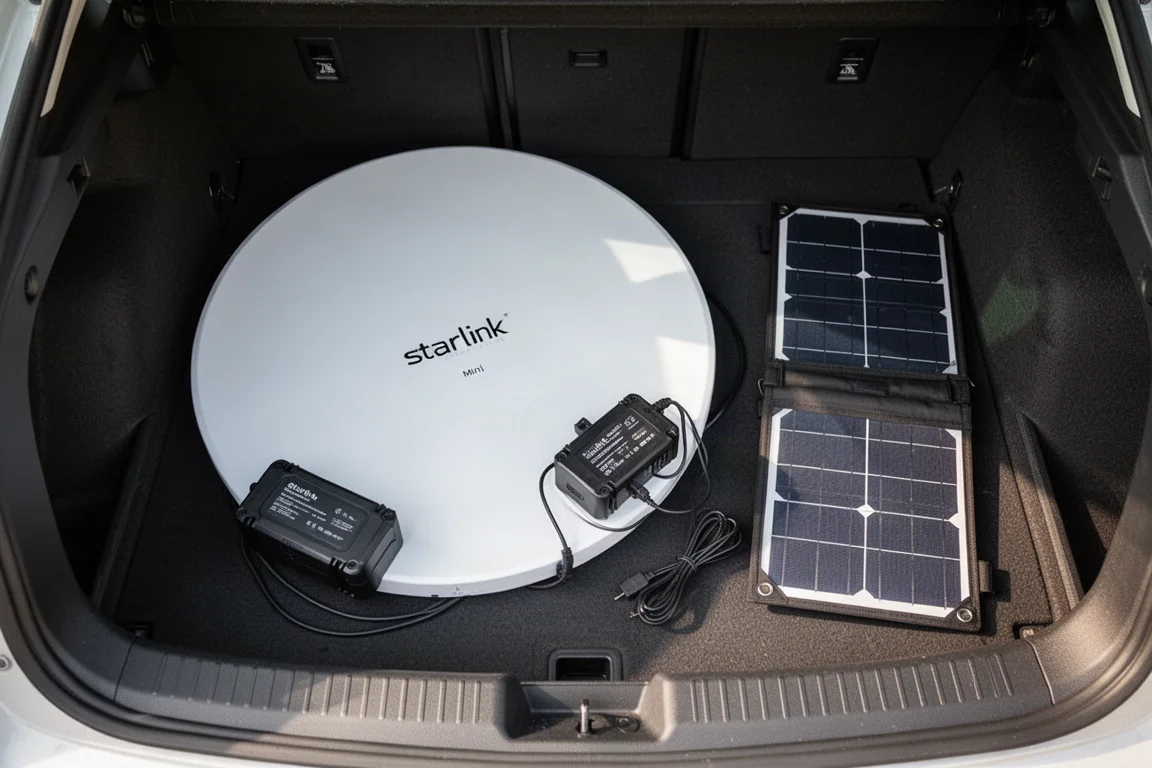
For emergency preparedness, the hibernation mode is a standout. The ability to store the battery for up to five years and have it ready to go in minutes makes it a reliable backup communication option for vehicles, cabins, or emergency kits. The IPX4 water resistance and mounting options add to its versatility.
The main considerations are the lack of an included tripod and the need to wake the battery from sleep mode with USB-C power on first use. Neither is a significant drawback, but they are worth knowing about before you buy.
Conclusion
The PeakDo LinkPower Starlink Mini Battery addresses the biggest limitation of the Starlink Mini dish: its lack of built-in power. With over four hours of run time, TSA-compliant capacity, and the ability to charge from solar panels while in use, it is a well-designed accessory for off-grid communication. Whether you are camping, hiking, off-road riding, or simply want a dependable backup for emergencies, this battery makes the Starlink Mini a genuinely portable solution.
Product link
View more details for PeakDo LinkPower Starlink Mini Battery
This product is mentioned in the review. Check the specifications, options, and compatibility before buying.
View more details for PeakDo LinkPower Starlink Mini BatteryFurther reading
Related Reviews
Off-Grid Power
Bluetti RV5 Power Hub and B4810 Battery Review: A Modular 5kW Off-Grid System
A detailed look at the Bluetti RV5 5kW inverter charger and B4810 battery, covering performance, installation, and real-world test results.
Smart Home
We Charge Review: Unlimited Smart Lock Power
A retrofit infrared charging system that keeps compatible smart locks topped up at 100% battery, eliminating the need to ever swap batteries again.