Backpacking Gear
Peak Outdoors P Lid Review: A Patented Lid That Reorganizes Your Backpacking Pot
A close look at the Peak Outdoors P Lid, a patented backpacking pot lid that holds a fuel canister and lighter, adds strainer and pouring openings, and prints a unit conversion chart on top.
Introduction
Most backpacking pots ship with a thin titanium lid that does exactly one job: cover the pot. The Peak Outdoors P Lid takes a different approach. It is a patented replacement lid developed over several years, built around the idea that the lid is the best place to organize the small items that normally rattle around inside a pot.
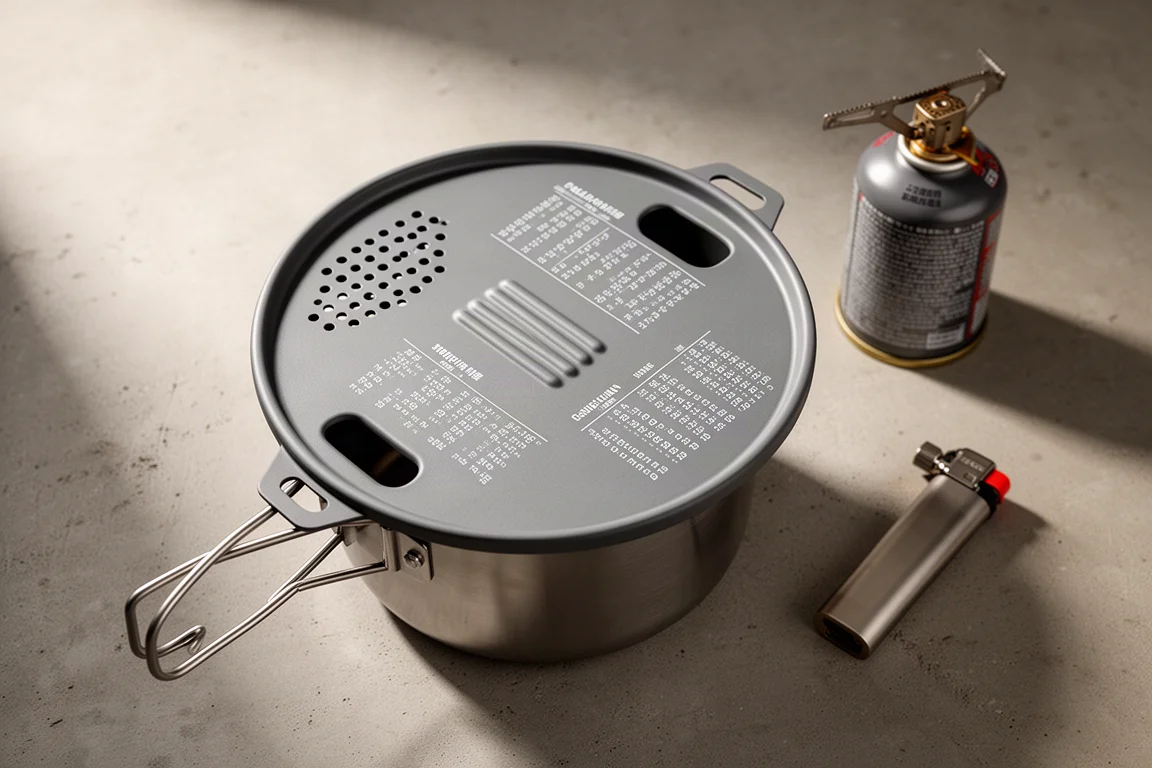
The lid snaps onto a compatible pot and adds storage for a fuel canister and a mini lighter, a printed unit conversion chart, strainer holes, a pouring opening, and a set of ridges that let a long handled titanium spoon serve as a pouring handle. This review covers what the lid does well, which pots it fits, and the handful of things worth knowing before you buy.
Who This Lid Is For
The P Lid is aimed at backpackers who cook with a small canister stove and want a tidier, quieter, more contained cook kit. The design targets the 750ml pot, which the makers identified as the most widely used size among backpackers. It also fits the 650ml pot, with or without handles, along with a number of similar pots.
The practical sizing rule is straightforward: the lid suits pots that are slightly wider than a standard fuel canister, which is the same group of pots designed to swallow a canister whole. A full compatibility list is maintained on the Peak Outdoors website and updated as more pots are tested.
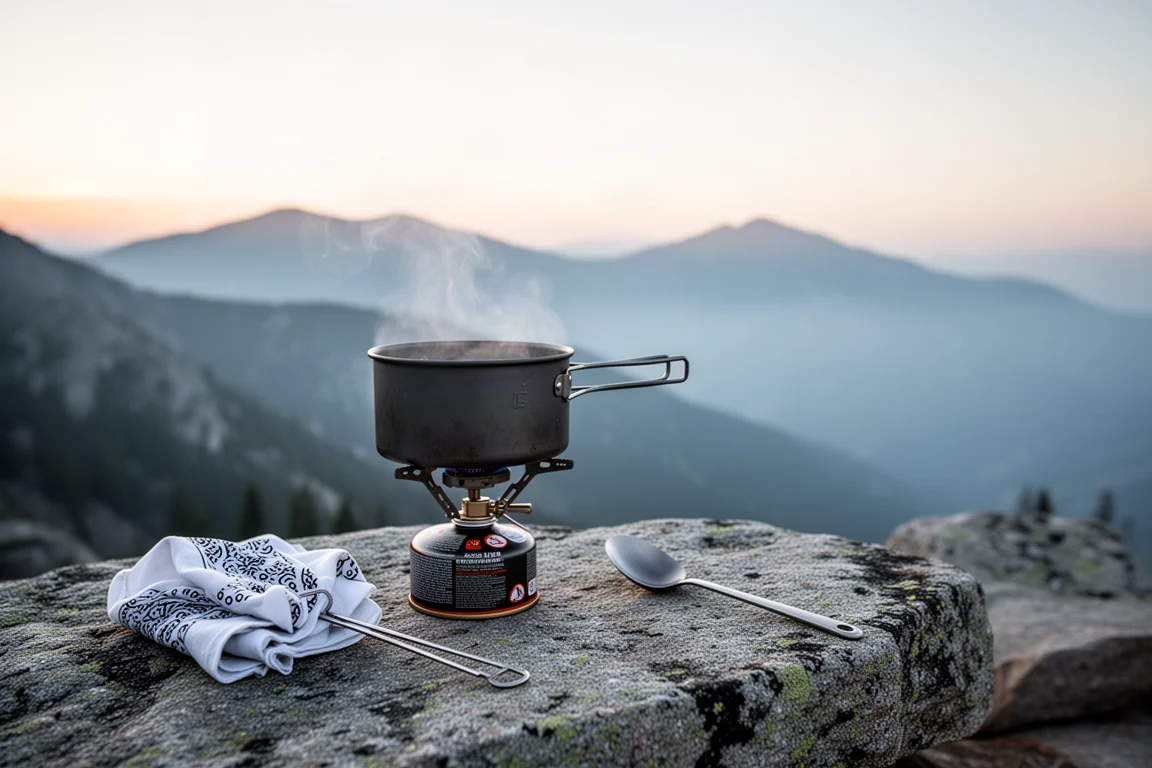
If you already carry a small pot, a canister stove, and a lighter, the lid fits the way you already pack. If you cook on a large pot or over an open fire, the benefits are smaller.
Compatibility and Fit
Fit is the first thing to check before ordering. The lid snaps onto the pot and locks in place. On newer pots it spins freely and seats easily. On some older pots, where the folded lip of the rim is slightly thicker, the lid is noticeably tighter at first.
That tightness is normal rather than a fault. The material stretches and adjusts with use, and the lid loosens over time. The lid is not listed as fully compatible with the 550ml pot, because a powerful stove running at full output sends flames up the side of the small pot, which can melt the edge of the lid. Used at roughly half power or less it still works, and even a lid with a melted edge continues to function.
The lid also works with one of the smaller pots, where the fit is very tight once seated but does work. That matters because it lets you leave the original lid and handle at home, and still get the nesting benefits for a canister and a lighter.
Main Strengths: Storage That Ends the Rattle
The headline feature is the way the lid holds a fuel canister. A canister snaps onto the lid, and the lid then snaps onto the pot, so the canister travels outside the pot instead of inside it. That solves two long standing annoyances at once: the canister no longer rattles against the pot walls, and it no longer leaves rust rings at the bottom of a pot that still holds a little moisture.
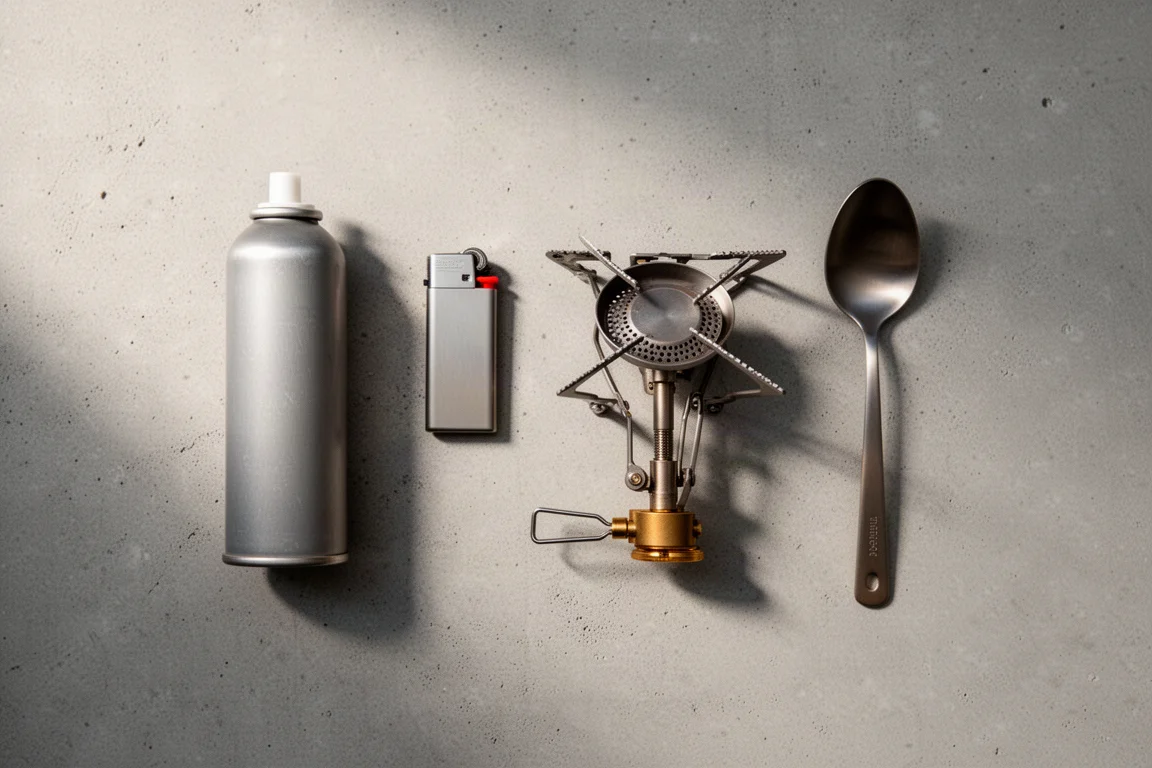
A mini lighter gets its own clip position on the lid, sitting underneath the canister so the whole kit travels as one contained package. Because the lid sits slightly above the lip of the pot, it also creates more internal clearance than a standard titanium lid. Larger stoves such as the Pocket Rocket Deluxe, together with a canister and a lighter, can sit inside a 750ml pot and still let the lid close properly.
Main Strengths: Pouring, Straining, and Measuring
The top of the lid carries several small but genuinely useful details. One side has a cluster of strainer holes. Opposite them is a larger opening for pouring water out of the pot, sized so it also works for sipping if you use the pot as a mug. A small gap accepts a hot lips style silicone rim guard for anyone who drinks straight from the pot.
A printed unit conversion chart covers cups, ounces, and milliliters, which helps when a freeze dried meal lists water in cups while the pot is marked in ounces or milliliters. Getting that conversion right is the difference between a properly rehydrated meal and one that turns out either too dry or too soupy.
The ridges across the lid drew the strongest early feedback. Most long handled titanium spoons slide into them, turning the spoon into a handle for pouring. A pot without handles can therefore do the same job while saving weight, and hands stay away from a rim that gets hot during boiling. The outer edge of the lid also has ridges, so it rests steadily on top of a pot and stays put while water boils, and the lighter clips can be used to lift the lid off.
Things to Consider Before Buying
The lid is not a universal fit, so the pot you already own matters. Compatibility is limited to pots in the right size band, and the 550ml pot is a half power proposition rather than a fully supported pairing.
Getting the lid on and off can feel stiff at first, particularly on older pots with a thicker rim fold, and the same applies to the canister clips. Both ease with repetition. The lid is designed to be squeezed at the side tabs and twisted rather than forced.
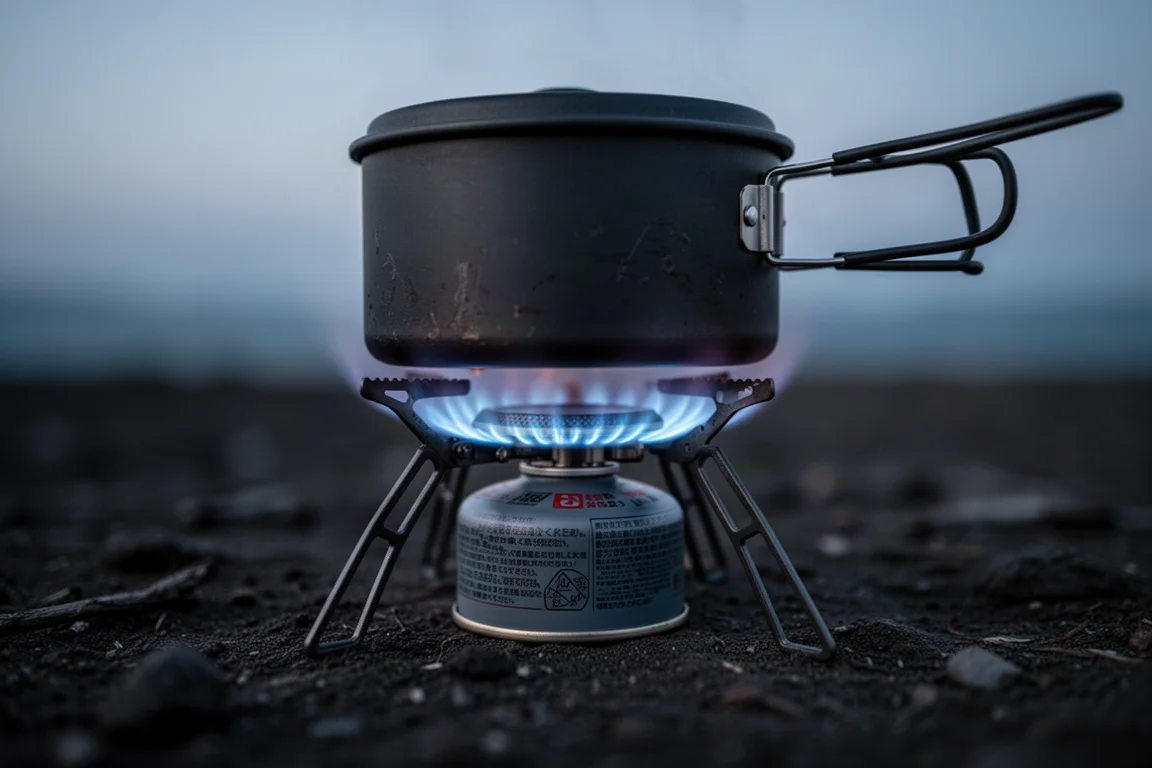
Melted lid edges have been reported, but only in the specific case of a small pot paired with a very powerful stove running at full blast. Running a stove at about half power avoids the problem entirely and uses less fuel. Stove fit inside the pot also varies: a compact stove such as the BRS 3000 with a pot gripper fits comfortably in the 550ml pot, larger stoves fit in the 750ml pot, and the 650ml pot is more hit and miss.
Tips for Getting the Most From the Lid
If the lid is tight, squeeze the pot right at the clip points and twist as you lift. The side tabs give you something to pull against, and the same approach works in reverse when refitting. A slight twist while pressing the lid down helps it seat.
Fuel canisters come off the same way: lift one side using the tab, then the other. Lighter removal was addressed specifically during development, and the lid has ramps on either side of the lighter clip so the lighter can be pushed up and out rather than pulled against the clip. Starting from the side that produces the flame makes it easier.
Two setups stand out as particularly well matched. The first pairs the lid with the 550ml pot, a BRS 3000 stove, and a compact pot gripper. The second pairs it with the 750ml pot without handles, a long handled spoon used as the pouring handle, and the Pocket Rocket Deluxe stove.
Buying Advice
Buy the P Lid if you already cook with a small canister stove and want your cook kit to stop rattling, stop rusting, and pack into a smaller footprint. The lid earns its place by clearing several small frustrations at once rather than by adding one dramatic feature.
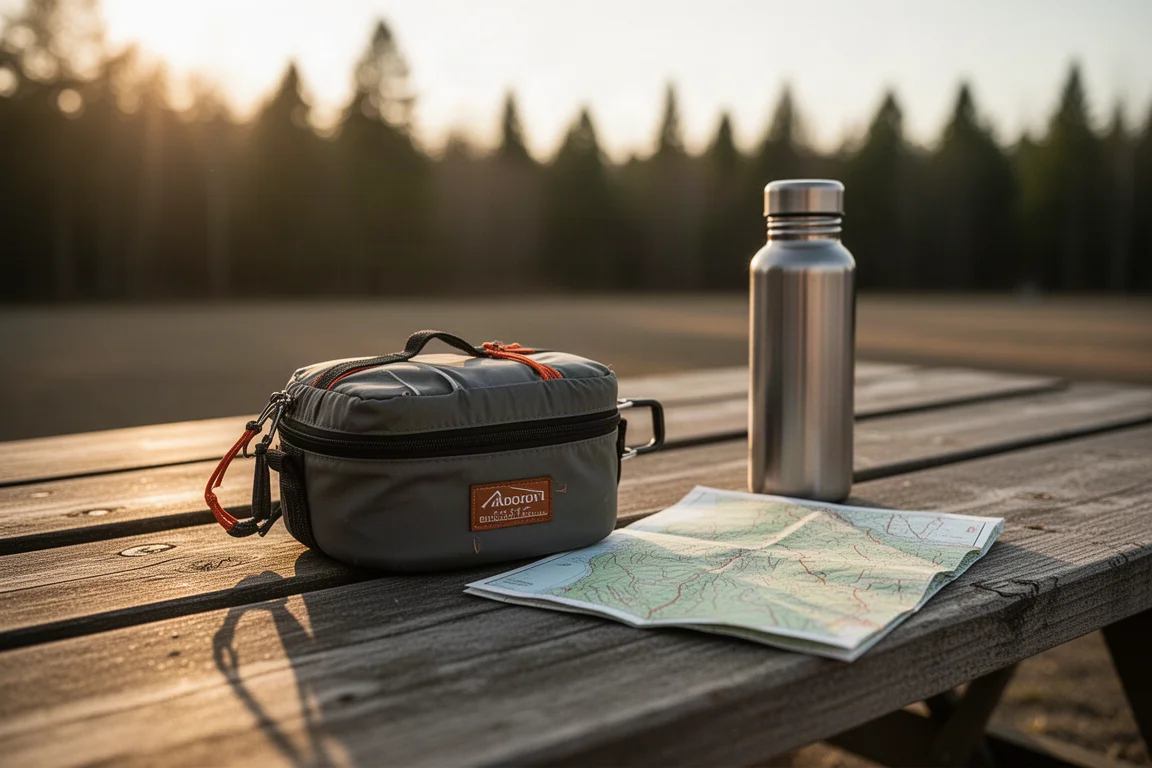
Check your pot against the compatibility list before ordering, and be honest about how you run your stove. If you routinely put a small pot on a powerful burner at full output, either dial the power back or step up to a larger pot. If your kit already centres on a 750ml pot and a mid sized stove, the lid slots naturally into the way you already pack.
A second version is planned for 2026, so the current design should not be expected to stay static. The lid itself is patented, which makes near-identical alternatives from other brands unlikely.
Conclusion
The Peak Outdoors P Lid is a small accessory that solves a set of small problems: canister rattle, rust rings, awkward pouring, and water measurement in the wrong units. It does not fit every pot, and it asks for a little patience during the first few uses. For backpackers whose cook kit is built around a 750ml or 650ml pot and a canister stove, it is a well considered upgrade that makes the whole setup easier to live with.
Product link
View more details for Peak Outdoors P Lid
This product is mentioned in the review. Check the specifications, options, and compatibility before buying.
View more details for Peak Outdoors P LidFurther reading
Related Reviews

Backpacking Gear
Building a 10 lb Base Weight: An Ultralight Backpacking Gear List
A practical walkthrough of the ultralight pieces behind a 10 lb base weight, from a 765 g pack and a roomy one-person tent to a full camp chair and a dependable water filter.

Backpacking Gear
A 15-Pound Lightweight Backpacking Gear List for Solo Trips
A beginner-friendly 15-pound backpacking setup built from easy-to-find gear, with notes on what each piece does, how it packs, and where to spend your attention.

Backpacking Gear
8 Ultralight Backpacking Gear Upgrades Worth Carrying
Eight small, affordable backpacking upgrades that solve real trail annoyances, from a pillow that stays put to a fuel valve that rescues leftover canister gas.