Integrated Amplifiers
Pathos Inpol Remix Mark II Review: Italian Class A Character in a Compact Integrated
A close look at the Pathos Inpol Remix Mark II, a 25-watt class A integrated amplifier from Italy with a warm, spacious, tube-like character and an unusual control layout.
Introduction
The Pathos Inpol Remix Mark II is a stereo integrated amplifier from an Italian manufacturer that has been designing and building its own equipment since it was founded in Vicenza in 1994. It is a compact, fully balanced class A design rated at 25 watts per channel, and while it can drive headphones, its primary job is to play through loudspeakers.
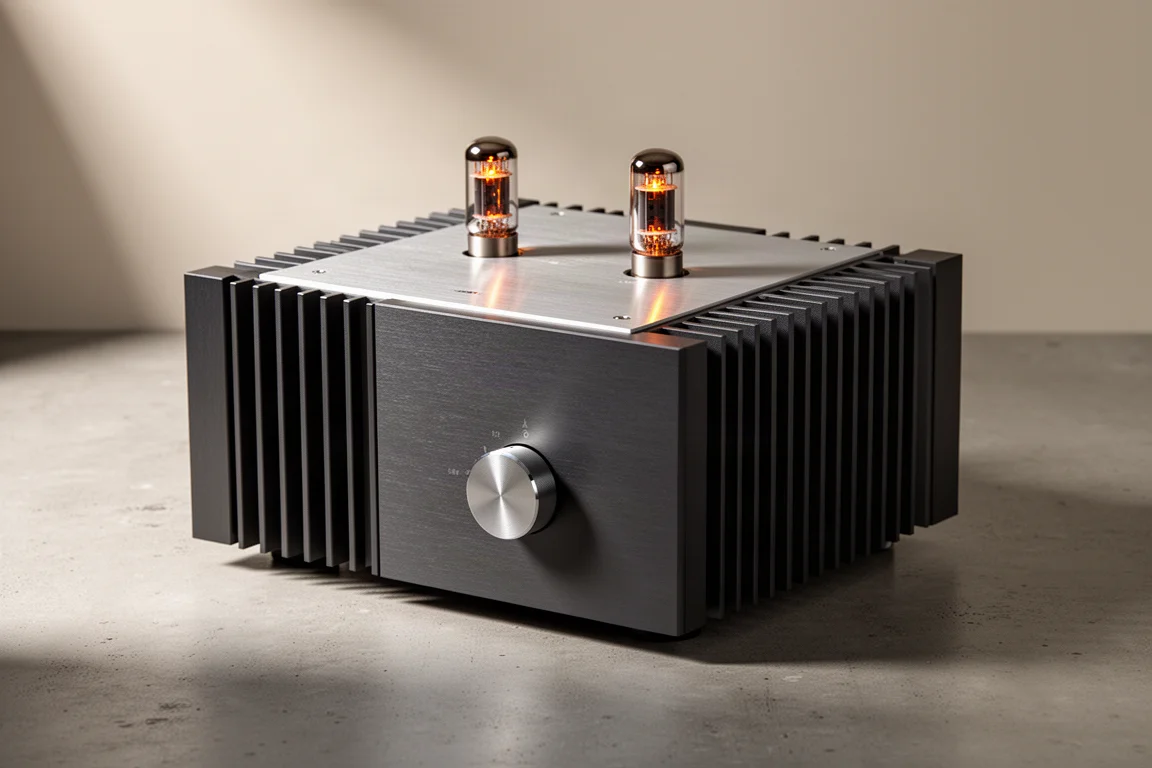
Two 6922 tubes are visible on the top panel, but they do not sit in the preamplifier stage. They form part of the output stage of Pathos’s proprietary Inpol circuit, and the Remix Mark II uses a double Inpol configuration. That circuit, together with the class A output and the heat sinks running down the sides, gives the amplifier a look and a feel that is distinctly its own.
Everything about the design is meant to be lived with: a single central control, an all-metal remote made in-house rather than bought from a third-party vendor, and a chassis that contains no plastic at all. The result is a small amplifier that behaves like a much larger one in the ways that matter to a careful listener.
Who This Amplifier Is For
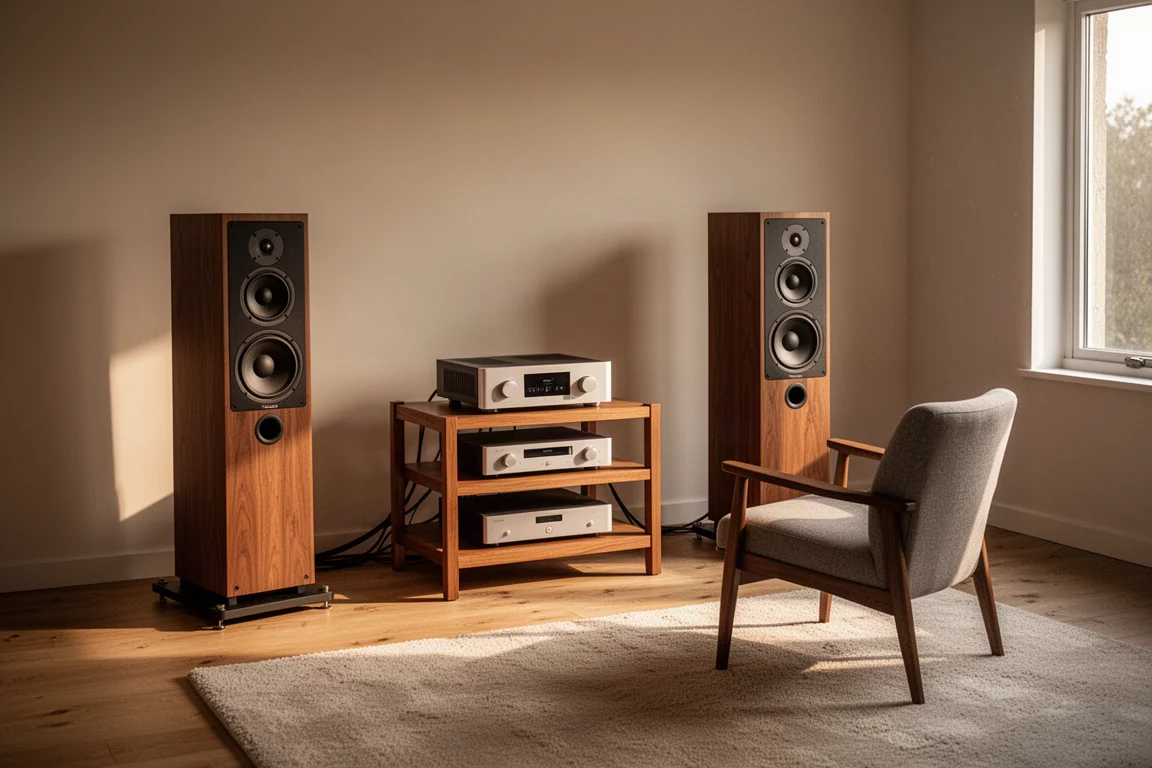
With 25 watts per channel, the Remix Mark II asks for reasonably sensitive speakers. Pair it with loudspeakers rated above roughly 88 dB, keep the room from being enormous, and avoid unusually loud listening levels, and those 25 watts go surprisingly far. Listeners who already own high-sensitivity designs will get the most from it.
It also suits anyone who wants the tonal character of a tube amplifier without the upkeep that usually comes with large power tubes. The tubes here are small and few, and the amplifier’s warmth comes from its circuit rather than from a rack of glowing glass.
Finally, it is a natural fit for listeners who run speakers and headphones from the same system, since one chassis handles both.
Design, Finishes, and Controls
The heat sinks are one of the most recognizable parts of the design, and they are a good example of how much attention Pathos pays to the physical object. The amplifier is available in a textured black paint, a high-gloss red, a high-gloss white, and a real zebra wood finish. There is no plastic anywhere in the construction.
The volume control does not behave like a conventional knob. Its neutral position is straight up at twelve o’clock. Turn it to the right to raise the level and let go, and the knob returns to the center while the volume stays where you set it. Turn it to the left to lower the level. It takes a few minutes to get used to, and then it feels entirely natural.
The remote is a slender, all-metal unit that Pathos designs and builds in-house rather than sourcing from a generic vendor. It covers volume up, volume down, mute, input selection, and a couple of other functions. That is the whole list, and it is enough.
Tubes and the Inpol Output Stage
The Remix Mark II runs in class A, and that has a practical consequence: it gets warm. The heat sinks are warm to the touch after a long session, though not hot enough to be a problem. That is normal behaviour for a class A amplifier of this size, and the chassis is built around it. The design is also fully balanced.
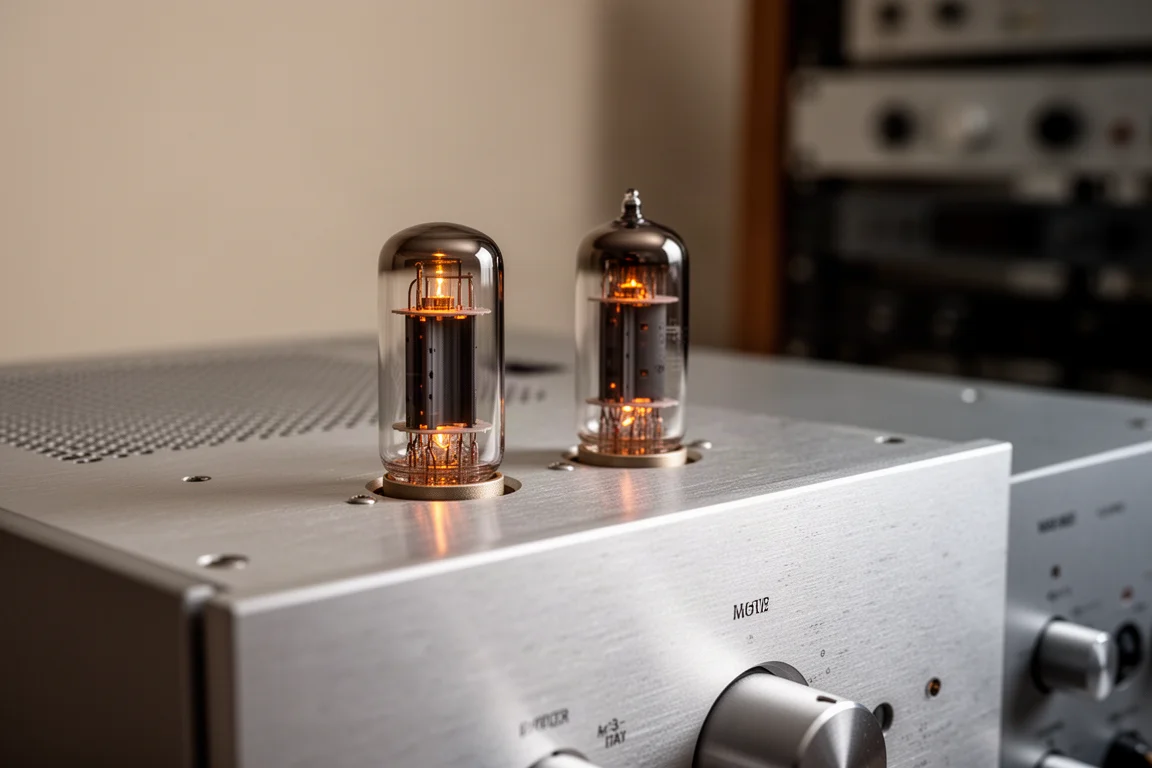
The two 6922 tubes on the top panel belong to the output stage rather than the preamp. Pathos calls the circuit Inpol, and the Remix Mark II uses a double Inpol arrangement. Because these are not large power tubes in the traditional sense, there is no bias routine or tube-rolling ritual to manage. That is much of the appeal: tube character without the maintenance overhead of a big tube amplifier.
Anyone moving from a conventional solid-state integrated should expect a different relationship with the chassis. Give it a little breathing room in the rack, and it settles into a long, comfortable life.
Sound Quality and Presentation
Tonally, the Remix Mark II sits on the rich side of neutral. It has a density to the sound that draws you in rather than a thin, clinical, or analytical presentation, and it never heads in that direction.
The soundstage is where the amplifier makes its strongest case. Instruments and voices are released from the speakers themselves rather than clinging to them, appearing in a plane in front of the speakers with depth and space. It is a spacious presentation, and it is the quality that most clearly separates this amplifier from leaner alternatives.
Familiar recordings made the point repeatedly. A 2010 John Mellencamp album produced by T-Bone Burnett, recorded in a church, at Sun Studios in Memphis, and in a hotel room in San Antonio, with every track cut in mono, came through with real energy and authenticity. Ray Davies with a choir demonstrated how the amplifier handles scale: the recording itself is a little dull, but the size and majesty of the choir arrived intact. Paul McCartney’s 1987 rock and roll record, recorded in London and first released in the Soviet Union before reaching the rest of the world two years later, showed that this small amplifier can rock out. Gershwin Plays Gershwin, built from piano rolls transcribed to computer files in the early 1990s and played back on a modern piano, was dynamic and full of swing, with the feel of a real person at the keyboard.
Headphone Listening
With a pair of Grado RS1 headphones and a pair of Audeze LCD-2 headphones, the amplifier produced a big stage with both, even though the two headphones sound nothing alike. The LCD-2 in particular imaged bigger and more spacious than it usually does, and less inside the head. Both were dynamically alive, with plenty of transient information coming through.
The LCD-2 held its expected advantage in power delivery and low-end weight, while the Grado sounded lighter and more focused on the midrange. Both pairings worked well.

The headphone output is a genuine bonus rather than the main event, but it is clearly not an afterthought. Listeners who split their time between speakers and headphones will appreciate having both in one chassis.
How It Compares to Other Class A Designs
Set against a Pass Labs HPA-1 used as a preamplifier and a First Watt F7 power amplifier, which run at roughly the same power and also operate in class A, the differences were easy to hear. The Pass Labs combination sounded brighter, more transparent, and more powerful, with more heft and a more kinetic, transient-forward character. The Pathos had more of that tube quality: more three-dimensional, more spatial, and warmer in tone.
Both approaches are strong, and the choice comes down to taste. If transparency and drive are the priority, the Pass Labs route has the edge. If richness, depth, and a presentation that floats free of the speakers are what you are after, the Pathos is the more compelling listen.
Things to Consider Before Buying
The obvious consideration is power. At 25 watts per channel, the Remix Mark II is not a universal amplifier. Buyers with low-sensitivity speakers, very large rooms, or a taste for loud playback should look elsewhere.
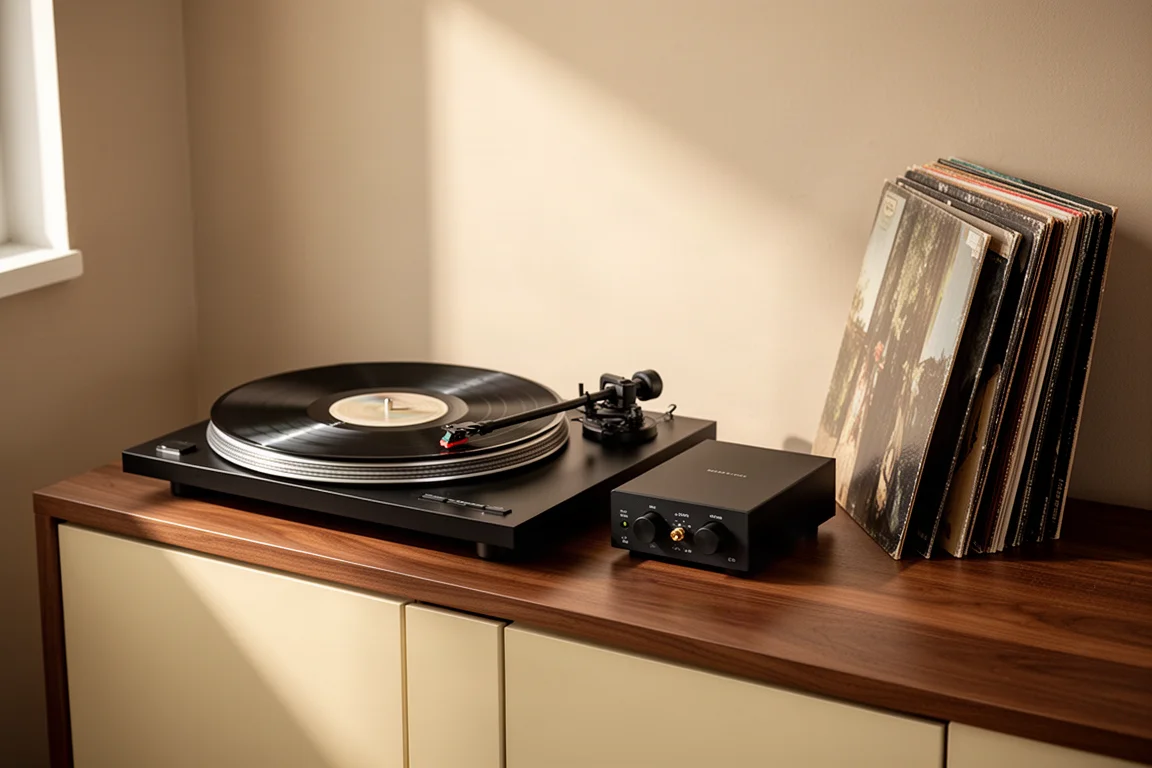
The amplifier is priced at $5,395, and adding the optional internal DAC brings it to $6,070. An external converter is usually the better route at this level, because digital sources change far more often than amplifiers do. There is no built-in phono stage on offer, so vinyl listeners will need an external phono preamp.
Class A operation also means the amplifier runs warm, so it wants a little space around it. And because the sound leans warm and rich rather than neutral and lean, matching it with speakers that are already sweet in the treble may push the balance further in that direction than some listeners want.
Buying Advice
Buy the Remix Mark II if you already own high-sensitivity speakers and you value tone, density, and a spacious soundstage over raw wattage. Then choose the finish: textured black is the most discreet option, while the high-gloss red, high-gloss white, and zebra wood versions make the amplifier a visible part of the room.
Skip the internal DAC unless a single-box solution is genuinely important to you. Put that budget toward a separate converter instead, and toward a phono stage if you play records, so the amplifier stays current as your digital sources change. Plan the speakers first and the amplifier second, because with 25 watts on tap the speaker match decides how satisfying the whole system will be.
Conclusion
The Pathos Inpol Remix Mark II is a quality-over-quantity amplifier. It is beautifully made in Italy, it looks and feels like a considered object, and it sounds more like a tube amplifier than a solid-state one: rich, dense, and spacious, with a soundstage that sits in front of the speakers rather than inside them.
The catch is the 25 watts, and it is a real one. For the same money, more powerful amplifiers exist. But if your speakers are sensitive, your room is reasonable, and your priority is tone and space, this is a very impressive piece of work and one worth considering seriously.
Product link
View more details for Pathos Inpol Remix Mark II
This product is mentioned in the review. Check the specifications, options, and compatibility before buying.
View more details for Pathos Inpol Remix Mark IIFurther reading
Related Reviews
Integrated Amplifiers
Advance Paris A10 Classic Review: Vintage Looks and a Lively, Punchy Sound
The Advance Paris A10 Classic pairs glowing blue VU meters and a tube stage with one of the widest input sets on any integrated amplifier. Here is what it does well and what to weigh before spending $2,500.
Integrated Amplifiers
Advance Paris A12 Apex Review: A Modern Integrated Amplifier With Vintage Character
A dual mono integrated amplifier with 180 watts per channel, a tube front end, VU meters, and a connectivity list that covers turntables, televisions, computers, and headphones.
Integrated Amplifiers
Advance Paris Nova Range Review: AI130, AI190 and Modular Upgrades
A practical look at the Advance Paris Nova range, including the AI130 and AI190 integrated amplifiers and the modular streaming, Bluetooth and remote accessories that expand them.