Bookshelf Speakers
Paradigm 40B Review: A High-Sensitivity Bookshelf Speaker That Rewards Careful Setup
A compact bookshelf speaker with solid build quality, low distortion, and a bright character that benefits from equalization and a subwoofer.
Introduction
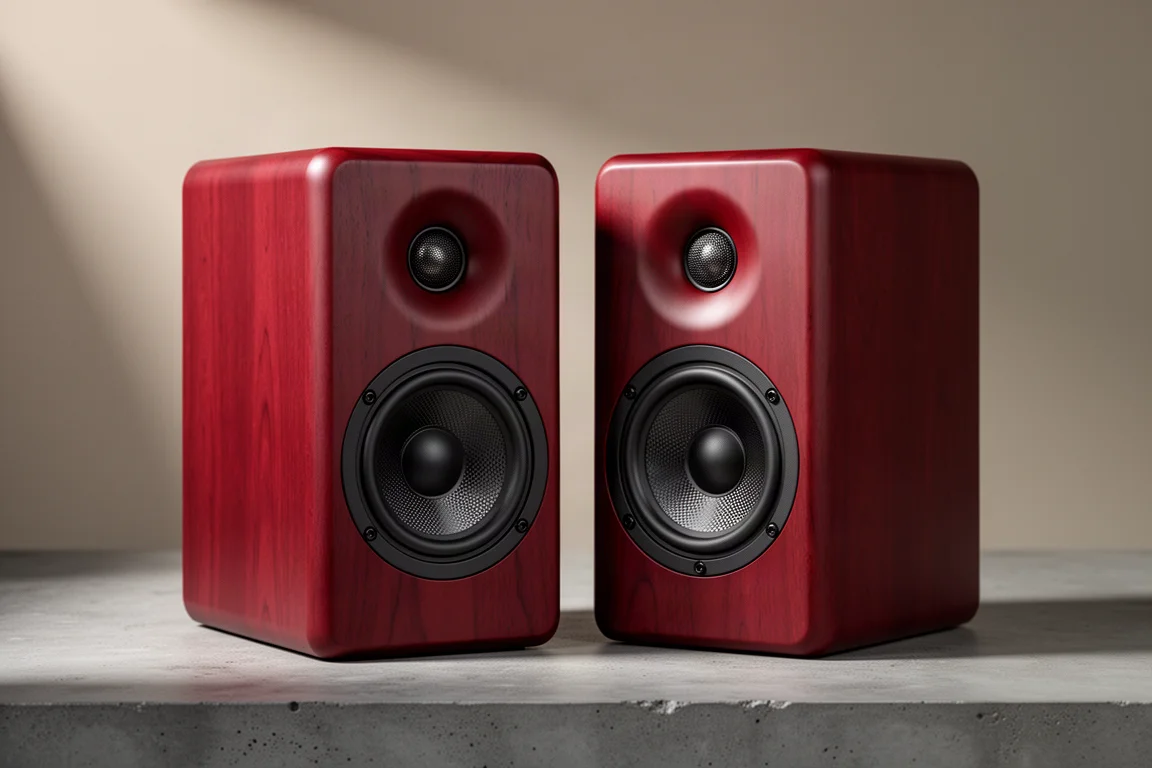
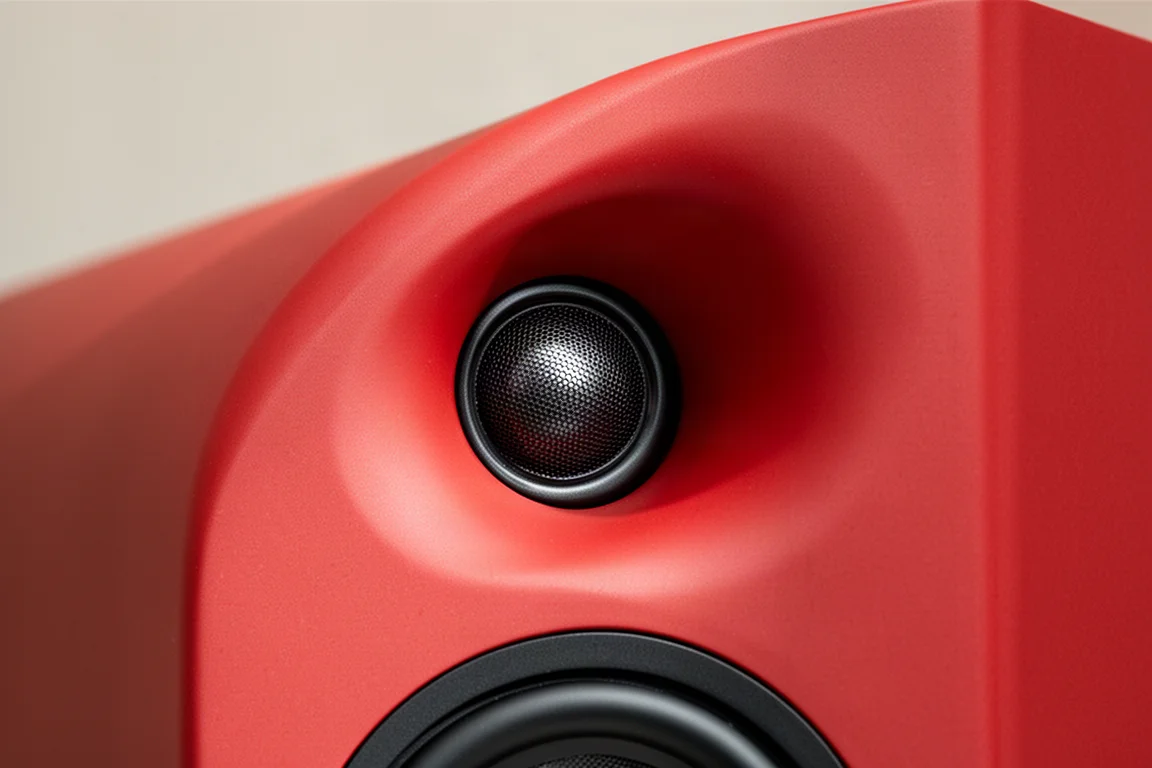
The Paradigm 40B is a compact bookshelf loudspeaker that retails for around $2,400 per pair. Its driver complement pairs a 1-inch aluminum ceramic dome tweeter set into an oblate spheroid waveguide with a 6-inch ultra-high-excursion aluminum magnesium mid-bass driver fitted with a perforated phase-aligning lens. Each cabinet weighs 25 lb, roughly 11 kg, and the range includes a variety of finishes, among them the darker red pair used for this assessment.
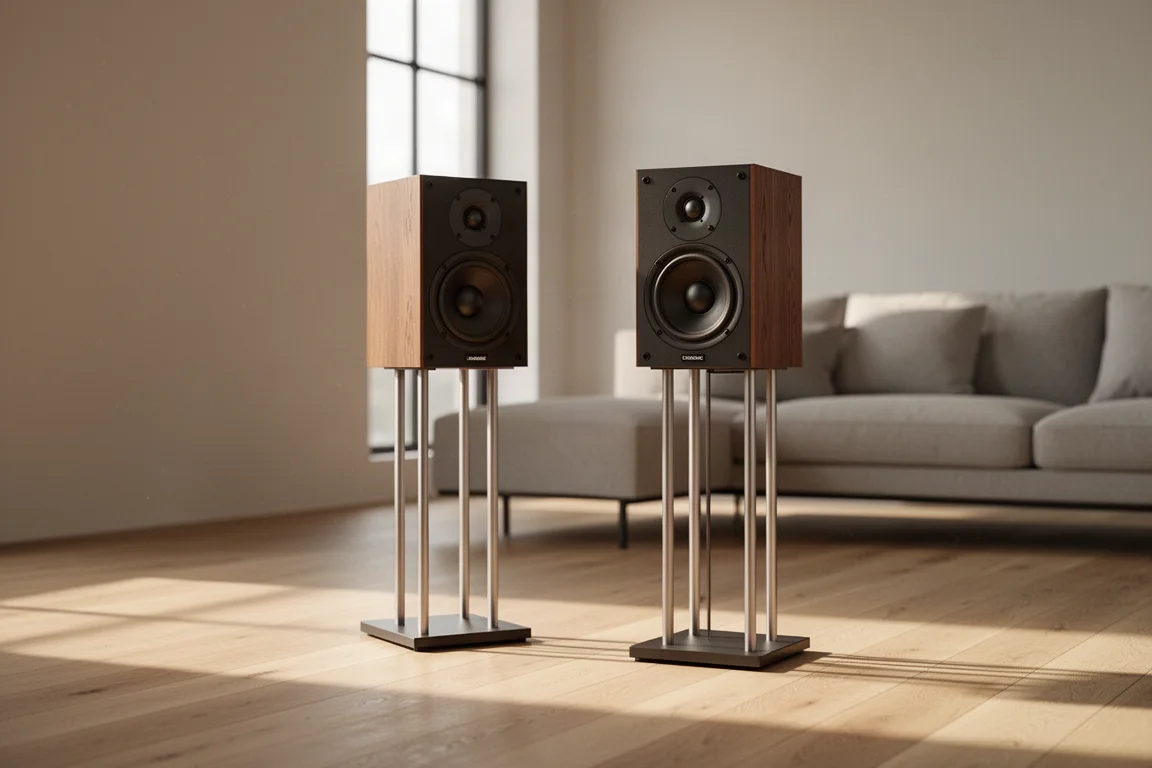
On paper, the 40B is a well-built speaker with above-average sensitivity and genuinely low distortion. In practice, it is also a speaker that asks for two things: a little equalization and a subwoofer. Given both, it can hold its own in a home theater system. Without them, its character leans bright, and some of the attack and clarity in the midrange can feel held back.
Who This Product Is For
The 40B makes the most sense for listeners building a home theater system who already expect to run a subwoofer. Its measured in-room extension lands near 60 Hz, with an F3 of 67 Hz and an F10 of 43 Hz, so a great deal of the lower mid-bass weight that gives music its punch simply is not there on its own.
That profile suits film soundtracks and multichannel setups where a subwoofer handles the bottom octaves and where room correction and EQ are part of the chain. It also works as a main or surround channel where the speaker will be crossed over.
Two-channel listeners who want a full-range speaker without a subwoofer will likely find the 40B too lean in the lower mid-bass. For that kind of listening, a speaker that reaches closer to 40 Hz is a better starting point, because most genres carry meaningful content in that region, and a 60 Hz floor leaves too much of the kick drum and mid-bass thump behind.
Main Strengths
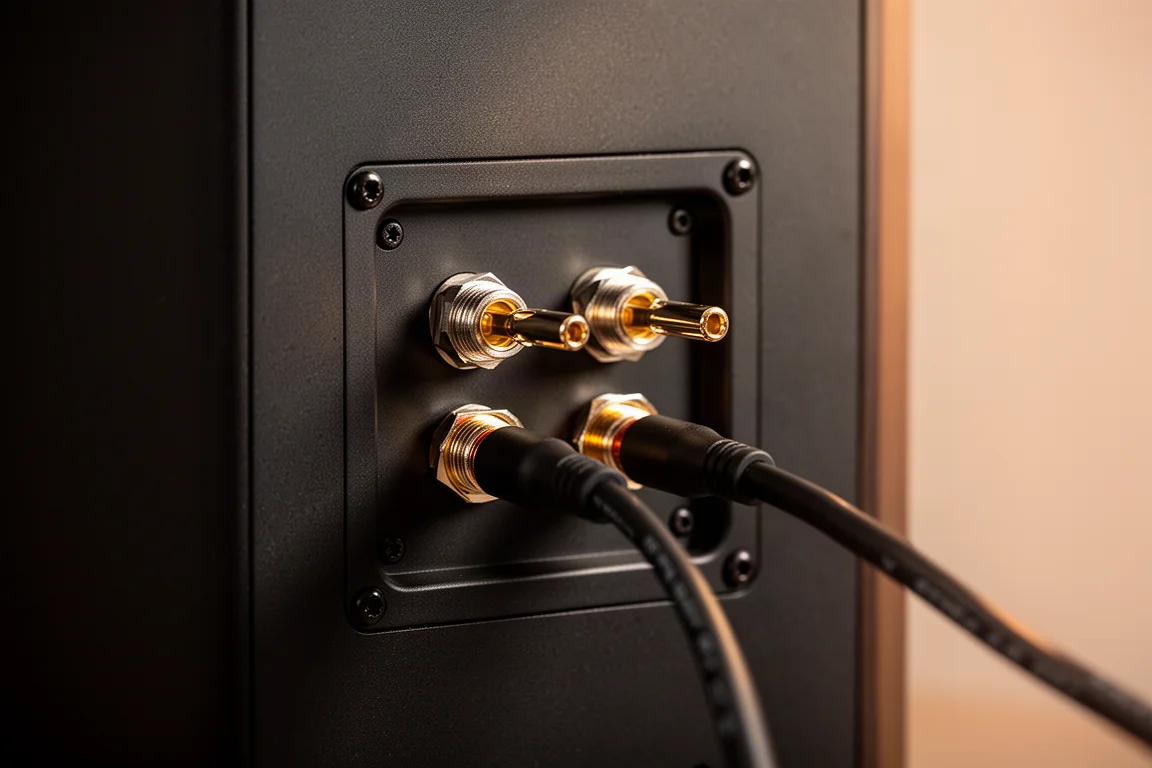
Build quality is a clear strength. The cabinets feel substantial for their size, the rear terminals are well executed, and the overall fit and finish reads as a step above what is typical at this price. Aesthetic preferences vary, but the 40B is a good-looking speaker in person, and the finish options give buyers some latitude.
Sensitivity sits around 88 dB at 2.83 volts at 1 meter, which is on the higher side for a consumer bookshelf design using conventional cone and dome drivers. Average sensitivity measured 88.4 dB on axis and 87.2 dB at 30 degrees off axis, calculated as the mean from 300 Hz to 3 kHz.
Distortion and compression are both low. Harmonic distortion stays below 1 percent THD down to about 50 Hz at both 86 dB and 96 dB, and multi-tone distortion also measures well, rising relative to the fundamental around 1 kHz but otherwise staying controlled.
Directivity is good, with roughly plus or minus 60 degrees of horizontal radiation and a usable vertical window of about plus or minus 20 degrees. The impedance curve shows no resonance, which points to an enclosure that is free of obvious problems.
How It Sounds in a Real Room
Placed roughly 3 feet from the wall behind them, the 40B excited room resonances that were distracting enough to require EQ to tame. Once that was handled, the first critical listening track revealed something specific. The snare lacked the attack and fullness it should have had. That impression was less pronounced on later tracks, but a crisp quality in the high frequencies became more noticeable instead. Nothing stood out in the 4 to 6 kHz region, and the midrange itself sounded good, yet something in the upper midrange or the treble never quite settled.
Placement changes the balance more than usual. Aimed directly at the listening position, the high frequencies were simply too much. Toed out into the room, the speaker sounded noticeably better. The difference between on-axis and off-axis is roughly 2 dB, which is enough to alter the character of the speaker. As with most designs, aiming matters. Pointing the speakers at the listener delivers more imaging precision and a more focused soundstage, while toeing them out trades some of that precision for greater width.
Moving the speakers closer to the wall improved the sound, partly because the low end rolls off sooner and partly because the intrusive room modes became less of a problem. The 40B also carries a slight bump around 120 Hz, which sits near the second harmonic region of a kick drum and can add a pleasing sense of the drum’s sound, though not its fundamental impact.
Equalization proved to be the most effective remedy. Raising the response around 2.5 kHz by about 3 dB brought back the attack and life in the recordings, and a smaller lift around 1 kHz helped as well. Because the speaker has good directivity, these corrections are practical rather than a workaround. Burst decay shows mild ringing around 2.5 kHz, possibly driver break-up, but nothing that suggests a serious enclosure issue. Measurements also show diffraction dips around 2 to 3 kHz and 7 kHz on axis, most of which fill in at 30 degrees off axis.
Things to Consider Before Buying
The 40B is not a full-range speaker on its own. Its in-room extension near 60 Hz means a subwoofer is effectively part of the package for anyone who wants weight and depth, and adding one produced little change in the measurements beyond slightly lower distortion in the midrange.
It is also bright without EQ. Depending on the recording, listeners may hear an excess of treble or a lack of attack and clarity in the midrange. Both descriptions point to the same underlying balance, and both respond to a modest correction in the presence region.
Placement deserves attention. Aiming the speakers at your head is not recommended. Firing them straight into the room, or toeing them out by roughly 20 degrees, keeps the high-frequency shelf in a more agreeable place. The relationship between toe-in and the distance to the sidewalls matters, so some experimentation is worthwhile.
Amplifier matching is worth checking. Minimum impedance is about 3.5 ohms, and minimum EPDR for an AB amplifier is about 1.8 ohms, which means the speaker benefits from an amplifier comfortable with a demanding load.
Setup, Placement, and EQ Notes
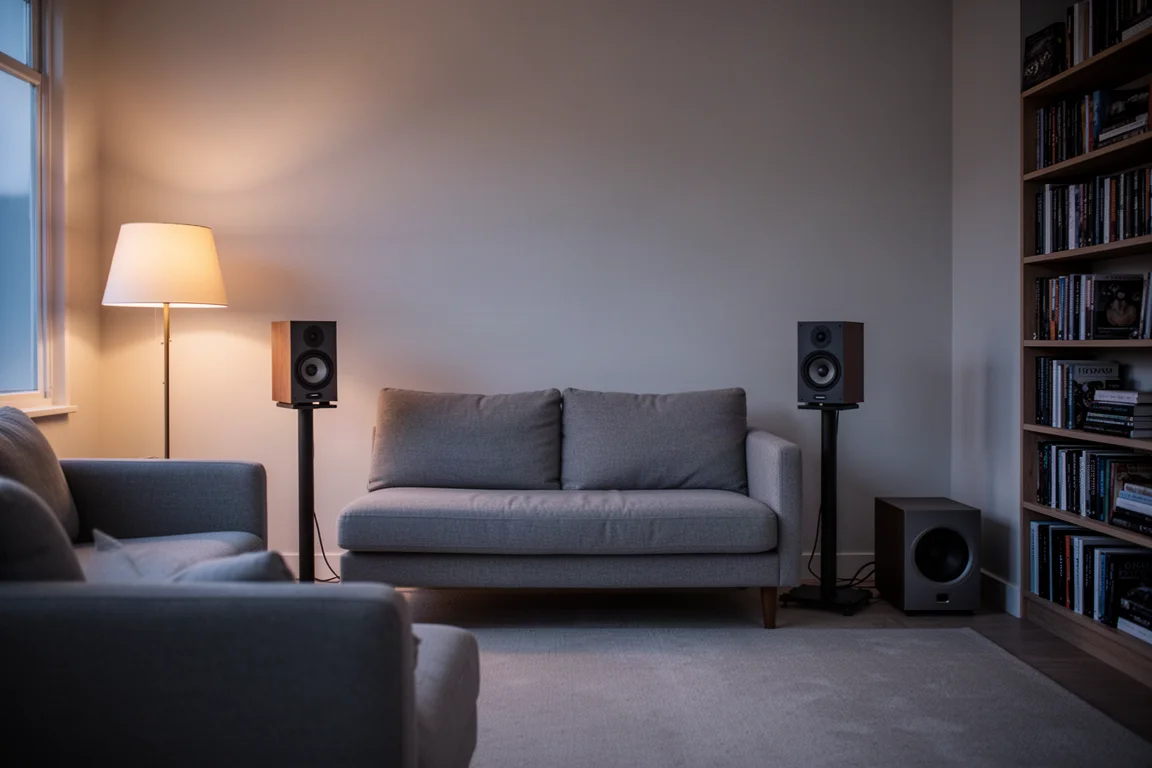
A practical starting point is to place the speakers parallel to the wall behind them and fire them straight into the room, then adjust toe-in toward 20 to 30 degrees to taste. This tilts the high-frequency shelf down slightly and produces a more neutral result than aiming the tweeters directly at the listening position.
Two equalization approaches are worth trying, and both leave the mid-bass bump in place. The first lets the midrange droop and allows the high frequencies to set the overall response, which produces a fuller, more lively presentation. The second targets the midrange more directly, capturing more of it while bringing the high frequencies down. That version stays linear but sounds darker overall. Neither is mandatory, but the first tends to preserve the energy that makes the speaker engaging.
Buying Advice
At around $2,400 per pair, the Paradigm 40B is a serious purchase, and it makes sense when the surrounding system matches what it does well. Buy it as part of a home theater build with a subwoofer, a receiver or processor with room correction, and enough amplification to handle a load that dips to roughly 3.5 ohms. Buy it if you are comfortable spending a few minutes with EQ, because that is where the speaker’s attack and clarity come back.
Think twice if you want a two-channel speaker that stands alone without a subwoofer, or if you prefer a sound that is warm and relaxed straight out of the box. The 40B rewards an owner who is willing to tune the setup rather than one looking for a plug-and-play full-range solution.
Conclusion
The Paradigm 40B is a good speaker with real strengths. Build quality is solid, sensitivity is above average, distortion and compression are low, and directivity is good enough that equalization is genuinely effective. Its weaknesses are equally clear. It does not extend low enough to stand alone, and without EQ it can sound bright or, on some material, slightly short on attack and clarity.
For a home theater system that will use EQ and a subwoofer, it is a reasonable and capable choice. For full-range hi-fi listening without a subwoofer, it gives up too much of the lower mid-bass to be the right answer.
Product link
View more details for Paradigm 40B
This product is mentioned in the review. Check the specifications, options, and compatibility before buying.
View more details for Paradigm 40BFurther reading
Related Reviews
Bookshelf Speakers
Acoustic Energy A100 Mark II Review: A Compact Standmount With an Expansive Soundstage
The Acoustic Energy A100 Mark II brings clarity, natural tonality and a wide soundstage to an entry-level standmount, with a few setup details worth knowing first.
Bookshelf Speakers
Acoustic Energy AE-100 Mark II Review: Compact Bookshelf Speakers With Standout Imaging
A compact British two-way bookshelf speaker with deep, layered imaging, fast bass, and a slight treble lift to weigh against a crowded $500 field.
Bookshelf Speakers
Acoustic Energy AE100 MK2 Review: Measured Performance and Four Alternatives
A close look at the Acoustic Energy AE100 MK2 bookshelf speaker, what its measured performance reveals, and four alternatives with different trade-offs.