Camping Tents
Ozark Trail A-Frame Three-Person Tent Review: A $60 Shelter Built for Warm-Weather Airflow
A budget three-season A-frame tent with exceptional ventilation, a genuinely simple pitch, and a capacity claim that deserves a closer look.
Introduction
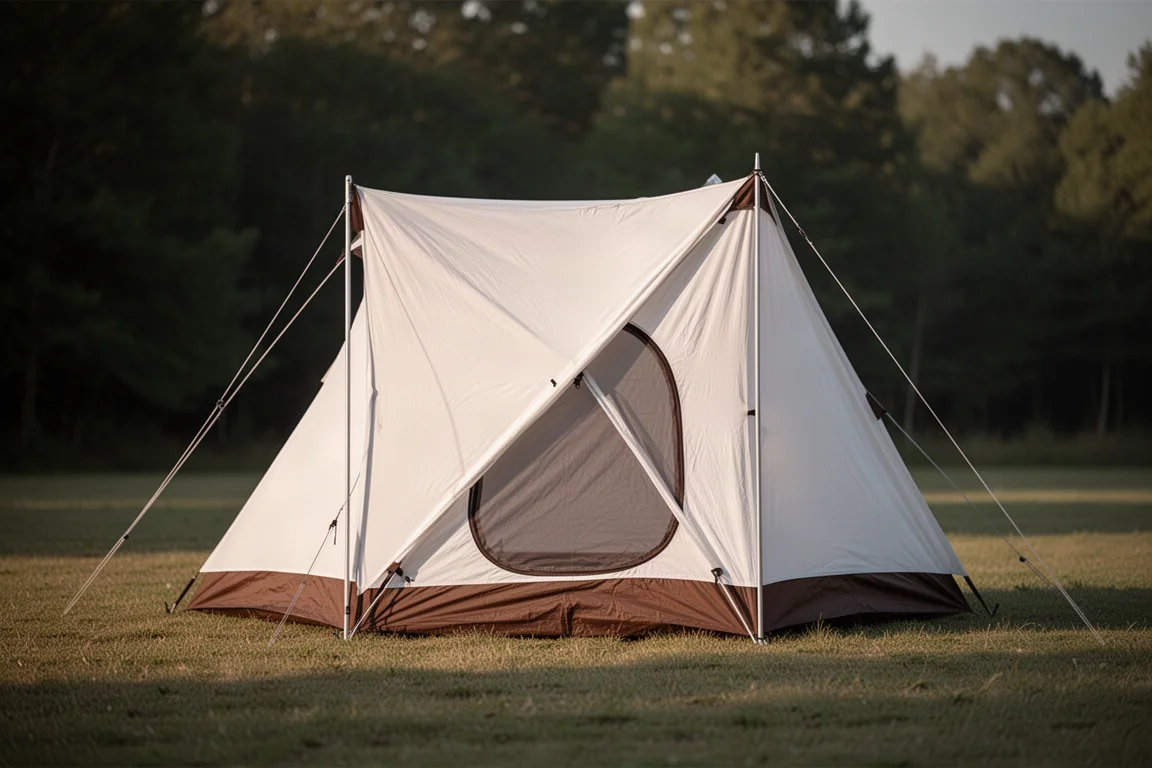
The Ozark Trail A-frame three-person tent sits at the very bottom of the camping shelter market, and it arrives with a set of claims that do not survive contact with the real world. It is sold as a three-person backpacking tent. It is neither. What it actually is turns out to be far more interesting: a simple, old-school A-frame shelter with remarkable ventilation and a price tag of around $60.
Ozark Trail is Walmart’s in-house outdoor brand, and that heritage usually signals compromise. This particular design breaks the pattern. The construction is tidy, the seam tape is clean, and the materials are noticeably better than what typically shows up on entry-level tents from legacy budget names.
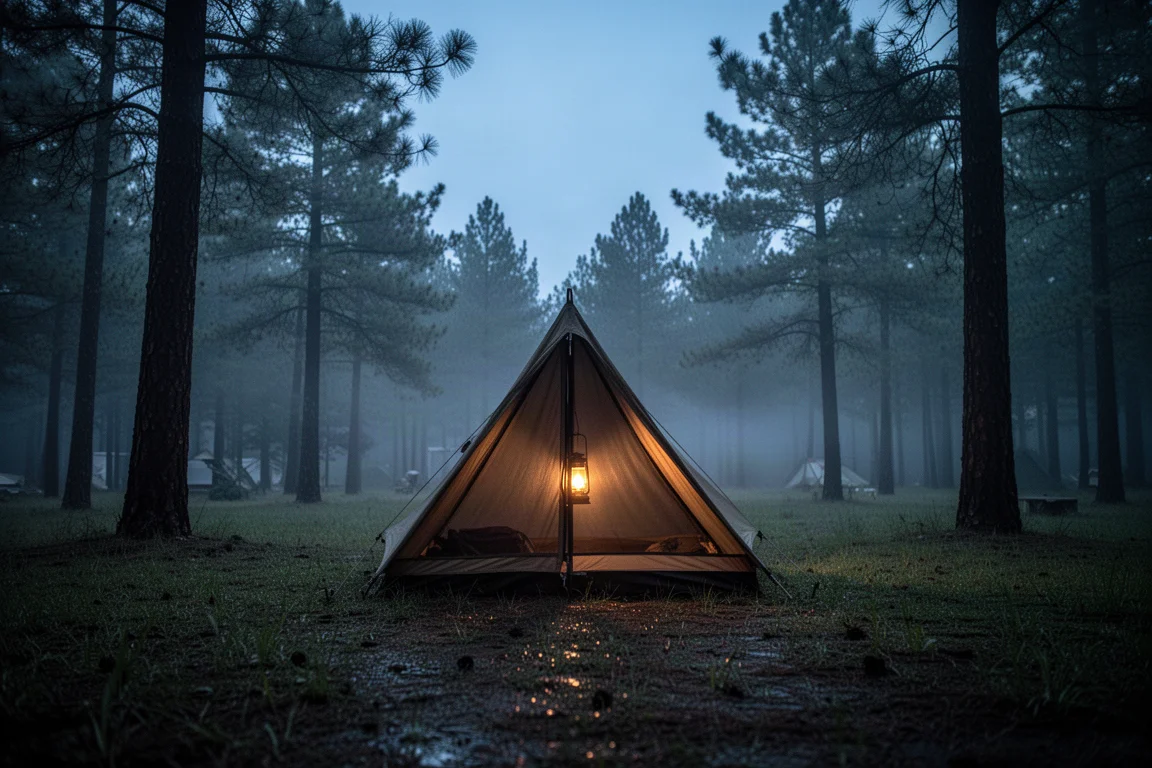
The tent is pitched as a three-season shelter, and that framing is accurate in one direction only. It is an outstanding warm-weather tent. It is a poor choice for cold, exposed conditions, and understanding that split is the key to deciding whether it belongs in your kit.
Who This Tent Is For
This is a fair-weather car camping tent for one person, or two people who are comfortable being close. It suits summer trips, warm coastal and southern winters, festival weekends, and backyard sleepouts where the priority is airflow rather than weather protection.
It is not a backpacking tent, despite the packaging language. At 14 lb and 48 in by 7 in packed, it belongs in a vehicle. Anyone shopping for a shelter to carry on their back should be looking at a different category entirely, where decent options start around $100 to $120 and climb from there.
It is also not a cold-weather shelter. There is no way to seal it against wind, which makes it a poor match for exposed sites in late fall and winter.
Main Strengths: Airflow, Ventilation, and Condensation Control
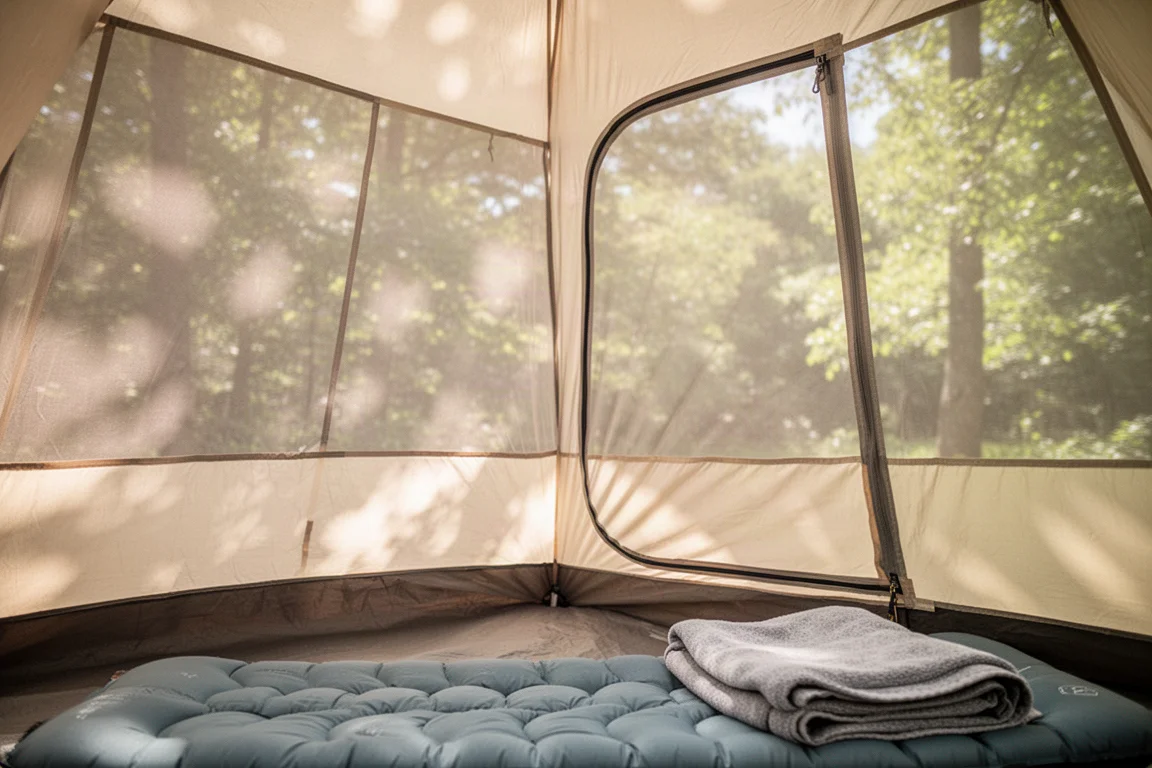
Ventilation is where this tent earns its keep. The inner body is covered in so much mesh that airflow is essentially guaranteed, and there are four separate entry points for moving air: a section at the door, both sides, and the back wall. The rainfly is cut to stand off the body, so air can travel underneath the fly and into the tent rather than being trapped against the walls.
That combination does two things well. It keeps interior temperatures down on hot nights, and it dramatically reduces condensation, which is the usual complaint with cheaper tents that use minimal mesh to save on material costs.
Setup is simple once you understand it. Five shock-corded steel poles are involved: four thicker poles that form the corners and one slim pole across the top. The first attempt or two can feel finicky while you work out pole placement, but the process becomes routine quickly, and an experienced pitch takes roughly ten minutes.
Setup, Construction, and Materials
For a tent at this price, the build quality is the surprise. There are no stray threads, the stitching is consistent, and the seam tape is applied cleanly. Across extensive use, the construction has held up without complaint.
The fabric is polyester rather than a premium nylon or Dyneema, and the poles and stakes are steel. Both the fly and the floor carry a 1,200 mm waterproof rating, which is a modest but workable figure for a fair-weather shelter. The materials feel better in hand than a typical Coleman tent of similar intent, and the cost argument is difficult to ignore: comparable fabrics appear on tents that sell for several hundred dollars elsewhere.
The single door is enormous, which makes getting in and out easy even with gear. Interior dimensions are 84 in by 84 in with a 48 in peak height, so headroom at the center is generous for almost any camper. The white and brown colorway is restrained and looks better in person than the price suggests.
Weather Performance and Waterproofing
Waterproofing results are honest and mixed. In a long-duration heavy rain event with thunderstorms and strong winds, a small leak appeared at the front of the tent near the storm flap that covers the zipper, producing a puddle roughly the size of a quarter. That is a minor intrusion rather than a failure, but it is worth knowing.
In less severe rainfall, the tent has stayed completely dry. For an average rain shower or a typical summer thunderstorm, it can be trusted to keep the interior protected. It is not a shelter to deliberately take into severe weather, and it is not marketed as one.

The bigger structural limitation is wind. Because the fly cannot be pinned tightly against the body, there is no way to stop air from moving through the tent when conditions turn breezy and cool. You can cover the mesh at the door and lower the fly, but nothing holds the fabric close enough to block the wind. Adding a larger tarp overhead is the only real workaround.
Things to Consider Before Buying
The capacity claim needs to be corrected before purchase. This is described as a three-person tent, yet the A-frame roof pitches to a single point. Two adults end up pushed into the corners with fabric resting against them, and neither can sit up properly. In practice this is a one-person tent with generous space, or a two-person tent in a pinch. Two sleeping pads fit side by side, and two occupants can sit up if each takes one end. Three people only works if one of them is a small child.
The backpacking claim is equally inaccurate, and the 14 lb packed weight settles that question on its own.
Cold-weather performance is the other real trade-off. The ventilation that makes this tent excellent in summer becomes a liability when temperatures drop, since heat simply cannot be retained. Campers in mild winter regions may still find it usable, but anyone facing genuine cold and wind should look elsewhere.
Buying Advice and Value
At $60, this is the strongest option at the extreme budget end of the tent market, and it is difficult to name a competitor that matches it. The combination of a clean build, a genuinely easy pitch, an oversized door, and exceptional airflow is unusual at this price.
The buying decision comes down to matching the shelter to the trip. For simple car camping in warm conditions, where the goal is a dry place to sleep without spending much, this tent has very little competition. Anyone who needs a shelter they can carry should budget roughly $100 to $120 and upward for a proper backpacking tent. Anyone who needs more interior volume should expect to spend a little under $200 and more beyond that.
It is also worth noting that this is a design that has largely disappeared from the market. The classic A-frame silhouette is rare now, and its revival here is what delivers the airflow advantage in the first place.
Conclusion
The Ozark Trail A-frame three-person tent is a genuinely good budget shelter wrapped in inaccurate marketing. Judge it as a spacious one-person or tight two-person warm-weather car camping tent with excellent ventilation and a tidy build, and it makes a great deal of sense at around $60. Judge it as a three-person backpacking tent for all seasons, and it will disappoint. Buy it for summer nights and fair forecasts, and it will do exactly what you need.
Product link
View more details for Ozark Trail A-Frame Three-Person Tent
This product is mentioned in the review. Check the specifications, options, and compatibility before buying.
View more details for Ozark Trail A-Frame Three-Person TentFurther reading
Related Reviews
Camping Tents
3F UL Gear Taiji Two-Person Tent Review: Field Waterproofing Results and Buying Advice
The Taiji pairs an attached fly with a removable inner, but sustained rain exposed untaped vent seams that need sealing before this shelter can be trusted.
Camping Tents
3FUL Gear Lanshan 2 Pro 4-Season Review: A Sub-$200 Single-Wall Trekking Pole Tent
An early look at the 3FUL Gear Lanshan 2 Pro 4-Season, covering its straightforward pitch, generous interior space, and the condensation and seam-sealing questions that come with any single-wall shelter.
Camping Tents
Alps Mountaineering Lynx 1-Person Tent Review: Big Value in a Small Budget Tent
A close look at the Alps Mountaineering Lynx 1-Person Tent, covering real interior dimensions, materials, setup time, ventilation limits, and who should buy it.