Camping Tents
Ozark Trail A-Frame Tent Review: A $60 Tent That Held Up in the Rain
An overnight rain and wind test of the Ozark Trail A-frame tent, covering how it pitched, what leaked, and which campers it actually suits.
Introduction
Ozark Trail has spent years as the default answer for anyone who wants camping gear at the lowest possible price, and the brand’s tents have a reputation that runs hot and cold. The A-frame model tested here is one of the cheapest ways to get a proper tent, sold at big-box retail for around $60.
That low price raises an obvious question: does it keep the rain out? To find out, the tent was pitched in a national forest and left out overnight through steady rain, gusting wind, and temperatures that settled in the mid-30s before dropping into the lower 30s by morning.
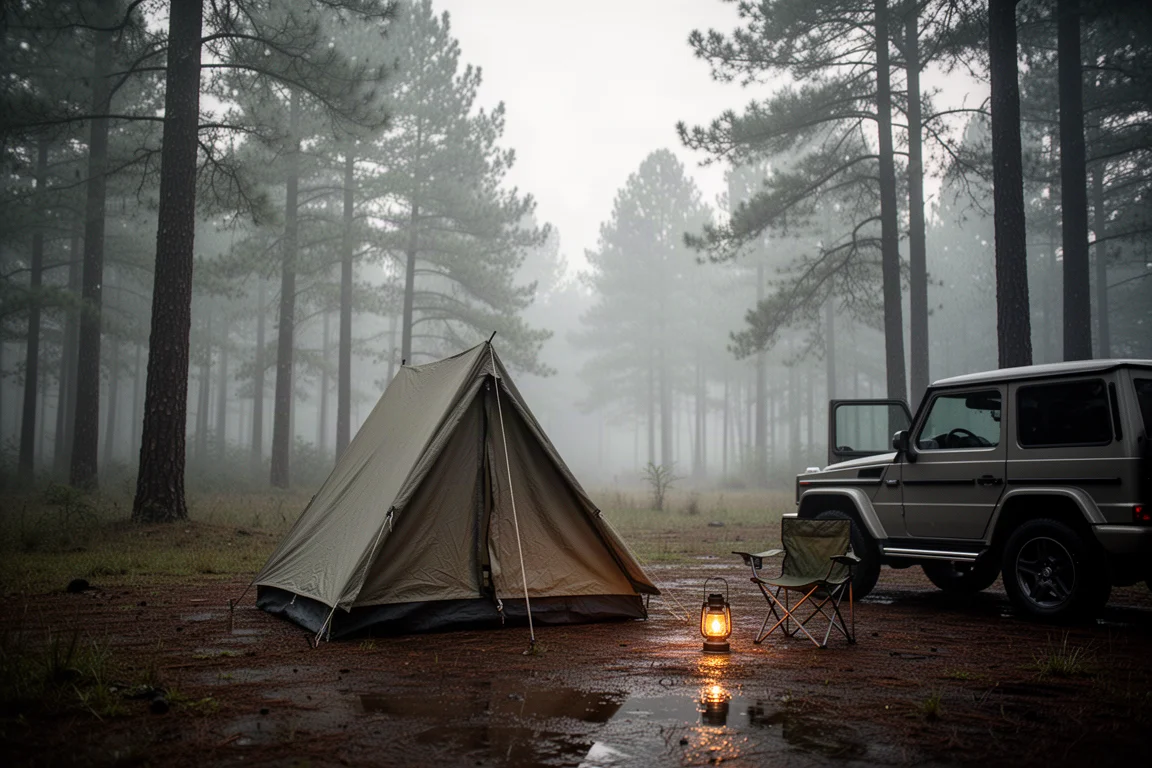
The short answer is that it mostly did. One small puddle formed near the door, the rest of the interior stayed dry, and the result counts as a genuine surprise for a tent at this price. What follows is a closer look at how it performed, where its limits sit, and who should actually consider buying it.
Who This Tent Is For
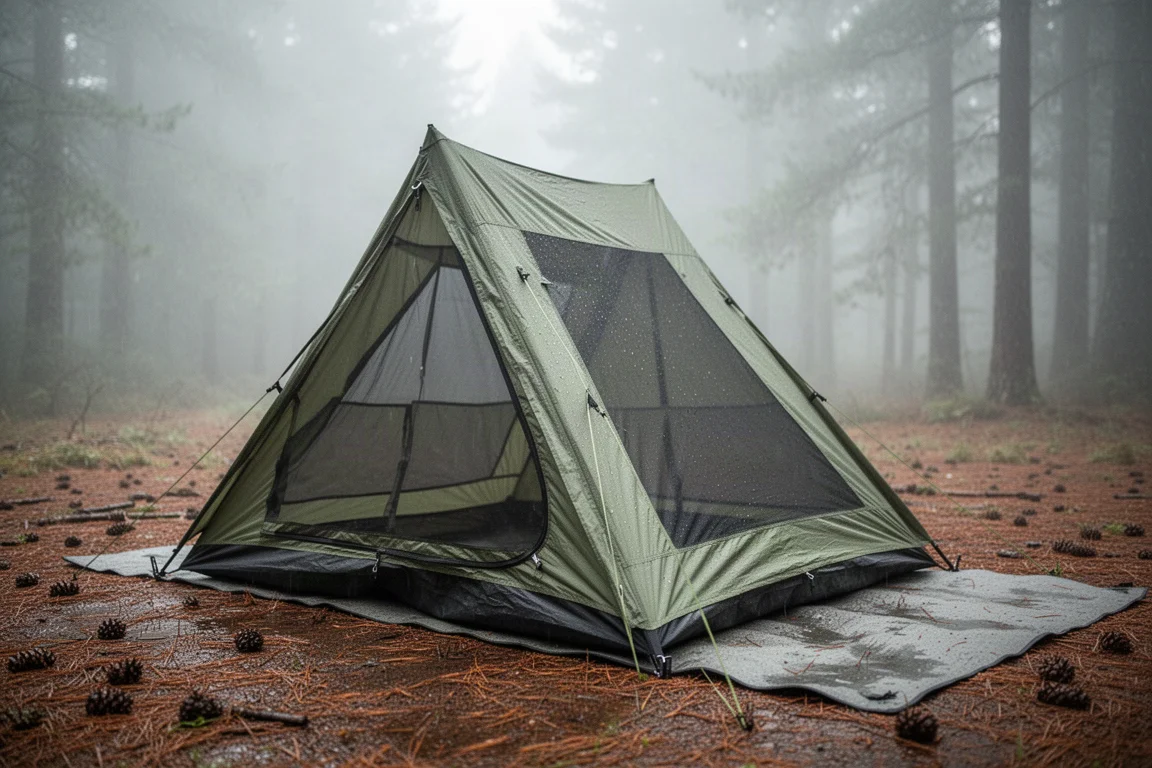
This is a fair-weather tent, and it is worth being direct about that. The body of the A-frame is almost entirely mesh, with no way to close it up against the cold. In cooler months it would be a genuinely uncomfortable place to sleep because airflow is the whole design idea.
That makes it a sensible fit for:
- Warm-weather campers who want ventilation more than insulation
- Campers heading out in settled, dry conditions
- First-time buyers who want a low-cost way to try tent camping
- Backyard and festival use, where the tent is close to a vehicle
It is not the right choice for shoulder-season trips, exposed ridgeline pitches, or anyone who expects to sleep warm in near-freezing temperatures.
Main Strengths
The headline strength is price. At roughly $60, the A-frame costs a fraction of what most name-brand tents command, and it still delivers a recognizable tent shape with a floor, a door, and guy lines.
The second strength is ventilation. Because the canopy is dominated by mesh, humid air escapes rather than condensing on the walls. On a warm night that translates into a noticeably fresher interior than a fully enclosed tent of the same size.
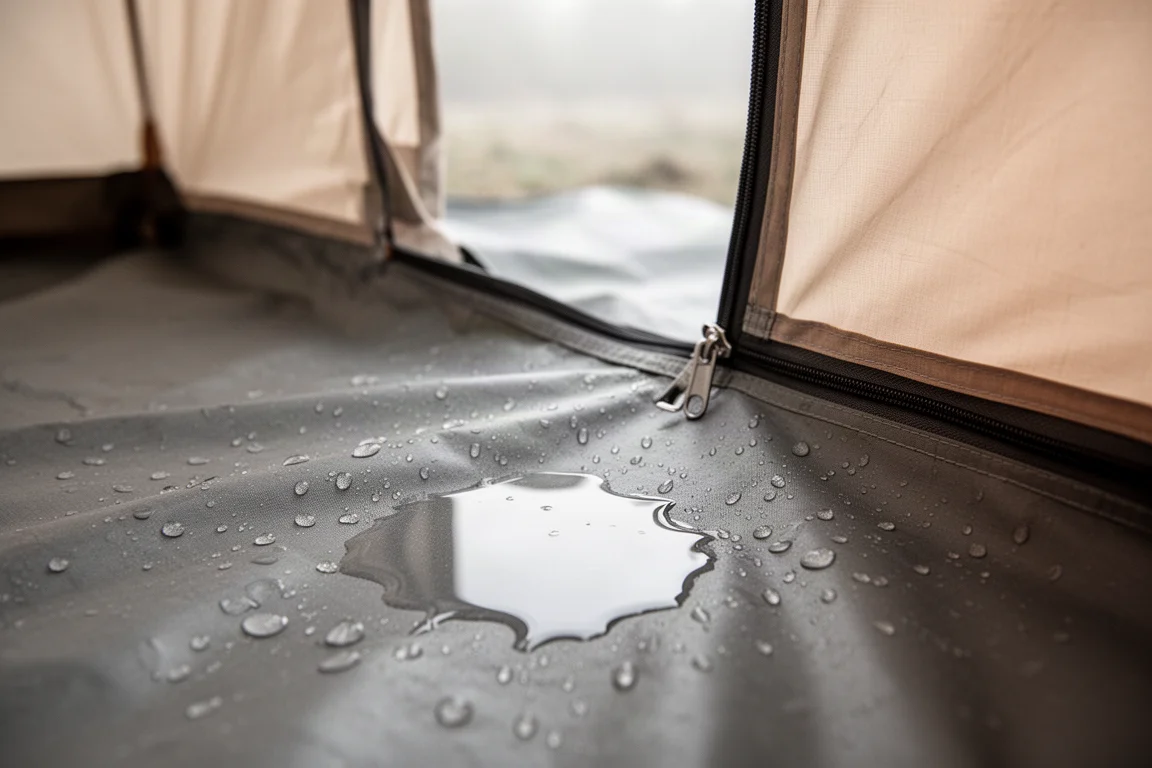
Third, it handled the wet test better than expected. After a full night of rain and wind gusts, the interior was dry apart from a small pool of water near the door zip. For a tent in this price bracket, that is a strong outcome and a clear pass.
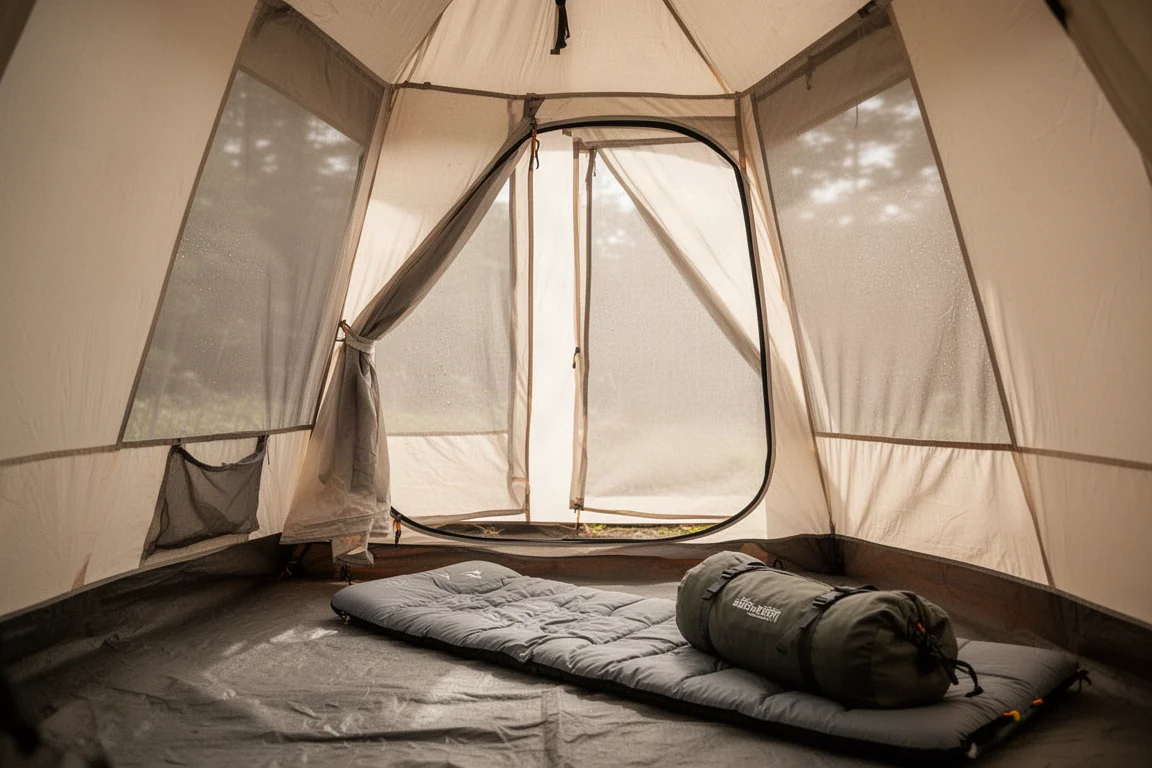
Setup was also refreshingly uncomplicated. The A-frame shape goes up quickly, which matters when the weather turns while you are still pitching.
Setup and Packing Notes
Pitching in bad weather is the real test of any tent, and the sensible approach here was to raise it under a tarp first so the fabric stayed dry, then move it into the rain once it was standing. That is a useful trick for any budget tent, because a dry pitch means you are not carrying extra moisture into the interior before the test even starts.
The A-frame form keeps the process simple. There are no complex pole sleeves or awkward crossings to work through, and the footprint is compact enough to fit into a small clearing between trees. Packing it away in the morning was equally straightforward once the fabric had been shaken out.
Wet-Weather Performance in an Overnight Rain Test
The conditions were not gentle. The forecast called for around a quarter inch of rain during the day, rain continuing overnight with a low near 34 degrees Fahrenheit, winds gusting up to 33 miles per hour, and a near-certain chance of precipitation. That is exactly the kind of night that exposes weak seams and poor coatings.
Rain fell through the evening and into the early hours, and the wind stayed strong enough to keep the canopy moving. The tent was left fully exposed, with no additional cover over it.
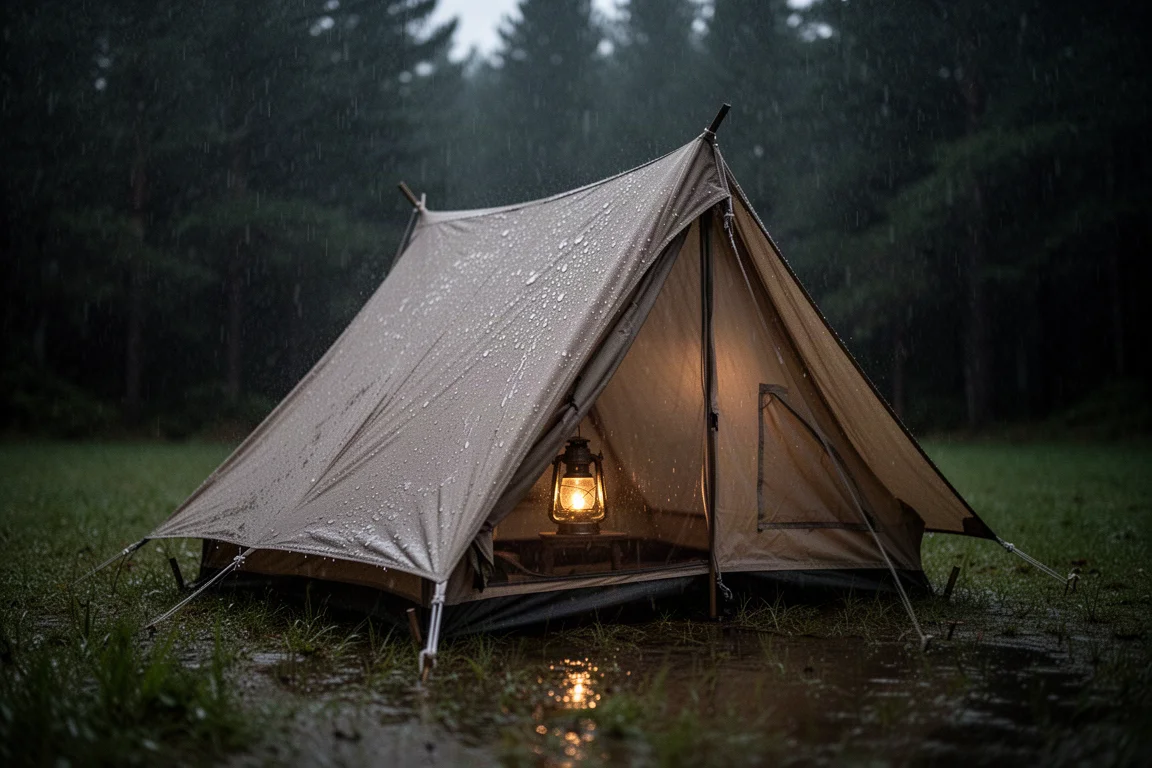
By morning the rain had stopped and the wind had eased. Inspection found a small puddle on the floor just inside the door, next to the zipper, and nothing else. The rest of the interior, including the sleeping area and the walls, was dry.
One honest caveat belongs here. A single tent passing a single wet night does not mean every Ozark Trail tent will behave the same way. The brand has a long history of reports about tents that struggle badly in sustained rain, and a good result from one model should not be read as a blanket endorsement of the whole range. Treat Ozark Trail tents as fair-conditions gear and you will rarely be disappointed.
Things to Consider Before Buying
The mesh-heavy body is the biggest limitation. You cannot seal this tent up, so it offers almost no protection from cold. In the lower 30s it would be an uncomfortable night, and in genuinely cold weather it would be worse than useless.
The small leak near the door is worth knowing about in advance. It is minor, but it is also exactly where gear tends to be stored and where you step in and out, so a small towel or a raised mat near the entrance is a practical precaution.
Public reviews for this tent also vary wildly in tone and reliability, which makes them a weak signal for judging weather performance. Real-world testing in actual rain says considerably more than a listing page does.
Finally, the tent is best treated as a good-conditions shelter. If your trips regularly involve exposed sites, heavy sustained rain, or cold nights, a more weather-focused tent is the better investment even at a higher price.
Buying Advice
At around $60, the Ozark Trail A-frame tent earns a qualified recommendation. It does what a budget tent is supposed to do in warm, reasonably settled weather, and it survived an overnight rain test with only a minor leak. That combination is rare at this price.
Buy it if your camping is seasonal, warm, and mostly dry, and if you want a low-risk way to get outdoors without spending several hundred dollars on a shelter. Buy it if ventilation matters more to you than insulation.
Skip it if you camp in cold conditions, chase storms, or need a tent you can button up tight on an exposed pitch. In those situations, the mesh body works against you and the low price stops being the deciding factor.
For anyone shopping on a tight budget, the practical move is to pair this tent with a separate groundsheet or tarp and to check the weather before you go. Used within its limits, it delivers far more than the price suggests.
Conclusion
The Ozark Trail A-frame tent is not a four-season shelter and it was never designed to be. What it is, at roughly $60, is a warm-weather tent that pitches easily, breathes well, and came through a wet, windy night with one small puddle near the door and a dry sleeping area.
That is a genuine pass, and a pleasant surprise from a brand that has earned plenty of skepticism over the years. Approach it as fair-conditions gear, keep an eye on the forecast, and it makes a sensible, low-cost starting point for warm-weather camping.
Product link
View more details for Ozark Trail A-Frame Tent
This product is mentioned in the review. Check the specifications, options, and compatibility before buying.
View more details for Ozark Trail A-Frame TentFurther reading
Related Reviews
Camping Tents
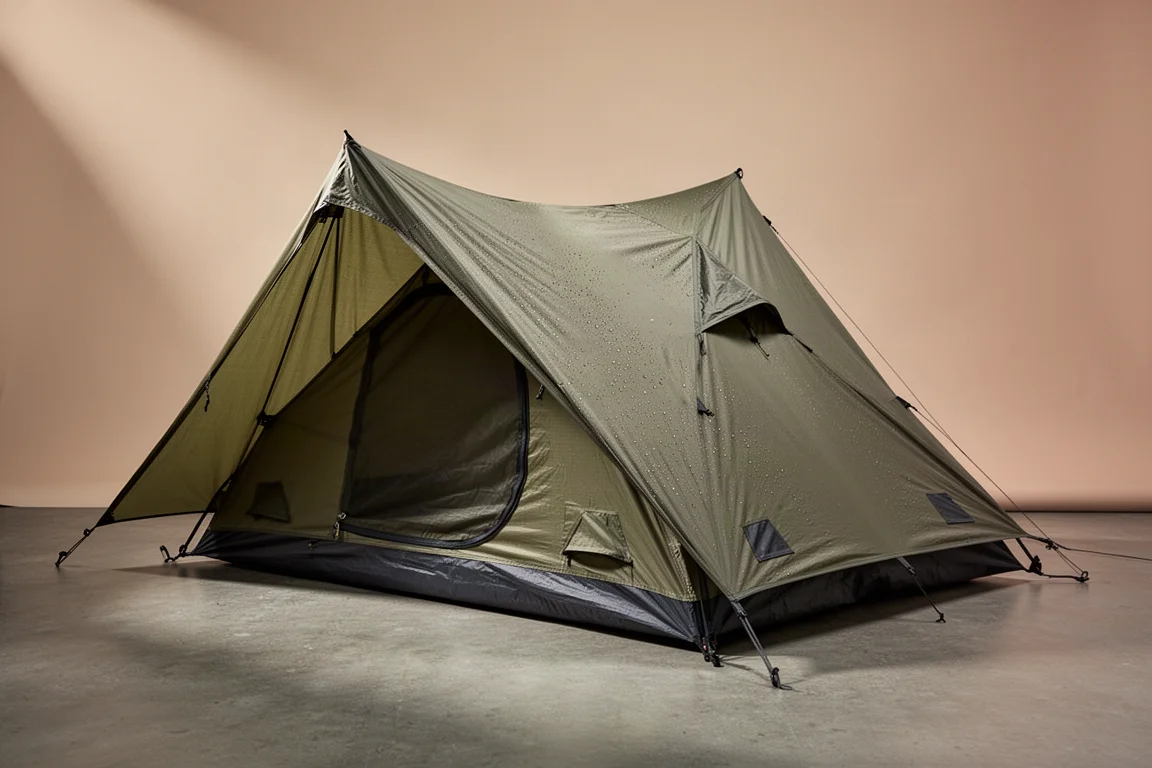
3F UL Gear Taiji Two-Person Tent Review: Field Waterproofing Results and Buying Advice
The Taiji pairs an attached fly with a removable inner, but sustained rain exposed untaped vent seams that need sealing before this shelter can be trusted.
Camping Tents
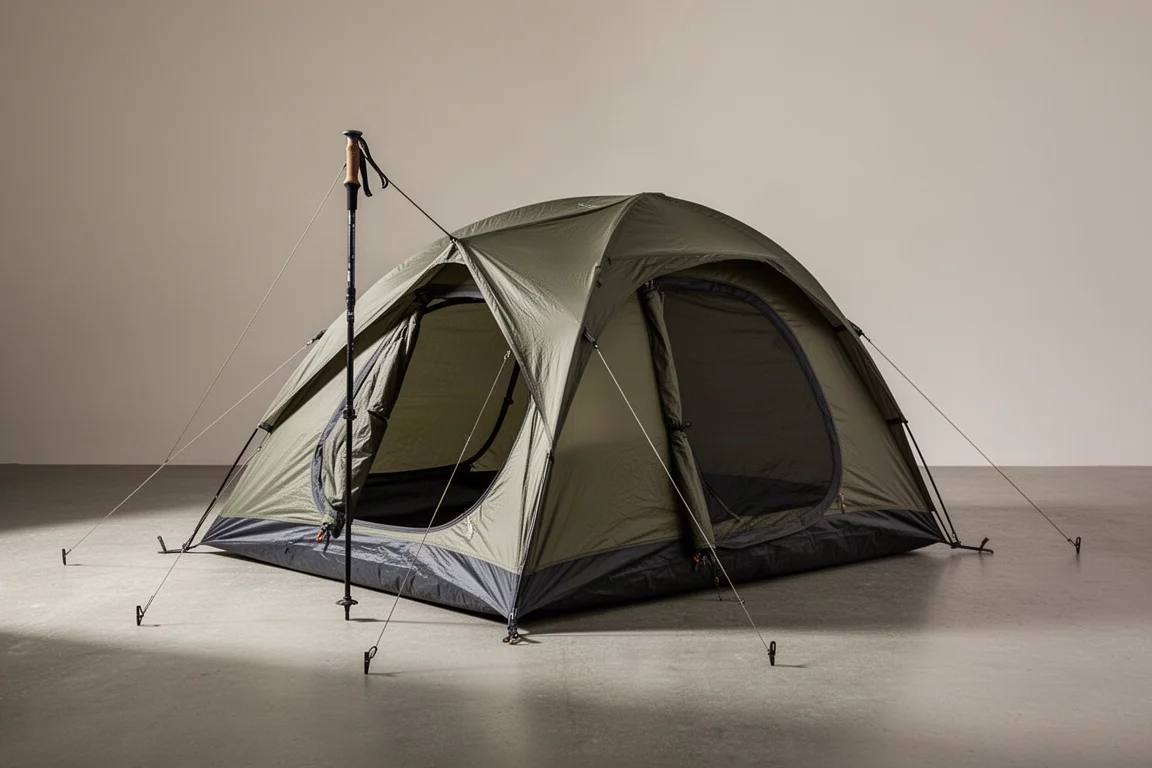
3FUL Gear Lanshan 2 Pro 4-Season Review: A Sub-$200 Single-Wall Trekking Pole Tent
An early look at the 3FUL Gear Lanshan 2 Pro 4-Season, covering its straightforward pitch, generous interior space, and the condensation and seam-sealing questions that come with any single-wall shelter.
Camping Tents
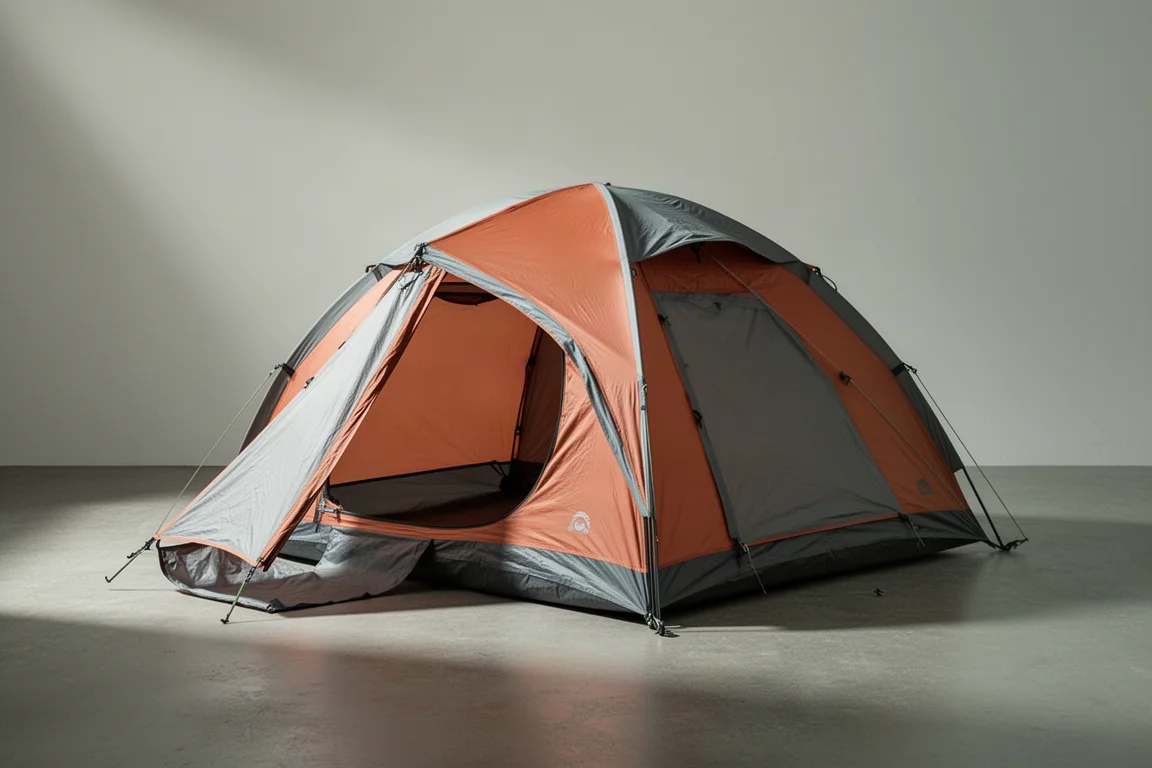
Alps Mountaineering Lynx 1-Person Tent Review: Big Value in a Small Budget Tent
A close look at the Alps Mountaineering Lynx 1-Person Tent, covering real interior dimensions, materials, setup time, ventilation limits, and who should buy it.