Camping Tents
Ozark Trail 10-Person Family Cabin Tent Review: Big Interior Space at a Budget Price
A budget 10-person cabin tent with an 88-inch peak height and generous floor space, plus the ventilation and weather resistance trade-offs worth understanding first.
Introduction
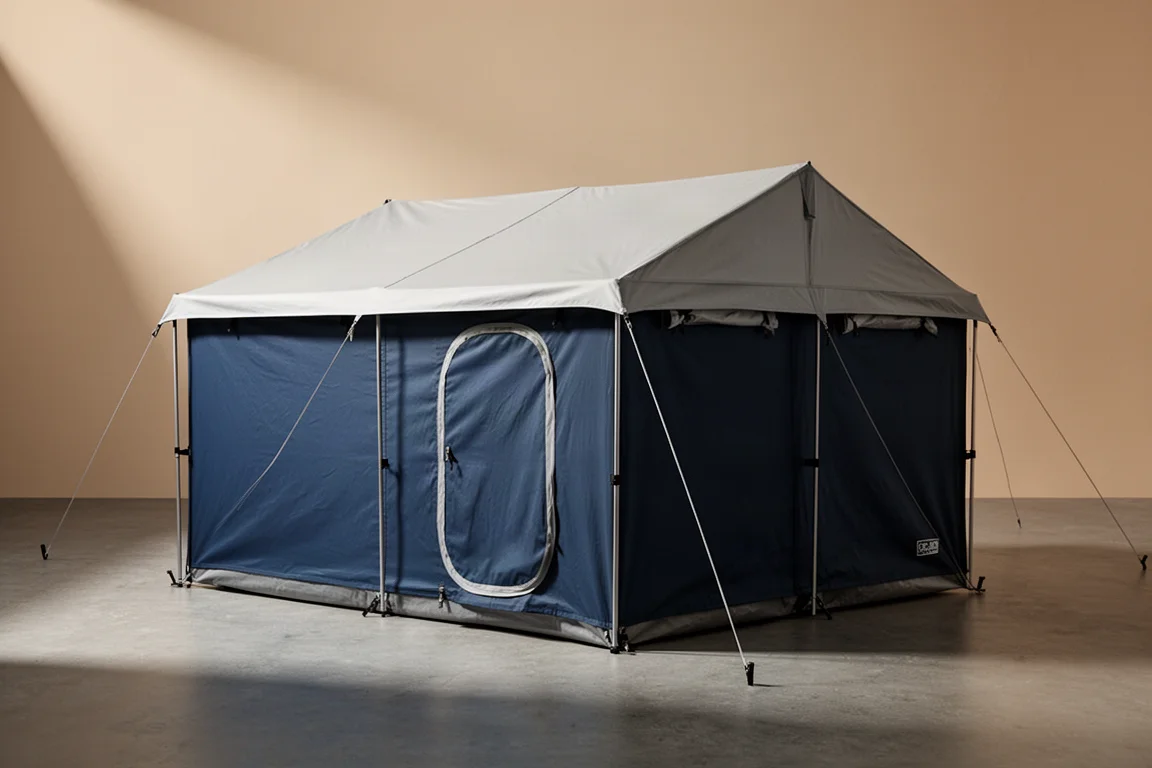
The Ozark Trail 10-Person Family Cabin Tent is a straightforward proposition: as much interior volume as a large family or group can reasonably want, at a price that sits far below what a 10-person cabin tent usually costs. It is sold through Walmart for slightly over $100, and for that money buyers get the tent, a set of poles, a carry bag, a gear loft, a room divider, 14 steel stakes, a tent floor repair kit, and warranty information.
What makes the design interesting is the shape. Cabin tents trade aerodynamic efficiency for livable space, and this one leans fully into that idea with vertical side walls and an 88-inch peak height. The trade-off is that the same shape, combined with a simple pole structure and a minimal rainfly, shapes almost everything else about how the tent performs.
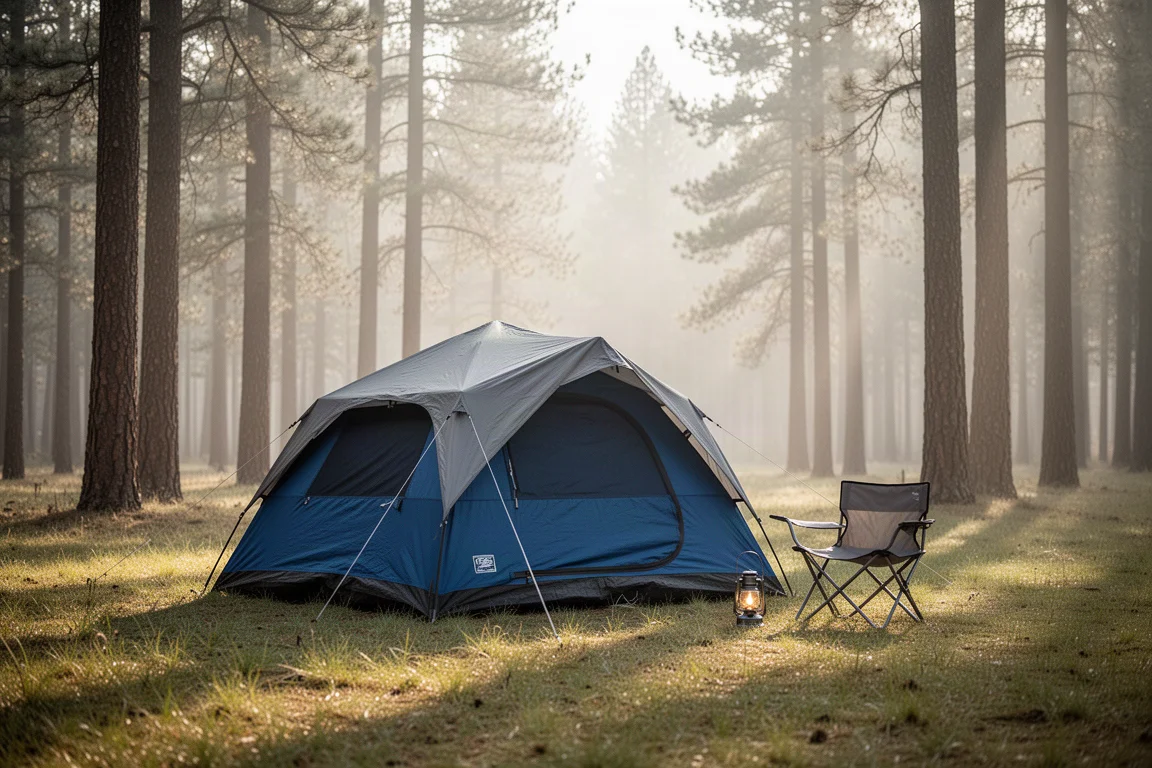
The tent measures about 13 feet 9 inches long and 9 feet 11 inches wide, which is slightly smaller than the marketed 14 by 10 feet. Packed down, it occupies roughly 29 by 18 by 13 inches and weighs around 30 pounds for the complete kit.
Who This Tent Is For
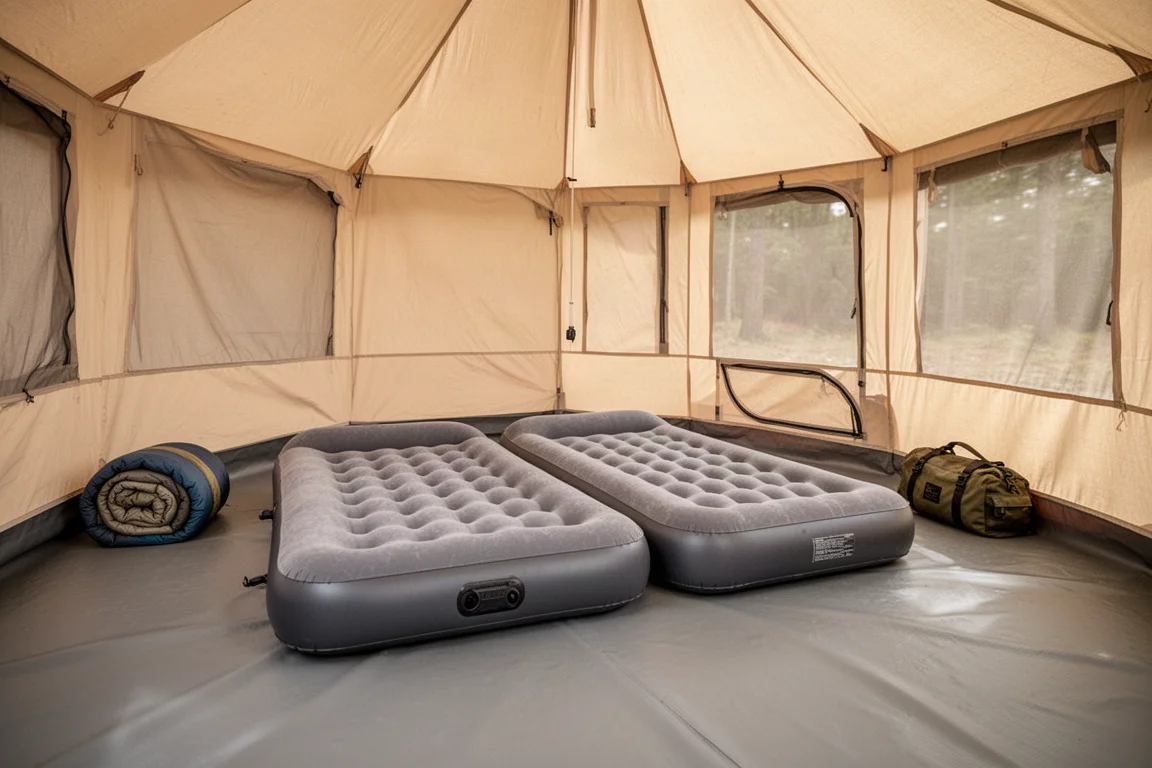
This tent suits campers who expect fair weather and prioritize space over weatherproofing. Ten single sleeping pads will fit inside, though that arrangement is close to shoulder to shoulder with only a narrow strip down the middle left for gear. Four queen-sized mattresses also fit, but they consume essentially the entire floor and leave almost nowhere to store bags.
The room divider splits the interior into two rooms, and each room can hold two queen beds. Because there is only one door, only one of those rooms has direct access, while the other is served by windows alone. The divider is also sheer rather than fully opaque, and it does not run the full length of the tent, leaving gaps at both the top and the bottom.
For a group that wants a shared sleeping area with a separate space for gear or changing, that layout works. For anyone camping in sustained rain or exposed, windy sites, it is worth reading the sections below before deciding.
Main Strengths
The clearest strength is price. For a tent of this size, it is remarkably inexpensive, and it is hard to find another brand offering a 10-person tent at a comparable figure. It also arrives with a gear loft and a room divider included, which are often sold separately on budget tents.
The second strength is interior height. An 88-inch peak means most adults can stand upright anywhere inside, and the lowest points at the four corners still measure about 65 inches. Combined with vertical walls, that produces a genuinely roomy feel rather than a tapered dome interior.
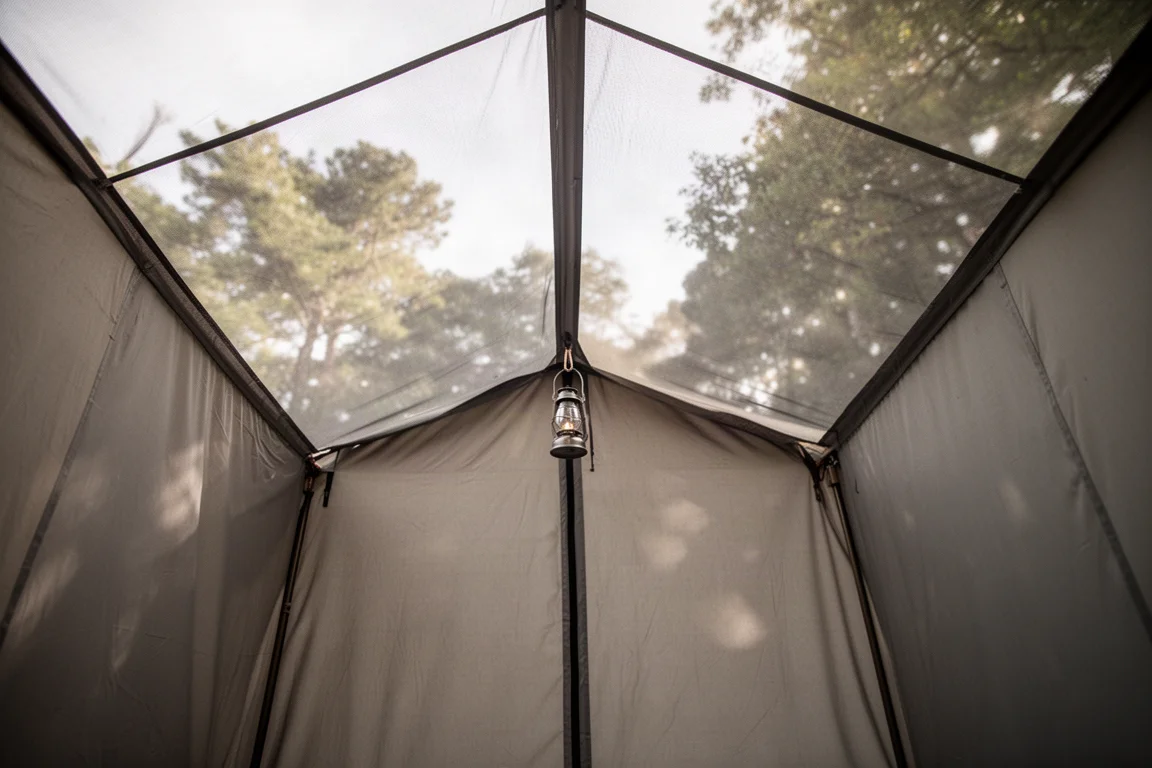
Storage is minimal for the size, with only two pockets measuring about 13 inches by 6 inches, plus the gear loft and a single lantern loop at the very top of the ceiling. The loft and lantern loop sit high enough that shorter users may need help reaching them.
Setup is also reasonable for a tent this large. With two people, the full process takes roughly nine and a half to ten minutes, and packing it away takes about six to seven minutes. Working alone roughly doubles the setup time, and getting the rainfly into position solo is the main sticking point for shorter users.
Setup and Packing
The structure is simple by design. Three fiberglass poles form the roof, six wall poles support the sides, and there are eight pre-attached guy lines plus 14 stakes in total, six for the tent body and eight for the guy lines.
The poles themselves are not colour-coded, but the sleeves are. Two green sleeves take the longer diagonal poles and one blue sleeve takes the shorter pole, which removes most of the guesswork. After the roof poles are threaded and connected to the elbow connectors, the six wall poles attach to the same connectors and to pins at the far end, and finally the fly goes on and the whole tent gets staked out.
The fiberglass roof poles are flexible, and the roof can be awkward to prop up single-handed, so this is realistically a two-person tent to pitch. The steel wall poles should be dried thoroughly before storage, since rust was visible on one of them after use. The carry bag is serviceable and can be expanded for easier packing, and getting the tent, poles and accessories back inside it is not difficult.
Living Space and Ventilation
Ventilation is where the design makes its biggest compromise. The ceiling carries a large mesh panel, and with the rainfly removed on a dry night, the tent opens up for stargazing. That is the setup the tent is happiest in.
The five identical windows measure roughly 43 inches by 25 inches, with two running along the length of the tent and the rest distributed around the body. Each window uses two zippers, which are noticeably noisy but generally snag-free, and each has a bug net. The mesh openings are fairly large, so this is not no-see-um mesh, though it keeps larger insects out.
The single D-shaped door measures about 54 by 39 inches, with roughly 62 inches from the floor to the top of the opening, so most adults will duck slightly on the way in. The bug net covers only half the door, and the door can be zipped from both inside and outside. The door zipper is the weakest point in daily use: it snags on the outside rain cover almost every time it is opened.
Once rain starts, ventilation effectively stops. There are no ground vents and no roof vents anywhere on the tent, so every window and the door must stay closed to keep water out. With the rainfly in place, only a minimal amount of air moves through the gap between the ceiling mesh and the fly. The tent also has no dark room treatment, so it stays bright through the day.
Things to Consider Before Buying
Weather resistance is the most important consideration. In about an hour of rain, roughly 20 minutes moderate and 40 minutes light, water began leaking after around 15 minutes through the seam that joins the blue body fabric to the bathtub floor. That seam is not taped or sealed. Water also soaked through the blue fabric itself, and after the full hour there was a noticeable amount of leakage.
Wind performance is likely to be limited as well. The cabin shape is not aerodynamic, the pole structure is simple, there are only eight guy lines, and the included stakes are ordinary rather than heavy duty. There is also no vestibule, so footwear or gear left outside the door will get wet in rain.
Build quality is the other area to weigh. The tent and rainfly use 68D coated polyester, and the fabric feels slightly tacky to the touch. Loose threads appear throughout, including at the guy line attachment points where the stitching holes are relatively large, and the mesh is inconsistent in places. The flooring feels like standard polyethylene bathtub material and is not especially thick. There is one ePort at the bottom of the tent with no zippered or hook-and-loop closure, though no leaking was observed through it.
Buying Advice
The honest framing here is that this tent delivers exactly what its price suggests: a very large, very affordable shelter that works well in dry conditions. In fair weather, the rainfly can come off, every window can be opened, and the result is a comfortable, airy space with enough headroom to stand and move around normally.
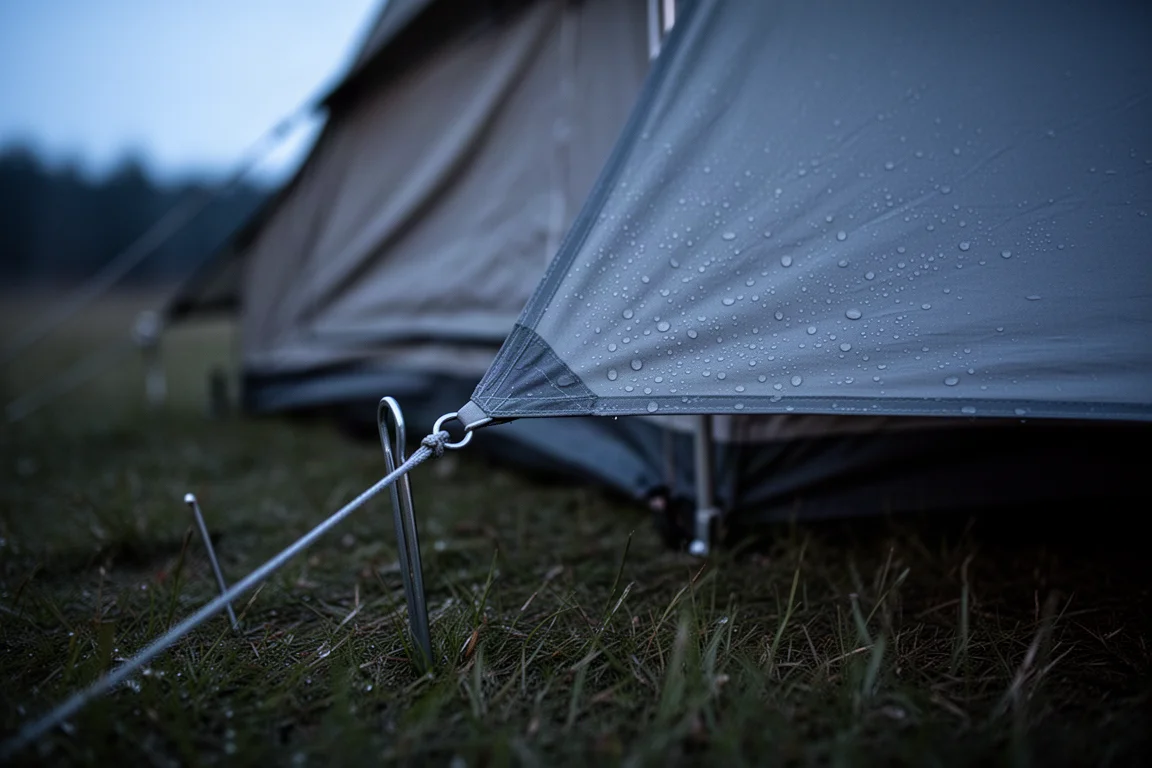
If the forecast is clear or the trip is short and casual, this is a sensible, low-cost way to sleep a large group. If rain, wind or multi-season durability is part of the plan, the leaking seam, the closed-up ventilation in wet weather and the loose stitching are real limitations to budget for, either by planning around them or by looking at a more weather-resistant tent. Buyers who simply want maximum space for the least money and are willing to accept the compromises will find the value proposition clear.
Conclusion
The Ozark Trail 10-Person Family Cabin Tent gets the big things right for its price: an 88-inch peak, vertical walls, room for ten sleeping pads or four queen mattresses, and a two-person setup time of under ten minutes. It also comes with a gear loft and room divider that many budget tents leave out.
The trade-offs are equally clear. One door, almost no ventilation once the windows are closed, leakage within about 15 minutes of light rain, and finish quality that includes loose threads, a sticky fabric feel and a snagging door zipper. For dry-weather camping on a tight budget, it is a practical and genuinely spacious option. For anything wetter or windier, plan for the compromises or consider a tent built with more weather protection in mind.
Product link
View more details for Ozark Trail 10-Person Family Cabin Tent
This product is mentioned in the review. Check the specifications, options, and compatibility before buying.
View more details for Ozark Trail 10-Person Family Cabin TentFurther reading
Related Reviews
Camping Tents
3F UL Gear Taiji Two-Person Tent Review: Field Waterproofing Results and Buying Advice
The Taiji pairs an attached fly with a removable inner, but sustained rain exposed untaped vent seams that need sealing before this shelter can be trusted.
Camping Tents
3FUL Gear Lanshan 2 Pro 4-Season Review: A Sub-$200 Single-Wall Trekking Pole Tent
An early look at the 3FUL Gear Lanshan 2 Pro 4-Season, covering its straightforward pitch, generous interior space, and the condensation and seam-sealing questions that come with any single-wall shelter.
Camping Tents
Alps Mountaineering Lynx 1-Person Tent Review: Big Value in a Small Budget Tent
A close look at the Alps Mountaineering Lynx 1-Person Tent, covering real interior dimensions, materials, setup time, ventilation limits, and who should buy it.