Camping Tents
Outdoor Vitals Forty 1P Tent Review: A Lightweight Trekking Pole Shelter
A single-wall trekking pole tent that pitches with the poles you already carry, with long stake points, a true rectangular floor, and removable wind panels.
Introduction
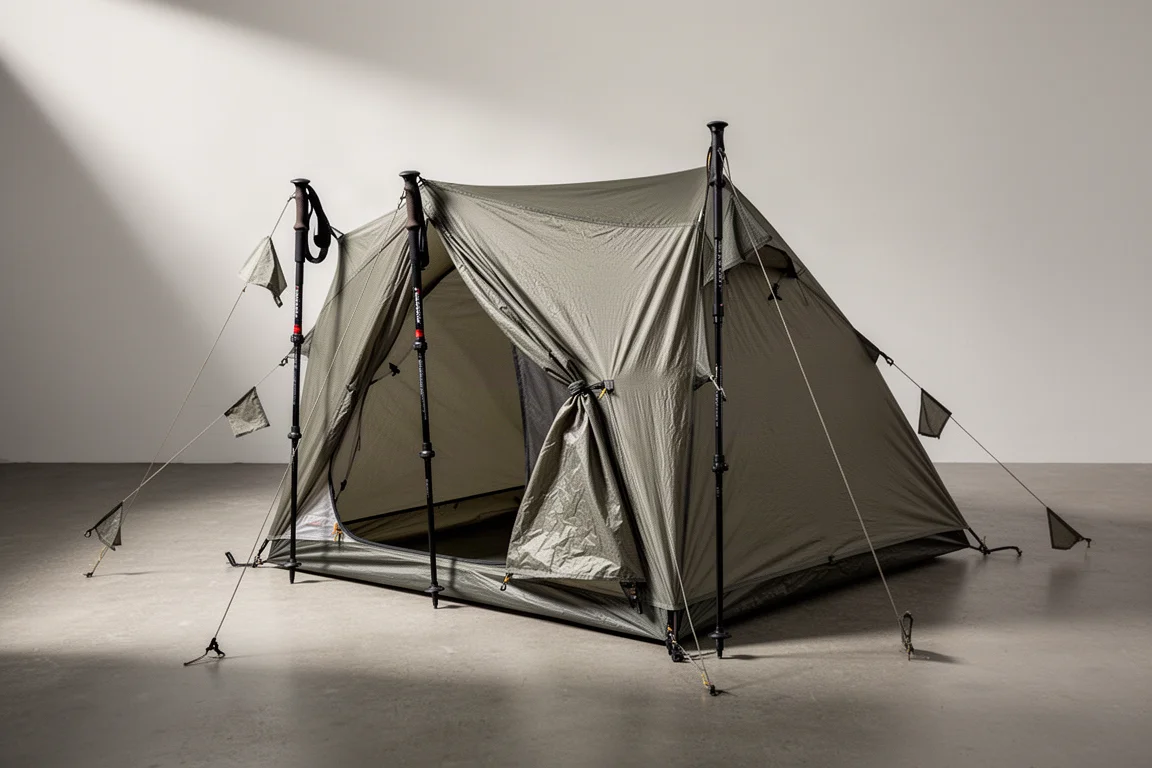
The Outdoor Vitals Forty 1P is a single-wall trekking pole tent. Rather than packing dedicated tent poles, it pitches using the trekking poles you are already carrying on the trail, which keeps the packed kit minimal and the setup quick once you have done it a few times.
Outdoor Vitals developed the Forty across roughly two years of field use, including desert terrain, high country basins, the Appalachian Trail, and the Pacific Northwest. The design brief was deliberately narrow: make it as light and minimal as possible, then add back only the features that proved genuinely useful in the field.
The shelter comes in a one-person version and a two-person version. The one-person model uses an offset pole structure with a single door and vestibule. The two-person version drops the offset layout and adds double vestibules, so the two sizes behave differently in practice.
Who this product is for
The Forty 1P makes the most sense for backpackers who already hike with trekking poles. You are carrying the poles anyway, so using them as the shelter structure removes the weight and bulk of a conventional pole set without adding anything back to your pack.

If you do not normally hike with trekking poles, the honest answer is either to start using them or to wait. Outdoor Vitals plans a carbon fiber pole that can be used in place of trekking poles, offered as an add-on, though no firm timeline has been given. Anyone who needs a shelter that stands without stakes, or that can be pitched on rock and hard ground with no place to anchor a guy line, is better served by a freestanding design.
It also suits hikers who would rather carry a slightly heavier shelter that holds up in weather than chase the lowest possible weight. The one-person model is listed at about 25.5 ounces, and Outdoor Vitals is upfront that a couple of tents out there are an ounce or two lighter.
Main strengths
The headline number is weight. The one-person version comes in at roughly 25.5 ounces, which puts it comfortably in ultralight territory for a shelter with a full floor and vestibule.
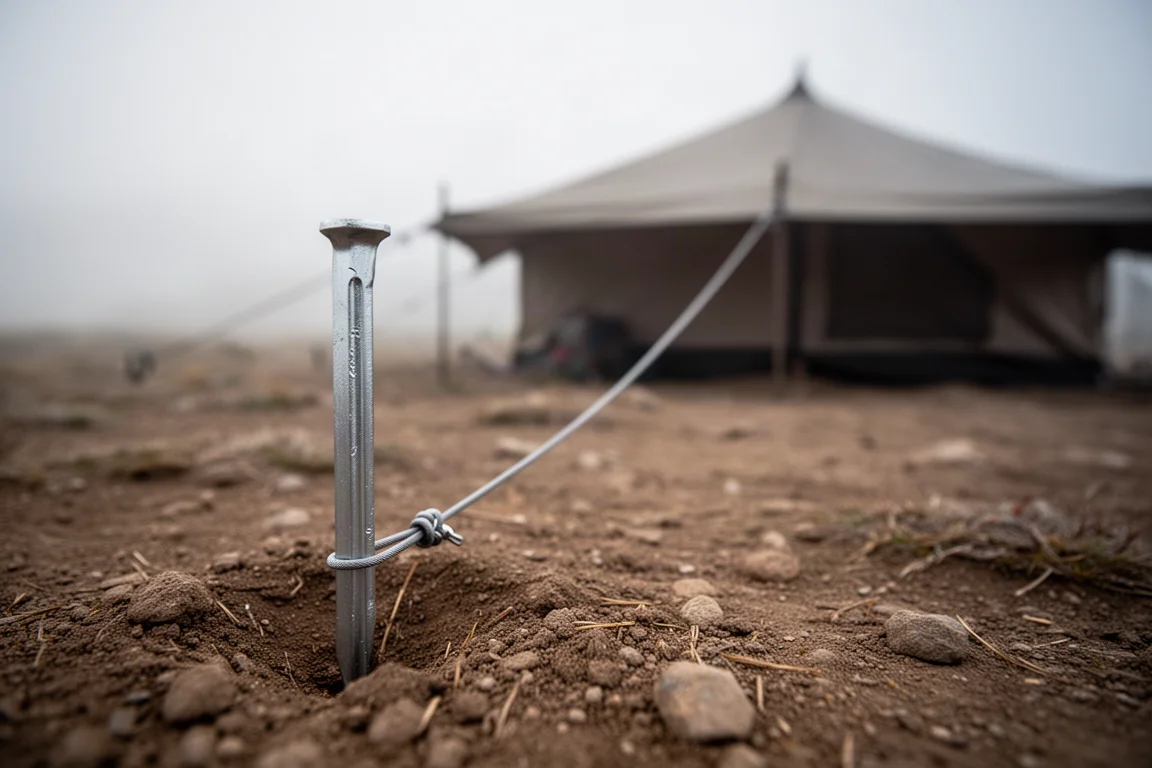
The second strength is how the tent anchors. Each critical stake point is reinforced with a long stake, around 18 inches, which means you can drive that stake almost anywhere within the reinforced section and still secure the shelter. Shorter ultralight designs often trim that material away, and it is one of the details that separates the Forty from the lightest tents on the market.
Outdoor Vitals also chose not to taper the floor, so there is no official head end. You can sleep with your head uphill or downhill depending on the terrain and the view without fighting the shape of the shelter. Both trekking poles cant outward slightly as well, which opens up extra elbow room once you are inside.
The offset pole structure is the other defining feature of the one-person model. One pole sits higher than the other, a layout that originally reduced weight by using less fabric. Over the course of field testing the poles were extended, so the offset remains while the interior keeps ample headroom.
Pitch and Setup Flexibility
Setup is straightforward. Stake out the four corners loosely, insert the trekking poles, pull out the two sides, then work slowly around the shelter snugging everything up until you have a pitch you are happy with. Six stakes are required to pitch it properly.
One of the best parts of a trekking pole tent is how much control you have over the pitch height. If condensation is likely, pitch the poles higher and stake out for more airflow underneath. If you are expecting real cold, sink the poles a few centimetres for a lower, tighter profile.
The side pull-outs serve two purposes: they add headroom and interior space, and they help manage wind load so the wall does not fold in on you. The recommendation is not to crank them tight like a guy line. Let the fabric sit out a little and take load with the wind. Some hikers run a stick through them and pull upward purely for extra headroom.
Removable wind panels are another practical touch. They ship with the tent and are also sold separately, and you can reposition them around the exterior wherever the wind is hitting at that moment.
The door has a section that unclips, letting both sides peel back for a clean opening. On the two-person version there would be one on each side.
Weather Resistance and Materials
The fabric is a 15-denier ripstop nylon, siliconized for waterproofing and PU coated. It is a light material, but it is built for exposed places. Outdoor Vitals designed the shelter to distribute wind load rather than fight it head-on, which matters when storms arrive quickly at altitude.
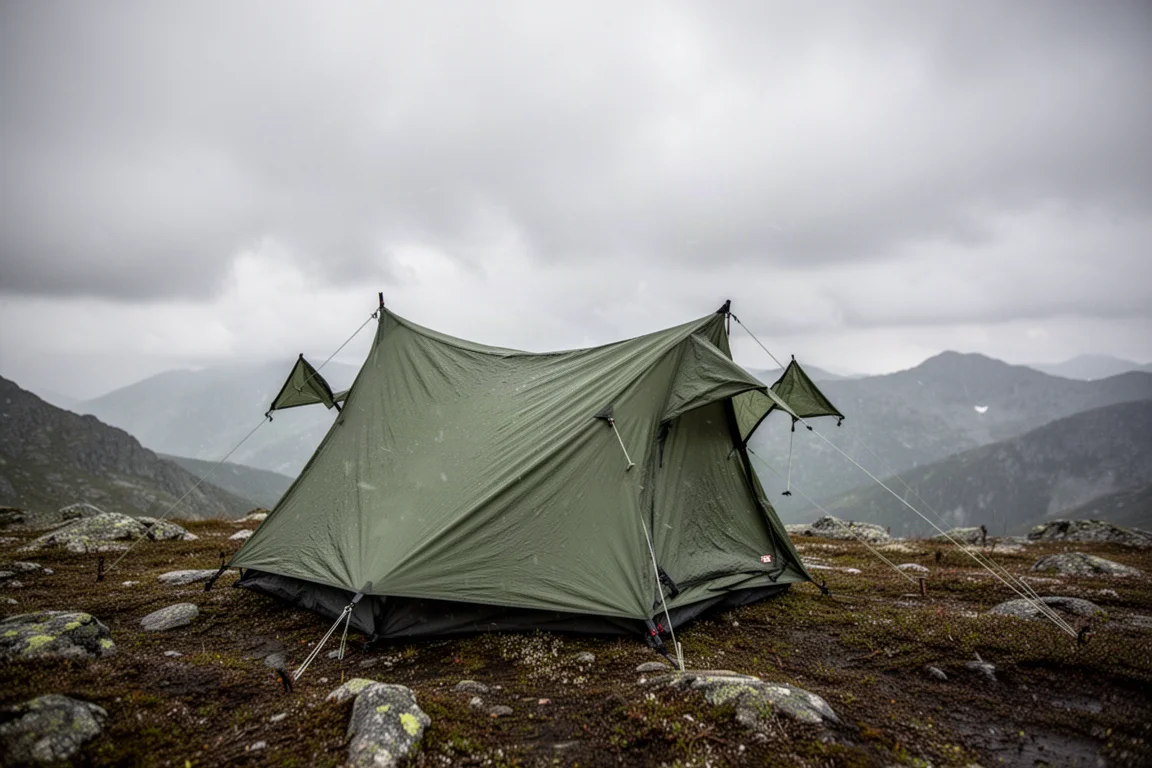
Because this is a single-wall tent, ventilation is the detail worth understanding before you buy. One side carries a large mesh wall panel, and the vestibule deliberately does not hug the ground, so air moves through the shelter. Each end also has mesh between the wall and the bathtub floor. Combined with the ability to pitch higher or lower, that gives you real control over condensation.
Interior Space and Storage
The floor is a true rectangle, measuring 32 inches wide at both ends. That is enough to fit a 25-inch wide sleeping pad with room to spare around it, so you are not wedged into a coffin shape. In practice there is enough space to fold a thick 3.5 inch pad over and sit on it while still having headroom above you, and enough room to stretch or move around inside.
Storage is simple. There is one pocket on the far side, positioned in the middle. Beyond that, the vestibules do the work, and they are genuinely large for a one-person shelter, which means most gear can stay outside the sleeping area.
Outdoor Vitals also includes a clip that attaches to the bottom corner of the tent and squares off the interior. It ships with every tent but is not installed by default, and it is not necessary for the shelter to function. It is there for anyone who prefers a cleaner look inside or who wants to stop the walls moving in low wind when the floor is empty.
Things to consider before buying
- The tent needs trekking poles to pitch. The carbon fiber pole option is planned as an add-on and no date has been confirmed.
- It is a single-wall shelter, so ventilation depends on how you pitch it. In humid conditions you will want to pitch higher and use the airflow the design provides.
- The offset pole structure belongs to the one-person model only. The two-person version uses a different layout with double vestibules.
- At about 25.5 ounces, it is not the absolute lightest shelter available. A couple of tents are an ounce or two lighter, but they typically give up stormworthiness and the long reinforced stake points.
- There is no official head end, which is a benefit for flexibility but means you may want to think about orientation when you choose a site.
Buying advice
The one-person Forty is listed at $280, with the two-person version expected to come in around $25 to $30 more. It is available at launch.
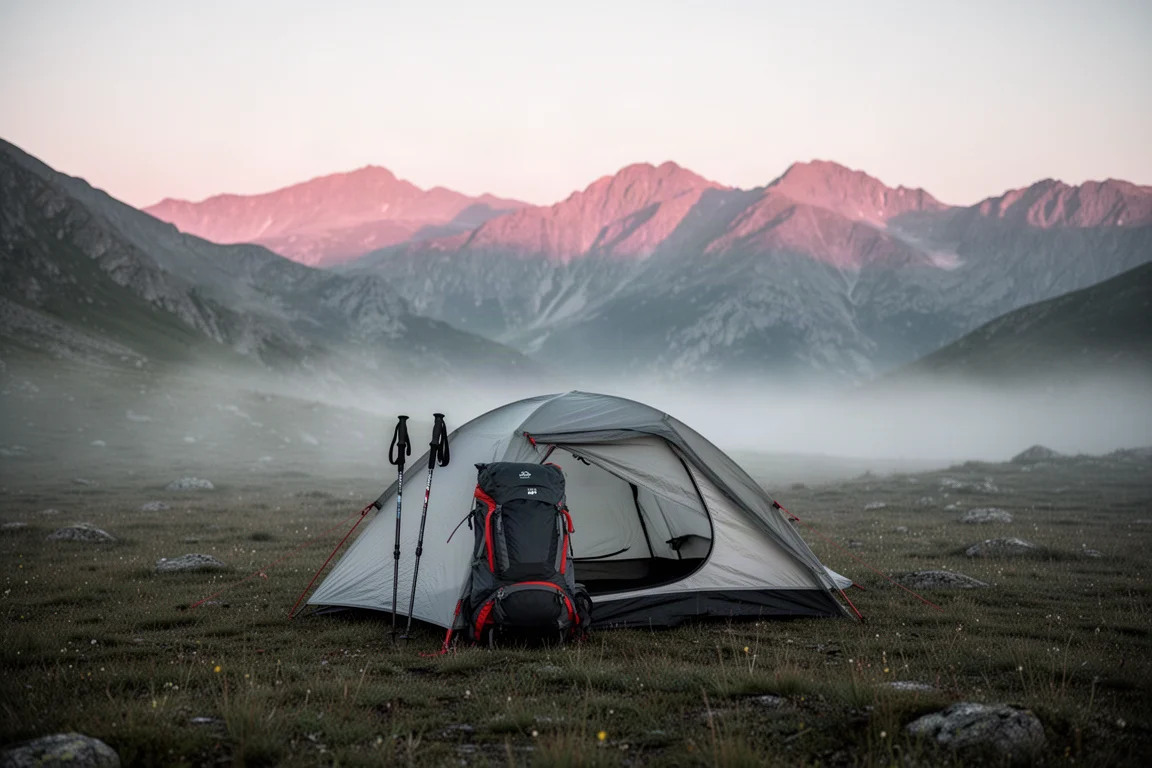
That price lands in a sensible place for a shelter that pitches with gear you already carry and still holds up in exposed terrain. If you are already hiking with trekking poles and want a fast, weather-capable single-wall tent with a rectangular floor and generous vestibule space, the Forty 1P is an easy one to shortlist.
If you do not use trekking poles, need a freestanding pitch, or are optimising purely for the lowest weight on the scale, look elsewhere. For everyone else, the Forty 1P is a well-considered balance of low weight, real interior room, and the details that matter when the weather turns.
Conclusion
The Outdoor Vitals Forty 1P is a trekking pole shelter built around a clear idea: strip the design back to the minimum, then add back only what two years of field testing proved necessary. The result is a roughly 25.5 ounce single-wall tent with long stake points, an offset pole structure for headroom, a true rectangular floor, removable wind panels, and large vestibules.
It rewards hikers who already carry trekking poles and who value stormworthiness over shaving the final ounce. If that describes the way you hike, the Forty 1P is worth a close look.
Product link
View more details for Outdoor Vitals Forty 1P Tent
This product is mentioned in the review. Check the specifications, options, and compatibility before buying.
View more details for Outdoor Vitals Forty 1P TentFurther reading
Related Reviews
Camping Tents
3F UL Gear Taiji Two-Person Tent Review: Field Waterproofing Results and Buying Advice
The Taiji pairs an attached fly with a removable inner, but sustained rain exposed untaped vent seams that need sealing before this shelter can be trusted.
Camping Tents
3FUL Gear Lanshan 2 Pro 4-Season Review: A Sub-$200 Single-Wall Trekking Pole Tent
An early look at the 3FUL Gear Lanshan 2 Pro 4-Season, covering its straightforward pitch, generous interior space, and the condensation and seam-sealing questions that come with any single-wall shelter.
Camping Tents
Alps Mountaineering Lynx 1-Person Tent Review: Big Value in a Small Budget Tent
A close look at the Alps Mountaineering Lynx 1-Person Tent, covering real interior dimensions, materials, setup time, ventilation limits, and who should buy it.