Insulated Jackets
Outdoor Research SuperStrand LT Hoodie Review: Down-Like Warmth at 10.9 Ounces
A 10.9-ounce synthetic insulated hoodie with down-like warmth, strong breathability, and a few hood and pocket compromises worth knowing about.
Introduction
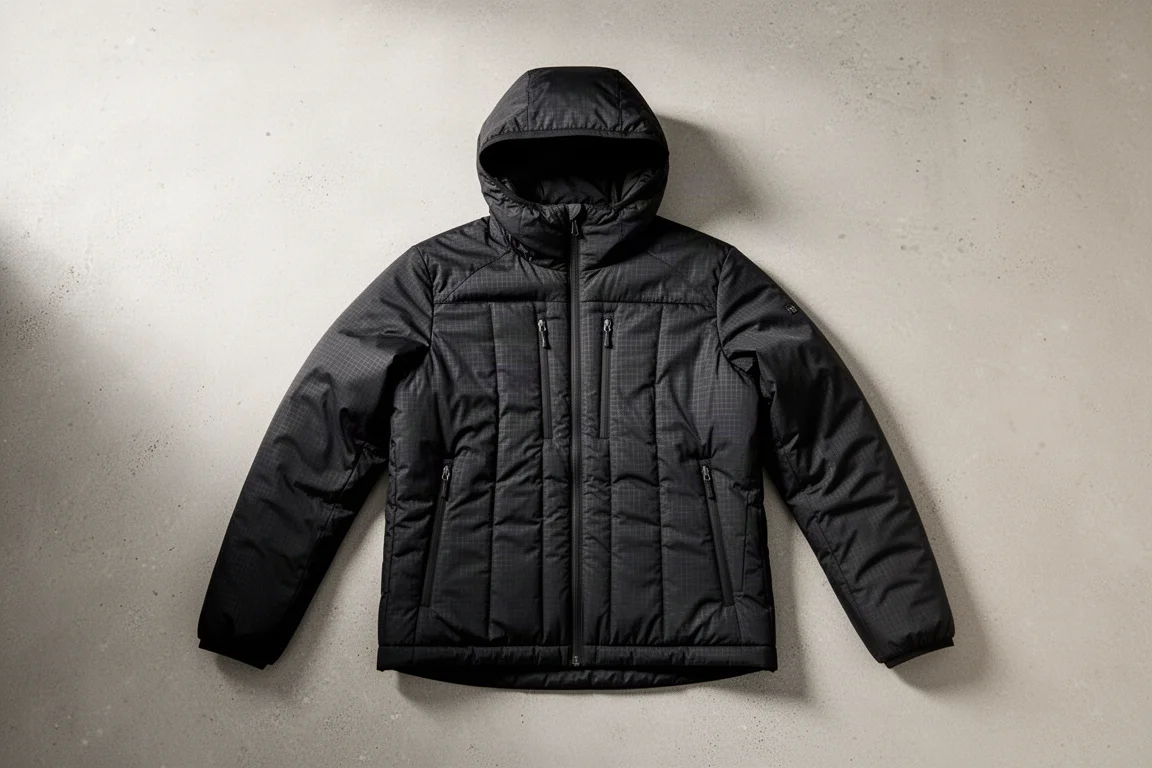
The Outdoor Research SuperStrand LT Hoodie is a lightweight synthetic insulated jacket built around a new fill the brand calls Vertical X SuperStrand. It weighs 10.9 ounces, uses a 12 denier ripstop nylon shell inside and out, and retails for $220. The headline is not the number on the scale but the way the jacket behaves: this is a fully synthetic piece that delivers warmth, loft, and packability much closer to down than most synthetic fills manage, while keeping the wet-weather advantage that down does not have.
This review looks at who the jacket suits, where it performs best, and the handful of design decisions worth understanding before you commit.
Who This Jacket Is For
The SuperStrand LT Hoodie is aimed at people who want real warmth at minimal weight: hikers, backpackers, and campers who count ounces but still want a layer that works from late summer evenings through winter trips. It is available in men’s and women’s versions, with both hooded and hoodless options, in sizes small through XXXL, and in blue, black, gray, and yellow. The hoodless version costs roughly $20 less than the hooded one.

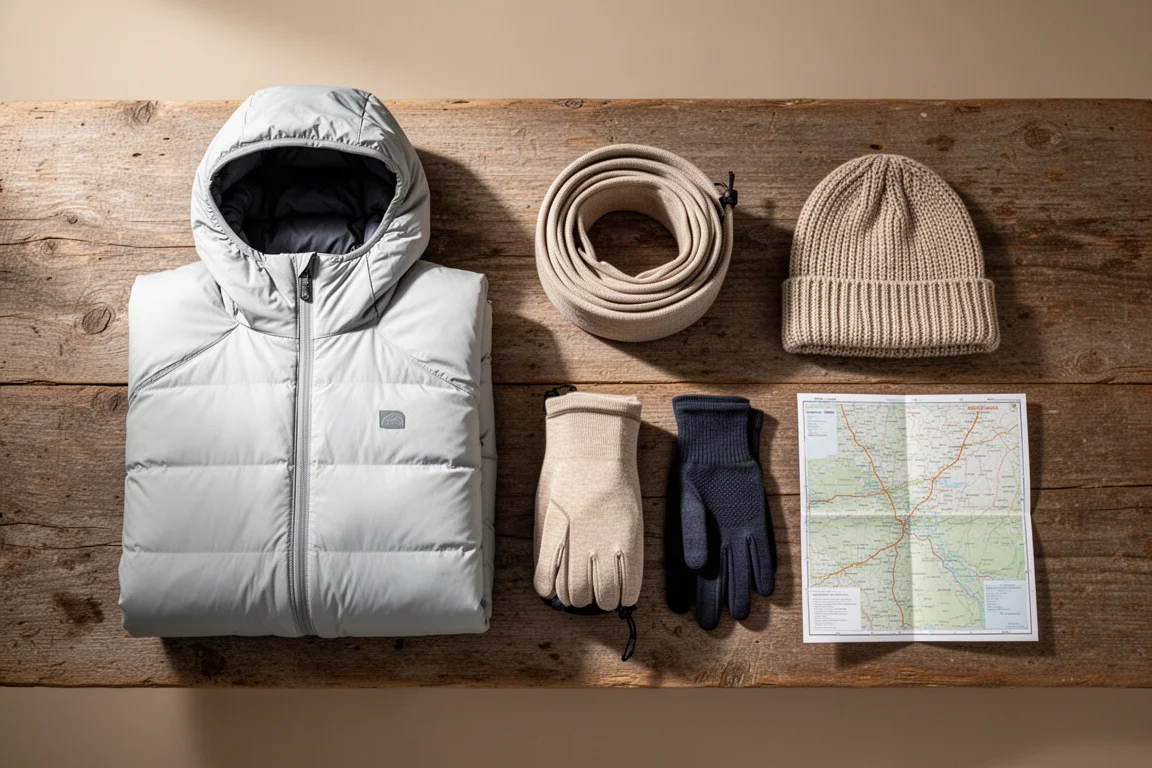
Because the jacket layers cleanly over a t-shirt or a merino base layer, it works in two distinct roles. Worn on its own it handles cool days and brisk mornings. Worn under a shell or over a midweight base layer it covers genuinely cold conditions, which makes it a versatile piece rather than a single-season specialist.
Main Strengths
Warmth and Weight That Rival Down
The fill is 100 percent polyester, made from lofted strands designed to mimic the shape and behavior of down clusters. In practice the gap between this and down is hard to detect. Extended testing put the jacket at comfortable temperatures down to about 40 degrees Fahrenheit over nothing more than a t-shirt, and around 30 degrees over a merino wool long sleeve while moving. Sitting still at 30 degrees, adding a midweight merino base layer kept things comfortable.
For a jacket this light, that is a match for similar-weight down jackets, and some heavier down jackets deliver less warmth. Other synthetic fills have tried to close this gap and largely failed, with insulation migrating through the shell fabric and disappointing warmth at a comparable price. The SuperStrand fill does not show those problems.
Breathability and Wind Protection
Most insulated jackets get taken off during a climb because they trap too much heat. This one can stay on. It releases enough heat and moisture that hiking for miles in it remains comfortable, which is unusual for a jacket carrying this much insulation.
Wind resistance is equally strong. On an exposed summit in roughly 15 degree Fahrenheit conditions with gusts reaching 60 miles per hour, wind did not cut through the shell, and the jacket stayed comfortable over additional layers.

That combination of breathability and wind blocking is what makes the jacket usable as an active layer rather than something you carry and only pull on when you stop.
Packability and Loft
Like down, the fill compresses easily and springs back into shape quickly after being packed away for days. The jacket stows into its own left hand pocket and takes up little room in a backpack, which makes it easy to justify carrying as a just-in-case layer. The stow process itself is tight and takes patience, but the jacket does fit.
Fit and Versatility
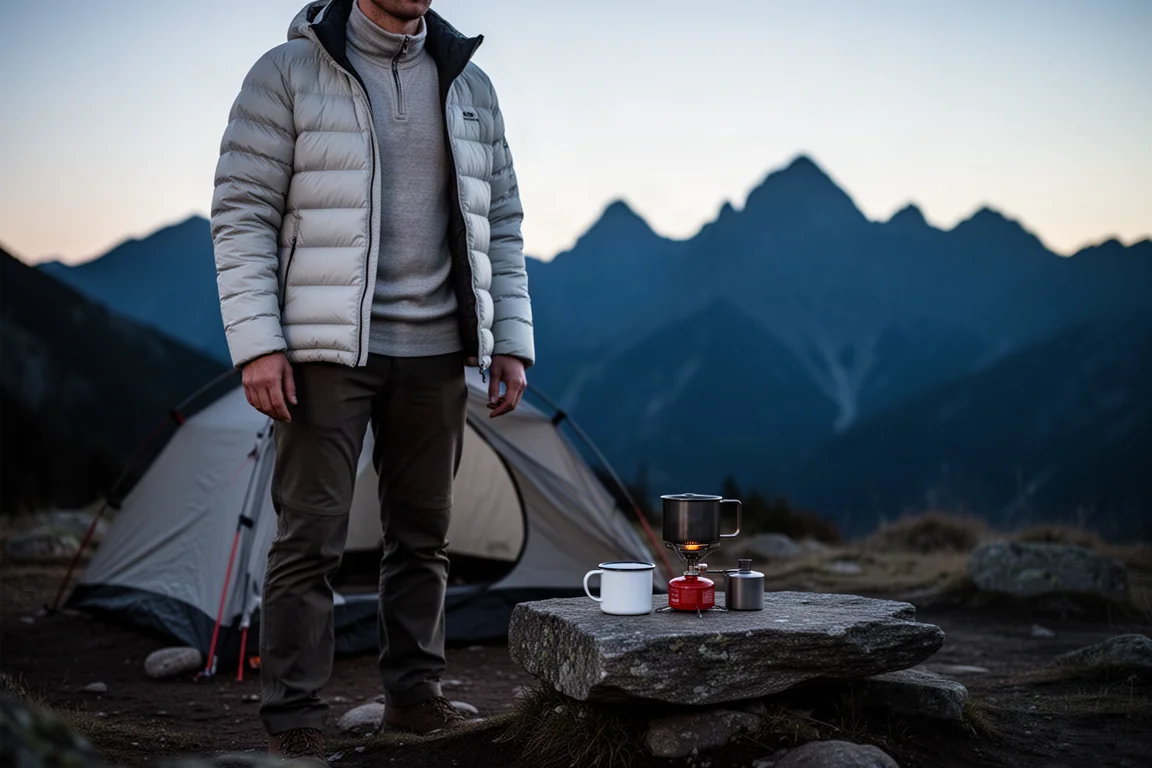
The jacket runs true to size. It fits well over a t-shirt while leaving enough room to add layers underneath, and the cuffs are non-adjustable but slightly stretchy. Because it covers everything from cool evenings to genuinely cold days, and because it layers in so many configurations, it earns a place across late summer, fall, and winter rather than sitting in a closet for one narrow season.
Sizing up is generally unnecessary unless you plan to wear it over a bulky fleece or a heavy midlayer.
Things to Consider Before Buying
A few omissions are worth knowing about before you order.
There is no upper chest pocket, which is a common spot for a phone. The two internal pockets are large, but they are not zippered, so items stored there have no closure. The two lower hand pockets use YKK zippers and include internal zipper pulls, but there is no fleece lining to warm your hands. There is also no center hem adjustment, so the jacket cannot be cinched around the waist.
The hood is the biggest compromise. It has no adjustment of any kind beyond the center YKK zipper. The only way to keep it snug is to zip the jacket all the way up. Once you open the zipper to vent heat, the hood is loose enough to be pushed around by wind. For a jacket that is otherwise carefully thought through, that is a real limitation for anyone who hikes in exposed, windy terrain.
Buying Advice
At $220, the SuperStrand LT Hoodie sits below many comparable jackets, which often land closer to $300, and it undercuts most similar down options as well. Given the warmth-to-weight ratio, the breathability, and the fact that it keeps performing when wet, the price is reasonable for what it delivers.
Choose the hoodless version if you mostly layer under a shell and want to save about $20. If an adjustable hood and zippered internal storage matter more to you than the last few ounces, another jacket may suit you better. Otherwise this is a straightforward recommendation for three-season hiking and cold-weather layering.
Conclusion
The Outdoor Research SuperStrand LT Hoodie does something synthetic insulation rarely manages: it performs like down. It is warm for its 10.9 ounce weight, it breathes well enough to hike in, it holds up in strong wind, and it keeps working when wet. The trade-offs are a hood with no adjustment, no chest pocket, and internal pockets without zippers. If warmth, weight, and breathability top your list, those are easy compromises to accept.
Product link
View more details for Outdoor Research SuperStrand LT Hoodie
This product is mentioned in the review. Check the specifications, options, and compatibility before buying.
View more details for Outdoor Research SuperStrand LT HoodieFurther reading
Related Reviews
Insulated Jackets
Aerogel vs Down Insulation: Two Aerogel Jackets Compared
Aerogel is the lightest solid on record, but two aerogel jackets measured against a comparable down jacket tell a more complicated story about warmth.
Insulated Jackets
Arc'teryx Atom LT vs Decathlon Trek 50: Does the Premium Synthetic Jacket Earn Its Price?
A side-by-side look at two synthetic insulated jackets at very different prices, covering fit, weight, insulation, features, and warranty.
Insulated Jackets
Big Agnes Shovelhead Jacket Review: Does Treated Down Stay Warm When Wet?
A close look at the Big Agnes Shovelhead jacket and its bluesign approved, PFAS-free DownTek insulation, including what happened when it was soaked twice in near-freezing conditions.