Camping Tents
Outdoor Products 10-Person Instant Cabin Tent Review: How It Handles Rain
A close look at the Outdoor Products 10-Person Instant Cabin Tent in wet weather, including taped seams, rainfly coverage, and the one seam that leaks in moderate rain.
Introduction
The Outdoor Products 10-Person Instant Cabin Tent is built for campers who want a large cabin-style shelter with quick pitching and dependable coverage in everyday weather. The real question with a tent this size is not how it looks on a dry weekend, but what happens once rain arrives and stays for a while.
Under a one-hour hose test concentrated on the front of the tent, roughly comparable to moderate rainfall, the tent came through mostly dry, with one clear exception at its lowest seam. Across the rest of the body, where the water pressure was closer to light rainfall, nothing leaked at all. This guide covers where the protection holds up, where it needs help, and what to do before a wet trip.
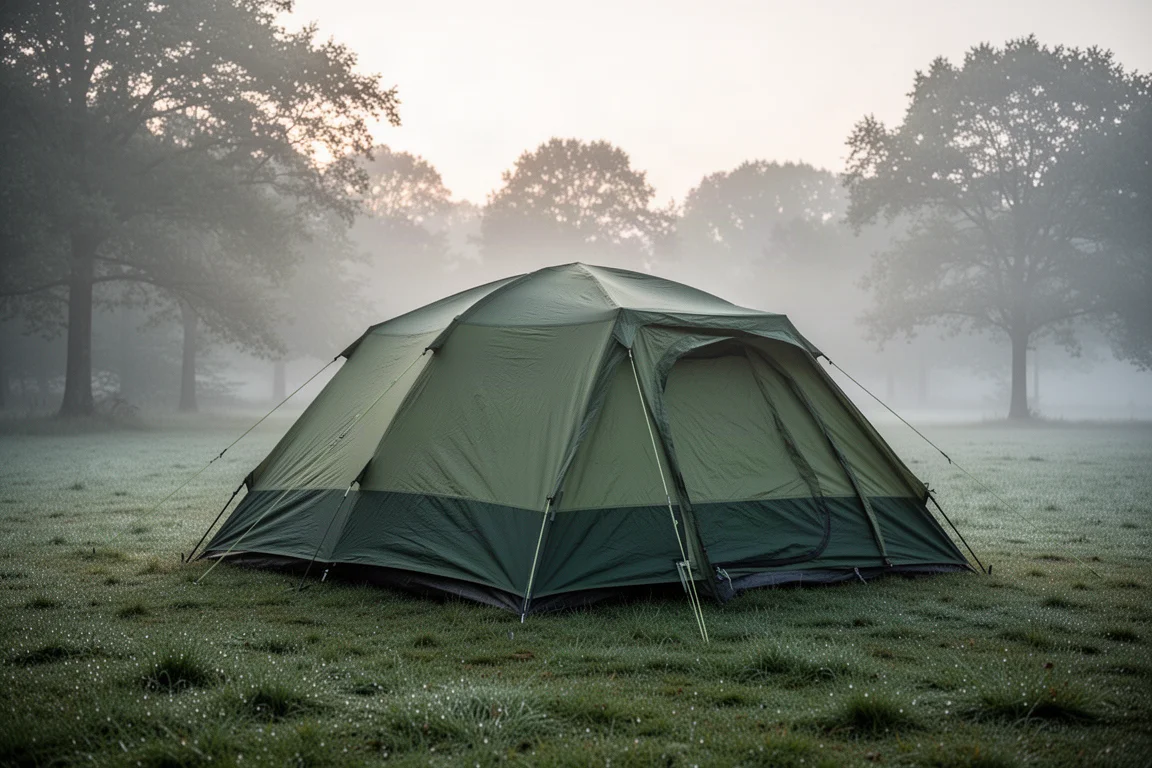
The short version: this is a tent that performs very well in light rain and needs a small amount of preparation before you trust it in sustained moderate rain.
Who This Tent Is For
This tent suits campers who want a spacious cabin layout for family trips and who mostly expect fair weather with occasional showers. In light rain, the fabric stayed dry throughout the body, and even the un-taped lowest seam held without a drop coming through.
It is a less obvious fit for anyone planning multi-hour moderate rainfall without preparation. The design leaves one seam unsealed by default, and that seam is the first thing to address if wet weather is a real possibility on your trip.
Main Strengths: Light Rain Performance and a High Bathtub Floor
Light rain is where this tent looks strongest. At the one-hour mark, most of the tent body was still dry, including the darker fabric at the top and the lighter fabric lower down. The lower fabric felt close to damp, but no water had come through it.
The bathtub flooring stands about five inches high, which is genuinely useful during heavy rain and minor flooding. No water passed through the floor itself, and it was still dry after an hour of moderate rainfall aimed at the front of the tent.
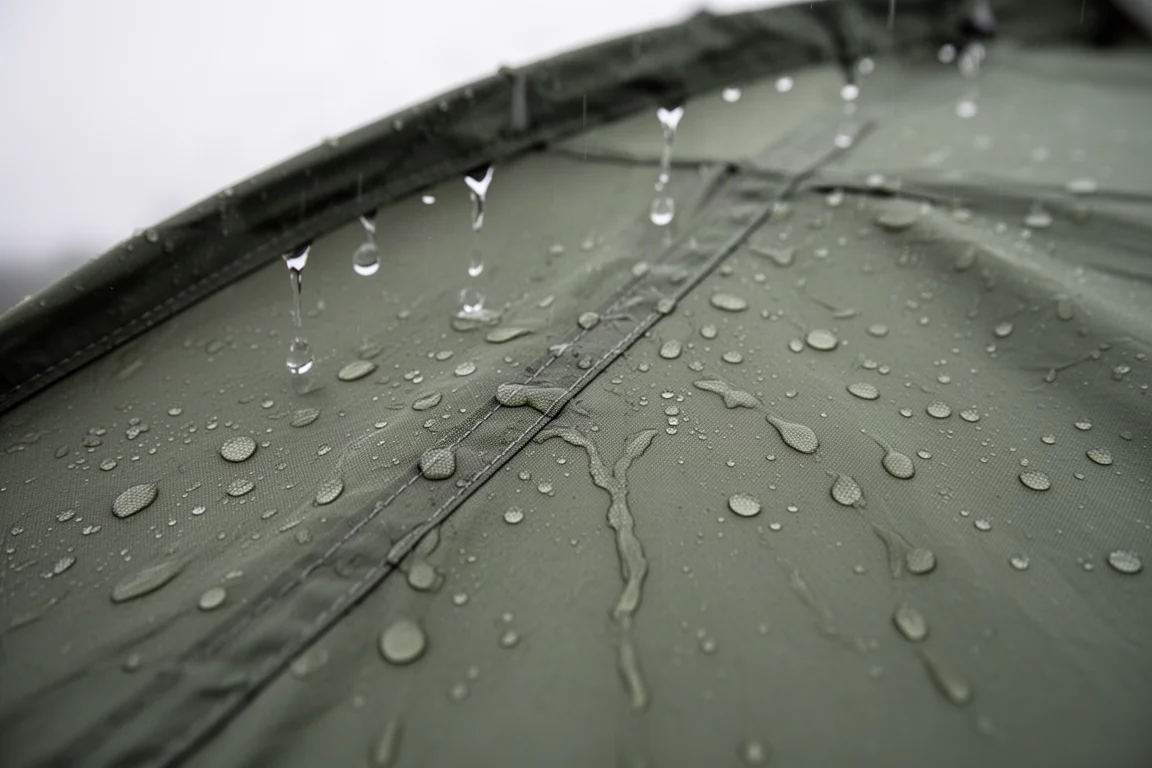
The curved roof also works in the tent’s favour. Water does not collect at the top; it runs off and drips away instead of pooling where the fabric could sag under the weight.
Stitching around the main body is tidy, with no obvious holes and no daylight visible through the stitching, apart from a single corner that was taped regardless.
Rainfly Coverage and Window Protection
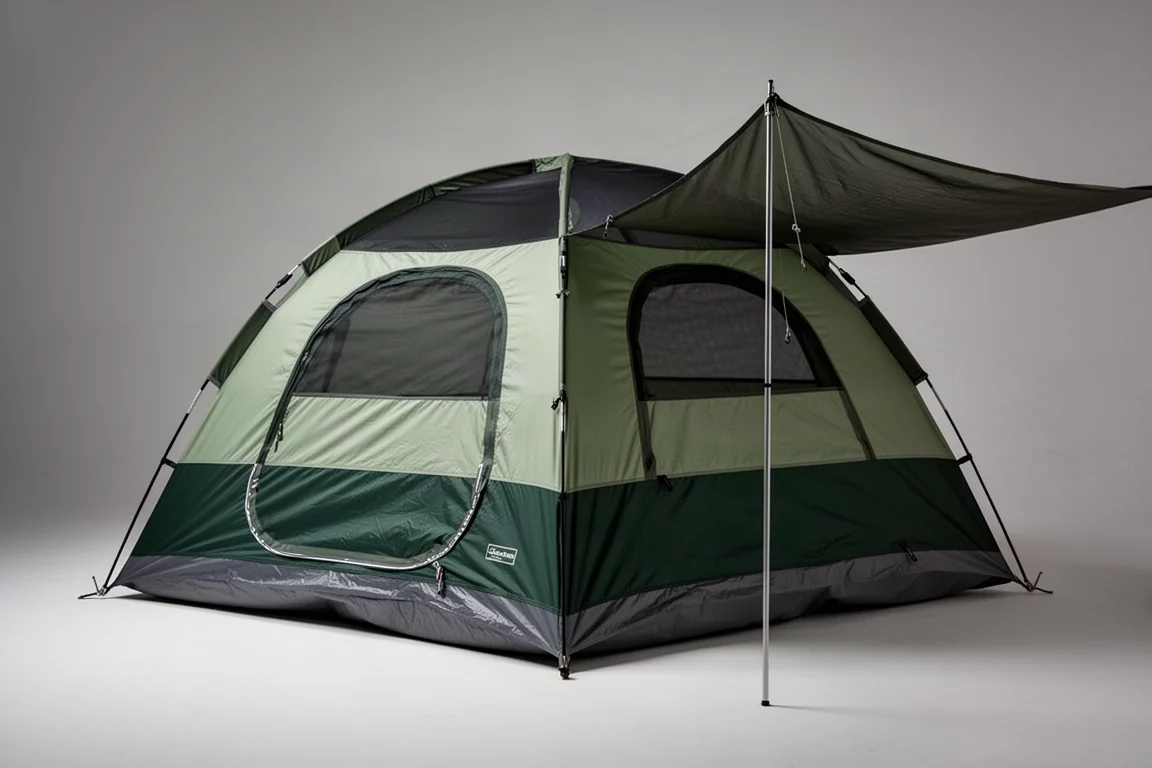
The rainfly only partially covers this tent, which is deliberate: it keeps water from seeping in through the ceiling mesh. Its vertical seams are taped, and the extended eaves hold the fly away from the tent body, so runoff clears most of the window mesh.
The trade-off is size. Because the rainfly is fairly small, even light rainfall puts water on the window mesh. You can likely crack the windows open slightly to improve airflow in mild conditions, but in heavy rain and wind it is best to keep them fully closed.
Seam Taping: What Is and Is Not Sealed
Seam treatment here is selective rather than uniform, and understanding the pattern tells you exactly what to expect.
The vertical seams on the tent body are taped up to a certain height. Above that point they are left untaped because the rainfly shields them. The topmost horizontal seam, where the dark green fabric meets the mesh roof, is also untaped, and that is fine because the rainfly covers it. The middle seam between the dark green and light green fabric panels is taped, and it did not leak.
The lowest seam, where the tent body meets the bathtub flooring, is not taped or sealed. During moderate rainfall, water began leaking through it after roughly fifteen minutes. The seam is inverted, but in practice that construction did not stop water from getting through. Window seams are fully taped on every window, and all doors and the ground vent are taped as well.
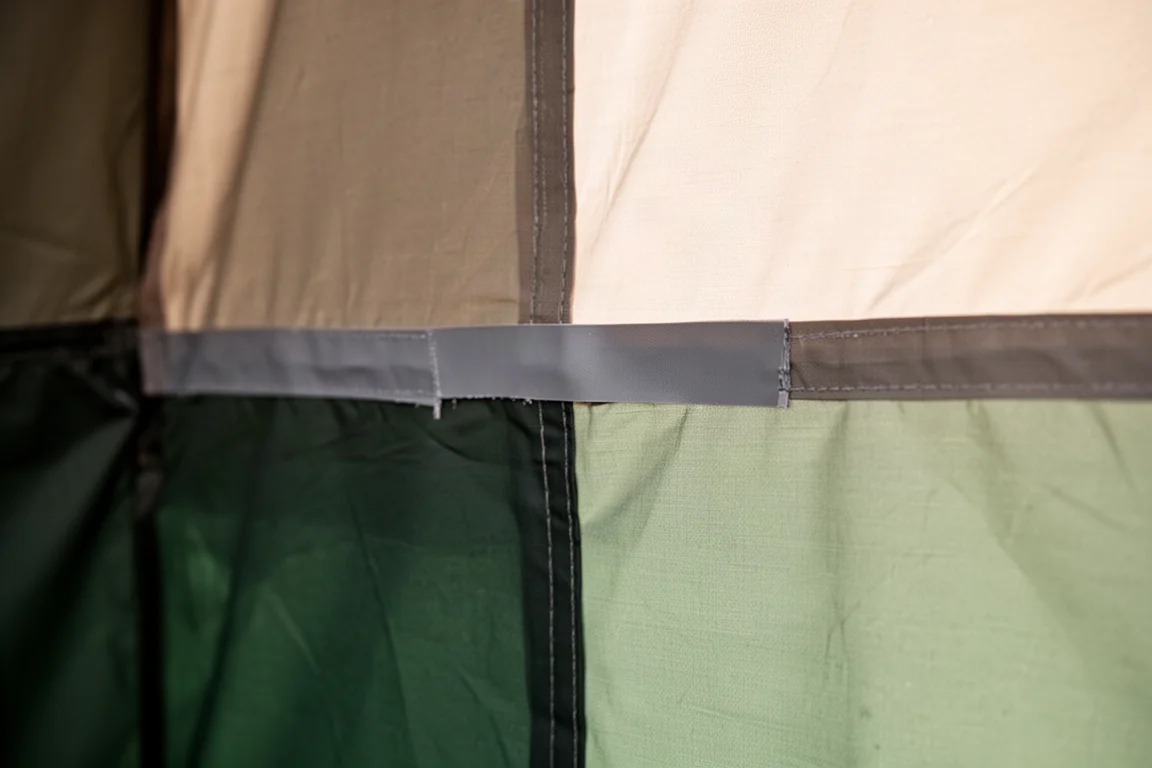
Sealing that one lower seam is the single highest-value fix for anyone who expects more than a passing shower.
Things to Consider Before Buying
A few details are worth knowing before you commit.
- The front side door let a little water through the zip during moderate rainfall. It was minor rather than dramatic, but it is worth watching.
- The T-door at the side of the tent stayed dry, and it has extra fabric to catch water if any gets in.
- When the door is opened, it can droop back into the tent, and water sitting on the door ends up inside. Shaking the door off before stepping in helps.
- The lighter fabric low on the body was still dry after an hour but felt almost wet. In a longer, heavier soaking, that fabric could eventually start letting moisture through.
- The bathtub floor, roof curvature, and taped doors, windows, and ground vent all behaved as intended, so the weak points are limited and identifiable.
Buying Advice
If your camping is mostly dry-weather trips with the occasional light shower, this tent is an easy recommendation. In light rain it produced no leaks at all, including at the seam that causes trouble in heavier conditions.
If you expect moderate rainfall, plan on two pieces of preparation. Seal the un-taped inverted seam where the tent body meets the bathtub flooring, and consider waterproofing the fabric if you are likely to face many hours of moderate rain. Those steps address the only two weaknesses that showed up, and the rest of the tent’s rain behaviour is solid.
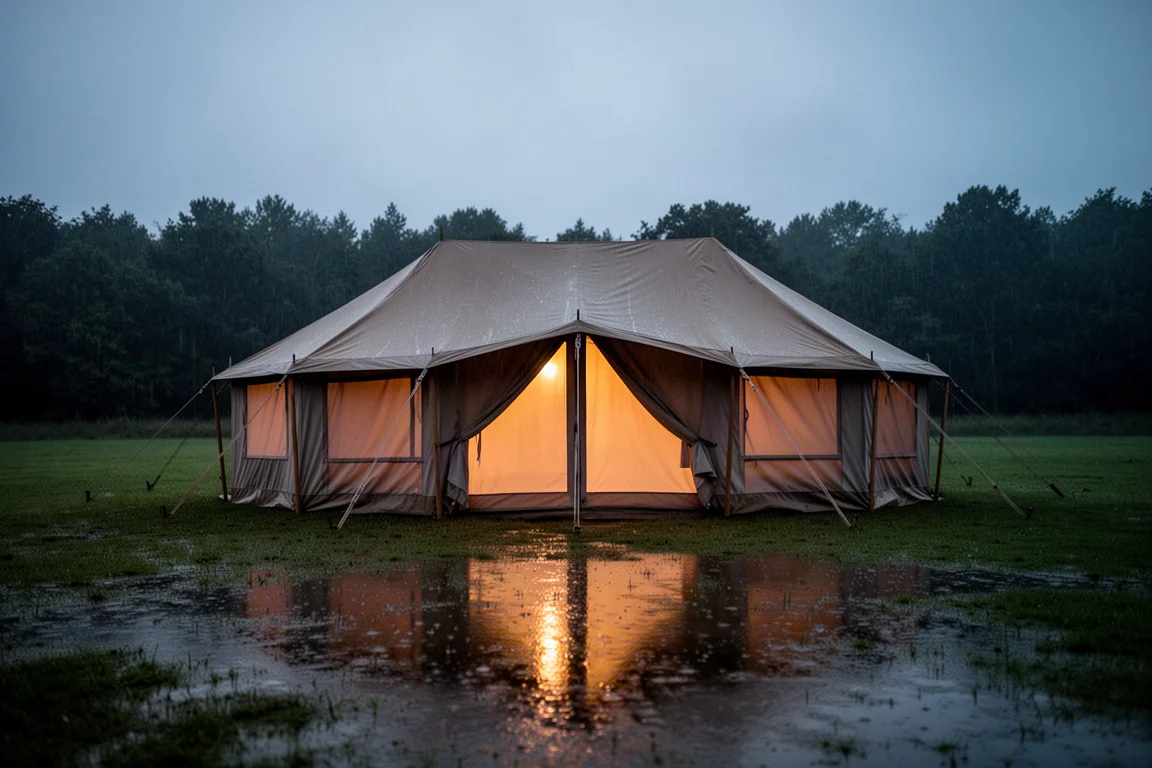
Set against its size and cabin-style layout, that is a reasonable amount of work for a tent that otherwise handles wet weather sensibly.
Conclusion
Overall, the Outdoor Products 10-Person Instant Cabin Tent did fine in wet conditions. It is not the strongest performer in that category, and it is far from the weakest. Its clearest strength is light rain, where it stays completely dry, and its clearest limitation is a single unsealed seam that needs attention before you rely on it in sustained moderate rainfall.
Product link
View more details for Outdoor Products 10-Person Instant Cabin Tent
This product is mentioned in the review. Check the specifications, options, and compatibility before buying.
View more details for Outdoor Products 10-Person Instant Cabin TentFurther reading
Related Reviews
Camping Tents
3F UL Gear Taiji Two-Person Tent Review: Field Waterproofing Results and Buying Advice
The Taiji pairs an attached fly with a removable inner, but sustained rain exposed untaped vent seams that need sealing before this shelter can be trusted.
Camping Tents
3FUL Gear Lanshan 2 Pro 4-Season Review: A Sub-$200 Single-Wall Trekking Pole Tent
An early look at the 3FUL Gear Lanshan 2 Pro 4-Season, covering its straightforward pitch, generous interior space, and the condensation and seam-sealing questions that come with any single-wall shelter.
Camping Tents
Alps Mountaineering Lynx 1-Person Tent Review: Big Value in a Small Budget Tent
A close look at the Alps Mountaineering Lynx 1-Person Tent, covering real interior dimensions, materials, setup time, ventilation limits, and who should buy it.