Technical Backpacks
Osprey Talon Velocity 20 Review: Race Vest Fit With Real Load-Carrying Structure
A close look at the Osprey Talon Velocity 20, a lightweight technical pack that blends race vest fit with the load-carrying behaviour of a proper rucksack.
Introduction
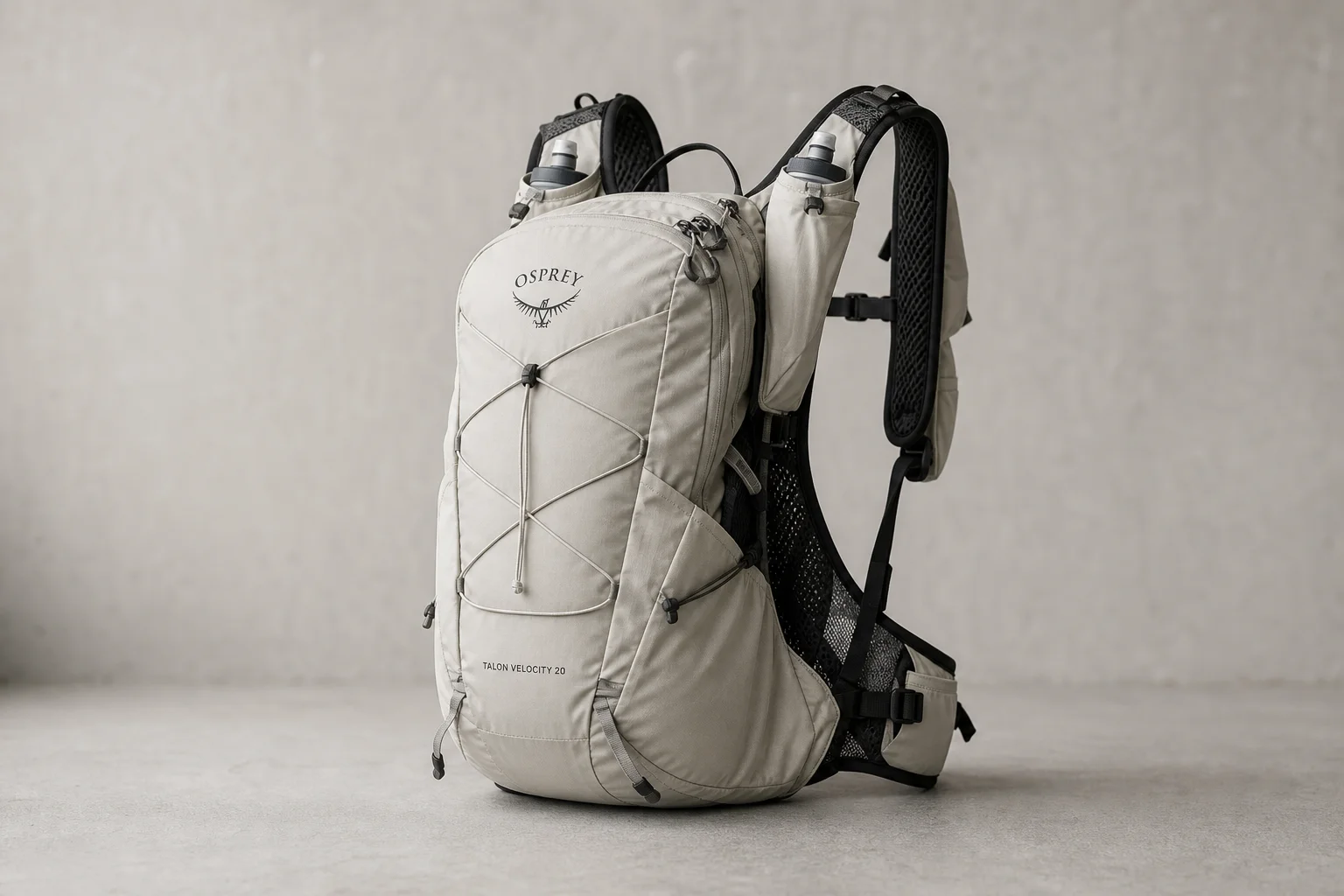
Osprey’s Talon and Tempest packs have been among the most popular technical packs in the world for years, and they have long crossed the line between hill walking and faster pursuits such as cycling and running. The Talon Velocity 20 is the latest iteration of that idea, and it looks like a strong one. The standard Talon and Tempest remain available and remain excellent for lightweight walking and hiking. The Velocity range simply adds a little extra for people who want to travel light, whether or not they intend to move fast.
What that means in practice is a pack that fits closer to the body, so it can be worn for a run, a scramble, a bike ride, or a ski tour, and still work as a normal hill walking pack. This guide looks at what the Talon Velocity 20 does well, where it asks you to compromise, and who should consider it.
Who This Product Is For
The Talon Velocity 20 is the men’s version, with the Tempest Velocity 20 as the women’s equivalent. Both come in a couple of colourways and, importantly, in different back lengths. The back length is also adjustable once you have the pack, so the fit can be fine-tuned rather than accepted as it arrives.
That adjustability matters because the pack is designed to cover two different styles of carrying. For walking, many people prefer the weight sitting on the hips so the pack can take a bigger load. For running, the same pack can be shortened and cinched snug, at which point it behaves much more like a race vest. One bag covers both, which is why it suits walkers who occasionally run, runners who sometimes carry overnight kit, and anyone whose plans change with the weather.

It is equally plausible as a commuter bag: there is room for a laptop, and it can be walked, run, or cycled to work. The design has clearly been thought through for skiing and mountain climbing as well as general hill walking.
Main Strengths
The central strength is the crossover between a race vest and a rucksack. Running race vests are genuinely light, but they do not take much weight and they do not put structure and load onto your hips. The Talon Velocity 20 does both. It is not the lightest rucksack on the market at 870 g for the men’s version, but it carries a load well, and for longer runs with a bit more weight, including overnight kit, a normal race vest would start to sag and move around in a way this pack will not.
The fit is the other big advantage. A close-fitting pack that stays stable is what makes faster movement comfortable, and that is exactly what the Velocity range is built around.
Fit and the AirScape Back System
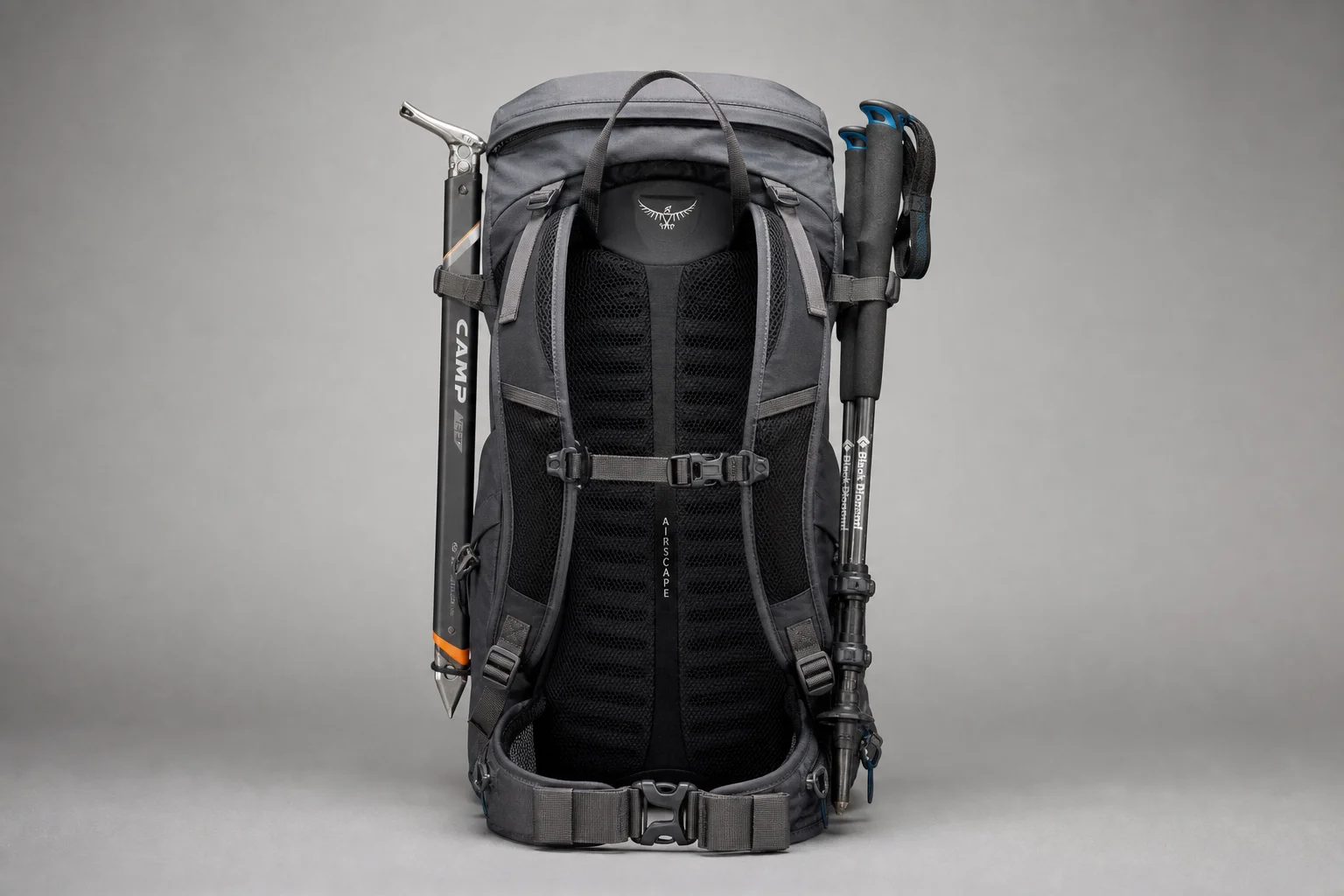
At the back, the pack reads like a race vest with the tried and tested AirScape back system from the standard Talon range. It is adjustable, so you can set it longer for walking with the weight on your hips, or shorten it and sit it higher for running. The appeal of AirScape is that it keeps the load close and secure rather than holding it away from your body. Venting panels that hold a pack off your back suit slower paced activities; this system is more stable when you are scrambling or running.
Up front, the race vest influence is obvious. Two 500 ml soft bottles can sit in the harness pockets, which means no sloshing drink and no reaching behind you. A zipped pocket takes a large phone, and there is still room for a flask. Smaller pockets hold snack bars or energy gels, and the hip belt pockets add more space, including enough for sunglasses in the looser opening on one side.
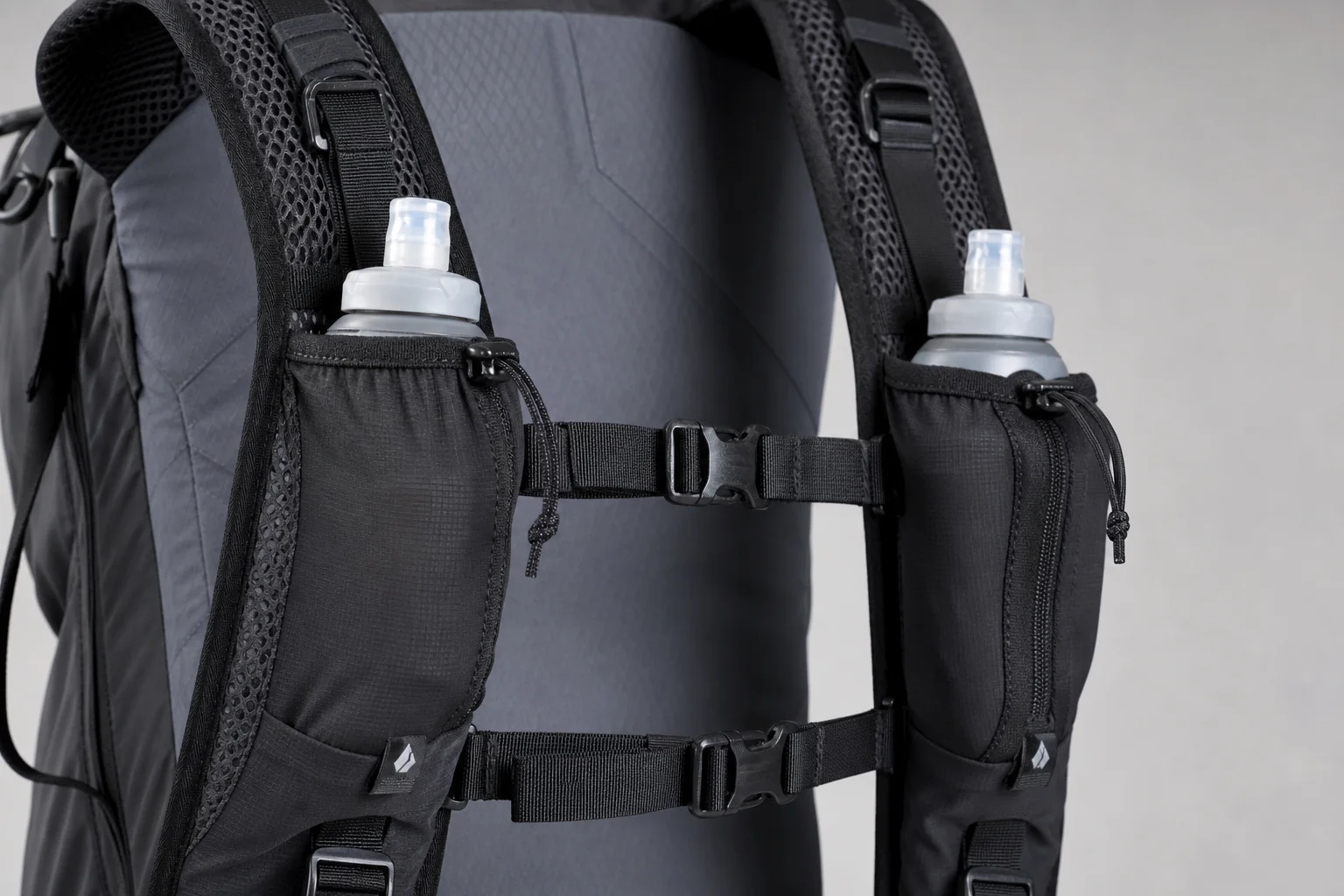
Chest harness hardware is deliberately substantial: proper chunky clips rather than the tiny, fiddly hooks found on some race vests. The buckles slide up and down for adjustment, and the top buckle carries an emergency whistle.
Storage and On-the-Move Access
Side bungee pockets can be reached from two directions, from the top or from the side, so a bottle can be pulled out while you are still walking. Riders and runners who prefer a bladder can still use one: the reservoir sits in a dedicated gap between the main compartment and the back system. That placement keeps it from eating into the main compartment, lets any leak drain through a small hole at the bottom rather than soaking your kit, and allows the bladder to be slid out and refilled without unpacking the whole bag.
The top of the pack closes with a climbing style buckle and a pull cord that gives quick access to the main compartment. A large mesh panel on the front is a full pocket, big enough for a jacket, a mat, or arguably a bike helmet. The stretchy closure over the top is well suited to lashing a rope or a helmet.
Two compression straps on the sides are a detail that matters more than it sounds. When you have emptied the pack of gear on the way to a route or a climb, compressing it keeps everything from rattling around and keeps the pack secure on your back. Inside, the main compartment is one large space with a small zippered pocket and a key clip.
Pole and Ice Axe Carry
Trekking poles are handled by the Osprey Stow-on-the-Go system: an elastic attachment on the shoulder strap and another at the lower part of the pack, so poles can be stowed or deployed without stopping and taking the pack off. Z-poles also sit neatly in the side pockets.
Ice axe attachments are included, which makes sense for fast and light days in the Alps or in Scotland when conditions allow. Longer walking poles can be hooked through the same rear arrangement rather than carried in the side pockets.
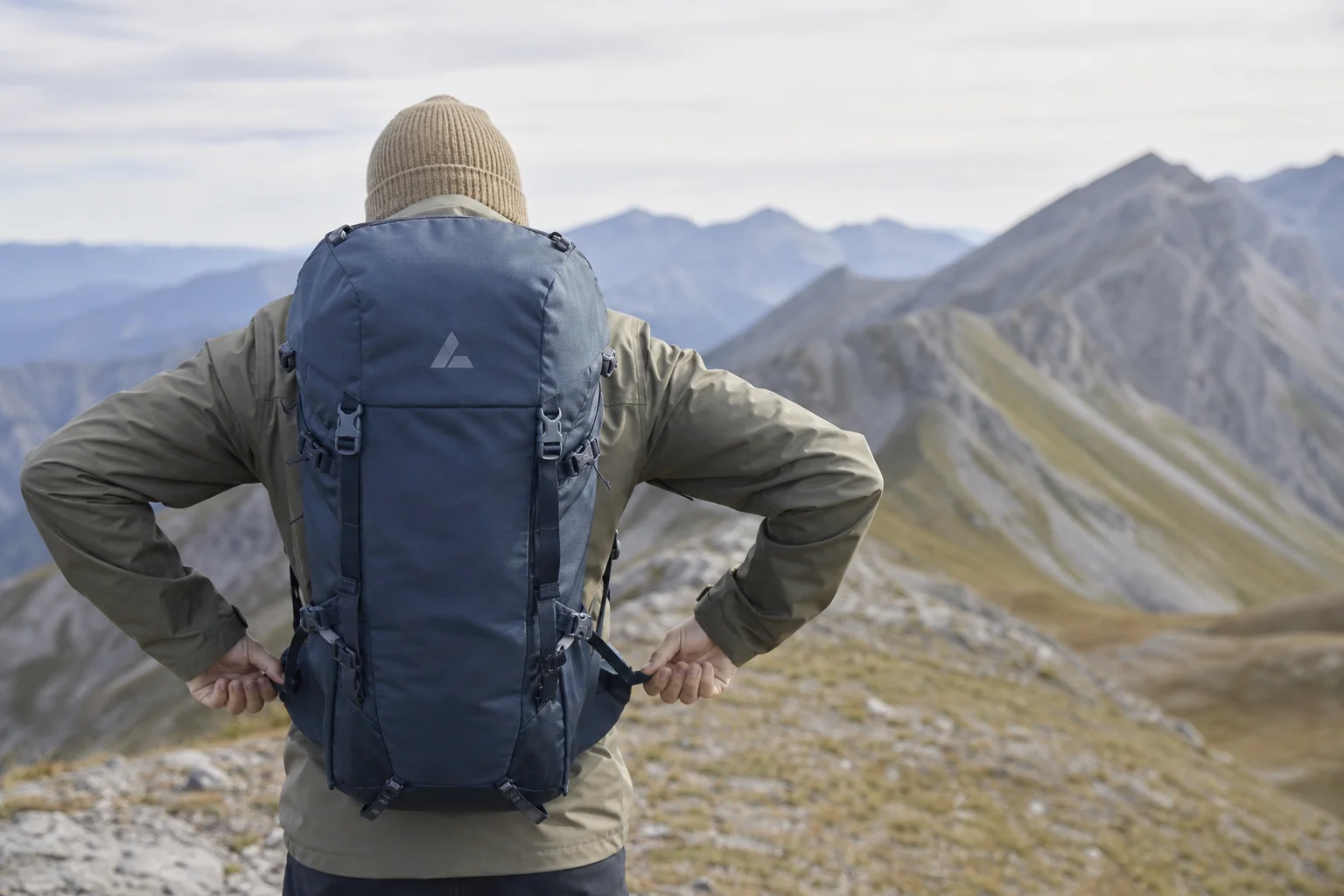
For something like a long ridge day, where you are moving all day with a moderate amount of gear, the combination of a stable carry, quick access, and tool attachment points is exactly what this format is for.
Things to Consider Before Buying
Weight is the first consideration. At 870 g for the men’s version, this is light, but it is not the lightest rucksack available, and it is not a dedicated race vest. That is a deliberate trade: the extra structure is what allows it to carry a load properly and put weight onto your hips.
Internal organisation is minimal. The main compartment is essentially one large space with a small zipped pocket and a key clip, so anyone who likes dividers and multiple internal compartments will need to pack with pouches instead.
Fit also depends on getting the back length right. The pack comes in different back lengths and the back panel is adjustable, so it is worth taking the time to set it up properly rather than accepting the default.
Finally, the front harness pockets are shaped around 500 ml soft flasks. If you prefer rigid bottles up front, expect a tighter fit.
Buying Advice
The Talon Velocity 20 makes the most sense for people whose days mix walking and faster movement. If you mostly hike with a moderate load and want the option to run sections of a route, or if you run and occasionally carry more than a race vest can handle, this is a strong match.
The material choice supports that role. The pack uses a recycled nylon face fabric, with 210 denier on the upper and 420 denier on the bottom for extra durability when it is set down on walls and rough ground. A PFC-free DWR finish adds a sensible environmental note.
If your priority is the lowest possible weight for a short, supported run, a dedicated race vest will be lighter. If your priority is a single pack that can be cinched down like a vest, carry a real load on your hips, and take bottles, poles, and an ice axe, the Talon Velocity 20 covers more ground than either option alone.
Conclusion
The Talon Velocity 20 is one of the most versatile rucksacks in this category. It borrows the close fit, front bottle carry, and pocket layout that make race vests comfortable at speed, then adds the back system, hip belt structure, and compression that let a rucksack carry weight properly. For walkers who sometimes run, runners who sometimes carry more, and anyone building a fast and light kit around a single pack, that combination is hard to argue with. Just go in knowing that it is a load carrier first and a weight-saving exercise second, and set the back length carefully before your first outing.
Product link
View more details for Osprey Talon Velocity 20
This product is mentioned in the review. Check the specifications, options, and compatibility before buying.
View more details for Osprey Talon Velocity 20Further reading
Related Reviews
Backpacking Gear
Building a 10 lb Base Weight: An Ultralight Backpacking Gear List
A practical walkthrough of the ultralight pieces behind a 10 lb base weight, from a 765 g pack and a roomy one-person tent to a full camp chair and a dependable water filter.
Road Bikes
10 New Road Bikes Worth Watching: Aero, Titanium, Steel and Endurance Standouts
A practical roundup of 10 new road bikes, from aero flagships chasing single-watt gains to titanium, steel and endurance platforms built for real roads.
Bikepacking Gear
11 Bikepacking Essentials for Long-Distance Cycling
Eleven bikepacking essentials for long-distance cycling, from a steel gravel frame and a two-person tent to helmet lights, packable gloves, and a frame bag that puts weight in the right place.