Hi-Fi Audio
Orsifun GL005 vs McIntosh MC275 MKVI: A Tube Amplifier Comparison
A measured comparison of a tube amplifier clone and the original it imitates, covering output impedance, load dependency, tube rolling, distortion, and noise.
Introduction
A tube amplifier clone and the long established design it imitates rarely get compared on the same bench, in the same room, on the same speakers. That is what happened here, and the results are more interesting than a simple pass or fail.
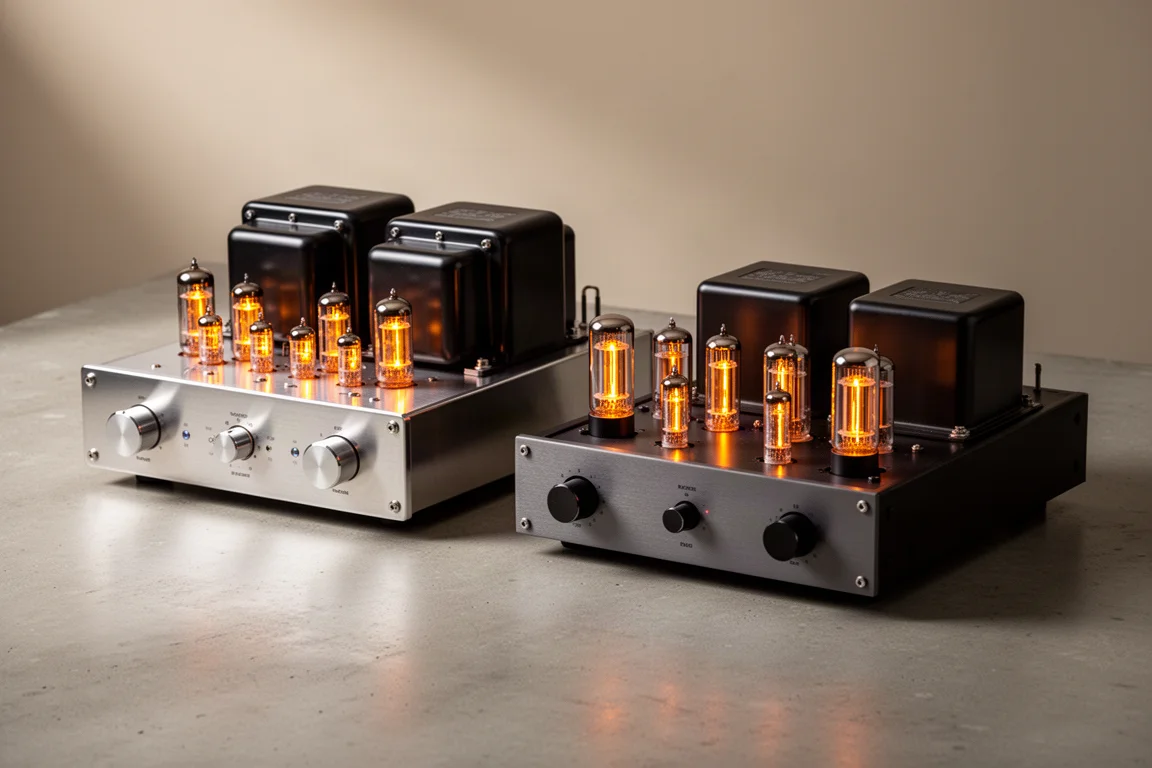
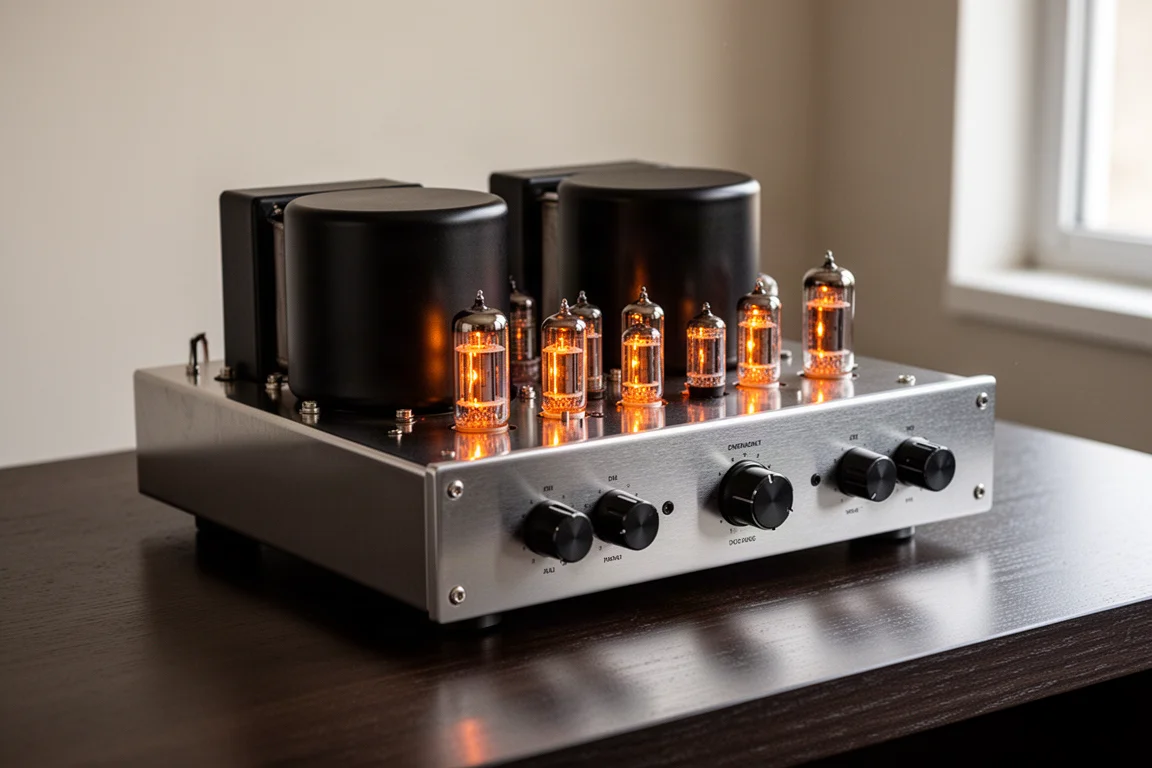
The Orsifun GL005 is built as a clone of the McIntosh amplifier platform, and the McIntosh MC275 MKVI is the original it follows. Both were run through matched listening sessions and then measured with the same signals, the same loads, and the same tube sets. The aim was to document what actually changes between them rather than to argue about taste.
How the Comparison Was Set Up
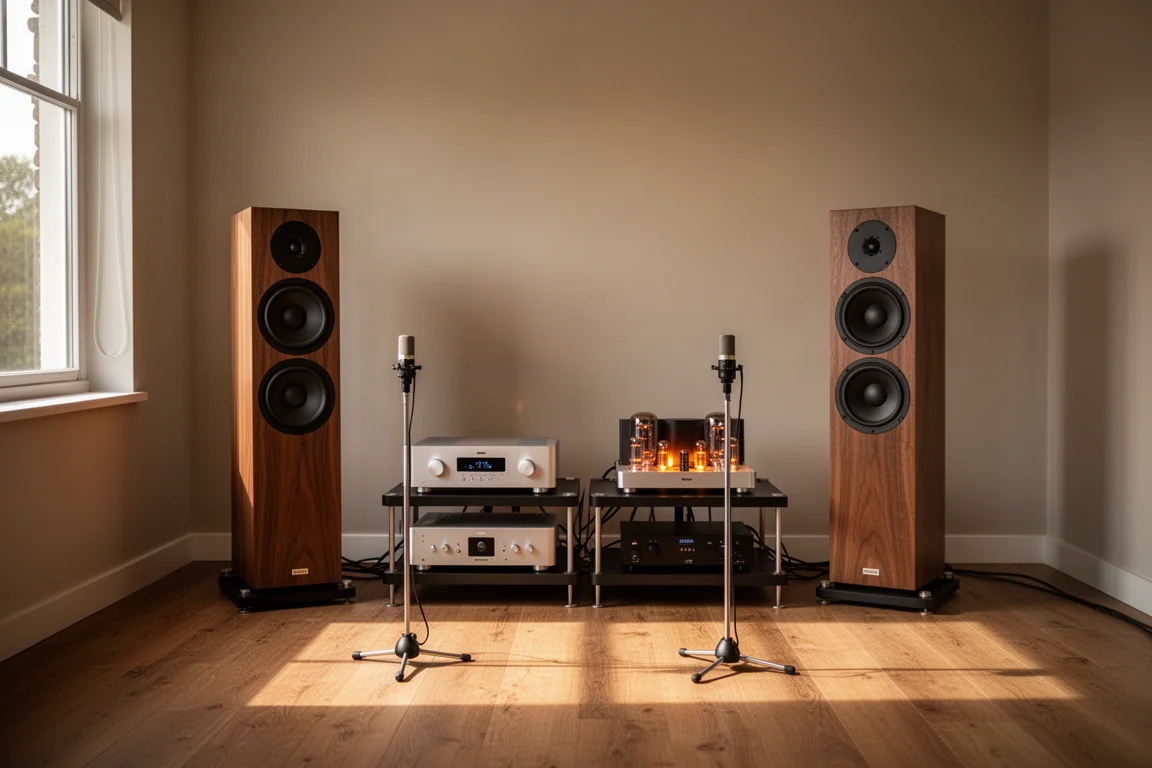
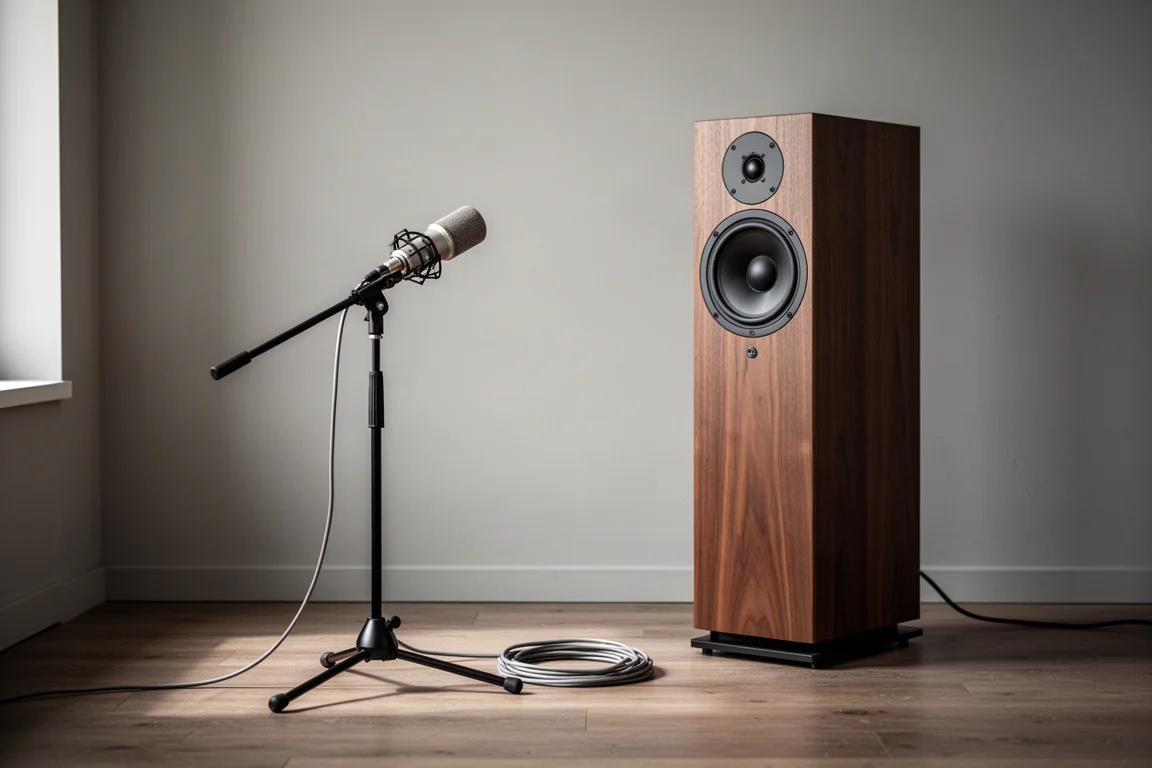
Both amplifiers were placed in the same listening room and fed from a single DAC used as the interface, with XLR output routed to each amplifier in turn. Each amplifier drove a pair of Radiant Acoustics Clarity 66 floorstanding speakers, a near full range design that makes shifts at the frequency extremes easier to spot.
Output levels were matched at 1 kHz so that both amplifiers produced the same voltage from a 0 dB sine wave. Matching at one frequency is intentional. If an amplifier has a response imbalance elsewhere in the band, that imbalance stays visible instead of being averaged away. Stereo recordings were captured from the same microphone position for each amplifier.
Pink noise proved the most revealing signal. Broadband noise exposes frequency response differences that music tends to mask, and the two amplifiers did not sound identical on it. Music passages were far less conclusive, which is a useful result in itself: the differences are real, but they are not always obvious on ordinary program material.
Orsifun GL005: Build, Biasing, and Measurements
The internals of the GL005 were photographed and passed to experienced builders for a second opinion. Their read was that the layout looked better than expected, with one consistent caveat: the transformers are the part most likely to shape the final sound.
That caveat cannot be settled by inspection. The transformers are potted, meaning the internal windings and core are sealed inside the housing with no way to see what is in there. Wiring does run into each transformer, which at least confirms the housings are not empty.
Day to day, the GL005 is an auto biasing design. No user adjustable dials or trim controls were found anywhere on the amplifier, so owners do not need to set bias themselves.
On the bench, the picture is mixed. Output impedance sits a little higher than the McIntosh and shows some shaping across the band, with shifts near 100 Hz, around 1 kHz and 2 kHz, and a rise above roughly 3 kHz. Distortion measured about 20 dB higher than the McIntosh on average. Output at 1% THD also varied with the load and the tube set rather than landing on one repeatable figure.
McIntosh MC275 MKVI: The Reference Point
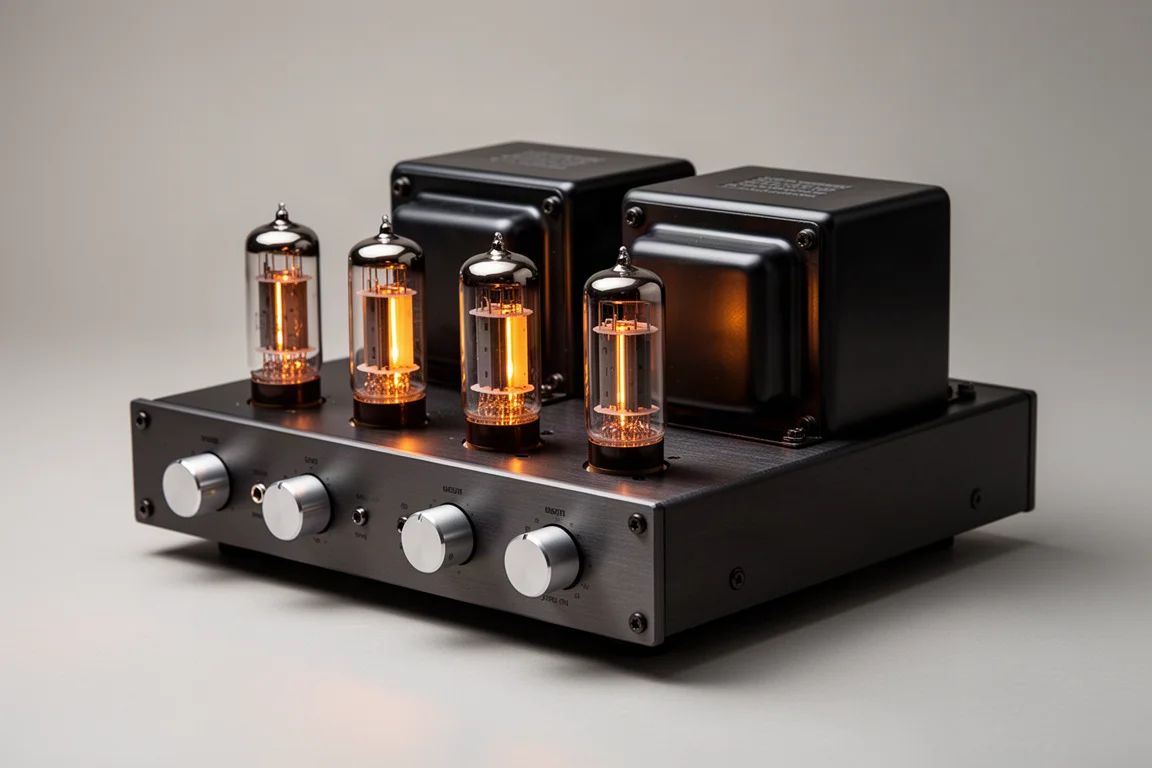
For a tube amplifier, the MC275 MKVI behaves unusually close to a solid state design. Its output impedance is low and essentially flat, which means it alters the frequency response of the speaker it drives far less than most tube amplifiers do.
That flatness has a practical payoff. The amplifier’s own response stays stable no matter what load is attached, so what you hear is closer to what the speaker is doing rather than a blend of speaker and amplifier.
Power delivery is equally consistent. Regardless of which tube set was installed, the MC275 MKVI reached its rated 75 W at 1% THD. Its measured noise floor is slightly higher than the GL005’s, by roughly 10 dB, but both sit low enough that noise is a non issue in practice.
Where the reference design earns its position is in predictability. A listener who wants an amplifier that stays out of the way of speaker choice will find very little to work around here.
Load Dependency and Why It Matters for Speaker Matching
Output impedance determines how much an amplifier’s frequency response shifts once a real speaker is attached. A higher, less flat output impedance means the amplifier’s own response changes with the load, which is the mechanism behind the informal idea of amplifier and speaker synergy. It is a real effect rather than a made up one, and it is also avoidable with an amplifier that does not depend on the load.
With a static 8 ohm load, the two amplifiers differed by roughly half a decibel, and the McIntosh stayed essentially flat. With a 4 ohm load, the GL005 measured about 0.75 dB down at 10 kHz. On a reactive load that simulates a real speaker, both showed some shaping of roughly 0.1 to 0.2 dB, with the GL005 contouring more and dipping around half a decibel in the high frequencies.
A more complex load with lower impedance and greater phase shift widened the gap. The GL005 dipped roughly 0.75 dB in the midrange and diverged more around 3 kHz, while the McIntosh showed about 0.3 dB of variation near 200 Hz.
Then comes the question that matters most: what happened with the speakers actually used here? With the Clarity 66 connected, the GL005 measured around 0.1 to 0.2 dB lower between 100 Hz and 300 Hz, and about 1.3 dB lower at 10 kHz. That high frequency difference is exactly what showed up in the listening comparison, where the GL005 came across as lighter and slightly duller at the top end.
For context, this is a mild result by tube amplifier standards. A different tube amplifier measured against the same McIntosh platform on a different speaker showed almost 3 dB of difference in the lower midrange and around 2.5 dB down at 20 kHz. By that yardstick, the GL005 performs reasonably well.
Tube Rolling and Channel Matching
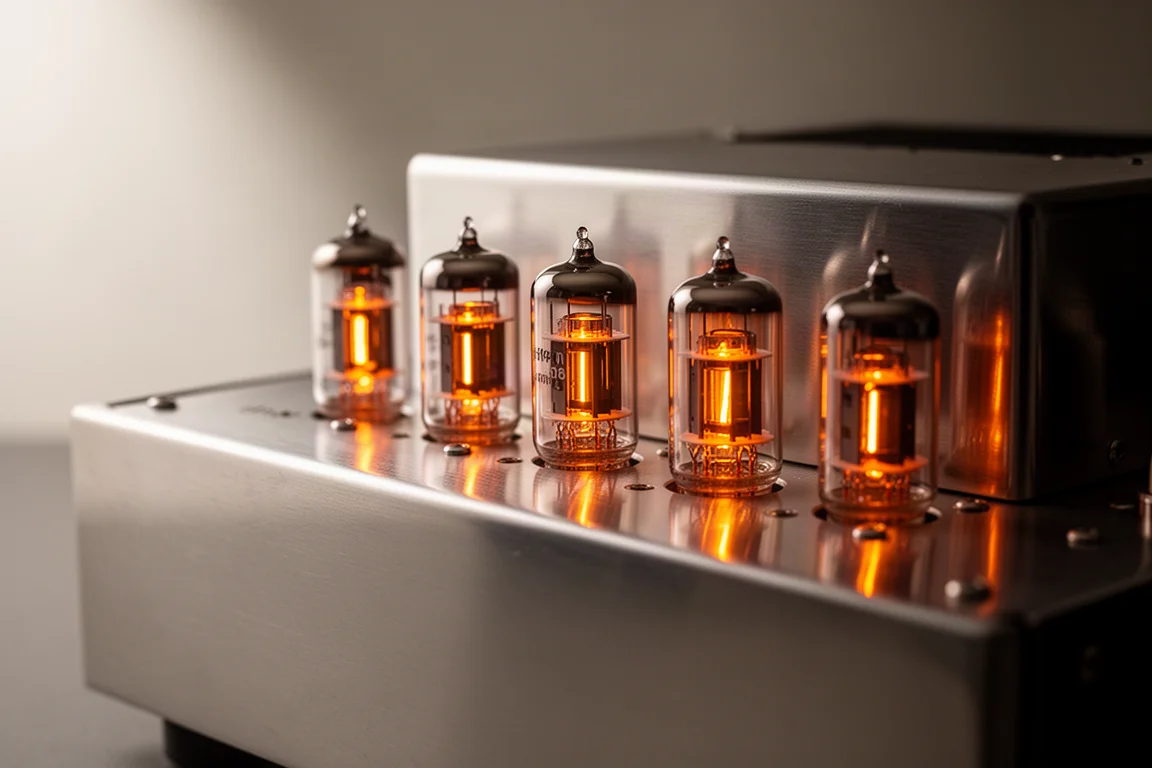
Three tube sets were compared: the tubes that came with the McIntosh, the tubes that came with the GL005, and a set of PSVane tubes. In the McIntosh, swapping between them produced essentially no measurable difference in frequency response.
In the GL005, the same three sets produced a little more variation, with small shifts in the 200 Hz region and around 3 kHz. The pattern tracked what the output impedance measurements already suggested, so the tubes are not introducing anything the amplifier was not already doing. The differences stay minor.
Left and right output matching told a similar story. The McIntosh was effectively dead on between outputs. The GL005 showed about 0.2 dB of difference between the left and right outputs, which is close enough that only a very discerning listener would notice any shift in the stereo image. In practice, half a decibel is roughly where left and right level differences start to become reliably audible when they are being adjusted deliberately.
Distortion, Noise, and the Myth of Tube Warmth
Harmonic distortion profiles were measured at several output levels into a 4 ohm load. On the McIntosh at 10 W, second order distortion was higher than third order, but not by the wide margins that are often claimed. At 89 W, total harmonic distortion plus noise measured 0.17%, with second order sitting roughly in line with the other harmonics rather than dominating. At full clipping, with about 7% total harmonic distortion, odd order components were higher than even order components, which is the expected behaviour.
The GL005 told a similar story at 10 W into 4 ohm: second and third order distortion were close to level with each other. That matters because the familiar claim that tube amplifiers sound warm because of second order distortion does not hold for either of these designs. The audible difference between them is driven mostly by frequency response and by how that response changes with the load.
There is a reason second order distortion is less obvious than its level suggests. A harmonic that sits close to the fundamental is more easily masked by it. With a 200 Hz fundamental, the second harmonic lands at 400 Hz and the third at 600 Hz. If both were at the same level, the third would be more noticeable because it sits further from the fundamental.
Noise floor is the other half of the picture. The McIntosh measured slightly higher than the GL005, by roughly 10 dB, and the GL005 was quieter still in the higher frequencies. Both amplifiers are quiet enough that noise should not be a concern, even with high sensitivity speakers where hiss is usually most exposed.
Buying Advice
The GL005 is a genuinely competent amplifier for what it is. It is auto biasing, it measures reasonably well for a tube design, and its noise floor is low enough for sensitive speakers. What it does not do is match the McIntosh on distortion or on the consistency of its power delivery, and its frequency response shifts more with the speaker attached.
That last point drives the buying decision. If you want a tube amplifier that behaves predictably with almost any speaker and delivers its rated power regardless of the tubes installed, the McIntosh MC275 MKVI is the safer choice. If you accept more interaction between amplifier and speaker and want the same basic platform at a lower entry point, the GL005 is a reasonable option, with the honest caveat that its transformers cannot be verified by inspection.
Conclusion
Two tube amplifiers, one a reference design and one a clone of it, turned out to be closer in measured behaviour than their positioning might suggest, and further apart in the areas that matter most for system matching. The McIntosh MC275 MKVI stays flat, stable, and consistent across loads and tube sets. The Orsifun GL005 gets much of the way there, with a lower noise floor but higher distortion, less consistent power delivery, and a frequency response that depends more on what it is driving.
Neither result is a verdict on taste. It is a map of where each amplifier will ask more or less of the rest of the system.
Further reading
Related Reviews
Hi-Fi Audio
Accuphase C-57 vs Allnic H-7000V: Two High-End Phono Stages Compared
A fully balanced solid-state phono stage with a pitch-black noise floor meets a tube design built for well-loved records. Here is how to choose between them.
Hi-Fi Audio
Active vs Passive Hi-Fi: Five Components for a Modern System
Five components that define modern active and passive hi-fi systems, with the strengths, trade-offs and setup details worth weighing before you buy.
Hi-Fi Audio
Advance Paris A10 Apex Review: A Hybrid Integrated Amplifier That Covers a Lot of Ground
A French hybrid integrated amplifier with a class A tube preamp stage, analogue power meters, and an internal DAC and phono stage good enough to make extra boxes unnecessary.