Telescope Accessories
Orion Variable Power Barlow Lens Review: One Barlow, Every Magnification Between 2X and 3X
A rare variable-power Barlow that slides from 2X to 3X magnification, with clever engineering and one awkward quirk to know about before buying used.
Introduction
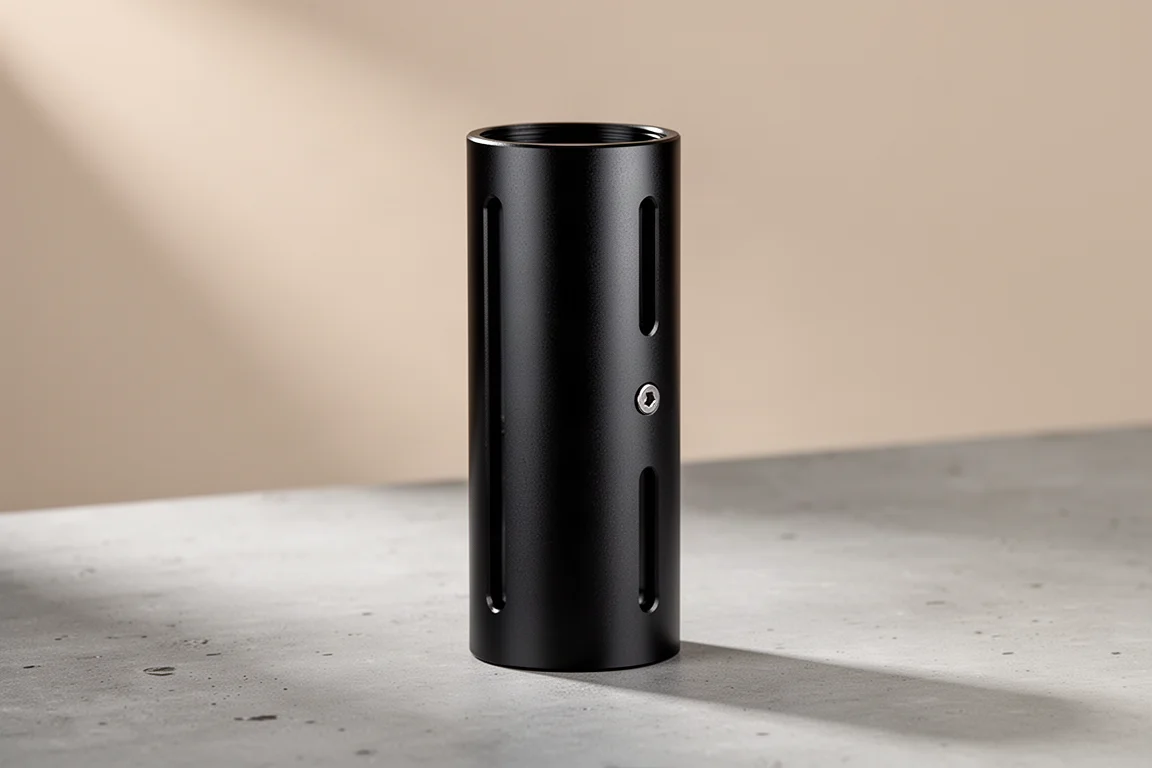
Most Barlow lenses force you to choose: 2X or 3X. The Orion Variable Power Barlow refuses to pick a side. It delivers any magnification between 2X and 3X, adjusted by physically sliding the lens cell inside the barrel. It is an analog solution to a problem most manufacturers solved with fixed multipliers, and it is genuinely rare. As far as is known, only Orion and Meade produced Barlows in this format, identifiable by the slots cut into both sides of the tube.
Orion no longer makes these variable Barlows, so anyone interested will be shopping the used market. That makes it worth understanding exactly what you are getting, including one design quirk that may explain why the product disappeared.
What Makes a Barlow Lens Work
A Barlow is not an eyepiece. It is a multiplier that sits between your eyepiece and the focuser, using a bit of optical trickery to make your eyepiece perceive that the telescope is longer than it physically is. A 2X Barlow effectively doubles the telescope’s focal length; a 3X Barlow triples it. The eyepiece itself is untouched.
The math behind it is dirt simple. Magnification equals the telescope’s focal length divided by the eyepiece’s focal length. Double or triple the top number of that fraction and you double or triple the magnification. That is the entire principle, and it is why a single Barlow can transform a whole set of eyepieces.
How You Adjust the Magnification
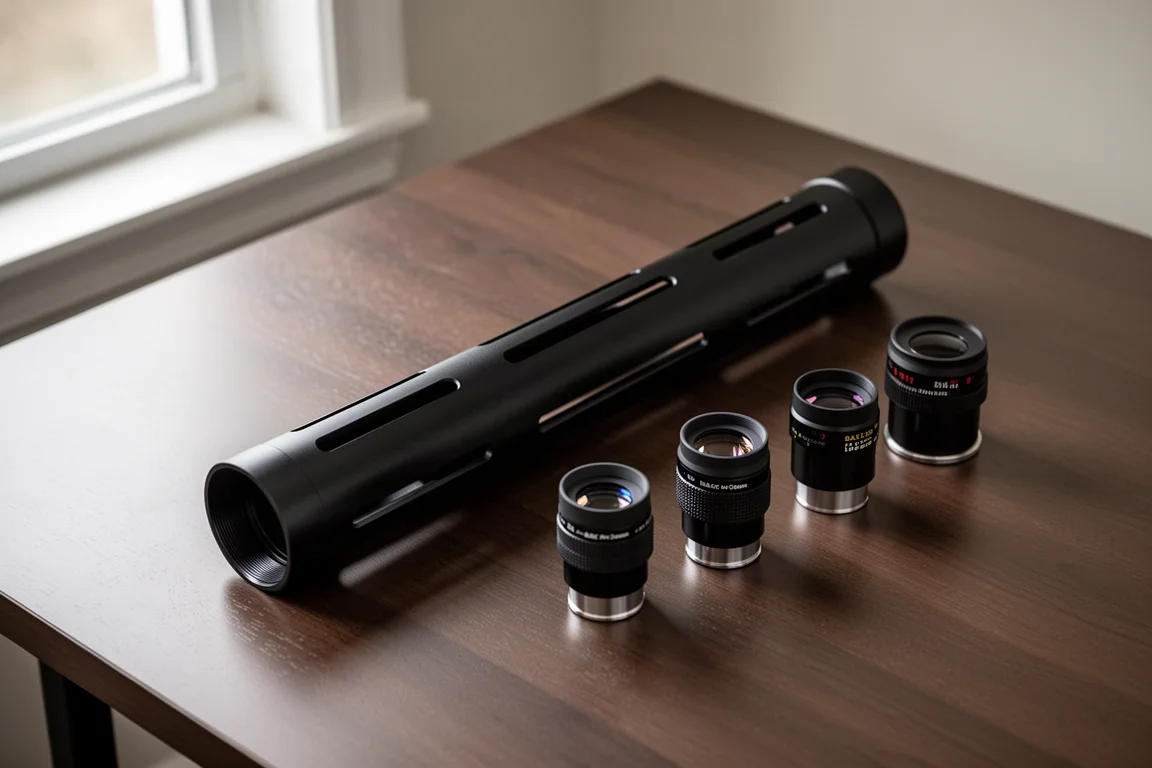
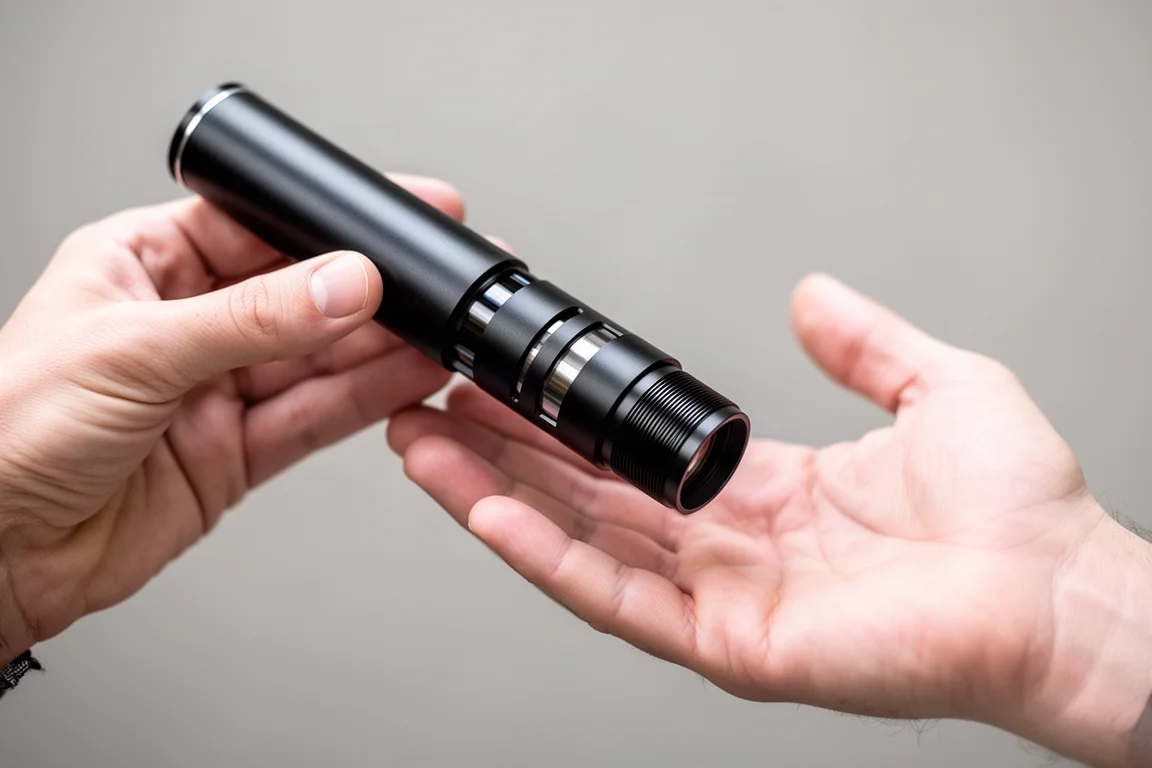
This is the strangest and most charming part of the product. Orion’s official instructions say: “The simplest way to change the magnification of the Barlow is to tap one end against the palm of your hand and slide the cell to the desired position.” In practice, that means you bang the Barlow on your hand until the internal lens cell slides where you want it. Or, as one owner put it, you can just bang it on the table.
The engineering behind this is actually clever. The designers needed the lens cell to slide up and down without falling out of either end of the tube, and they could not let anything protrude beyond the sacred 1.25-inch diameter, or it would no longer fit in a focuser. Their solution: cut slots in both sides of the barrel and fit tiny flathead screws that travel along the slots, acting as stoppers to keep the cell contained.
Using It on Jupiter
The real-world test used a 32 mm eyepiece in a 10 inch Dobsonian with a 1200 mm focal length. That works out to about 38X on its own, showing Jupiter as a bright ball with a few moons floating around it.
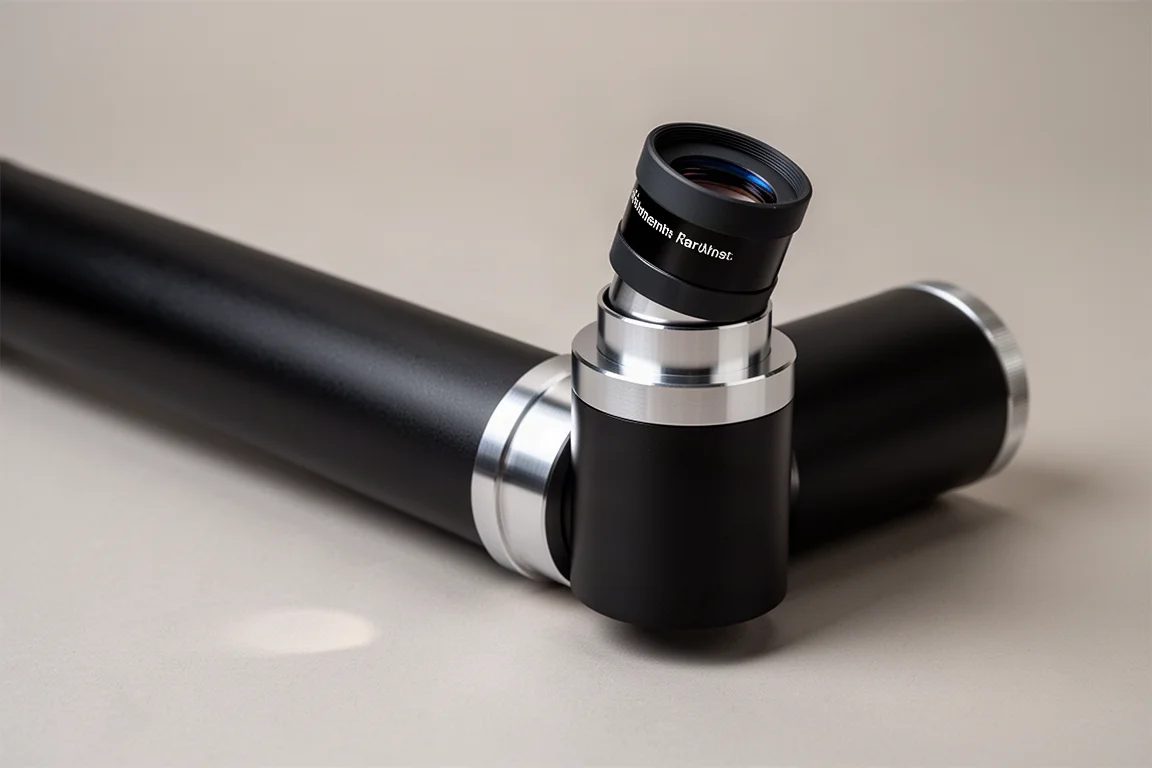
Sliding the Barlow to 2X and reinserting the eyepiece pushed the magnification to about 75X. Visually it was sharp, with a couple of Jupiter’s storm bands clearly visible. Moving the cell to the 3X end brought the magnification to about 113X, and there was a catch: with the focus tube fully extended, sharp focus was still out of reach. The whole Barlow had to be pulled partially out of the focuser to reach focus. Fortunately, this Barlow is incredibly long, so there was still plenty of barrel to clamp onto. It reached focus fine, but it looked a little odd hanging out of the focuser.
Things to Consider Before Buying
The dust problem is the big one. You can cap each end of the Barlow to keep dust out of the optical path, but the two slots running along both sides of the barrel remain open, letting dust in regardless. Storing it with lens paper wrapped around the barrel is a practical workaround, and used examples may arrive with varying levels of dust exposure.
The full-extension focus issue is worth noting too. At 3X magnification, some telescopes may not have enough focuser travel, requiring you to pull the Barlow partway out of the focuser tube. The extra-long body makes that manageable, but it is an awkward look at the eyepiece.
One more reason for the product’s disappearance may simply be competition: high quality zoom eyepieces have risen in popularity, and they achieve similar flexibility without an adjustable lens cell.
Buying Advice
Since Orion no longer produces these, your only route is the used market, which is exactly how many owners acquired theirs. Check that the lens cell slides smoothly and that the set screws are intact, since they are what keep the cell from falling out of either end. Inspect the optics through the slots for dust, and factor in the storage workaround. If you accept those quirks, you get a genuinely versatile Barlow that covers every magnification between 2X and 3X, something no fixed Barlow can offer.
Conclusion
The Orion Variable Power Barlow is a rare and clever piece of amateur astronomy engineering: fully analog, infinitely adjustable between 2X and 3X, and honest about its quirks. The sliding-cell design demands a tap on the palm and some tolerance for dust slots and long focuser extensions. For observers who enjoy tactile, unusual gear and are comfortable buying used, it remains one of the more interesting Barlows ever made.
Product link
View more details for Orion Variable Power Barlow Lens
This product is mentioned in the review. Check the specifications, options, and compatibility before buying.
View more details for Orion Variable Power Barlow LensFurther reading
Related Reviews
Astrophotography
RBFocus Merlin Autofocuser Review: A Premium Focuser Without the Premium Price
A detailed look at the RBFocus Merlin autofocuser, covering its easy installation, zero backlash performance, and the 12V power requirement you need to know about.
Astrophotography
Wanderer Astro ETA Review: Automatic Tilt Adjustment for Astrophotography
The Wanderer Astro ETA promises to solve one of astrophotography's most frustrating problems: sensor tilt. We tested it on a full-frame camera to see if it delivers.
Fountain Pens
Artcraft Mars Rover Pen Review: A Handmade Fountain Pen With Real Martian Detail
John Hubbard's Artcraft Mars Rover pen packs 47-piece limited-edition charm, ceramic coating, a Franklin-Christoph nib, and thoughtful extras into a well-priced astronomy-themed writer.