Bookshelf Speakers
Opera Prima 2015 vs Sonus Faber Lumina II Amator vs Emotiva XB2: Three Bookshelf Speakers Compared
Three bookshelf speakers at three price points, compared on build, specifications and sound, with clear guidance on which one deserves your money.
Introduction
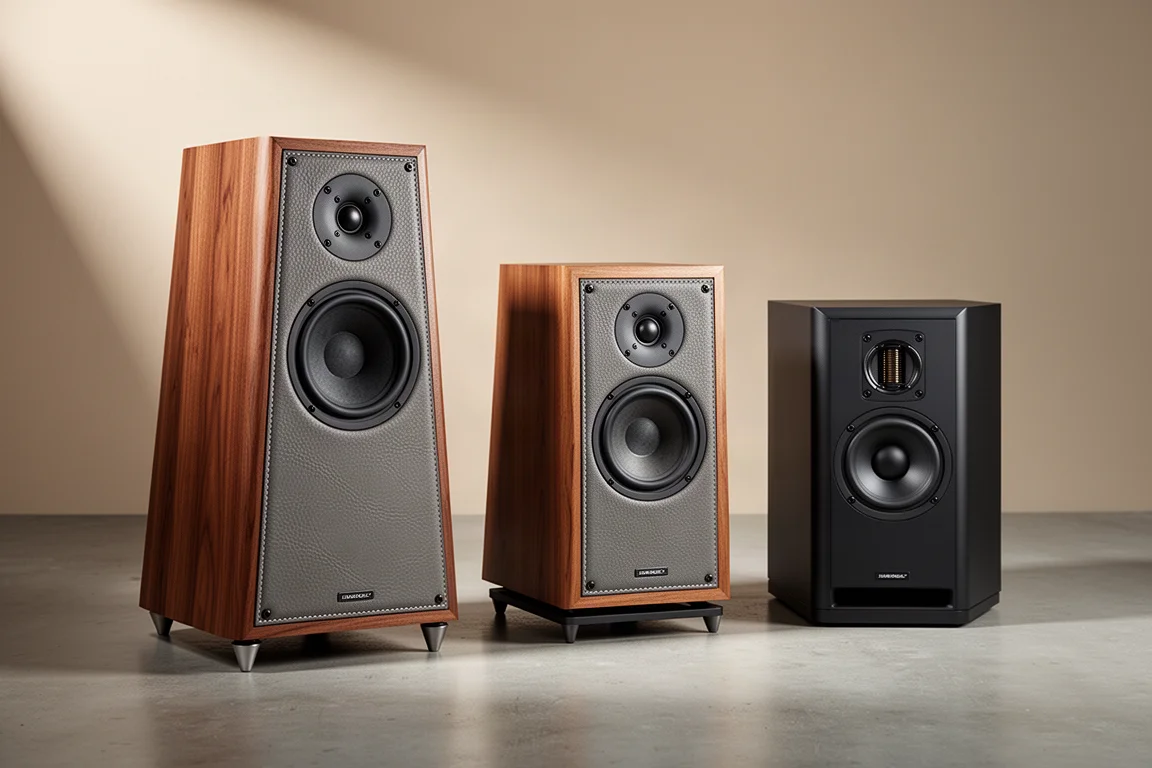
Putting three bookshelf speakers from three different price points into the same room is a fast way to learn what money actually buys in hi-fi. The Opera Prima 2015 sells for around $2,500, the Sonus Faber Lumina II Amator for $1,499, and the Emotiva XB2 for $499 before any discounts. That is roughly a five-to-one spread, and yet all three are legitimate contenders inside their own brackets.
This comparison ran across two rooms, several integrated amplifiers and a wide range of music. The outcome is straightforward: the Opera Prima 2015 is the strongest performer of the three and earns a place among the best bookshelf speakers available today. The Sonus Faber remains an excellent, beautifully made speaker with a fuller lower midrange. The Emotiva, at a fifth of the Opera’s price, holds its own far better than the price gap suggests.
How These Three Speakers Compare on Paper
Specifications first, because they explain much of what follows.
- Opera Prima 2015: 91 dB sensitivity, 4 ohm nominal impedance, 40 Hz to 20,000 Hz, crossover at 2,000 Hz, 7 inch Scan-Speak woofer, 1 inch soft dome tweeter, 21 lb per speaker, 14 inches tall.
- Sonus Faber Lumina II Amator: 86 dB sensitivity, 4 ohm nominal impedance, 55 Hz to 24,000 Hz, crossover at 2,600 Hz, 29 mm tweeter, 150 mm paper cone woofer, 12.8 lb per speaker.
- Emotiva XB2: 86 dB efficiency, 4 ohm nominal impedance, 48 Hz to 27,000 Hz, crossover at 2,600 Hz, 25 mm folded ribbon tweeter, 6 inch woven cone woofer, 18 lb per speaker.
The Opera is far and away the most sensitive of the three at 91 dB, and it is also the largest and heaviest, at 21 lb each, 14 inches high, roughly 9 inches wide at the baffle and about 11 inches deep. The Sonus Faber is the smallest and lightest at 12.8 lb. All three are 4 ohm nominal designs, so none of them is a trivially easy load for an amplifier.
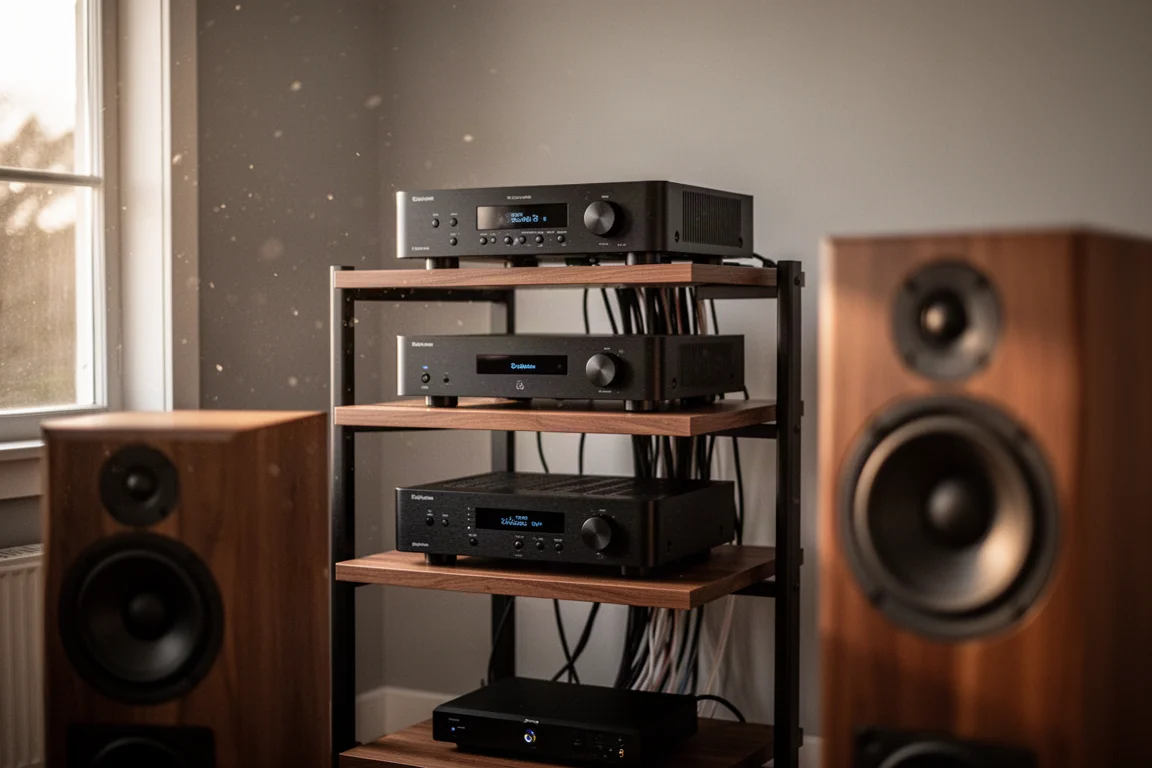
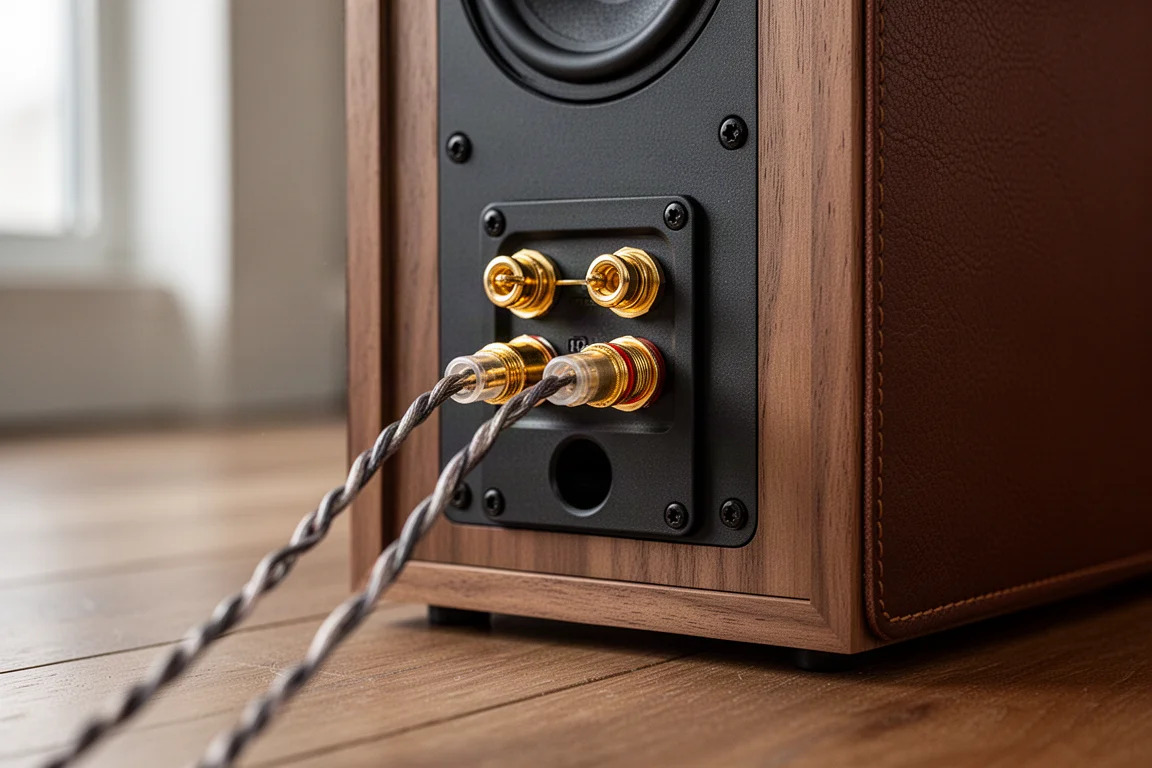
Crossover points are worth noting because they shape the character of each speaker. The Opera hands off between woofer and tweeter at 2,000 Hz, lower than the 2,600 Hz used by both the Sonus Faber and the Emotiva. Cabinet loading also differs: the Opera is front ported, the Sonus Faber is bottom ported and the Emotiva is rear ported, which matters if you need to place a speaker close to a wall. Finally, the Opera cannot be bi-wired or bi-amped, while the Sonus Faber and the Emotiva both can.
Opera Prima 2015: Handmade in Italy
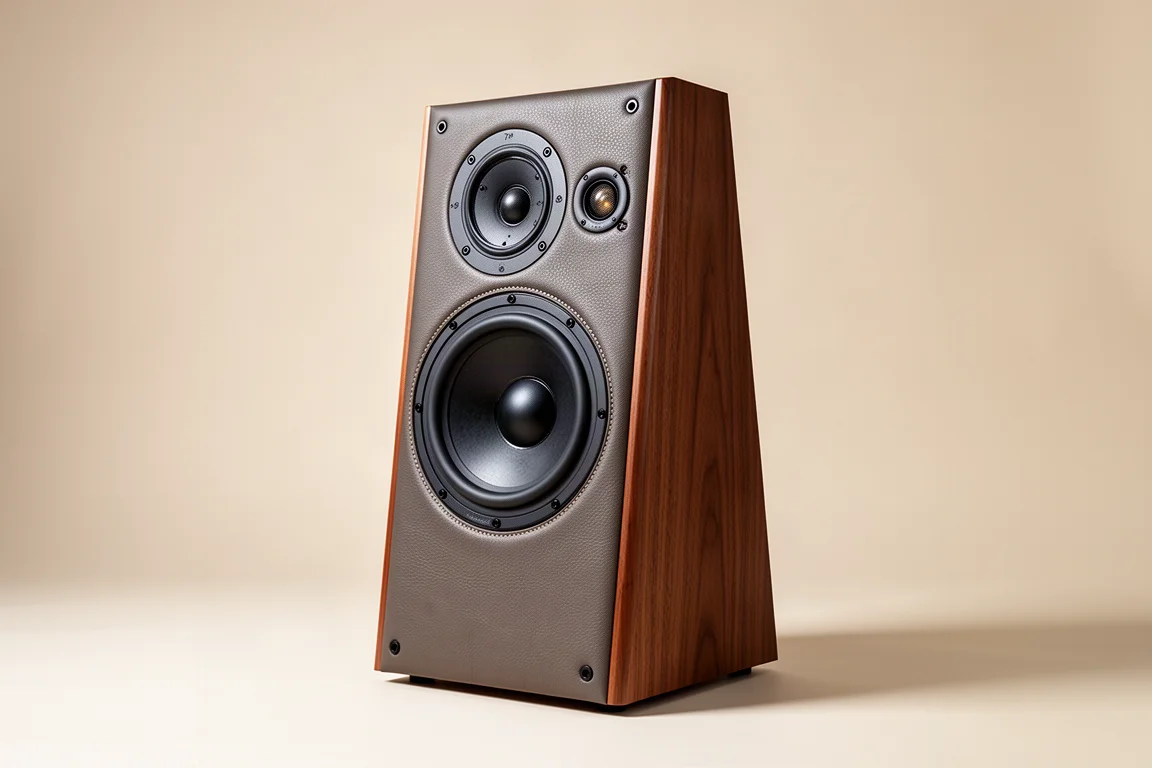
The Prima 2015 is built by hand in Italy, and its drivers come from Scan-Speak: a 7 inch woofer made specifically for Opera, paired with a 1 inch soft dome tweeter. The cabinet has a tapered, slightly triangular profile with wood side panels and a leather-wrapped top and front, and the pairs are mirror images of one another, with the tweeters offset rather than centred.
That offset arrangement is not purely cosmetic. It contributes to the wide, stable image the speaker produces. At 21 lb each and 14 inches tall, this is a substantial standmount, and the size is as visible in the finish as it is in the measurements. Up close, the cabinet work explains where a good part of the money goes.
The Prima 2015 sells for about $2,500, and unlike most of its competition it cannot be bi-wired or bi-amped. Retail availability is also limited, since relatively few dealers stock Opera speakers.
Sonus Faber Lumina II Amator: Compact and Refined
The Lumina II Amator uses a 29 mm tweeter and a 150 mm paper cone woofer crossed at 2,600 Hz, with a claimed response of 55 Hz to 24,000 Hz. Sensitivity is 86 dB into a 4 ohm nominal load, which means it is not the easiest speaker to drive, though it was comfortable on every solid-state amplifier used in this comparison. Tube amplifiers are a less certain match.
Physically it is the smallest of the three at 12.8 lb, with a leather-look wrap across the top and sides and a wood front baffle. It is bottom ported, which makes near-wall placement easier, and it supports both bi-wiring and bi-amping. At $1,499 it sits in the middle of this group, and the finish is genuinely attractive.
In listening, the Lumina II Amator leans toward fullness rather than analysis. Its lower midrange is richer than the Opera’s and voices carry more weight, but fine detail is not quite as easy to pick out.
Emotiva XB2: A Strong Value Proposition
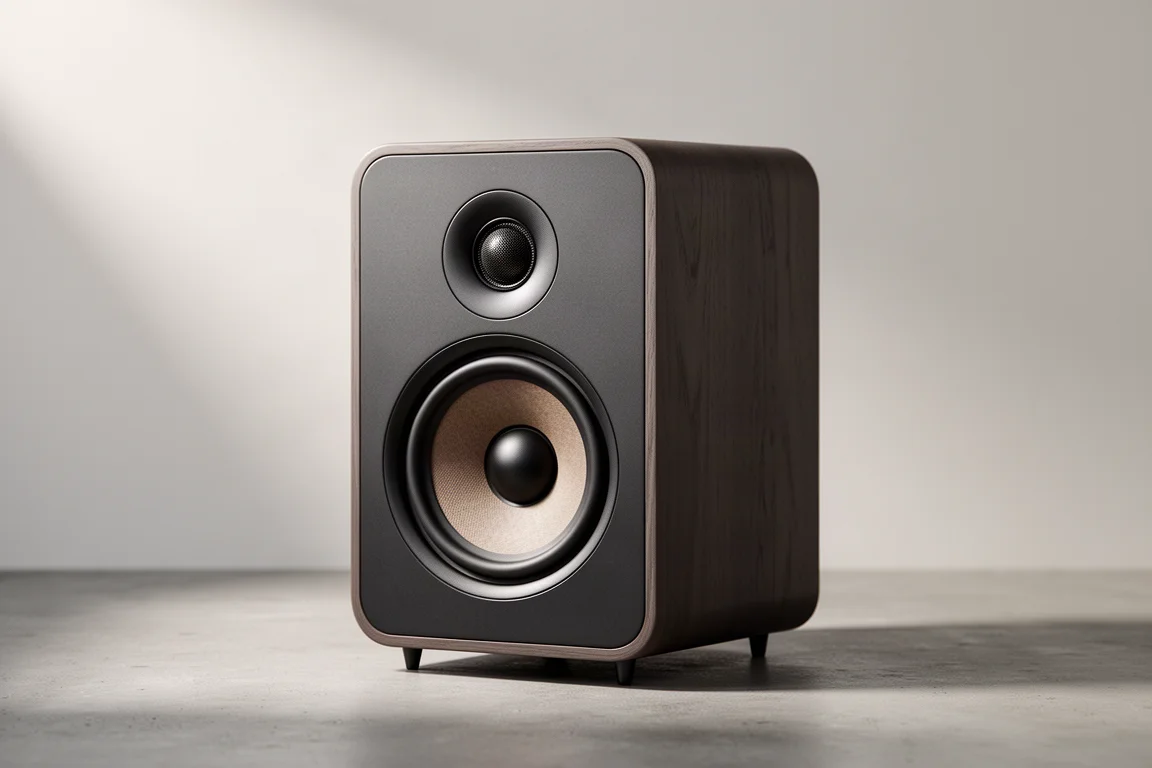
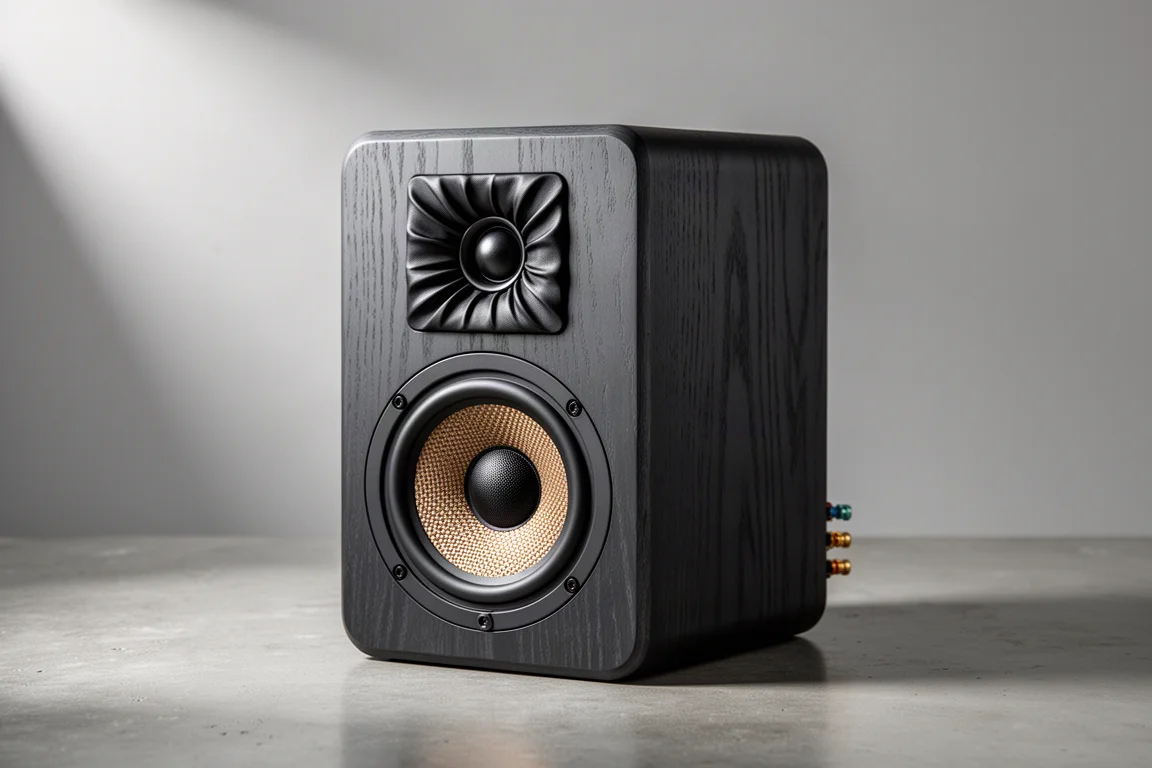
The XB2 pairs a 25 mm folded ribbon tweeter with a 6 inch woven cone woofer, crossed at 2,600 Hz, and is rated from 48 Hz to 27,000 Hz. Efficiency is 86 dB with a 4 ohm nominal impedance, and the cabinet measures 12.8 inches high, 8.5 inches wide and 11.5 inches deep at 18 lb each. It is rear ported and supports bi-wiring and bi-amping.
At $499 before any discounts it is the outlier here, and Emotiva also offers a military discount along with bundle discounts for purchases above $1,000 or $2,000. The cabinet is wrapped on the top, sides and bottom with a black front baffle, and the binding posts look like what you would expect at this price rather than at $2,500.
Listening Notes: Where the Differences Show Up
Against the Sonus Faber, the Opera was consistently the more resolving speaker. On Fleetwood Mac’s “The Chain,” the Opera added air and reverb around the cowbell, while the Sonus Faber gave the bass drum more fullness but less clean definition. The Opera’s low end was punchier and better controlled.
On Tracy Chapman’s “Give Me One Reason,” the pattern reversed in the lower midrange: the Sonus Faber was fuller and her voice carried more weight, but the Opera was the more detailed of the two. On Metallica’s “Wherever I May Roam,” the snare was noticeably more forward and snappier through the Opera, and individual cymbal hits were easier to separate. On Miles Davis’s “So What,” the bassline was fuller on the Sonus Faber, while the trumpet was more forward and more cleanly defined on the Opera, detailed enough to reveal small things in the recording.
Neither speaker is fatiguing, which matters if you like to listen at volume. The Opera simply came across as the better balanced design from bottom to top.
Against the Emotiva, the gap narrowed. At the same point in “The Chain,” the Emotiva showed roughly the same detail, perhaps a touch more air, and both speakers had a similar pop on the bottom end, though the Opera was more controlled and hit harder. The Opera’s lower crossover point gives it better continuity through the vocal range, and on Tracy Chapman the presentation was seamless enough to sound live rather than reproduced. The Emotiva was not embarrassed at a fifth of the price, but the Opera was the better speaker.
Amplifier Pairing and Room Considerations
The Opera played well with every amplifier used, and it was transparent enough to reveal the character of each one. Despite the 91 dB sensitivity, it responds well to power: with more powerful amplification the bass impact became more obvious. A class AB or class A biased integrated warmed the lower midrange in a way that suited the speaker particularly well, while a cleaner, more analytical amplifier produced a leaner presentation that still sounded very good.
The Opera can also play loudly and fill a large room, which makes it more flexible than its size suggests. The Sonus Faber handled every solid-state amplifier in the comparison without complaint, and the Emotiva presents a similar load at 86 dB and 4 ohms. Placement is the other variable to plan for: the Opera’s front port and the Sonus Faber’s bottom port are easier to work with near a wall than the Emotiva’s rear port.
Buying Advice
The right choice comes down to budget and priorities rather than to which speaker is objectively best.
The Emotiva XB2 at $499 is the value pick. It gives you a ribbon tweeter, a woven cone woofer and a genuinely competitive sound for a fraction of the outlay, and its discount options make it even easier to justify.
The Sonus Faber Lumina II Amator at $1,499 is the choice for a compact room and a fuller, weightier lower midrange. It is beautifully finished and easy to live with, provided you have solid-state amplification on hand.
The Opera Prima 2015 at $2,500 is the best of the three. It is the most balanced, the most detailed and the most dynamically convincing, and the hand-built Italian cabinet explains a good part of the price.
Compared with other speakers at or above its price, the Opera stood out for its clarity, while a similarly priced standmount with a warmer tonality was less convincing. The closest sound at a lower price came from a floorstanding Q Acoustics model at $1,500 a pair, which gives up some midrange clarity and top-end air. A smaller Q Acoustics standmount shares some of the Opera’s character but hits nowhere near as hard in the bass.
If clarity, detail and build quality are the priorities and the budget allows, the Opera is the one to buy. If the budget is tighter, the Emotiva gets you much of the way there for a fifth of the money.
Conclusion
Three price points, three credible speakers. The Emotiva XB2 proves that $499 still buys a serious bookshelf speaker. The Sonus Faber Lumina II Amator delivers a refined, compact design with a fuller lower midrange. The Opera Prima 2015 is the most complete of the three, with the best balance, the most detail and the most convincing dynamics, and it earns its place among the best bookshelf speakers on the market.
Further reading
Related Reviews
Bookshelf Speakers
Acoustic Energy A100 Mark II Review: A Compact Standmount With an Expansive Soundstage
The Acoustic Energy A100 Mark II brings clarity, natural tonality and a wide soundstage to an entry-level standmount, with a few setup details worth knowing first.
Bookshelf Speakers
Acoustic Energy AE-100 Mark II Review: Compact Bookshelf Speakers With Standout Imaging
A compact British two-way bookshelf speaker with deep, layered imaging, fast bass, and a slight treble lift to weigh against a crowded $500 field.
Bookshelf Speakers
Acoustic Energy AE100 MK2 Review: Measured Performance and Four Alternatives
A close look at the Acoustic Energy AE100 MK2 bookshelf speaker, what its measured performance reveals, and four alternatives with different trade-offs.