Hi-Fi Speakers
Open Baffle Speakers Compared: Maco Mercurius, Magnepan 3.7i, and GR Research Kits
A practical comparison of four boxless speaker options, from the Maco Mercurius and Magnepan 3.7i to the GR Research NX Extreme and Triple Threat kits, and the trade-offs that matter before you buy.
Introduction
Most loudspeakers house their drivers in a cabinet. Open baffle designs do not, and that single decision shapes how they sound, how they are placed, and how much room they need. This comparison covers four boxless options that sit at very different points on the price and effort scale: the Maco Mercurius, the Magnepan 3.7i, the GR Research NX Extreme, and the GR Research Triple Threat subwoofer.
If you are shopping for an open baffle speaker, the useful question is not which one is best in the abstract. It is which set of trade-offs fits your room, your amplifier, and your appetite for assembly.
Understanding the Open Baffle Approach
Open baffle speakers are called open baffles because there is no box. The drivers are mounted on a baffle and radiate front and rear, which removes the boxy resonance and the cabinet coloration that a traditional enclosure contributes. The practical result is a presentation that lets you hear the drivers more directly, without the cabinet adding its own character.
Bass changes too. Low frequencies from an open baffle are less pressurized and less impactful than from a sealed or ported box. They tend to be more linear and to fill the room rather than pressurize it, so the physical chest-thump sensation is reduced compared with a box design.
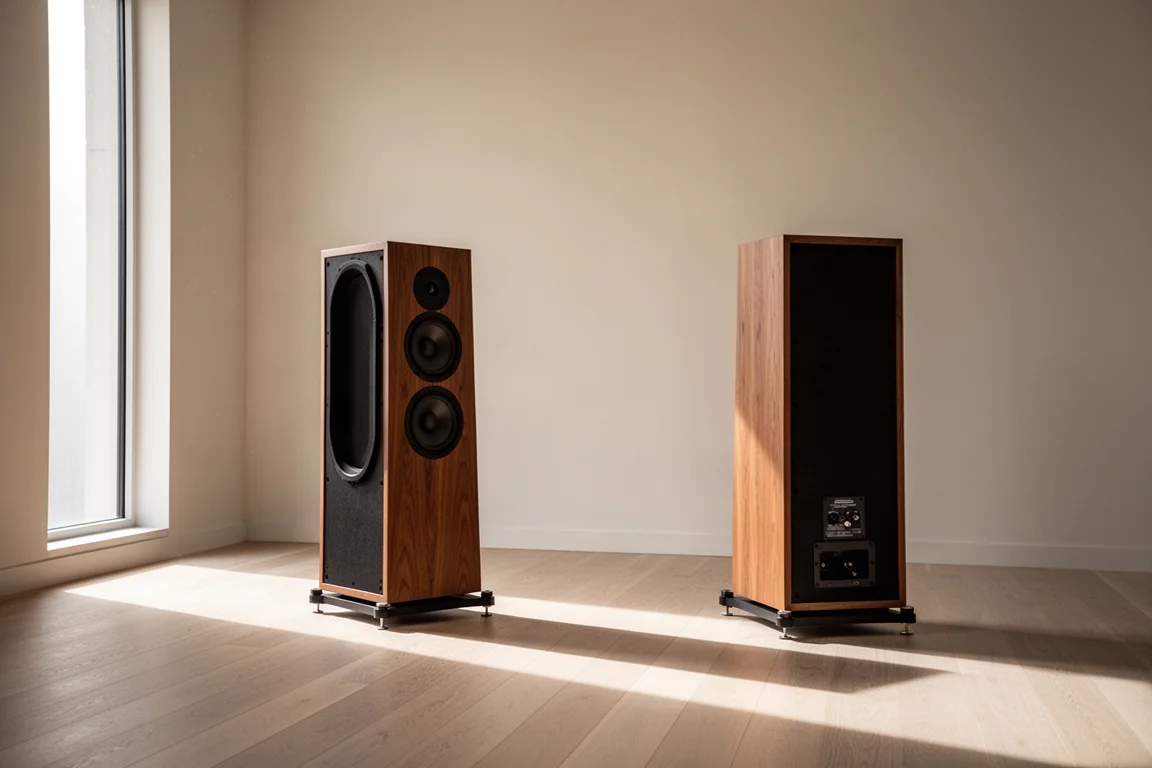
Placement carries more weight than it does with a box speaker. Because open baffle designs radiate in both directions, the distance to the wall behind them affects how much bass reinforcement you get and how controlled it sounds. Many owners end up pulling the speakers well out into the room, which is worth planning for before you buy.
Maco Mercurius: The Flagship Open Baffle
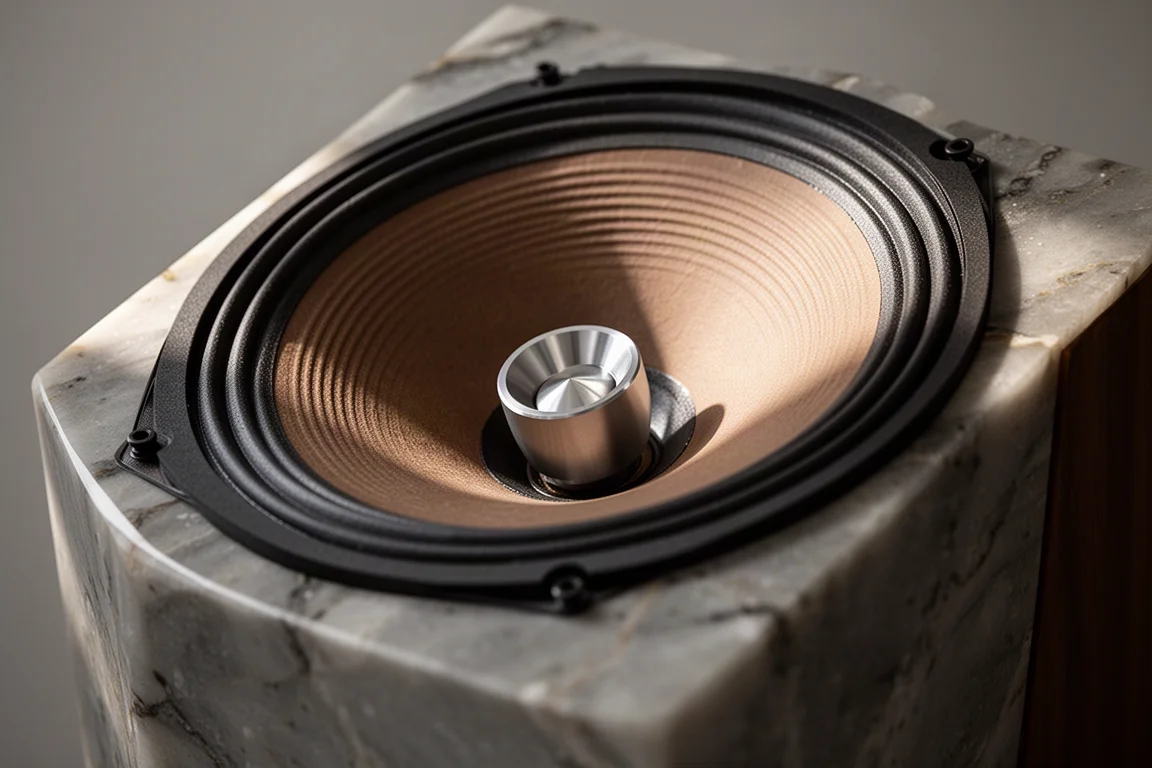
The Maco Mercurius is a cost-no-object open baffle design built around two 15-inch paper cone drivers, manufactured to Maco’s specifications. The upper driver carries a phase plug and handles almost everything above 300 Hz. It is a full-range driver in its own right, and some builders use it alone on a baffle. The lower 15-inch driver augments the bass, reaching down to 30 Hz and lower in a suitable room.
Because one driver covers everything above 300 Hz, instruments and vocals arrive from a single point source rather than from several drivers crossed over higher up. The phase plug also extends the high frequencies and improves dispersion, directing sound toward the listener instead of letting it interact with the large cone surface and generate reflections. The baffle itself is sculpted into a large waveguide to improve dispersion and sensitivity while minimizing diffraction and reflections.
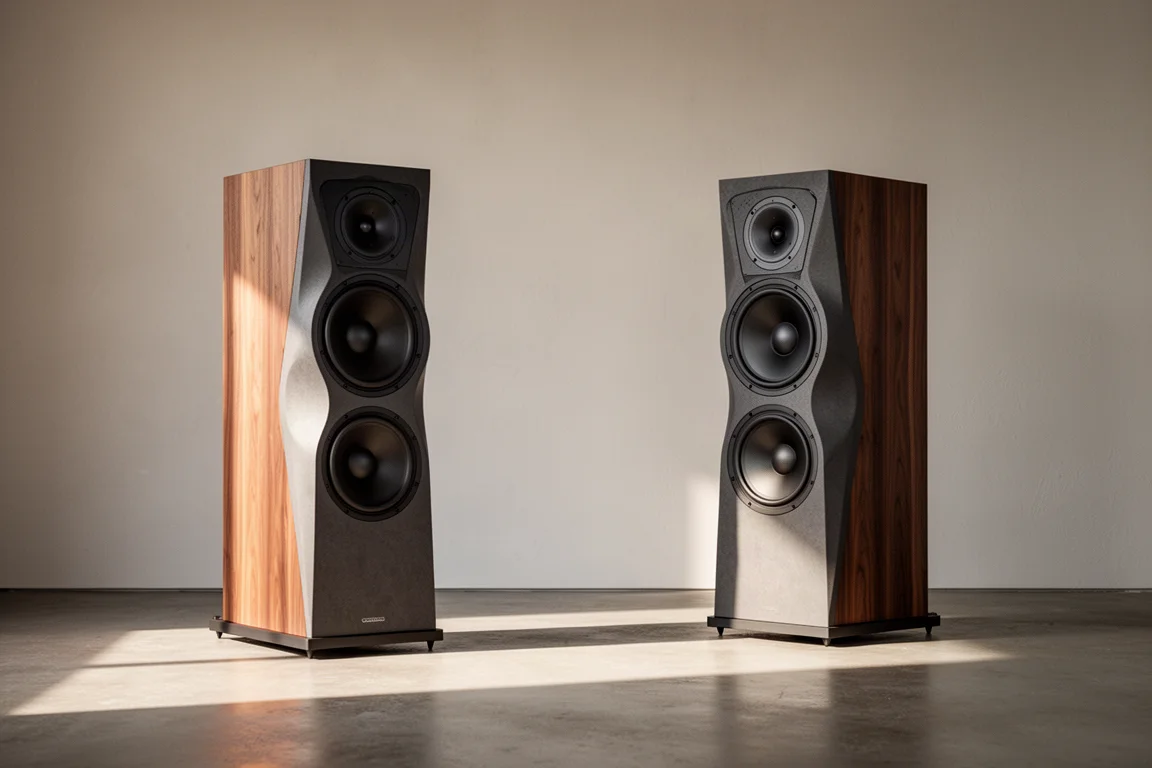
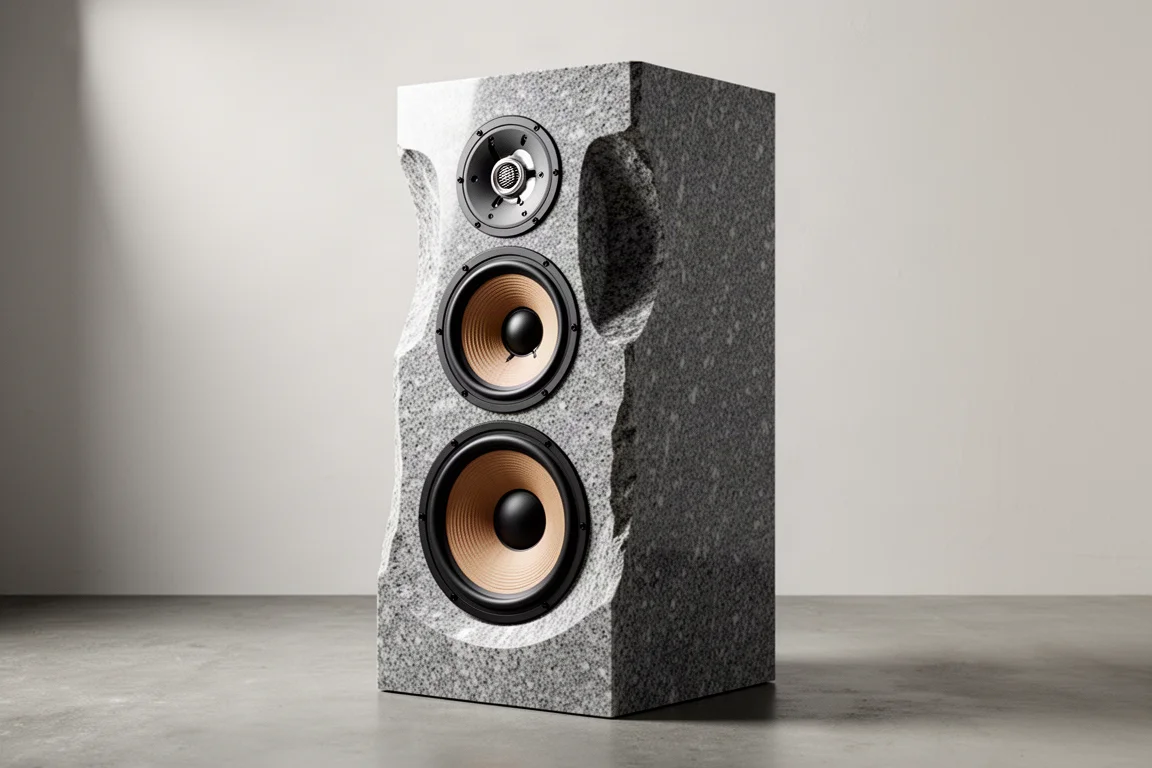
Baffle material is both a sonic and a financial decision. Maco states that granite and quartz versions have advantages in soundstage and air, birch plywood in neutrality, and solid wood in overall warmth. The granite pair is unusually heavy at roughly 140 lb per speaker. Pricing runs from about $6,300 in birch plywood to $9,500 in solid wood, with the granite version totaling $13,500 including the optional floating stand at $500.
In practice, the Mercurius does not present itself as a large speaker. Its centre image is focused and coherent, staying locked in place whether the speakers are toed in or angled out toward the room. Side imaging is less precise, and the soundstage is wide and deep with strong layering. Bass extends far enough that a subwoofer is unnecessary, and the 15-inch woofer moves enough air to produce low frequencies you feel rather than only hear. Around 6 ft from the rear wall is ideal, and at 2 ft the bass stays controlled rather than boomy; a crossover tuning with less bass output is available for closer placement.
The midrange is warm and musical, with coherent vocals and good texture and nuance, though it is not the most detailed or attention-grabbing midrange on the market. Tonality leans slightly warm, rich and full-bodied, with transparency and detail present without dominating. The treble is detailed and sweet. Sensitivity is rated at 91 dB, so amplification demands are modest: above 20 watts should be enough in most rooms, and 50 watts or more suits very large spaces. The speaker responds clearly to the character of the amplifier behind it, and the final external crossovers are expected to use higher-grade parts than the prototypes, housed in their own enclosure.
Magnepan 3.7i: Panel Transparency and Speed
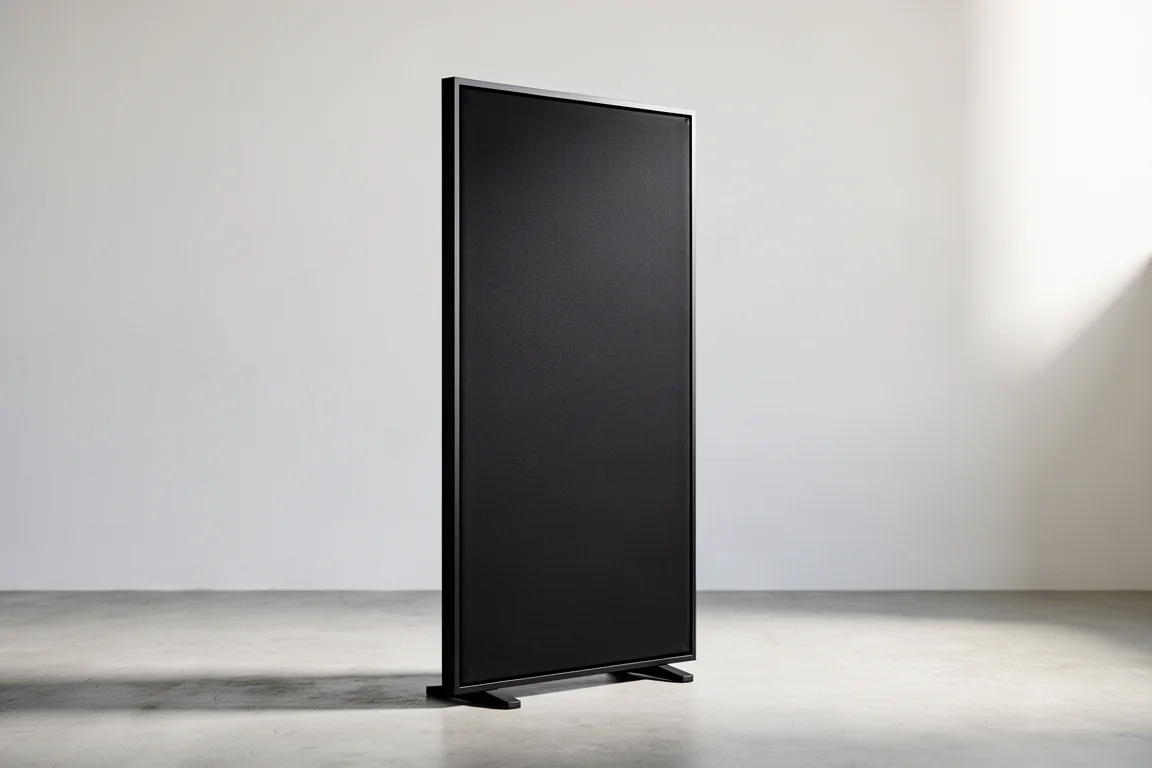
The Magnepan 3.7i approaches the boxless idea from a different direction. As a panel speaker it has no cabinetry at all, and the transparency, openness and speed that follow from that are hard to beat, even for a high-end open baffle design. The Mercurius is not far behind on openness and transparency, which is a strong result for a design using conventional dynamic drivers.
Bass is where the two separate most clearly. Panel speakers are not at their strongest in the low end, and the 3.7i cannot match the depth, output and impact of the Mercurius. The 15-inch driver in the Mercurius moves considerably more air, producing the kind of bass you feel in your chest, something the 3.7i does not deliver in the same way.
In character, the Mercurius is warmer and richer, with the scale and dynamics that dynamic drivers bring. The 3.7i trades those qualities for ultimate transparency, openness and speed. Neither approach is better in the abstract, and the decision comes down to which strengths bring you more enjoyment.
GR Research NX Extreme: The Kit Build Route
The GR Research NX Extreme is the company’s flagship open baffle speaker, sold as a kit only, which means assembly is part of the purchase. The kit is priced at $5,185, well below what a finished speaker of comparable ambition tends to cost.
Compared with the Mercurius, the NX Extreme sounds leaner but more transparent and nuanced through the midrange, where the Mercurius is fuller and meatier. Both speakers image and layer well, and because they were heard in different rooms it is difficult to say which produces the wider or deeper soundstage. The Mercurius keeps its imaging more firmly locked in place and more coherent, while side imaging is easier to pinpoint on the NX Extreme.
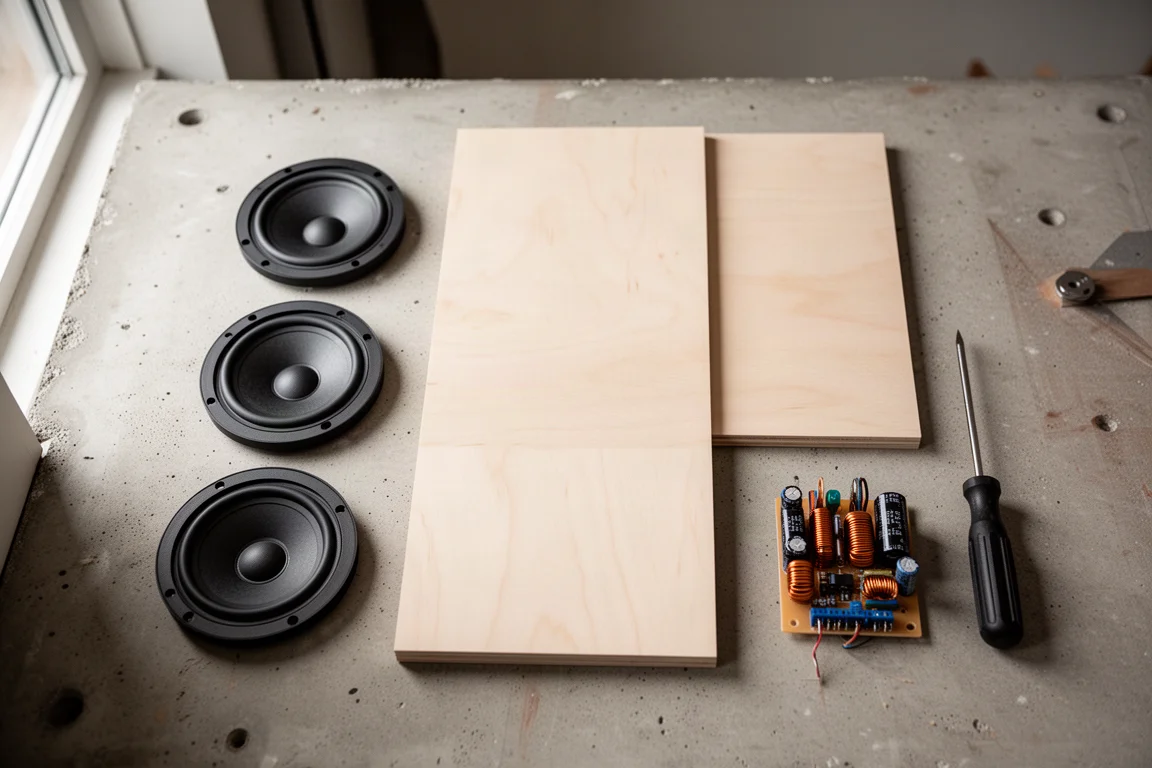
Bass follows the classic open baffle pattern: it fills the room rather than pressurizing it, so the chest-level punch of a box design is absent. Paired with two Triple Threat servo-controlled subwoofers, the combined kit total came to about $9,100. The trade-off is simple to state. The NX Extreme asks for your time and tools in exchange for a lower price and a more transparent midrange.
GR Research Triple Threat: Open Baffle Bass
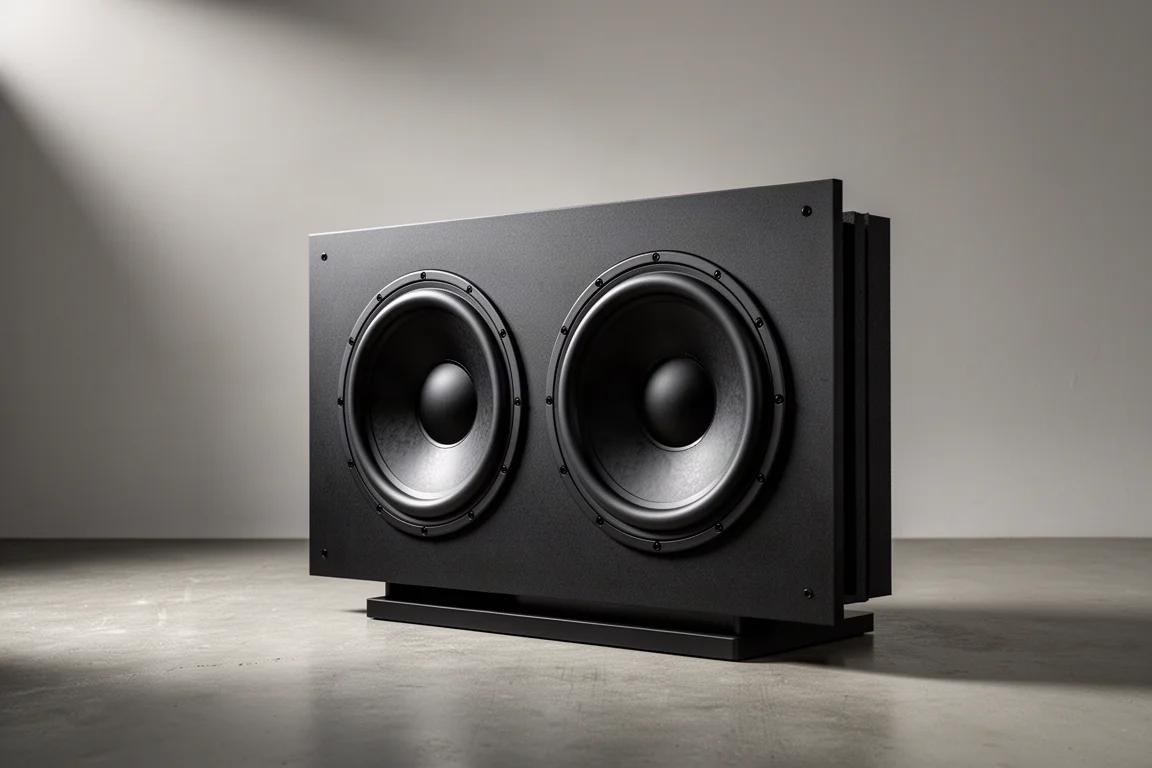
The Triple Threat is GR Research’s servo-controlled open baffle subwoofer, also sold as a kit. It is designed to extend the low end of an open baffle system without abandoning the boxless character of the main speakers, and a pair used with the NX Extreme brought the combined kit total to about $9,100.
Because it is an open baffle subwoofer, it behaves differently from a sealed or ported design. Output is linear and room-filling rather than pressurized, so the physical punch associated with a box subwoofer is reduced. For listeners who value the unpressurized character of open baffle bass and want more extension and output than a pair of full-range baffles provides alone, this is the matching route.
Buying Advice: Matching an Open Baffle Speaker to Your Room
Budget and effort are the first filters. The GR Research NX Extreme kit starts at $5,185, and a pair of Triple Threat subwoofers brings a combined kit system to about $9,100. The Maco Mercurius runs from about $6,300 in birch plywood to $9,500 in solid wood, with the granite version at $13,500 including the floating stand.
Placement is the second filter. Open baffle speakers reward being pulled out from the rear wall. The Mercurius works well around 6 ft out and stays controlled at 2 ft, where a lower-bass crossover tuning is also available. If your room only allows speakers close to the wall, that flexibility matters.
Amplification is the third. At 91 dB sensitivity the Mercurius does not demand a large amplifier: 20 watts is enough in most rooms, and 50 watts or more suits very large spaces. It also responds audibly to the character of the amplifier behind it, which is helpful if you want to shape the sound and less helpful if you prefer a fixed result.
Finally, decide how much bass pressure you want. If the chest-pounding pressurization of a box design is essential, an open baffle speaker will not reproduce it in the same way. If you value a linear, room-filling low end and the openness that comes from removing the cabinet, these designs are built around exactly that.
Conclusion
Four boxless designs, four different propositions. The Maco Mercurius is the most complete statement of the open baffle idea here, with point-source coherence above 300 Hz, deep bass that removes the need for a subwoofer, and a baffle material choice that shapes both sound and price. The Magnepan 3.7i is the specialist, offering transparency and speed with bass as the compromise. The GR Research NX Extreme and Triple Threat suit listeners willing to build, trading assembly time for a lower entry price and a leaner, more transparent midrange.
Match the speaker to your room and your amplifier, and the decision becomes far easier.
Further reading
Related Reviews
Hi-Fi Speakers
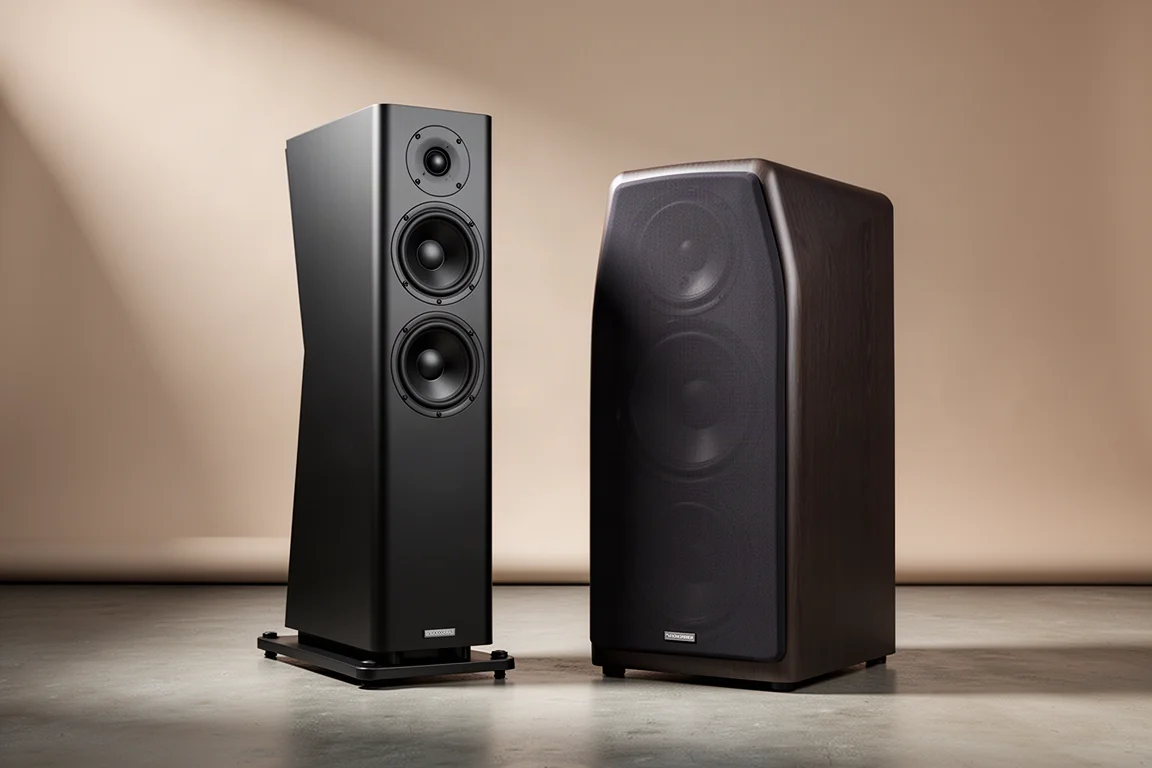
1723 THX Tower vs 1528 Bookshelf: Which Speaker Fits Your Room?
Two speakers at roughly the same price, built very differently. How the 1723 THX tower and the 1528 bookshelf compare on construction, bass, power needs, and sound.
Hi-Fi Speakers
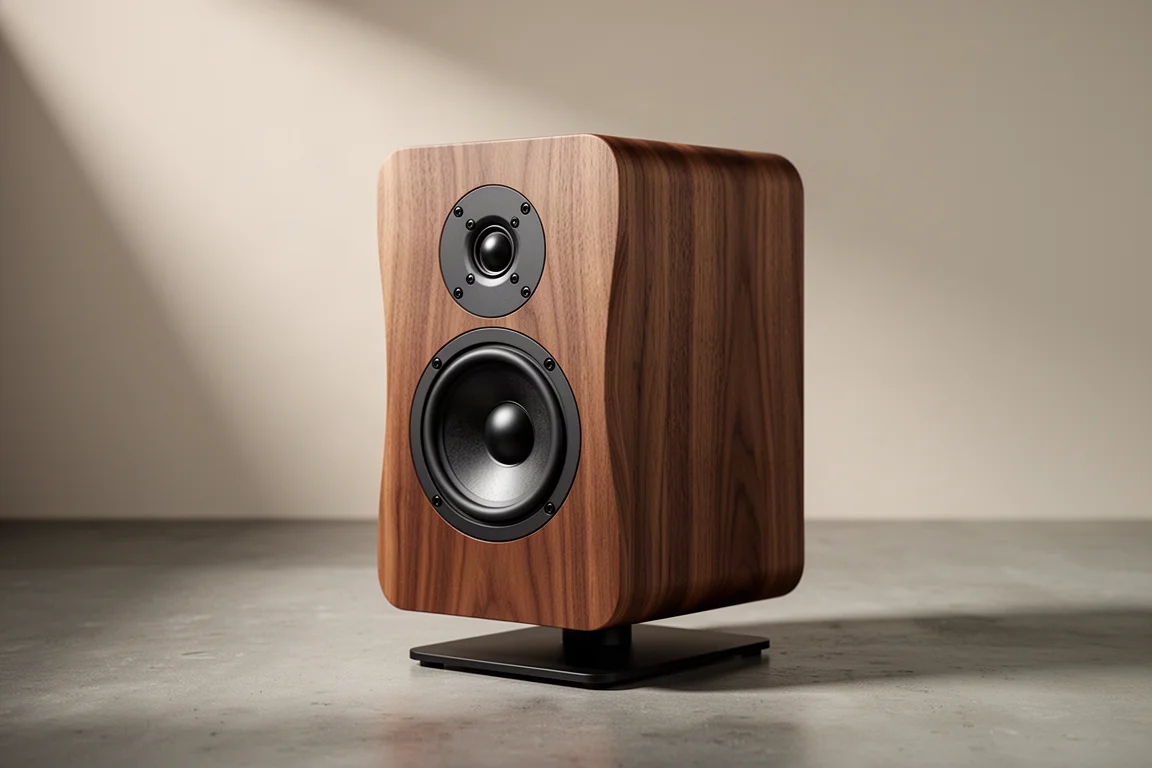
Acoustic Energy AE 300 Review: Deep Bass From a Compact Standmount
A two-way standmount with real wood veneer, surprising low-end weight, and a warm, easygoing character. Here is what to know before buying.
Hi-Fi Speakers
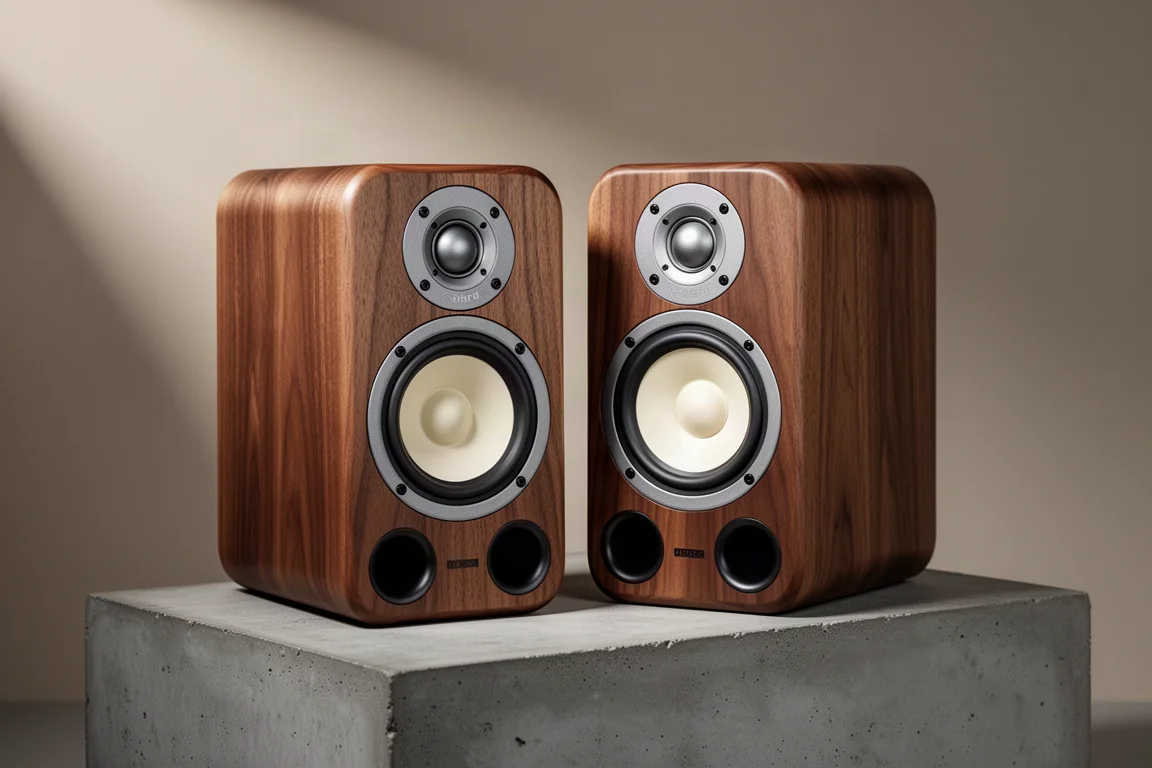
Acoustic Energy AE1 40th Anniversary Review: A Modern Take on a British Classic
A compact standmount that revives a 1980s favorite with all-new parts, a warm mid-centric balance, and a price of £1,499 per pair.