AV Receivers
Onkyo TX-SR3100 Review: A Sub-$400 AV Receiver for Stereo and Home Theater
A 5.2 channel Dolby Atmos receiver with 80 watts per channel, four HDMI 2.1 inputs, and power delivery that stays composed under demanding speaker loads.
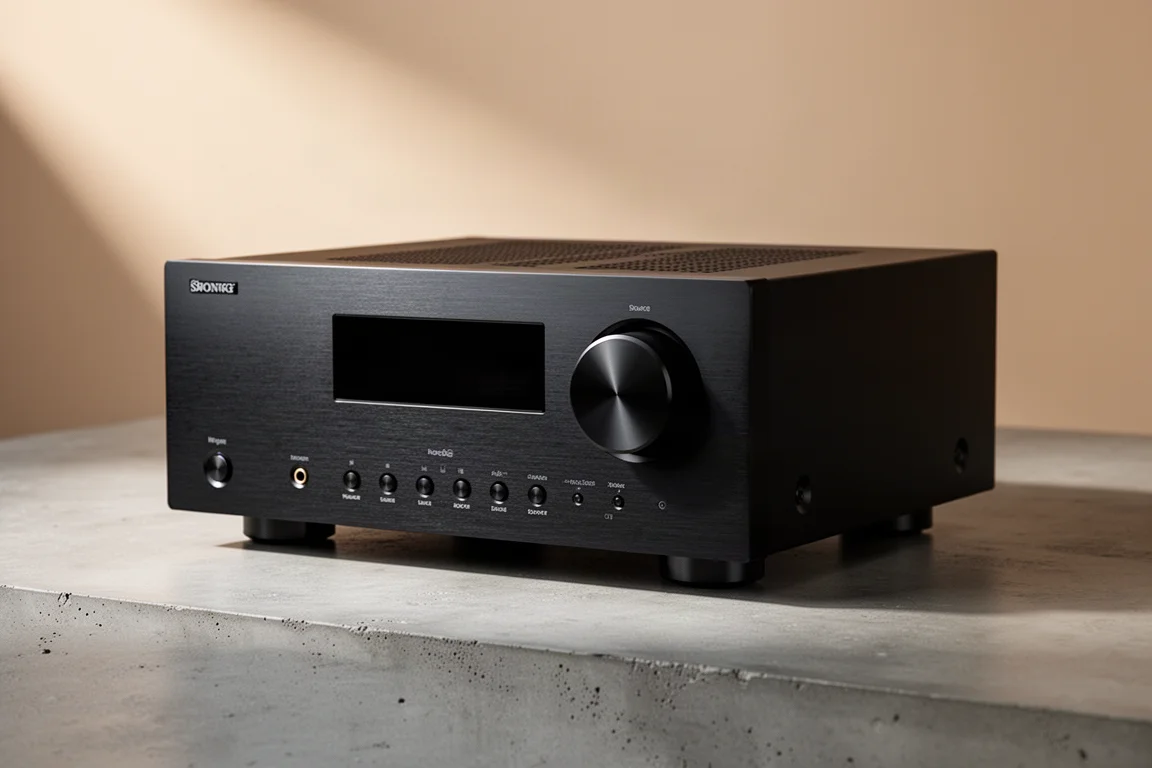
Introduction
Home theater receivers carry a reputation problem in some hi-fi circles, and the usual argument is that a dedicated stereo amplifier will always sound better for the same money. The Onkyo TX-SR3100 makes that argument harder to win. It is a 5.2 channel Dolby Atmos enabled receiver that produces 80 watts per channel into 8 ohms from a class AB amplifier, and it sells for less than $400.
That combination matters because it puts genuine home theater capability and respectable stereo playback in the same box, at a price where most people are still deciding whether they want to explore the hobby at all.
Who the Onkyo TX-SR3100 Is For
The TX-SR3100 is aimed at listeners building a first proper system. It supports a traditional 5.2 speaker layout, a 3.2.2 Atmos arrangement, and most configurations in between, so a room can grow with the receiver instead of being locked into one setup.
It also suits stereo listeners who already own a dedicated streamer. Because there is no built-in streaming platform here, pairing the receiver with an external streamer avoids paying twice for the same capability and lets the Onkyo focus on what it does well: amplification and speaker control.
Gamers are covered too. The receiver supports variable refresh rate and auto low latency mode, and it handles 4K at 120Hz without drama.
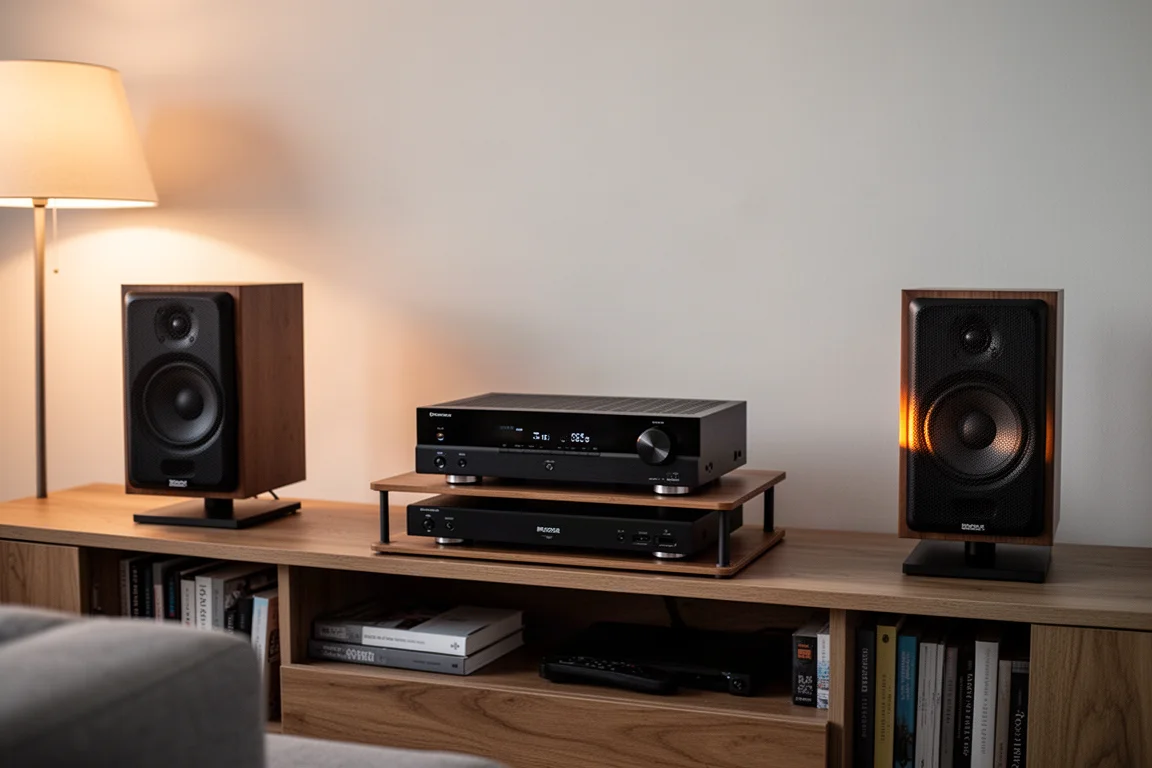
The case for this receiver is strongest when the speaker count stays at five or fewer. That is where its channel count, price, and power delivery line up most cleanly.
Main Strengths
The TX-SR3100 concentrates its strengths in three areas: how it delivers power, how easy it is to set up, and how much modern connectivity Onkyo fitted into a budget chassis.
Power Delivery That Holds Up Under Load
On paper, 80 watts per channel into 8 ohms from a class AB design is a modest figure. In practice, the TX-SR3100 drove two very different pairs of speakers without complaint. One was a 4 ohm set, the other a pair with wildly fluctuating impedance, and the receiver pushed both comfortably above 90 dB with peaks reaching 100 dB.
That kind of stability is not a given at this price. A similarly priced compact amplifier shut down repeatedly before reaching the same volumes on the same speakers, while the Onkyo kept going.
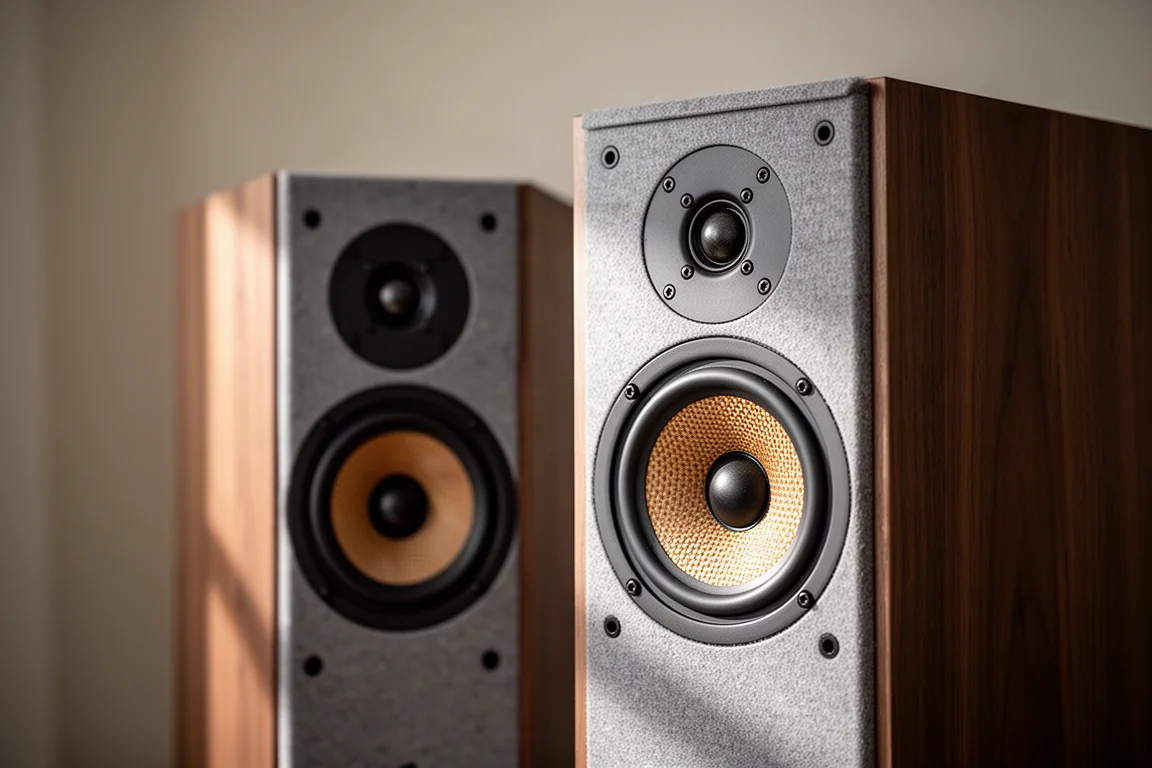
Volume levels that high are not a normal listening habit for most people, but the headroom says something useful: the receiver is not straining during ordinary use, and it will not fall apart when a demanding soundtrack arrives.
AccuEQ Room Correction and Straightforward Setup
Setup is handled by Onkyo’s AccuEQ room calibration, which makes the initial tuning process close to plug and play. A full manual configuration is also available, and adjusting the speakers by hand was straightforward.
Performance was trouble-free once the latest firmware was installed. Before that update, HDMI connections produced occasional signal dropouts, and the update resolved them. If the room or speaker placement is less than ideal, room correction can help tighten up the result.
HDMI 2.1, Gaming, and Daily Connectivity
The rear panel carries four HDMI 2.1 inputs and one HDMI 2.1 output with ARC and eARC support. Every HDMI input and output accepts video signals up to 8K and 4K at 120Hz, with support for the major HDR formats, including Dolby Vision.
Additional digital inputs include a single optical connection and a coaxial input. There is also an FM and AM tuner for radio listeners. Three analog audio inputs are available, but there is no built-in phono preamp, so vinyl playback needs either a turntable with its own preamp or a separate phono stage.
HDMI switching proved reliable after the firmware update. It is not the fastest switching around, but gaming held up at 4K 120Hz and in HDR with variable refresh rate, and no additional input lag was noticeable.
Sound Quality in Stereo and Movies
In stereo, the TX-SR3100 sounds balanced from top to bottom, with dynamics and in-room presence that belie its price. As volume rises, it stays linear and even rather than turning bright or shouty.
It is not as separated, dimensional, or texturally nuanced as considerably more expensive receivers. Tonally it sits close to another well-regarded budget receiver, with a more forward, in-room character that places vocalists in line with or just ahead of the speaker baffles and keeps the rest of the performance not far behind.
For movies, the receiver delivered the same neutral, slightly forward signature with solid low-frequency weight. Virtualization settings and listening profiles can make a standard 5.1 layout feel closer to an Atmos presentation, and a 3.1.2 setup produced a convincing sense of surround channels.
Things to Consider Before Buying
No Built-In Streaming or Wi-Fi
Wireless connectivity is limited to Bluetooth. There is no Wi-Fi and no Ethernet port, which means no built-in streaming services and no network-based control.
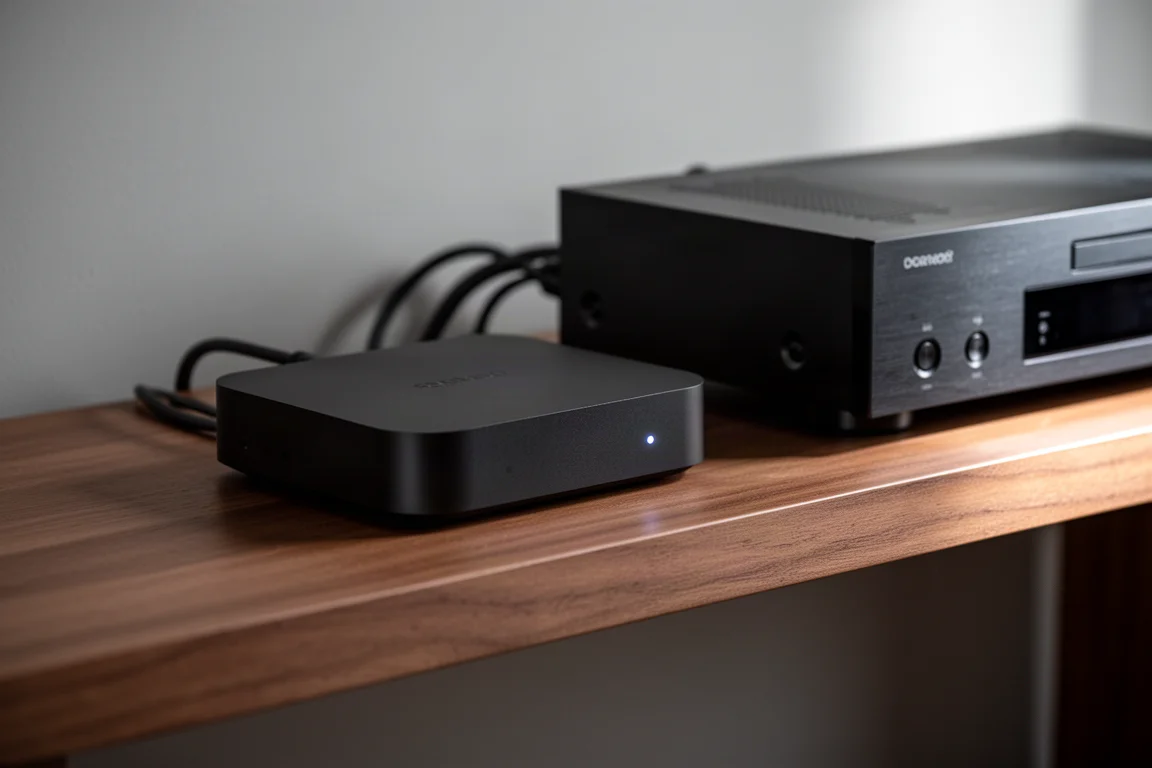
That is a real limitation for anyone who wants a single-box solution. It is much less of a problem if a streamer is already part of the setup, and pairing the TX-SR3100 with one produced a flexible, capable budget system.
Firmware Updates Require a USB Drive
Over-the-air updates are not possible on this receiver. Firmware has to be downloaded and installed from a USB drive, which adds a step that many modern devices have eliminated.
A Click at Higher Volumes
The receiver produces an audible click when it reaches a certain volume level, in one case around the 50 mark. This is normal behavior rather than a sign of a faulty unit, and disabling the Eco settings does not stop it.
Room Correction Limits and Dialogue Boost
AccuEQ is effective, but it does not offer the deeper correction options found on more expensive receivers. The most satisfying results came with no room correction at all or with a fully manual setup.
The dialogue enhancement feature is worth using carefully. It makes most vocal ranges stand out, but above the lowest setting it injects energy across the speaker response starting at around 100Hz, which makes the receiver sound forward and brighter and can cause fatigue over long sessions.
Buying Advice
At less than $400, the TX-SR3100 is a sensible entry point into home theater and a credible stereo option for anyone who already owns a streamer.
If the budget can stretch, there are more capable receivers to consider. A well-equipped Sony receiver under $1,000 offers better long-term flexibility. Yamaha’s V6A adds channels, more setup flexibility, and the most neutral tonal balance of the group, though it is more complicated to configure and better suited to experienced users. Onkyo’s own 5100 model adds seven channels, built-in streaming, and other modern conveniences for a modest premium, with push-pin style binding posts as its main compromise. Recently announced ultra-affordable Pioneer receivers share a fair amount with this Onkyo, but they have not been evaluated yet.

The decision comes down to speaker count and streaming habits. If the plan is to stay at five speakers or fewer, or to use the receiver mostly for stereo alongside a streamer you already own, the TX-SR3100 is easy to recommend.
Conclusion
The Onkyo TX-SR3100 shows that an AV receiver can be a legitimate starting point for a hi-fi journey. It delivers stable power into difficult speaker loads, supports a full set of modern HDMI 2.1 features, and handles both stereo music and multichannel film sound with a balanced, lively character.
Its compromises are clear and specific: no built-in streaming, USB-only firmware updates, and room correction that stops short of more advanced systems. For a first system, or for a stereo setup built around an external streamer, those trade-offs are easy to accept at this price.
Product link
View more details for Onkyo TX-SR3100
This product is mentioned in the review. Check the specifications, options, and compatibility before buying.
View more details for Onkyo TX-SR3100Further reading
Related Reviews
AV Receivers
Anthem MRX 740 8K Review: Composed Home Theater Sound With a Few Rough Edges
A close look at Anthem's mid-tier MRX 740 8K receiver, covering its sound, ARC Genesis room correction, HDMI 2.1 features and the daily quirks worth knowing before you buy.
AV Receivers
Anthem MRX 740 vs MRX 1140: Which AV Receiver Fits Your System?
A measured look at the Anthem MRX 740 and MRX 1140, covering preamp output performance, amplifier behaviour, bass management, and expansion headroom.
AV Receivers
Best AV Receivers for Home Theater: Denon, Onkyo, Marantz and Yamaha Compared
Four home theater receivers compared on features, sound character, setup and value, with clear guidance on which one fits which kind of buyer.