Home Theater Receivers
Onkyo TX-NR7100 Review: A 9.2 Channel Receiver With Dirac Live Built In
A THX-certified 9.2 channel receiver with full 4K 120 gaming support and Dirac Live room correction, plus the trade-offs worth weighing first.
Introduction
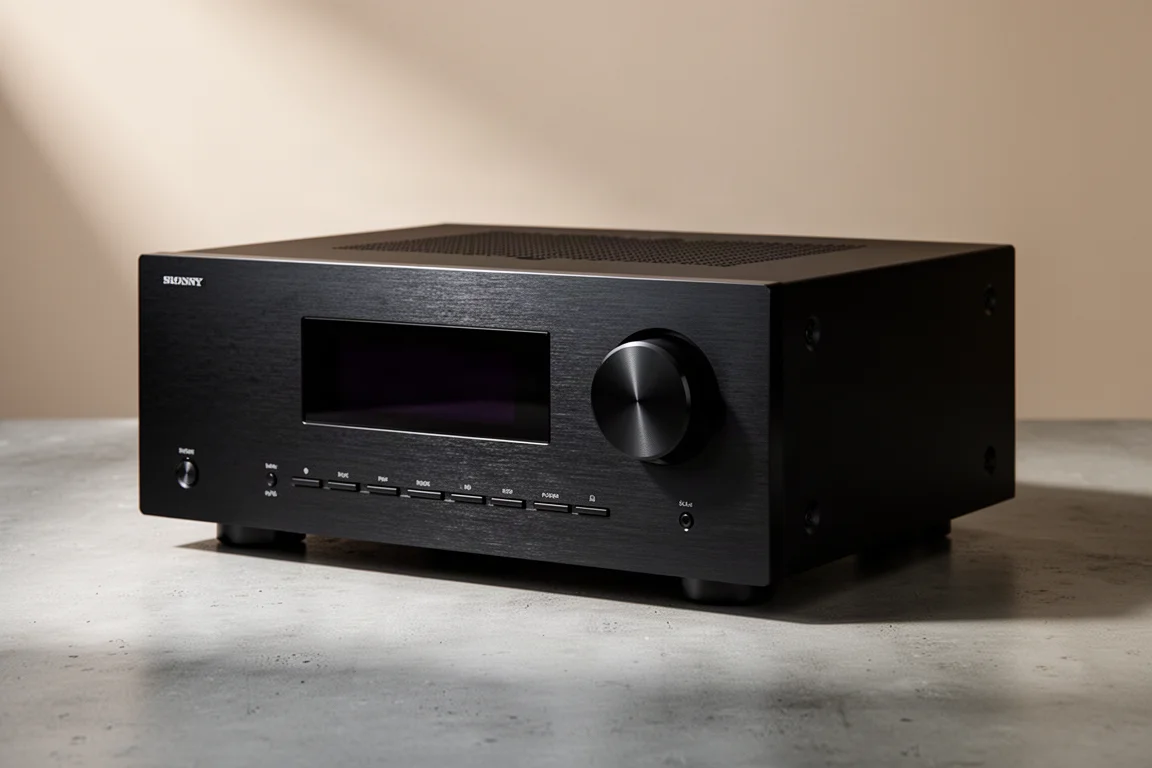
The Onkyo TX-NR7100 is a 9.2 channel home theater receiver aimed at listeners who want a genuinely capable surround system without moving into flagship pricing. It can power up to nine speakers and two subwoofers, covers everything from plain stereo to a 7.2.2 layout, and carries THX certification, which means it is specified to reproduce the volume levels you would hear in a commercial cinema from roughly 12 feet away. It also supports Dirac Live room correction, which is unusual to find at this position in the market.
That combination of channel count, current-generation HDMI support and advanced room correction is what makes the TX-NR7100 worth a careful look. The brand has been through a period of corporate change, and the Premium Audio Company, which owns the name, has stated that it will continue to develop, build and support Onkyo, Integra and Pioneer products. Production of AV receivers is increasing and supply is expected to keep improving, although availability remains uneven in some regions.
Who This Receiver Is For
This is a receiver for the listener who has settled on nine channels as the destination rather than a waypoint. The TX-NR7100 offers no preamp outputs beyond the subwoofer connections, so there is no path to add external amplification and climb beyond nine channels later. If an 11.2 channel build is the plan, this is not the right starting point.
The amplifier section is rated at 100 watts per channel with two channels driven. As you add speakers, expect the available power per channel to drop, which is normal behaviour for receivers in this class. In practice the TX-NR7100 is comfortable driving most mainstream speakers with an impedance above roughly 6 ohms and a sensitivity above about 85 dB.
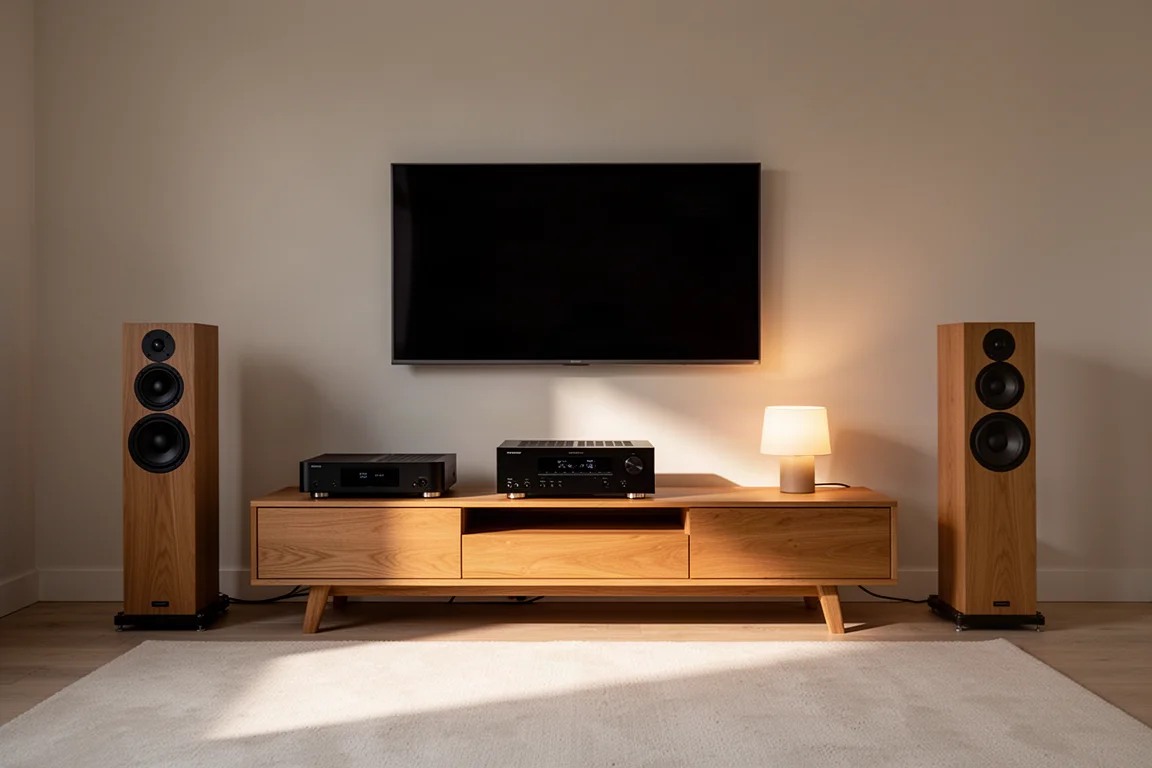
It also suits buyers who are assembling a room from scratch. Setup follows the familiar modern receiver routine, with on-screen menus that are functional rather than elaborate, and an on-screen guide that walks newcomers through the process step by step. More experienced users can skip straight to the manual adjustments, which are detailed enough to satisfy most people, though not quite as deep as what some rival brands offer.
Main Strengths
Nine Channels With Flexible Speaker Configuration
The appeal here is flexibility within a fixed ceiling. You can run two channels, a conventional 5.1 or 7.1 arrangement, or spread effects overhead for a 7.2.2 setup, and most configurations in between are available. THX certification adds a recognised reference point for cinema-level playback, and the two subwoofer outputs let you run a dual-subwoofer layout, though those outputs are not independent of one another.
For the majority of rooms, this is more than enough configurability. The limitation only becomes relevant if you already know you want to expand past nine channels down the road.
HDMI 2.1 Support and Gaming Performance
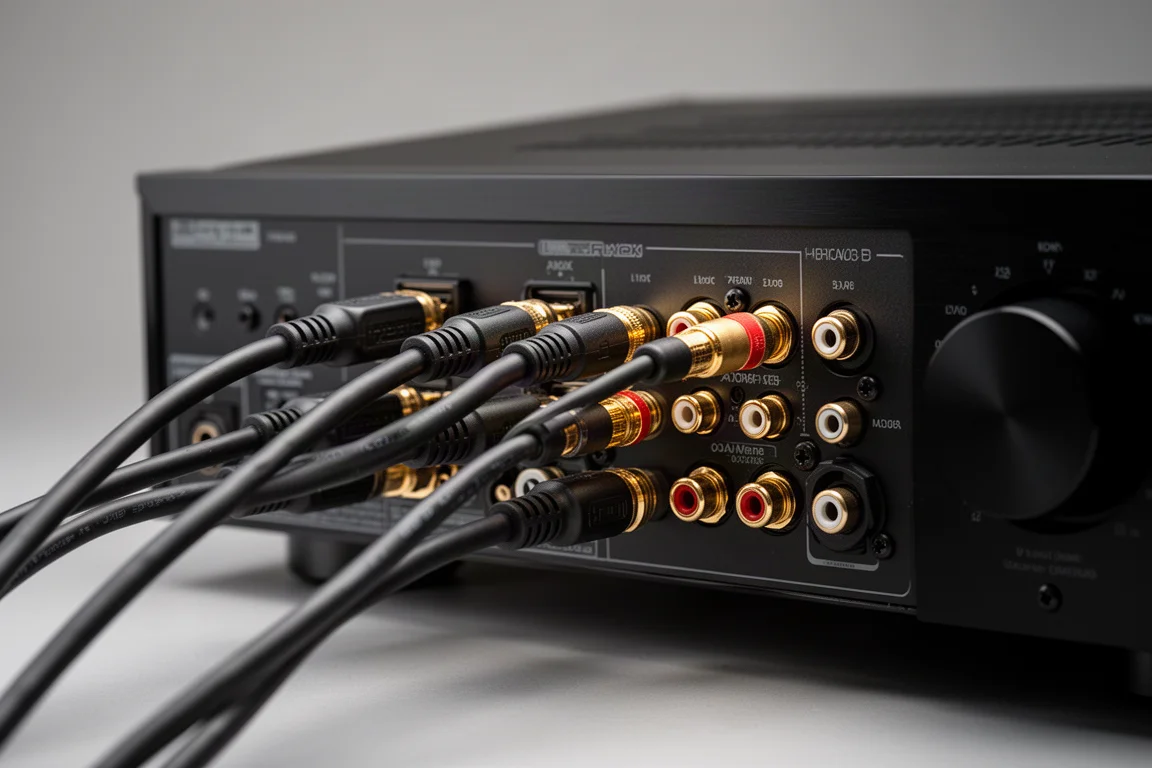
All HDMI inputs on the TX-NR7100 accept 4K at 120Hz. Inputs 1 through 3 meet the full 40 Gbps specification, while inputs 4 through 6 run at 24 Gbps. Variable refresh rate and auto low latency mode are both supported, which matters if multiple current-generation consoles are part of the plan.
In practice the gaming experience is clean. 4K at 120Hz passed through without complaint, and a 4K 60 racing title ran buttery smooth at its highest graphical settings with no perceivable lag. If you are hooking up more than one console and want a receiver that will not become the bottleneck, this one holds up.
Dirac Live Room Correction
The TX-NR7100 ships with two automatic room correction options: Onkyo’s own AccuEQ and the more advanced Dirac Live. AccuEQ can deliver respectable results, but buyers who choose a receiver with Dirac Live support are usually there for Dirac, and the implementation here is notably streamlined. It works with the included low-profile microphone and a smartphone, with no dongles or laptops required.
The difference before and after a full or even a quick Dirac Live calibration can be dramatic, depending on what the room is doing to the sound. Gains in clarity, definition and spaciousness are the usual outcome. In a room that is already well treated, the change will be less pronounced. The app also allows manual adjustment of speaker sound to taste, so you can lift the treble or bass slightly, and preferences can be stored in memory for recall later.
Connectivity and Everyday Use
Feature coverage is broad. The receiver includes Ethernet, Wi-Fi, AirPlay 2 and Bluetooth, along with compatibility for Chromecast, Google Assistant, Alexa and Roon. ARC and eARC are on board, with Dolby Atmos, DTS:X and IMAX Enhanced support. There is even a competent moving magnet phono preamp, which is a useful inclusion for anyone with a turntable in the same room.
The companion app is genuinely good, and the remote has a sensible button layout with dedicated keys for dialogue, treble and bass adjustments. The one thing missing is backlighting, which is noticeable in a dark room.

Things to Consider Before Buying
Power delivery changes with the load. With less efficient speakers, a very large room, or all channels driven at maximum output for long stretches, there can be moments where the receiver feels like it is working hard to keep pace. That can show up as a slight loss of low-end grip or some thinning in the highs.
At louder than typical listening levels, roughly above 85 to 90 dB, the sound does thin a little. If your speakers already lean forward, you may notice slightly more energetic highs. For some listeners that trait is actually welcome, since it can make dialogue seem clearer. At reasonable volumes, and even a click or two above reasonable, there is very little to object to.
The expansion ceiling is fixed. With no preamp outputs beyond the subwoofer connections, and subwoofer outputs that are not independent, the architecture is closed once you reach nine channels. The on-screen menus are also fairly basic, and the remote is not backlit.
Availability is worth checking before you commit. No new AV receivers were on the brand’s roadmap for the year, and while production has been ramping up and shipping volumes have grown, stock has been tight enough that the exact model you want may not always be in stock.
Buying Advice
It helps to compare the TX-NR7100 against the alternatives at similar money. The Yamaha RX-A4A sits closer in price at $1,500 but comes with fewer channels. The Marantz NR1711 costs about the same as the TX-NR7100, and while it is lower on power at 50 watts and has two fewer channels, it remains a viable option to weigh alongside it. The closest Denon in price is not the one to choose here; a comparable or better Denon means spending roughly $500 more.
If the ability to add more powerful amplifiers later matters, look at the step-up models instead, such as the Onkyo RZ50, the Integra DRX 3.4 or the Pioneer 505. If a 9.2 channel receiver with almost no future expansion is enough for your room, the TX-NR7100 is the one to pick. Stock levels being what they are, you may not find the badge you originally wanted, but cross-shopping these related brands will not deliver radically different performance, so a sibling model is a reasonable substitute if the TX-NR7100 is unavailable.
Conclusion
The TX-NR7100 may not be the most glamorous receiver on the shelf, but it works as advertised. It offers a strong set of current-generation features for a fair price, handles gaming and movie duty without fuss, and brings Dirac Live room correction to a price point where that is still uncommon. It does not embarrass or upset the step-up Onkyo RZ50, but it may well be all the receiver many rooms need, and for less money. If nine channels, full 4K 120 support and Dirac Live line up with your plans, this is an easy recommendation to investigate further.
Product link
View more details for Onkyo TX-NR7100
This product is mentioned in the review. Check the specifications, options, and compatibility before buying.
View more details for Onkyo TX-NR7100Further reading
Related Reviews
Home Theater Receivers
Arcam AVR11, AVR21, AVR31 and AV41: Inside the Current Home Theater Lineup
Three AV receivers and one surround processor share Arcam's house sound and a complete modern feature set. Here is how they differ and which one fits your room.
Home Theater Receivers
Best Home Theater Receivers 2026: Ten Picks From Entry Level to Flagship
A practical roundup of ten home theater receivers, from an affordable 5.1.2 model to a 15-channel flagship, with the features that matter most before you buy.
Home Theater Receivers
Best Home Theater Receivers: Eight Picks From Entry Level to Audiophile
Eight home theater receivers compared on channels, amplifier headroom, room correction, subwoofer outputs, and expansion, from an entry-level pick under $750 to audiophile flagships.