Hi-Fi Amplifiers
Onkyo Muse Y40 vs Muse Y50 vs Icon A50: Which One-Box Hi-Fi System Fits Your Room
Three one-box Onkyo systems compared, covering the differences in power, phono support, room correction and connectivity that actually shape a buying decision.
Introduction
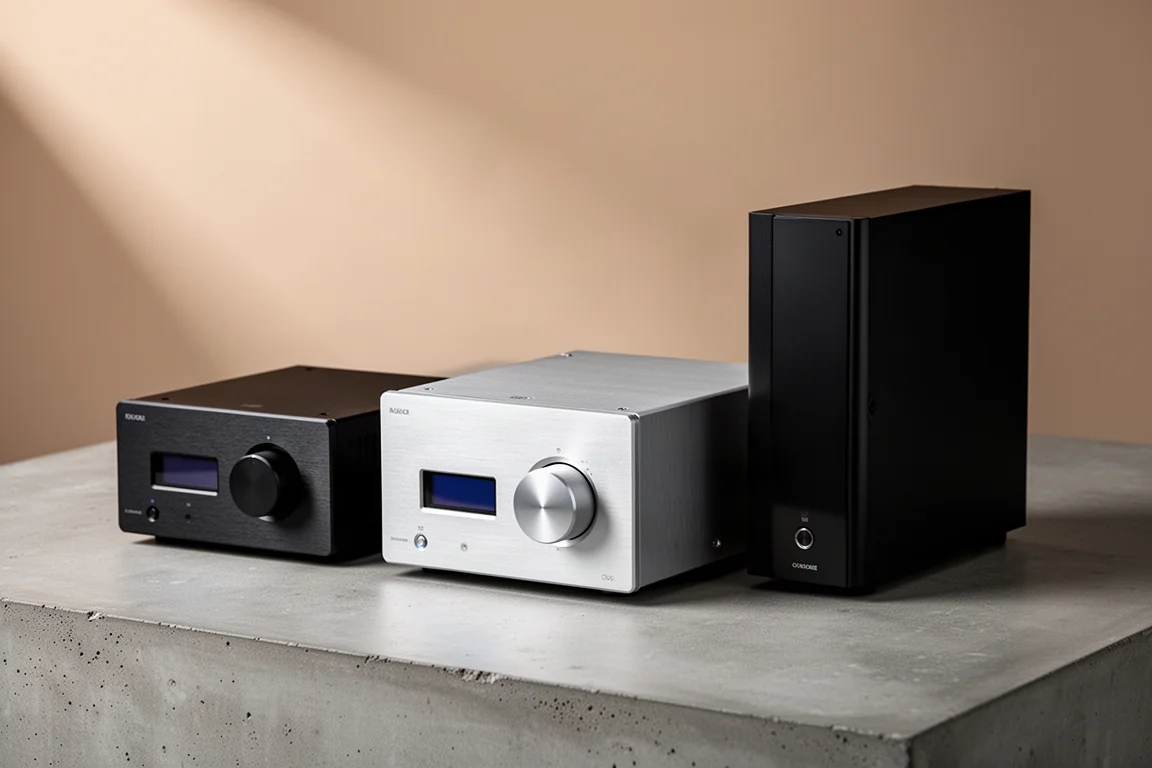
Onkyo’s return to two-channel Hi-Fi has been one of the more deliberate moves in the audio category, and the Muse series is where it becomes concrete. The Muse Y40 and Muse Y50 are network streaming integrated amplifiers built to replace a full stack of separates, while the Icon A50 offers a traditional full-size alternative at the same price as the Y50.
All three remove the need for a separate streamer, DAC and phono preamp, so the real decision comes down to room size, speaker demands, and how much correction you want for the space you actually listen in. This guide covers what each model does well, where the differences genuinely show up, and who each one suits.
What a Network Streaming Integrated Amplifier Replaces
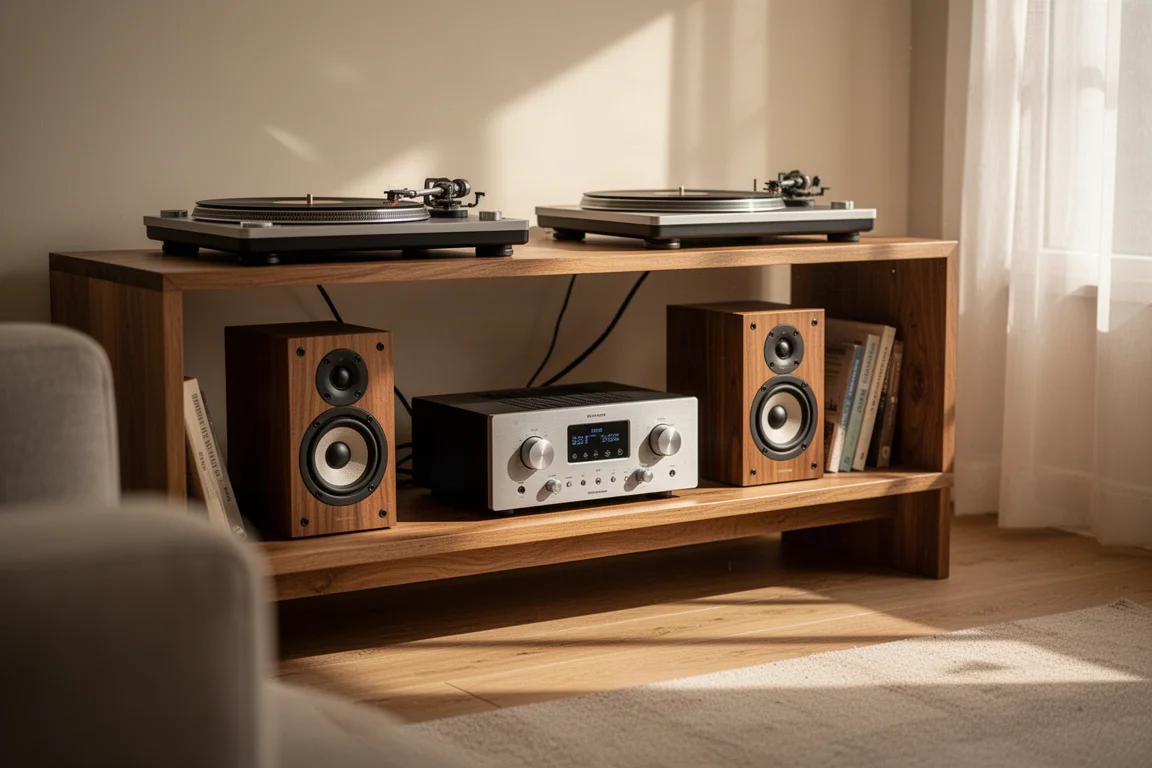
A conventional system asks for four separate components: a network streamer to pull music from the internet or a local network, a DAC to convert that digital signal to analog, a phono preamp for vinyl, and an amplifier to drive the speakers. That means four boxes, four power supplies, a drawer full of interconnects, and a lot of shelf space.
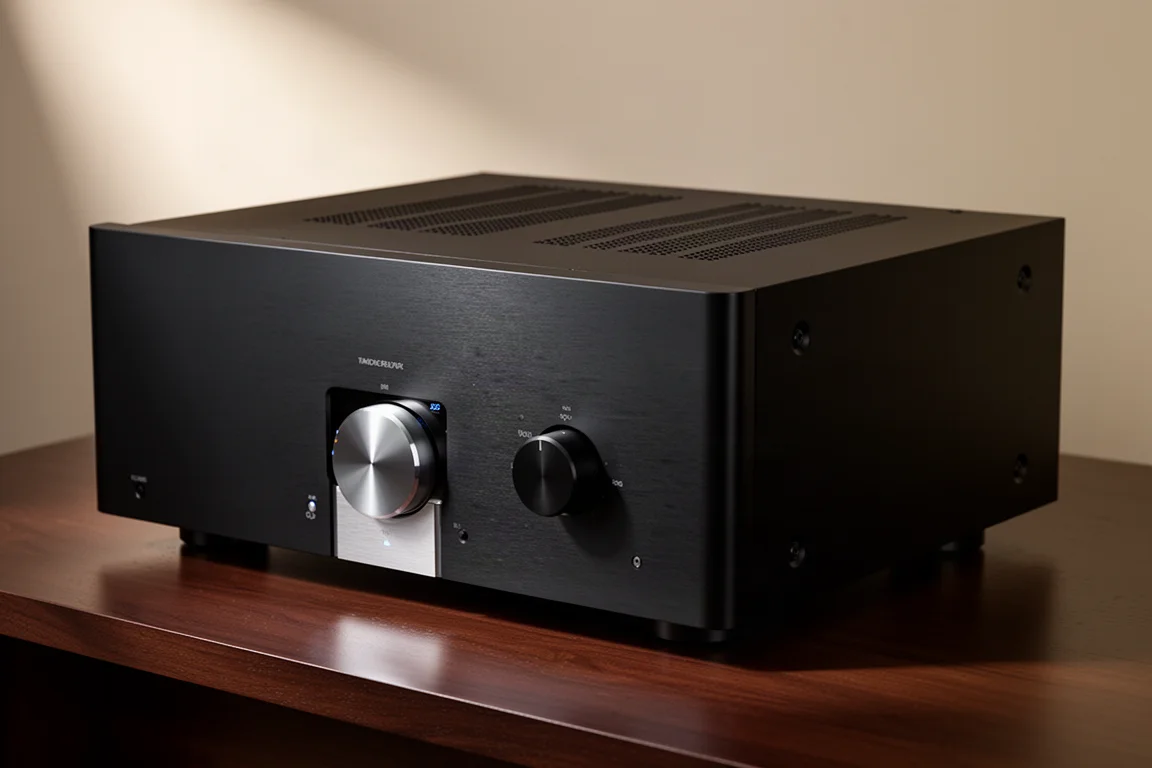
The Muse Y40 and Muse Y50 collapse all of that into a single chassis under 4 inches tall, with Wi-Fi and Ethernet on board for streaming and a built-in phono stage for turntables. Both are built on the Axign Class D platform, which uses high-current MOSFET output transistors and monitors and corrects the audio signal right at the speaker terminals rather than earlier in the chain.
That correction-at-the-terminal approach is the technical heart of the Muse pair, and it is the main reason these amplifiers can drive demanding speakers without sounding thin or losing control. Because the signal path stays digital from the streaming stage through to the output, the noise and hiss that can creep in during analog handoffs is largely avoided.
Onkyo Muse Y40: The Compact All-Rounder
At $999, the Y40 is the entry point into the Muse range, with 75 watts per channel into 8 ohms and 150 watts into 4 ohms. That is enough for most bookshelf speakers in a normal-sized room, and it pairs especially well with high-sensitivity designs where the amplifier never has to strain.
Its phono stage handles moving magnet cartridges only, which covers the majority of entry and mid-level turntables. Around the back there are three pairs of RCA inputs, a coaxial input, an optical TOSLINK input, HDMI ARC for TV audio, and a pre-out for adding a separate power amplifier later. The front panel adds a USB-A port for playing files from a drive and a 6.3 mm headphone jack supporting a wide 13 to 600 ohm impedance range. Wi-Fi and a wired Ethernet port are both included.
What the Y40 leaves out is room correction, an HDMI video output, and a subwoofer output. Those omissions define the gap to the Y50, and for a straightforward turntable and streaming setup with a good pair of bookshelf speakers, they may not matter at all.
Onkyo Muse Y50: More Power, Room EQ, and a Subwoofer Output
The Y50 keeps the same chassis and the same platform but raises output to 125 watts per channel into 8 ohms and 250 watts into 4 ohms. That extra reserve is what you hear in larger rooms, at higher listening levels, and with speakers that are less sensitive or drop below 4 ohms in the bass.
Onkyo room EQ is the second major addition. It runs through the Onkyo Controller app and uses the microphone on an iPhone to measure the acoustics of the actual room, then applies correction to compensate for bass build-up in corners and reflections from parallel walls. Most listening rooms are imperfect, and this is the closest thing to a straightforward fix without treating the room itself.
The Y50 also adds a full HDMI output alongside the ARC input, so a game console or Blu-ray player can feed the amplifier and pass video through to the TV, with support for 4K at 120 frames per second, 8K at 60 frames per second, VRR and ALLM. A subwoofer pre-out with an adjustable crossover makes it the model to choose for a 2.1 system, and the phono stage steps up to handle both moving magnet and moving coil cartridges, the latter requiring a more sensitive, lower-noise stage.
At $1,500, the Y50 is the more complete of the two Muse models.
Onkyo Icon A50: The Traditional Full-Size Alternative
At the same $1,500 price point, Onkyo offers a second route to a one-box system. The Icon A50 trades the Muse’s compact Class D design for a classic Class AB amplifier in a traditional full-size chassis, and it adds Dirac Live, a room correction system with a strong reputation for precision.
Like the Muse models, the A50 removes the need for a separate streamer, DAC and phono preamp, so the choice is less about capability and more about priorities. The Muse route favours a compact, high-power, efficient design that fits almost anywhere. The Icon route favours the sound and room-tuning precision of a full-size Class AB component that asks for more shelf space.
Design, Connectivity, and Streaming Support
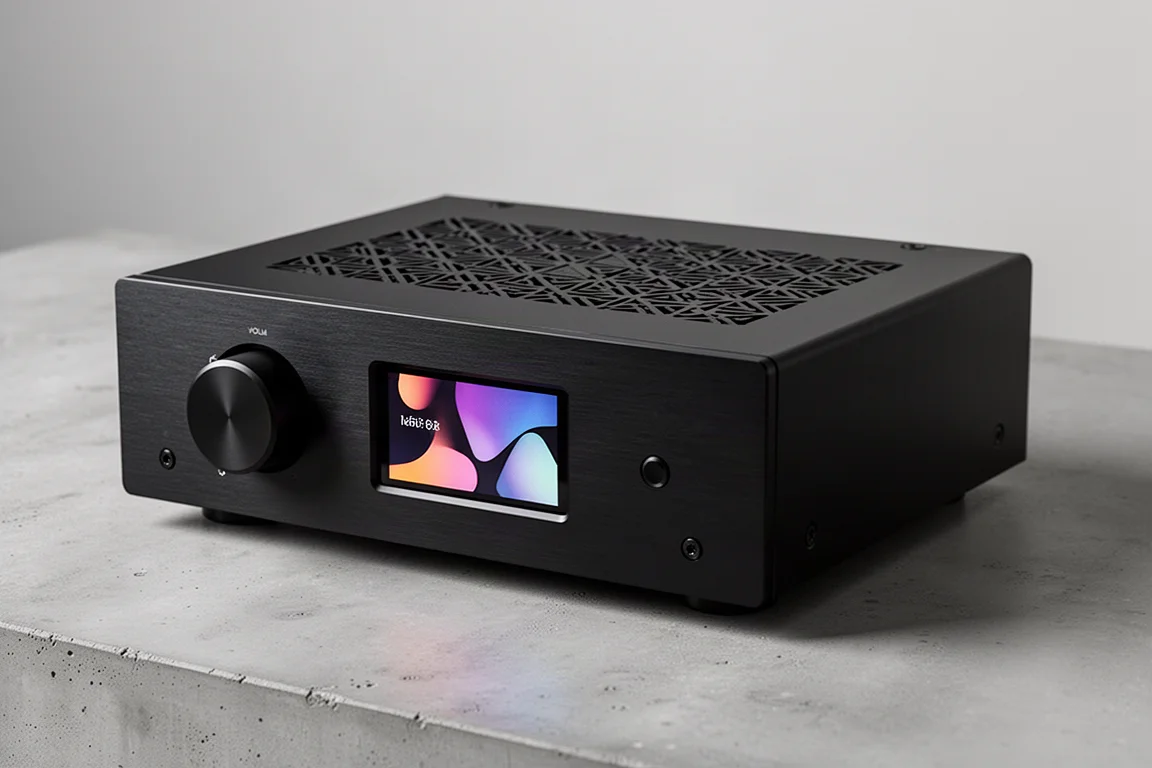
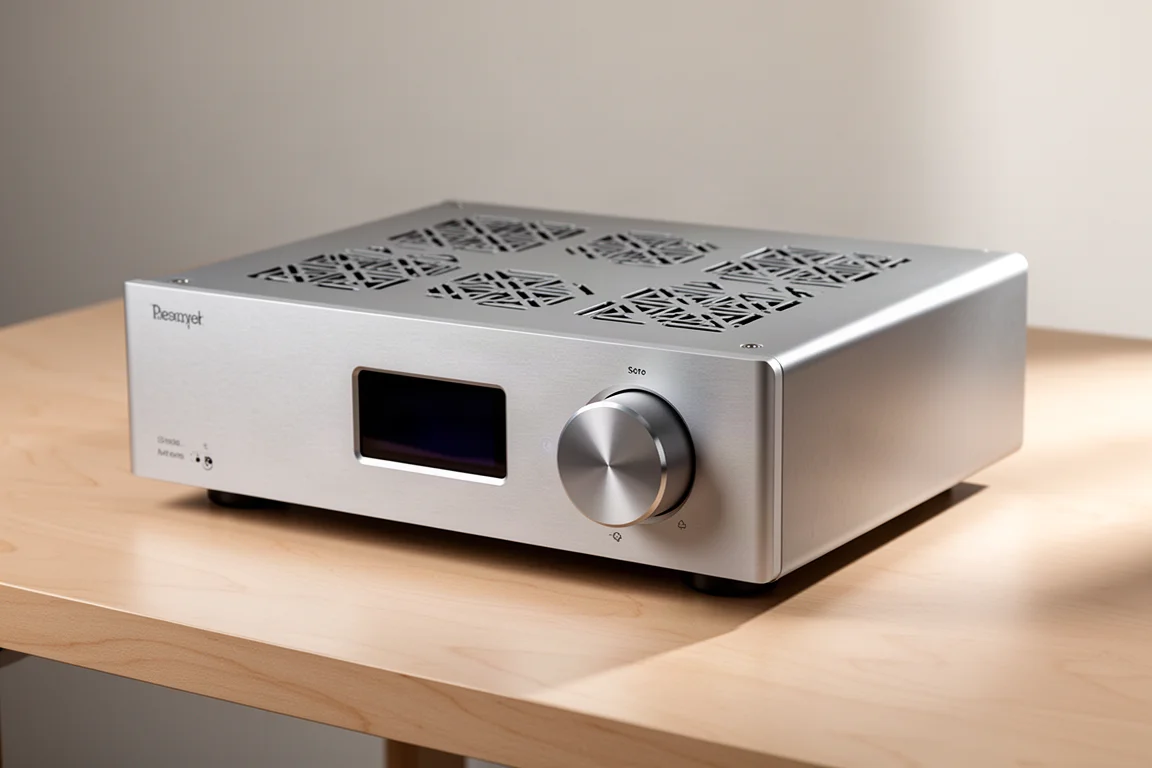
The Y40 and Y50 share an identical chassis: 13.8 inches wide, 3.9 inches tall and 13.3 inches deep, with an understated aluminium front panel. The top plate carries cut-in heat dissipation vents in a geometric pattern called sankaku-shi, a traditional Japanese motif and a quiet nod to Onkyo’s roots as an Osaka company founded in 1946. Both models are available in black or silver.
The front panel is dominated by a large tactile volume knob and a 5.46 inch colour LCD. It is not a touchscreen and not an edge-to-edge panel, but it handles the essentials well: album art, track metadata, file resolution, and clean VU meters that stay readable from across the room.
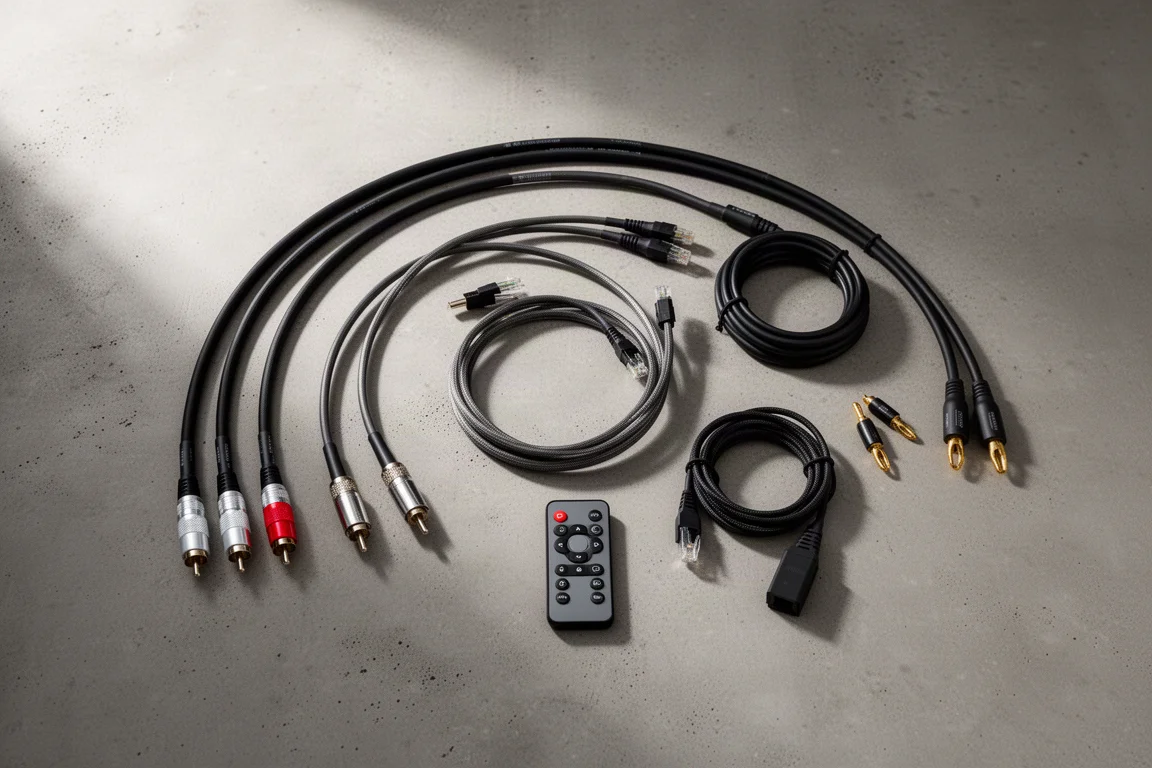
Around the back, both Muse models give you three pairs of RCA inputs, more than most streaming amplifiers in this class offer, along with a coaxial input, an optical TOSLINK input, HDMI ARC, a pre-out and an Ethernet port. Wi-Fi and Bluetooth are built in, with Bluetooth limited to SBC and AAC, so there is no aptX or LDAC for wireless listening from an Android phone.
Streaming support covers Spotify Connect, Tidal Connect, Qobuz Connect, Apple AirPlay 2 and Google Chromecast built-in, all managed through the Onkyo Controller app on iOS or Android. One absence worth knowing about: there is no Roon Ready certification at present, and while some competing models in this class do carry it, Roon users should factor that in.
Listening Notes: Transients, Bass Control, and Headroom
With Sultans of Swing, the Y40 showed a clean, immediate pick attack that points to the Axign platform handling transients properly. Detail came through without ever turning harsh, the lead guitar sat slightly right of centre where it belongs, and the soundstage held together when the full band entered. The low end stayed fast and controlled, even without a subwoofer in the system.
The Y50 on the same track was not simply louder. The difference was headroom: a sense of reserve and ease at the top of the dynamic range that is audible even at moderate levels. The stage opened very slightly and the bass carried a little more weight without giving up any tightness.
The Chain is a useful bass stress test thanks to its breakdown section. On the Y40 the bassline arrived with real authority, clean and punchy, and it did not blur into the lower midrange the way some Class D designs can when the low end gets demanding. The drum hit before the band re-enters landed sharp and physical, and the guitars kept their presence without crowding each other. Through the Y50, the same passage had more weight and body, and the jump from the quiet breakdown back to the full arrangement felt considerably more dramatic.
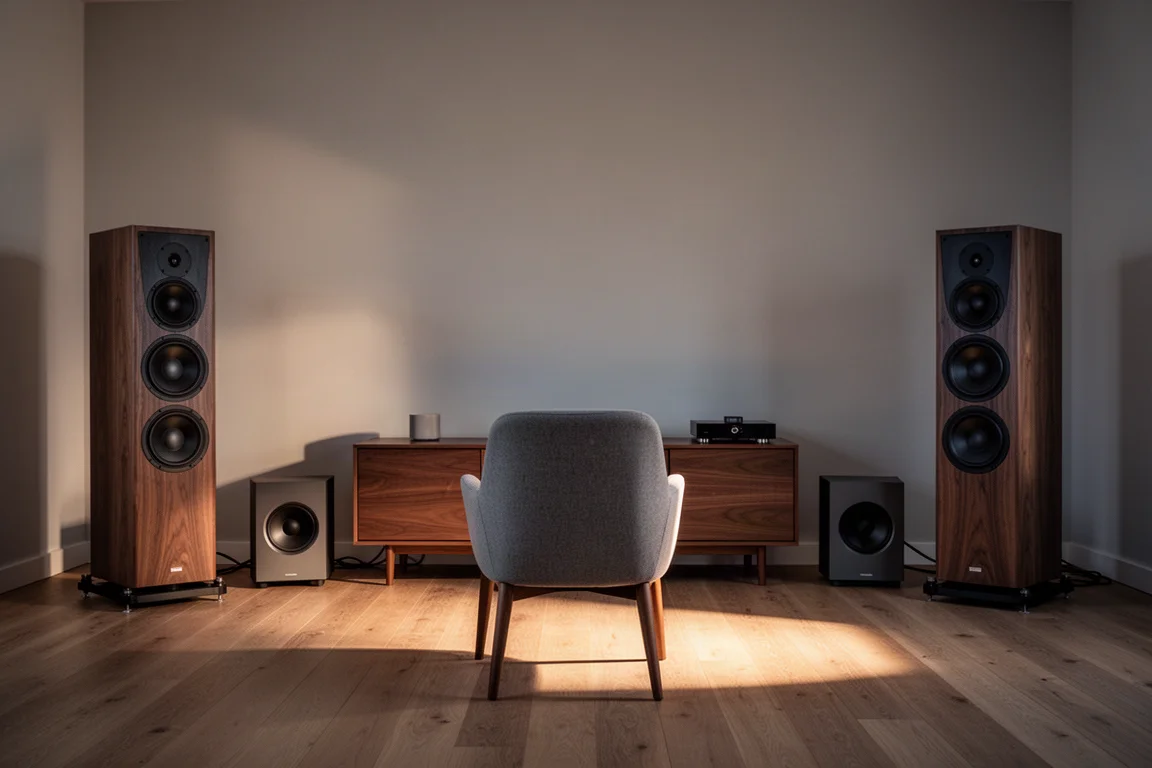
Speaker pairing matters as much as the amplifier here. With high-sensitivity bookshelf speakers such as the Klipsch RP-600M II, the Y40 never feels like it is leaving power on the table. The Y50’s extra output becomes meaningful with larger floorstanding speakers around 87 to 88 dB sensitivity in a bigger room, where 250 watts into 4 ohms against 150 watts is a difference you can genuinely hear.
Which Onkyo Model Fits Your Room?
The Y40 at $999 is for the listener who wants to simplify without compromising. A turntable, a streaming setup and a TV all run cleanly through one well-built box with enough power for a solid pair of bookshelf speakers. If the room is a normal size and the speakers are reasonably sensitive, it covers the job.
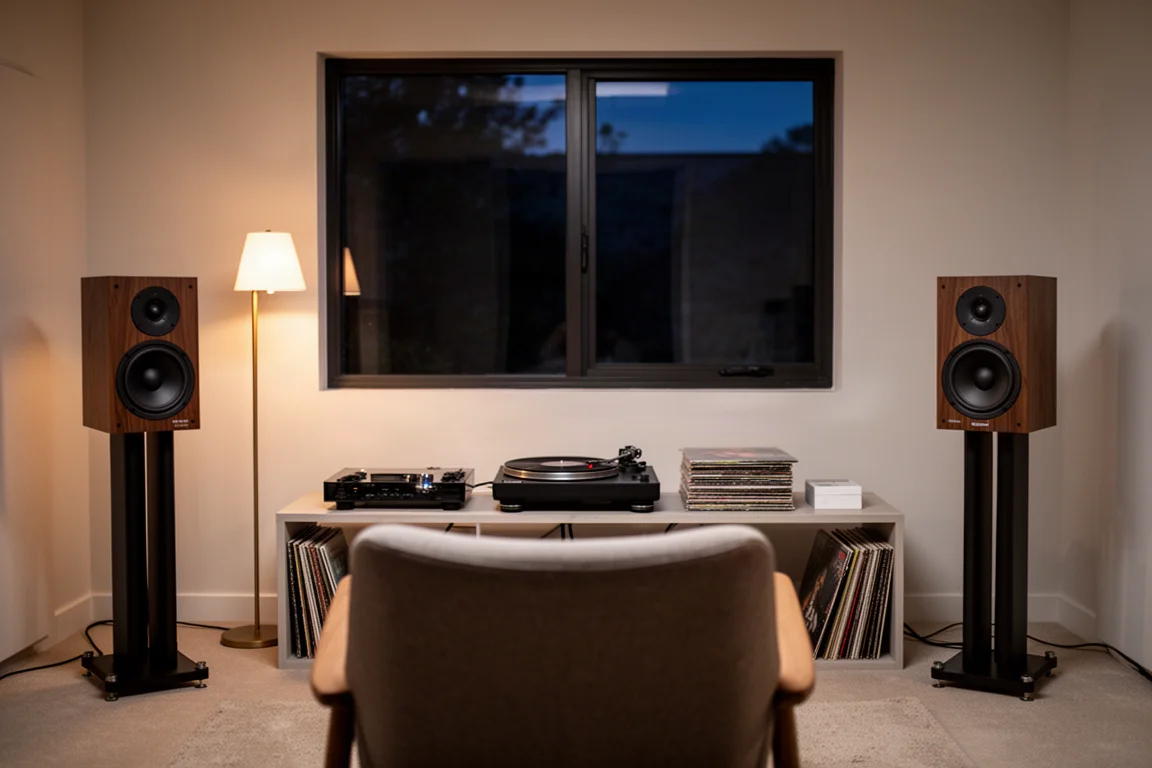
Step up to the Y50 if the room is large, roughly over 400 square feet, or if the speakers are big floorstanders with lower sensitivity or an impedance that dips below 4 ohms. It is also the model to pick if you use a moving coil cartridge, want room correction to tame an imperfect space, or plan to add a subwoofer. The extra $500 buys headroom, room EQ, video pass-through and a subwoofer output, and each of those is a practical benefit rather than a specification on paper.
The Icon A50 answers a different preference. At the same $1,500, it delivers a full-size Class AB amplifier with Dirac Live correction for listeners who want a traditional component and the most precise room tuning of the three.
Conclusion
All three models solve the same problem: they replace a streamer, a DAC, a phono preamp and an amplifier with a single chassis. The difference lies in how much headroom and correction you want on top of that.
The Muse Y40 is the straightforward choice for a normal room and efficient speakers. The Muse Y50 is the better fit for larger spaces, harder-to-drive speakers, moving coil cartridges and subwoofer-based systems. The Icon A50 suits listeners who would rather have a traditional full-size Class AB amplifier with Dirac Live handling the room correction.
Match the amplifier to the room and the speakers rather than to the specification sheet, and any of the three will deliver a clean, single-box system that is easy to live with.
Further reading
Related Reviews
Hi-Fi Amplifiers
Accuphase E-280 Review: Entry-Level Accuphase With Flagship Attention to Detail
A close look at the Accuphase E-280 integrated amplifier, covering its champagne build, AAVA volume control, sound quality, and the speakers and sources that suit it best.
Hi-Fi Amplifiers
Advance Paris A10 Classic vs Yamaha A-S301: Two Integrated Amplifiers Compared
A practical comparison of a $350 integrated amplifier and a $2,500 reference model, covering the differences that matter and the ones that do not.
Hi-Fi Amplifiers
Affordable Chinese Amplifiers Worth Buying: Five Budget Hi-Fi Amps Compared
A practical look at five affordable amplifiers, what each one does well, and the trade-offs to weigh before you buy.