Hi-Fi Audio
Onkyo M-80 Review: A High-Current Class AB Power Amplifier With Analog VU Meters
The Onkyo M-80 pairs 130 W per channel Class AB output with balanced inputs, switchable speaker pairs, and amber-lit analog VU meters. Here is what it does well and what to check before buying.
Introduction
The Onkyo M-80 is a two-channel power amplifier built around a Class AB, high-current design rather than a switching topology. Onkyo rates it at 130 W per channel into 8 ohms and 200 W per channel into 4 ohms, and it leads the Onkyo Icon series alongside a matching preamplifier and a CD player.
The M-80 is also a return to form for a brand with a long history. Onkyo was founded in Osaka, Japan in 1946, and its name means sound echo. The company built its reputation on accessible high-quality hi-fi, introduced the Integra line in the 1960s and 1970s, and later became one of the defining names in home theater receivers, including models that used Dirac room correction. Onkyo acquired the AV portion of Pioneer in 2015, and in May 2022 the traditional Japanese company folded. The Onkyo name and a number of its assets were subsequently purchased by Premium Audio Company, a partnership involving Voxx and Sharp, and Voxx also owns Klipsch.
Rather than continuing down the home theater path, the new ownership took the brand back to two-channel audio with the Icon series. The M-80 is the centerpiece of that move: a power amplifier with analog meters, a high-current output stage, and a design that reads as a blend of vintage hi-fi and modern industrial design.
Who the Onkyo M-80 Is For
The M-80 suits listeners building a two-channel system around a separate preamplifier who want an amplifier that can deliver current into demanding loudspeakers. Because it has no volume control of its own, it belongs in a system where another component handles source selection and level.
It also appeals to anyone who values a tactile, meter-driven front panel. As part of a matched series, it can be paired with the Icon preamplifier and CD player for a consistent look and a short, straightforward signal path.
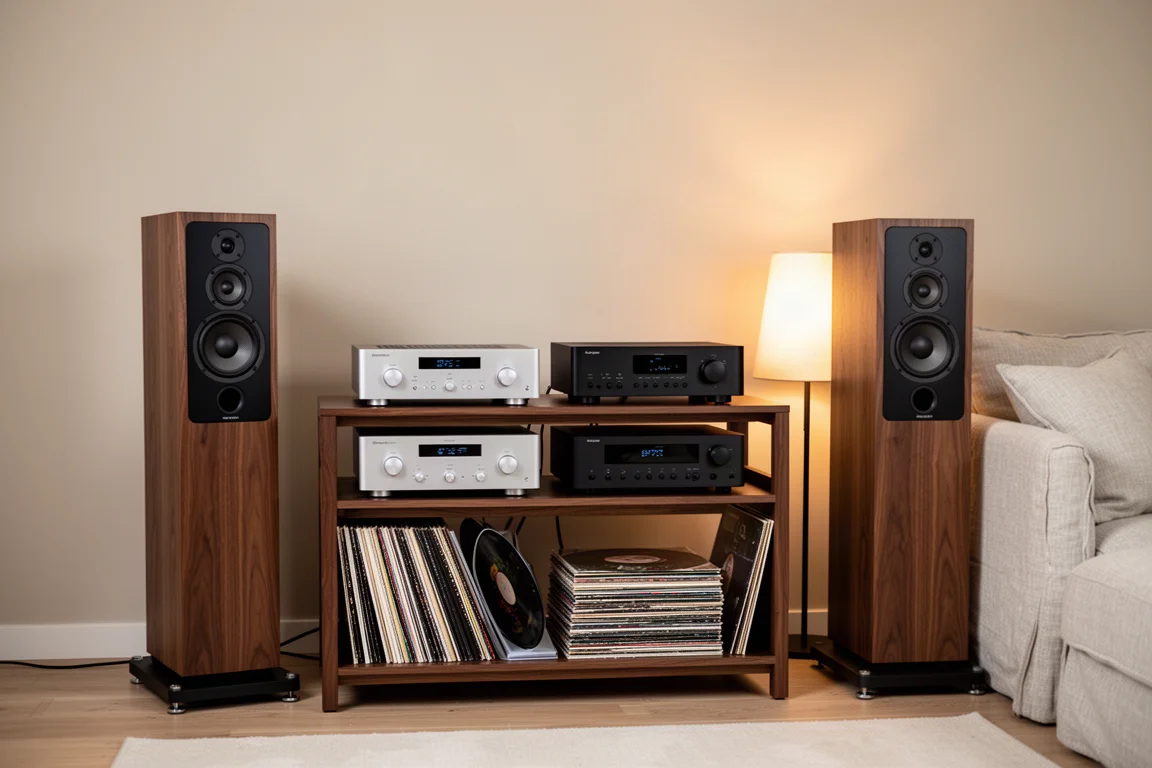
It is a less natural fit for anyone who wants a single box that handles streaming, digital inputs, and volume control. The M-80 is analog in and power out, and it expects the rest of the chain to be in place already.
Design and Build Quality
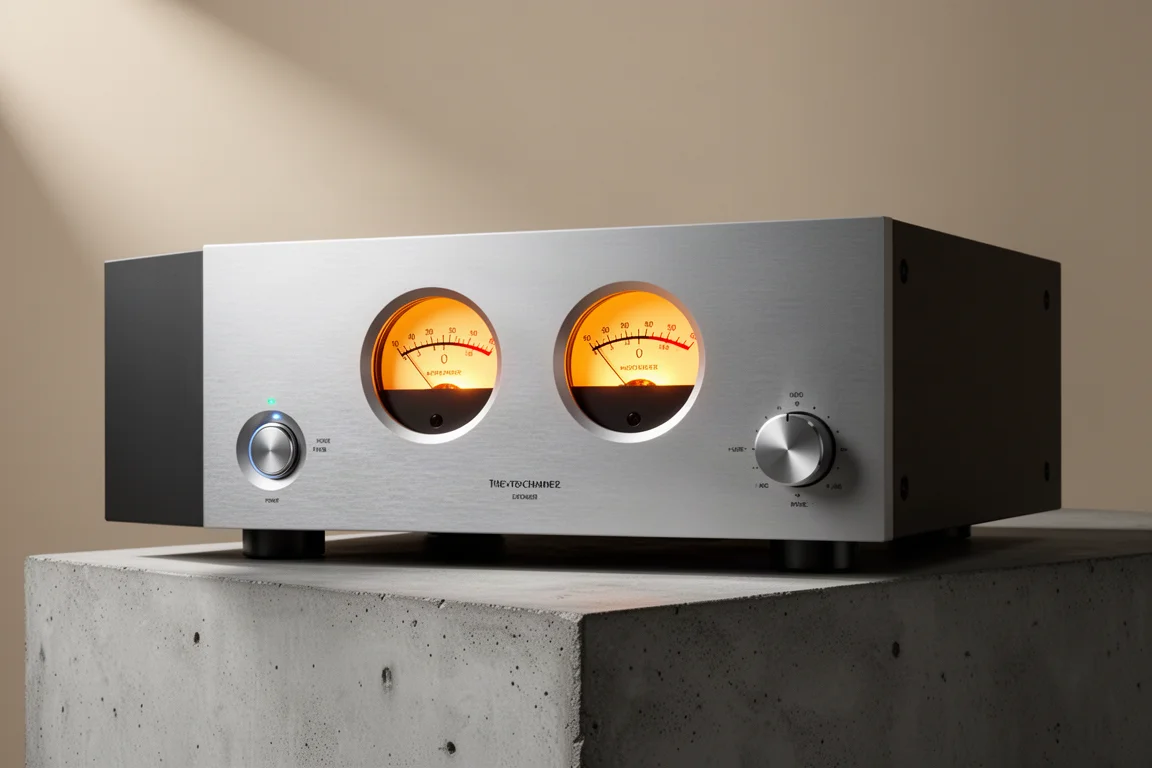
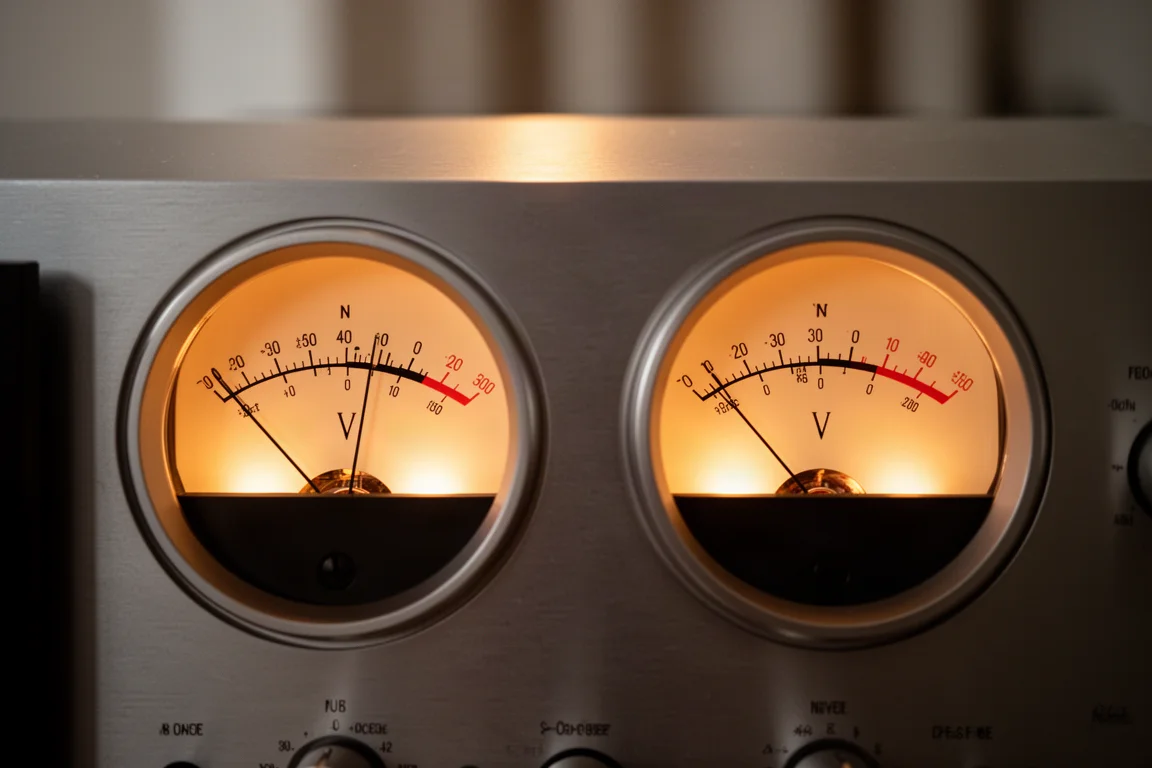
The front panel is the first thing that stands out. Two analog VU meters sit behind a warm amber backlight, and the layout gives the amplifier a purposeful, vintage-modern appearance. A large power button anchors the left side. On the right, a second large control adjusts the span of the meters so they still move visibly at lower listening levels. The backlight can also be switched off entirely.
Along the lower edge of the panel, Onkyo places a speaker A/B switcher on the right and a button for the DIDRC circuit. The brand logo sits on top of the chassis, and the lower section carries a curvy type treatment reading power amplifier M-80.
Build quality carries beyond the faceplate. The top panel is open enough that the internal layout is visible from above, and the side panels and hardware are finished to the same standard as the front. The amplifier weighs 25 lb, which is lighter than its footprint suggests and keeps it manageable on a shelf or in a rack.
Sound Quality and Amplifier Design
The M-80 uses a three-stage inverted Darlington amplifier design with low output impedance, which helps it supply current when a speaker asks for it. Onkyo also keeps negative feedback relatively low. Heavy negative feedback can reduce measured distortion, but it can also leave an amplifier sounding sterile, and the M-80 takes a different route by using DIDRC, or dynamic intermodulation distortion reduction circuitry, in the driver stage. That circuit targets high-frequency noise through a high slew rate design. Output transistors run in parallel to provide instantaneous current capability, which matters with dynamic music and difficult speaker loads.
In listening, the M-80 comes across as clean and articulate without sounding thin. Snare hits sit further forward in the mix than expected, and individual hits carry audible differences rather than blending into a single sound. Where a track includes a brass section, that section is placed clearly in the arrangement instead of being buried. Vocal detail in the baritone range is easy to follow, and stereo imaging is precise.
The most distinctive trait is the balance between refinement and low-end attitude. The amplifier behaves politely through the midrange and treble, then delivers weight and punch when the music calls for it, a combination that is uncommon in amplifiers this clean.
Set against another high-end amplifier in the same system, the M-80 came across as more articulate through the upper mid-range, with a character that is easy to live with over long sessions. Detail also remained easy to follow with a modest source component feeding the system, which suggests the amplifier will not be the limiting factor in a stronger front end.
Living With the M-80
In practice, the M-80 is controlled by whatever preamplifier sits in front of it. Balanced XLR inputs and unbalanced RCA inputs cover both connection styles, and a 12 V trigger on the rear panel lets the amplifier power up with the rest of the system. Two pairs of speakers can be connected and switched from the front panel, which makes speaker comparisons straightforward.
The meter span control earns its place in daily use. At lower listening levels, widening the span keeps the needles moving across a visible range rather than sitting near the bottom of the scale. The DIDRC button on the front panel gives direct access to the distortion reduction circuit, and the backlight switch is there for anyone who prefers a dark front panel.
Things to Consider Before Buying
The M-80 has no volume control, so a preamplifier is not optional. Budget for one if the rest of the system does not already include it, and expect source selection and level control to come from that unit.
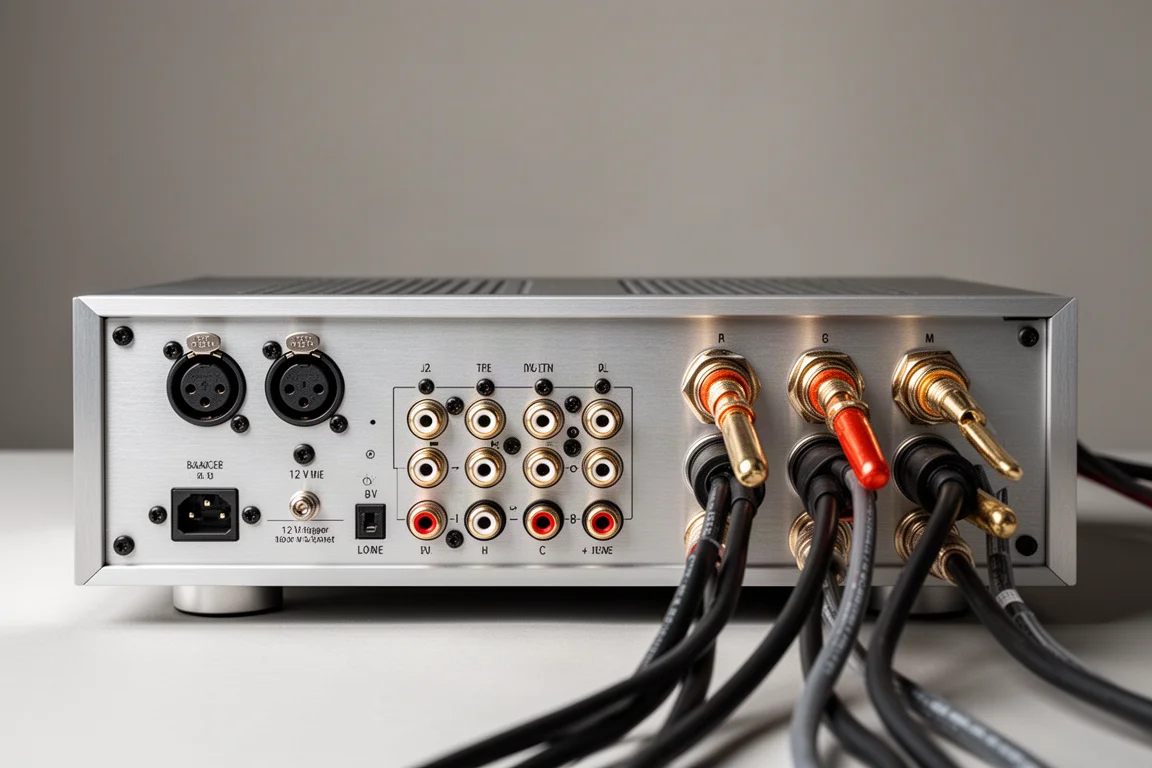
Inputs are analog only. Balanced XLR and unbalanced RCA cover CD players, turntables with a phono stage, and outboard converters, but digital sources need their own DAC before they reach the amplifier.
The amber meter backlight is warmer and softer than some listeners may expect. It can be switched off, but it is not a bright display, and that is worth knowing if a vivid glow is part of the appeal.
At 25 lb, the amplifier is easy to place on a shelf or in a rack. It is also part of a wider series, so matching components will look consistent in a system, though each one adds to the total cost.
Buying Advice
The M-80 makes the most sense for buyers who already have, or intend to add, a quality preamplifier and a pair of speakers that benefit from current delivery. It is a power amplifier first, so the rest of the chain determines how much of its capability is used.
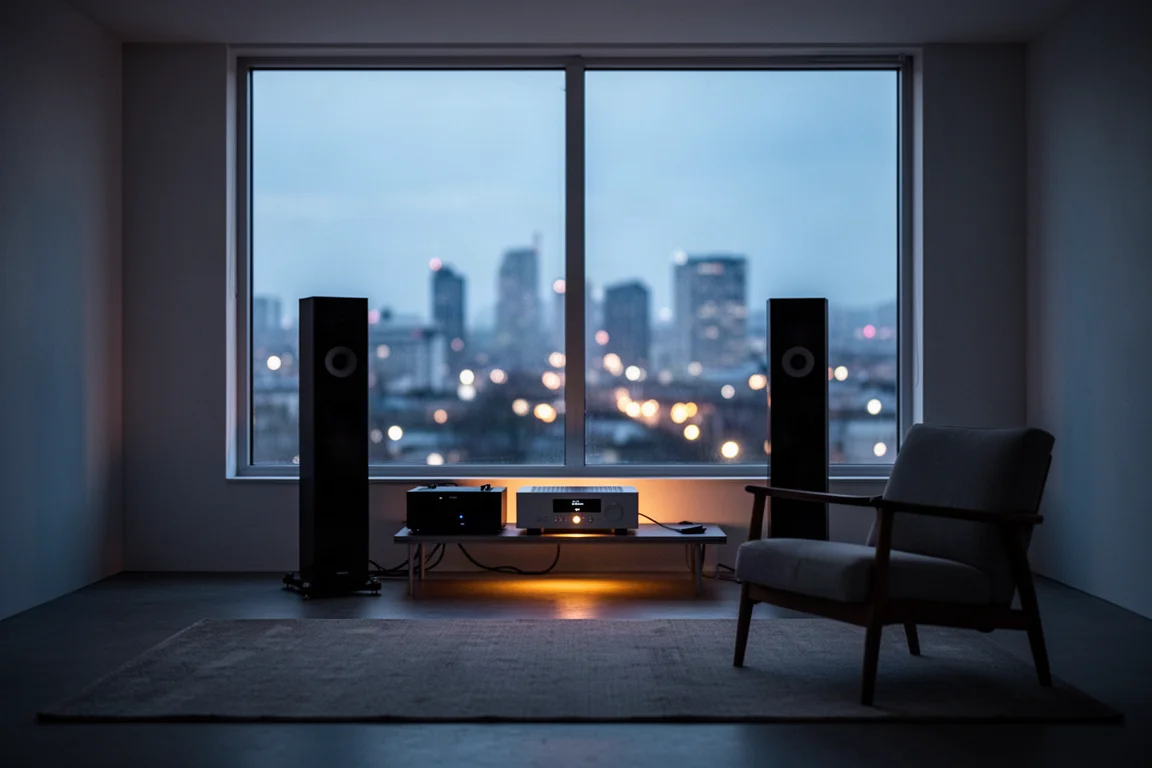
For a matched setup, the Icon preamplifier and CD player complete the look and keep the signal path simple. For listeners with an existing preamplifier, the balanced XLR input is the cleanest way to connect, and the 12 V trigger makes the amplifier behave like part of a single system rather than a separate box that needs its own switch.
If the priority is an all-in-one unit with digital inputs and streaming built in, this is not the right amplifier. If the priority is a two-channel amplifier that is engaging to listen to and pleasant to look at, the M-80 is the more interesting proposition.
Conclusion
The Onkyo M-80 is a confident piece of two-channel engineering. It delivers 130 W per channel into 8 ohms, runs a high-current Class AB output stage with low negative feedback, and pairs that with balanced and unbalanced inputs, switchable speaker pairs, and analog meters that are genuinely useful rather than decorative.
Just as importantly, it signals a clear direction. After a period of uncertainty, Onkyo has returned to the kind of hi-fi that built its reputation, and the M-80 is the clearest statement of that intent so far. For listeners assembling a serious two-channel system around a separate preamplifier, it is an amplifier worth taking seriously.
Product link
View more details for Onkyo M-80
This product is mentioned in the review. Check the specifications, options, and compatibility before buying.
View more details for Onkyo M-80Further reading
Related Reviews
Hi-Fi Audio
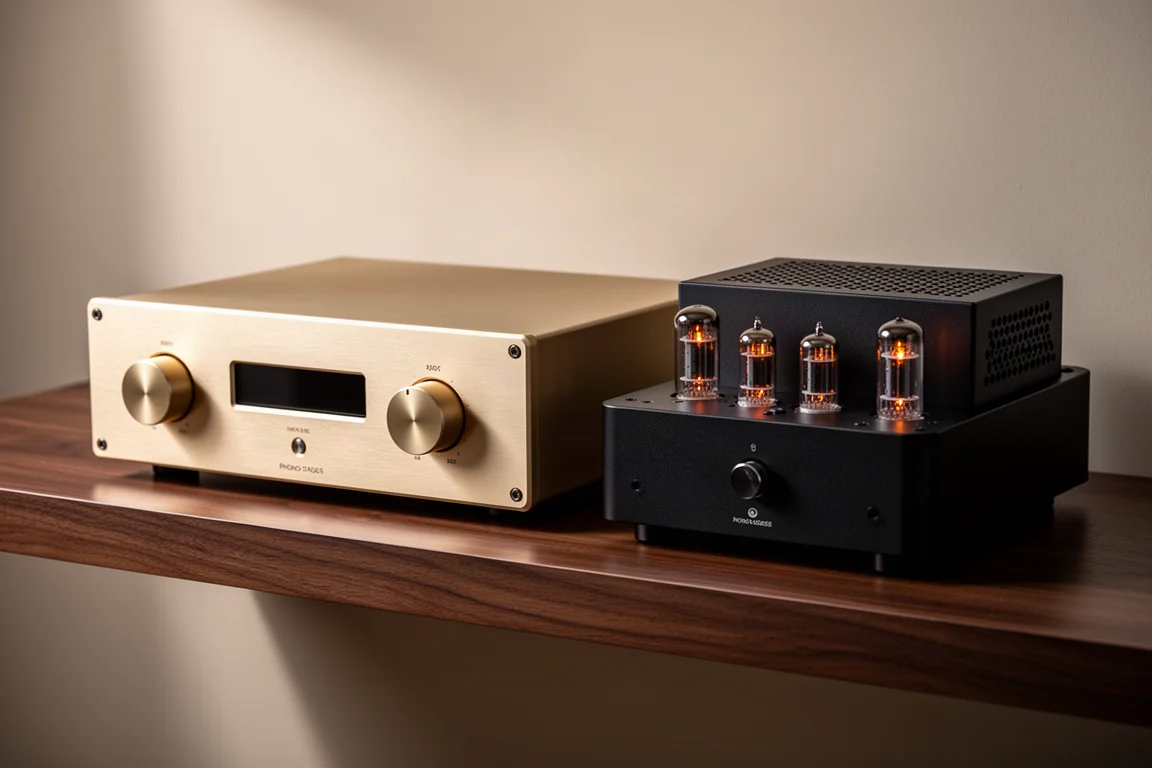
Accuphase C-57 vs Allnic H-7000V: Two High-End Phono Stages Compared
A fully balanced solid-state phono stage with a pitch-black noise floor meets a tube design built for well-loved records. Here is how to choose between them.
Hi-Fi Audio
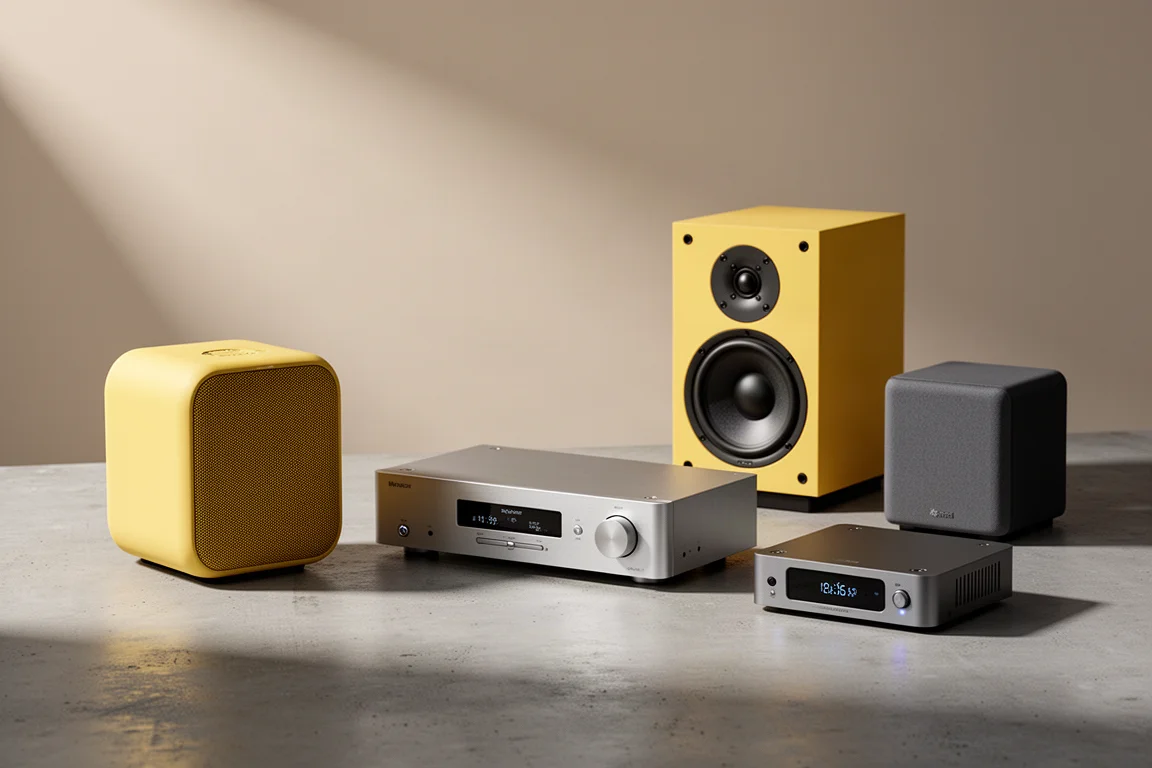
Active vs Passive Hi-Fi: Five Components for a Modern System
Five components that define modern active and passive hi-fi systems, with the strengths, trade-offs and setup details worth weighing before you buy.
Hi-Fi Audio
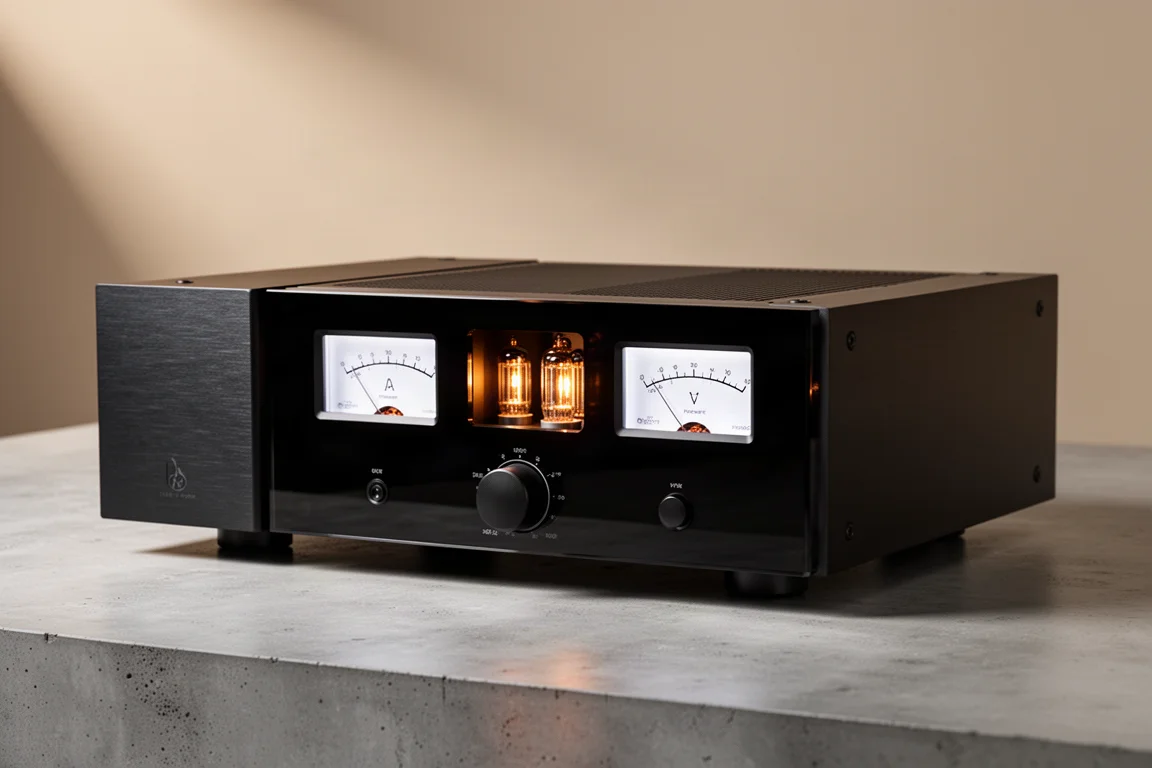
Advance Paris A10 Apex Review: A Hybrid Integrated Amplifier That Covers a Lot of Ground
A French hybrid integrated amplifier with a class A tube preamp stage, analogue power meters, and an internal DAC and phono stage good enough to make extra boxes unnecessary.