Hi-Fi Amplifiers
Onkyo Icon P-80 and M-80 Review: A Feature-Packed Pre and Power Pair
A close look at the Onkyo Icon P-80 preamplifier and M-80 power amplifier, covering build, connectivity, sound, room correction and speaker matching.
Introduction
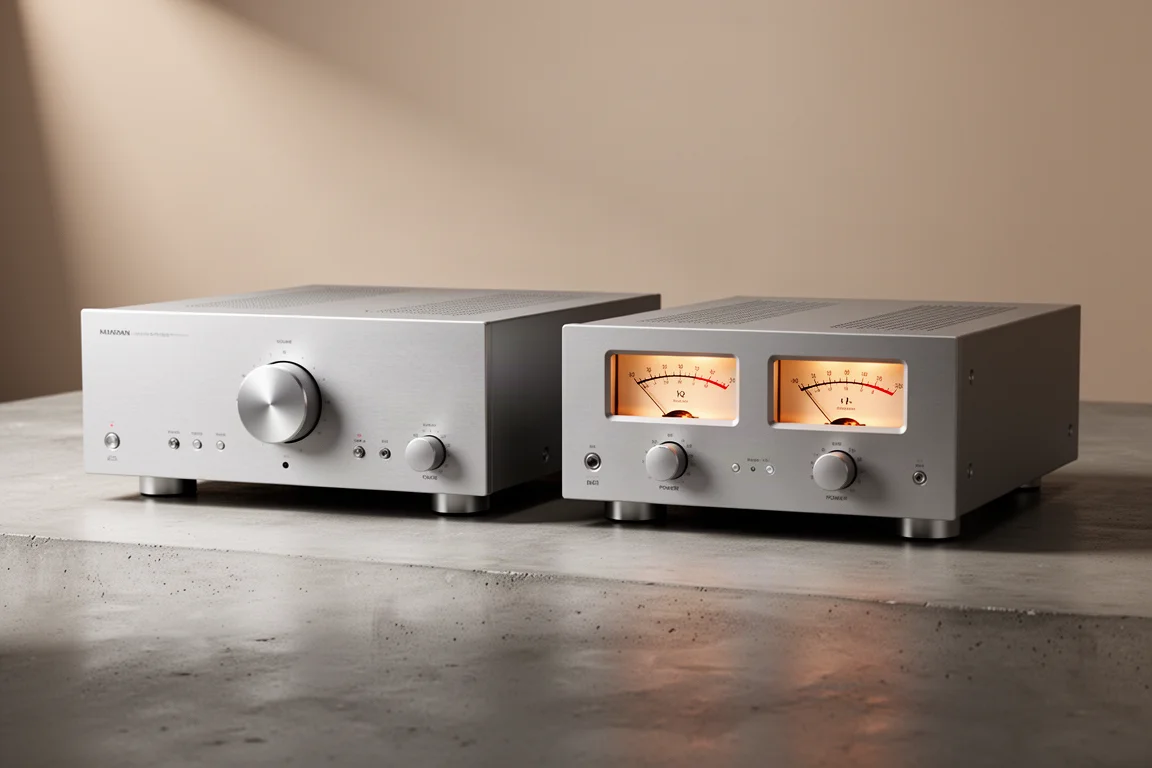
The Onkyo Icon P-80 preamplifier and Icon M-80 power amplifier are the centrepiece of the brand’s return to two-channel hi-fi, launched in 2025 as a matching two-box set. Both units share the same full rack width chassis, standing 135 mm high, and are available in silver as well as black. The preamplifier weighs 12 kg and the power amplifier 13.5 kg, so this is a set built to feel substantial once it is in place.
For anyone weighing up a pre and power combination, the appeal goes beyond the finish. The P-80 packs a phono stage, a DAC, a streaming module and room correction support into a single chassis, which means fewer boxes and fewer cables without giving up much in the way of inputs.
Why the Onkyo Icon Series Still Matters
Onkyo has been associated mainly with home cinema and AV receivers over the past 30 years, but the company’s history runs much deeper. It was founded in 1946, and during the 1960s and 1970s it produced high-end hi-fi under the Integra sub-brand. Some of its 1970s receivers still fetch decent money on the used market.
The corporate story since then has been complicated. Onkyo purchased the home electronics division of Pioneer in 2015 and later ran into financial difficulty. A 2019 sale to Sound United, the owner of Marantz and Denon, evaporated at the eleventh hour, and in 2022 the Onkyo home electronics company filed for bankruptcy. The original Japanese corporation no longer exists, but the name and assets were sold to a partnership. Premium Audio Company, a subsidiary of Voxx International, holds a 75 percent share, with the remaining 25 percent owned by Sharp Corporation.
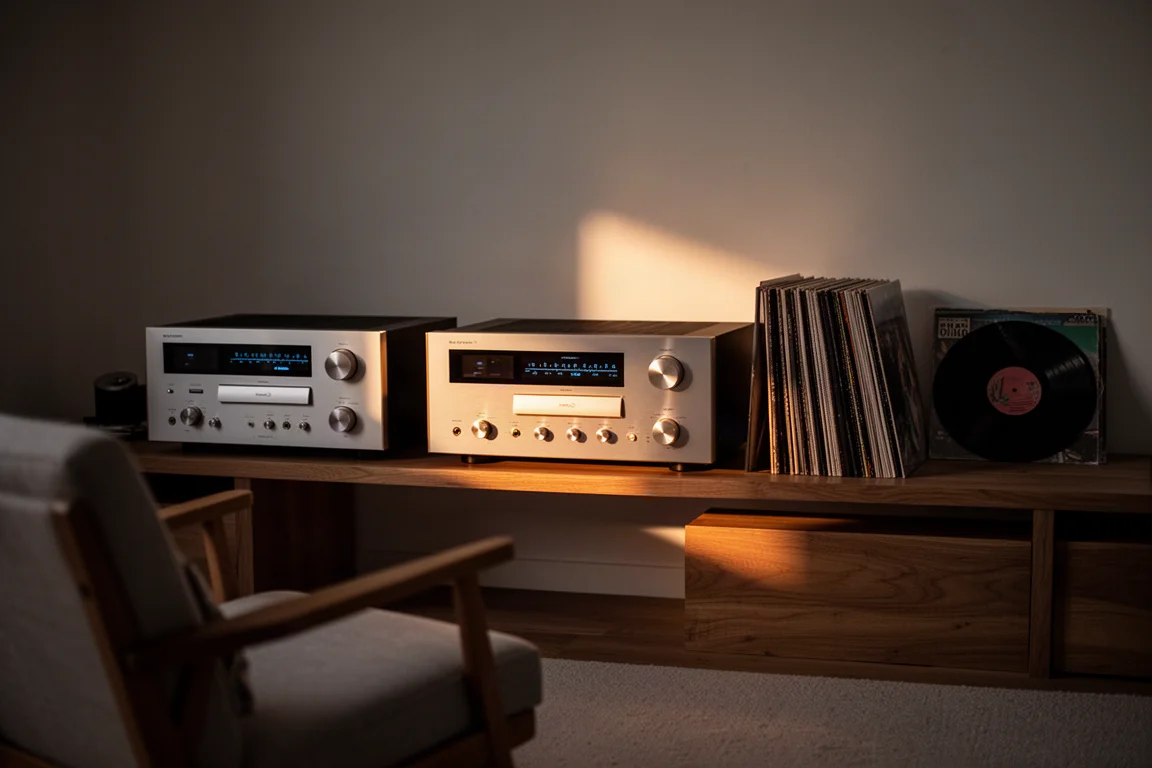
That background matters to anyone spending serious money on a two-box amplifier. The Icon range is the clearest signal yet of what the current ownership intends to do with the badge, and the P-80 and M-80 are the products that will shape first impressions.
Onkyo Icon P-80 Preamplifier: Connectivity and Control
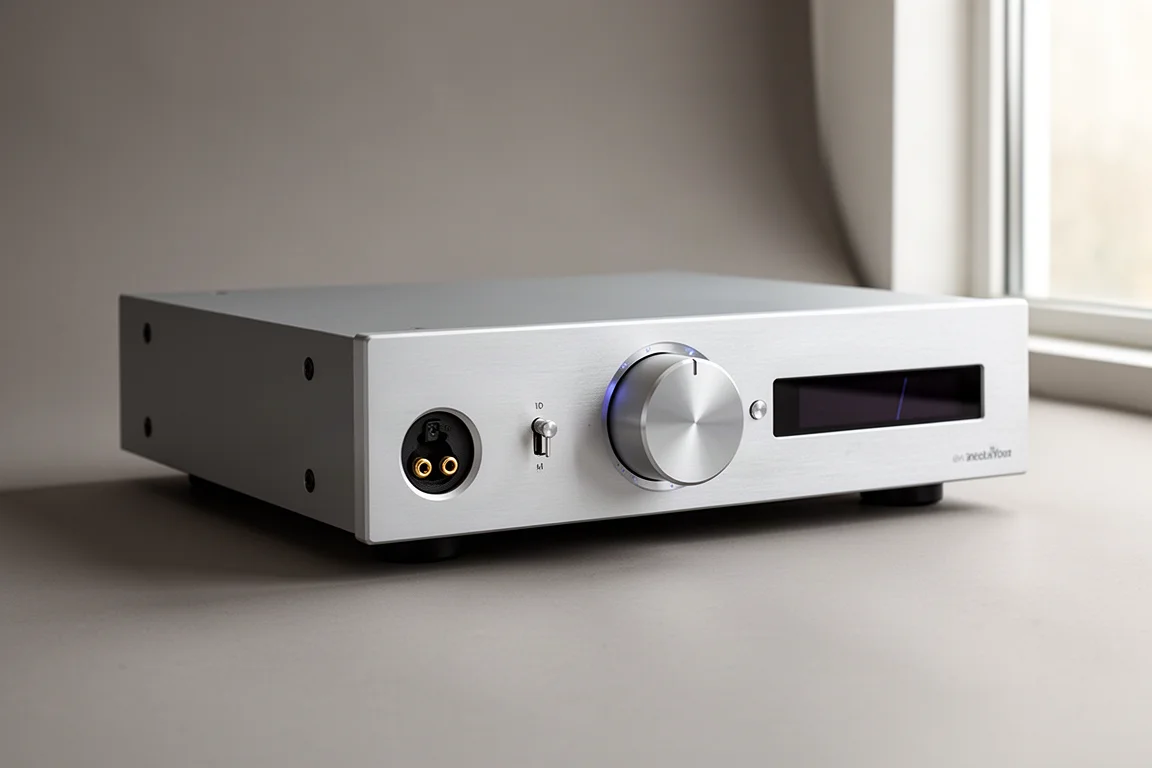
The P-80 is the more feature-dense half of the pair. It offers nine inputs, spanning digital and analogue sources, and ships with a fully functional remote control that provides direct access to every input along with volume and tone adjustments. On the front panel, a 6.35 mm headphone socket sits at the extreme left, with a source direct toggle switch to the right of the volume dial that bypasses the tone controls. A microphone connection is provided for Dirac room correction. One of the nicer design touches is the motorised volume dial, which rotates and fades its illumination when the unit is placed in standby.
There are two practical quirks worth knowing about. It is hard to see which input you have selected in low light conditions, and there is roughly a two-second delay between selecting an input and the sound arriving, which takes some getting used to. Up to four inputs can be stored in the presets for quicker access.
Connectivity is comprehensive. The phono stage handles both moving magnet and moving coil cartridges. Digital inputs cover coaxial and optical, with an optical output as well. Two analogue RCA inputs are provided, alongside twin subwoofer outputs and preamplifier outputs on both RCA and balanced XLR. An HDMI ARC connection for TVs sits between the Bluetooth antennas, and there is a USB port for accessing music on flash drives plus an Ethernet network jack. A streaming module is fitted too, with Roon Ready support, Chromecast, AirPlay 2 and native streaming platforms including Spotify Connect, Tidal Connect, Qobuz Connect and Amazon Music. Inside, the DAC is based around a mid-tier AKM 4452 chip, and Onkyo’s patented Direct Intermodulation Distortion Reduction Circuitry, DIDRC, is intended to stop high-frequency noise from impacting the audible range while increasing slew rate for quick transient response.
Onkyo Icon M-80 Power Amplifier: Power, Meters and Terminals
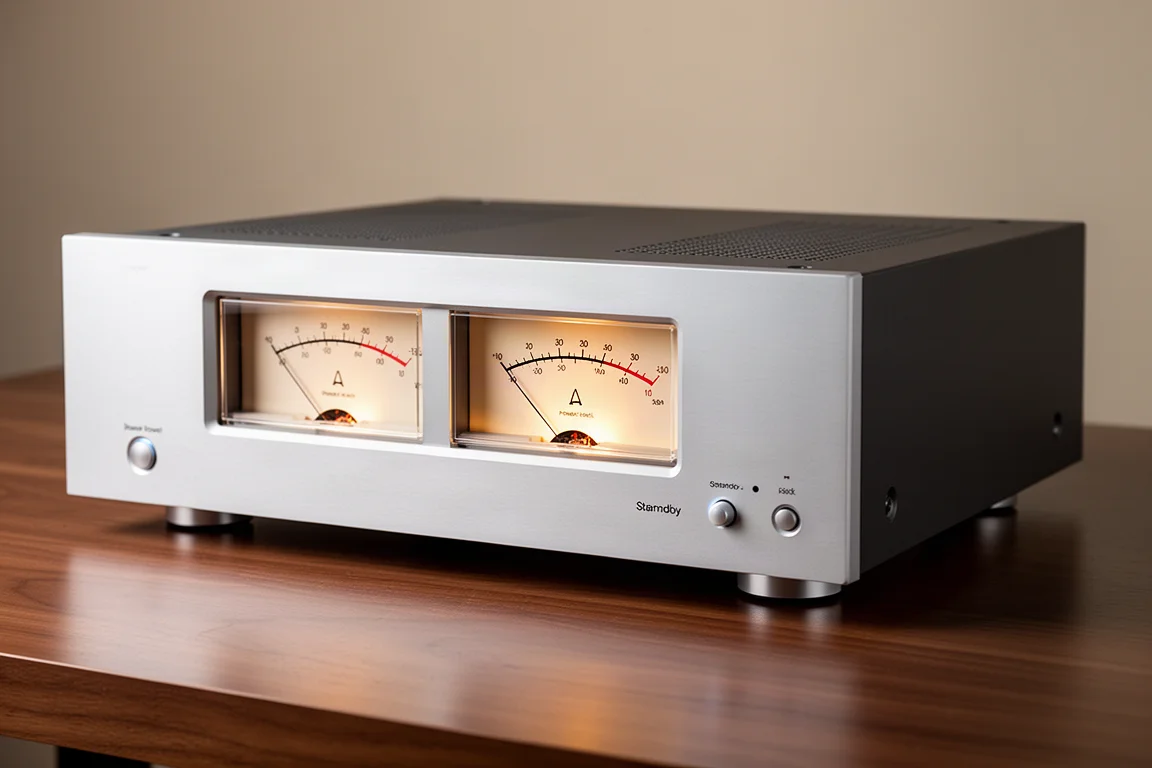
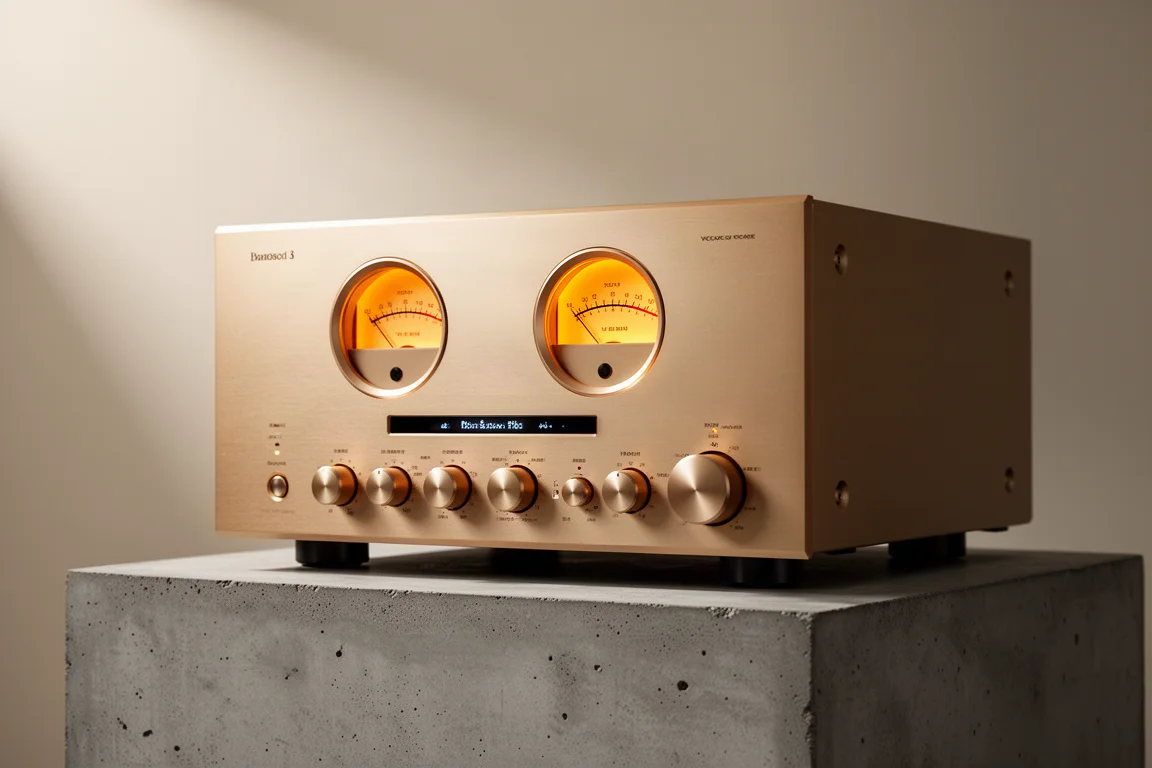
The M-80 holds even more visual interest than the preamplifier thanks to a pair of substantial power level meters. The backlighting is subtle and understated, which makes the amplifier look considerably more expensive than its asking price. Below the standby button sits a smaller button that turns off the light show if you prefer a darker front panel. The larger button on the right changes the sensitivity of the meter from unity to times ten, while the smaller button selects between A, B or both speaker terminals. On the rear, one toggle switch enables or disables auto standby and another selects between single-ended RCA and balanced XLR inputs.
The two sets of speaker terminals place the left and right channels on top of each other rather than side by side, which is less intuitive than it could be when you are wiring the amplifier up.
Inside, the M-80 uses DIDRC circuitry to drive the output stage. Three stages of inverted Darlington transistors are connected in parallel, rather than the conventional two-stage Darlington pairs connected in series. The aim of that arrangement is to maintain high current while producing lower distortion, since any distortion created in the first stage is not amplified by the second. The class AB amplifier is rated at 130 watts per channel into 8 ohms and 200 watts into 4 ohms. No peak current rating is published. The power transformer and the two main filter capacitors, specified at 10,000 microfarads each, look undersized given the power rating and the number of transistors involved.
How the Onkyo Icon Pair Sounds
There is some added flavour to the sound. The bass is extremely tight with a crisp mid-range transient attack, the lower mid-range gains some body that gives male vocals a sense of gravitas, and the upper mid-range has extra emphasis that projects singers and lead instruments forward. That combination of snappy bass, lower mid-range warmth and upper mid-range presence is reminiscent of the character of the Rega Brio Mark 7, with the main difference being that the Onkyo pair is more dynamic thanks to greater power on tap.
Where the pair is less convincing is the size of the space it creates. The soundstage is restricted in both width and depth, extending only a little beyond the speakers to the left and right, and stereo imaging is a touch diffuse rather than sharply focused. Against the Audiolab 6000A Mark II, the Onkyo pre and power has the better bass control and definition at the leading edge of notes and is the more revealing of the two, while the Audiolab counters with a more open soundstage and more accurate placement of performers. Stepping up to the Exposure 2510 opens the sonic landscape much further, with more precise localisation and greater nuance and texture in the midrange, although it cannot match the Icon pair for bass definition and midrange transient attack. Both amplifiers show equally impressive high-frequency extension and refinement.
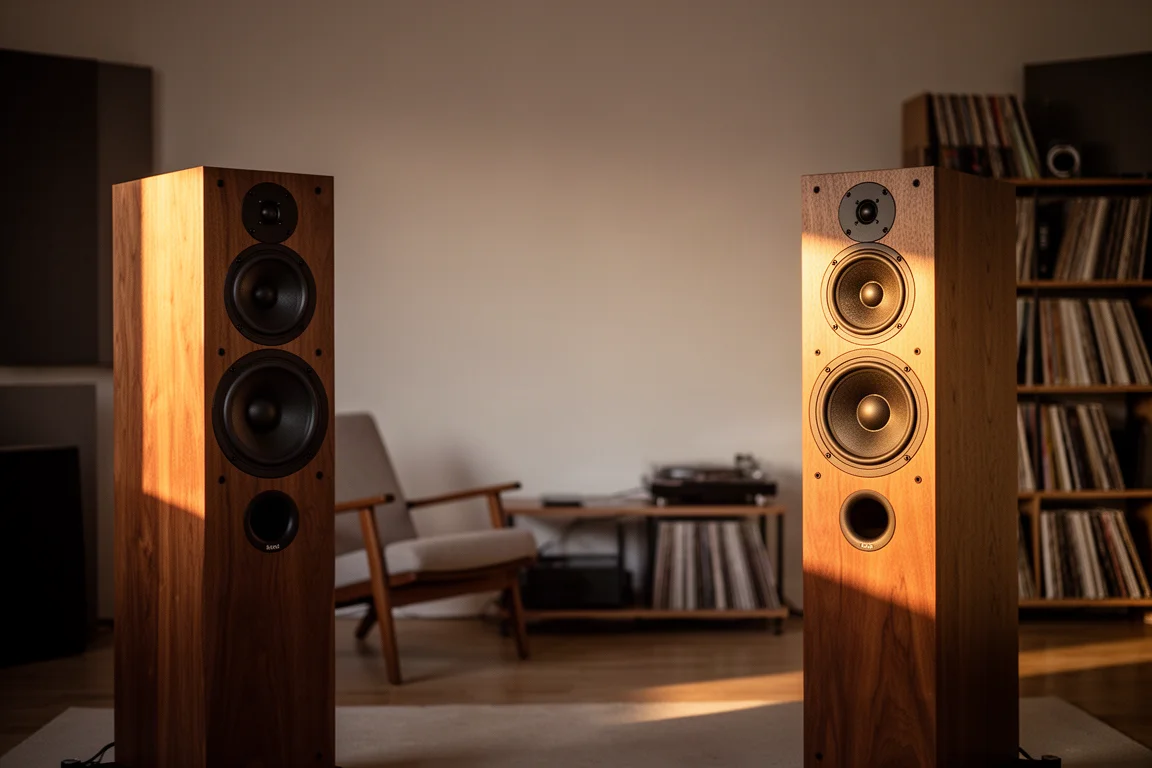
Separation of elements within a mix is a genuine strength here, helped by how little bleed there is from the bass into the midrange. Basslines are held onto and delivered with authority, even if the three-dimensionality of the space around them stays modest.
Onboard DAC, Phono Stage and Streaming
The modest AKM 4452-based DAC is well suited to this amplifier. It is resolving enough to extract pretty much all of the performance the P-80 and M-80 can deliver, while adding a slightly warm tone that sweetens the sound just a touch. Trying external converters ranging from affordable desktop models to far more costly units produced only marginal improvement, so the internal DAC is the sensible place to stay.
The phono stage is more than satisfactory, and even the moving coil option is quiet enough to satisfy all but the most discerning listeners. Switching to a separate outboard phono stage did deliver a worthwhile improvement in fidelity, so vinyl enthusiasts with demanding tastes may still want to explore that route.
The streaming module follows a similar pattern: basic but functional, including Tidal Connect. Adding a dedicated streamer brings a noticeable uplift in detail retrieval along with a slicker user interface, but plenty of listeners would be perfectly happy to skip that extra box entirely.
Dirac Room Correction in Practice
The version of Dirac limited to below 500 hertz comes free with the P-80, while the full frequency bandwidth variant is available at additional cost. Setup is simple. You download the Onkyo Control app, plug in the supplied microphone and follow the on-screen instructions, which direct you to place the mic in nine locations in and around the listening position. After the frequency sweeps run, you are presented with a correction curve.
In practice, Dirac Live dramatically boosted the bass between 50 and 80 hertz and began rolling off the highs at 6,000 hertz in one room, which left a pair of lean, bright stand-mount speakers sounding thick, dull and slow with the correction engaged. Manual adjustments are possible, so results will vary from room to room, but it is worth treating the automatic curve as a starting point rather than a finished result.
Speaker Matching Notes
Partnering the pair with demanding, current-hungry stand-mount speakers is not the natural route. Vintage ProAc Response 1 SC speakers sounded very small, and a pair of Quad Vena Ones did not fare any better. A revealing tweeter in one compact model unearthed some harshness in the upper mid-range of the Onkyo pair. Transmission line floorstanders presented an easier load, but the pre and power combination did not have the resolution to do those speakers full justice.
Compact stand-mounts were a more reasonable match, showing off the strengths in transient attack and instrument separation, although better amplifiers will pull more soundstaging, imaging and midrange resolution from the same speakers. The most successful partnership was with the Monitor Audio Silver 107 Gs, which are clean and dynamic and added some welcome richness to the lower mid-range while surprisingly avoiding any brightness with the lean-sounding Monitor Audios.
Overall Buying Advice
The P-80 preamplifier retails at 1,000 and the M-80 power amplifier at 1,449 pounds, which makes the pair a two-box solution with phono stages, a DAC, a streaming module and room correction already included. Many buyers will be drawn in by how the set looks, but the decision will usually come down to whether those integrated features are worth more than a stronger soundstage elsewhere.
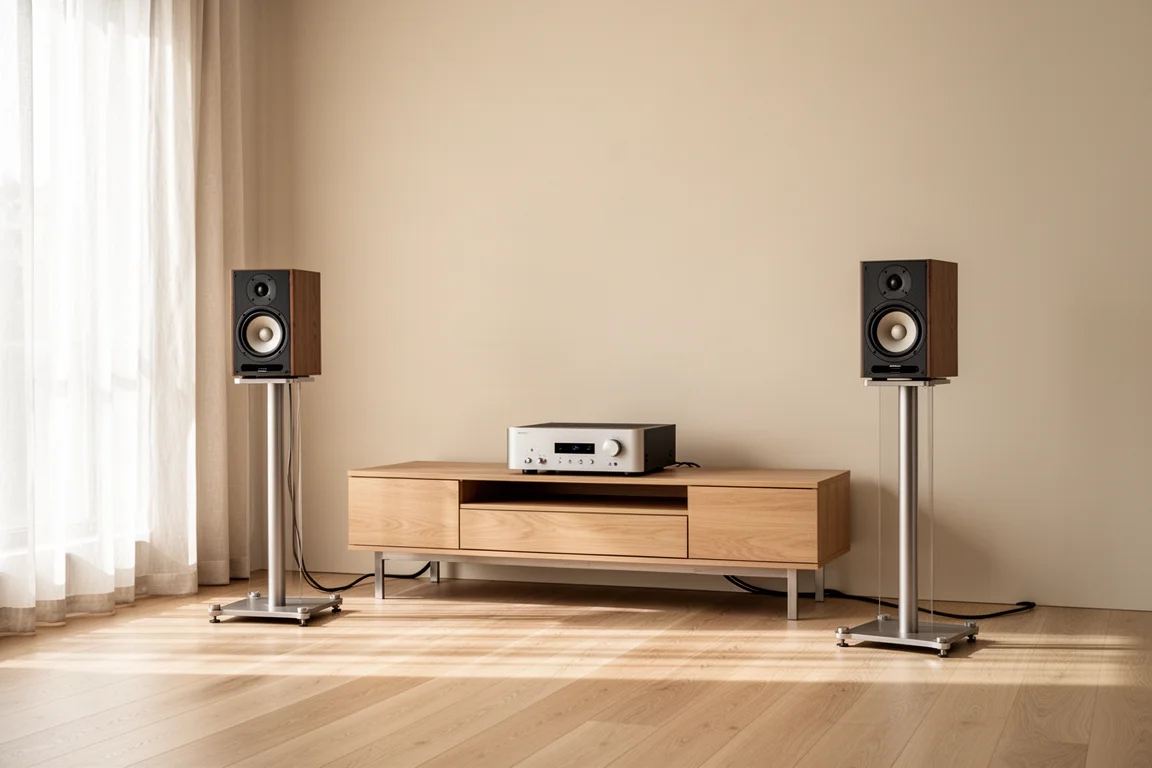
If you want everything in one matching chassis and would rather not add extra boxes, the feature set here is hard to argue with. If you already own a high-quality outboard DAC, phono stage or streamer, spending the same budget on an amplifier pairing with stronger imaging and midrange resolution may suit you better. Matching the amplifier to the right speakers will matter more than the specification sheet suggests.
Conclusion
The Onkyo Icon P-80 and M-80 are striking to look at, and that alone will sell plenty of them. As an amplifier pairing they are competent in all the ways that matter day to day: excellent bass control, decent dynamics, very good instrument separation, and an internal DAC that does not need replacing. The trade-offs are a soundstage that falls short of expectations and a few usability quirks, notably the input readout in low light and the delay when switching sources. For listeners who want a well-finished two-box system with vinyl, streaming and TV audio covered, this pair earns a strong recommendation.
Further reading
Related Reviews
Hi-Fi Amplifiers
Accuphase E-280 Review: Entry-Level Accuphase With Flagship Attention to Detail
A close look at the Accuphase E-280 integrated amplifier, covering its champagne build, AAVA volume control, sound quality, and the speakers and sources that suit it best.
Hi-Fi Amplifiers
Advance Paris A10 Classic vs Yamaha A-S301: Two Integrated Amplifiers Compared
A practical comparison of a $350 integrated amplifier and a $2,500 reference model, covering the differences that matter and the ones that do not.
Hi-Fi Amplifiers
Affordable Chinese Amplifiers Worth Buying: Five Budget Hi-Fi Amps Compared
A practical look at five affordable amplifiers, what each one does well, and the trade-offs to weigh before you buy.