CD Players
Onkyo DXC390 Review: A Six-Disc CD Carousel That Still Earns Its Place in 2026
With no apps, no Wi-Fi, and no updates, the Onkyo DXC390 is a deliberately old-school six-disc CD carousel that makes a surprisingly strong case for itself.
Introduction
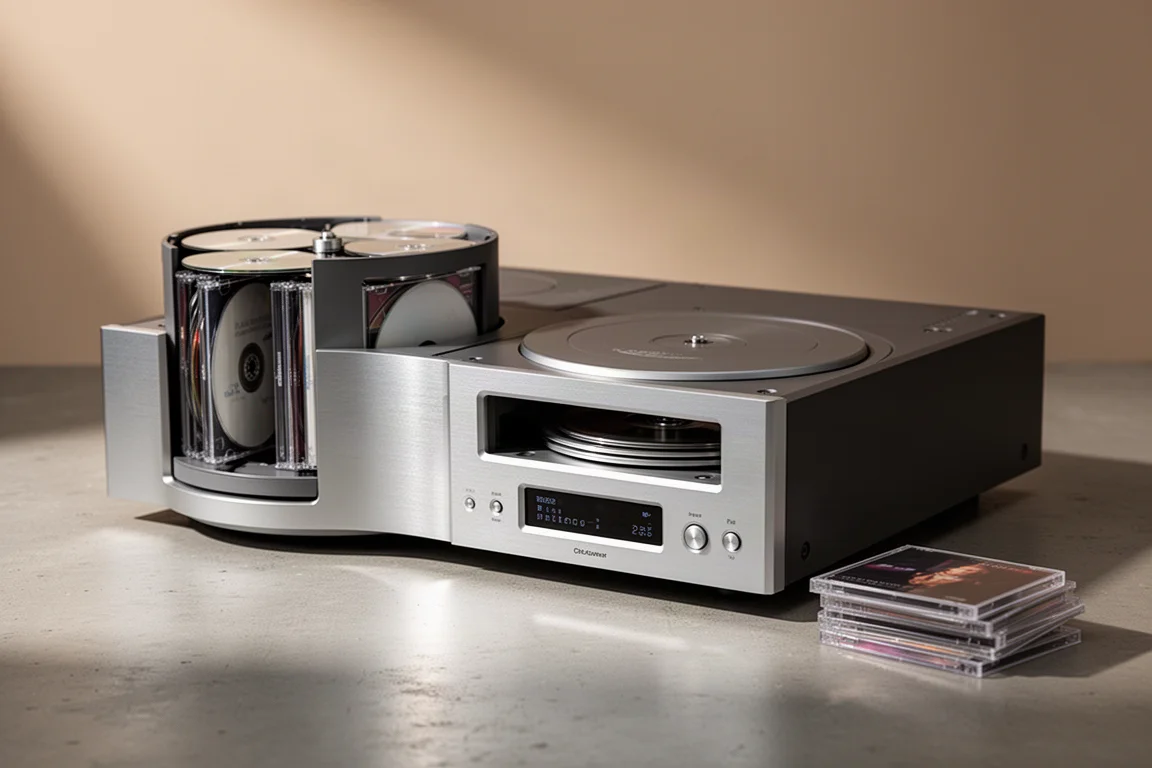
A six-disc CD carousel is not the kind of product anyone expects to find on sale in 2026. The Onkyo DXC390 has no apps, no Wi-Fi, no Bluetooth, and no firmware updates to wait for. It plays compact discs, six at a time, and it has been doing roughly the same job for a very long time. It also sells for about the same money it did in the late 1980s, which is unusual for any piece of consumer electronics.
That alone makes it worth a closer look. The people buying CDs today tend to fall into two broad groups: listeners who care about sound quality, and listeners who are pushing back against subscription streaming. For both, a carousel changer offers something a phone cannot, which is a small stack of albums loaded and waiting, with no screen in between.
Who the Onkyo DXC390 Is For
This player suits anyone with a CD collection that still gets used. Load six discs, press play, and the machine works through them in order without further input. That is a genuinely useful arrangement for long listening sessions, background music while working around the house, or simply working through a stack of albums you have been meaning to revisit.
It is not aimed at people who want streaming convenience. There is no network connection, no voice control, and no way to queue a track from the sofa. The DXC390 asks you to handle physical discs, and that is the entire point of owning one.
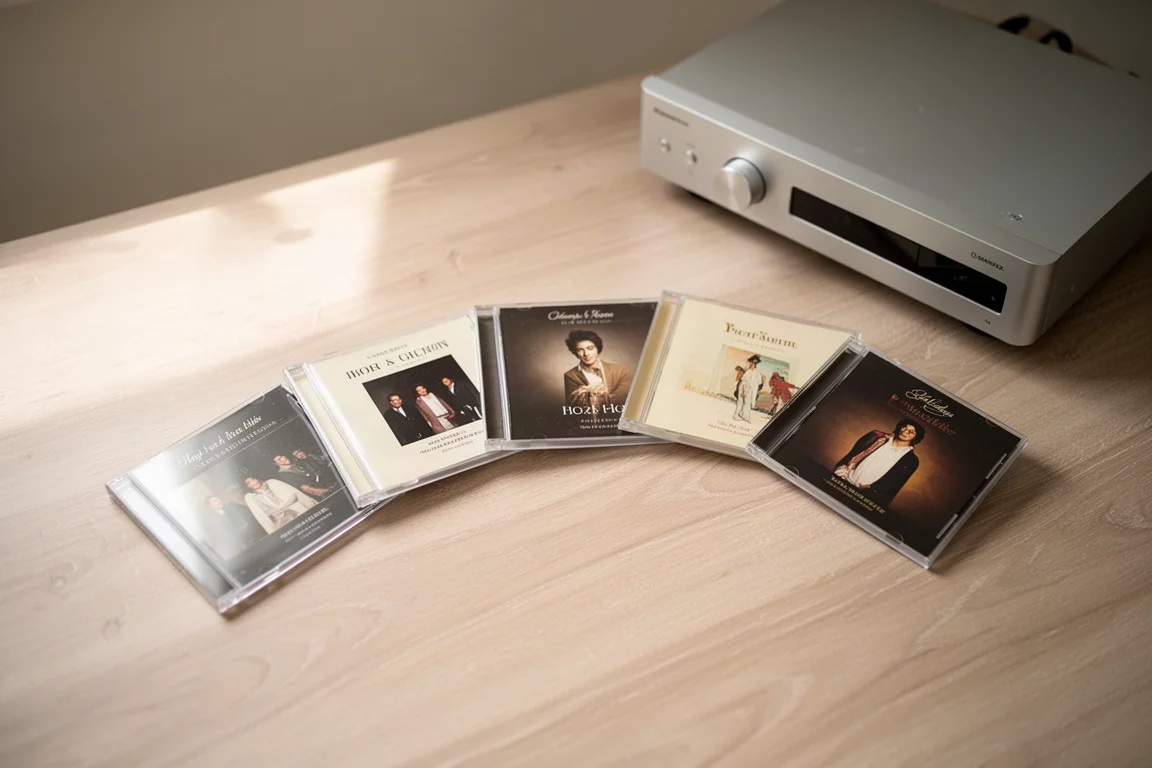
It also appeals to listeners who want their own choices rather than an algorithm’s. Six discs you selected yourself, played in the order you decided, is a different experience from an endless generated playlist. The carousel makes that selection visible, since you can see every disc sitting in the tray.
Main Strengths: Fewer Parts, Less to Go Wrong
The carousel design is mechanically simple, and that simplicity is its main advantage. A typical carousel changer uses roughly 30 to 40 moving parts. A magazine-style changer, which loads discs into a removable cartridge, uses closer to 70 to 100. Every extra part means tighter tolerances, more alignment drift over time, and more places for something to fail.
Inside a carousel there is very little to go wrong: one tray motor, one laser sled moving back and forth, and gravity handling the rest. There are no disc extraction arms, no elevators, and no robotic transfers between slots. When something does misbehave, the cause is usually visible, which means it can often be corrected at home rather than sent away for service. A fault is inconvenient rather than catastrophic.
That same simplicity is why carousels were cheaper to build in the first place. Fewer motors, fewer sensors, and no proprietary magazines to replace all kept costs down, and those savings reached the buyer.
Sound Quality and Day-to-Day Listening
The DXC390 sounds genuinely good. It holds its own against a far more expensive 4K Blu-ray player that also handles CDs and SACDs, which is a strong result for a player at this price. If you prefer to use your own conversion, the player includes a digital output, so you can send the signal to an external DAC or to the DAC inside an integrated amplifier.
The remote is a simple old-school design, and it works. There is no feature creep here, no menus to learn, and no settings that need revisiting. You put discs in, you press play, and the machine does the rest.
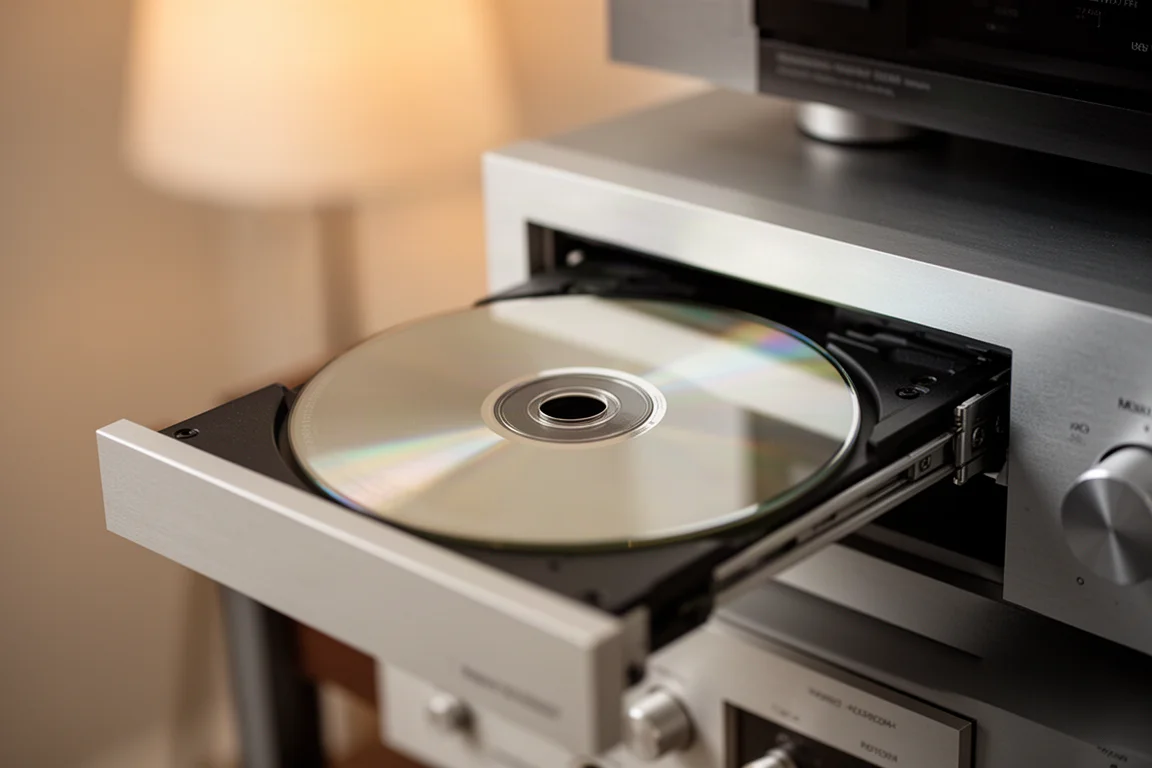
For everyday use, that predictability is the appeal. Nothing needs updating, nothing needs pairing, and nothing changes between sessions. The player behaves the same way in five years as it does on the first day.
How the Carousel Design Beat Magazine Changers at Home
At the height of the CD boom, two competing multi-disc designs fought for the same shelf space. Magazine changers used a removable cartridge about the size of an eight-track, with each disc loaded into its own tray before the cartridge was slotted into the player. Carousels took the opposite approach: a rotating platter holding five or six discs in the open.
Magazine changers felt more advanced. Because the player tracked which disc sat in which slot after the initial read, it could pre-stage the next disc while the current one played, which meant a shorter pause between tracks. That was smarter mechanics and better timing rather than any kind of audio buffering, and it never amounted to true gapless playback.
Carousels still won the living room, for three unglamorous reasons. They were cheaper, because they used fewer motors and sensors and needed no proprietary magazines. They were more reliable and easier to diagnose. And they were easier to trust, because owners could see the discs loading and see which one was playing. In the 1990s, a six-disc magazine changer cost roughly $400 to $700, a carousel ran about $250 to $500, and a large 100-disc home jukebox sat between $800 and $1,500.
Design, Remote, and Everyday Handling
The DXC390 keeps the traditional carousel layout: a low, wide component that slots into a normal hi-fi rack, with a tray you can watch rotate as it selects the next disc. The mechanism is slow compared with a phone tap, and the pause between tracks is longer than a magazine changer managed, but the process is legible from start to finish.
Handling is straightforward. Discs go in, the drawer closes, and the player reads what is loaded. The supplied remote covers the essentials without requiring a manual, and the front panel keeps controls minimal.
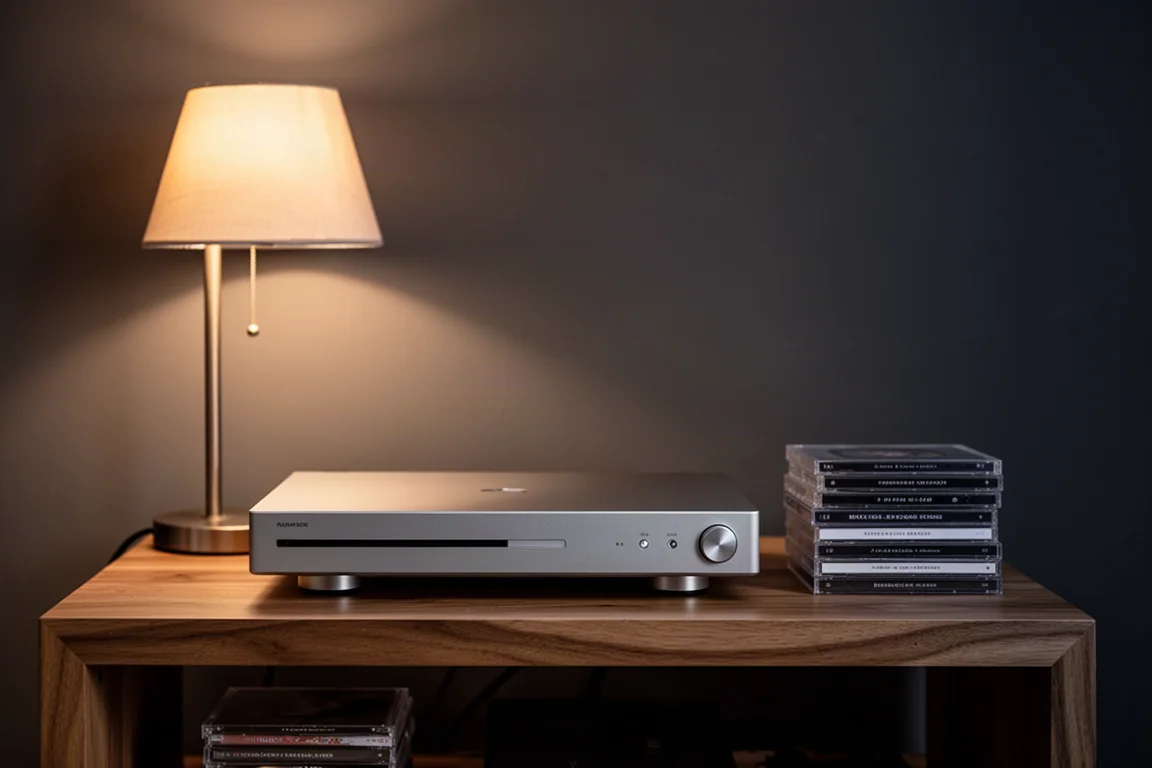
Living with it means accepting a certain rhythm. You will hear the carousel move before the next track begins, and that mechanical pause becomes part of the listening experience rather than an interruption of it.
Things to Consider Before Buying
The most obvious trade-off is the gap between tracks. Carousels have always paused longer than magazine changers did, and the DXC390 does not change that. If you listen to continuous mixes or live albums where transitions matter, this will be noticeable.
The second consideration is involvement. There is no way to skip ahead without getting up, no search function worth using from across the room, and no streaming apps to fall back on. You are your own algorithm, and the player expects you to act like one.
Finally, supply is limited. Only a small number of manufacturers still build six-disc carousel changers, with Onkyo and Yamaha among them. That makes this a niche product in 2026 rather than a mainstream one, so availability can shift.
Buying Advice: Price, Value, and What You Give Up
The DXC390 sells for around $375, comfortably under $400, which is close to what these players cost in the late 1980s. That price is reasonable in context. Single-disc CD players can cost more, and this one carries six discs, a digital output, and a mechanism that is easy to understand and often easy to fix.
There is no feature creep to pay for here. No software, no apps, no Bluetooth, and no need for ongoing development. The design is arguably archaic next to a modern network streamer, and it has moving parts, which is exactly why it remains affordable and repairable.
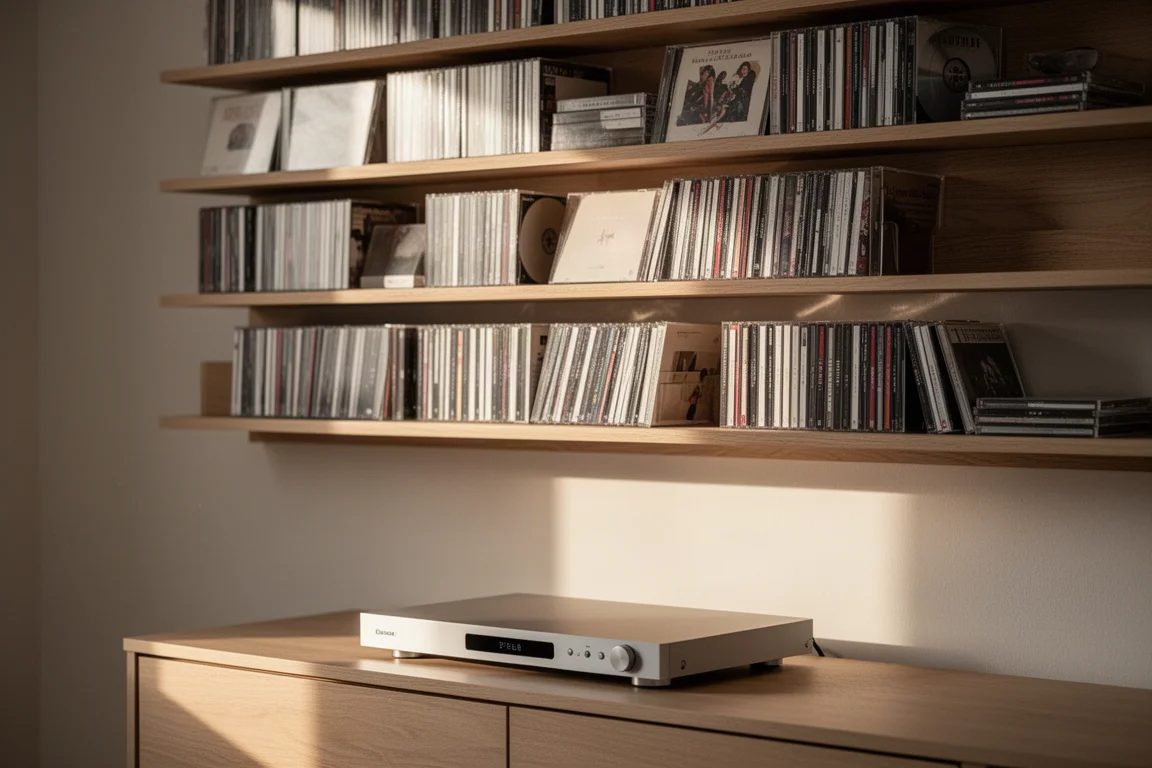
If you already own CDs and want a dedicated machine to play them, this is a sensible purchase rather than a nostalgic one. If your library lives entirely in the cloud, a carousel will not convert you, and it is not trying to.
Conclusion
The DXC390 should not exist in 2026, and yet it does, which is the most interesting thing about it. A machine designed for convenience in the late 1980s has become inconvenient next to unlimited streaming, but that inconvenience comes with intent: choosing the discs, loading them, and waiting for the mechanism to move before the music starts.
At under $400, with sound quality that punches above its price and a design that is simple enough to keep running, the Onkyo DXC390 is a well-built doorway back to a more deliberate way of listening. For anyone who still loves CDs, that is more than enough reason to consider one.
Product link
View more details for Onkyo DXC390
This product is mentioned in the review. Check the specifications, options, and compatibility before buying.
View more details for Onkyo DXC390Further reading
Related Reviews
CD Players
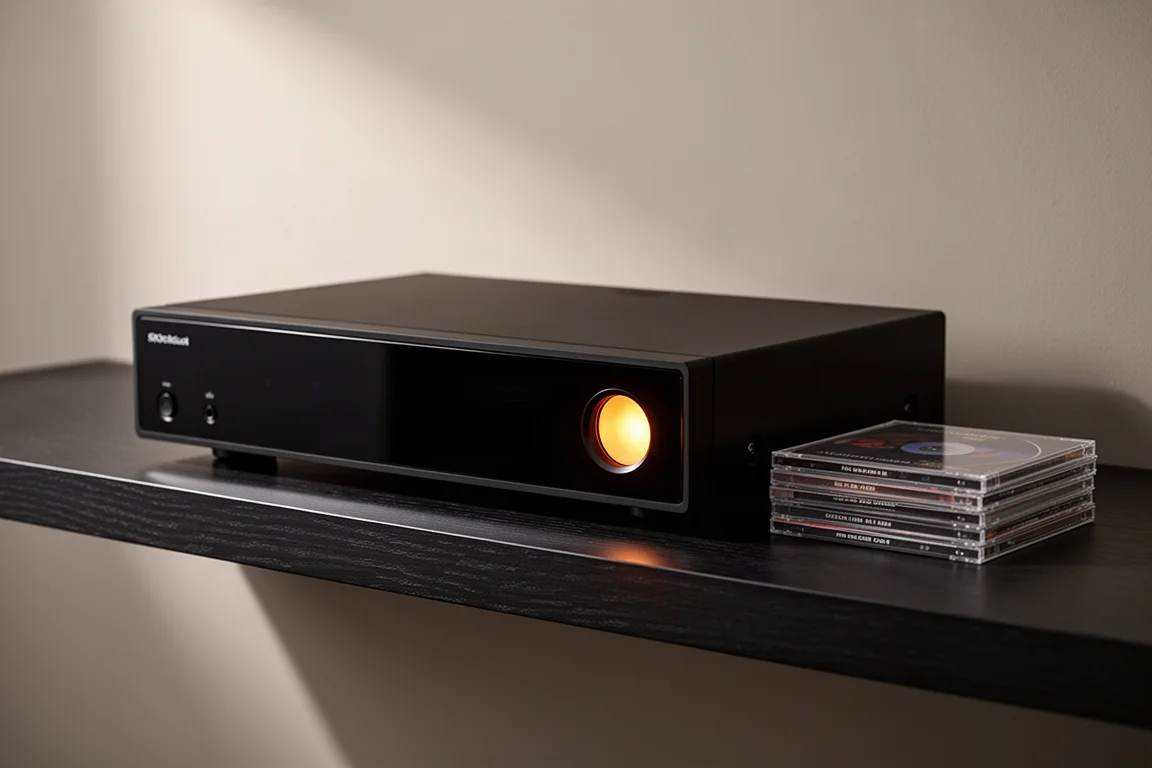
Advance Paris X-CD9 Review: A Tube CD Player That Also Works as a Transport
A close look at the Advance Paris X-CD9, a tube CD player that doubles as a CD transport, with listening notes, handling details, and a comparison against an external DAC.
CD Players
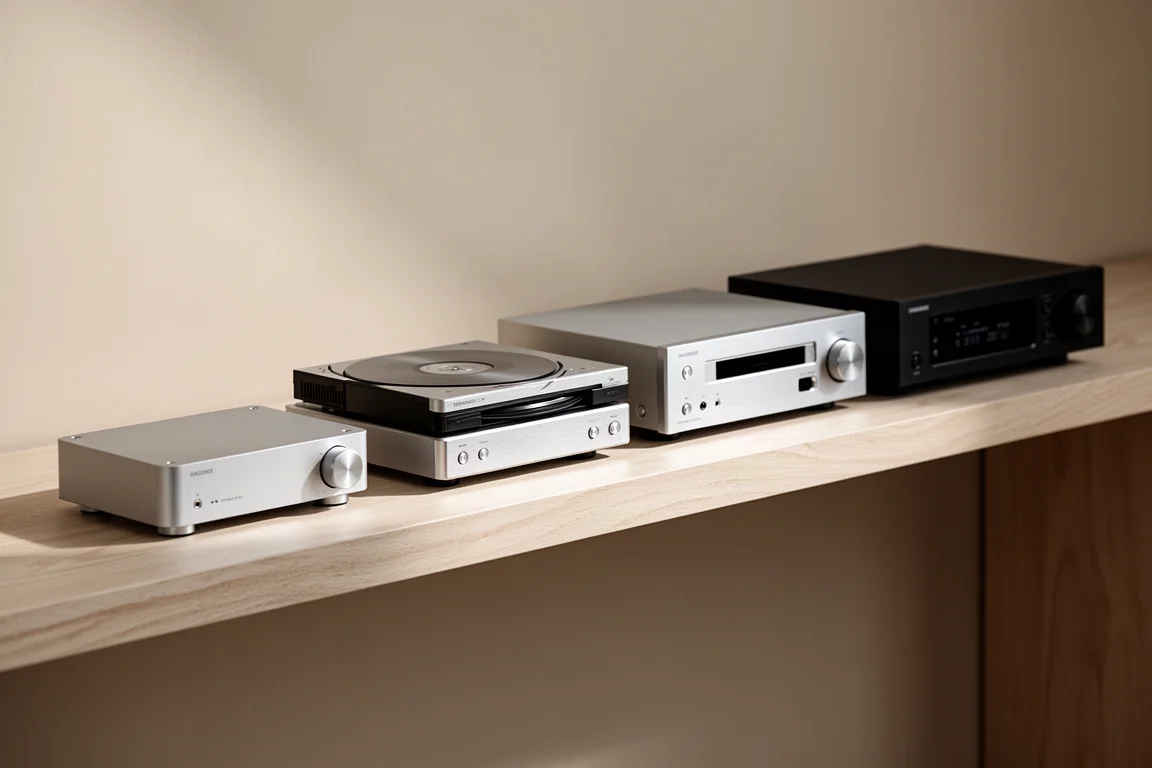
Best CD Players and DACs in 2026: Five Ways to Get Great CD Sound
Five CD player and converter options from roughly $80 to $600, plus what actually matters for sound quality and how buying discs supports the artists you love.
CD Players
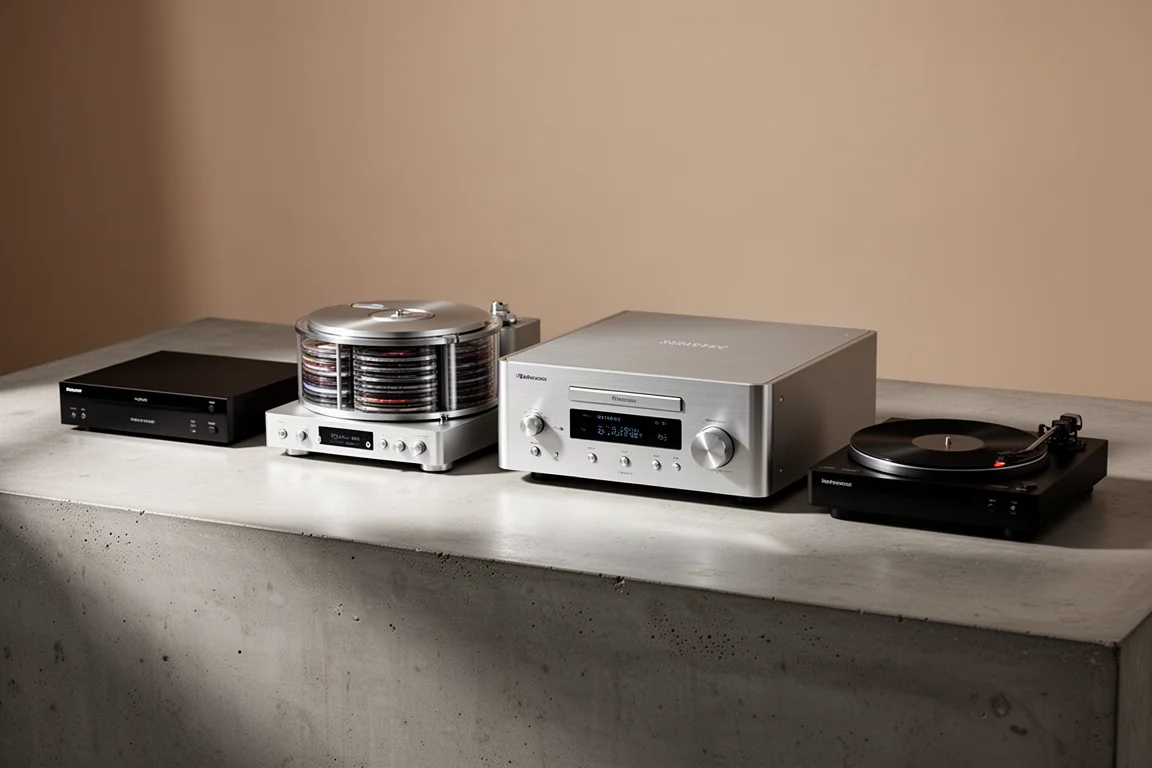
Best CD Players Compared: Budget, Mid-Range, and High-End Picks
A practical comparison of four CD players across price points, from an entry-level deck to a reference-grade player that doubles as a DAC and headphone amplifier.