Camping Tents
OneWind Skyshade Tarp Tent Review: A Bold Hybrid Shelter With One Serious Flaw
A single-person tarp tent with six configurations, strong airflow, and a light packed weight, held back by a sharply dropped foot box.
Introduction
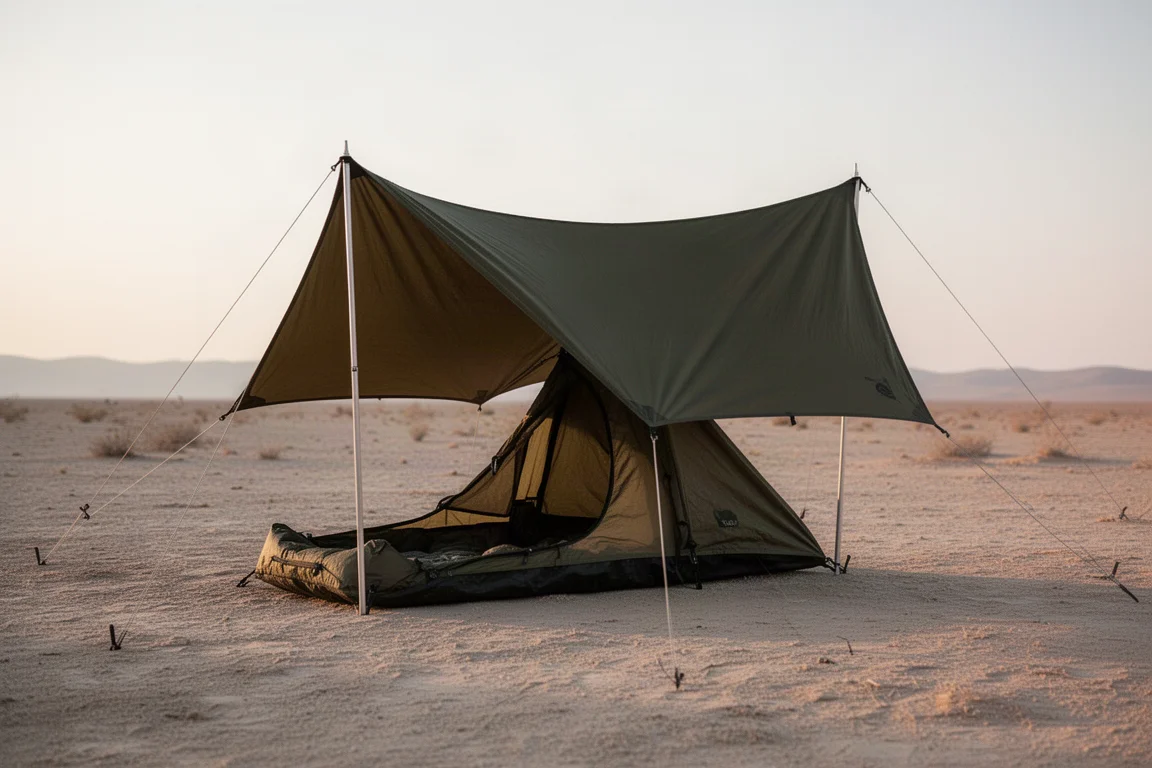
The OneWind Skyshade tarp tent is one of the more unusual shelter designs available for solo campers. It combines a compact bivy-style body with a fly that can be raised into a tarp, giving the shelter several distinct configurations rather than a single fixed shape. The fly can sit fully closed, partly raised, or extended outward as an overhead canopy.
That flexibility is the main selling point, and it is genuinely different from a conventional single-wall or double-wall backpacking tent. It also changes how the shelter behaves in wind, rain, and condensation, so the practical details matter more here than they would with a standard tent.
This review covers what the design does well, where it falls short in real use, and who should consider it.
Who This Shelter Is For
The Skyshade is a single-person, three-season shelter with two doors. It suits campers who value airflow and an open sleeping position over a conventional enclosed tent shape.
The design is most workable for shorter users and for trips where rain is unlikely. Campers who sleep in dry, warm conditions and want maximum ventilation will get the most from it. Anyone who regularly camps in wet weather, or who is taller than roughly 5 ft, should look closely at the foot-end space before committing.
Design and Setup Overview
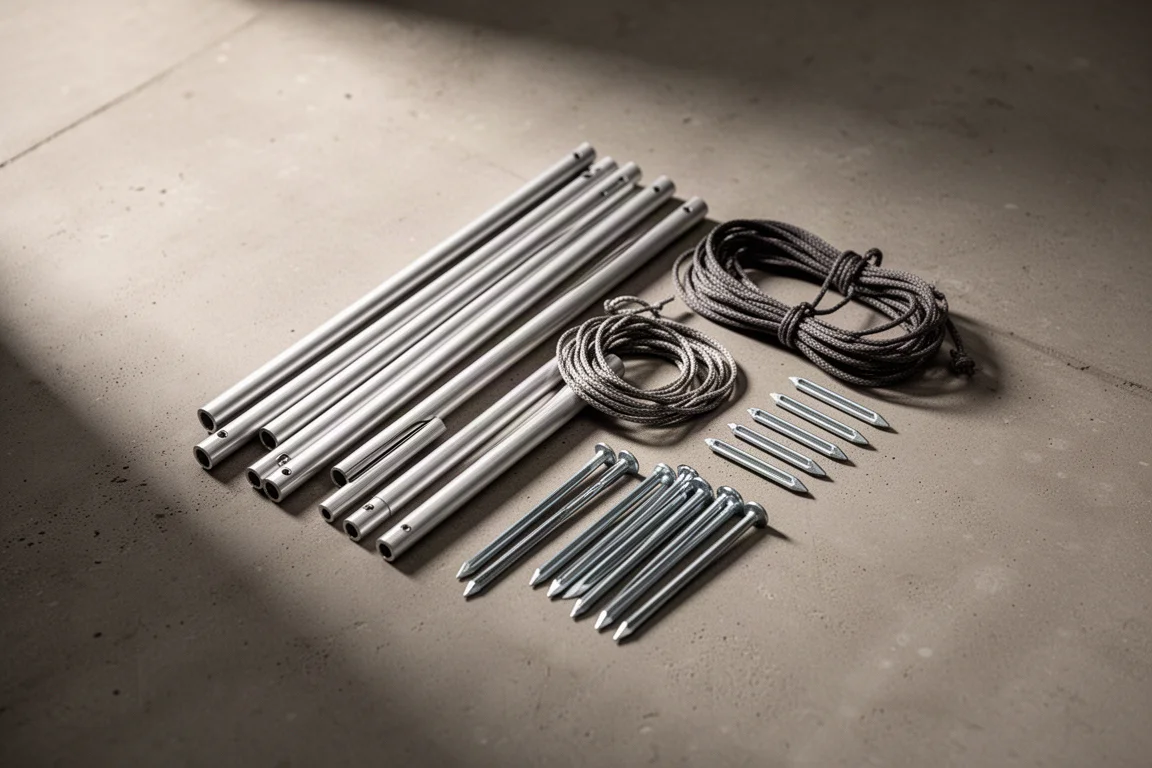
The shelter uses a fly-first pitch, so the outer layer can be positioned before the inner is exposed. Setup requires three aluminum poles, and the package includes two guy lines and eight tent stakes. The storage bag has a drawcord closure at the top and two compression straps on the back.
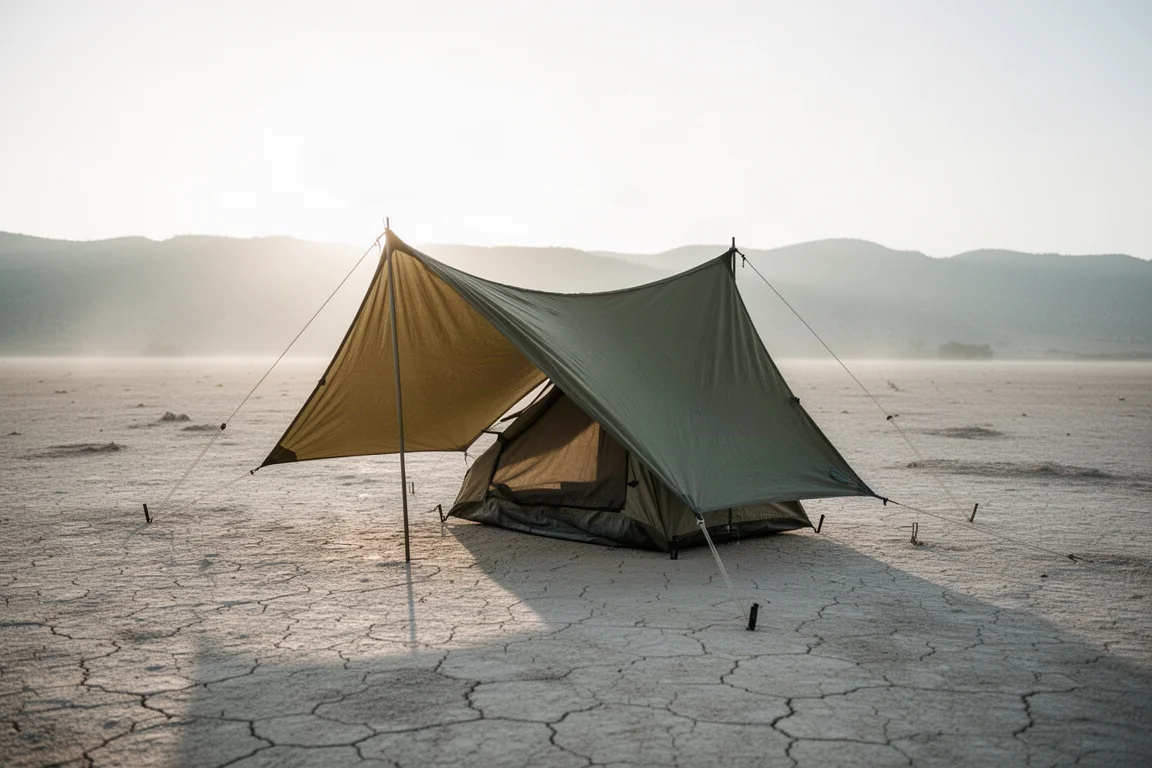
The fly can be configured in six different ways: fully enclosed, doors and fly rolled open, tarp above the inner, tarp above with the mesh rolled back, mesh rolled up with the fly partly lowered, and the fly over the head with the inner fully rolled up.
The tarp position is intended for dry weather only. It will not keep out rain, but it does help reduce morning dew on the inner and allows a large amount of airflow through the shelter. In the right conditions and at the right time of day it can also block some direct sunlight.
This is not a freestanding shelter. It must be staked out at multiple points, and the process takes some patience to get everything aligned properly.
Main Strengths
The packed size is compact at 15 in by 5.5 in, and the total weight is 3.1 lb, both reasonable figures for a solo shelter. Construction quality is solid, with few loose threads and clean stitching throughout.
At the head end there is enough room to sit up, and in some positions to kneel. The back panel has a large mesh vent that can be opened and closed from inside. With the tarp raised, ventilation is excellent, and the raised fly keeps dew off the inner surface.
Living Space and Interior Layout
The interior measures about 6 ft in length. The widest section near the head is roughly 34 in across, about 37 in tall at its highest point, and around 28 in deep before the floor drops away.
That drop is the central issue. The inner mesh descends sharply toward the foot end, and the angle is steep enough that most sleepers will have a sleeping bag in contact with the mesh. With the fly closed, that contact means any condensation forming on the inside of the fly can transfer to the bag.
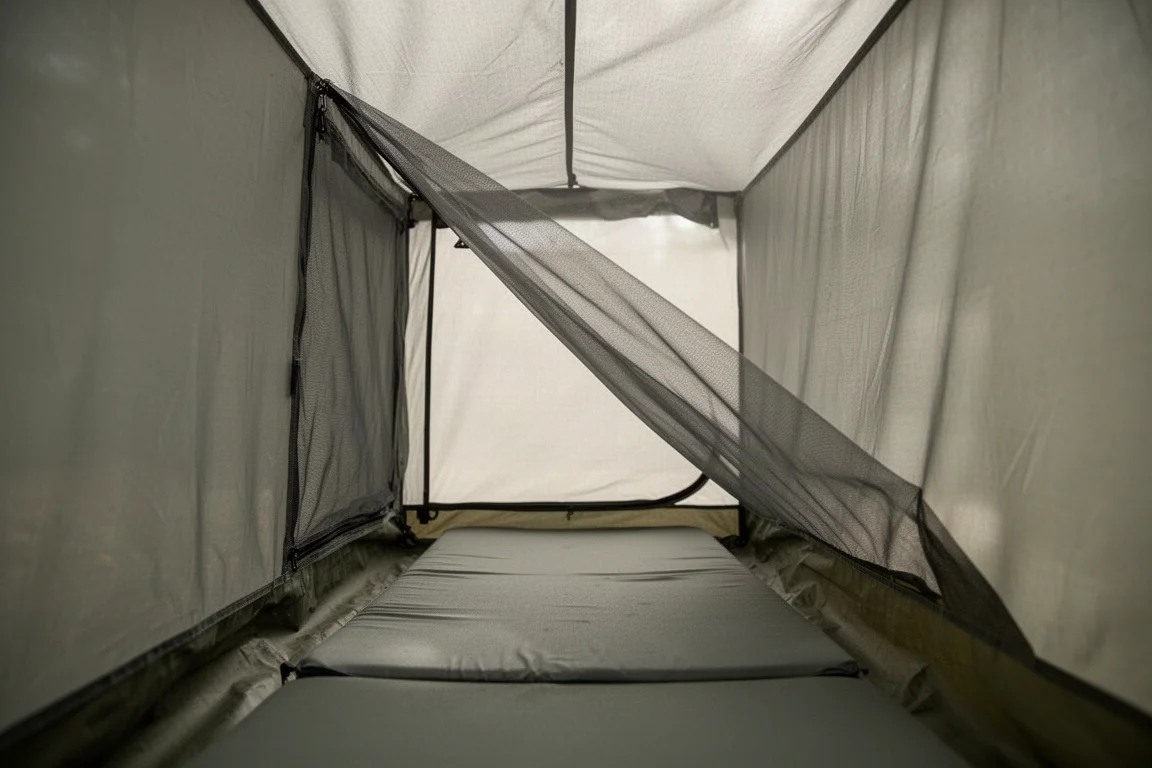
The mesh panel at the inner can be unzipped and moved out of the way, and the manufacturer describes stowing it. In practice there is no pocket or toggle set provided for that purpose, which makes the claim difficult to carry out cleanly.
Things to Consider Before Buying
The foot end is the main concern. Because the mesh drops so low, the usable space is concentrated at the head end, and the foot box is effectively compromised for taller sleepers. Raising that section by even a small amount would transform the shelter into a far more usable design.
Ventilation also depends heavily on configuration. With the tarp up, airflow is strong. With the fly fully zipped and reaching close to the ground, airflow is limited and condensation becomes likely. The rear vent is intended for dry weather use only.
There are reports of this shelter leaking, and the most plausible explanation is condensation rather than a fabric fault. The 20-denier silnylon fly carries a 3,000 mm hydrostatic head rating, and the floor is rated at 5,000 mm.
Buying Advice
Retail price is $160, with the shelter listed around $140 on Amazon. At that price the materials and construction are reasonable, and the tarp concept is genuinely interesting.
The recommendation depends on conditions. For dry-weather camping with little chance of rain, and for sleepers around 5 ft or shorter, the shelter can work, though the layout will still feel awkward. For anyone taller, or for anyone camping where rain and condensation are likely, the foot-end design is a real limitation. A small modification could improve it, but that should not be a requirement on a new shelter.

Conclusion
The OneWind Skyshade tarp tent is a distinctive idea with solid materials, a light packed weight, and impressive airflow when the tarp is raised. The sharp drop in the inner mesh at the foot end holds it back, because it reduces usable space and puts a sleeping bag in contact with condensation-prone surfaces. Campers who match the shelter’s narrow set of conditions may find it workable; everyone else should weigh the foot-end compromise carefully before buying.
Product link
View more details for OneWind Skyshade Tarp Tent
This product is mentioned in the review. Check the specifications, options, and compatibility before buying.
View more details for OneWind Skyshade Tarp TentFurther reading
Related Reviews
Camping Tents
3F UL Gear Taiji Two-Person Tent Review: Field Waterproofing Results and Buying Advice
The Taiji pairs an attached fly with a removable inner, but sustained rain exposed untaped vent seams that need sealing before this shelter can be trusted.
Camping Tents
3FUL Gear Lanshan 2 Pro 4-Season Review: A Sub-$200 Single-Wall Trekking Pole Tent
An early look at the 3FUL Gear Lanshan 2 Pro 4-Season, covering its straightforward pitch, generous interior space, and the condensation and seam-sealing questions that come with any single-wall shelter.
Camping Tents
Alps Mountaineering Lynx 1-Person Tent Review: Big Value in a Small Budget Tent
A close look at the Alps Mountaineering Lynx 1-Person Tent, covering real interior dimensions, materials, setup time, ventilation limits, and who should buy it.