Camping Tents
OneTigris Tetra 130 vs Tetra 160: Which Square Shelter Fits Your Trip?
Two square ultralight shelters from the same new line, compared on living space, ventilation, setup, and what each version includes in the bag.
Introduction
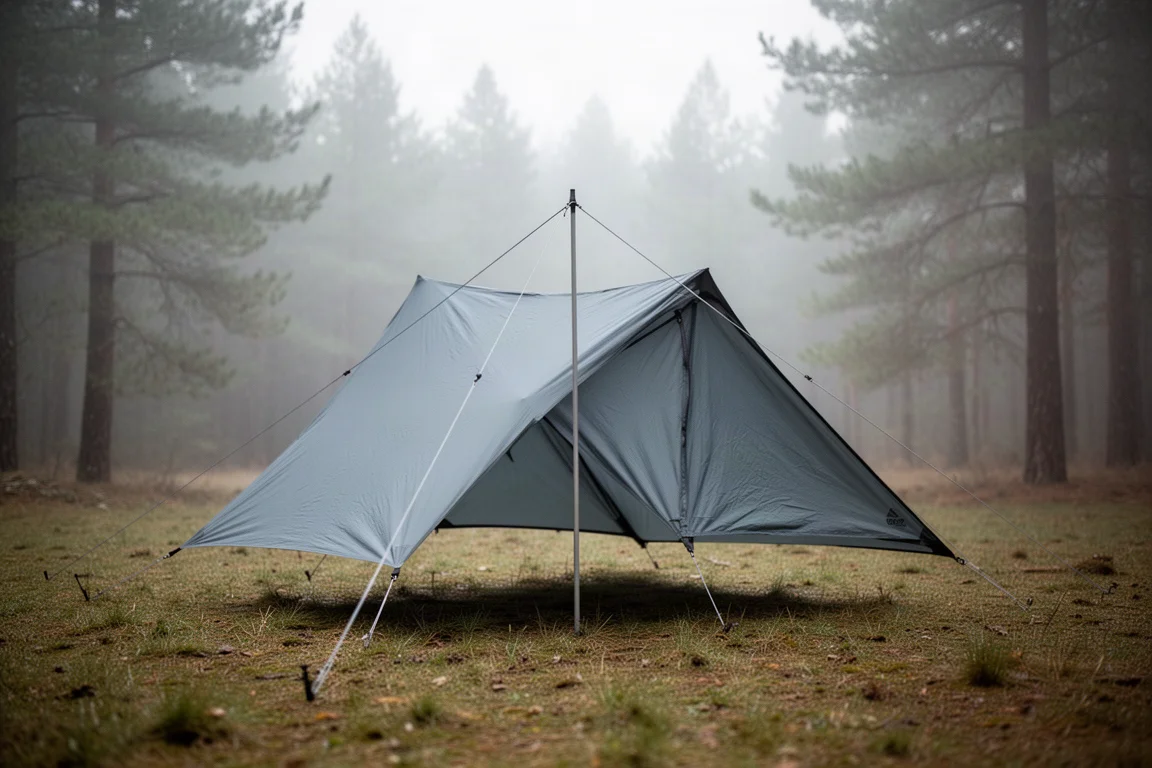
OneTigris has added a new line of square-shaped shelters called the Tetra, and it arrives in two sizes. The smaller Tetra 130 is a single-wall, two-person shelter that pitches with one pole. The larger Tetra 160 is the version that ships with its own pole and an integrated insert that cannot be removed.
Because both sizes come from the same design family, the decision usually comes down to what is in the bag and how you plan to carry it. This comparison covers the specifications of the smaller shelter, the differences in the larger version, and the practical details that tend to matter most once you are actually camping.
How the Tetra Line Is Structured
Both models follow the same square concept. A square footprint is quick to lay out and easy to stake, and it avoids the repeated adjustments that more complex polygonal shapes often require during pitching.
The naming simply reflects the two sizes: 130 for the smaller shelter and 160 for the larger one. What changes between them is the contents of the package. The Tetra 130 is the shelter alone, with no pole and no insert. The Tetra 160 adds an included pole and an integrated insert, and it is the more expensive of the two.
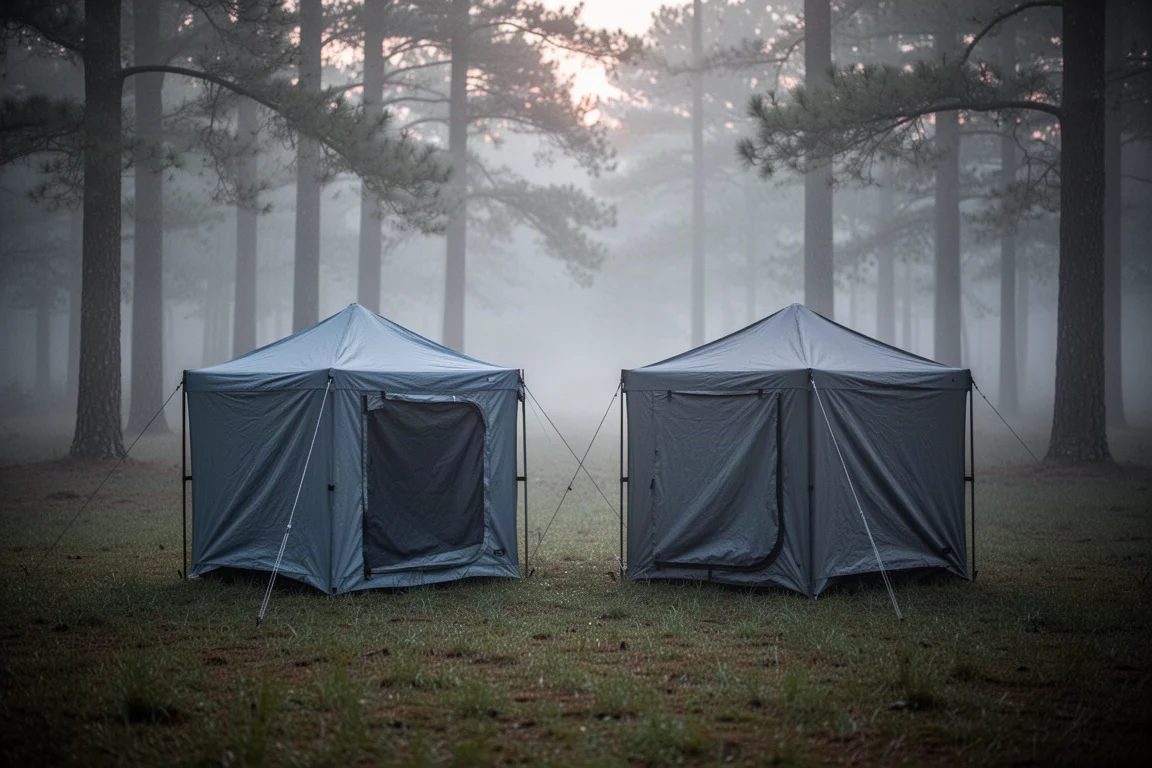
For buyers weighing the two, the practical question is less about the shape and more about what you are willing to carry and pay for. The smaller version leaves the pole choice in your hands, which can be an advantage if you already hike with trekking poles. The larger version removes that decision by including a pole, but it costs more and the insert is fixed in place.
OneTigris Tetra 130: The Smaller, Lighter Shelter
The Tetra 130 arrives in a burrito-style stuff sack with two compression straps and a drawcord. Inside the bag you get the shelter itself, 12 tent stakes, and four guy lines. It is offered in a single color, urban gray, which reads as a muted blue-gray in person.
Packed down, it measures 15.7 inches by 6 inches and weighs 2.4 pounds with all components included. Pitched, it stands 4.3 feet tall, 7.2 feet deep, and 7.5 feet wide, with 3.6 feet of depth from the pole to the back wall. The fabric is a 20-denier silicone and PU coated nylon, the zippers are black, and the waterproof rating is 3,000 mm. It is a single-wall, non-freestanding design, and the price is $130.
OneTigris Tetra 160: The Larger Version With a Pole and Insert
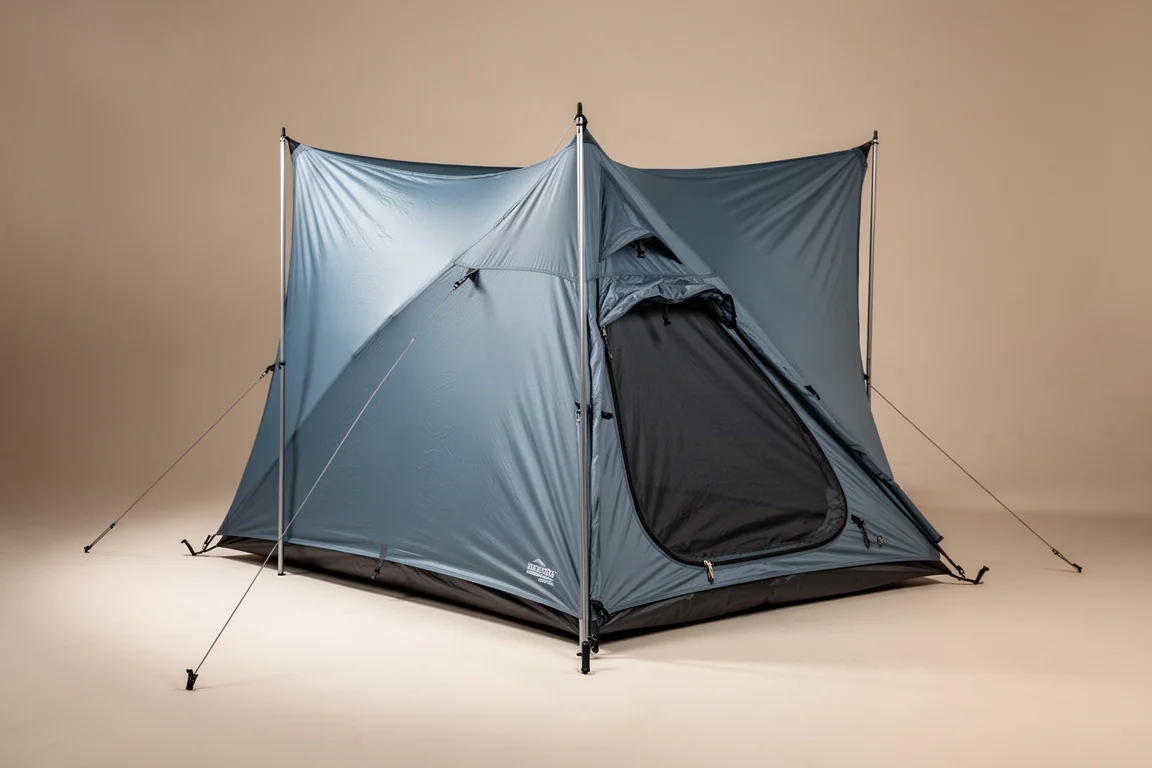
The Tetra 160 is the larger version of the same square design. Two differences stand out immediately. First, it includes a pole, so there is no separate purchase or guesswork about length. Second, it has an integrated insert, and that insert cannot be removed from the shelter.
The larger version is also more expensive, at roughly $180, which is a meaningful step up from the smaller shelter. For campers who would rather not research and carry a separate pole, the included pole is a genuine convenience, and the fixed insert means one less loose component to keep track of.
Living Space and Interior Details
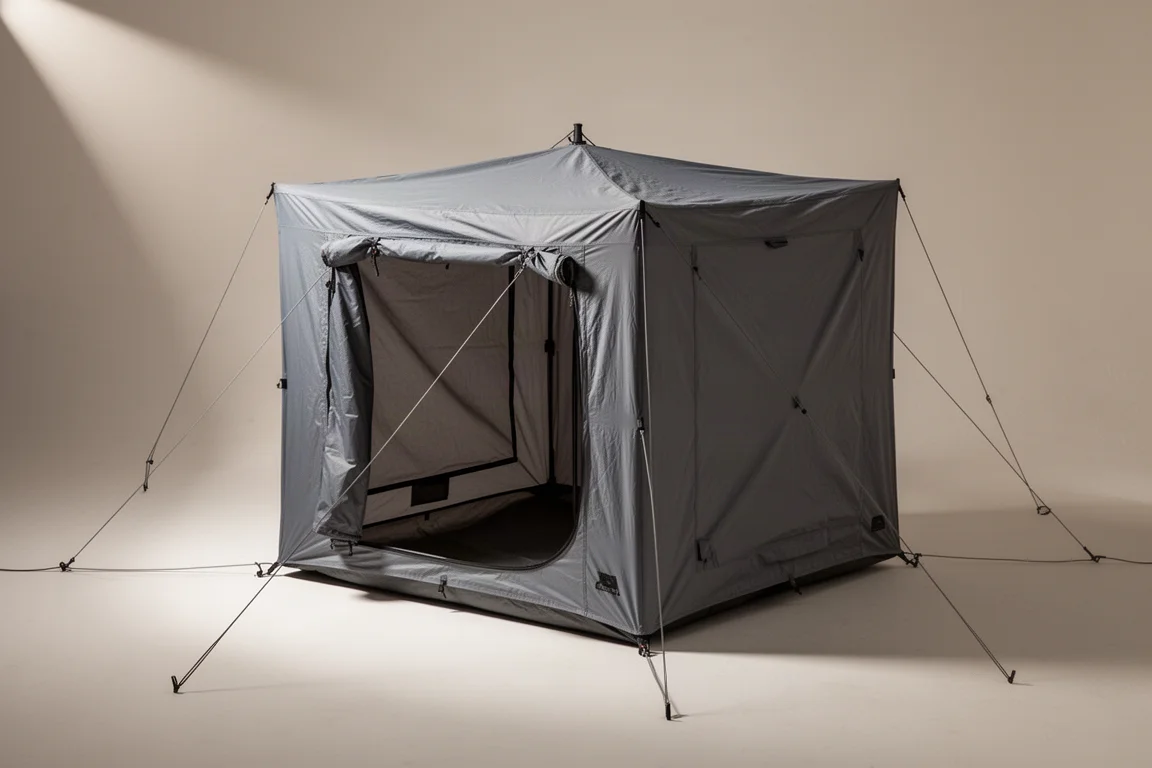
The Tetra 130 is rated as a two-person shelter, and the interior reflects that. Two people fit comfortably, and for a solo camper it is generous enough to place a cot in the back along with gear, a small table, or even a chair. That kind of elbow room is unusual at this weight and price point.
Inside, there is a mesh pocket on the right side as you face the door. Along the interior perimeter runs a raised lip that works like a skirt around the floor. The door uses zippers on both sides, so it can be opened from the left, from the right, or from both sides at once.
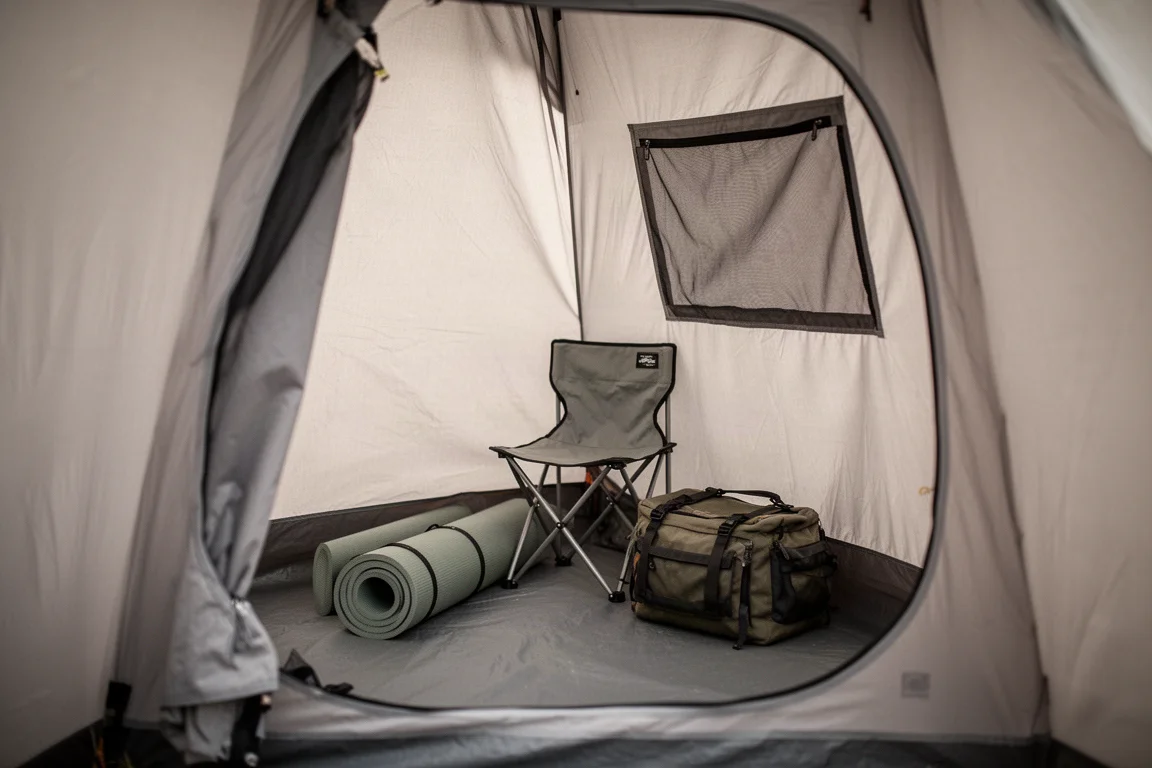
Opening both sides at the same time converts the front into a small awning. It is a useful configuration for shade and for sitting outside the shelter, and the storm flap above the zippers features two sections of Velcro to keep the closure secure when the door is sealed. A vent sits at the top of the shelter on each side, and a loop at the peak lets you hang the shelter from an overhang instead of using a pole at all.
Ventilation and the 3D Condensation System
Ventilation is where the Tetra 130 makes its strongest argument. One side of the shelter is higher than the other, and it tapers toward the front. Along that raised section runs a large mesh vent that spans the width of the shelter. OneTigris calls this arrangement the 3D condensation system.
The vent is elevated and slanted rather than flat, which allows angled airflow into the shelter while a protective panel blocks wind from reaching the sleepers inside. Because of the slant, condensation is directed toward the outside of the shelter instead of collecting inside. The rear vent also has a cover with a toggle, so it can be closed down when conditions demand it.
That combination proved effective in practice. During a freezing rain outing with the shelter fully sealed, only a small amount of condensation formed on the interior, which is a reasonable result for a single-wall design. The two top vents and the large rear vent work together rather than relying on a single opening.
Setup, Stakes, and Guy Lines
Pitching the Tetra 130 is genuinely simple: stake the perimeter, raise the center pole, make a few minor adjustments, and you are finished. Stake points are positioned at the front, one on each side, at the rear corners, and at a center point along the back.
There are four tie-off points, and all of them sit on the front half of the shelter. The rear half has no guy-out points, which limits how much you can tension the back of the shelter in exposed conditions. The package includes 12 stakes and four guy lines to work with.
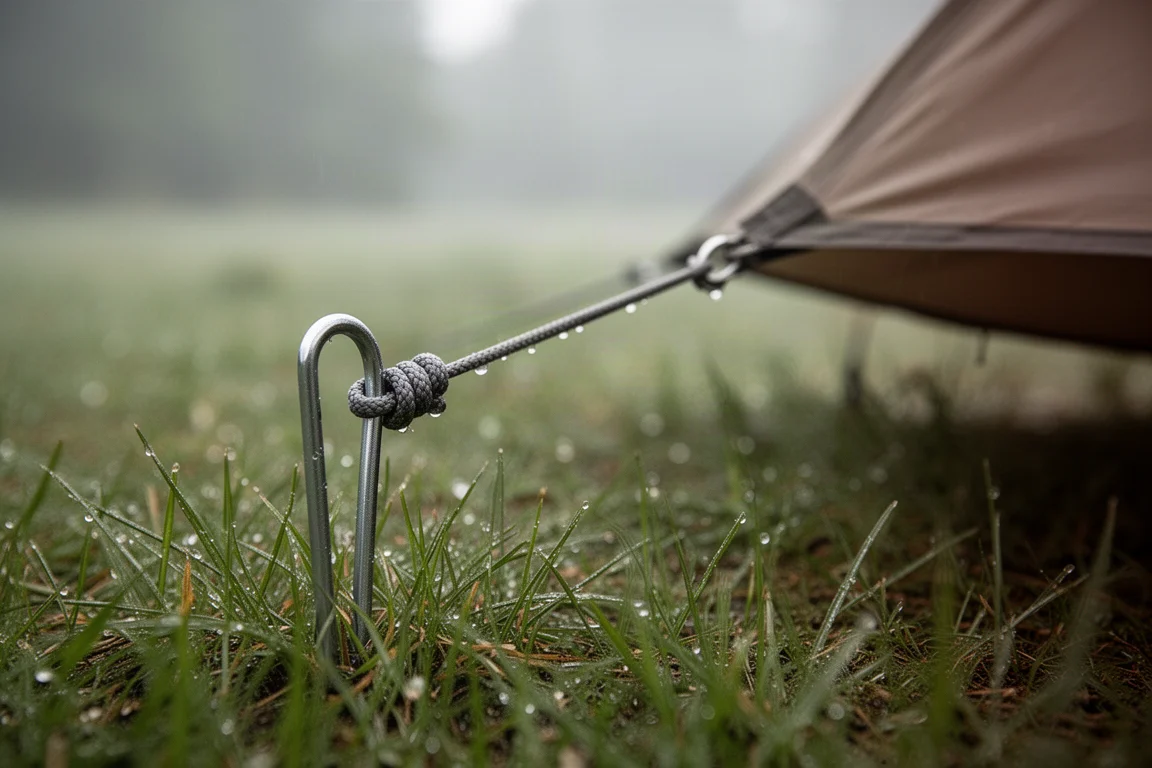
The shelter does not include a pole, so you will need one that is at least 4.3 feet long. A trekking pole works well, and the loop at the top of the shelter gives you the option of hanging it from an overhang instead. One weak point is worth planning around: the pull cords on the included stakes are not durable. They came undone during use, and one cord tore away entirely during a cold, windy trip, exposing a sharp edge on the stake. The stakes themselves hold up fine, so replacing the cords is a simple fix that pays off quickly.
Weather Protection and Build Quality
The Tetra 130 carries a 3,000 mm waterproof rating and uses a 20-denier silicone and PU coated nylon. Storm flaps cover the zippers, each with two sections of Velcro, which helps keep the closure locked down in wind. Stitching and seam tape both looked clean on inspection, with no defects noted.
Waterproofing has held up well so far, including through heavy rainfall and a freezing rain event. The one caveat concerns porch mode. Because the fly tapers toward the front, the shelter offers good coverage underneath but limited protection right at the front opening. For heavy or sustained rainfall, a tarp over at least the front half of the shelter is a sensible addition. Porch mode is better understood as sun protection than as rain protection.
Buying Advice: Which Tetra Fits Your Trip
Choose the Tetra 130 if you already carry trekking poles, want the lighter and less expensive option at $130, and prefer a shelter-only package that keeps the total kit simple. It is the better fit for solo campers who want space for a cot and gear, and for anyone who values a quick, predictable pitch.
Choose the Tetra 160 if you would rather have the pole included and want the integrated insert as part of the shelter, and if the higher price of about $180 is acceptable for those conveniences.
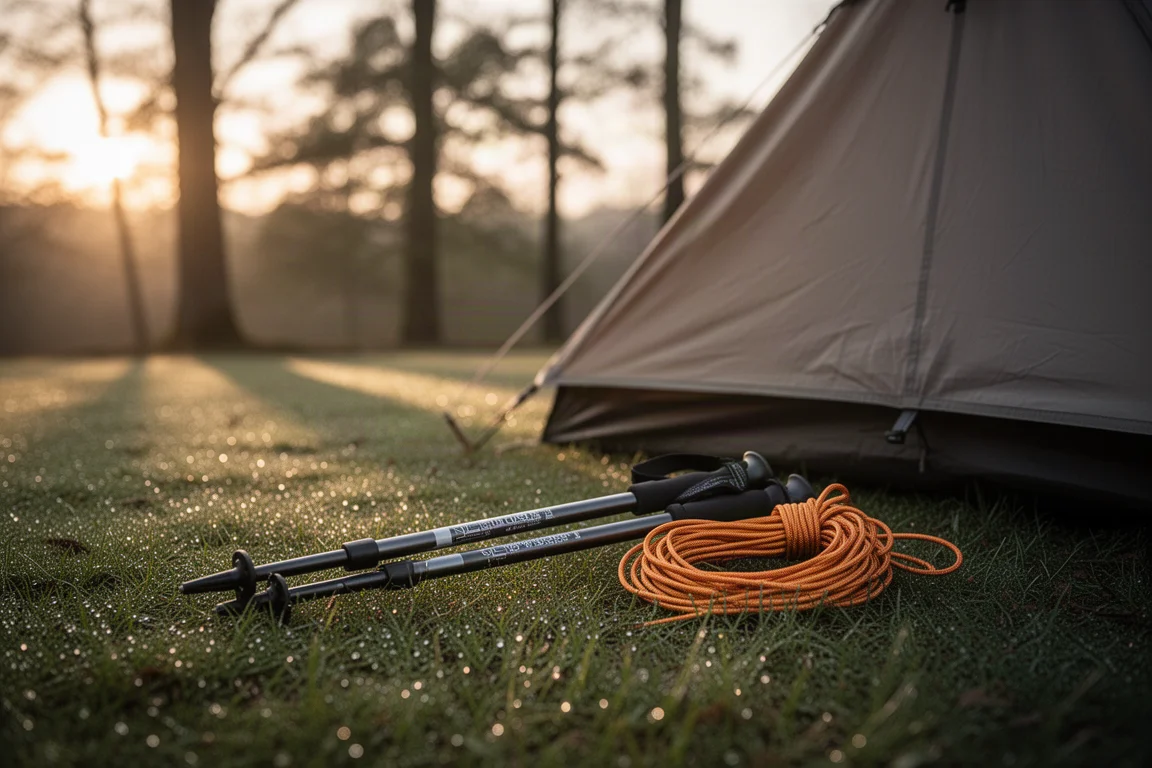
Whichever version you choose, budget for the pieces that complete the setup. With the smaller shelter that means a pole of at least 4.3 feet, plus replacement cords for the included stakes. With either version, a tarp is worth carrying if you expect sustained rain and plan to use the front as a porch.
Conclusion
The Tetra line takes a simple idea and executes it cleanly: a square, single-wall shelter that is quick to pitch and pleasant to spend time in. The Tetra 130 stands out for its low weight, generous interior, and effective ventilation at $130, provided you already own or are willing to source a pole and swap out the stake cords. The Tetra 160 answers the same brief with a larger package that includes its own pole and a permanently integrated insert, at roughly $180.
Match the version to how you actually camp. If you carry trekking poles and want the lightest, least expensive route, the smaller shelter is the natural pick. If you want the pole and insert handled for you, the larger version makes that trade in exchange for a higher price.
Further reading
Related Reviews
Camping Tents
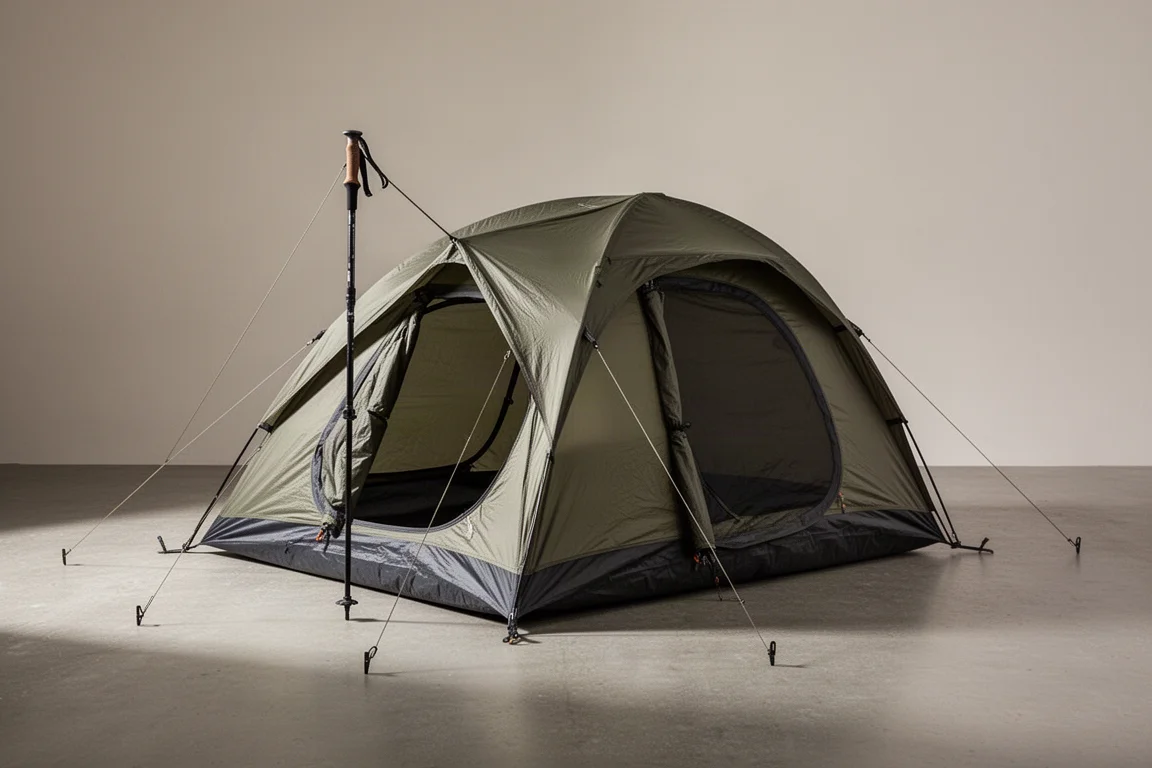
3F UL Gear Taiji Two-Person Tent Review: Field Waterproofing Results and Buying Advice
The Taiji pairs an attached fly with a removable inner, but sustained rain exposed untaped vent seams that need sealing before this shelter can be trusted.
Camping Tents
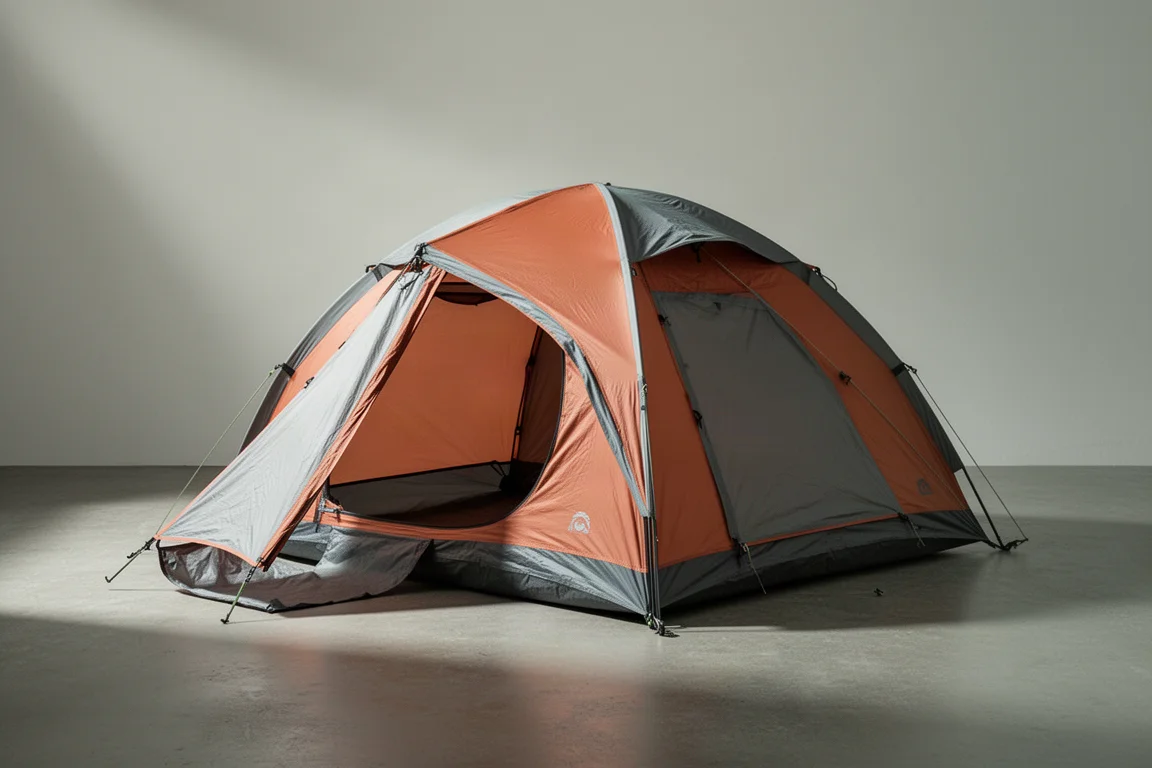
3FUL Gear Lanshan 2 Pro 4-Season Review: A Sub-$200 Single-Wall Trekking Pole Tent
An early look at the 3FUL Gear Lanshan 2 Pro 4-Season, covering its straightforward pitch, generous interior space, and the condensation and seam-sealing questions that come with any single-wall shelter.
Camping Tents
Alps Mountaineering Lynx 1-Person Tent Review: Big Value in a Small Budget Tent
A close look at the Alps Mountaineering Lynx 1-Person Tent, covering real interior dimensions, materials, setup time, ventilation limits, and who should buy it.