Camping Tents
OneTigris Tetra 130 Tent Review: A Lightweight Square Tarp Tent
A practical look at the OneTigris Tetra 130, a $130 single-wall tarp tent with a square footprint, a 2.4 pound packed weight, and a ventilation design built to limit condensation.
Introduction
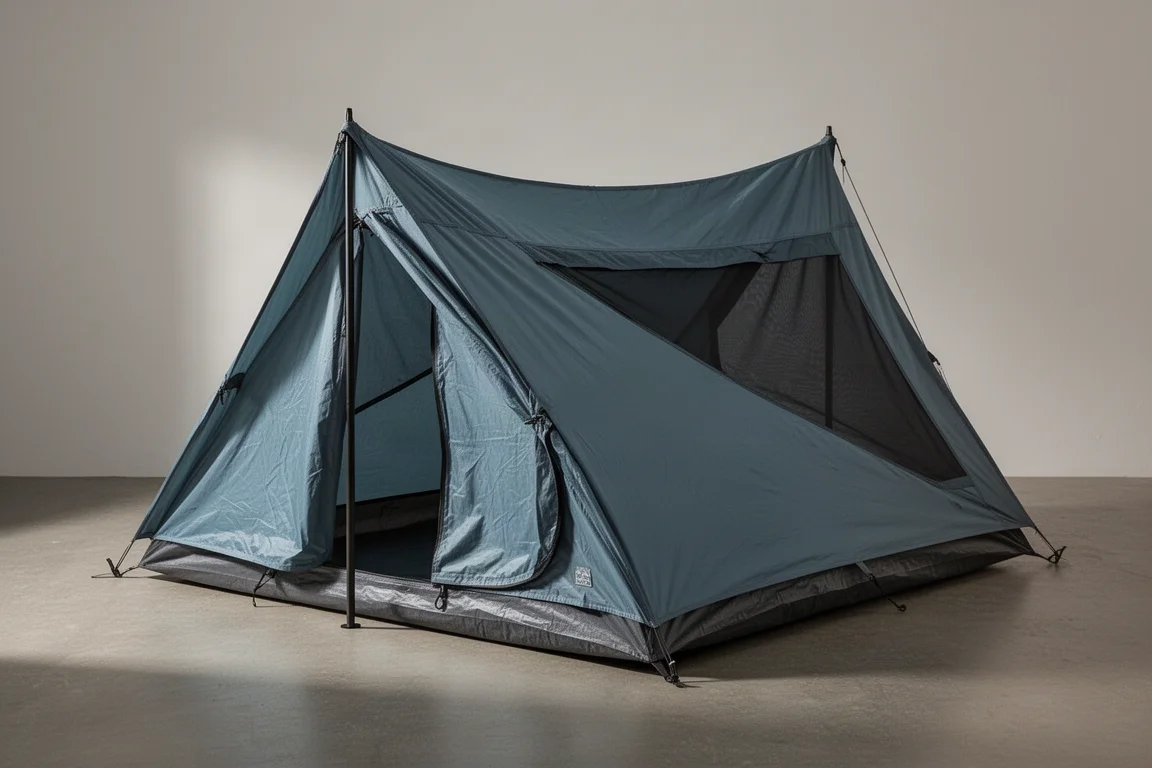
The OneTigris Tetra 130 is the smaller of two square-shaped tarp tents in the Tetra line. It is a single-wall, two-person shelter that pitches from one center pole with a staked perimeter, and it sells for around $130. The larger Tetra 160 adds an included pole and a permanently integrated inner tent for roughly $180.
The square footprint is the defining trait. It pitches quickly, holds a generous interior, and packs down small. It also brings a few trade-offs worth understanding before you commit, most notably the pole that is not in the box.
Inside the Box: What Comes With the Tetra 130
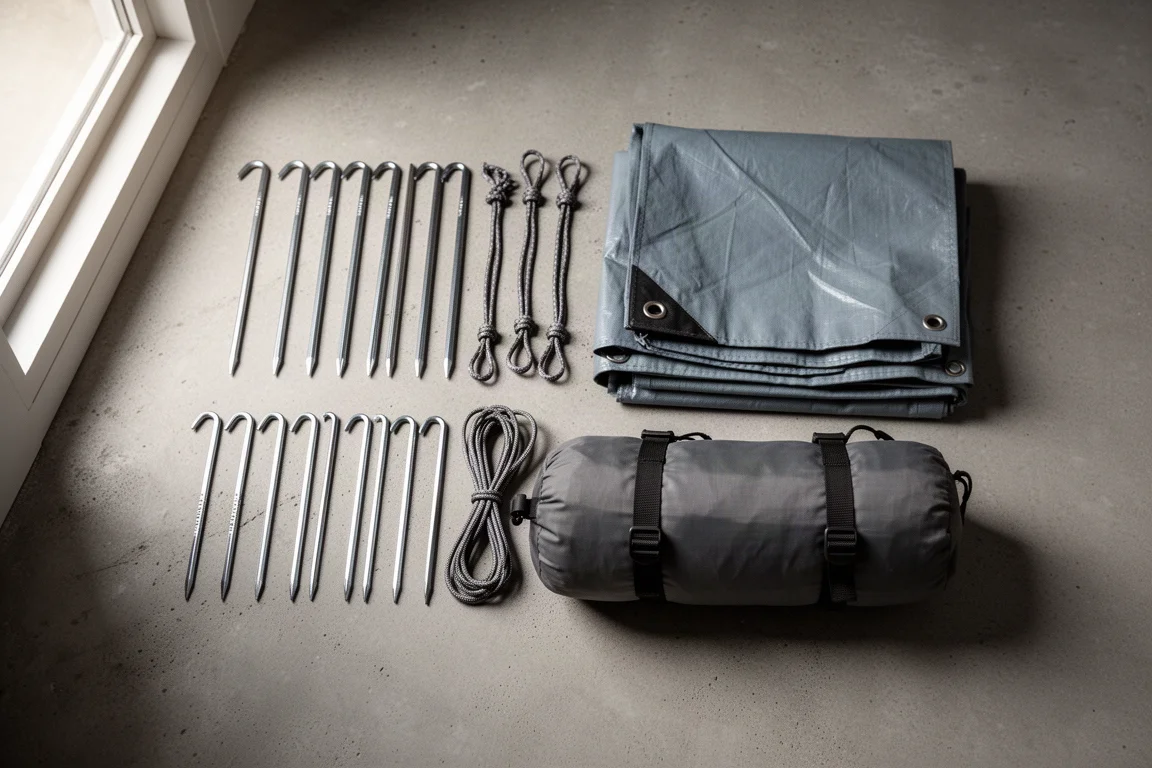
Everything arrives in a burrito-style stuff sack with two compression straps and a drawcord closure. Inside you get the shelter, 12 tent stakes, and four guy lines. A pole is not included.
The packed size is 15.7 inches by 6 inches, and the full kit weighs 2.4 pounds with the stakes and lines. Pitched, the shelter measures 7.5 feet wide and 7.2 feet deep, with 4.3 feet of headroom at the pole and 3.6 feet from the pole back to the rear wall.
The fabric is a 20 denier silicone and PU coated nylon rated to 3,000 mm. Black zippers run along the door and are covered by storm flaps, each with two Velcro sections. Urban gray is the only colorway, a bluish gray that looks sharp in daylight and sits quietly in shaded campsites.
Who This Tent Is For
Two people fit comfortably inside, and a single camper gets what amounts to a small palace, with room for a cot, a chair, and gear alongside a sleeping setup. The door opens fully from either side, and opening both sides at once creates an awning-style porch for shade or lighter weather.
This is a non-freestanding shelter, so it relies on stakes and tie-off points rather than its own frame. That makes it a natural fit for campers who already carry trekking poles and want a light, roomy shelter that packs small.
Design and Ventilation: The 3D Condensation System
The profile is deliberately asymmetric. One side sits higher and tapers toward the front, and the raised rear section carries a long mesh vent. Two smaller vents sit at the top of the tent.
OneTigris calls the rear arrangement a 3D condensation system. A protective panel can be toggled open or closed. When it is in place, it angles airflow up into the shelter while blocking wind from reaching anyone sleeping inside, and the slant of the panel drains condensation to the outside rather than letting it collect. In cold, wet conditions with the tent fully sealed, condensation buildup stays modest for a single-wall design.
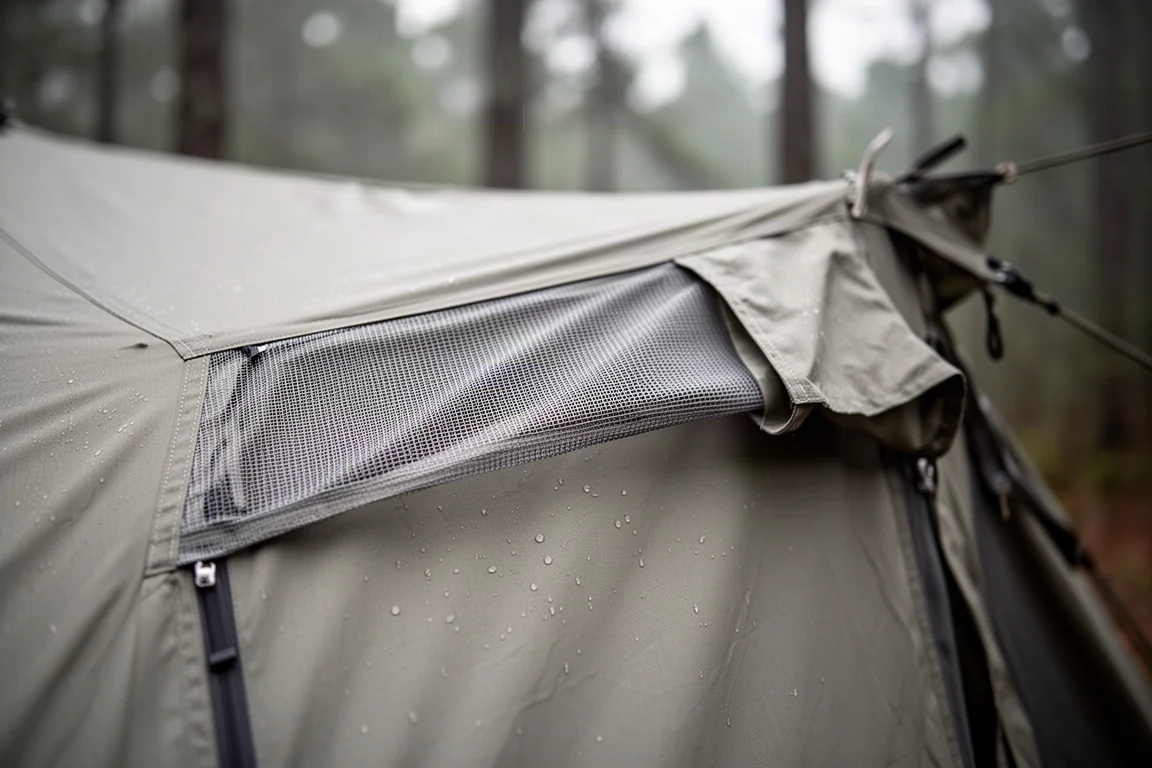
Inside, a mesh pocket sits on the right side near the door, and a lip runs around the interior perimeter, acting as a skirt. The rear vent cover is adjustable with a toggle at the top, and a loop at the apex lets you hang the shelter from an overhang instead of using a pole.
Main Strengths
- Space relative to weight: 2.4 pounds for a two-person shelter with 4.3 feet of headroom and a 7.5 by 7.2 foot footprint.
- Straightforward pitching: stake the perimeter, set the center pole, make minor adjustments.
- Door flexibility: open from either side, or both at once to form a porch.
- Ventilation: two top vents plus the elevated rear vent keep air moving through the shelter.
- Build quality: stitching and seam tape look clean, and the fabric is a 20D silicone and PU coated nylon with a 3,000 mm rating.
- Value: around $130 for the shelter, 12 stakes, and four guy lines.
Setup and Pole Options
Pitching is simple. Stake out the perimeter, insert a center pole, and fine-tune the tension. The stake layout includes two points at the front, one on each side, and corners at the rear with an additional center point along the back edge.
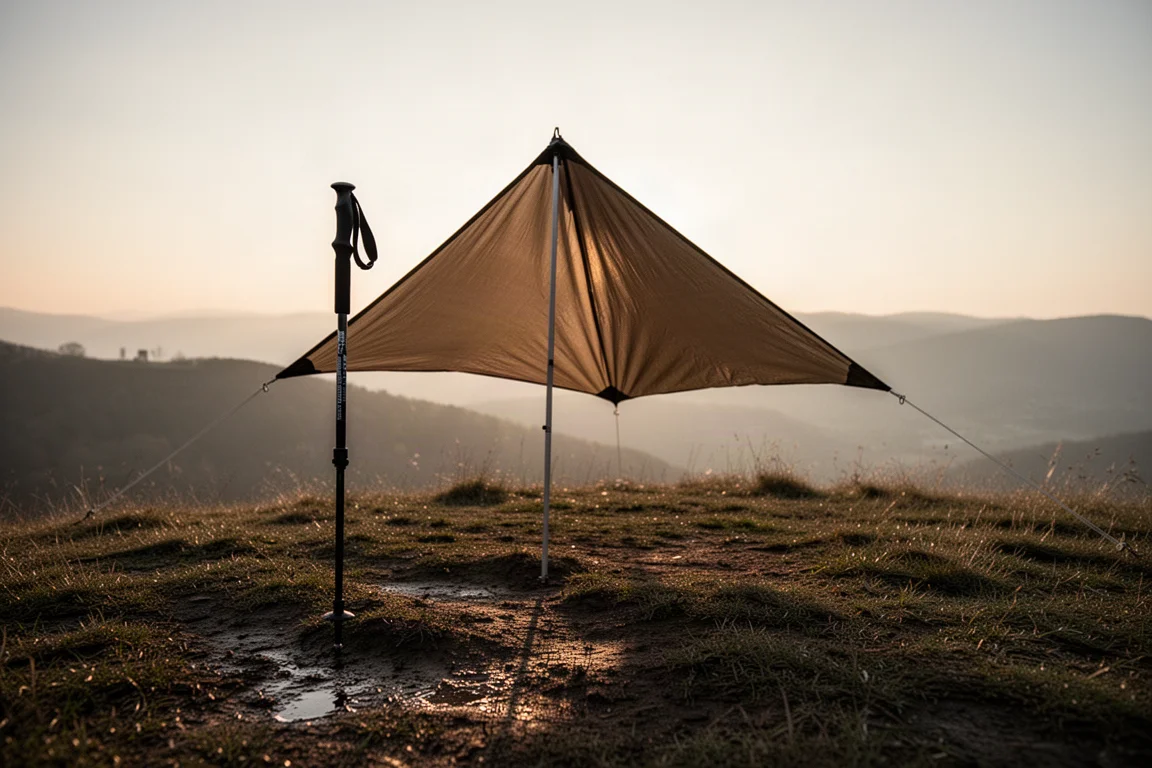
The catch is the pole. None is included, and the shelter needs one at least 4.3 feet long. A trekking pole works well, and so does an adjustable pole of the right length, though finding the correct size takes some research. If you would rather not carry a pole at all, the loop at the top of the tent allows it to be attached to an overhang instead.
Things to Consider Before Buying
The included stakes are the weakest part of the package. The stakes themselves hold well, but the corded pulls are not durable: the cords come undone, and one pulled free during a breakdown in freezing rain, leaving a sharp edge exposed. Replacing the cords, or the stakes themselves, is a sensible step.
Guy-out coverage is also uneven. Four tie-off points sit on the front half of the shelter, and there are none on the back half, which limits how much you can tension the rear in exposed conditions.
Porch mode is best treated as sun and light-weather protection. Because the fly tapers, heavy rain will find the front opening, and a tarp over the front half is a reasonable addition when wet weather is expected.
Buying Advice
At around $130, the Tetra 130 makes the most sense for campers who already carry trekking poles, want a light two-person shelter, and value interior space over a freestanding frame. Plan on replacing the stake cords, and confirm your pole length before the first trip.
If you would rather not source a pole and want an inner tent included, the larger Tetra 160 at roughly $180 covers both, with the caveat that its inner is permanently attached and cannot be removed.
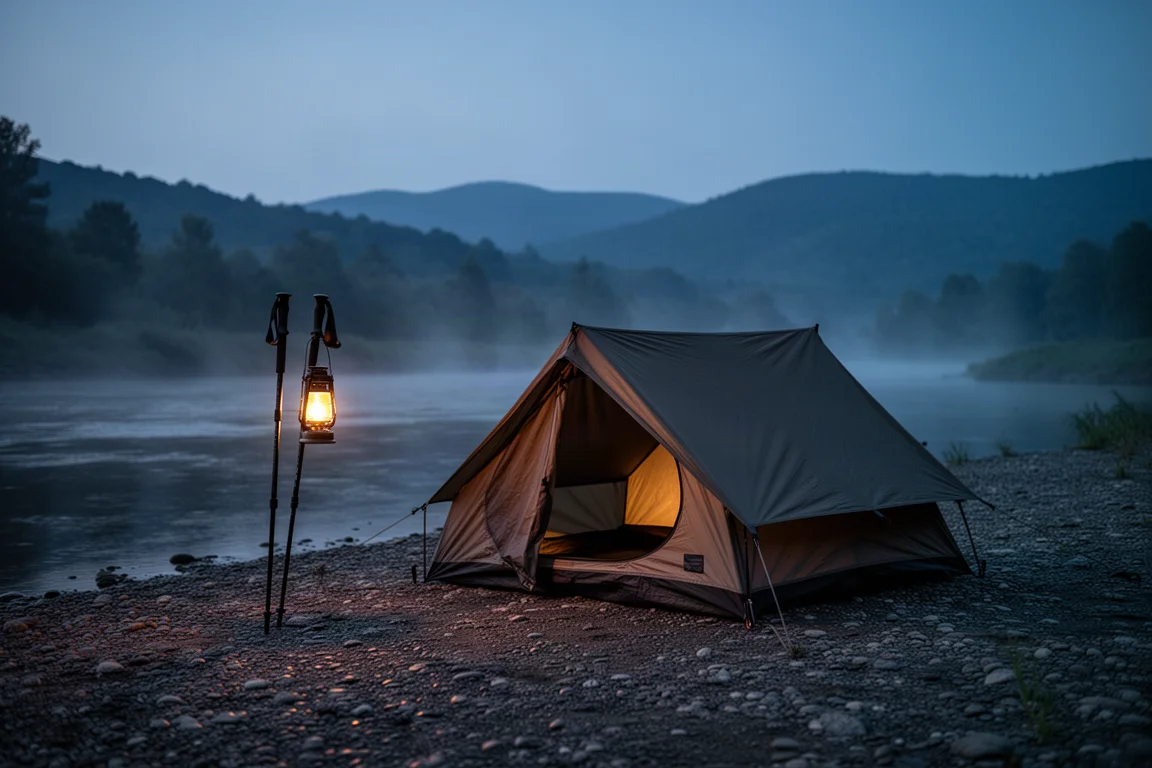
Whichever version you choose, treat the included stake cords as a consumable to swap out early. It is a small fix that removes the only consistent frustration in an otherwise tidy package.
Conclusion
The Tetra 130 pairs a compact pack size with a genuinely roomy interior, and its ventilation design holds up in cold, damp conditions. The missing pole and the flimsy stake pulls are real considerations, but both are easy to solve. For the price, it is a compelling option for anyone who wants a square-footprint tarp tent without the longer adjustment process that octagonal shelters often require.
Product link
View more details for OneTigris Tetra 130 Tent
This product is mentioned in the review. Check the specifications, options, and compatibility before buying.
View more details for OneTigris Tetra 130 TentFurther reading
Related Reviews
Camping Tents
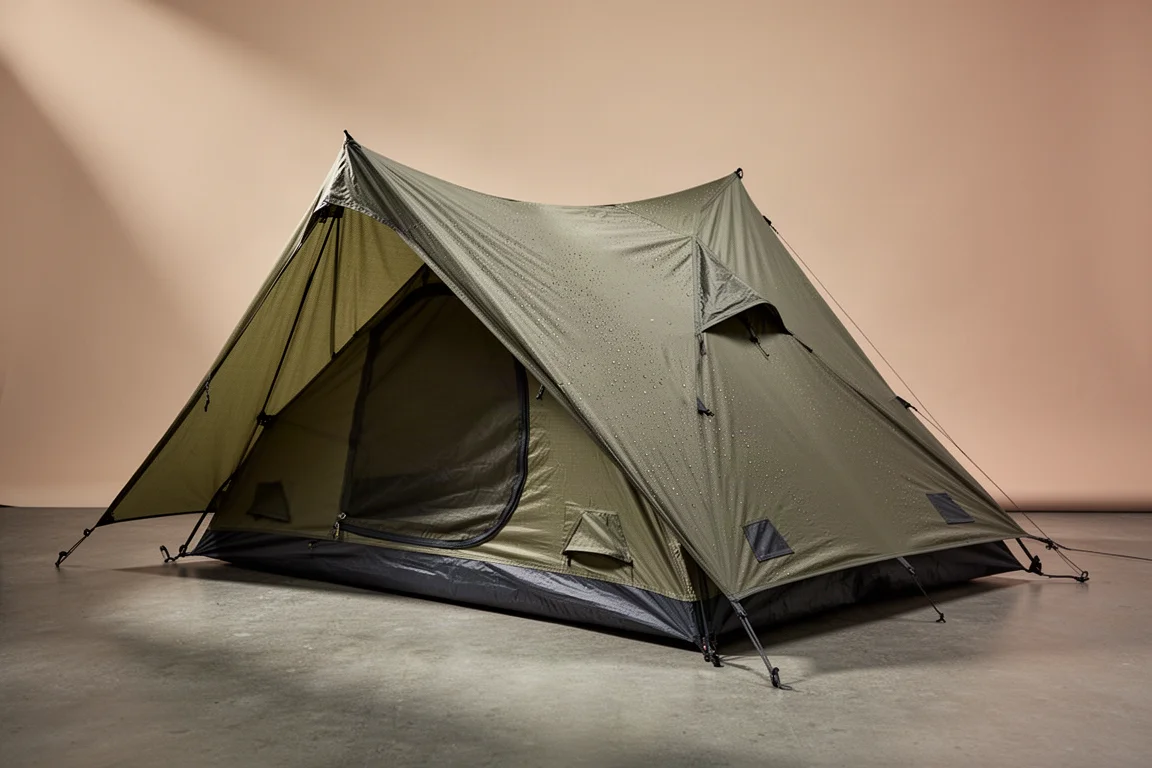
3F UL Gear Taiji Two-Person Tent Review: Field Waterproofing Results and Buying Advice
The Taiji pairs an attached fly with a removable inner, but sustained rain exposed untaped vent seams that need sealing before this shelter can be trusted.
Camping Tents
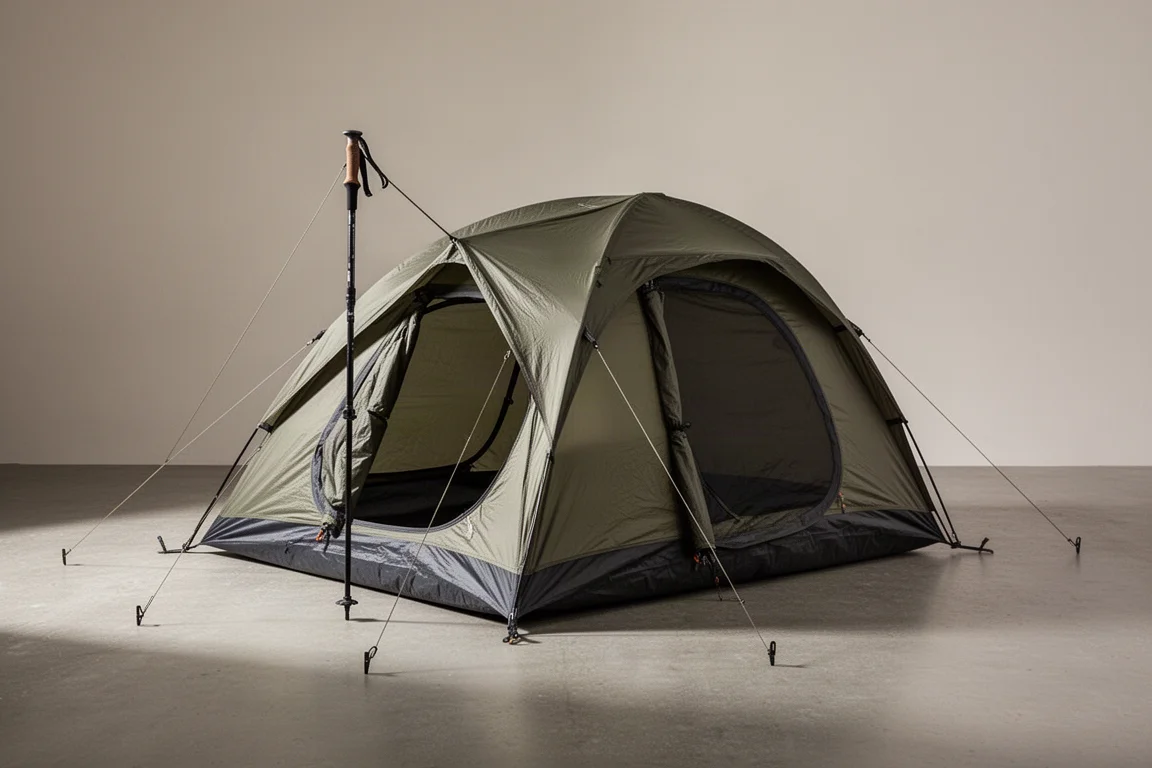
3FUL Gear Lanshan 2 Pro 4-Season Review: A Sub-$200 Single-Wall Trekking Pole Tent
An early look at the 3FUL Gear Lanshan 2 Pro 4-Season, covering its straightforward pitch, generous interior space, and the condensation and seam-sealing questions that come with any single-wall shelter.
Camping Tents
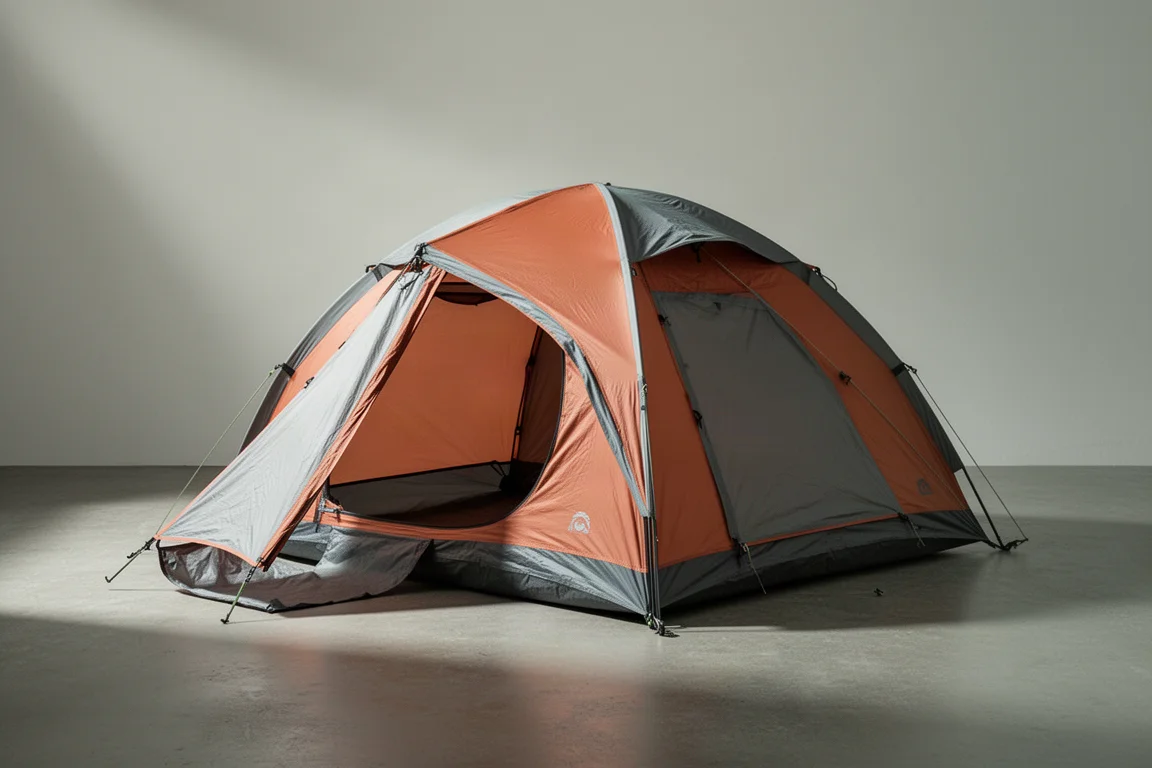
Alps Mountaineering Lynx 1-Person Tent Review: Big Value in a Small Budget Tent
A close look at the Alps Mountaineering Lynx 1-Person Tent, covering real interior dimensions, materials, setup time, ventilation limits, and who should buy it.