Camping Tents
OneTigris Tetra 130 Review: A Lightweight Square Tarp Tent for Two
A practical look at the OneTigris Tetra 130, a 2.4 lb square tarp tent for two with a smart rear vent, a versatile door, and a few details worth planning around.
Introduction
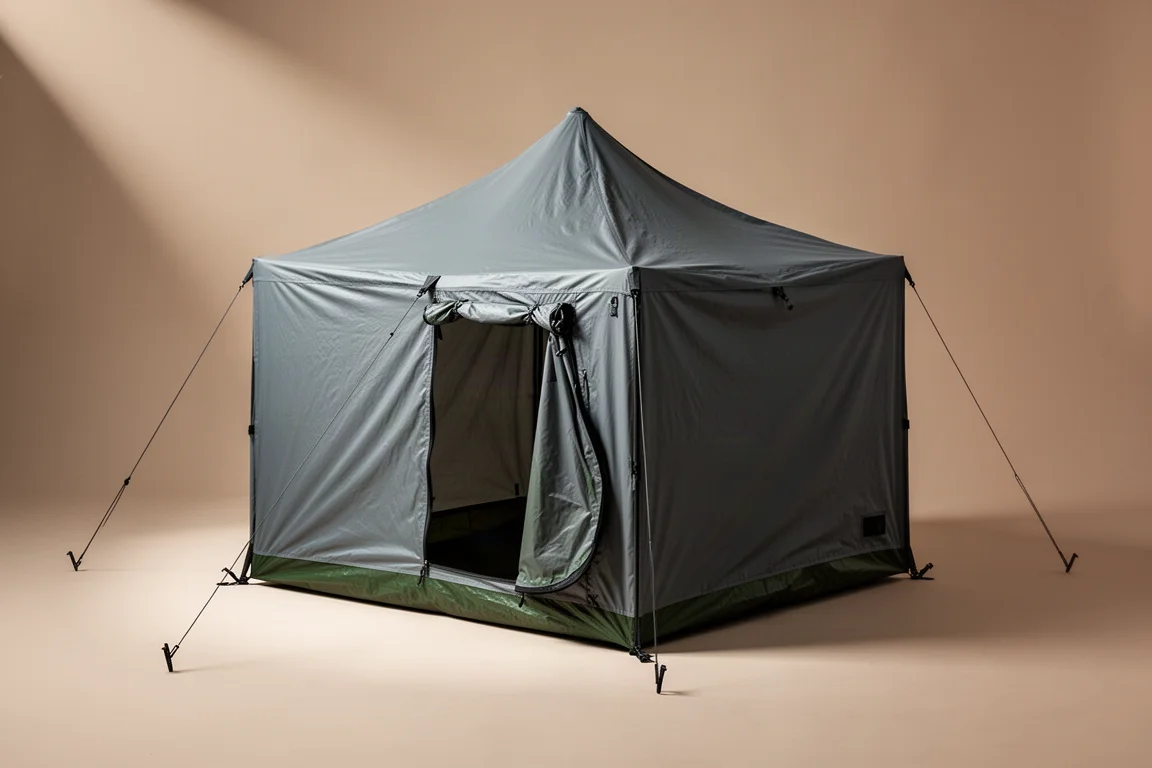
The OneTigris Tetra 130 is a square-shaped tarp tent built for two people, and it lands at a price that is genuinely difficult to ignore. At $130 you get a shelter that weighs 2.4 pounds with every component included and packs down to 15.7 inches by 6 inches. It is a single-wall, non-freestanding design, which means it pitches around a center pole and a perimeter of stakes instead of a built-in frame. That construction is the source of both its low weight and its one real practical requirement.
The Tetra line is new, and the 130 is the smaller of two versions. It ships in urban gray, a muted bluish gray that reads sharper in daylight than the specification suggests. The pack size is compact enough to disappear into a mid-size backpack, and the whole kit travels in a burrito-style stuff bag with two compression straps and a drawcord.
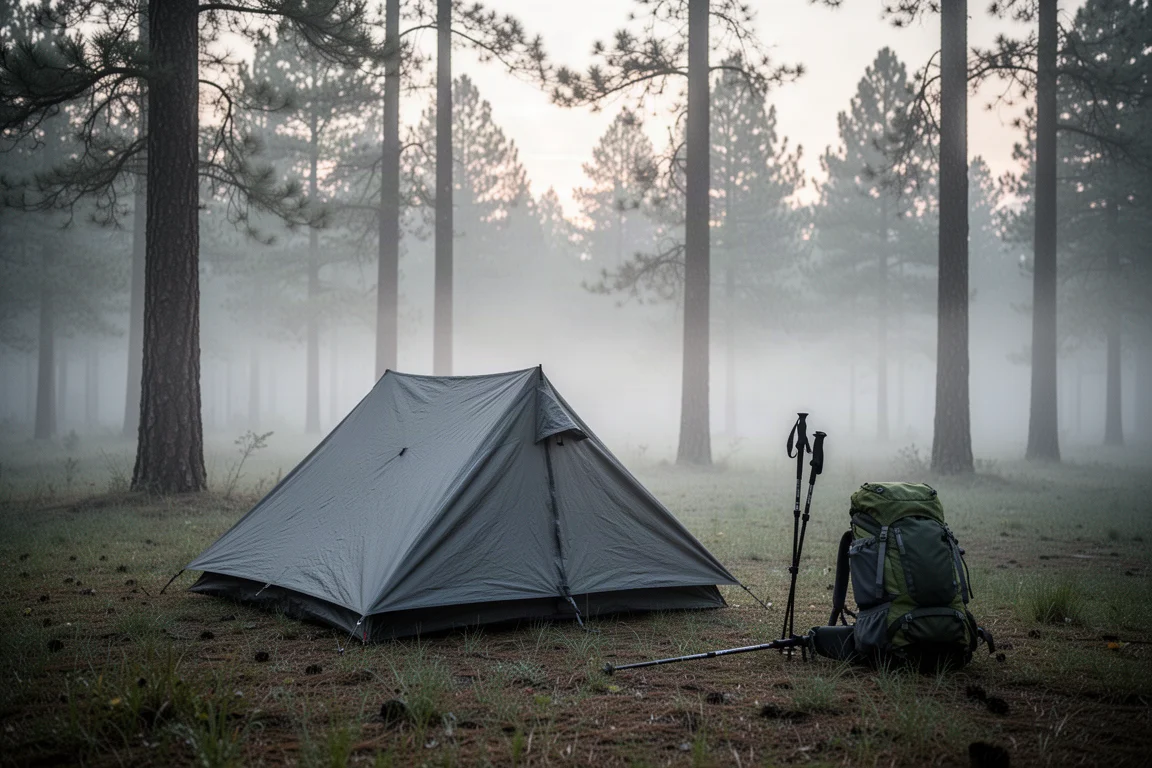
What makes this shelter interesting is not a single headline feature but the way the details fit together: a simple square footprint, a door that works from either side, a large elevated rear vent, and a fabric package rated to 3,000 mm. The sections below cover what the Tetra 130 does well, where it asks for compromises, and who will get the most out of it.
Who This Tent Is For
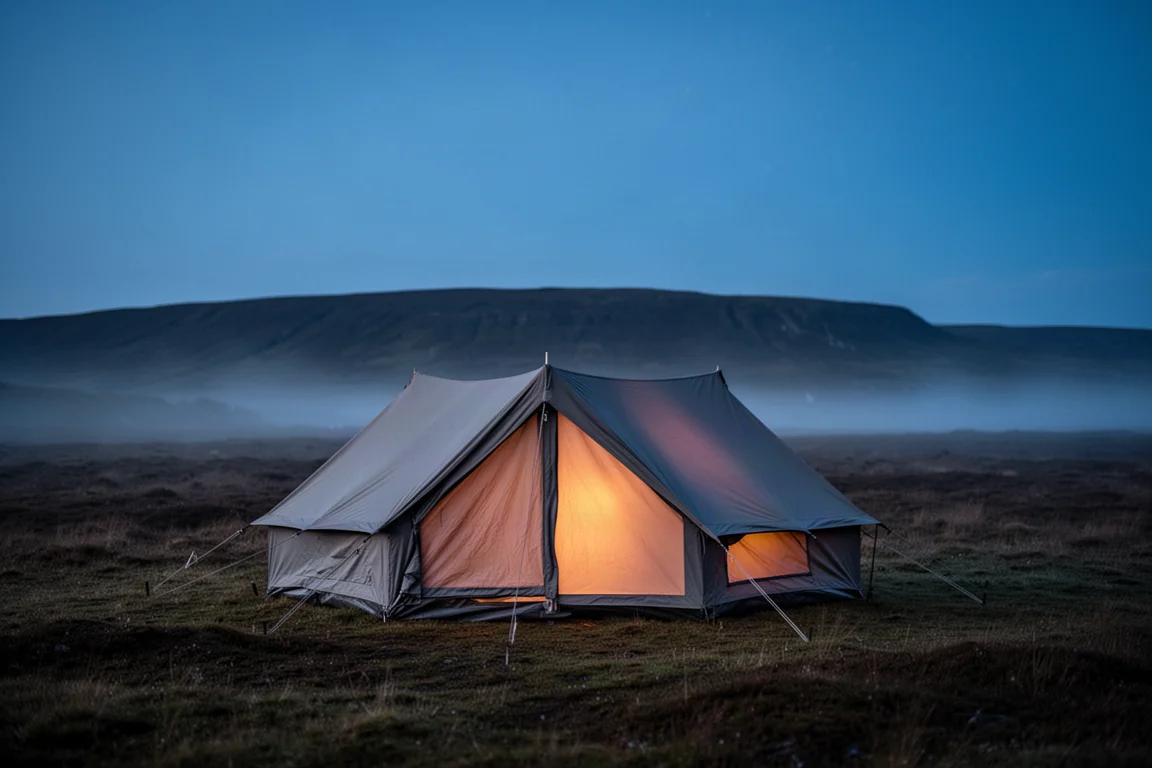
This is a two-person shelter that is genuinely big enough for two adults, and for a solo camper it is close to a palace. There is room to place a cot at the back, store gear along the sides, and still keep a small table or a chair next to a sleeping area. The internal dimensions are generous for the weight: 7.5 feet wide, 7.2 feet deep, and 4.3 feet tall at the peak, with 3.6 feet of depth from the pole to the back wall.
The 130 suits backpackers who already carry trekking poles, or who are comfortable choosing and packing a dedicated pole. It also suits campers who want a lightweight two-person shelter without paying ultralight prices, and who accept that a non-freestanding tent needs solid ground for stakes.
It is a less natural fit for anyone who wants a tent that stands up on its own, or who expects a shelter to handle heavy rain in porch mode without any extra cover. Those are the two cases where the design’s compromises show up most clearly.
Design and Setup
Inside the box you get the tent itself, 12 tent stakes, four guy lines, and the burrito-style stuff bag with its two compression straps and drawcord. What you do not get is a pole. The Tetra 130 needs a support at least 4.3 feet long, and a trekking pole works perfectly well for that job.
Setup is refreshingly simple, and the square footprint is a big part of why. Stake out the perimeter, raise the center pole, make a few minor adjustments, and you are done. Square tarp tents reach a taut pitch far faster than octagonal systems, which are not complicated to build but can take a long time to fine-tune.
The roof is deliberately asymmetric. One side sits higher and tapers toward the front, and a large mesh vent runs along that raised section. The door is a single opening with zippers on both sides, so you can unzip from the left, from the right, or open both at once to create a porch or awning. A storm flap covers the zippers, and each flap carries two sections of Velcro. At the top of the tent there are two vents, plus a loop that lets you hang the shelter from an overhang instead of using a pole at all.
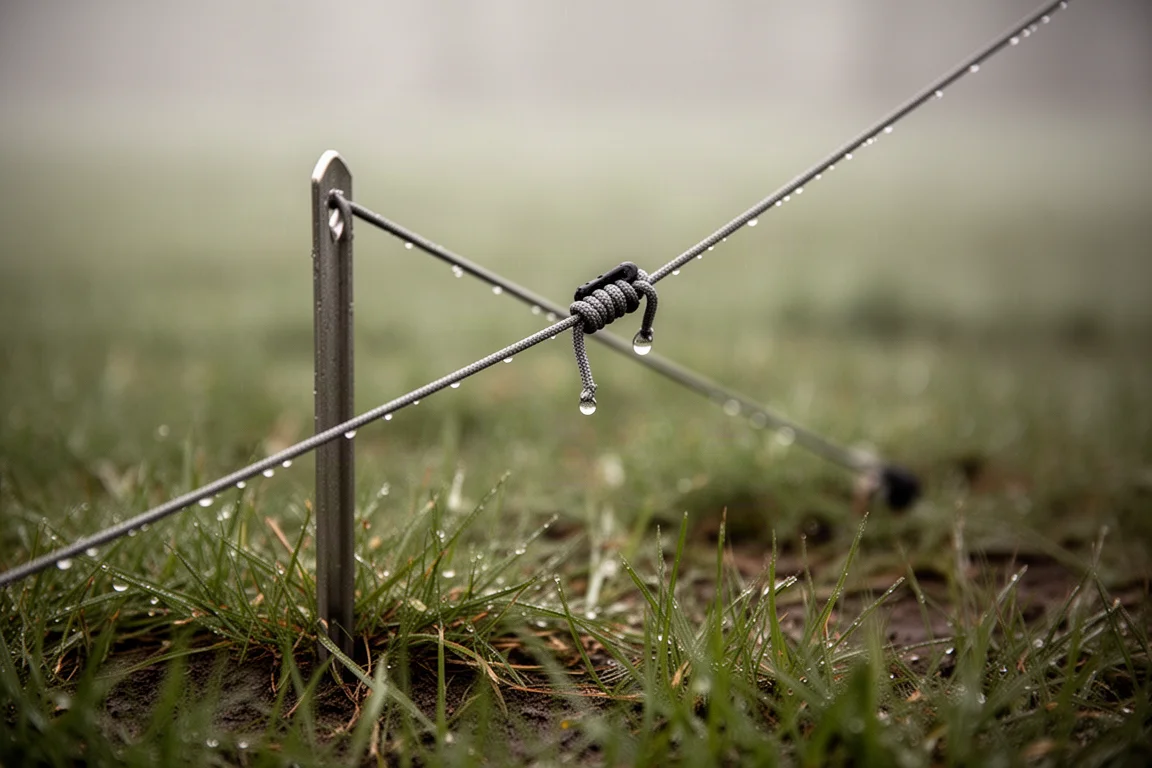
Stake points run around the perimeter: two at the front, one on each side, and the rear corners with an additional center point. Along the front half there are four tie-off points. The back half has none, which is worth knowing if you like to add extra anchoring in exposed weather. Inside, a mesh pocket sits on the right side near the door, the rear vent has a toggle-controlled cover, and a lip runs around the perimeter like a small skirt. The fabric is 20 denier silicone and PU coated nylon with black zippers and a 3,000 mm waterproof rating.
The 3D Condensation System
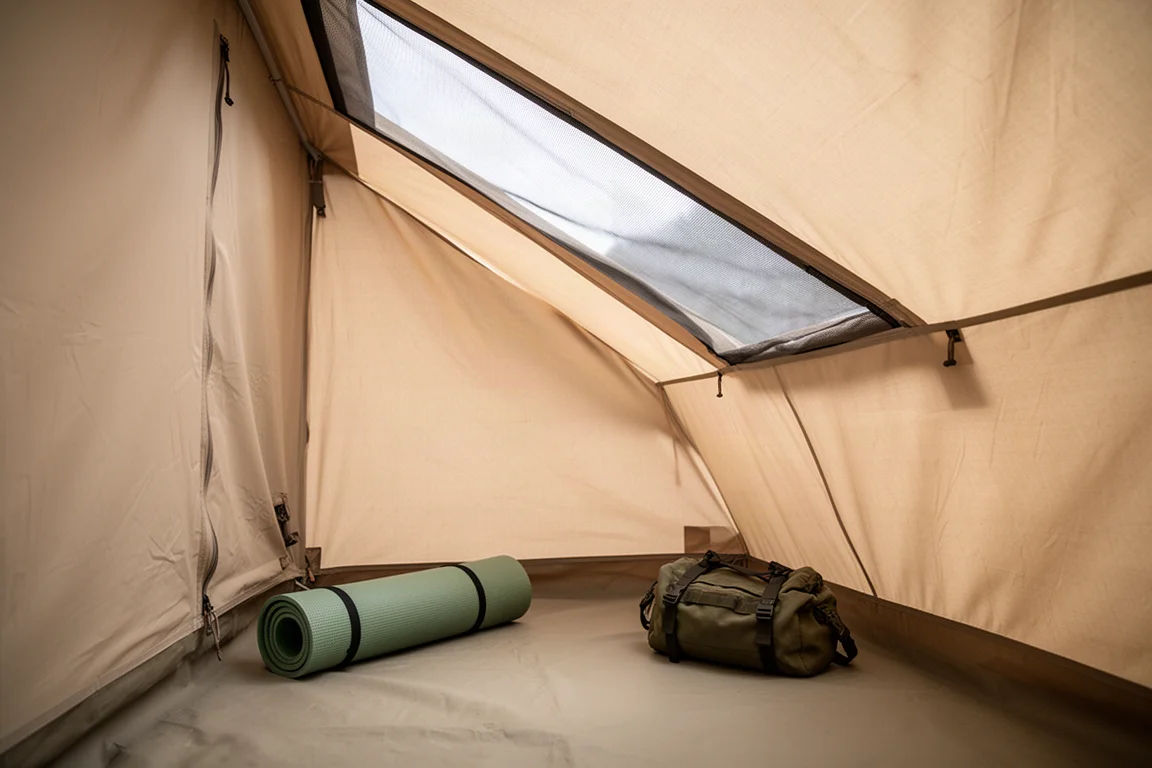
The feature OneTigris calls the 3D condensation system is the reason the rear of this tent looks unusual. Instead of a small vent, the raised back section carries a long mesh opening that sits above sleeping height and angles airflow down into the shelter. A protective panel runs alongside it, blocking wind from reaching the people inside while still allowing air to move up through the tent.
That angle does a second job. Because the vent is slanted, condensation tends to drain to the outside of the shelter rather than dripping back onto occupants or gear. In a freezing rain event with the tent fully sealed, very little condensation formed on the inside. Some did appear, which is normal for a single-wall shelter, but it stayed modest for a design with no separate inner tent to trap moisture.
Main Strengths
The price is the first thing that stands out. At $130, the Tetra 130 undercuts most two-person shelters in its weight class, and it does so without feeling like a stripped-down product.
Space is the second. Two adults fit comfortably, and one person gets enough room for a cot, a table, and gear without feeling crowded. The weight and pack size support that space well, at 2.4 pounds complete and a packed length under 16 inches.
The door design deserves credit too. Being able to open it from either side, or both at once for a porch, adds real flexibility in warm weather and light rain. Add the two top vents and the large rear vent, and the shelter manages airflow far better than its single-wall construction would suggest.
Build quality looks solid in inspection: threads are clean, seam tape is properly applied, and no defects showed up. Waterproofing has held up completely so far, including during heavy rain and freezing rain. Setup is quick, the pitched shape looks sharp in urban gray, and the overall package feels considered rather than assembled from whatever was on hand.
Things to Consider Before Buying
No pole is included, and that is the most consequential omission. You need a support at least 4.3 feet long, and finding the right one takes some research. Trekking pole users will not mind, but anyone without poles should factor the extra purchase into the decision.
The tent stakes are a mixed story. The stakes themselves work fine, but the corded pulls on them are poor. The cord and the knot do not hold up, and in one case a pull ripped off while being removed, sending a finger into a sharp edge. The practical fix is simple: plan to replace the cords on the stakes before your first trip, or use your own stakes.
Porch mode is best understood as sun and light-rain shelter. Because the fly tapers toward the front, protection directly at the front of the tent is limited once rain gets heavy. If you intend to sit under the awning in serious weather, adding a tarp over the front half is a sensible move.
The rear half of the tent has no tie-off points, so extra anchoring in strong wind is limited to the front. And if a pole and an inner insert matter to you, note that the larger Tetra 160 includes both, with an integrated insert that cannot be removed. That version costs about $180.
Buying Advice
Buy the Tetra 130 if you want a light, roomy, two-person shelter at a modest price and you already carry a trekking pole or do not mind sourcing one. Budget for two small extras alongside the tent: a pole of at least 4.3 feet and a set of replacement stake cords. Those two additions remove almost every practical annoyance in this design.
Buy the larger Tetra 160 instead if you would rather have the pole and the integrated insert included from the start, and if the higher price of about $180 fits your budget. For a solo camper who wants space and low weight, the 130 remains the better value of the two, since it delivers the same generous interior for less money and less packed bulk.
Conclusion
The OneTigris Tetra 130 gets the fundamentals right. It is light, quick to pitch, comfortable for two and luxurious for one, and it handles ventilation and condensation better than a single-wall tarp tent usually does. The $130 price makes those strengths unusually accessible. Replace the stake cords, bring a pole, and add a tarp if you plan to use porch mode in real rain, and this becomes a very easy shelter to recommend.
Product link
View more details for OneTigris Tetra 130
This product is mentioned in the review. Check the specifications, options, and compatibility before buying.
View more details for OneTigris Tetra 130Further reading
Related Reviews
Camping Tents
3F UL Gear Taiji Two-Person Tent Review: Field Waterproofing Results and Buying Advice
The Taiji pairs an attached fly with a removable inner, but sustained rain exposed untaped vent seams that need sealing before this shelter can be trusted.
Camping Tents
3FUL Gear Lanshan 2 Pro 4-Season Review: A Sub-$200 Single-Wall Trekking Pole Tent
An early look at the 3FUL Gear Lanshan 2 Pro 4-Season, covering its straightforward pitch, generous interior space, and the condensation and seam-sealing questions that come with any single-wall shelter.
Camping Tents
Alps Mountaineering Lynx 1-Person Tent Review: Big Value in a Small Budget Tent
A close look at the Alps Mountaineering Lynx 1-Person Tent, covering real interior dimensions, materials, setup time, ventilation limits, and who should buy it.