Camping Tents
OneTigris Skyina Tent Review: A Redesigned Two-Person Shelter With an Unusual Internal Fly
A close look at the OneTigris Skyina, a $250 two-person tent with taped seams, 3,000 mm nylon fabrics, and a partial internal fly that changes how you pitch, ventilate, and seal it.
Introduction
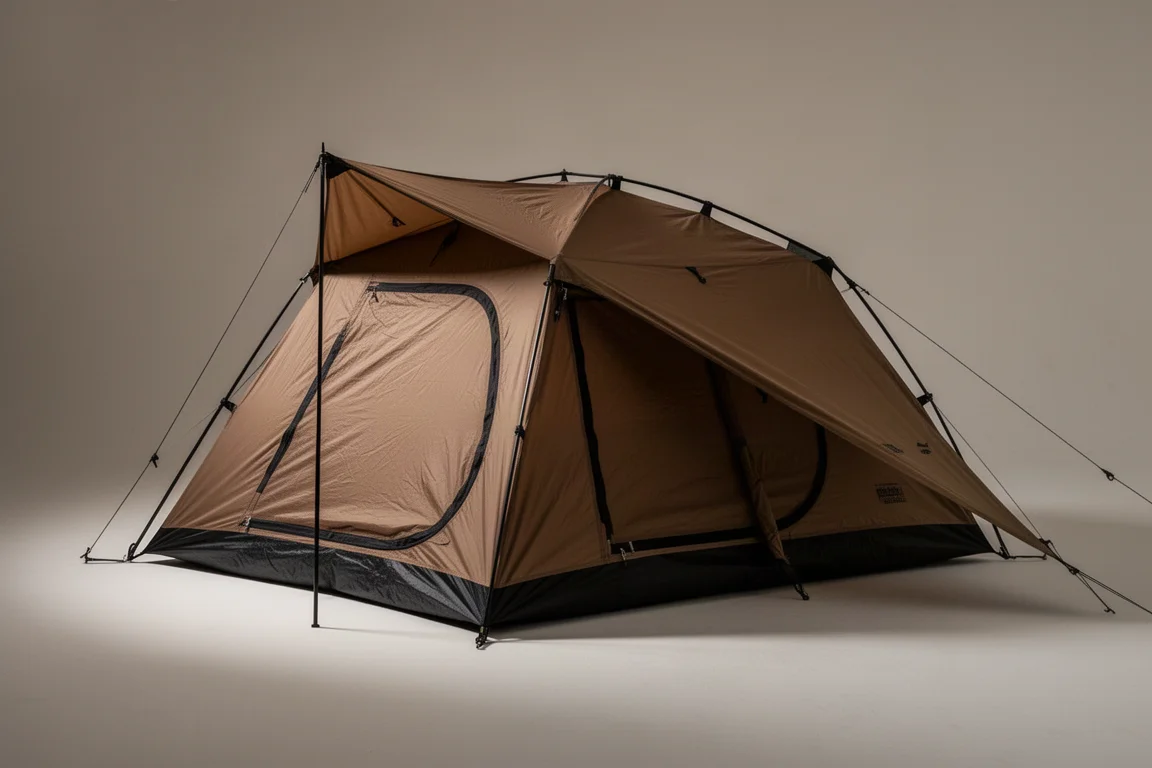
The OneTigris Skyina is not a brand new design so much as a corrected one. An earlier OneTigris tent had a serious leaking problem, badly enough that the company went back and rebuilt it from the ground up. The Skyina is the result of that work, and it is the version worth looking at today.
It comes in a single color, coyote brown, and it sells for $250. The materials are the first thing that stands out at that price. The fly is a 20-denier silicone-treated ripstop nylon with a 3,000 mm hydrostatic head rating, and the body is a 40-denier silicone-treated ripstop nylon with the same 3,000 mm rating. The poles are 7001 aluminum, the stakes are aluminum, and the zippers are YKK. The package includes a ground sheet, five guy lines, ten tent stakes, three poles, and a storage bag.
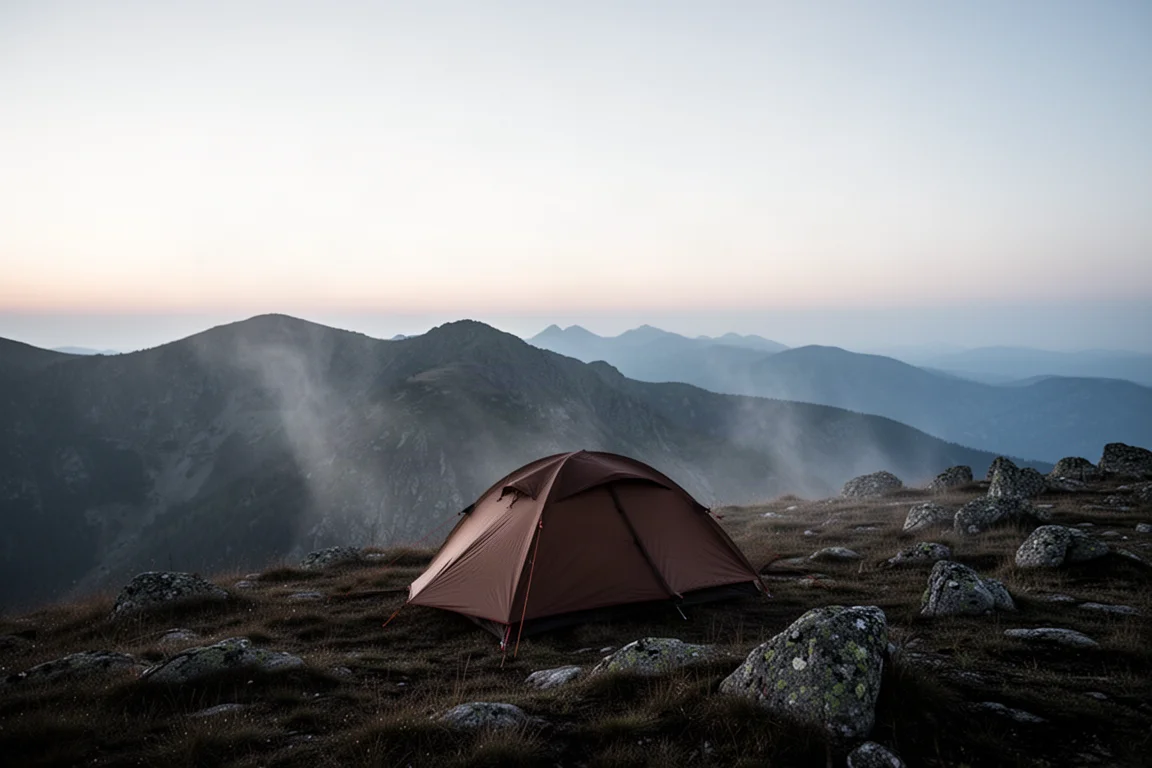
Pitched, the Skyina measures 6.8 feet long, 4.1 feet wide, and 3.7 feet tall, which puts it firmly in two-person-plus-gear territory rather than the cramped two-person category. Packed down it measures 15.5 inches by 8.5 inches and weighs 5.3 pounds. There are two doors and one vestibule, two large mesh pockets, a hanging hook at the center, and taped seams throughout.
The genuinely unusual part is the fly arrangement. Rather than a conventional full fly, the Skyina uses a partial fly on one side that wraps over the top and then continues along the inside of the tent as an internal fly. Internal fly designs have been attempted in the outdoor market for years and have rarely worked well, so this is the detail that shapes almost everything else about the tent.
Who This Tent Is For
This is a shelter for campers who want interior volume and weather flexibility more than they want the lightest possible pack weight. The floor plan is long, wide, and tall enough to sit up in comfortably, and the two large mesh pockets plus the center hanging hook make it easy to keep a headlamp, phone, and small items off the floor.
It also suits campers who deal with wind. Because the internal fly panels can be deployed or rolled back and stored out of the way, the tent can be tuned toward more airflow on a warm night or toward more wind blocking when conditions turn. Deployed, those panels effectively turn the shelter into something closer to a four-season tent, which is a meaningful amount of adjustability for a single-wall-adjacent design.
It is less suited to anyone who wants a simple, foolproof pitch with no learning curve, and to anyone who wants a shelter that performs the same way regardless of how it is closed up. The Skyina rewards attention to detail, particularly around the door on the internal fly side.
Main Strengths: Materials and Build Quality
Nylon rather than polyester is the right call here, and it shows in the numbers. A polyester build of equal strength would push the weight of this tent to roughly eight pounds, because it takes considerably more polyester material to match the strength of nylon. Using 20-denier and 40-denier silicone-treated ripstop keeps the Skyina lighter and stronger than an equivalent polyester shelter would be.
Construction quality is genuinely good. The seam taping is clean and consistent, the stitching is tidy with no loose threads or obvious weak points, and the hardware feels sorted. Visually the tent is a strong piece of design work: earthy coyote brown with black accents, a shape that looks purposeful rather than generic, and a finish that reads as more expensive than the price suggests.
The overall silhouette is unlike most tents on the market. On the internal fly side the body pulls forward and outward, which creates extra usable space inside rather than simply adding bulk to the exterior. Combined with the partial fly, it is a shape that is hard to confuse with anything else in a campsite.
Main Strengths: Space, Ventilation, and Setup
Interior space is the headline. The tent is long, wide, and tall for its class, and it comfortably holds two people and their gear rather than two people and a compromise. The mesh pockets are large enough to swallow a meaningful amount of kit, and the center hook takes a headlamp or a small lantern without fuss.
Ventilation is strong for a tent with this much coverage. The body itself is largely mesh, and the fly stands away from the body at both the top and the bottom, so air can move up underneath the fly and into the living space. That is a detail many manufacturers skip, and it makes a real difference on humid nights. Condensation will still form on the fly and on the internal fly, which is normal for any tent, but the internal fly panels can be rolled back and secured out of the way when the weather allows.
Setup and breakdown are straightforward. There is nothing awkward to thread or fight with, and an experienced camper can have the tent standing in around five minutes. The two-pitch capability is worth noting: the tent goes up in its standard fly configuration, and it can also be pitched as a minimal fly-only shelter, though that configuration is limited by the partial fly, as covered below.
Things to Consider: Waterproofing and the Zipper Corner
Waterproofing is the most important thing to understand before buying, and the honest answer is not a simple one. In repeated testing that included roughly four nights of rain, heavy downpours, thunderstorms, and strong winds, the tent did not leak at all. It also survived hot, warm, wet, and windy conditions across roughly fifteen nights of use in mountain and coastal settings without letting water in.
However, other owners have reported leaks. Working through those cases alongside the tent’s own behavior points to one specific weak point, and it is not where you would expect. Water does not come in through the generous gap between the body and the fly in the center of the tent. It comes in at the corner where the two zippers on the internal fly side meet.
The fix is entirely about technique. The storm flap must sit fully over the zipper and lie completely flush against the body, and the zipper pulls must be pulled all the way down through the channel. If the pulls stop short or the flap is not seated properly, water can travel down the channel and into the tent. That is difficult to verify from inside, where the pulls and the flap are hard to see and harder to correct.
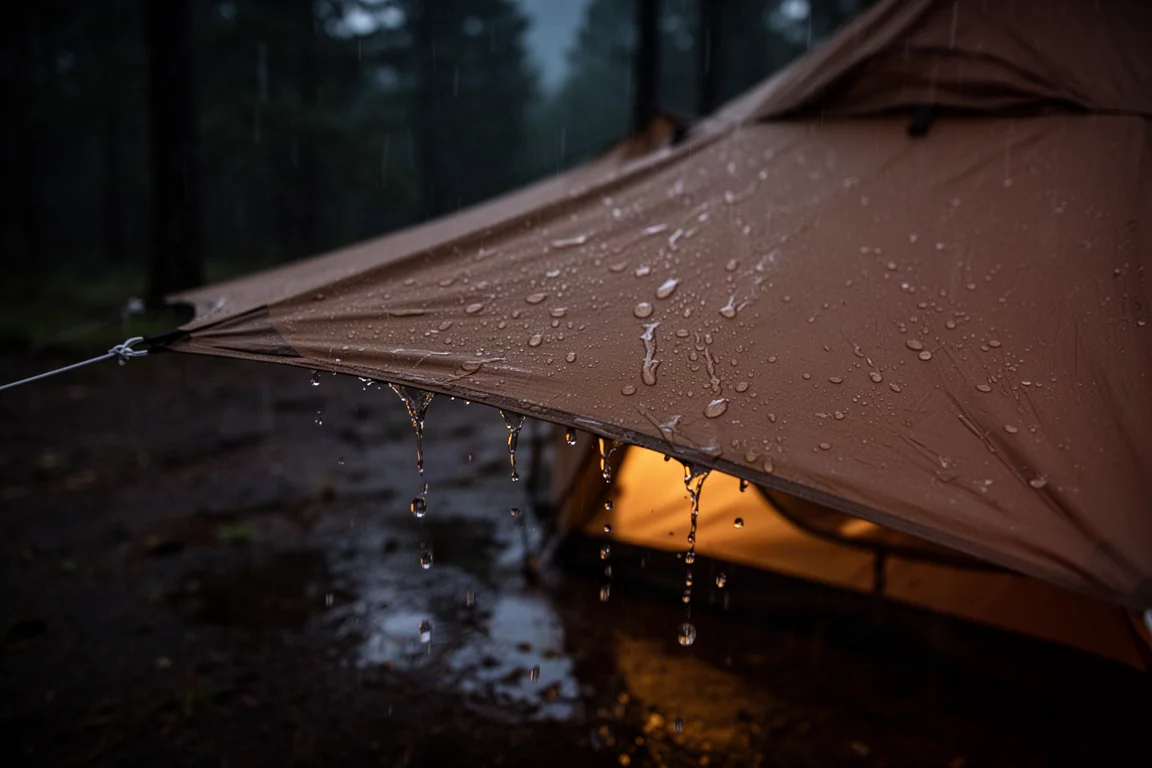
The practical rule is to enter and exit through the vestibule side whenever rain is possible, after checking that the internal fly side is properly closed. That single habit removes most of the risk. It is also worth noting that wind-driven rain could, in some situations, be pushed into the internal fly panels, which is one more reason a full fly would add protection for anyone camping regularly in wet, exposed conditions.
The fly-only quick shelter configuration is the other weak spot. Because the fly is only partial, that setup functions as little more than a sun shade and does not deliver meaningful weather protection. Treat it as a fair-weather option rather than a storm shelter.
Things to Consider: Vestibule, Stakes, and Small Details
The vestibule is small. It will take a pair of boots or a compact backpack, but the gap between the fly and the body is limited, so it is a storage nook rather than a covered porch.
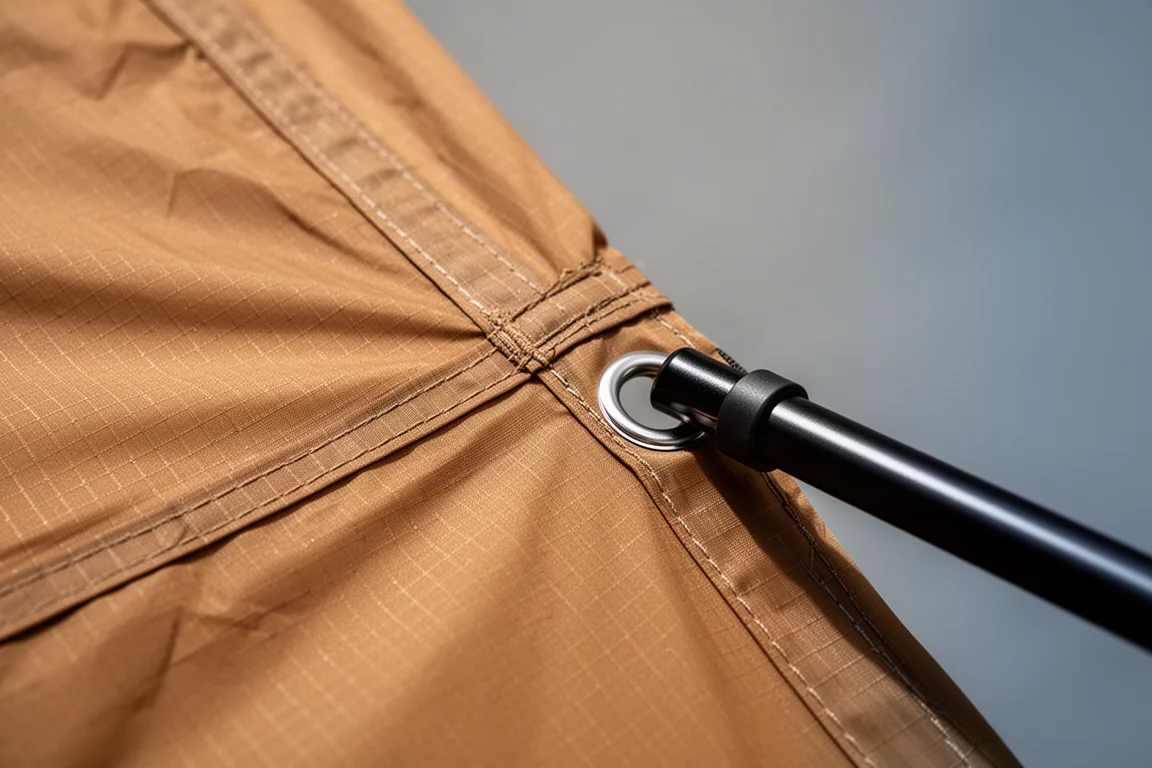
A few hardware details add friction. The grommets around the base of the tent are slightly oversized relative to the diameter of the pole tips, so poles can pop out of them during pitching. It is not a deal breaker, but it makes setup more fiddly than it should be. The corded pulls on the tent stakes have all come off over a couple of months of use and needed re-tying.
There is also a hole where the two zippers on the vestibule side meet. It cannot be sealed, and while you can stuff something into it, it remains a potential entry point for insects. That is worth planning for if you camp in bug-heavy areas.
Buying Advice
At $250 the Skyina delivers a lot: excellent materials, a genuinely roomy two-person interior, strong ventilation, taped seams, quality hardware, and a design that is clearly its own thing rather than a copy of a copy. For the money, the build quality and the interior space are the strongest arguments in its favor.
The decision really comes down to how you camp and how much margin you want. If you camp mostly in fair weather and occasional rain, and you are willing to learn the one habit that matters, closing the internal fly side correctly and entering through the vestibule when rain is likely, the Skyina is a capable, comfortable shelter with unusual flexibility. The internal fly panels give it wind-blocking ability and adjustability that most tents at this price do not offer.
If you camp regularly in sustained wet conditions and want the widest possible safety margin, the partial fly is the limitation to weigh carefully. A full fly would make this tent considerably more versatile and more protective, and it would be the single most valuable addition OneTigris could make, ideally as an optional accessory. The internal fly concept itself works, and it works for more than keeping water out.
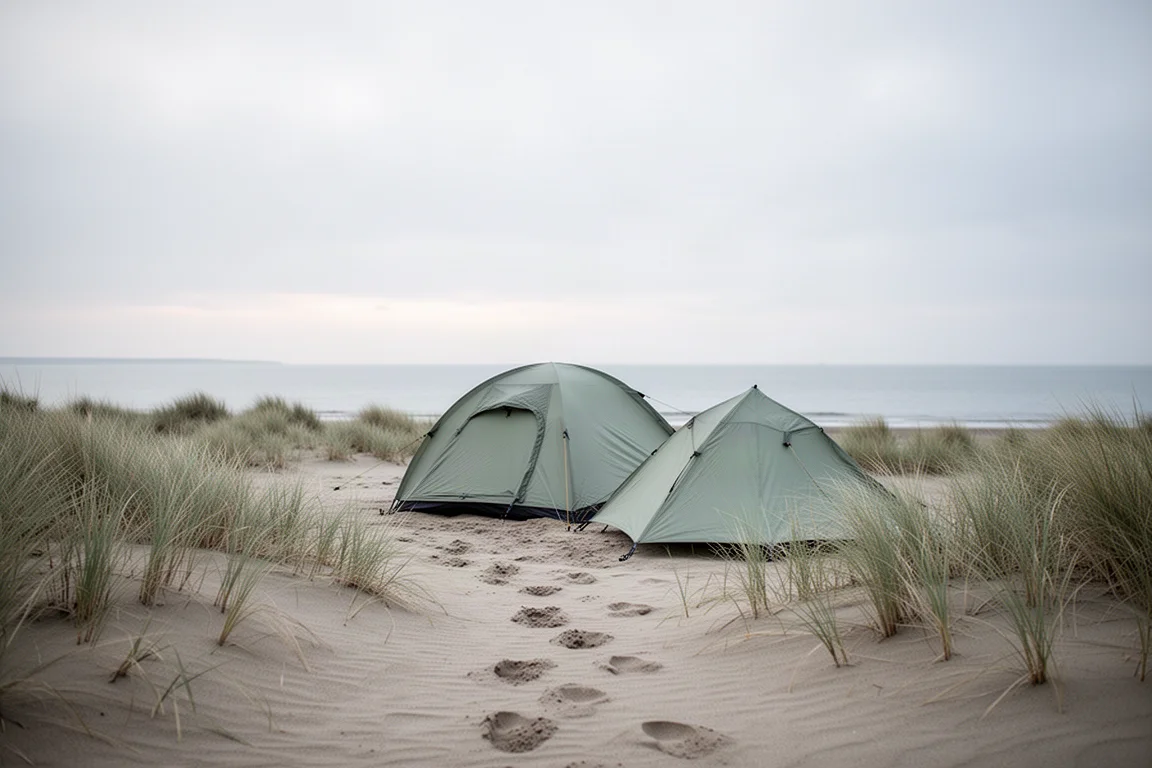
It is also worth being clear about what this tent is not. It is not the lightest option for its interior volume, and it is not a no-thought pitch. What it is, is a well-made, thoughtfully shaped shelter that improves meaningfully on the model it replaces, at a price that undercuts what the materials would normally suggest.
Conclusion
The OneTigris Skyina is a clear upgrade over the earlier design it replaces, and it earns a recommendation for the right camper. The materials are top tier for the price, the space is generous for two people and their gear, ventilation is genuinely good, and the unusual internal fly adds real wind-blocking versatility that you will not find on most tents in this class.
The caveats are specific rather than general. Waterproofing depends on closing the internal fly side correctly, the vestibule is small, the fly-only setup is a fair-weather shelter at best, and a few hardware details could be refined. None of those are reasons to walk away. They are reasons to buy with the right expectations, and to learn the pitch properly before your first wet night out.
Product link
View more details for OneTigris Skyina Tent
This product is mentioned in the review. Check the specifications, options, and compatibility before buying.
View more details for OneTigris Skyina TentFurther reading
Related Reviews
Camping Tents
3F UL Gear Taiji Two-Person Tent Review: Field Waterproofing Results and Buying Advice
The Taiji pairs an attached fly with a removable inner, but sustained rain exposed untaped vent seams that need sealing before this shelter can be trusted.
Camping Tents
3FUL Gear Lanshan 2 Pro 4-Season Review: A Sub-$200 Single-Wall Trekking Pole Tent
An early look at the 3FUL Gear Lanshan 2 Pro 4-Season, covering its straightforward pitch, generous interior space, and the condensation and seam-sealing questions that come with any single-wall shelter.
Camping Tents
Alps Mountaineering Lynx 1-Person Tent Review: Big Value in a Small Budget Tent
A close look at the Alps Mountaineering Lynx 1-Person Tent, covering real interior dimensions, materials, setup time, ventilation limits, and who should buy it.