Camping Tents
OneTigris Raven Nest Tunnel Tent Review: A Four-Season Hot Tent With an Internal Snow Skirt
A detailed look at the OneTigris Raven Nest, a four-season two-person tunnel tent with a stove jack port, twin awning doors, and a rare internal snow skirt at a $220 price.
Introduction
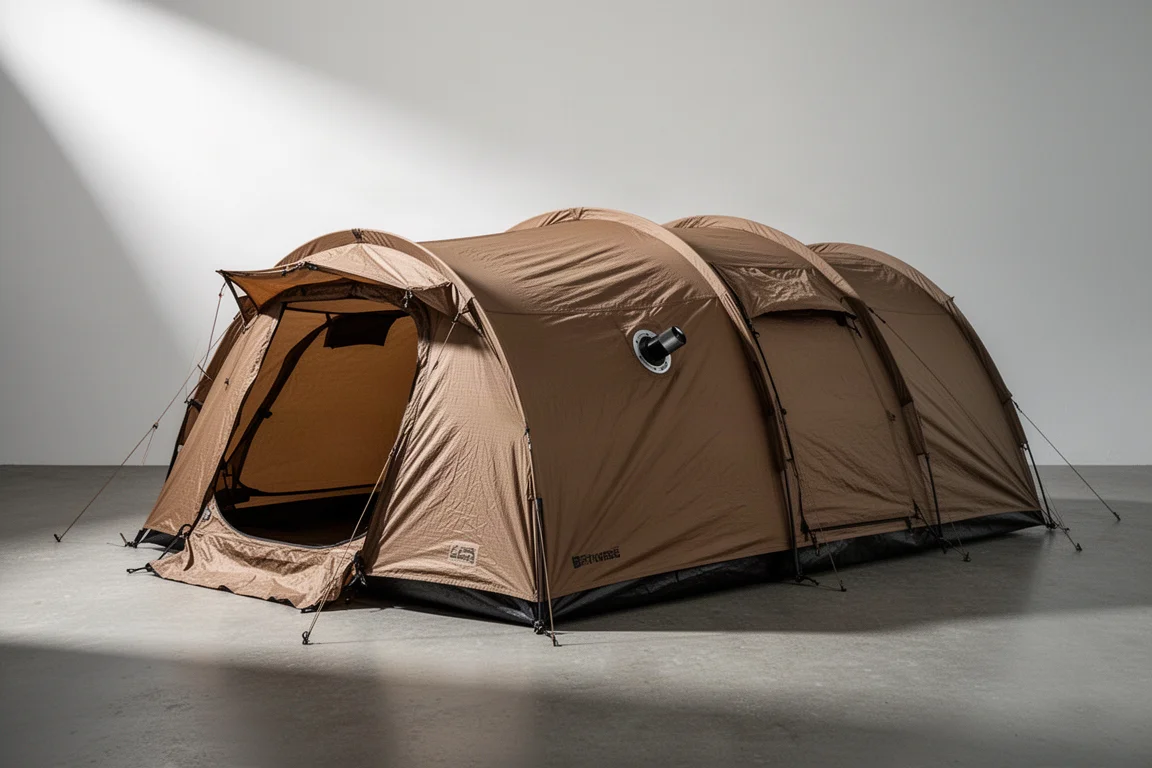
The OneTigris Raven Nest is a four-season tunnel tent built for cold-weather camping, and it carries a feature that is genuinely uncommon in this category: an internal snow skirt. Combine that with a stove jack port, two large doors that convert into awnings, and a retail price of $220, and the Raven Nest becomes an interesting proposition for winter campers.
It is a two-person shelter. Pitched, it measures 14 ft long and 100 in wide, with a maximum interior height of 4.7 ft. The tent is offered in coyote brown only, and an optional inner tent can be added for $60.
Weight lands at roughly 10 lb, which is comparable with many other four-season winter tents. In its storage bag the shelter measures 17 in by 7.5 in, so it stays manageable for vehicle-based trips and shorter approaches.
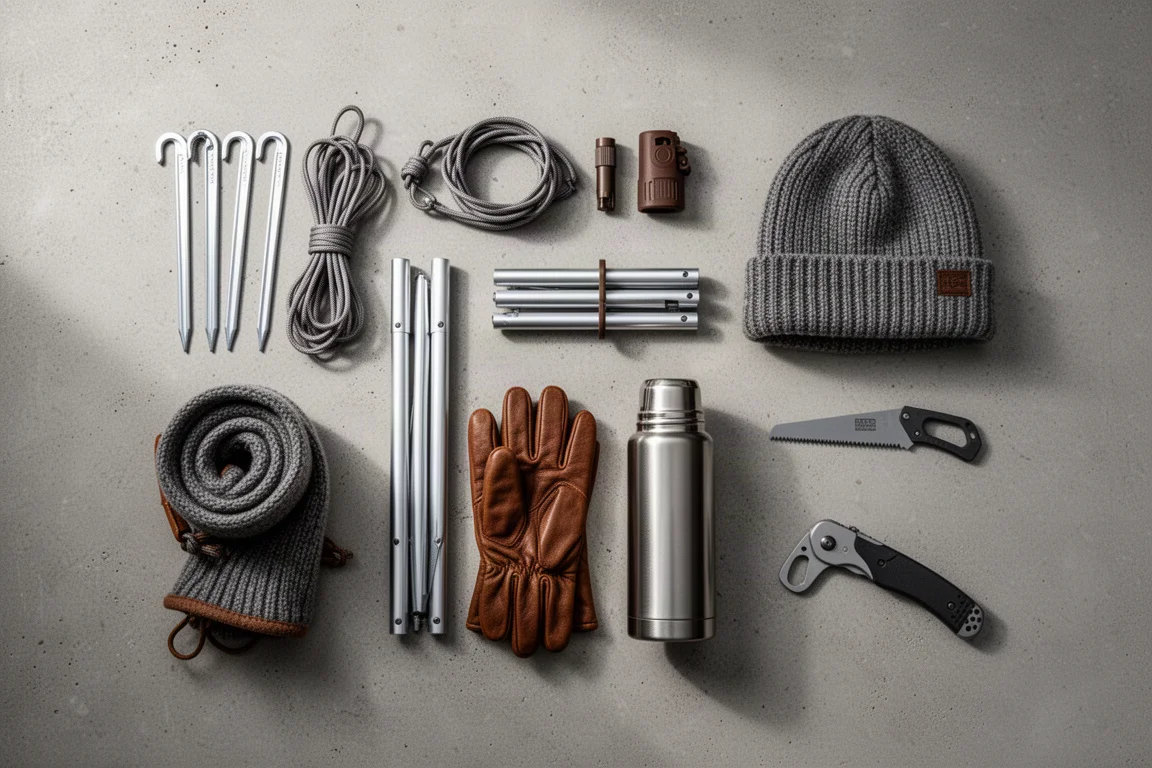
The included kit covers the essentials: a storage bag with compression straps and a drop pole in the corner, the tent body, two aluminium poles, four pre-attached guidelines, and 16 aluminium stakes.
Who This Tent Is For
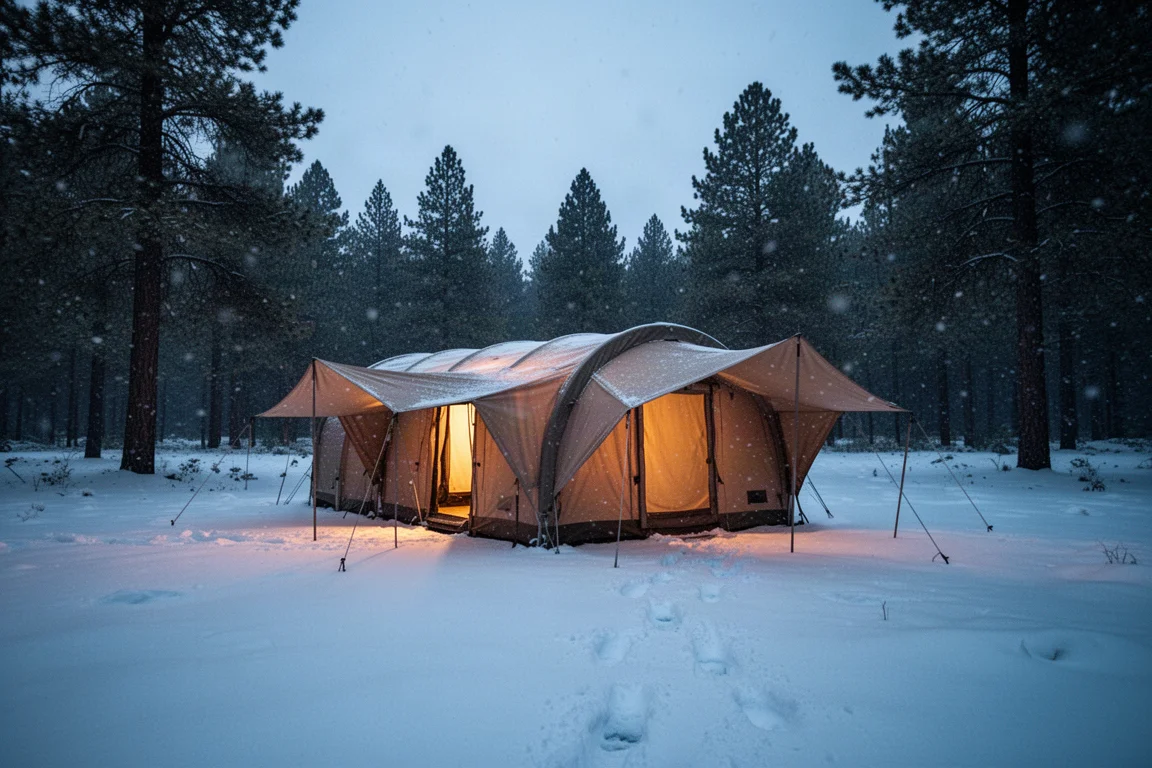
This is a shelter built around winter use and around the idea of running a stove inside. The stove jack port is included, and the internal snow skirt runs along both sides to seal the gap where the tent meets the ground, which matters when snow is being driven underneath the walls.
The layout suits two people camping from a vehicle, from a basecamp, or on a short approach where weight is not the deciding factor. At around 10 lb it can be backpacked, but the size and interior volume point more toward trips where living space matters more than pack weight.
It also suits anyone who wants a large interior they can move around in comfortably. Standing upright is not possible, but there is enough room to avoid crawling across the floor, which is not always true of tunnel designs.
Build Quality and Materials
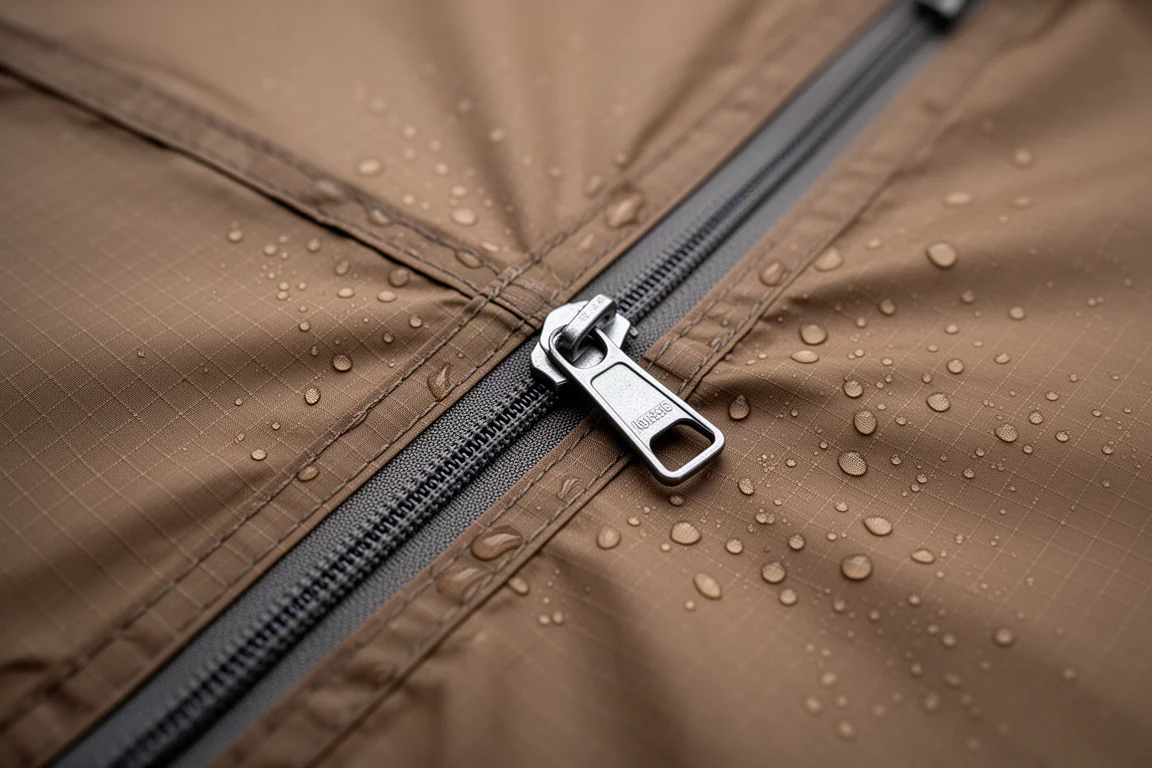
The main fabric is a 70D ripstop nylon treated with both PU and silicone, with a stated waterproof rating of 300 mm. The zippers are waterproof YKK units, and the poles and stakes are aluminium.
Construction details hold up under close inspection. Stitching, seams, and seam taping are all clean and consistent, and the fit and finish is high for this price bracket.
Guy line placement is sensible, and the pre-attached lines on both sides make pitching straightforward. The two poles slide through sleeves and seat into grommets, a process that stayed quick even in roughly 40 F conditions, when stiff fabric and tight grommets often turn setup into a struggle.
A cover over the stove jack port adds an extra layer of protection against water ingress, which is a thoughtful detail on a hot tent. The optional inner tent arrives in its own storage bag with a grab tab and a drawcord closure.
Space, Ventilation, and Interior Layout
There are two doors, one on each side, and both double as awnings. Behind the large mesh panels at the front are zippered fabric panels that act as an internal rainfly. The rear of the tent does not carry those mesh and rainfly features.
Four vents sit above the mesh panels, and the two windows can be zipped open and rolled up for airflow. Between the vents, the windows, and the two door openings, there are plenty of ways to move air through the shelter and manage condensation.
Inside, the internal snow skirt runs along both sides and the stove jack sits at the front. Attachment points at both ends of the tent are what allow the optional inner to be fitted.
Buckles hold the lower edge of each door panel in place, which should help those panels resist being pushed inward in strong wind.
One practical note: awning poles are not included, so the awnings need separate poles before they can be pitched out.
The Optional Inner Tent
The inner tent is sold separately rather than bundled, a deliberate change from an earlier OneTigris model where an inner was included and the price reflected it.
Installation is simple. Buckles around the perimeter and toggles at the top let the inner go in and come out quickly, and it can be mounted on either side of the tent so the stove jack stays clear. The door uses three zippers arranged in an inverted T.
The shape is a partial octagon, and that geometry works against usable space. Width is roughly 30 in, and the effective length is about 5 ft 9 in, because a sleeping pad cannot sit in the recessed rear corner and has to run from the door outward. Maximum height is 53 in, but the wall slopes sharply, so usable space is concentrated near the door.
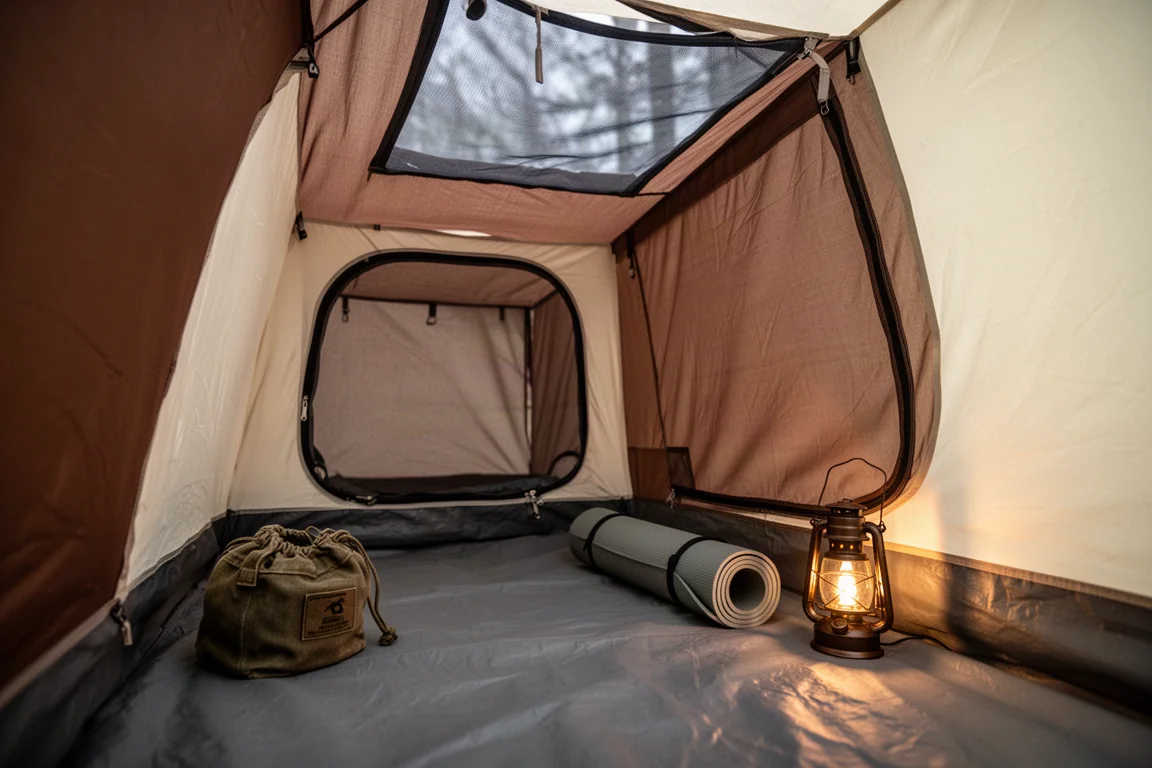
For campers around 5 ft 9 in or shorter, the inner can work. For taller campers it is likely to feel cramped, which is the main reason it makes sense as an optional add-on rather than a required purchase.
A workable alternative is to skip the inner entirely and place a small freestanding tent inside the Raven Nest instead. That preserves floor space in the centre for a stove, firewood, and gear while still providing a separate sleeping compartment.
Things to Consider Before Buying
The fabric is a PU and silicone treated nylon, and silicone treated nylon can stretch when it gets wet. How much that affects pitching tension and long-term usability is still an open question, and it is worth watching if the tent will be used in sustained rain.
Interior height peaks at 4.7 ft, so this is not a stand-up shelter. Combined with the tunnel shape, it is best suited to campers who are comfortable sitting and kneeling inside.
The optional inner has the space limitations described above, the tent ships in a single colour, and awning poles are not included, so budget for those separately if the awnings matter to your setup.
Field testing in rain and freezing conditions is still to come, so conclusions about weather performance rest on materials, construction, and design rather than on long-term use.
Buying Advice
At $220, the Raven Nest sits well below what a comparable four-season shelter of this size and specification typically costs from a large established brand. The fabric treatment, waterproof zippers, aluminium poles and stakes, and the sheer interior volume all support that price.
For winter campers who want a hot tent with a stove jack, two awnings, and enough room for a chair, a table, a stove, and firewood, this is a sensible buy. The internal snow skirt and the covered stove jack port are the details that separate it from a generic tunnel tent.
If you are taller than roughly 5 ft 9 in, plan on using your own inner tent rather than the optional one, or go without an inner entirely. Either way, the shelter itself remains the part worth paying for.
Conclusion
The OneTigris Raven Nest pairs a large, well-ventilated four-season interior with a stove jack and an internal snow skirt at a price that is difficult to match for this size and specification. The optional inner tent is the one weak link, and it is now correctly sold as an optional extra rather than a forced bundle.
For anyone building a winter hot tent setup around a wood stove, the Raven Nest deserves a place on the shortlist.
Product link
View more details for OneTigris Raven Nest Tunnel Tent
This product is mentioned in the review. Check the specifications, options, and compatibility before buying.
View more details for OneTigris Raven Nest Tunnel TentFurther reading
Related Reviews
Camping Tents
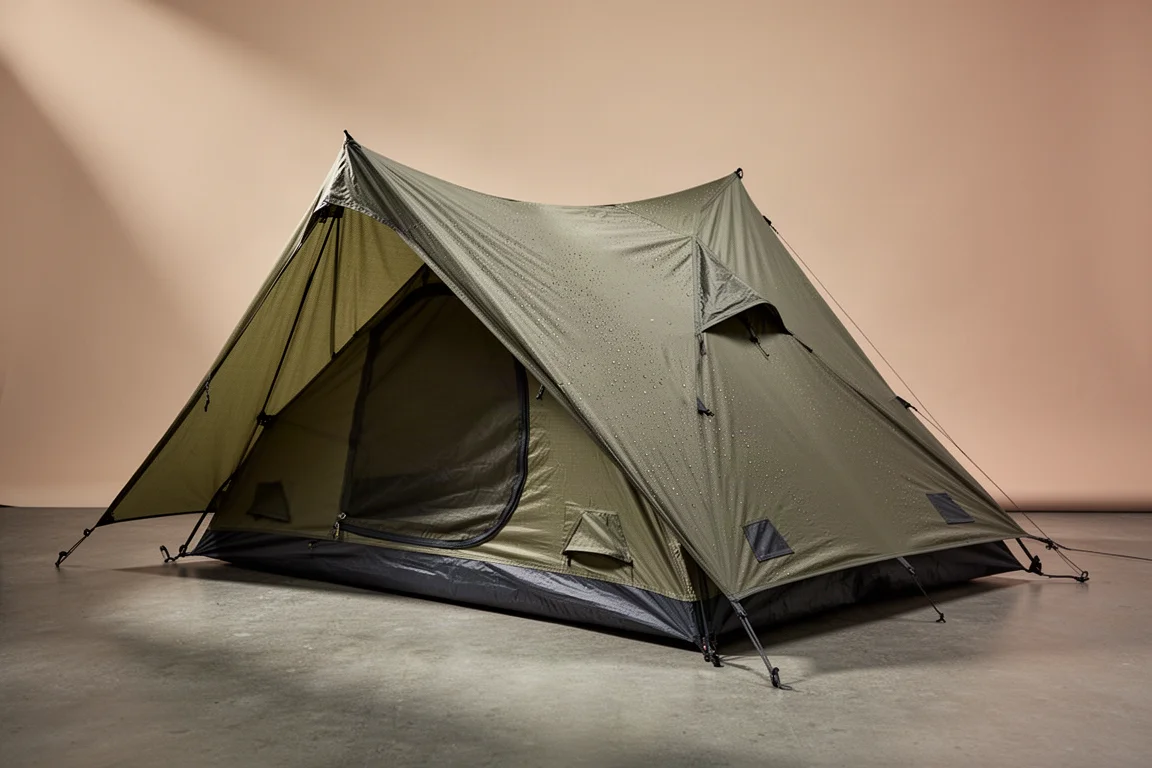
3F UL Gear Taiji Two-Person Tent Review: Field Waterproofing Results and Buying Advice
The Taiji pairs an attached fly with a removable inner, but sustained rain exposed untaped vent seams that need sealing before this shelter can be trusted.
Camping Tents
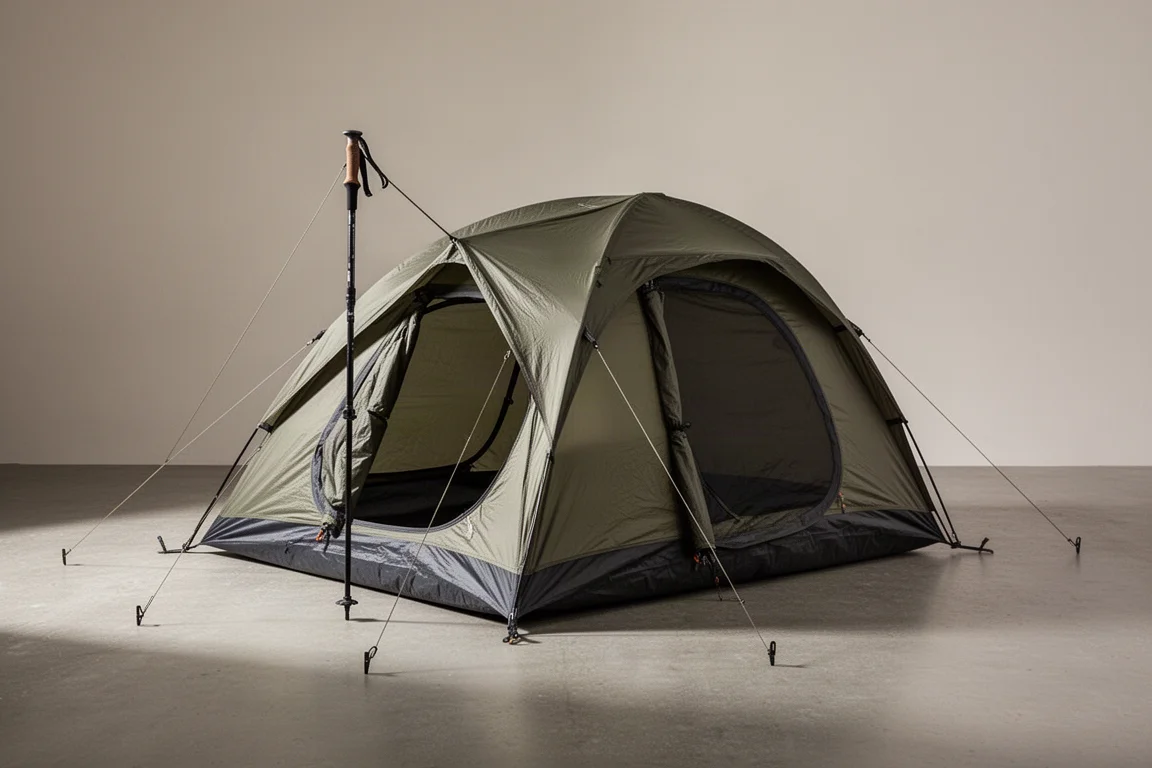
3FUL Gear Lanshan 2 Pro 4-Season Review: A Sub-$200 Single-Wall Trekking Pole Tent
An early look at the 3FUL Gear Lanshan 2 Pro 4-Season, covering its straightforward pitch, generous interior space, and the condensation and seam-sealing questions that come with any single-wall shelter.
Camping Tents
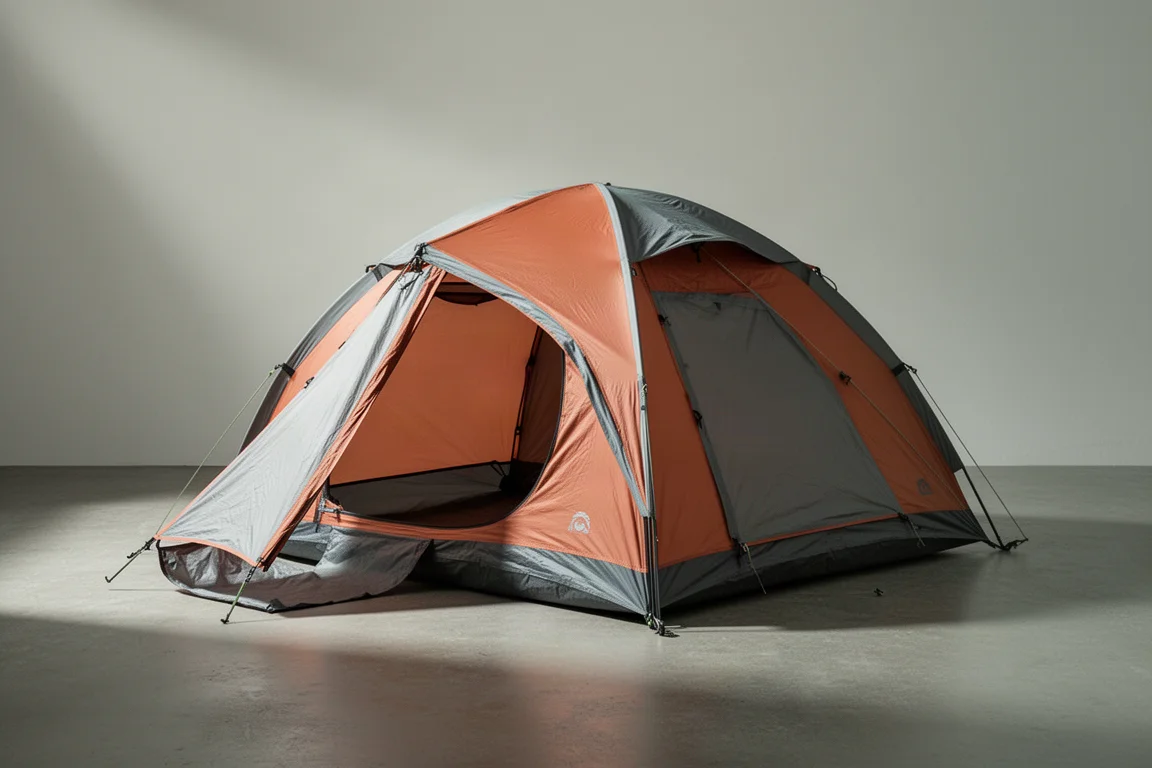
Alps Mountaineering Lynx 1-Person Tent Review: Big Value in a Small Budget Tent
A close look at the Alps Mountaineering Lynx 1-Person Tent, covering real interior dimensions, materials, setup time, ventilation limits, and who should buy it.