Camping Tents
OneTigris Cosmitto One-Person Tent Review: Roomy Solo Shelter and Two Alternatives
A closer look at the OneTigris Cosmitto one-person tent, plus how the Cosmitto 2.0 and the Nemo Osmo Hornet Elite compare on space, weight, and price.
Introduction
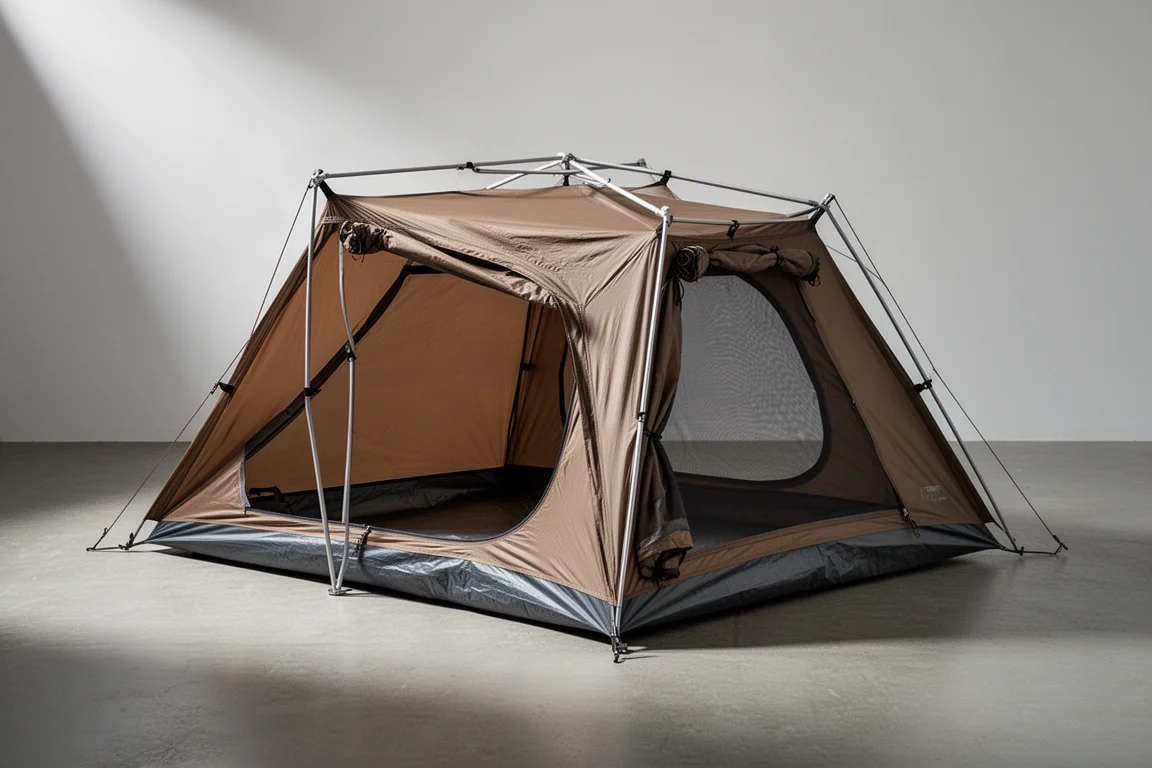
OneTigris built the Cosmitto name on a two-person shelter that stood out for interior space and a price comfortably under $200. The Cosmitto one-person tent takes the same approach and scales it down, although the result is anything but cramped. With a 39 in peak height and roughly 6 ft 2 in of usable length, it behaves less like a classic solo tent and more like a one-and-a-half person shelter.
That extra volume is the whole point. Solo shelters usually sit on a compromise between weight and livability, and the Cosmitto one-person tent leans firmly toward livability, with two doors, a fully meshed inner and a packed weight of 4.4 lb.
This article covers what the solo Cosmitto gets right, where it asks for patience, and how it sits next to two reference points: the larger Cosmitto 2.0 and the ultralight Nemo Osmo Hornet Elite.
What to Look For in a Roomy Solo Shelter
Solo shelters live on a sliding scale. The lightest options use thin fabrics, minimal pole structures and a single door, and they cost accordingly. Roomier options add width, height and often a second door, and the weight climbs with them. For most campers the useful question is not which tent is lightest, but how much interior space is worth carrying.
Four numbers matter most. Usable length determines whether you can lie flat without pressing against the walls. Peak height decides whether you can sit up and change clothes. Width and door count determine how easy the tent is to live in over several nights. Packed weight then sets how far you are willing to carry it.
Ventilation deserves the same attention as size. A solo tent with limited mesh traps condensation, especially on cool, still nights, and a damp inner wall is far more annoying in a small shelter than in a large one. A fly that pitches with clearance from the body, plus vents built into the doors, makes a meaningful difference.
Price is the final variable. Lightweight fabrics and complex pole sets push tents well past $500, while simpler materials and aluminium poles keep costs down. That is the band the Cosmitto line competes in.
OneTigris Cosmitto One-Person Tent: Size and Interior Space
Measured up, the Cosmitto one-person tent is unusually generous. Peak height reaches 39 in, or 3 ft 9 in, which is tall enough to sit upright with room to spare. Interior width is 34 in, and usable length is roughly 6 ft 2 in, so campers up to about 6 ft 1 in should be able to stretch out. Taller users will find the length tight and should look at a longer shelter.
The shape helps as much as the numbers. Instead of tapering to a narrow point at the foot, the walls rise more vertically and then angle outward before dropping to the floor. That geometry keeps usable volume wide along the whole length of the tent rather than only at the centre.
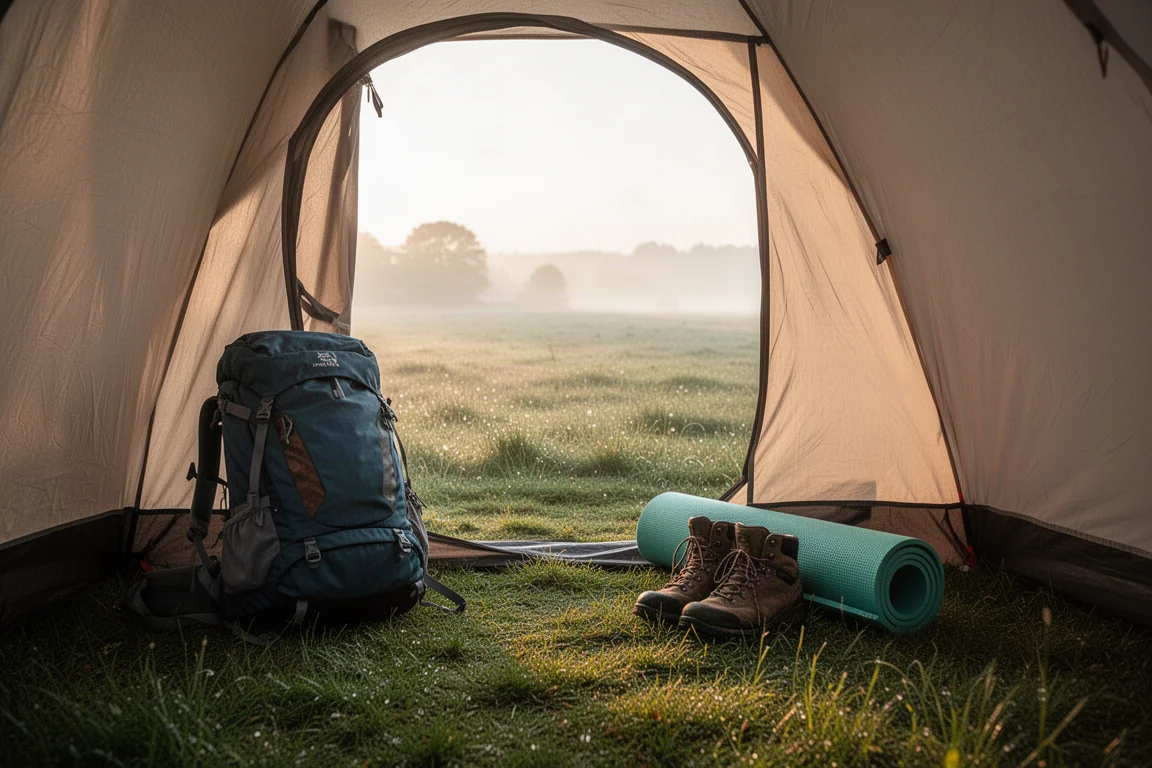
In practice, that means space for a sleeping pad plus a pack, boots and a lantern, with enough room left over to sit inside on a folding camp chair. It is also a realistic option for campers who travel with a dog, or who simply prefer to keep their gear indoors rather than in a vestibule.
Doors, Ventilation, and Weather Protection
Two doors on a one-person tent is unusual, and the Cosmitto uses a front door and a side door, each closed by three zippers arranged in an inverted T. Storm flaps cover the zippers, and both doors roll back and secure out of the way, which opens up vestibule space on either side of the tent. A second exit also means you can leave the tent on the side that is sheltered from wind and rain.
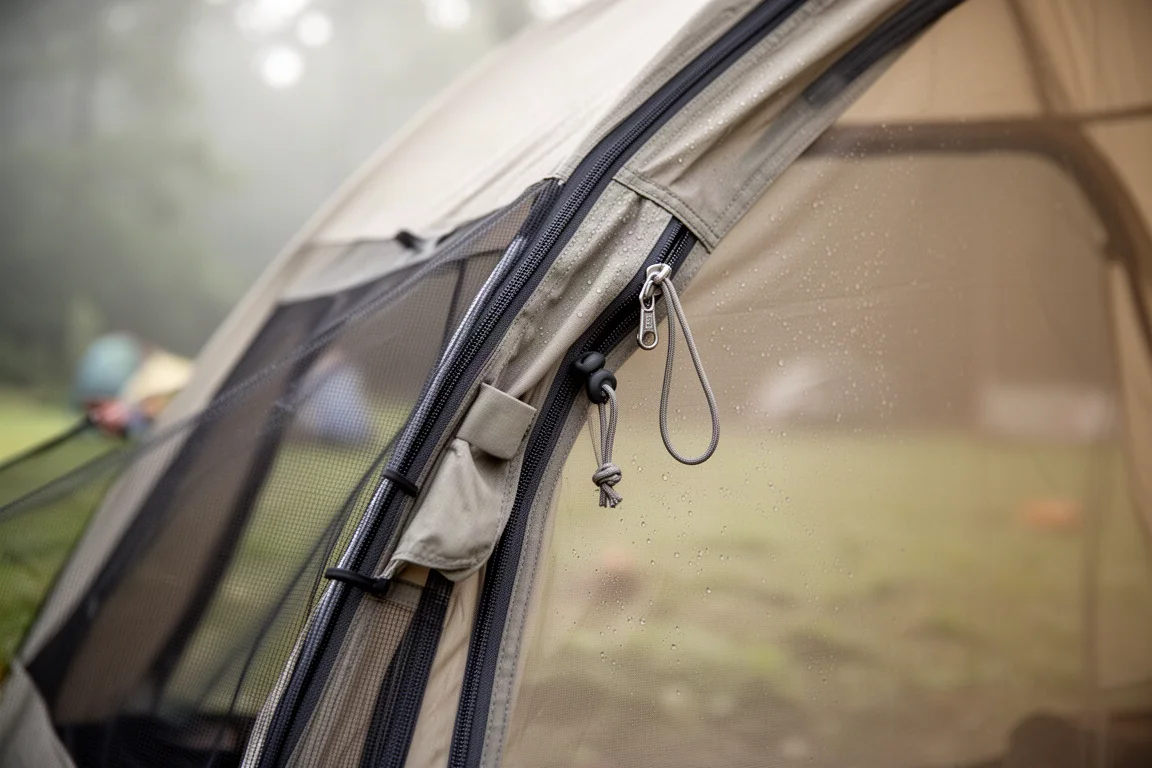
The inner is dominated by mesh, with solid panels wrapping the lower perimeter and mesh continuing overhead. That combination is what makes this a three-season design aimed at warmer conditions: it prioritises airflow over insulation. The fly pitches with clearance from the body so air can move between the two layers, and two vents built into the doors give warm, damp air somewhere to escape. When rain sets in, the fly buckles into place quickly and the taped bathtub floor keeps ground water out.
Inside, there are two mesh pockets for small items and a loop at the top for hanging a light. Setup follows the same sequence as the two-person version and is straightforward, with a realistic pitch time of about 10 minutes.
Materials, Construction, and Packed Weight
The fly is a 20-denier polyester ripstop with a 2,000 mm hydrostatic head rating, backed by a 75-denier nylon floor and a 40-denier nylon mesh inner. Poles and stakes are aluminium, and the zippers come from YKK. Polyester is the notable choice here: unlike silnylon, it does not stretch when it gets wet, so the fly stays taut through a rainy night.
Construction quality is high across the board. Seams, stitching and seam tape are clean and consistent, which matters in a tent that will be pitched and struck repeatedly over a season.
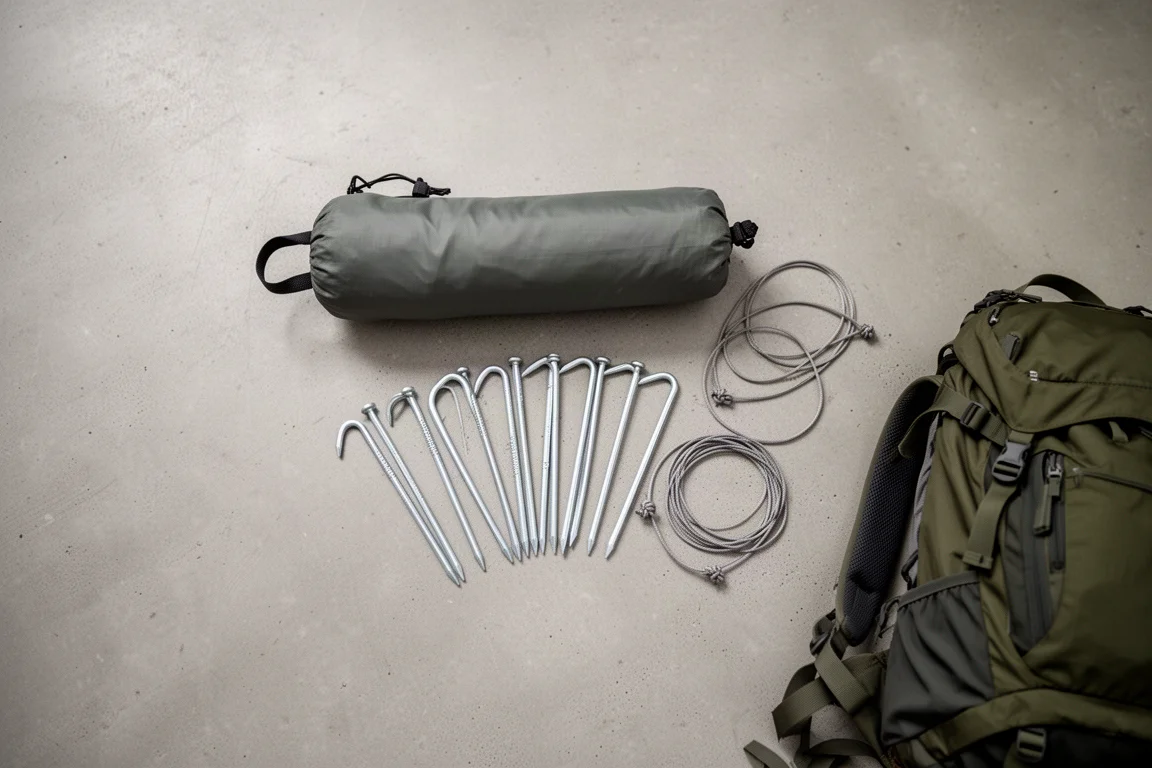
The trade-off is weight. The Cosmitto one-person tent has a packed weight of 4.4 lb, which is heavy for a solo shelter, and the two doors plus the large fly account for much of it. Packed, it measures about 21.7 in by 6 in. The kit includes the tent body, fly, two poles, 10 aluminium stakes, four guy lines and a storage bag with a grab handle and a drawstring closure.
OneTigris Cosmitto 2.0: The Larger Two-Person Sibling
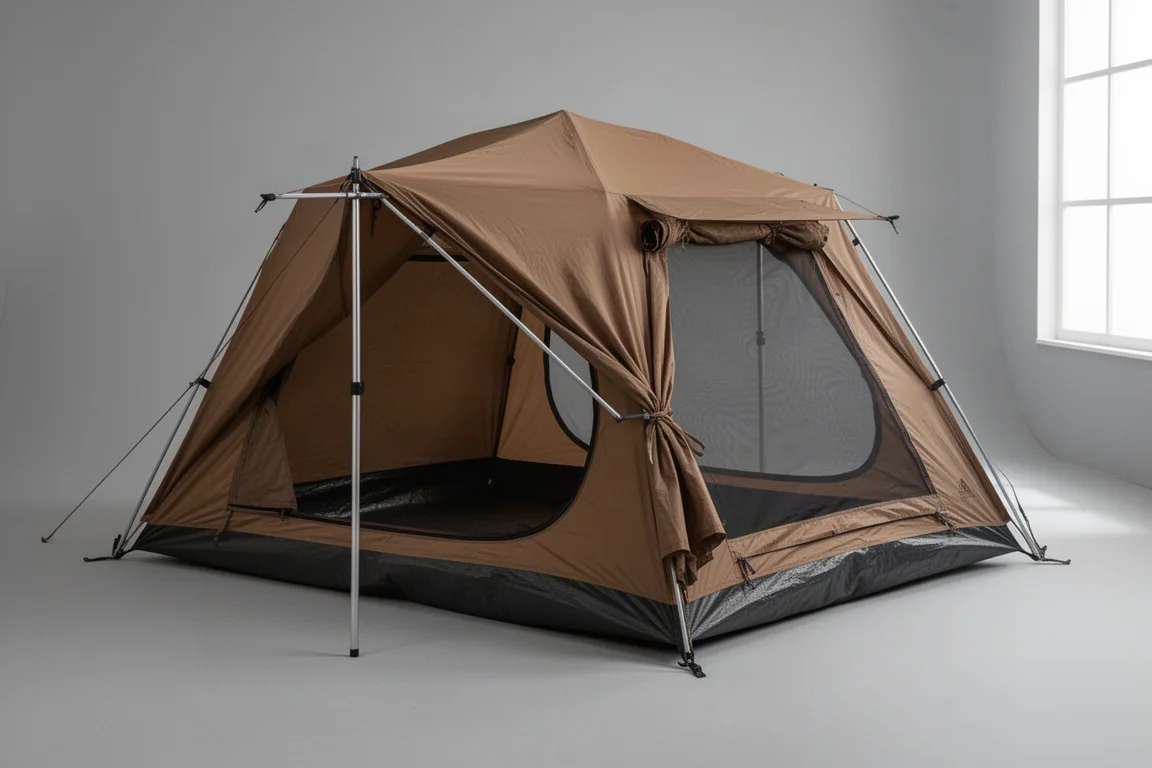
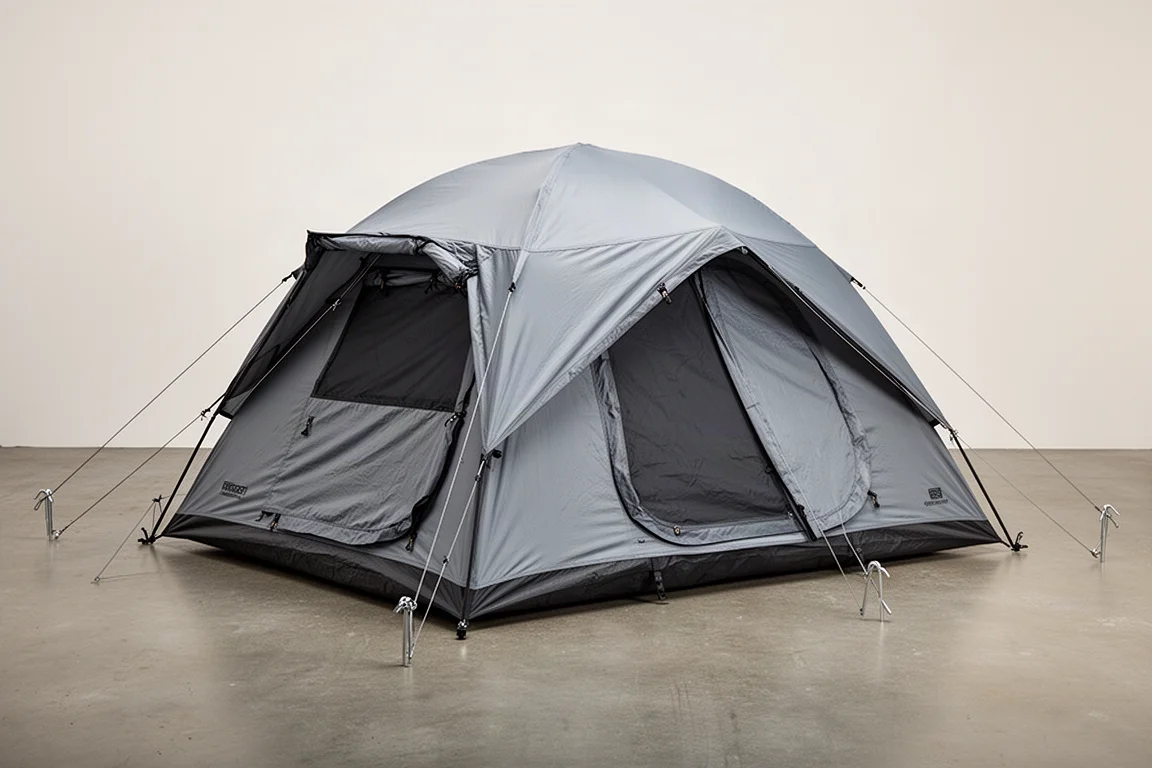
The Cosmitto 2.0 is the tent that set the tone for the line. It is a two-person shelter with an interior large enough to fit a folding camp chair, which is rare at any price and remarkable at this one. Materials and construction match the standard set by the solo version, and the tent is offered in an urban grey colourway.
Priced under $200, the Cosmitto 2.0 remains the value benchmark in this group. The one-person model at $146 carries the same logic into a smaller package, which is why the pair works well as a two-tent lineup: one for solo trips where comfort matters, one for trips with a partner.
For campers who rarely go out alone, the 2.0 removes the main compromise of two-person tents, which is the feeling of being squeezed in beside a second person and a pack.
Buyers who count every gram should weigh that interior volume against the packed size. For anyone who values space at the campsite and is not hiking long distances with the shelter on their back, that trade is easy to accept.
Nemo Osmo Hornet Elite: The Ultralight Alternative
At the other end of the spectrum sits the Nemo Osmo Hornet Elite. It is a two-person tent priced around $700, and its priority is clearly low weight rather than interior volume. The result is a shelter that is very lightweight and very small inside.
That contrast is the most useful thing to take from this comparison. The Cosmitto one-person tent offers more usable interior space than the Nemo two-person tent, which says a great deal about how differently the two designs spend their grams. The Nemo makes sense for backpackers who carry their shelter over long distances and accept a compact, close-fitting interior in exchange. The Cosmitto models make sense for campers who want room to move and a much lower price.

Buying Advice
Start with how you camp rather than with the specification sheet. If you go solo, want to sit up and move around inside, and your trips involve short carries or a car, the Cosmitto one-person tent delivers a lot of interior for $146. Check your height first: campers around 6 ft 1 in or shorter will be comfortable, while taller campers should look at a longer design.
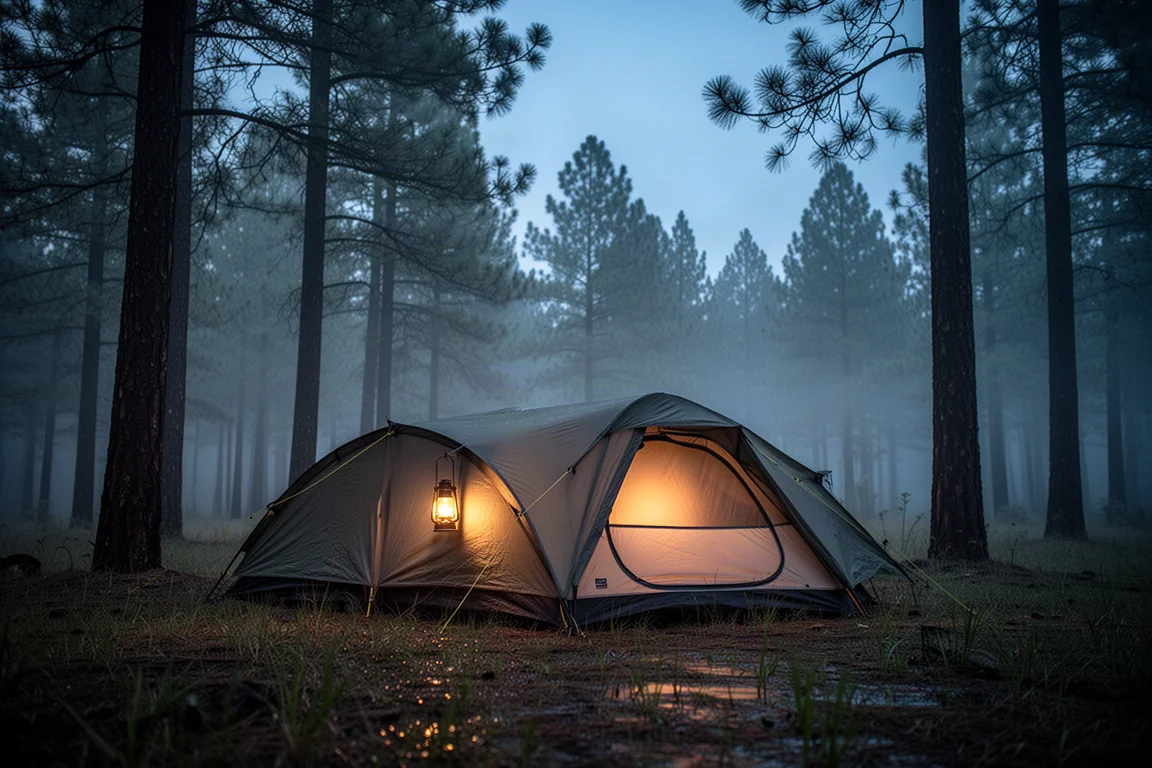
If you usually camp with a partner and want the same roomy feel, the Cosmitto 2.0 covers two people with space to spare for under $200. If low weight is the priority and budget is not a constraint, the Nemo Osmo Hornet Elite trades interior volume for a much lighter carry at around $700. All three are honest about their priorities, and the right choice simply depends on which one matches yours.
Conclusion
The Cosmitto one-person tent takes the formula that made the two-person version appealing, generous space at a low price, and adapts it for solo trips. Two doors, full mesh ventilation and a 39 in peak height make it far more liveable than most one-person shelters, and the 4.4 lb weight is the cost of that comfort. Campers who accept the weight get a tent that is quick to pitch, well made and pleasant to spend a night in.
For two-person trips, the Cosmitto 2.0 delivers the largest interior here at a price under $200. For backpackers chasing the lowest possible carry weight, the Nemo Osmo Hornet Elite is the specialist choice. Decide which compromise you can live with, and any of the three will serve you well.
Further reading
Related Reviews
Camping Tents
3F UL Gear Taiji Two-Person Tent Review: Field Waterproofing Results and Buying Advice
The Taiji pairs an attached fly with a removable inner, but sustained rain exposed untaped vent seams that need sealing before this shelter can be trusted.
Camping Tents
3FUL Gear Lanshan 2 Pro 4-Season Review: A Sub-$200 Single-Wall Trekking Pole Tent
An early look at the 3FUL Gear Lanshan 2 Pro 4-Season, covering its straightforward pitch, generous interior space, and the condensation and seam-sealing questions that come with any single-wall shelter.
Camping Tents
Alps Mountaineering Lynx 1-Person Tent Review: Big Value in a Small Budget Tent
A close look at the Alps Mountaineering Lynx 1-Person Tent, covering real interior dimensions, materials, setup time, ventilation limits, and who should buy it.