Camping Tents
OneTigris Cosmito 2.0 Tent Review: A Rebuilt Two-Person Shelter Worth a Closer Look
The Cosmito 2.0 reworks the original with a roomier structure, door-mounted vents, top interior pockets, and improved water resistance, all at a $170 price.
Introduction
The OneTigris Cosmito 2.0 is a two-person, two-door tent priced at $170, and it carries a complicated family history. The original Cosmito arrived in 2021 as an inexpensive shelter with decent materials, a reasonable weight, and a promising look. Then the water came in. The first version leaked through the vents at the top of the canopy, and it leaked even with those vents closed. The brand eventually added a note to its product page advising that the tent should only be used in very light rain, which is a difficult disclaimer to read on any shelter sold for camping.
The 2.0 is the answer to that problem. OneTigris has rebuilt the structure, moved the vents off the roof, added storage that the original lacked, and raised the water resistance rating. On the ground, it reads as a genuinely different tent rather than a cosmetic refresh, and at this price it is one of the more interesting value propositions in the two-person category.
This review covers what comes in the bag, what changed from the first version, where the Cosmito 2.0 looks strong, and which questions remain open before anyone can call it a fully proven shelter.
Who This Tent Is For
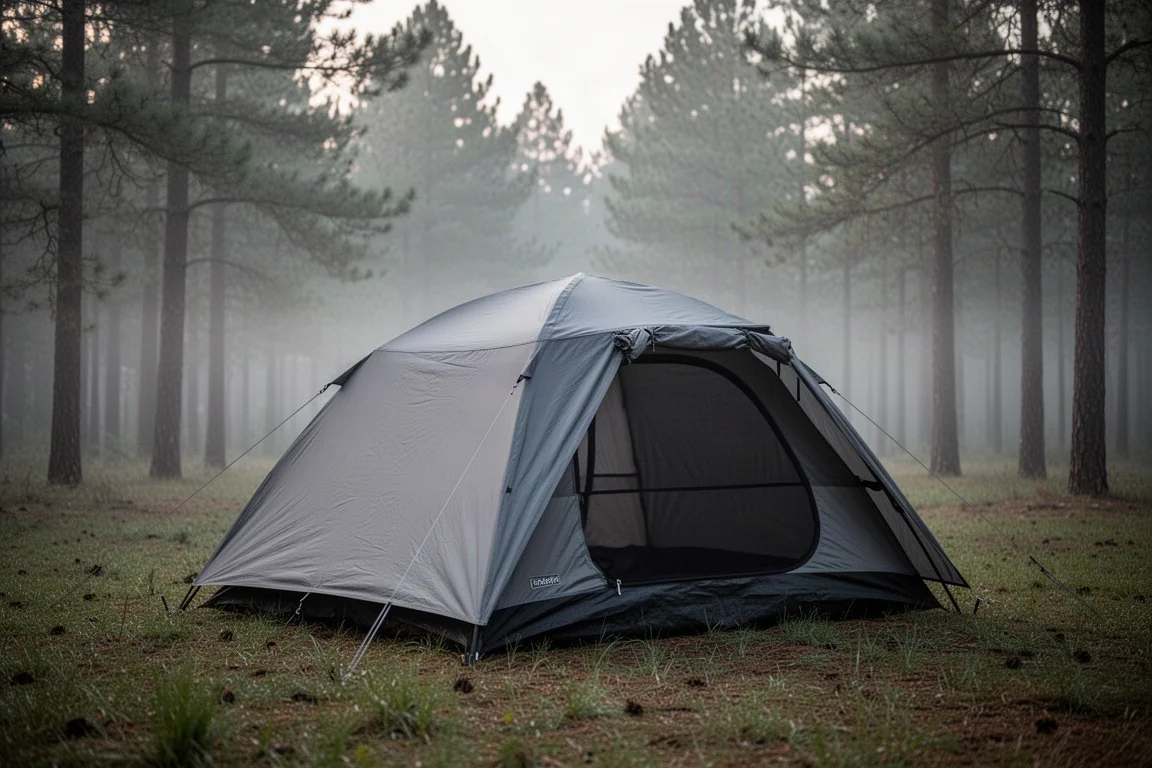
The Cosmito 2.0 is aimed at campers who want maximum interior volume for the money. It measures 6.9 feet long, 4.3 feet wide, and 3.6 feet tall, which is generous for a two-person tent at this price. Two doors mean each sleeper gets their own entry and their own covered space for gear between the inner body and the fly.
It is a partially freestanding design. The body stands on its own, but the doors have to be staked out, so it is not a shelter you can simply pick up and move once it is pitched. Packed size is 20.5 inches by 6.7 inches, and the weight on the scale is 5.2 pounds. That is manageable for short backpacking trips and easy to live with for car camping, but it is not a lightweight option for long-distance hikers counting grams. The tent is available in gray and coyote brown.
Main Strengths: Space, Materials, and Build Quality
The materials list is unusually specific for a tent at this price. The fly is a 20 denier plaid ripstop polyester, the floor is 70 denier nylon, and the mesh is 40 denier nylon. The tent uses YKK zippers, 7001 aluminum poles, and aluminum stakes. The inner body has taped seams, and the bathtub floor rises aggressively around the sides.
Build quality is where the Cosmito 2.0 makes its strongest first impression. Every seam looks clean, there are no loose threads, the seam tape is applied neatly, and the zippers run smoothly. Judged by eye and by hand, this is a well-assembled shelter, and the gap between how it is put together and what it costs is the most surprising part of the package.

The fly does not sit tight against the inner body. Each side pulls away, and the fly also has four guy line loops plus reinforced stakeout points. That offset creates a useful air channel between the two layers, which helps with airflow and with keeping condensation off the inner walls. The fly attaches to the body with buckles, so pitching and packing stay quick.
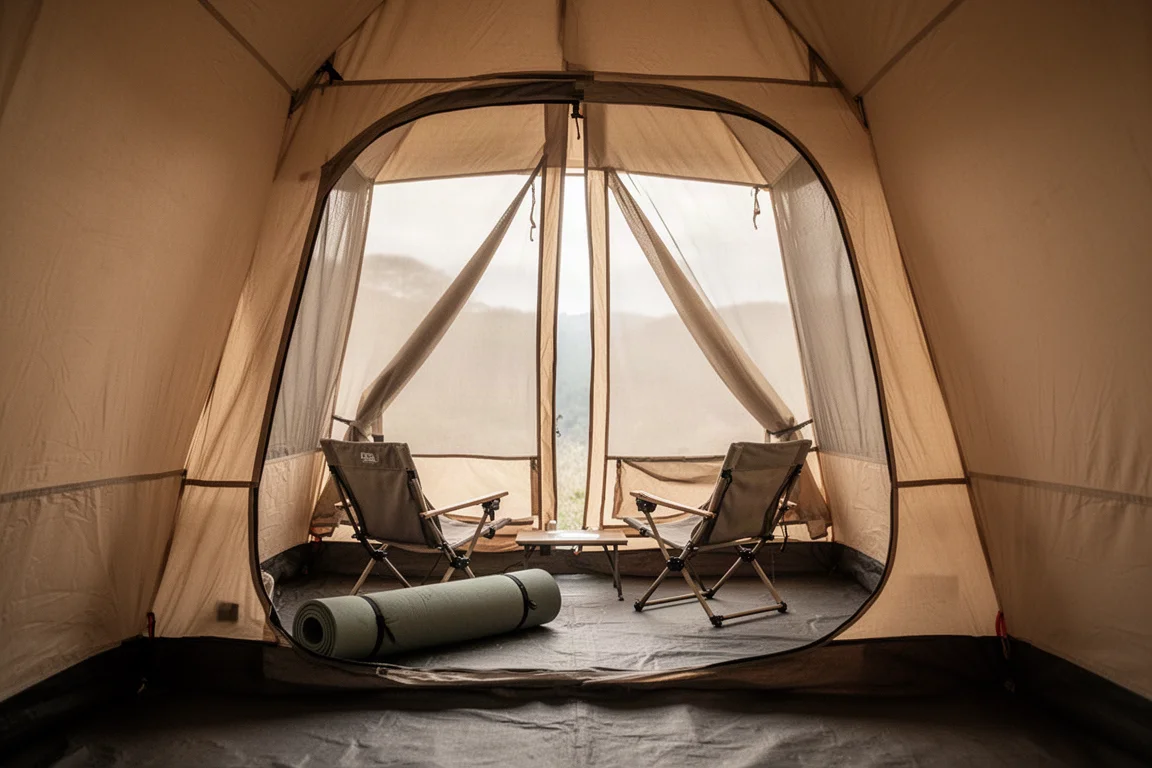
Inside, you get two large mesh pockets, one at each end, a hanging hook at the top, and a large amount of mesh for ventilation. There is also a decent amount of storage space for gear in the gap between the tent and the fly.
What Changed in the Cosmito 2.0
The brand lists four main differences between this version and the original, and each one targets a known weakness.
First, the tent structure was redesigned to match the brand’s Skyina model, which provides more interior space. Second, the top vents were removed entirely and relocated to the doors, which is the change that matters most given where the original leaked. Third, 3D interior pockets were added at the top, storage the older version did not have. Fourth, water resistance was improved from 1,500 millimeters to 2,000 millimeters.
Read together, those changes describe a tent that was reworked around its failure point rather than dressed up with new colors. The relocated vents are the clearest signal that the ventilation and water entry issues were taken seriously.
Setup and Interior Details
Setup is straightforward. You lay out the body, stake it if conditions call for it, insert the poles, buckle the fly into place, stake it out, and adjust the tension. The pole structure is a spider pole running across the top of the tent with a cross member, and the two doors use an upside-down T design.
The doors themselves are well thought out. Each one has a storm flap over the zipper, held in place by hook and loop tabs at the top and bottom. Two-way zippers let you open the door from either end, and unzipping the top section reveals a vent behind the flap. A small pole props that flap open to keep the vent clear, and the same arrangement appears on both sides. The door panels roll up and stow out of the way, individually or together.
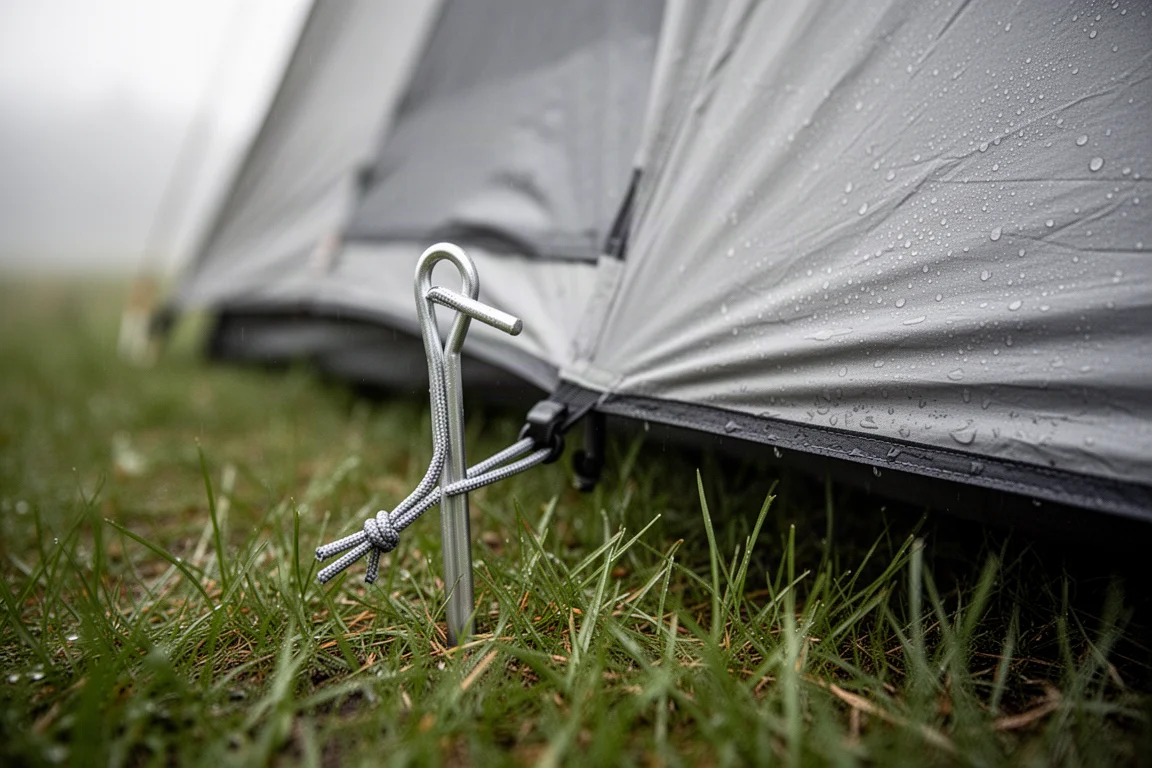
One minor annoyance shows up during pitching: the grommets are a little large for the pole tips, so a pole can pop out on one side while you are inserting the other. It adds a moment of fiddling rather than a real problem, and it does not change how the finished pitch performs.
Things to Consider Before Buying
Waterproofing is the honest open question. The original Cosmito had a genuine water problem, and while this version carries a higher water resistance rating and a completely different vent layout, a rating on paper is not the same as a night of steady rain. Anyone buying this tent should treat its wet-weather performance as something to verify on a short, low-stakes trip first.
Ventilation is the second unknown. The upper vents are gone, moved down to the doors, so the main defense against condensation is the gap between the fly and the inner body plus the extensive mesh. That offset does help, and the fly stays clear of the sides rather than pressing against them, but whether it is enough on a still, humid night is something only time outdoors will answer.
Weight is worth a second look as well. At 5.2 pounds this is a large tent rather than a light one, so backpackers who count ounces should weigh it against their own priorities. And if you own several OneTigris shelters, note that the storage bag is not labeled with the model name, which makes telling one bag from another harder than it needs to be.
Buying Advice
For campers who want a genuinely spacious two-person tent with two doors, two vestibule areas, solid hardware, and a $170 price, the Cosmito 2.0 is a compelling package. The materials, the seam work, and the smooth zippers all sit above what the price suggests, and the redesigned structure gives it the interior room that makes a two-person tent comfortable rather than merely adequate.
The sensible approach is to match the tent to the trip. For fair-weather camping, car camping, and short backpacking trips where 5.2 pounds is acceptable, it offers a lot of shelter for the money. For exposed multi-day routes or trips where rain is guaranteed, wait until its wet-weather behavior has been proven in the field, or bring a shelter with a longer track record. Buyers who prioritize low weight over interior volume should also look at lighter options before committing.
Conclusion
The Cosmito 2.0 is a clear attempt to fix what went wrong the first time. The structure is roomier, the vents have moved off the roof, the interior finally has proper pockets, and the water resistance rating has been raised. The build quality is excellent for the price, the setup is simple, and the fly’s offset from the body gives it a real advantage against condensation.
What remains is verification. If this tent stays dry in sustained rain, OneTigris will have a large, well-made, inexpensive two-person shelter that is hard for other brands to match. Until that is confirmed, it is a strong value with one important question still attached to it.
Product link
View more details for OneTigris Cosmito 2.0 Tent
This product is mentioned in the review. Check the specifications, options, and compatibility before buying.
View more details for OneTigris Cosmito 2.0 TentFurther reading
Related Reviews
Camping Tents
3F UL Gear Taiji Two-Person Tent Review: Field Waterproofing Results and Buying Advice
The Taiji pairs an attached fly with a removable inner, but sustained rain exposed untaped vent seams that need sealing before this shelter can be trusted.
Camping Tents
3FUL Gear Lanshan 2 Pro 4-Season Review: A Sub-$200 Single-Wall Trekking Pole Tent
An early look at the 3FUL Gear Lanshan 2 Pro 4-Season, covering its straightforward pitch, generous interior space, and the condensation and seam-sealing questions that come with any single-wall shelter.
Camping Tents
Alps Mountaineering Lynx 1-Person Tent Review: Big Value in a Small Budget Tent
A close look at the Alps Mountaineering Lynx 1-Person Tent, covering real interior dimensions, materials, setup time, ventilation limits, and who should buy it.