Camping Tents
OneTigris Black Tiger Nebula Review: A Huge Shell Tent for Overlanding and Motorcycle Camping
A practical look at the OneTigris Black Tiger Nebula, a very large shell tent built for overlanding and motorcycle camping, covering its materials, setup demands, and the trade-offs worth knowing before you buy.
Introduction
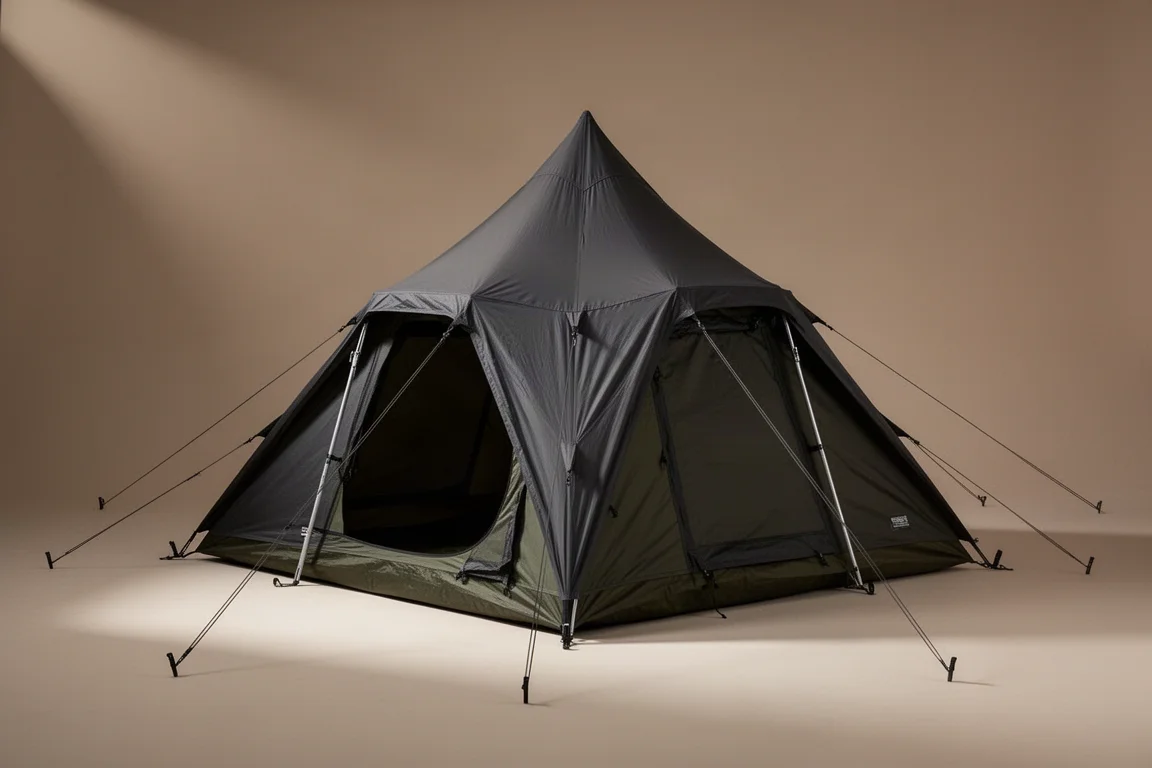
The OneTigris Black Tiger Nebula is not a typical backpacking tent, and it is worth being clear about that before anything else. It sits in the Black Tiger series alongside the Comida and the Stella, both of which follow more traditional backpacking layouts. The Nebula takes a different direction entirely: it is built for overlanding and motorcycle camping, and it is large and heavy in a way that is deliberate rather than accidental.
It is also a shell. There is no inner tent, no integrated sleeping compartment, and no floor-to-ceiling bug netting. What you get is a very big, fully sealed outer structure with two doors, two vestibules, a footprint, and a full pole set. OneTigris offers it in two colourways: black at around $270, and a licensed MultiCam version at around $780.
This review covers what the tent is made of, how it goes together, how much space it actually provides, and where the trade-offs sit for anyone considering it for vehicle-based camping.
Who This Tent Is For
The Nebula makes the most sense for people who camp from a vehicle rather than on their back. At 12.7 pounds packed, with a footprint measuring roughly 13.1 feet by 7.8 feet and a peak height of about 5.2 feet, it is designed to be carried by a motorcycle, a 4x4, or a car boot, not by a hiker covering distance.
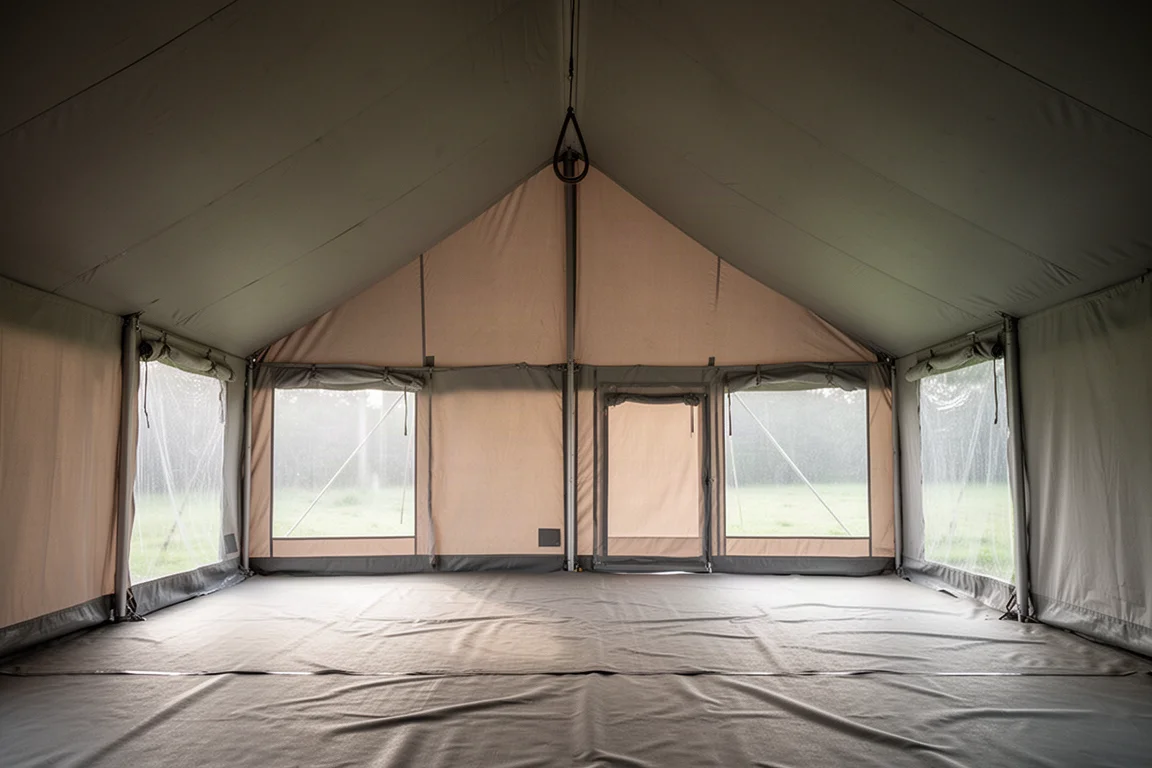
The interior volume is the headline. Because the shell is so large, there is room for a cot, a chair, a small table, and still enough space left over to pitch a separate bug inner if you want one. For riders and overlanders who want a base of operations at the end of a long day rather than a minimal shelter, that amount of room changes how a camp feels.
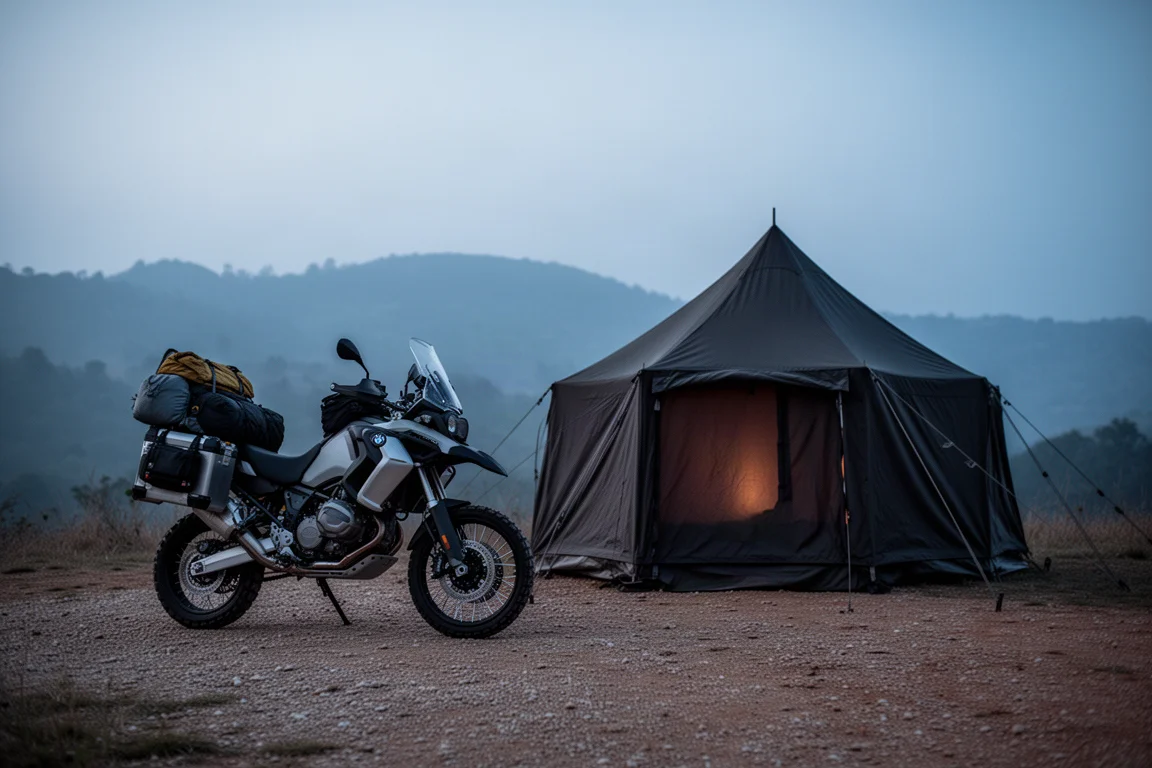
That lack of an inner tent is the single most important thing to plan around. There is no bug protection built in, so anyone camping where insects are active should expect to bring a standalone bug inner or accept the trade-off. The upside is flexibility: the empty interior can be configured however the trip demands.
Setup and Pitching Considerations
Pitching the Nebula is a genuine learning curve. The tent ships without instructions, and the brand’s own product photography shows the outside well but does not make the shape or internal layout especially clear. The poles also arrive in separate sleeves without colour coding, which makes it easy to mix up pieces if you are not careful. Keeping the sleeves labelled and repacking the poles into the same sleeve every time is the simplest way to avoid frustration.
The order that works best is to stake out the body first, then attach the external frame poles into their clips and grommets, then tension the guy lines for those frame poles, then insert the two longer poles and finally work around the tent making small adjustments. It is not difficult once the sequence is familiar, but it is not a tent you will pitch correctly on instinct the first time.
Wind is worth flagging. Because the structure is tall and uses a large number of guy line points, a breezy exposed pitch is the least forgiving place to learn the process. Arriving with time and daylight to spare is the sensible approach for the first few trips.
Design, Materials, and Build Quality
The materials are the strongest argument for the Nebula. The main body uses a 40 denier silicone treated nylon, the seams are sealed throughout, and the zippers come from YKK. The included footprint is a 68 denier polyester. OneTigris rates the tent at 3,000 mm of waterproofing.
The pole set runs to eight pieces: four external frame poles that clip along the outside of the shell, two longer poles, and two poles for the vestibule. Each vestibule corner has zippers and grommets, and the two vestibules can be rolled and stowed out of the way when you want them open. Behind them sit two mesh doors that also roll up, with nylon doors outside those and storm flaps covering the zipper runs.
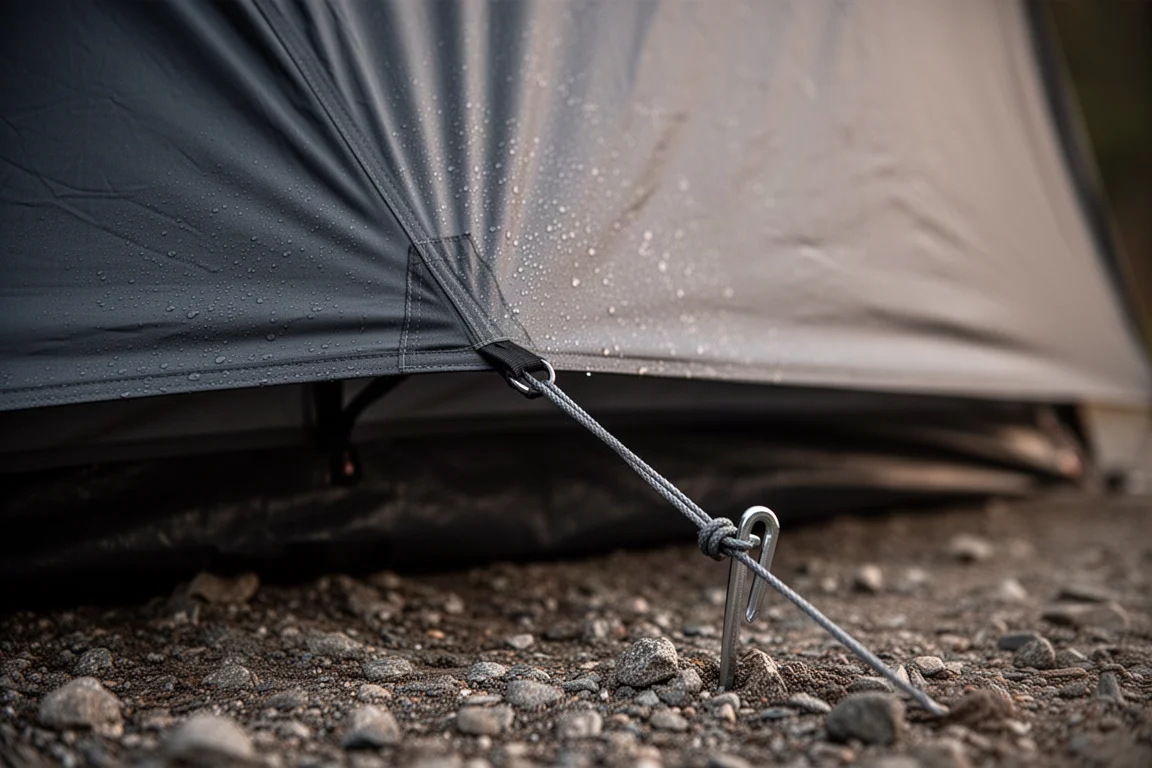
Smaller details are handled well. There are two vents built into the shell, a hanging hook at the centre of the roof, and two skirt panels that drop to the ground at the base. Build quality looks consistent across the structure, with no loose threads or unfinished stitching to speak of, and the nylon used here is the same class of material found on far more expensive tents.
Size, Weight, and Interior Space
There is no way around it: the Nebula is enormous. Two doors and two vestibules give it the feel of a small expedition shelter, and the peak height of about 5.2 feet means most adults can move around inside without stooping constantly. OneTigris describes it as at least a two person tent, and with the space available it comfortably fits two sleepers with room to spare, or a cot and a motorcycle if you are travelling on two wheels.
Weight is the counterbalance. At 12.7 pounds this is not a tent you want to carry far, and that is clearly the intent. Treated as a vehicle-supported shelter, the size-to-weight ratio is reasonable. Treated as a backpacking tent, it is simply the wrong product.
Things to Consider Before Buying
- No inner tent and no bug protection. This is a shell, so insect defence is something you supply yourself.
- Setup takes time, especially for the first several pitches, and no instructions are included.
- The poles are not colour coded and ship in separate sleeves, so organisation matters.
- At 12.7 pounds it is heavy, and the packed size reflects that.
- The black fabric absorbs heat in direct sun. It is not dramatically different from a lighter coloured tent, but it does retain a little more warmth rather than reflecting it away.
- The licensed MultiCam version costs significantly more than the black version, which is a materials and licensing premium rather than a functional upgrade.
Cold Weather and Warm Weather Use
The Black Tiger series is designed with cold weather camping in mind, and the Nebula’s sealed shell, skirt panels, and extensive guy line points fit that brief. The company also positions it as the sturdiest model in the series based on its number of guy line attachment points, which is a claim worth testing over time rather than taking at face value.
At the same time, the large mesh doors mean the tent is not limited to winter. With the vestibules open and airflow moving through, it can work in warmer conditions. The practical consideration is sun exposure and fabric colour, which is a minor factor rather than a deal breaker.
Buying Advice
At around $270 for the black version, the Nebula is priced well below what its materials and dimensions would suggest. The licensed MultiCam version at around $780 is a different proposition entirely, and that jump buys a specific fabric rather than more tent.
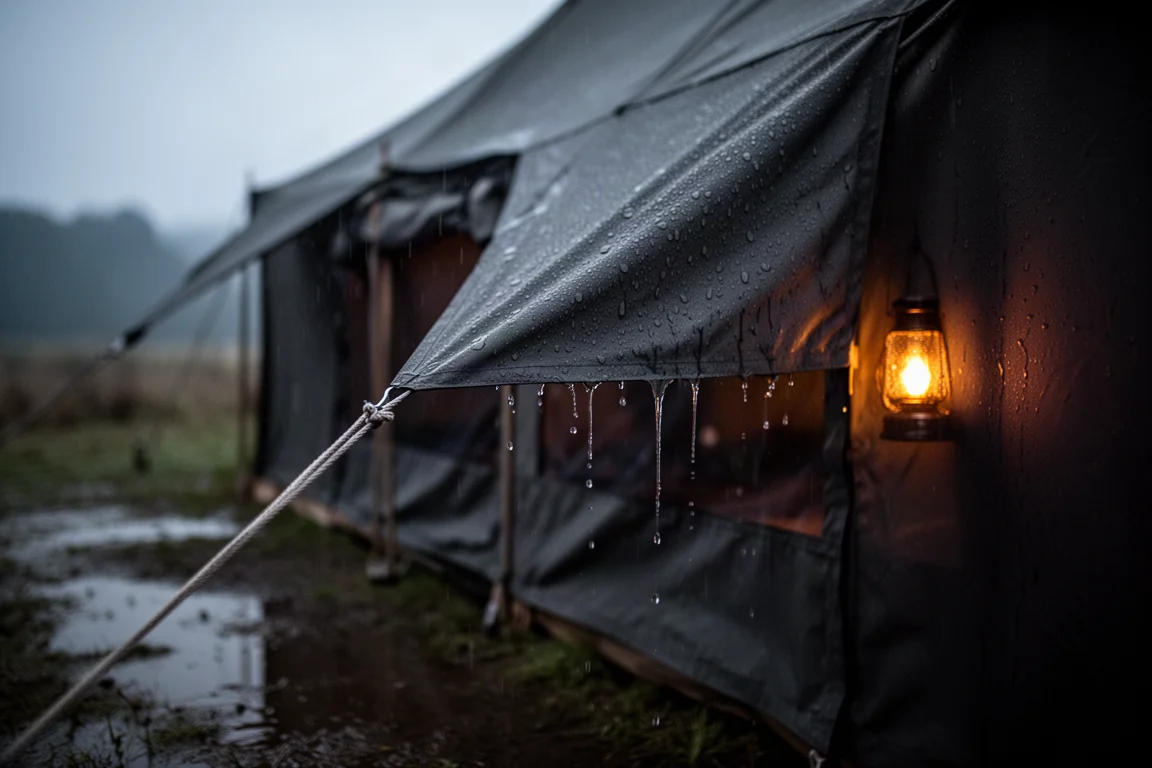
If you camp from a vehicle, ride a motorcycle, or set up a base camp for several nights at a time, the Nebula offers a very large weather-protected space for the money, and the setup effort becomes routine after a handful of trips. If you need a tent you can carry on your back, or you want integrated bug protection out of the box, this is not the right choice, and a more conventional double-wall design will serve you better.
Conclusion
The OneTigris Black Tiger Nebula is a specialised tent that does one job unusually well: it provides a huge, well-sealed, well-made shell for overlanding and motorcycle camping at a price that is hard to argue with. It asks for patience during setup and a willingness to build your own sleeping arrangement inside it, and in return it delivers space and materials that few tents in this bracket can match. For the right camper, that is a straightforward trade.
Product link
View more details for OneTigris Black Tiger Nebula
This product is mentioned in the review. Check the specifications, options, and compatibility before buying.
View more details for OneTigris Black Tiger NebulaFurther reading
Related Reviews
Camping Tents
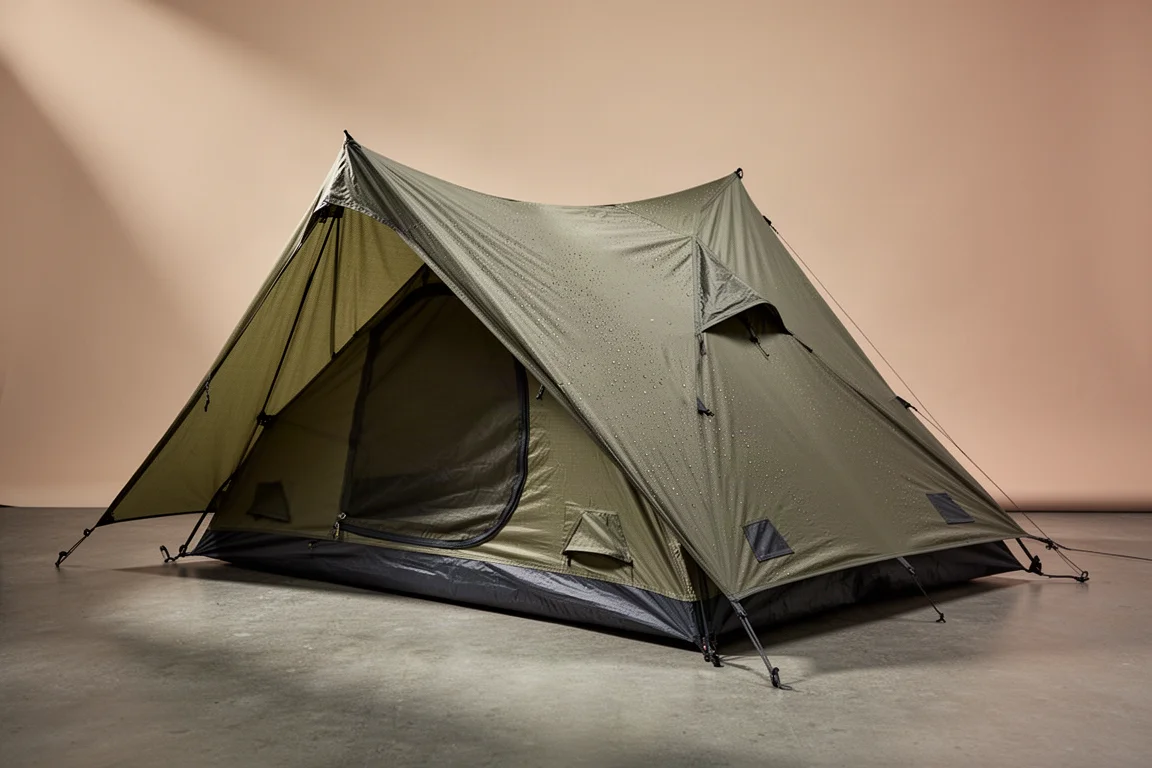
3F UL Gear Taiji Two-Person Tent Review: Field Waterproofing Results and Buying Advice
The Taiji pairs an attached fly with a removable inner, but sustained rain exposed untaped vent seams that need sealing before this shelter can be trusted.
Camping Tents
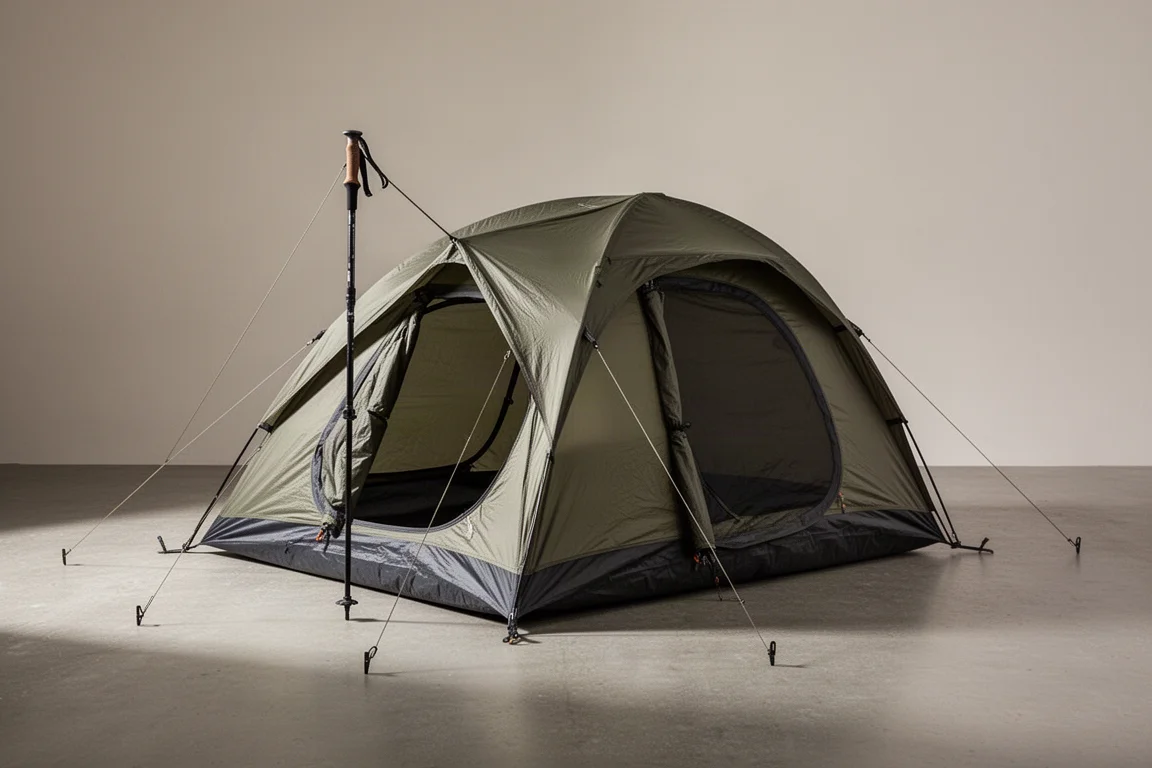
3FUL Gear Lanshan 2 Pro 4-Season Review: A Sub-$200 Single-Wall Trekking Pole Tent
An early look at the 3FUL Gear Lanshan 2 Pro 4-Season, covering its straightforward pitch, generous interior space, and the condensation and seam-sealing questions that come with any single-wall shelter.
Camping Tents
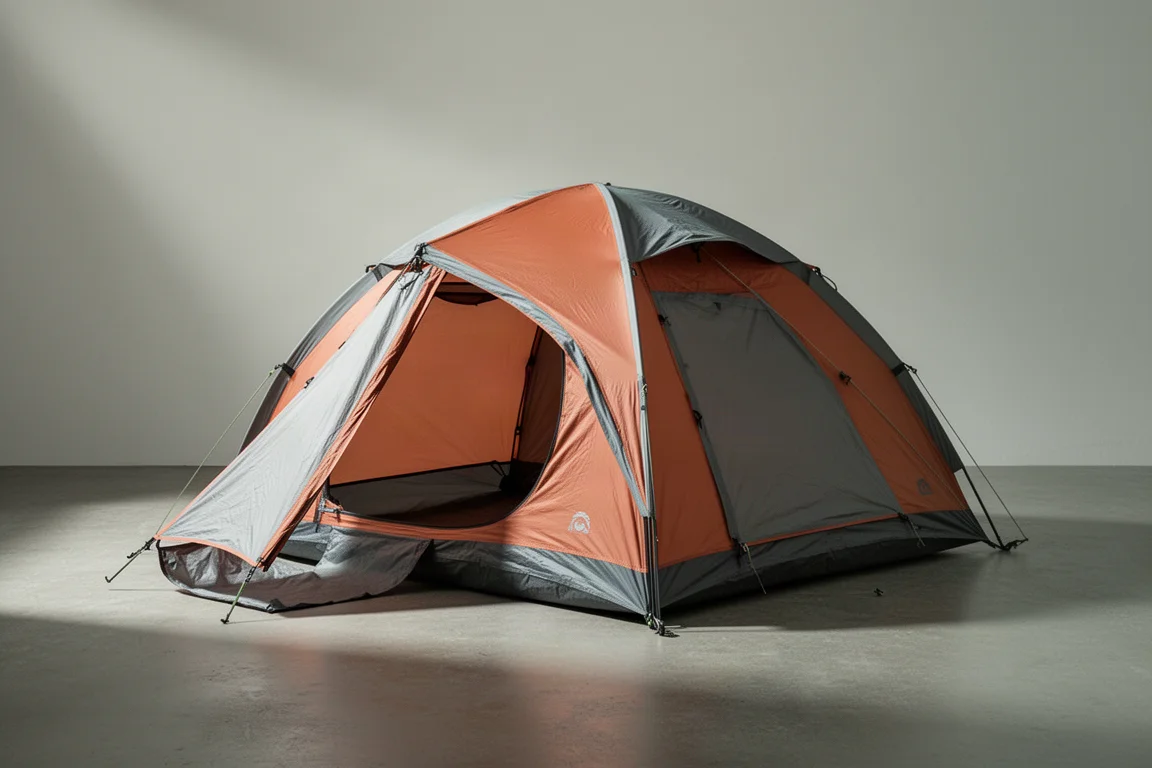
Alps Mountaineering Lynx 1-Person Tent Review: Big Value in a Small Budget Tent
A close look at the Alps Mountaineering Lynx 1-Person Tent, covering real interior dimensions, materials, setup time, ventilation limits, and who should buy it.