Camping Tarps
OneTigris 9.5 ft x 9.5 ft Tarp Review: Light and Packable, but Not Weatherproof
A lightweight 20D silnylon square tarp with 19 tie-off points and a 2.2 lb packed weight, undermined by leaking external guy-out points.
Introduction
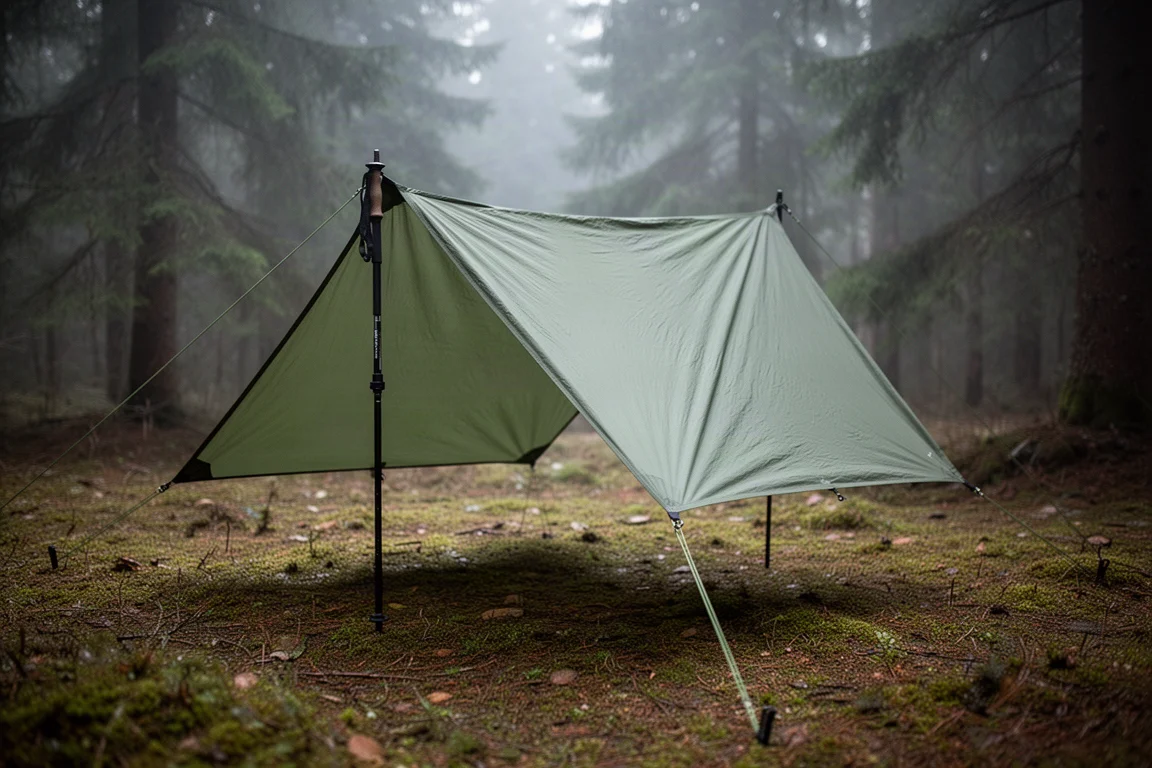
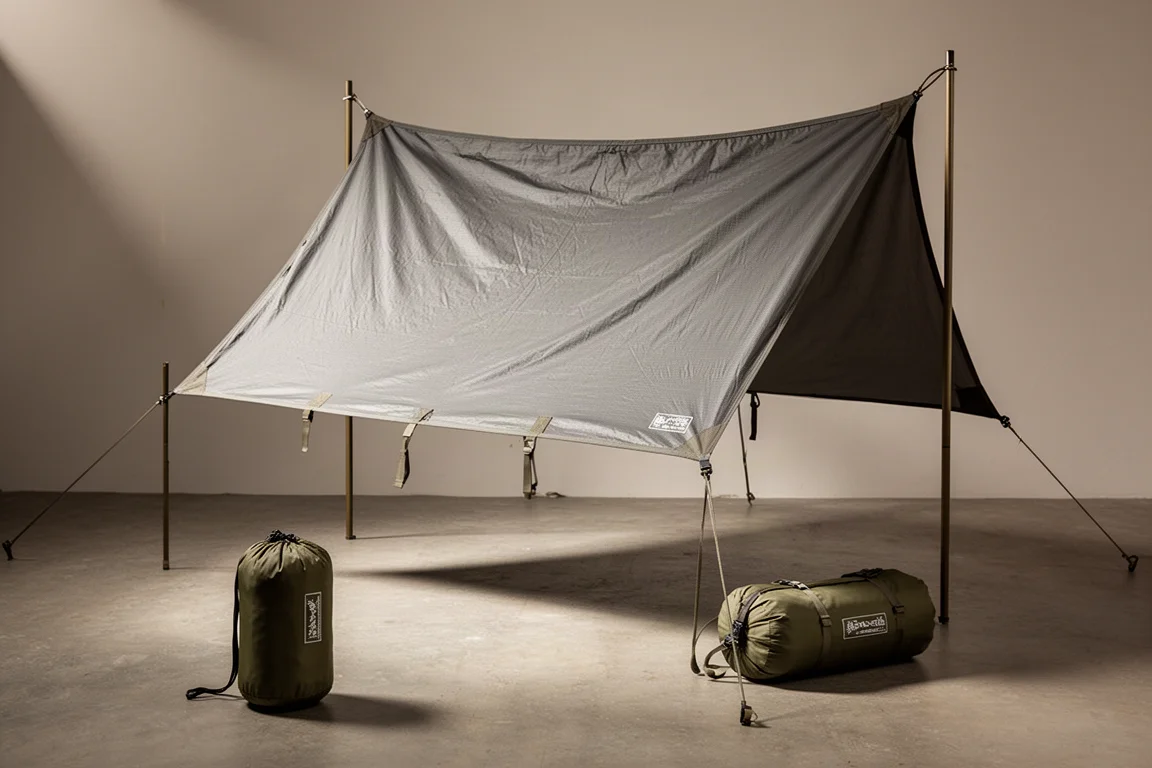
The OneTigris 9.5 ft x 9.5 ft tarp is a square silnylon shelter aimed at lightweight campers who want flexible coverage for one or two people. On paper the package looks promising: a 20D silicone-treated nylon fabric with a claimed 2,000 mm hydrostatic head rating, 19 tie-off points, and a complete kit that weighs 2.2 pounds.
The problem is water. This tarp leaks at its external guy-out points, and it does so in sustained light rain as well as in moderate to heavy rainfall. That is a fundamental failure for a shelter, and it shapes everything else in this review.
What follows is a breakdown of what the tarp does well, where it falls short, and how to check any tarp of this type before you depend on it outdoors.
What the OneTigris 9.5 ft x 9.5 ft Tarp Offers
The headline specifications are worth listing in full before any assessment.
- Square 9.5 ft x 9.5 ft footprint
- 20D silicone-treated nylon with a claimed 2,000 mm hydrostatic head rating
- 19 tie-off points spaced roughly 2.3 ft apart
- 2.2 lb total packed weight, including eight guy lines, eight stakes, and the storage bags
- Packed size of approximately 11.8 in x 5.5 in
- One color option: green
- Around $95 at retail, with listings commonly closer to $60
Those figures place the tarp in the lightweight end of the general camping market rather than the specialist ultralight bracket. The 2.2 pound number covers the complete kit, so swapping the supplied lines and stakes for lighter cordage and pegs would bring the total under two pounds.
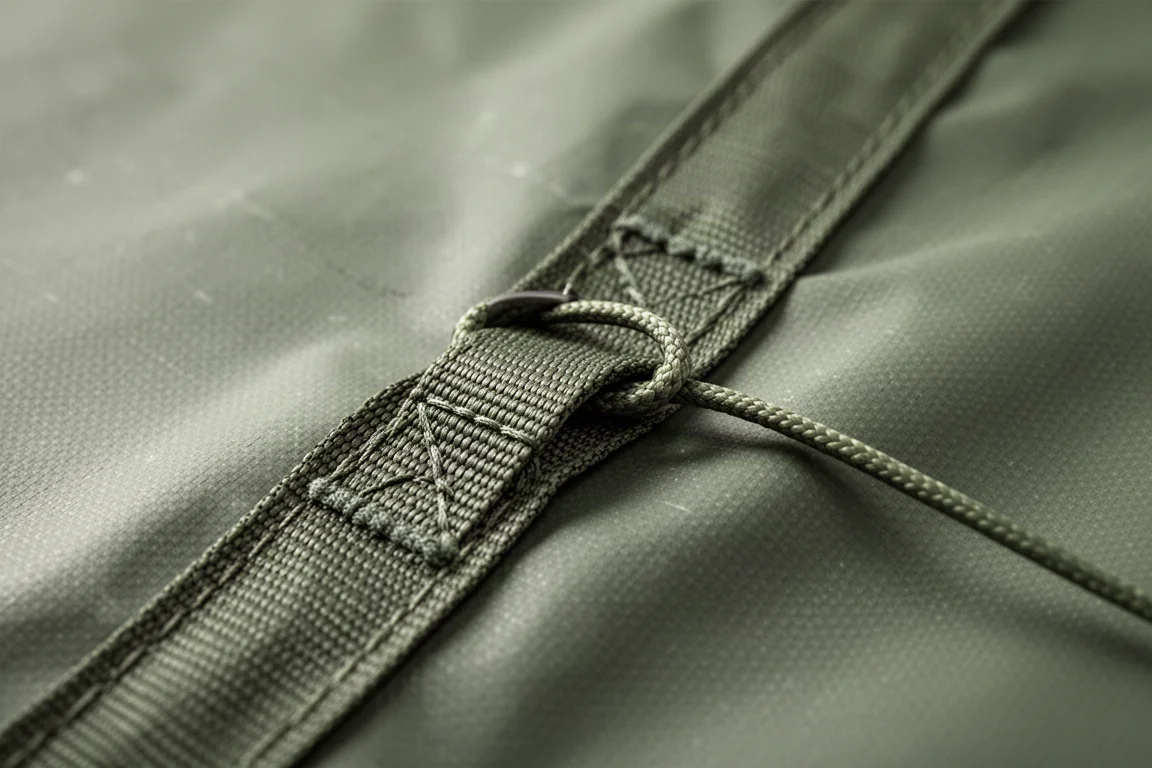
The fabric is 20D silicone-treated nylon, chosen for low weight and a small packed size. Tie-off points are spaced roughly 2.3 feet apart around the perimeter and across the body of the tarp, which is what makes the wide range of pitch configurations possible.
Who This Tarp Is For
A 9.5 ft x 9.5 ft square is a practical size for one or two people. It gives a single camper generous living space under cover, and it can shelter two people in a simple A-frame pitch when conditions are calm. Because the shape is square rather than rectangular, it can be set up in a wide range of configurations, from a low storm shelter to an open sunshade.
That flexibility is the main reason a tarp like this appeals. It is also the reason the waterproofing failure matters so much. The whole point of a tarp is to keep rain off, and the value of every other feature collapses if water comes through the fabric.
It is worth being clear about who this shelter suits today. Campers who want a light, packable, highly configurable square tarp will find the layout appealing, but only if they are prepared to test it thoroughly and treat the leak as a genuine risk rather than a minor annoyance.
Main Strengths
Size and pitch options come first. The square footprint gives plenty of coverage for one to two people, and the number of usable tie-off points means the tarp can be set up in many different ways depending on terrain and weather.
The fabric itself is a genuine strength. Silicone-treated nylon is light, packs down small, and the material here should be inherently water resistant. The leaking in this case comes from the guy-out points rather than from water passing through the fabric.
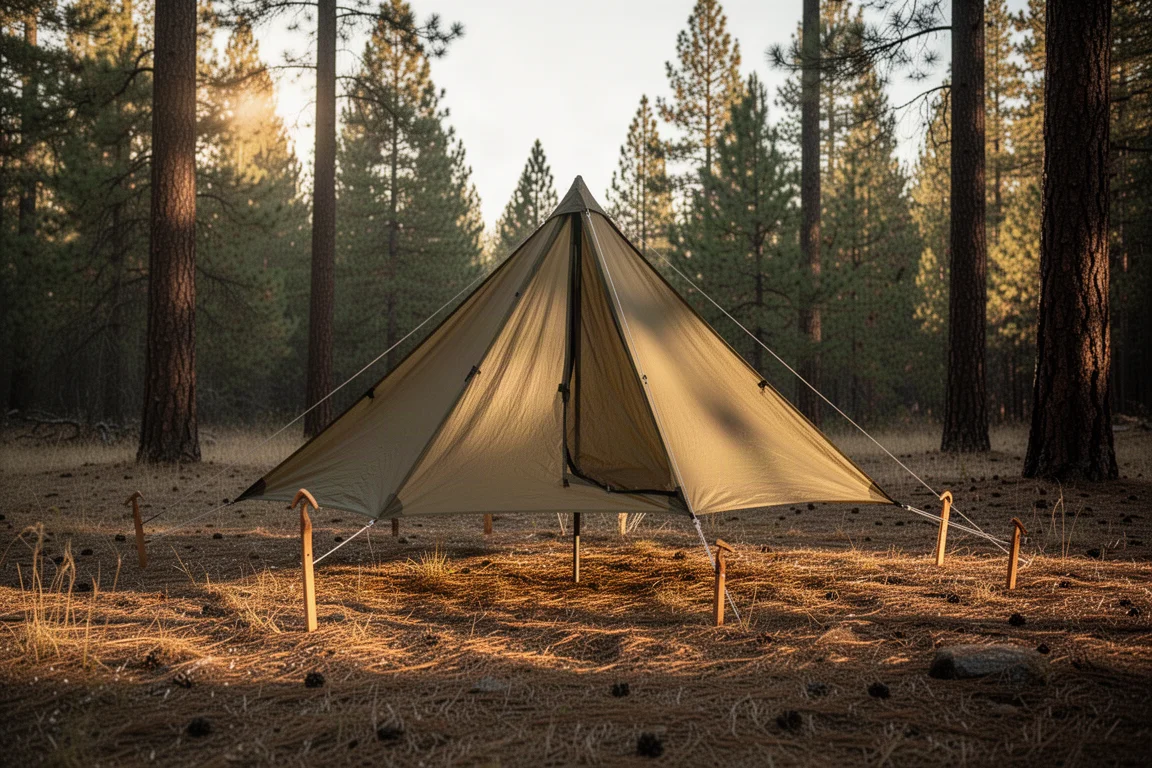
Weight is another plus. At 2.2 pounds for the entire package, including lines and stakes, the tarp is easy to carry, and it can be trimmed below two pounds with lighter accessories.
Wind performance holds up well too. The tarp stays stable and controlled in winds up to around 25 mph, and it looks capable of handling more than that.
Stretch is well managed for a silnylon product. Silicone-treated nylon has a reputation for stretching, and some shelters made from it sag noticeably once they are pitched and loaded. This tarp holds its shape far better than that. Some movement is normal, and the guy lines will stretch a little, but the fabric does not sag dramatically.
The tie-off points are a good size, and each one is reinforced, which adds strength and makes the tarp easier to work with than shelters that use very small, fiddly attachment loops. The included stuff sack is also generously sized, so the tarp can be packed away wet and in a hurry without a fight.
Finally, the green color is a sensible, understated choice for a shelter.
Things to Consider Before Buying
Waterproofing is the decisive issue. This tarp leaks from all three external guy-out points on the top panel, and it leaks heavily. The failure shows up in sustained light rain and continues in moderate to heavy rainfall, with water pushing through the fabric, running down the walls, and dripping onto whatever is underneath.
Each of those points is reinforced, and the inner side is seam taped, but the seam tape does nothing to stop the leaking. Because the problem appears at every one of those three points rather than at a single spot, it points to a manufacturing defect in the batch rather than an isolated fault.
Price is the second concern. At the roughly $95 retail figure, the tarp is difficult to justify. Lighter and stronger tarps with better waterproofing are available from established manufacturers with long track records in shelter construction, and some of them cost less. At the roughly $60 street price the proposition would be reasonable if the tarp stayed dry, but it does not.
The supplied guy lines are the third weak point. They are highly fibrous, which makes them catch on sticks, bark, and anything else on the ground, and they tangle easily with themselves. Replacing them with simple 550 cord or another lightweight line is a practical step for anyone who keeps the tarp.
How to Test the Tarp Before You Trust It
If you already own this tarp, or any tarp you have not yet used in real weather, test it before you rely on it. Pitch it in the yard and leave it out through a steady rain, then check the underside of every guy-out point, seam, and reinforced patch for moisture.
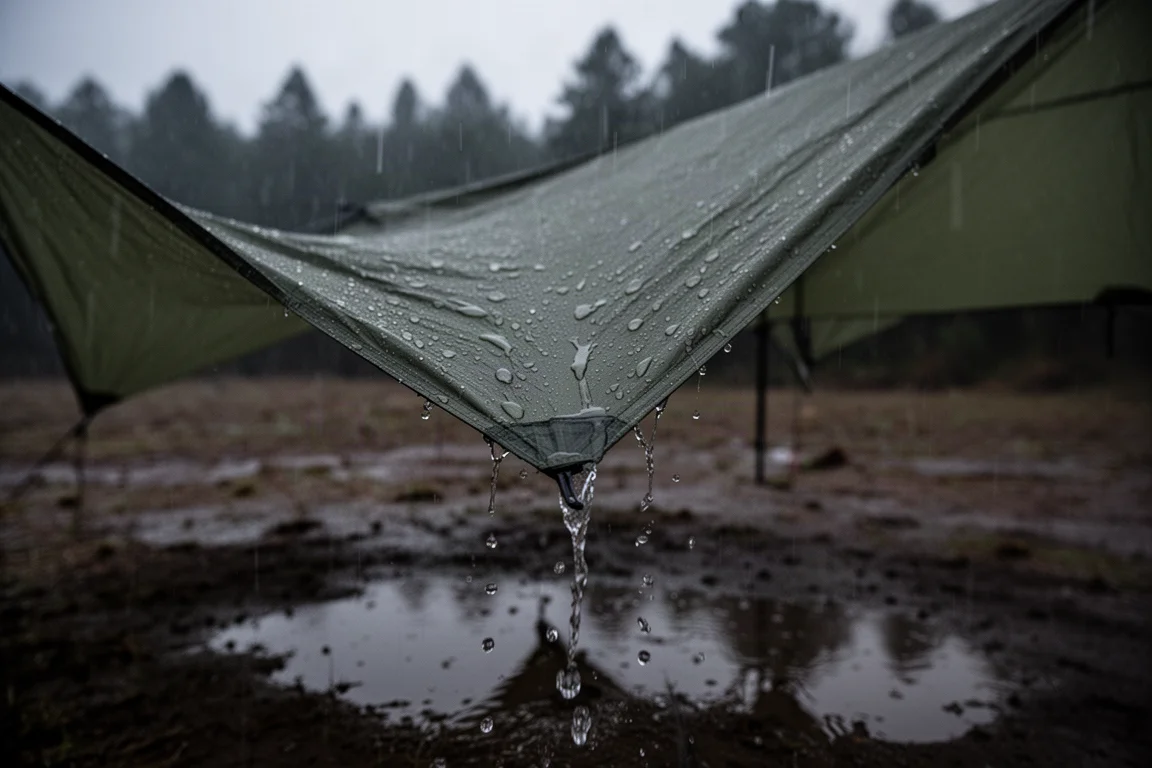
A garden hose test works as well when rain is not forecast. Run water over the top panel for several minutes, paying particular attention to the external attachment points on the ridge, and watch for drips forming underneath. Repeat the test after the tarp has been pitched and tensioned a few times, since leaks often appear once the fabric has been stressed.
Testing at home costs an afternoon. Discovering the same fault at a campsite in bad weather costs a great deal more.
Price and Value Compared With the Wider Market
At around $95 retail, this tarp competes with shelters from manufacturers who have spent years refining waterproof construction. Lighter options exist, stronger options exist, and better sealed options exist, which makes the retail price hard to defend even before the leak is taken into account.
At the roughly $60 street price the calculation changes slightly but the conclusion does not. A leaking tarp is not a bargain at any price, because the shelter fails at the one job it has to perform.
Buying Advice
The recommendation here is straightforward: do not buy this tarp. The leaking at the external guy-out points is significant, appears across all three attachment points, and shows up in ordinary rain rather than only in extreme conditions. Even setting the leak aside, the retail price is high for what the product delivers in weight and strength.

If you already own one, waterproof test it thoroughly before any serious trip, and treat any moisture under those top attachment points as a reason to leave it at home. If you are shopping for a lightweight square tarp for one or two people, look for shelters from manufacturers with a long history of building waterproof tarps, and check that the guy-out points are sealed as well as reinforced. Paying a little more for proven weather protection is a better use of money than saving on a shelter you cannot trust in the rain.
Conclusion
The OneTigris 9.5 ft x 9.5 ft tarp gets several things right. It is light, it packs small, it offers plenty of pitch options, and its silnylon fabric manages stretch well. Those strengths are real, and they are the reason the waterproofing failure is so disappointing.
A tarp has one essential job: keeping rain off the person underneath. This one does not do it reliably, and until that changes, it is difficult to recommend for any trip where weather matters.
Product link
View more details for OneTigris 9.5 ft x 9.5 ft Tarp
This product is mentioned in the review. Check the specifications, options, and compatibility before buying.
View more details for OneTigris 9.5 ft x 9.5 ft TarpFurther reading
Related Reviews
Camping Tarps
Aqua Quest Defender vs Safari 20x13: Which Large Tarp Fits Your Setup?
A side-by-side look at Aqua Quest's two 20 ft by 13 ft tarps: the 9.2 lb, 20,000 mm Defender and the 4.5 lb, 5,000 mm Safari, plus sizing, setup, and warranty details worth knowing.
Camping Tarps
AquaQuest Guide Series Tarp 13 ft x 10 ft Review: Light, Waterproof, Storm Ready
A detailed look at the AquaQuest Guide Series 13 ft x 10 ft tarp, covering its 5,000 mm waterproof rating, 1 lb 6.3 oz weight, 17 tie-off points, and the trade-offs worth knowing before buying.
Camping Tarps
Fjällräven Abisko Tarp Review: Premium Ultralight Materials, Unreliable in Rain
The Fjällräven Abisko Tarp pairs a 1.1 lb packed weight with 40D silicone-treated nylon, but long-term testing found it leaks in steady rain and sags badly once wet.