Camping Shelters
Fjallraven Abisko Tarp Review: A Lightweight 10 x 10 Shelter Built for Rough Weather
A close look at the Fjallraven Abisko Tarp, a 1.1 lb square shelter in 40D ripstop nylon with a 3,000 mm hydrostatic head and 17 reinforced tie-off points.
Introduction
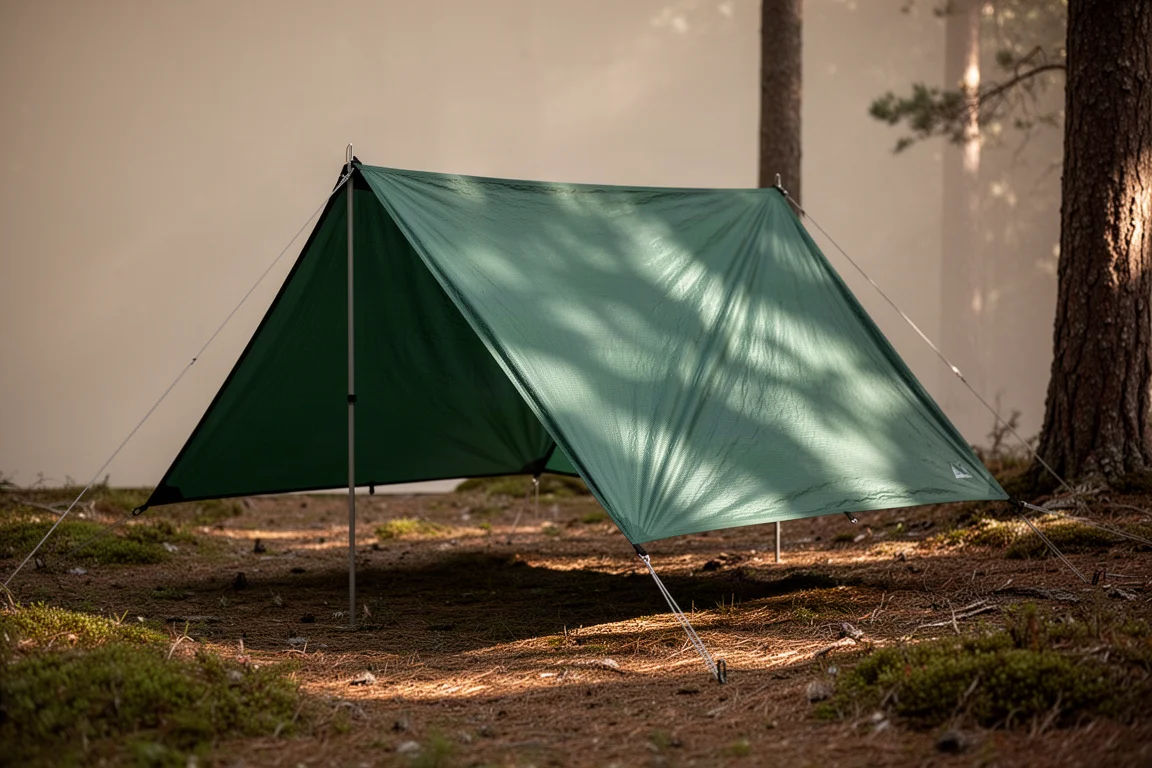
The Fjallraven Abisko Tarp is a 10 foot by 10 foot square shelter for campers who want serious storm coverage without serious weight. Fjallraven is better known for trekking trousers, jackets, and packs, so the tarp is one of the quieter pieces in the range. It comes in two sizes: the standard 10 foot by 10 foot model covered here, and a larger version measuring roughly 14.5 feet long by 11.5 feet wide.
The standard size retails at $164, and the larger version retails at $240. The tarp is genuinely expensive for what looks like a simple sheet of fabric, and there are certainly more expensive tarps on the market. Availability in the United States has also been inconsistent, so importing from a UK retailer is a practical route for buyers who want one without waiting.
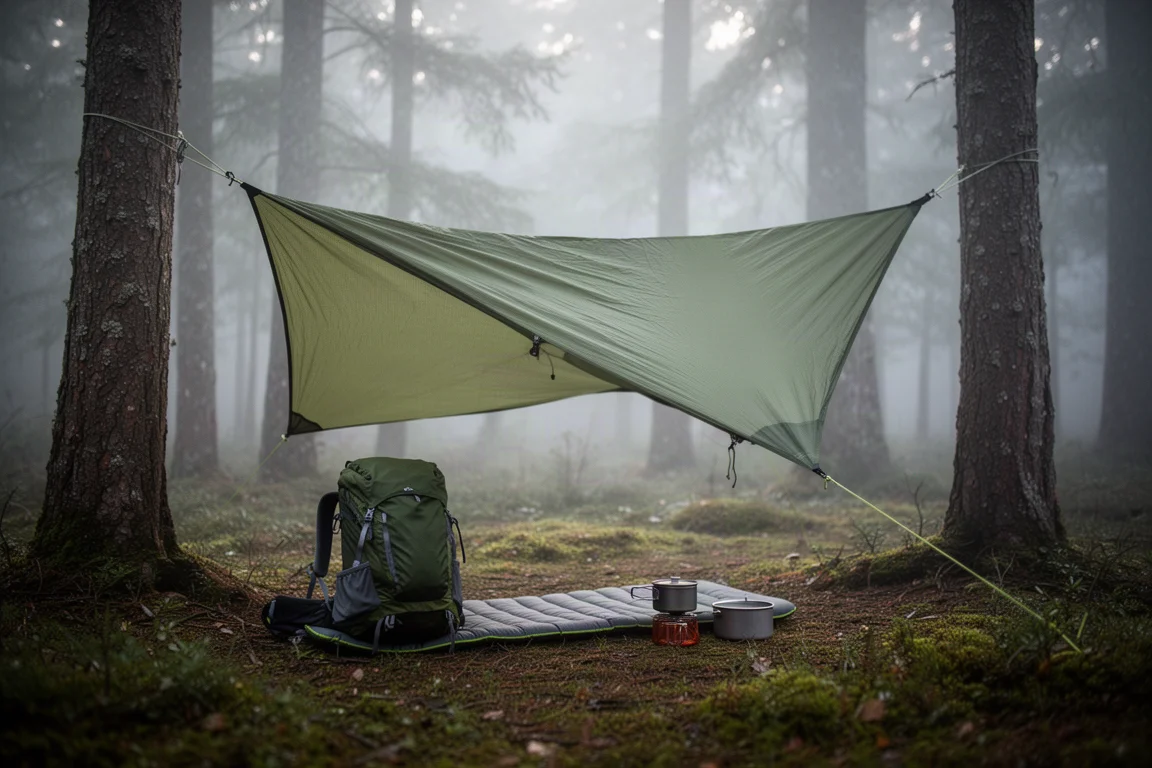
The sections below cover the materials, the coverage, the tie-off system, and the practical trade-offs worth weighing before you commit to one.
Who This Tarp Is For
This is a shelter for campers who pitch with trekking poles, paddles, or trees rather than a freestanding tent. The square footprint makes it a natural fit for woodland camping, where a 10 foot by 10 foot canopy can be pitched in several configurations depending on the weather and the trees available.
It also suits anyone who counts grams. At 1.1 pounds for the standard size, the Abisko Tarp disappears into a pack. The larger version weighs 1.9 pounds, which is still light for the amount of covered space it delivers.
Materials and Construction Quality
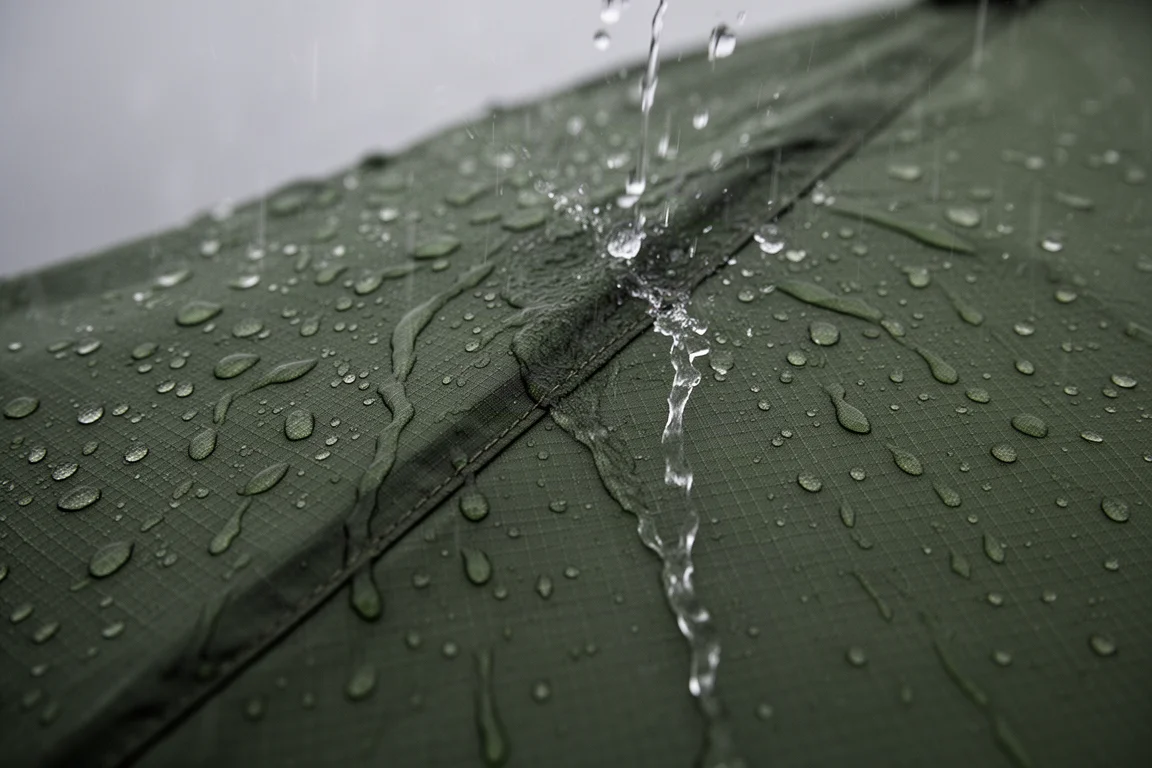
The canopy is made from a 40D triple ripstop nylon with a 3,000 mm hydrostatic head rating. That combination gives the fabric a noticeable amount of stretch, which is an advantage rather than a flaw. A shelter that gives slightly in strong wind is far less likely to tear than one that stays completely rigid, and the material works with the weather instead of against it.
There is no seam tape anywhere on the tarp. Instead, the stitching uses very small needles, and the thread itself swells when it gets wet, filling the gaps between stitches so water cannot pass through. That removes the most common failure mode in older shelters, where taped seams dry out, peel, and eventually leak. It also means the tarp should hold up over years of use rather than degrading quietly in storage.
The stitching is tight and even across the whole canopy, and the materials feel premium in the hand. The closest comparison in feel and craftsmanship is the tarp range from Hilleberg.
Size, Coverage, and Weather Protection
Ten feet by ten feet is a lot of covered space, and the square shape is efficient to pitch. With the sides pulled down, the canopy can be used to block driving rain and snow, and the interior stays roomy enough to sit, cook, and keep gear out of the weather. In genuinely bad conditions, a well-pitched tarp of this size keeps you dry underneath it.
The stretch in the nylon matters here. When the fabric relaxes or takes on water, the pre-attached lines and adjusters let you take up the slack quickly and keep the pitch taut.
Tie-Off Points, Guy Lines, and Setup
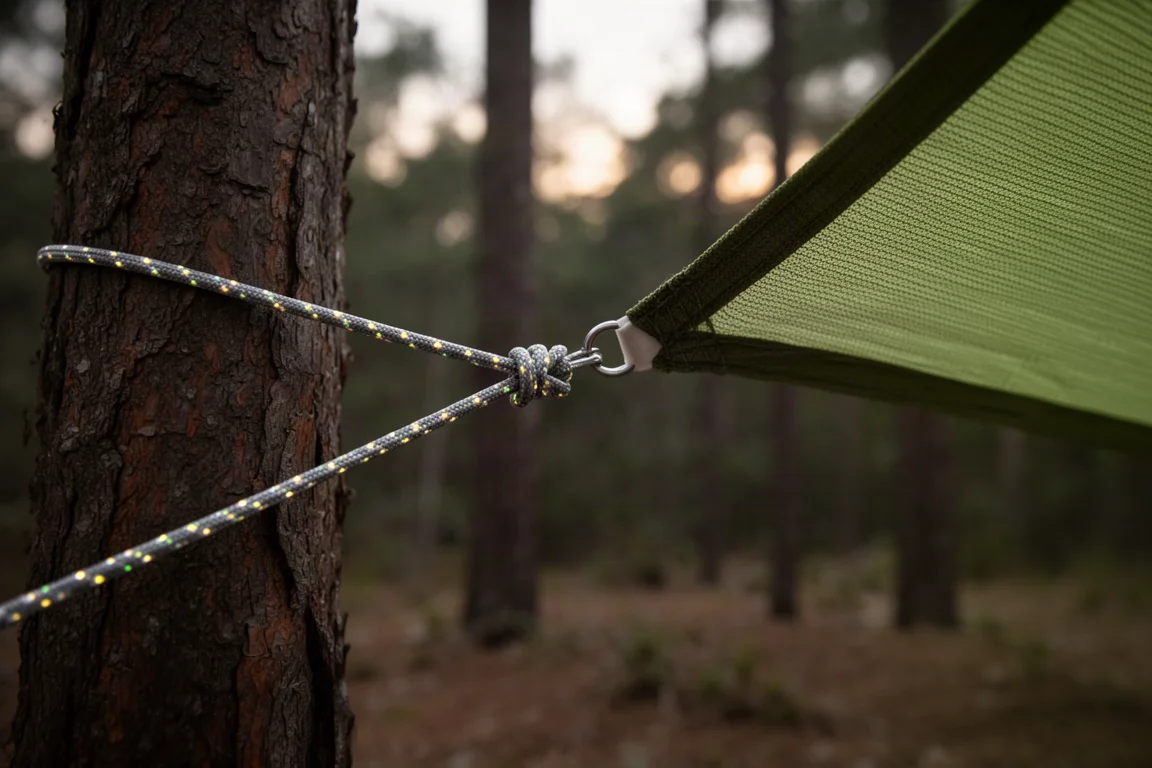
Seventeen tie-off points run around the tarp, five along each side plus the centre and perimeter positions. Each attachment point is reinforced with clearly visible stitching, so they should tolerate repeated tensioning without pulling free. That count is enough to achieve most common tarp configurations, and a square canopy is forgiving to set up even in a hurry.
The included guy lines are 2 mm Dyneema, reflective, and already attached with adjusters fitted. At 7.5 feet they are shorter than the 9 to 10 foot lines many campers prefer, because longer lines give more freedom when anchoring to trees that sit further from the pitch. Keeping one long spare line of 15 to 20 feet in your cordage bag covers the rare occasions when every anchor point is well away from the shelter.
It is also worth noting that most tarp makers do not include guy lines at all, so finding them in the bag is a genuine bonus.
Things to Consider Before Buying
The colour range is a single option: pine green. That works beautifully in woodland, where the tarp blends into the ground and the bushes behind it, but it is not a high-visibility shelter.
Guy line length is the other point to plan around. If you regularly pitch in terrain where the trees are far apart, budget for a longer spare line from the start.
Availability deserves a check before you commit. The tarp has been difficult to source from US sellers, so buyers may need to import from a UK retailer, which adds shipping cost and delivery time to the purchase.
Buying Advice
If your priority is a light, durable, storm-capable square tarp and the budget stretches to it, the Abisko Tarp is a well-made option. The materials feel premium, the construction is clean, and the absence of seam tape points to a long service life rather than a slow decline.
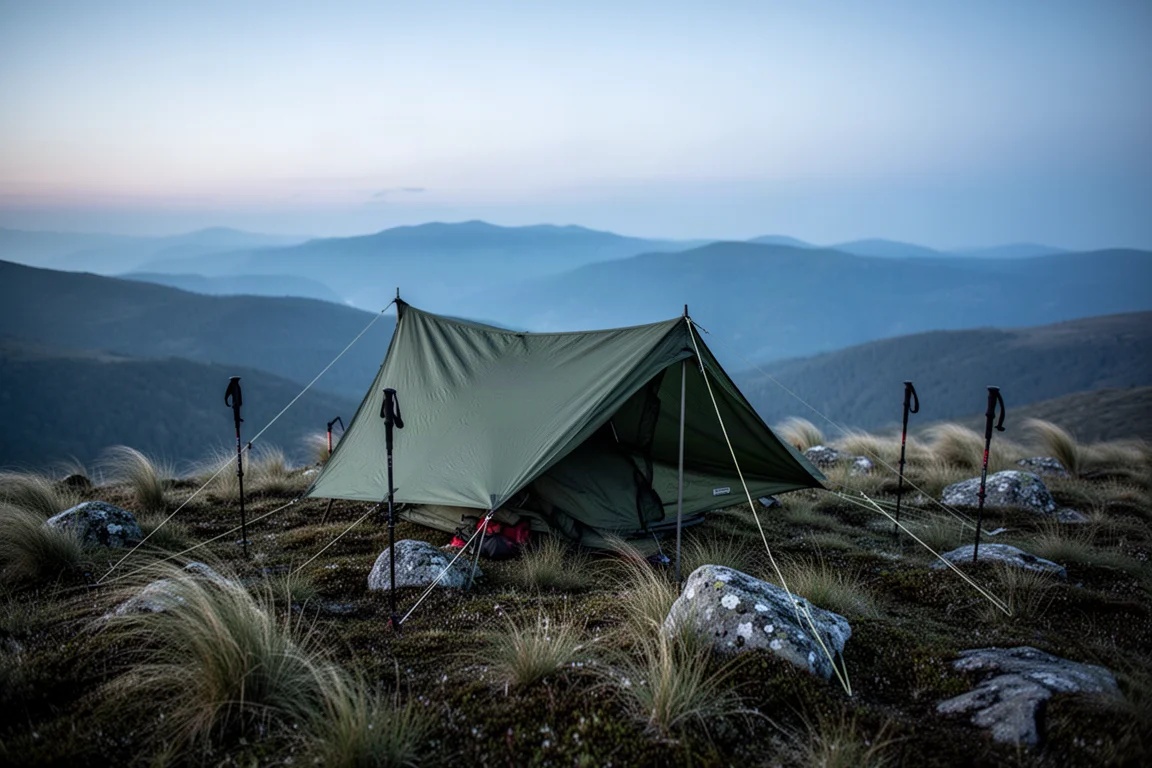
The larger version makes sense for groups or basecamp use, where the extra coverage is worth the additional 0.8 pounds. For solo and two-person camping, the 10 foot by 10 foot size is the more versatile choice, and it remains light enough to carry without thinking about it.
Conclusion
The Fjallraven Abisko Tarp is an expensive tarp that justifies its price through materials, construction, and a design that ages well. Its 40D triple ripstop nylon, 3,000 mm hydrostatic head rating, and 17 reinforced tie-off points make it a capable three-season and winter shelter, while 1.1 pounds keeps it packable. The main compromises are the single colour option, the short 7.5 foot guy lines, and the patchy availability in the United States.
Product link
View more details for Fjallraven Abisko Tarp
This product is mentioned in the review. Check the specifications, options, and compatibility before buying.
View more details for Fjallraven Abisko TarpFurther reading
Related Reviews
Camping Shelters
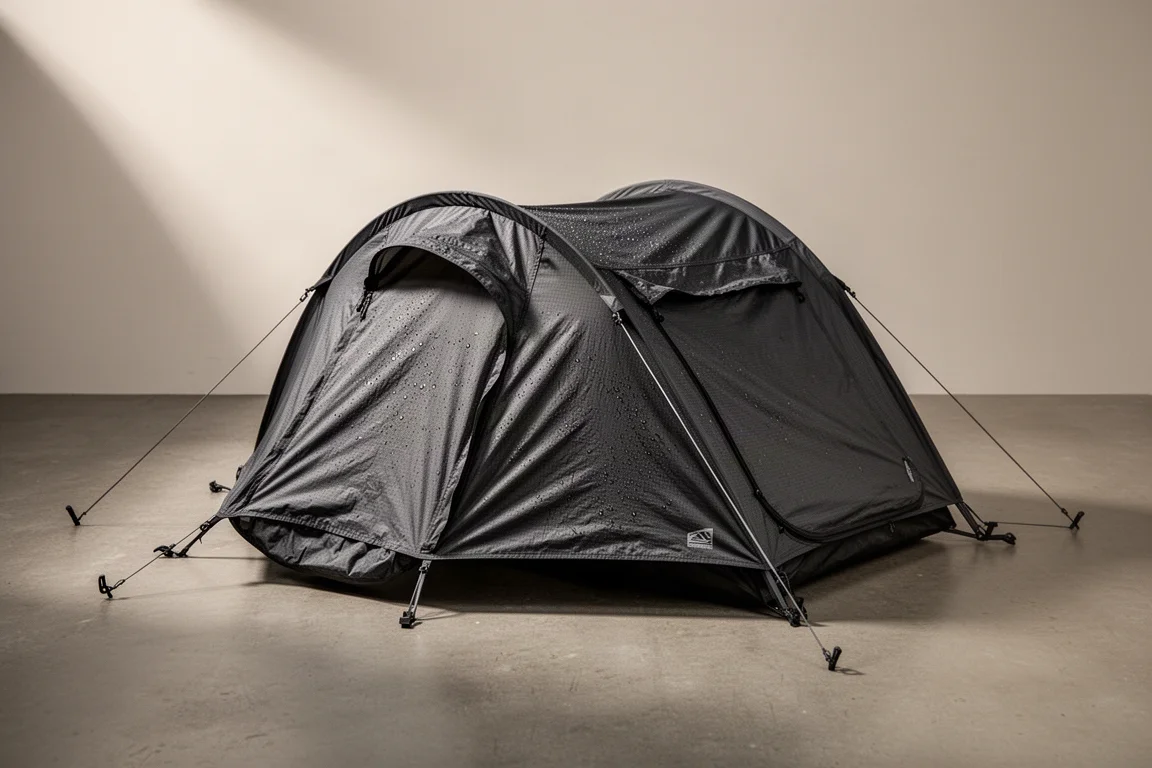
Alps Mountaineering Stealth 1 Bivy Review: A Waterproof Claim That Does Not Hold Up
The Alps Mountaineering Stealth 1 Bivy carries a 2,000 mm hydrostatic head rating and a waterproof claim, but sustained rain exposure and build quality concerns make it difficult to recommend.
Camping Shelters
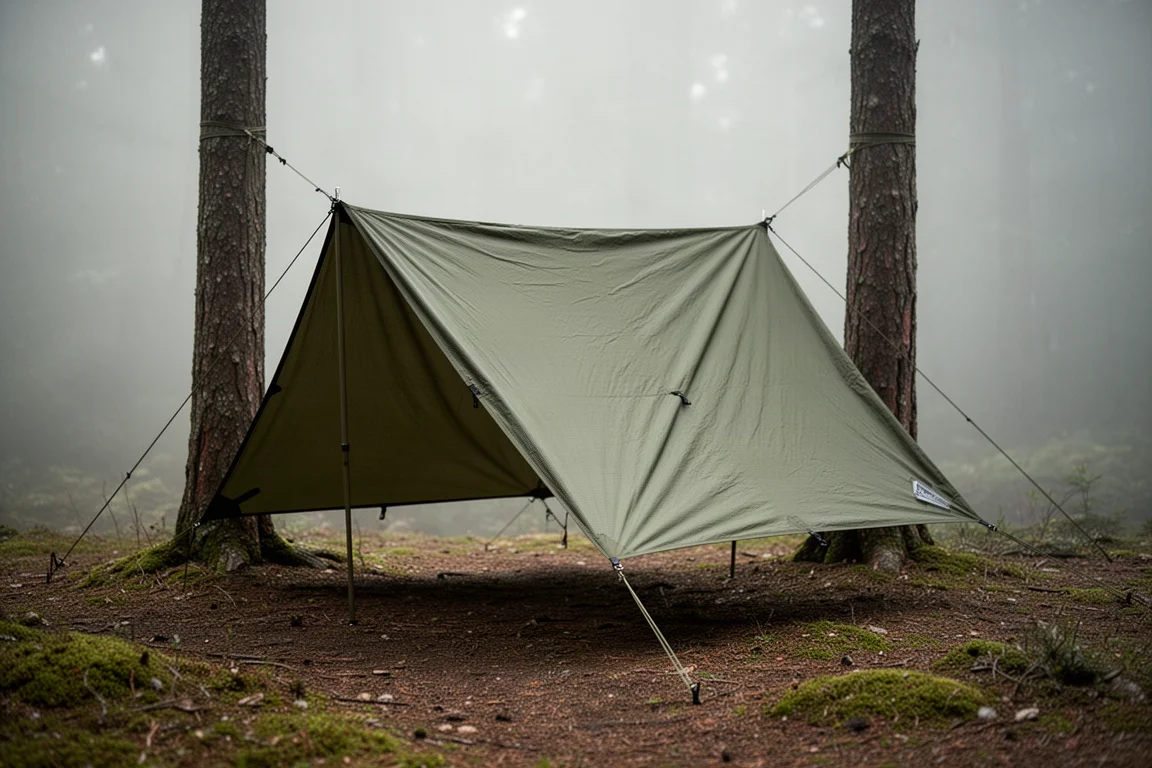
AquaQuest Safari Hybrid 20 ft x 13 ft Tarp Review: Two Years Under a Very Large Roof
A long-term look at the AquaQuest Safari Hybrid 20 x 13 tarp, covering build quality, weather protection, setup realities, and who should buy one.
Camping Shelters
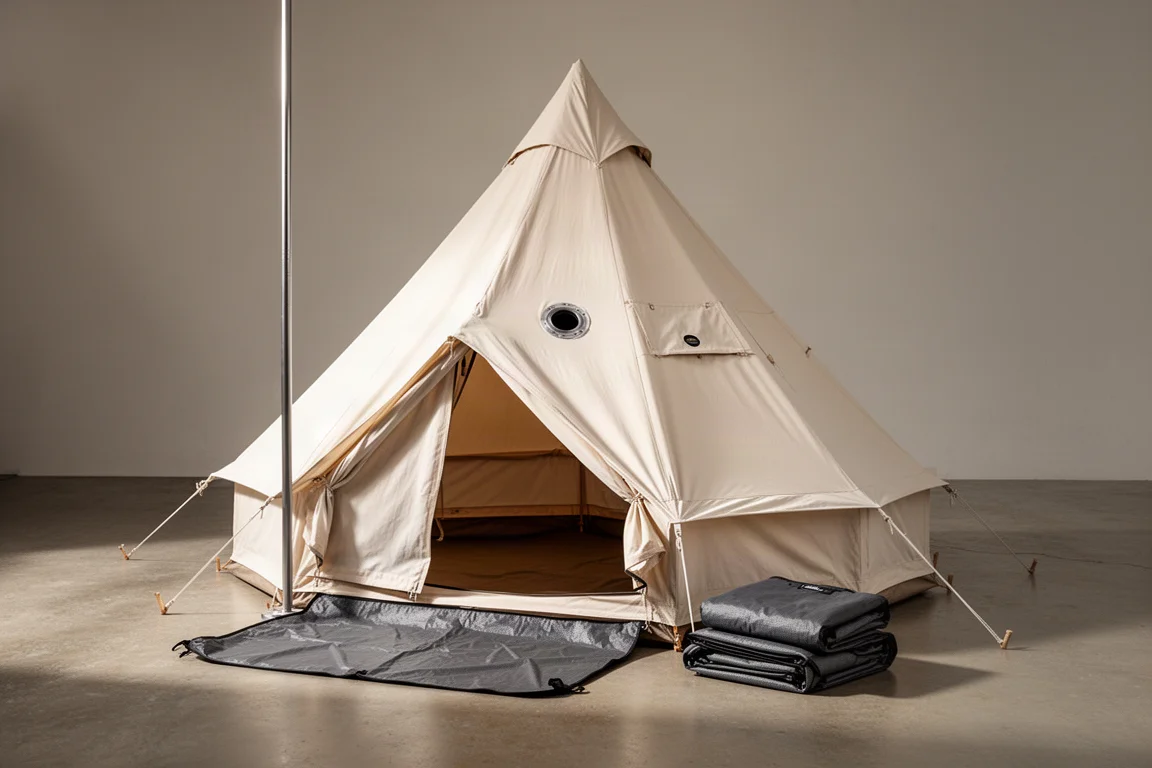
Backcountry Light Mesa 3 Hot Tent and Floor SL Tarp Review
A practical look at the Backcountry Light Mesa 3 four-season hot tent and its optional Floor SL Tarp, covering materials, stove jack design, packed weight, pricing, and the trade-offs to weigh before buying.