Camping Tarps
AquaQuest Guide Series Tarp 13 ft x 10 ft Review: Light, Waterproof, Storm Ready
A detailed look at the AquaQuest Guide Series 13 ft x 10 ft tarp, covering its 5,000 mm waterproof rating, 1 lb 6.3 oz weight, 17 tie-off points, and the trade-offs worth knowing before buying.
Introduction
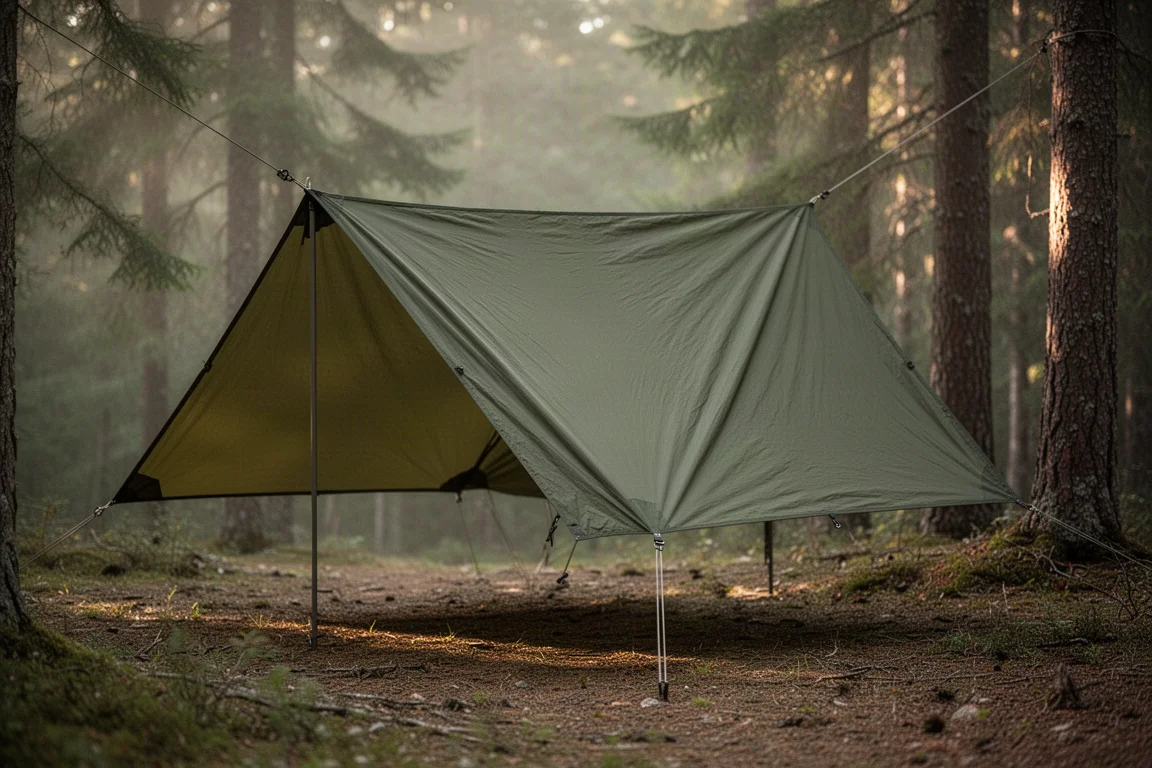
AquaQuest has built a strong reputation for tarps that combine low weight with serious waterproofing, and the Guide Series sits at the lightest end of the company’s range. It is also the least strong of the three lines, although that is a relative statement: against the heavier Safari and Defender tarps, the Guide gives up some raw strength rather than everyday capability. The 13 ft x 10 ft size is a mid-range option in a lineup that spans 10 ft x 7 ft up to 20 ft x 13 ft, and it is the size that makes the most sense for general use.
Who This Tarp Is For
The 13 ft x 10 ft footprint is generous enough for one person and still workable for two or three. There is enough coverage to shelter a chair, a table, and a tent at the same time, which matters when the weather turns and the plan is to stay put rather than pack up. The size also opens up a wide range of pitch configurations, from a simple A-frame to more elaborate wind-blocking shapes, so the same tarp adapts to strong wind, rain, and snow instead of locking the user into one setup. Smaller tarps cannot match that flexibility.
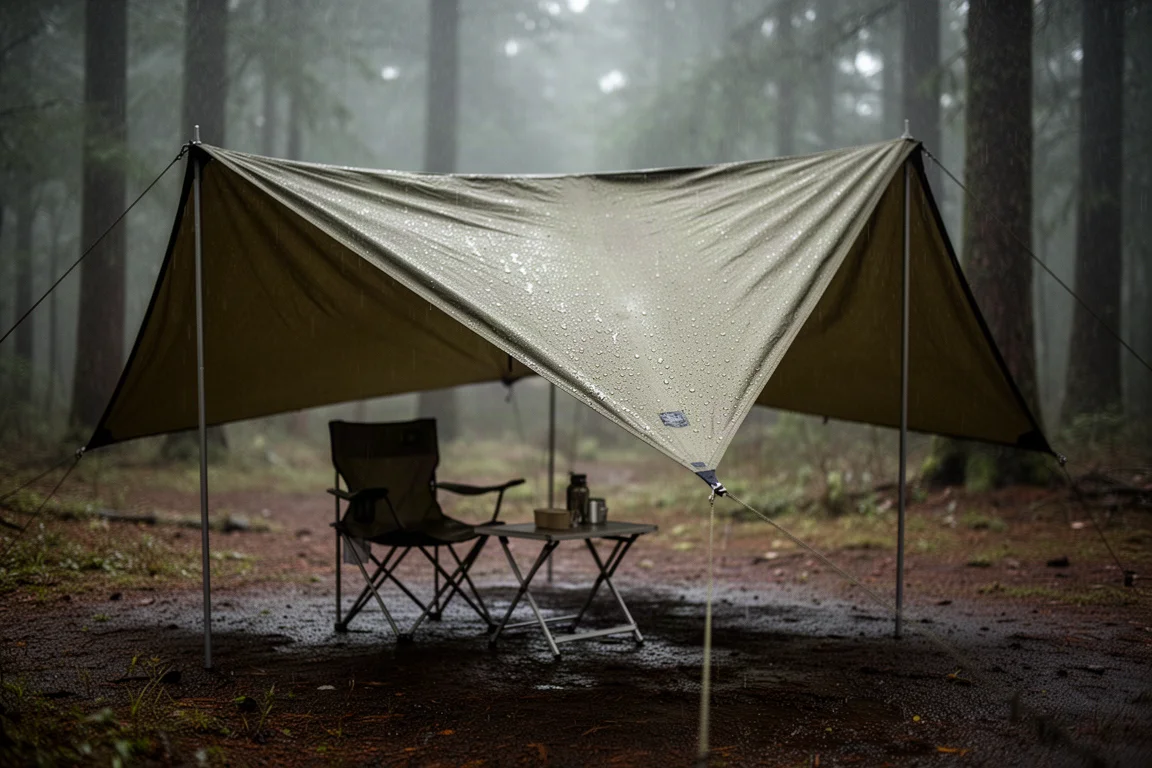
For backpackers, the appeal is the combination of that coverage with a packed weight that disappears into a pack. For car campers and base camps, it is simply a large, dependable roof that can be rigged in several ways depending on which direction the weather is coming from.
Build and Materials
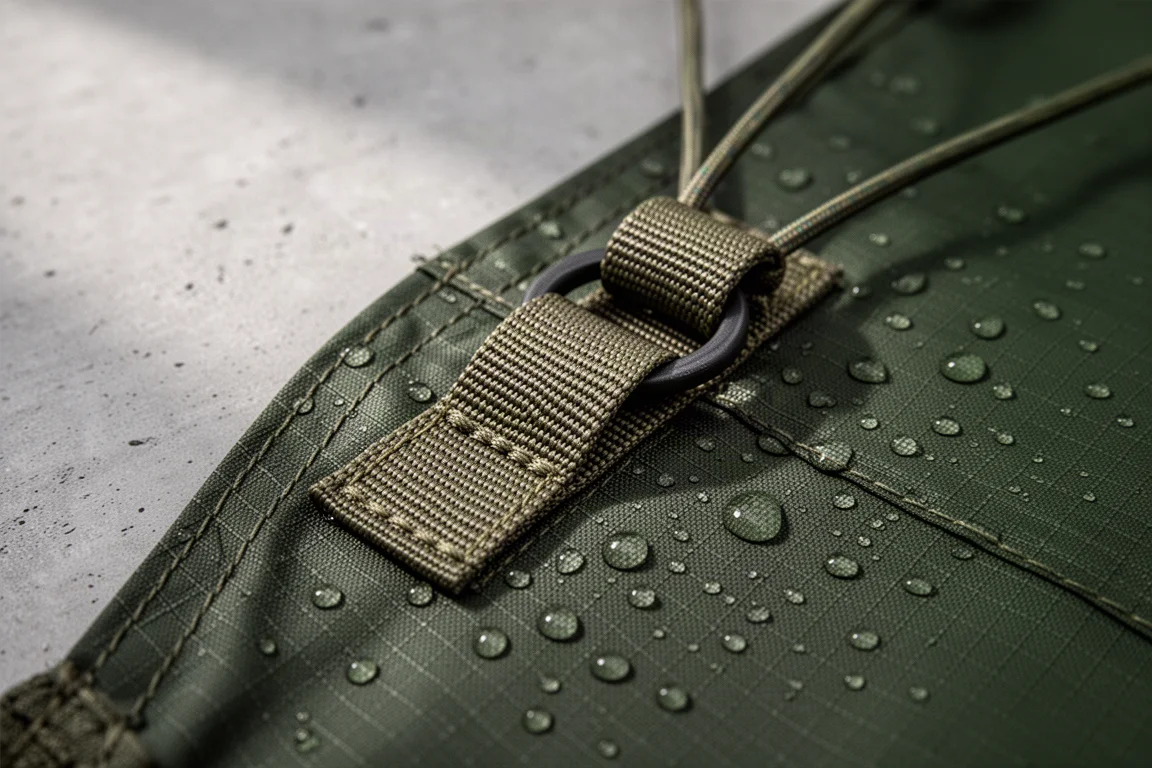
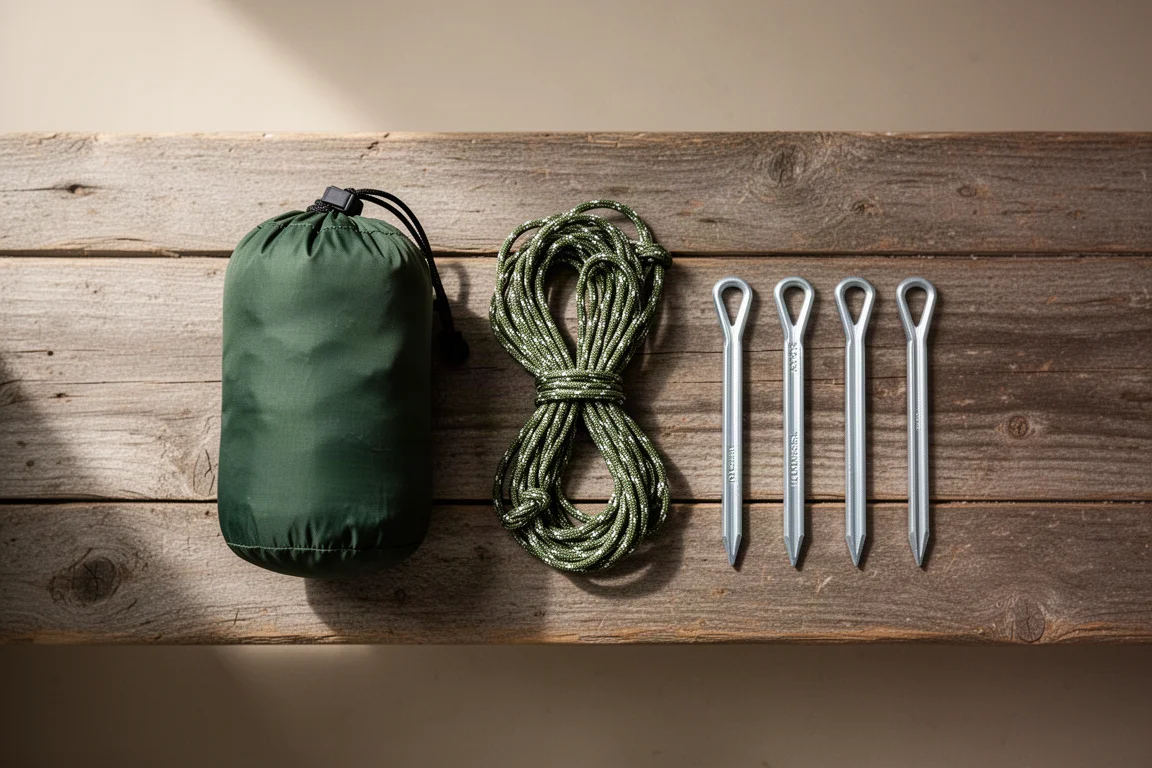
The fabric is a 40-denier ripstop nylon carrying two coatings, silicone and polyurethane. The hydrostatic head rating is 5,000 mm, which is very high for a shelter of this type, given that an average tent sits around 1,200 mm. AquaQuest lists 17 tie-off points on the 13 ft x 10 ft model, including a center tie-off, and the stitching at each point is reinforced. Color options are forest green, gray, and olive drab. The tarp weighs 1 lb 6.3 oz and packs down to roughly 10 in x 4 in x 4.5 in.
A lifetime warranty backs the tarp, and it is a policy that rarely seems to be called upon. That says something about how the materials and construction hold up over time.
Main Strengths
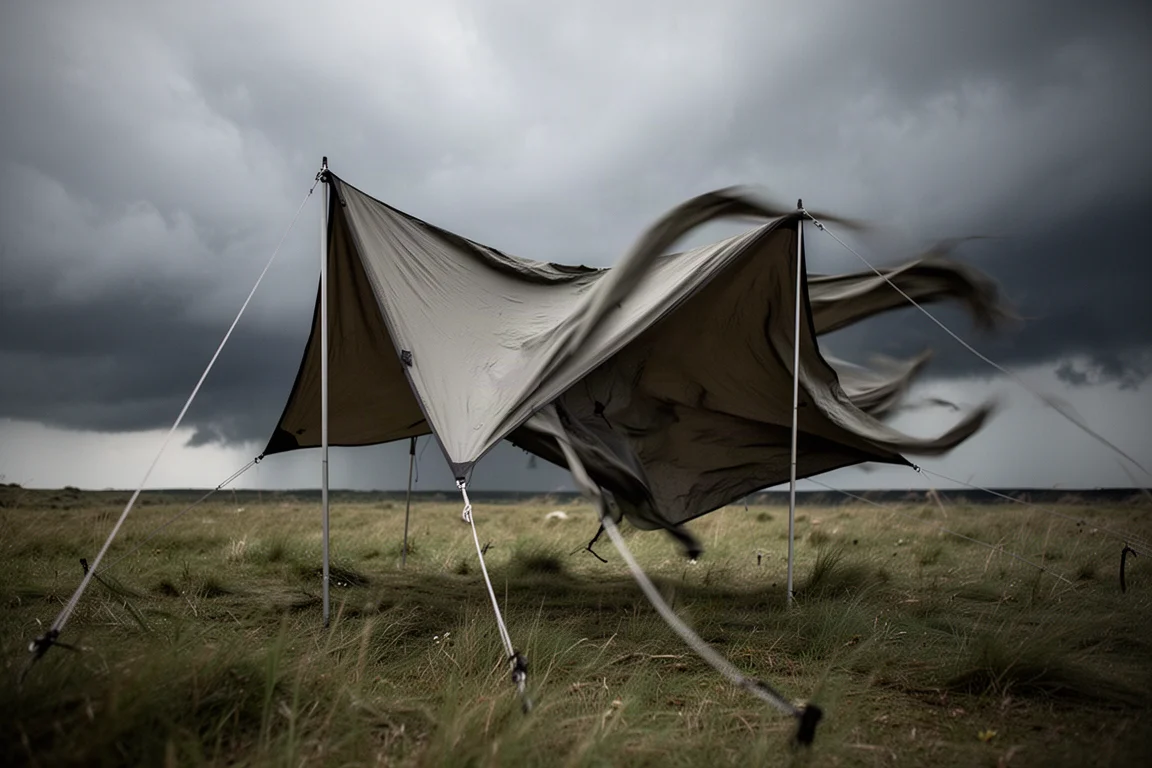
Durability is the headline. This tarp has been pitched through thunderstorms with winds around 35 mph, the sort of sustained load that tears inexpensive tarps apart, and it has come through without damage after years of use. Guide Series tarps have survived storm systems that other tarps simply cannot handle, and the quality is consistent across the sizes tested.
Weight and packed size come next. For a tarp this large, 1 lb 6.3 oz is genuinely light, and the stuffed bundle takes up very little room in a pack while adding minimal weight to the overall loadout.
The darker colorways also help with sun exposure, diffusing both the light and the heat coming through from above. Add the reinforced tie-off points and the result is a shelter that works as wind protection, rain protection, and shade in one piece of fabric.
Things to Consider Before Buying
Price is the main trade-off. There are plenty of inexpensive tarps on the market, and they will keep the weather off, but the savings come from different materials. Polyester alternatives generally mean more weight, less strength, and less waterproofing than the nylon used here.
The included storage bag is small. Rolling up a soaking wet tarp in wind and working it into that sack is a chore, and the same complaint applies to a lot of small stuff sacks sold with shelters. It is a packaging decision rather than a performance issue, but it is worth planning around.
Silicone-treated nylon stretches, and it stretches more once it gets wet. Over several hours of exposure the pitch will loosen and the guy lines will need retensioning. It is a manageable quirk rather than a defect, and it is part of what allows the tarp to be this light and compact in the first place.
Buying Advice
The 13 ft x 10 ft Guide Series tarp retails for $140. Other sizes in the line are about $89 for the 10 ft x 7 ft, $120 for the 10 ft x 10 ft, $200 for the 15 ft x 15 ft, and $230 for the 20 ft x 13 ft. Listings on Amazon generally run $10 to $20 below those retail figures.
Choosing between the three lines comes down to conditions. The Guide Series is the sensible pick for most three-season use. The Safari adds weight and strength, and the Defender is built for the heaviest wind and snow loading, which makes it the right call for a vicious winter storm and unnecessary the rest of the year.
The value case rests on how long the tarp lasts. A cheaper option will be heavier, less waterproof, less strong, and bulkier to carry, and it may not survive the storms this one shrugs off. Buy once, cry once is a fair description of the math here.
Conclusion
The AquaQuest Guide Series 13 ft x 10 ft tarp earns its place as one of the best tarps available for the money. Nothing in the same price bracket matches the combination of low weight, high waterproofing, compact packed size, and genuine stormworthiness. The trade-offs are real, from the price premium over basic tarps to the small stuff sack and the stretch of silicone-treated nylon, but none of them undermine what the tarp is built to do. For anyone weighing a large, light, long-lasting shelter, this is an easy recommendation.
Product link
View more details for AquaQuest Guide Series Tarp 13 ft x 10 ft
This product is mentioned in the review. Check the specifications, options, and compatibility before buying.
View more details for AquaQuest Guide Series Tarp 13 ft x 10 ftFurther reading
Related Reviews
Camping Tarps
Aqua Quest Defender vs Safari 20x13: Which Large Tarp Fits Your Setup?
A side-by-side look at Aqua Quest's two 20 ft by 13 ft tarps: the 9.2 lb, 20,000 mm Defender and the 4.5 lb, 5,000 mm Safari, plus sizing, setup, and warranty details worth knowing.
Camping Tarps
Fjällräven Abisko Tarp Review: Premium Ultralight Materials, Unreliable in Rain
The Fjällräven Abisko Tarp pairs a 1.1 lb packed weight with 40D silicone-treated nylon, but long-term testing found it leaks in steady rain and sags badly once wet.
Camping Tarps
Gold Armor 10x10 Tarp Review: A $34 Shelter With Clear Limits
A large, genuinely lightweight tarp at a very low price, held back by thin polyester, heavy seam construction, and storage bags that fail early.