Camping Tarps
Aqua Quest Defender vs Safari 20x13: Which Large Tarp Fits Your Setup?
A side-by-side look at Aqua Quest's two 20 ft by 13 ft tarps: the 9.2 lb, 20,000 mm Defender and the 4.5 lb, 5,000 mm Safari, plus sizing, setup, and warranty details worth knowing.
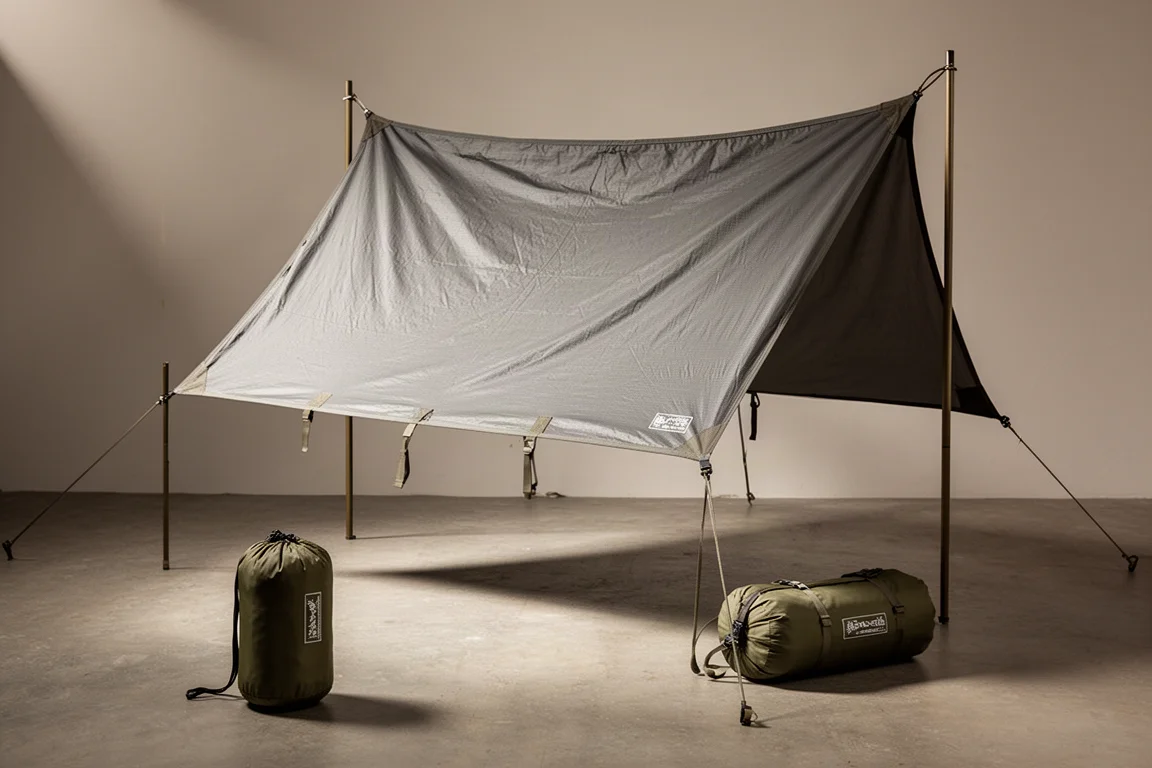
Introduction
Aqua Quest has earned a following among backpackers and overlanders for tarps that stand up to serious weather, and the company’s largest format, a 20 ft by 13 ft rectangle, comes in two very different builds. The Safari 20x13 has long been a favourite for trips where weight matters. The Defender 20x13 takes the same footprint and pushes strength and waterproofing much further.
This comparison covers what separates the two tarps, the sizes and colours available, and the practical points worth weighing before buying a shelter this large.
What Sets These Two Tarps Apart
Weight and weather protection separate these two most clearly. The Safari 20x13 weighs 4.5 lb and carries a 5,000 mm hydrostatic head rating with 25 tie-out points. The Defender 20x13 weighs 9.2 lb, roughly double, and carries a 20,000 mm hydrostatic head rating with 47 tie-out points.
Both are made from coated ripstop nylon, with the Defender using a 70 denier ripstop nylon finished with a TPU coating. The coating on the Defender feels noticeably thicker in hand, the tarp carries far more webbing, and every tie-out point is reinforced.
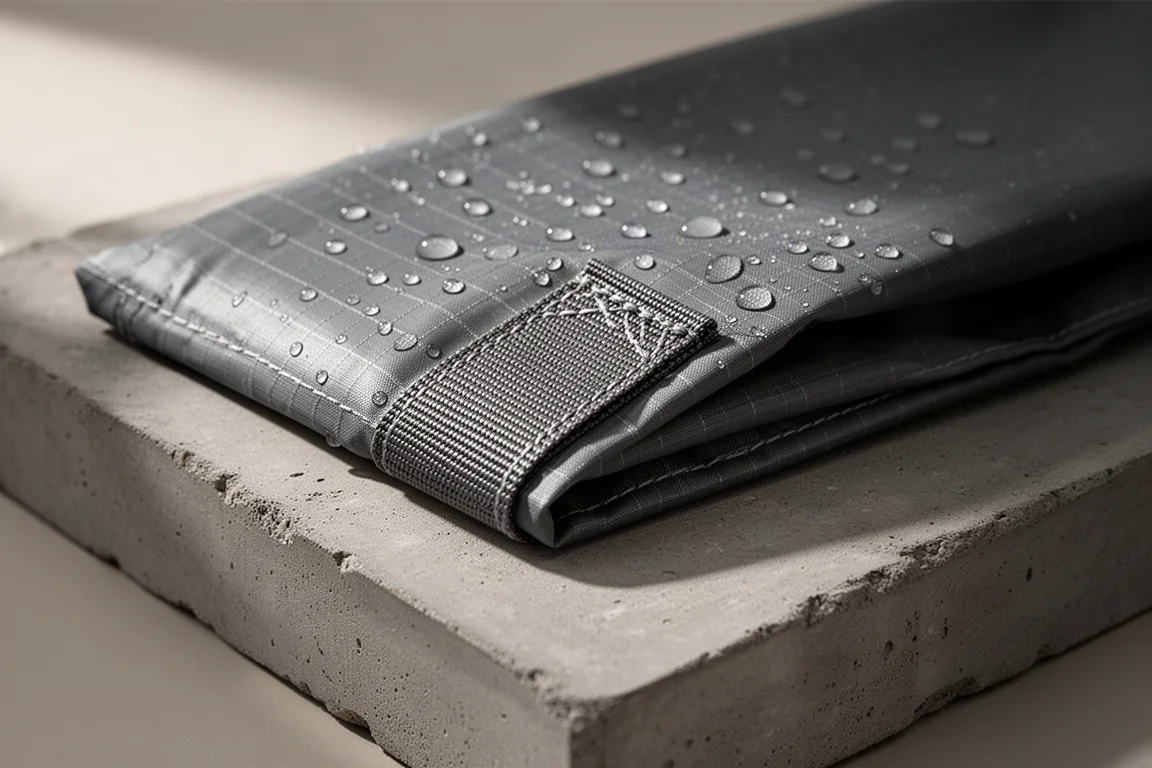
The range is organised into three tiers. Guide tarps are the lightest and least waterproofed. Safari sits in the middle as a hybrid, a little heavier and more waterproof while staying reasonably light. Defender is the heavy-duty tier, built for the most extreme conditions. All three are described as very strong and highly waterproof, but the Defender is a clear step above the others in construction.
Aqua Quest Defender 20x13: Maximum Coverage
The Defender 20x13 measures 20 ft by 13 ft, roughly 240 square feet of coverage. Underneath it, eight people can sleep on cots comfortably, and more can fit if needed. Walking from one end of the tarp to the other takes about five seconds, which gives a sense of the scale.
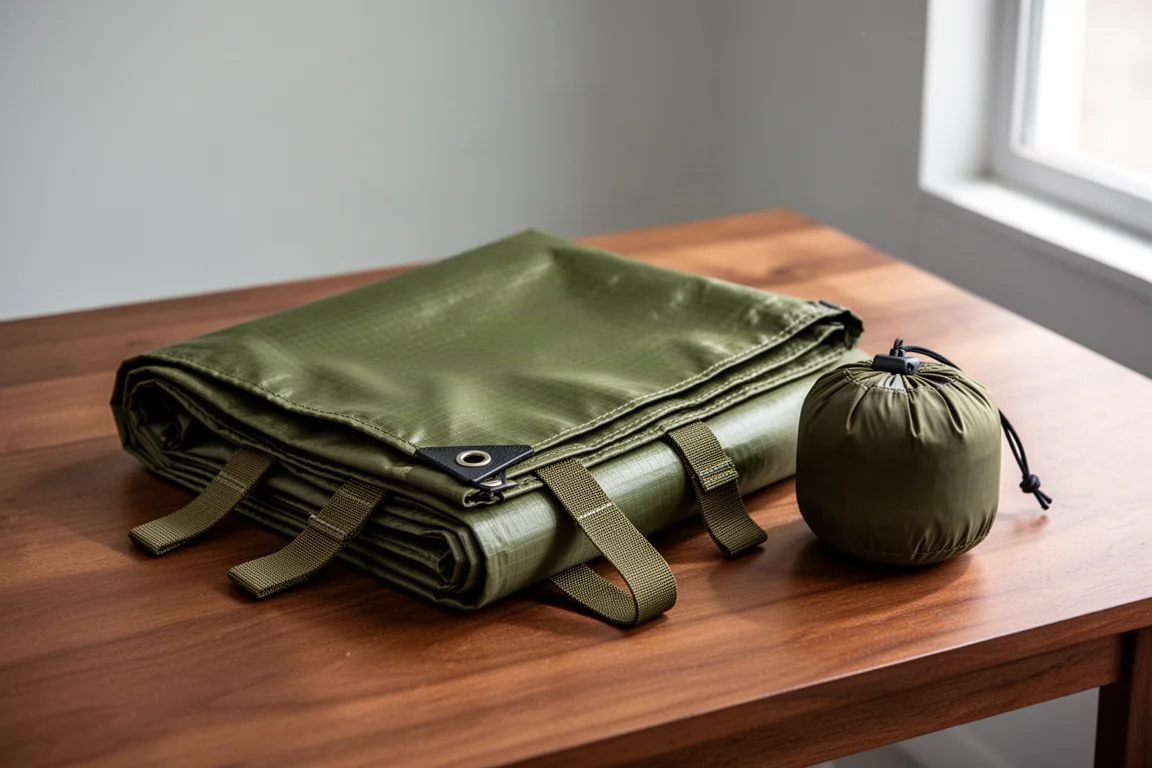
The build is unusually reinforced for a tarp. There are 47 tie-out points, positioned around the entire perimeter and across the body in both directions. A reinforced strip runs down the centre of the tarp, with three more reinforced strips running across the body. Packed down, it fits into a storage bag measuring 16 in by 9 in by 5 in.
The Defender 20x13 uses 70 denier ripstop nylon with a TPU coating and a 20,000 mm hydrostatic head rating. It weighs 9.2 lb and is priced at $230. Colour options include stealth gray, forest green, olive drab, woodland camo, and other camouflage patterns. The Defender line is available in rectangular and square shapes and in sizes including 10x7, 10x10, 13x10, 15x15, and 20x13.
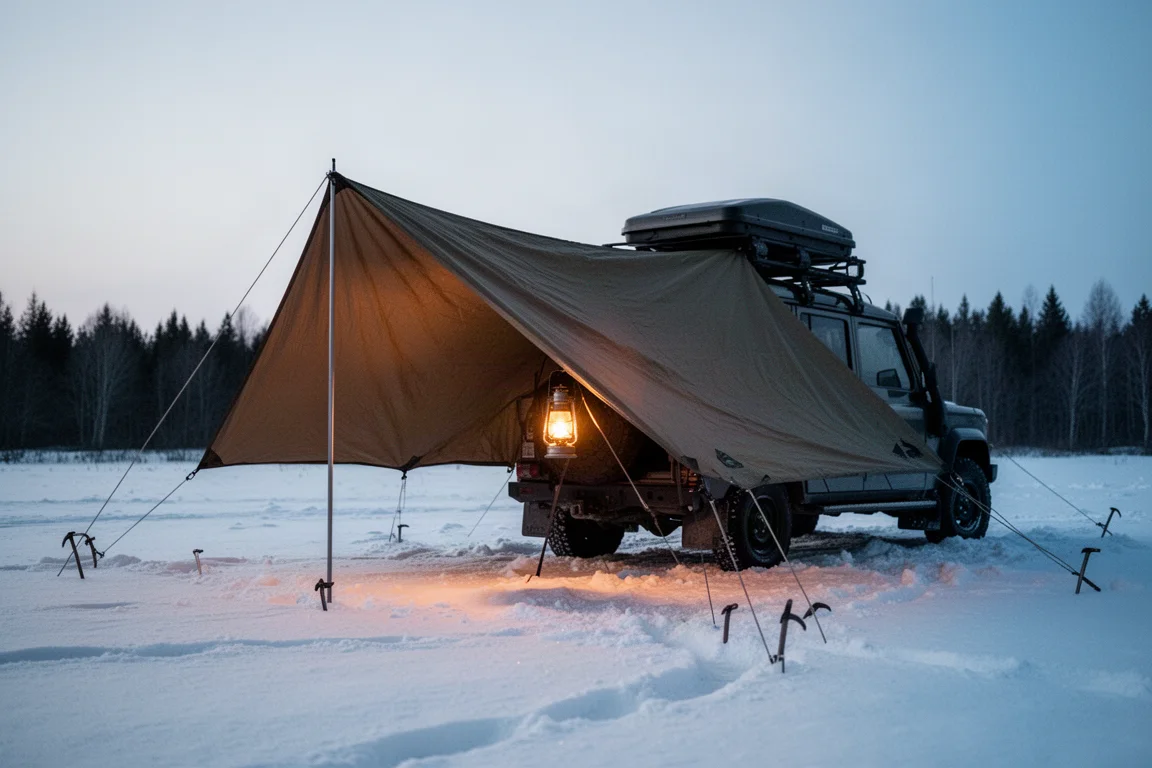
Overlanding is where this tarp makes the most sense. It can be pitched from one end of a vehicle to the other, or from one side to the other, and set up in a wide range of configurations.
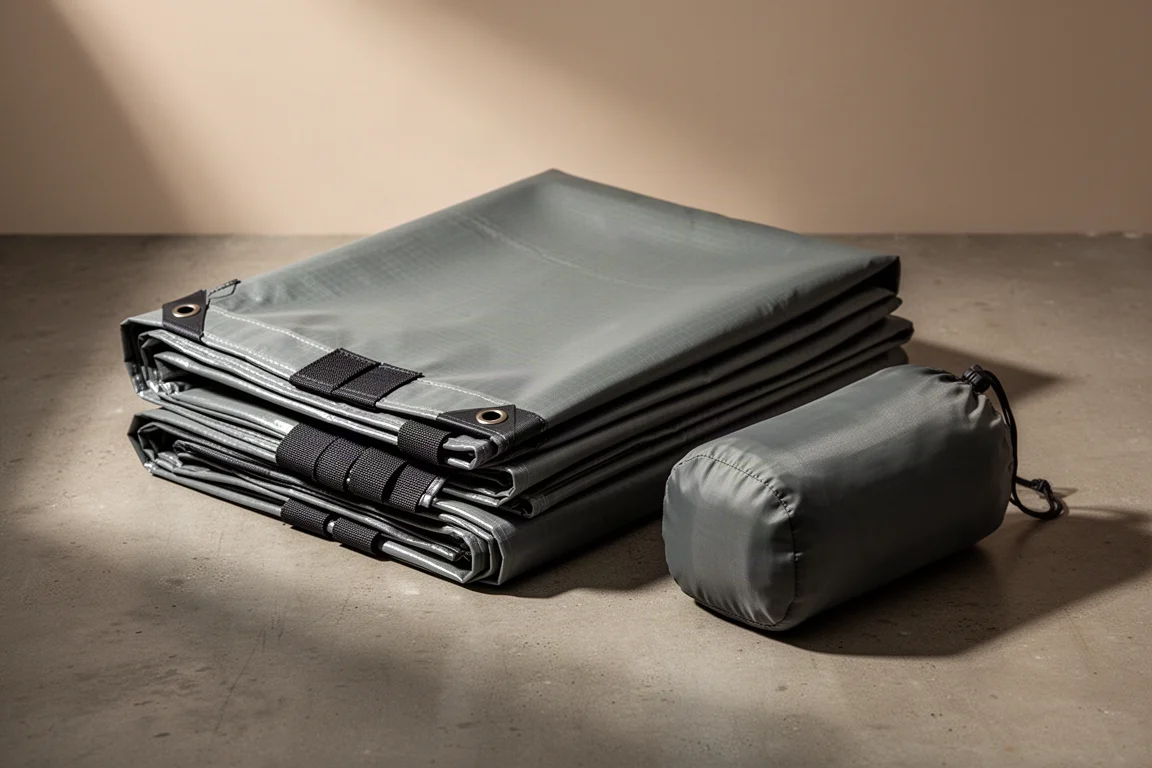
Aqua Quest Safari 20x13: The Lighter Option
The Safari 20x13 covers the same 20 ft by 13 ft footprint at 4.5 lb, roughly half the weight of the Defender. It has 25 tie-out points and a 5,000 mm hydrostatic head rating. Aqua Quest positions it as a hybrid: heavier and more waterproof than the Guide tier, yet still light enough for real distance on foot.
That balance is what makes it a practical all-rounder. It suits backpacking trips where a large dry living area matters, and it works just as well for overlanding, where the tarp can be rigged over or beside a vehicle. In heavy rain, thunderstorms, snowstorms, and strong wind, a 5,000 mm rating and reinforced tie-outs are enough for the conditions most campers actually meet.
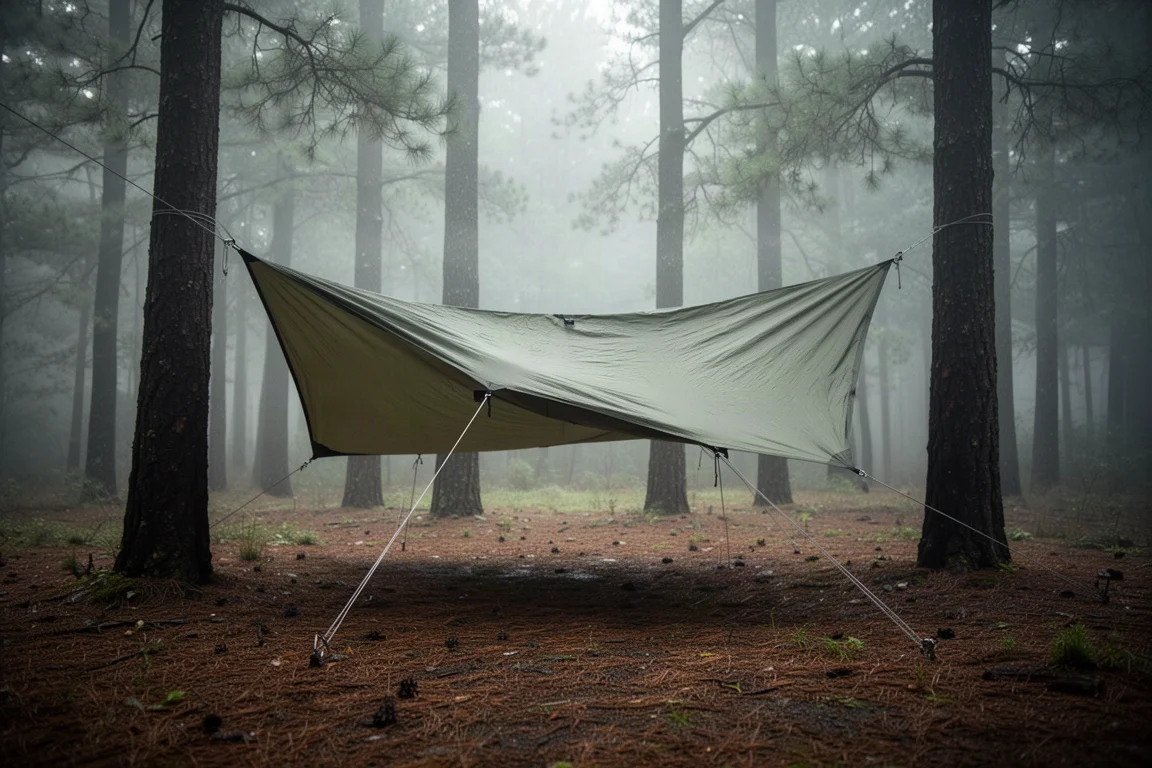
For most people and most trips, the Safari 20x13 is the more sensible of the two. The weight saving is the deciding factor: the same coverage at half the packed weight is easier to carry, easier to pitch, and easier to dry.
Sizing: How Much Tarp Do You Actually Need?
A 20 ft by 13 ft tarp is a specialist item, and Aqua Quest offers smaller sizes that suit everyday camping better. The Defender line, for example, runs from a 10x7 up through 10x10, 13x10, and 15x15 before reaching the 20x13 in this comparison. Square and rectangular shapes are both available.
The right choice comes down to how the tarp will be used. A 10x7 or 13x10 is manageable for a small group, or for a solo camper who wants a dry area to sit and cook. A 15x15 or 20x13 is a group shelter, a basecamp cover, or a vehicle-mounted awning. Buying bigger than needed adds weight, packed volume, and setup effort without adding much benefit.
Setup, Drying, and Care
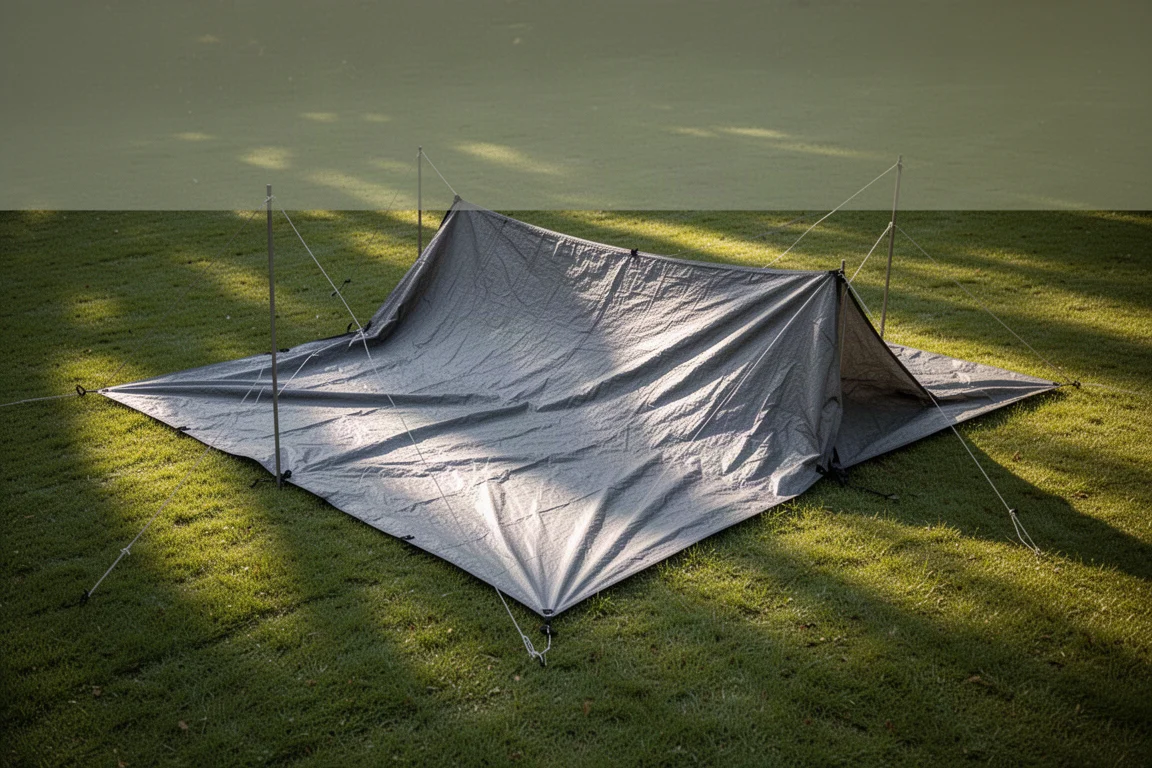
Size and weight make large tarps a chore to pitch. A 20 ft by 13 ft tarp needs clear ground, several anchor points, and enough time to tension it properly. The Defender’s 9.2 lb of coated nylon adds to the effort, and the payoff is a shelter that stays put in rough weather.
Drying is the detail people underestimate. After a wet trip, a tarp this large needs somewhere to spread out fully. A big yard or a garage makes that easy. Without one, drying a 20x13 tarp can be a genuine struggle, and it has to be done after every wet outing if the coating and fabric are to last.
Storage matters too. The Defender packs into a 16 in by 9 in by 5 in bag, so it needs real space in a vehicle or a gear room. Folding along the reinforced strips and rolling rather than stuffing helps keep the coated fabric and seam tape in good condition over time.
Warranty and Long-Term Value
Every tarp from Aqua Quest carries a lifetime warranty, which changes the maths on a high-priced purchase. The Defender 20x13 costs $230, a lot for a tarpaulin, but tarps of this size are hard to find, and those that exist tend to be made from inexpensive, weak polyester. What the money buys here is a thick, heavily coated, highly waterproof material with reinforced webbing at every attachment point.
Overall Buying Advice
Choose the Defender 20x13 if the tarp will live on or near a vehicle, if it needs to handle the most extreme conditions, or if it will shelter a group or serve in a guide role. The 20,000 mm rating, 47 tie-out points, and reinforced strip layout are aimed at exactly that kind of use, and the 9.2 lb weight is a fair trade for it.
Choose the Safari 20x13 if the tarp has to be carried any real distance. It offers the same footprint, half the weight, 25 tie-out points, and a 5,000 mm rating, which is more than enough for most backpacking and camping conditions. For the average camper or family trip, it is the easier tarp to live with.
Conclusion
Two tarps, one footprint, two very different jobs. The Defender 20x13 is a heavy-duty shelter for overlanding, group cover, and hard weather. The Safari 20x13 is the lighter, more versatile option that most people will find easier to carry and pitch. Matching the tarp to how you actually travel is the whole decision, and both sit at the top of the materials and construction quality available in this size.
Further reading
Related Reviews
Camping Tarps
AquaQuest Guide Series Tarp 13 ft x 10 ft Review: Light, Waterproof, Storm Ready
A detailed look at the AquaQuest Guide Series 13 ft x 10 ft tarp, covering its 5,000 mm waterproof rating, 1 lb 6.3 oz weight, 17 tie-off points, and the trade-offs worth knowing before buying.
Camping Tarps
Fjällräven Abisko Tarp Review: Premium Ultralight Materials, Unreliable in Rain
The Fjällräven Abisko Tarp pairs a 1.1 lb packed weight with 40D silicone-treated nylon, but long-term testing found it leaks in steady rain and sags badly once wet.
Camping Tarps
Gold Armor 10x10 Tarp Review: A $34 Shelter With Clear Limits
A large, genuinely lightweight tarp at a very low price, held back by thin polyester, heavy seam construction, and storage bags that fail early.