Sleeping Pads
One Tigris Noble Jade Air Mattress: A 7.3 R-Value Cold-Weather Pad at a Fraction of the Price
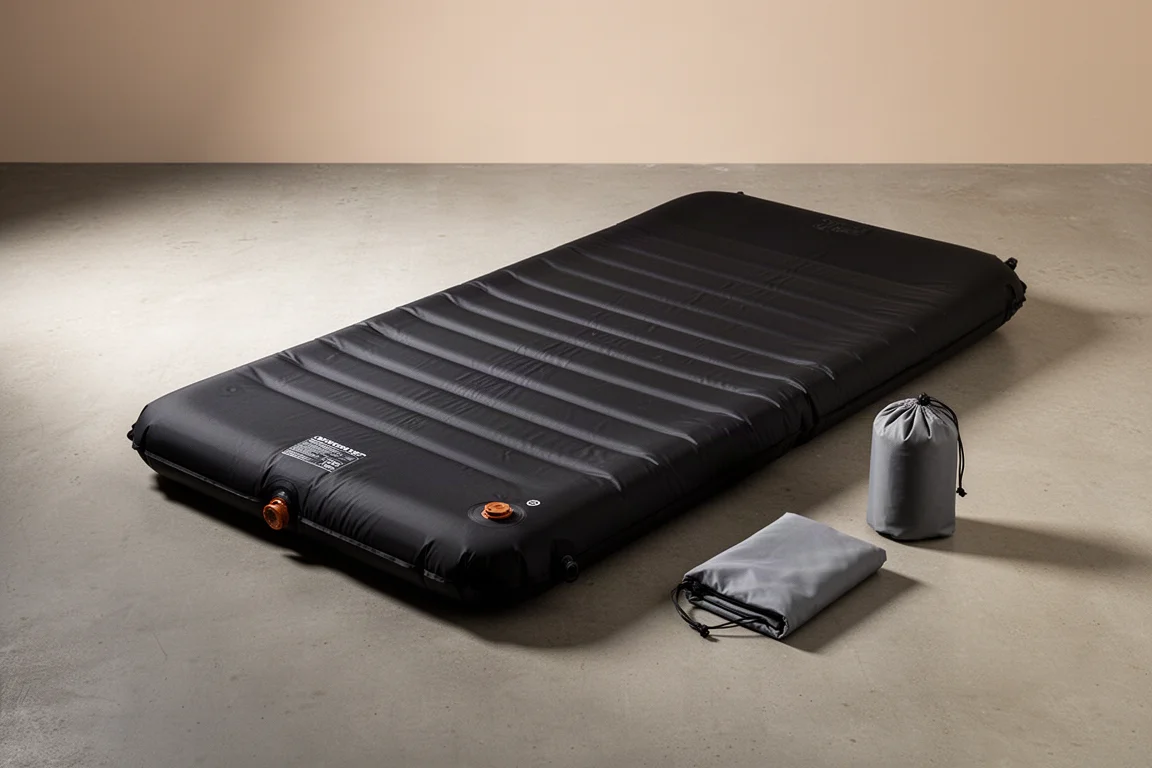
A first look at the One Tigris Noble Jade Air Mattress, a 7.3 R-value insulated pad with generous dimensions and a price far below the established cold-weather benchmark.
Introduction
For years, the cold-weather sleeping pad conversation has started and ended with one product: the Therm-a-Rest XTherm. It is light, compact, and warm enough for winter camping, and no other air mattress on the market has seriously challenged it. It is also priced at around $250, which is the single biggest reason it has never been adopted by everyone who wants one.
The One Tigris Noble Jade Air Mattress is a direct attempt to close that gap. It carries a claimed R-value of 7.3, the same figure the XTherm claims, and it was listed at $84 on Amazon at the time of writing. That is $156 less than the established benchmark, and it is the number that makes this pad worth a closer look.

What follows is a first look rather than a finished verdict. One night has been spent on the Noble Jade so far, on an overland trip with a backup mattress packed just in case. That night went well, and that alone is worth noting, because this is the first One Tigris backpacking mattress that has felt genuinely comfortable to sleep on.
Who This Pad Is For
The Noble Jade targets backpackers and campers who want a four-season pad without paying flagship four-season money. Its inflated dimensions are generous: 77.5 inches long, 25.5 inches wide, and 3.9 inches thick. That puts it ahead of the XTherm on all three measurements, which matters for taller sleepers and for anyone who dislikes feeling the ground through a thin pad.
It is also a sensible step up for campers moving on from an uninsulated summer pad, since the reflective interior and the claimed R-value point to a much wider usable temperature range. The trade-off is portability. At 25 ounces, or roughly 1.5 pounds, the Noble Jade is heavier than the XTherm, and it packs down larger. Ultralight hikers who count every ounce should factor that in before deciding.
Design and Build Quality
The pad uses a polyester top and a nylon bottom treated with a DWR coating, so the underside resists moisture from damp ground. Inside, a mylar-like reflective layer bounces body heat back toward the sleeper and reflects the cold of the ground away. It is the same broad approach used by the XTherm and by many other insulated pads.
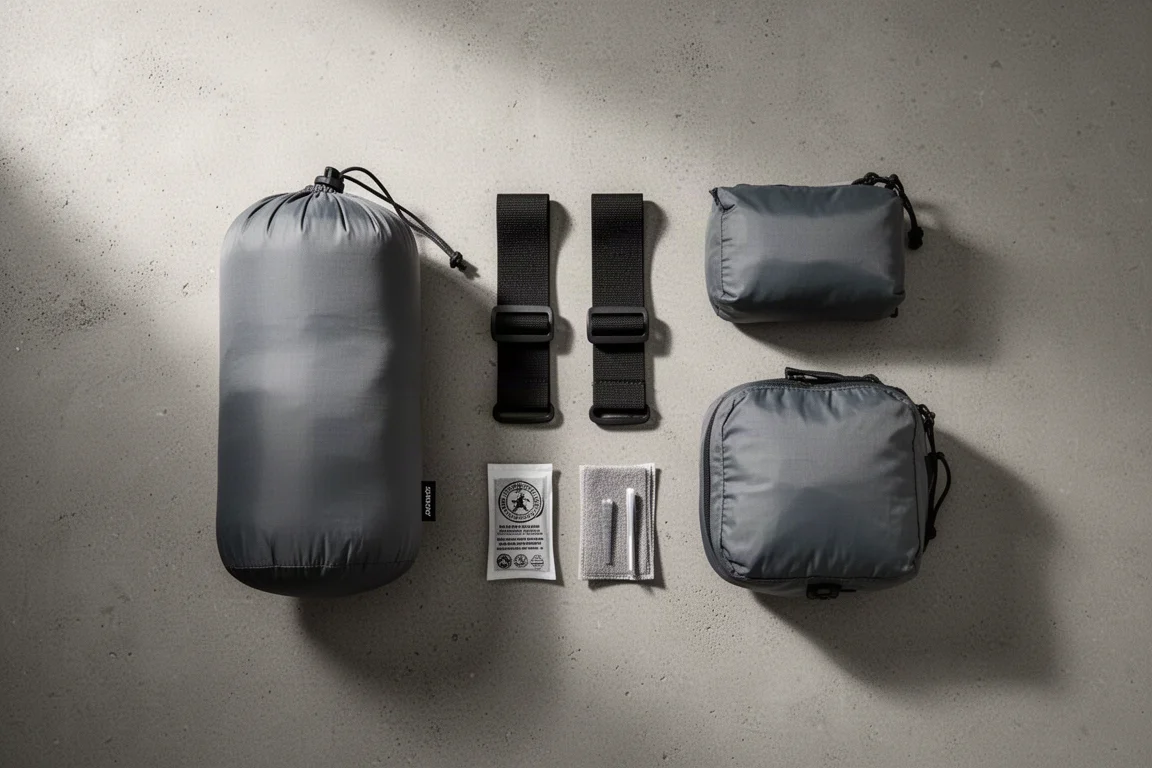
Construction quality is a clear strength. The stitching is clean, there are no loose threads, and the overall build reads as well made. The included storage bag is generously sized, which is a small but real win: it swallows both the pad and the pump sack without a fight, and it has a drawcord plus grab handles at the top and bottom, the lower one there so the mattress can be pulled out easily.
The valve layout is straightforward. The first cap opens the inflation port, an orange release lets out small amounts of air to fine-tune firmness, and opening the valve fully deflates the pad. The kit also includes two compression straps, a repair kit, and a pump sack with instructions.
Comfort and Sleep Quality
The center of the pad measures 3.9 inches thick, and that thickness does its job. Lying on the back, on the side, or on the stomach, the sleeper stays fully clear of the ground, and the pad felt comfortable in every one of those positions during the night it was used. No leaking was observed at any point.
There is one design quirk worth understanding. The pad tapers toward the perimeter, dropping to roughly 3 inches or even 2.5 inches at the edges, presumably to save weight, packed volume, and material cost. In normal use it is barely noticeable, but when body weight sits close to the edge there is a sensation of wanting to roll off. A uniform 3.9-inch profile would remove that feeling entirely.
Noise is the other consideration. The reflective layers produce a faint crinkling sound, which is typical of this style of insulation and is the same characteristic the XTherm is known for. Pads that use synthetic fill are quieter. For most sleepers this is a non-issue, but anyone who wakes at the smallest sound may prefer a different construction.
Warmth and the 7.3 R-Value Claim
One Tigris claims an R-value of 7.3, which is a very high number for an air mattress and would place it firmly in four-season territory. The company has also published test documentation from SGS, a large Swiss testing organization with laboratories worldwide and a long history in industrial, manufacturing, and medical testing.
That documentation is the reason the claim deserves the benefit of the doubt rather than immediate skepticism. It is not, however, the same thing as real-world verification. The one night spent on this pad saw a low of only 50 degrees Fahrenheit, a temperature at which insulation barely matters. Genuine cold-weather performance still has to be established, and until it is, the R-value should be treated as a promising claim rather than a confirmed result.
Things to Consider Before Buying
The pump sack is the weakest part of the package. The material along its top edge is extremely rigid and wants to fold into a fixed shape, which makes rolling it up to push air into the pad awkward and frustrating. It works, but it is unpleasant to use, and a small electric pump or another inflation method may be a better fit.
Inflating by breath is possible, though it is not advisable in cold conditions, since moisture from exhaled air ends up inside the pad and can reduce insulation performance. Deflation is simple, and the pad rolls back into its bag without trouble.
Beyond the pump sack, the open questions are warmth in genuinely cold weather, the tapered edges, and the weight and packed size relative to lighter options. None of these are deal-breakers on their own, but they are the details that separate a promising pad from a proven one.
Buying Advice
If the priority is the smallest and lightest possible cold-weather pad, the XTherm still sets the standard. It is lighter, it packs smaller, and its R-value claim is long established.
If the priority is warmth per dollar, the Noble Jade is compelling on paper and encouraging in person. It claims the same 7.3 R-value, it is longer, wider, and thicker, and at $84 it costs $156 less than the benchmark. The comfort reported after the first night out is the strongest signal so far, because comfort has historically been the weak point of budget backpacking pads from this brand.

Buyers who camp in deep winter should wait for cold-weather testing to be completed before committing. Buyers who camp in three seasons and want a roomy, well-built insulated pad at a low price have a genuinely interesting option here.
Conclusion
The One Tigris Noble Jade Air Mattress is the most promising budget cold-weather pad to come from this brand so far. It is well made, comfortably sized, and backed by a 7.3 R-value claim supported by published third-party test documentation, all for a fraction of what the long-standing benchmark costs. The pump sack is annoying and the tapered edges take some getting used to, but the fundamentals look right. Full cold-weather testing will decide whether the promise holds.
Product link
View more details for One Tigris Noble Jade Air Mattress
This product is mentioned in the review. Check the specifications, options, and compatibility before buying.
View more details for One Tigris Noble Jade Air MattressFurther reading
Related Reviews
Sleeping Pads
Best Backpacking Sleeping Pads 2026: Nine Pads Rated on Price, Comfort, Warmth, and Weight
Nine backpacking sleeping pads compared on price, comfort, warmth, and weight, from a $65 summer pad to a year-round option rated at R-7.3.
Sleeping Pads
Best Backpacking Sleeping Pads: Comfort, Warmth, and Weight Compared
A practical comparison of the Nemo Quasar 3D, Therm-a-Rest NeoAir XTherm Max, and Big Agnes Rapide SL for backpackers choosing between comfort, warmth, and packed weight.
Sleeping Pads
Best Backpacking Sleeping Pads: Ultralight, Winter, Comfort and Budget Picks
A practical roundup of the sleeping pads that stand out for ultralight weight, winter warmth, pressure relief and value, plus three popular pads that fell short.