Cargo Bikes
Omnium MiniMax Wi-Fi Review: A Custom Cargo E-Bike Built for the Daily Commute
A practical look at the Omnium MiniMax Wi-Fi cargo bike, including its Bafang e-assist conversion, hill-ready brakes and gearing, and the dog-friendly cargo setup.
Introduction
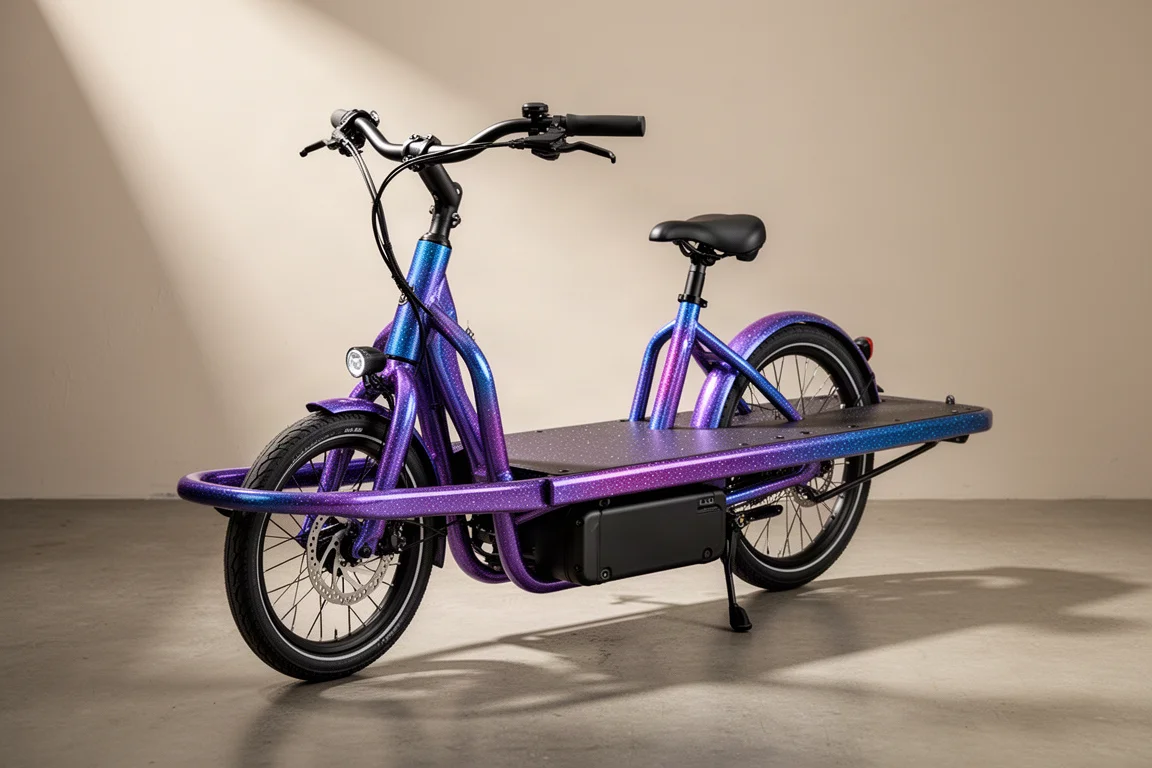
Cargo bikes make the most sense when they replace car journeys rather than short leisure rides. The Omnium MiniMax Wi-Fi is a small-front cargo platform built around exactly that idea: a bike long enough and stable enough to carry a real load, but short enough to live with in a city.
This particular build is not a factory e-bike. It is a standard MiniMax frame converted with an electric drive system, specified and assembled by an East London bike shop that distributes the brand. That distinction matters, because the character of the bike comes as much from the chosen motor, brakes, gearing and cargo accessories as it does from the frame itself.
Who This Cargo Bike Is For
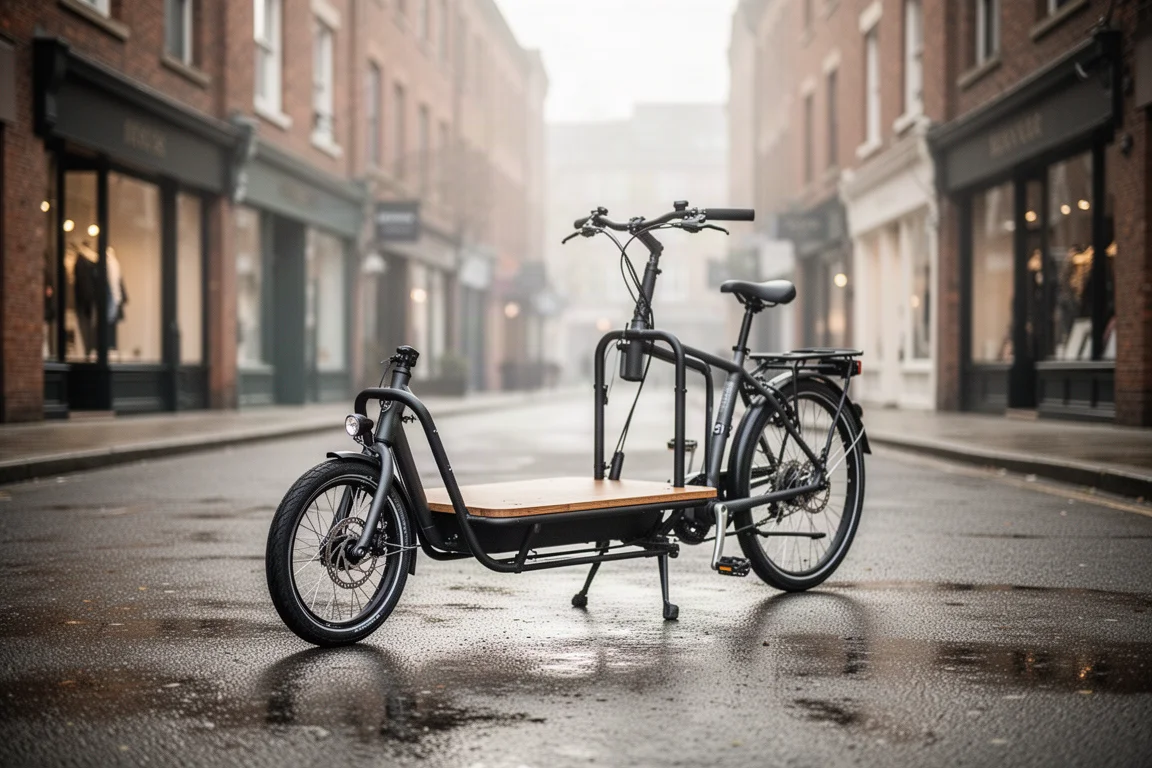
The MiniMax name refers to the shorter front end of this model. Omnium also makes a longer full-size cargo bike, and the MiniMax trims that length down while keeping a genuine load platform up front. For riders who need carrying capacity without piloting something the size of a small van, that shorter wheelbase is the appeal.
This build was put together around a specific brief: a roughly 10 km commute each way, over hilly terrain, usually carrying a dog rather than a heavy freight load. That is a useful lens for judging it. Riders with a similar routine, hilly routes, moderate loads, and a strong preference for stability over outright speed, will find the reasoning behind the spec easy to follow.
A cargo bike also sits differently in the daily routine than a trailer or a backpack. Carrying the load on the bike itself keeps the weight low and centralised rather than hanging off the rider or trailing behind, which is where the extra stability comes from.
Main Strengths
The frame here is the extra small size, finished in a blue-purple flip colour with a glitter clear coat. Beyond aesthetics, the most important trait is that the platform is adaptable: the cargo area can be configured around whatever the rider actually needs to carry.
Motor, Battery, and Real-World Power
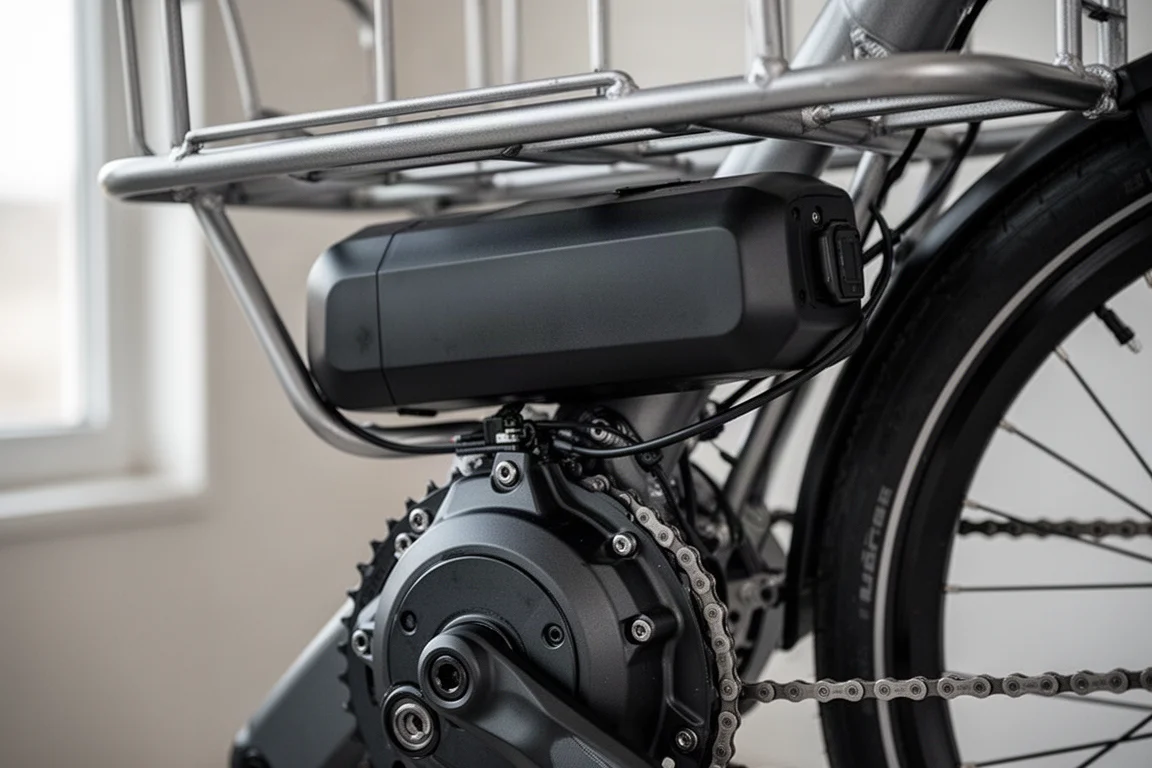
The drive unit is made by Bafang, a brand commonly used in e-bike conversions. The hardware in this build is rated at 750 watts, though it runs at roughly 400 watts as configured. Throttle options exist for this family of motors, but legality varies considerably between countries, so anyone considering that route should check their local rules first.
The battery is substantial, and it sits in a custom 3D-printed case that was designed specifically for this bike. The case is sealed to be fully waterproof and is tucked under the cargo platform, where it is largely out of sight. Getting that packaging right was one of the slower parts of the project, and it shows in how cleanly the finished bike hides its power source.
Brakes, Gearing, and Stopping Confidence
Braking is handled by Magura four-piston calipers. Instead of a single set of pistons, these use a longer pad with more contact area, which is a mountain bike approach rather than a road one. On a light road bike it would be overkill. On a heavy cargo build descending a steep hill, that extra stopping power is exactly what you want.
The drivetrain is deliberately unfussy. Shifters are Shimano Deore, and the rear derailleur is a Shimano SLX chosen for its ability to handle a wide gear spread. A 32-tooth chainring pairs with an 11-46 tooth cassette, and the chainset comes from a brand that specialises in e-bike drivetrain components. The result is gearing low enough that the bike can still be pedalled home if the motor cuts out or the battery runs flat, which is a sensible thing to design for on any e-assist build.
Tyres were picked for durability rather than speed. A Schwalbe Marathon E-Plus sits at the rear, and the 20-inch front wheel runs a 2.15-inch Schwalbe Big Ben Plus. Both were chosen for their puncture protection, a reasonable priority when a breakdown means a loaded bike stranded at the roadside.
Cargo Setup and Load Options
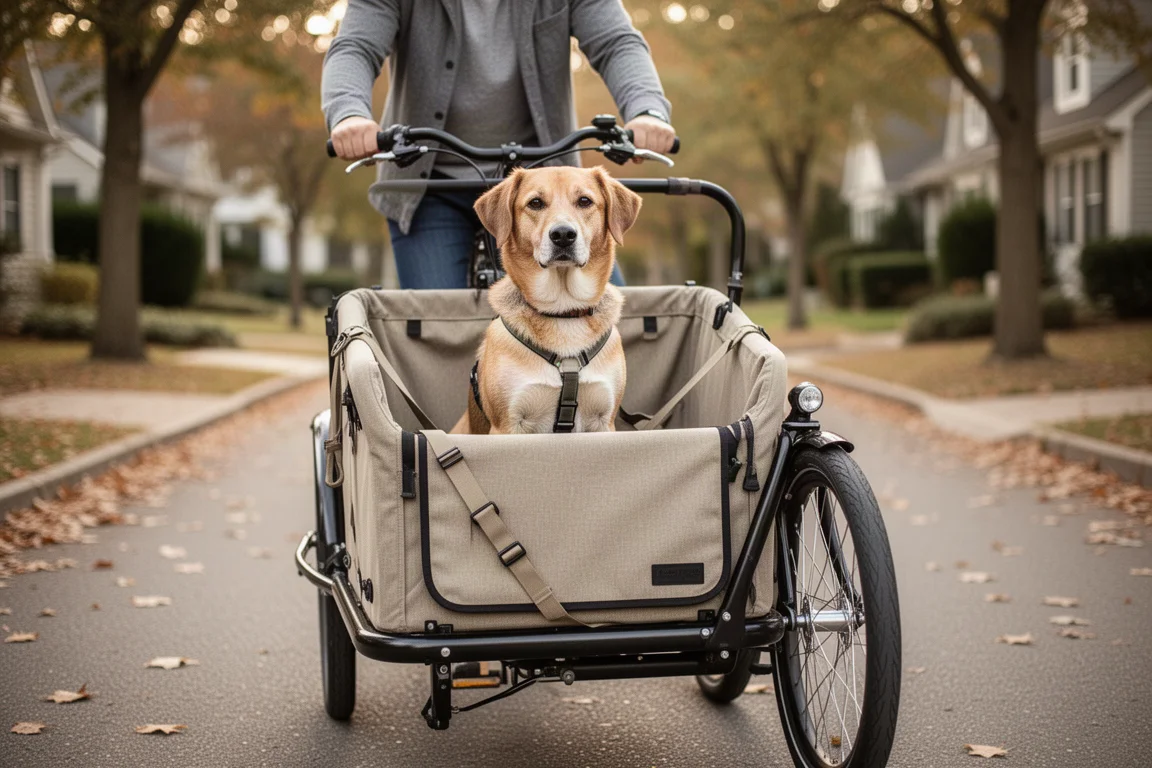
The front of the bike has been extended with a plate that lengthens the cargo section. Across that sits a custom canvas deck, providing a flat, supported surface for whatever is being carried. For this build the occupant is a dog, secured with a custom three-point harness: one clip at the chest and one across the back, each set to a fixed length.
The harness design is worth noting because it is a genuine compromise between safety and comfort. The dog cannot fall off the side, jump forward off the platform, or shift too far back, but the range of movement is wide enough that the experience does not feel restrictive. That kind of detail is the difference between a cargo bike that works daily and one that gets abandoned after a month.
The platform itself is configurable. A seat for a child is one option, and a crate for shopping is another. The frame does not dictate the use case; the owner does.
Things to Consider Before Buying
This is a heavy machine. A cargo e-bike of this type carries a lot of mass before any load is added, and that weight shapes everything from braking to storage. Manoeuvring it in a narrow hallway or lifting it onto a rack is not realistic for most riders.
Because this is a conversion rather than a factory e-bike, the finished result depends heavily on who specifies and builds it. Motor, battery case, brakes, gearing and cargo accessories are all choices, and a different builder will produce a different bike. Buyers considering this route should expect a conversation about their route, load and terrain rather than a fixed spec sheet.
The Wi-Fi part of the name describes the frame’s clearance rather than connectivity. It means the bike can accept mountain bike tyres and mudguards, with room for tyres up to around 2.1 inches and still plenty of clearance left over. That is useful for anyone who wants a tougher tyre and proper guards for wet weather riding.
Finally, e-bike motor rules differ widely by country. Power limits, throttle legality and registration requirements are not the same everywhere, so it is worth confirming what is permitted locally before committing to a particular configuration.
Buying Advice
Start with the route, not the components. A hilly commute of moderate distance points towards strong brakes, a wide gear range and a battery sized for the round trip rather than the maximum possible capacity. A flatter, shorter ride can be specified more simply.
If the bike will carry a child or a pet, treat the harness or seating as part of the purchase rather than an afterthought. A supported deck and a properly fitted restraint are what make the arrangement safe and repeatable day after day, and they are worth having made to suit the specific passenger.
It also makes sense to weigh the conversion path against your own appetite for involvement. A custom build gives you a bike matched to your route and your load, but it also means the specification is only as good as the shop behind it. Ask what happens with servicing, and make sure the drivetrain is geared low enough to get you home without assistance.
Conclusion
The Omnium MiniMax Wi-Fi is a convincing argument for the cargo bike as a car replacement. The shorter front end keeps it manageable in traffic, the platform is genuinely configurable, and this build’s motor, brakes and low gearing were chosen around a real commute rather than a specification sheet.
It is not a light bike, and it is not an off-the-shelf e-bike. For riders who want to carry a dog, a child or a week of shopping over hilly ground without driving, the trade-offs are the point rather than a compromise.
Product link
View more details for Omnium MiniMax Wi-Fi
This product is mentioned in the review. Check the specifications, options, and compatibility before buying.
View more details for Omnium MiniMax Wi-FiFurther reading
Related Reviews
Cargo Bikes
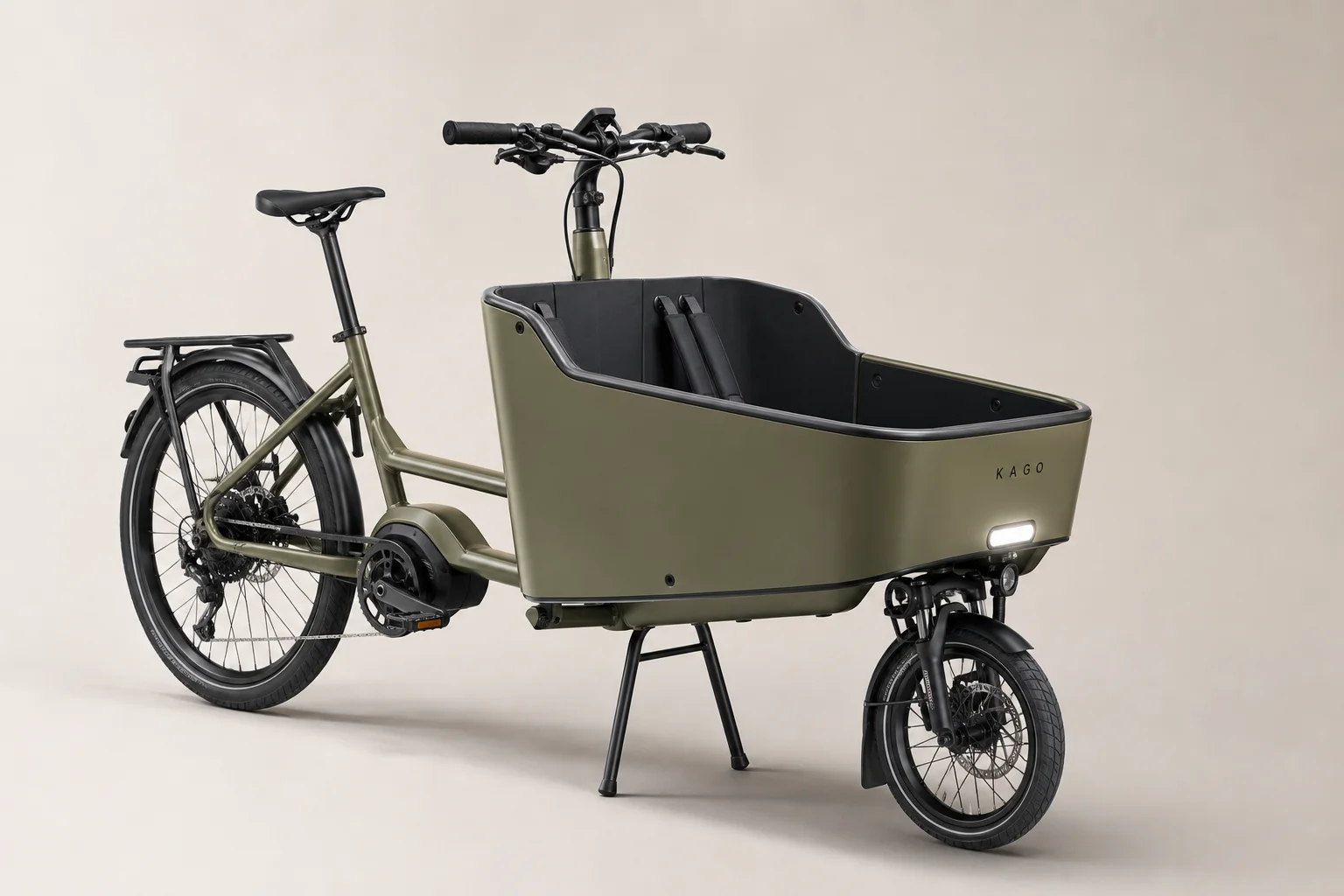
Kago Bike Review: A 121-Pound Cargo Hauler Built for the Future
The Kago is an ambitious electric cargo bike with automotive-grade safety engineering, a 600-pound capacity, and a price tag that reflects its ambitions. We tested it fully loaded down a steep hill.
Cargo Bikes
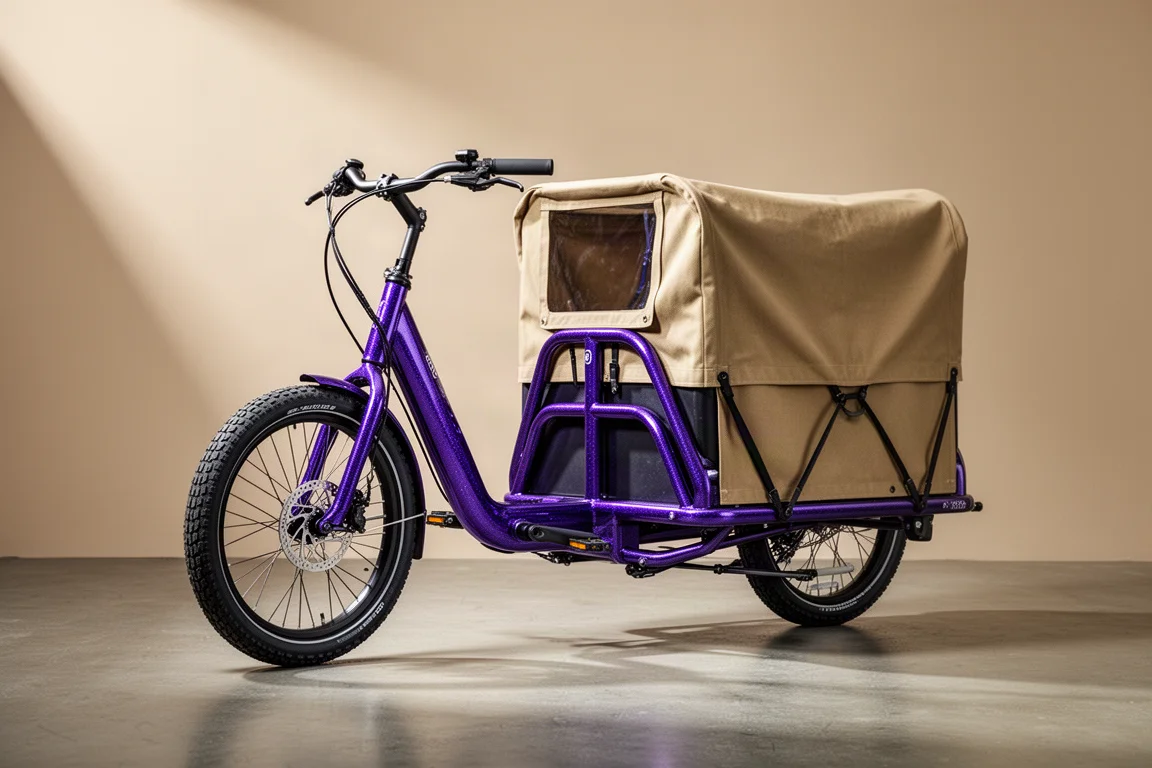
Omnium Mini-Max WiFi Cargo Bike Review: An Electric Build for Commuting With a Dog
A practical look at an Omnium Mini-Max WiFi cargo bike built up as an electric commuter, covering the Bafang motor, the custom battery case, the Magura brakes, the Schwalbe tyres, and the dog harness setup.
Cargo Bikes
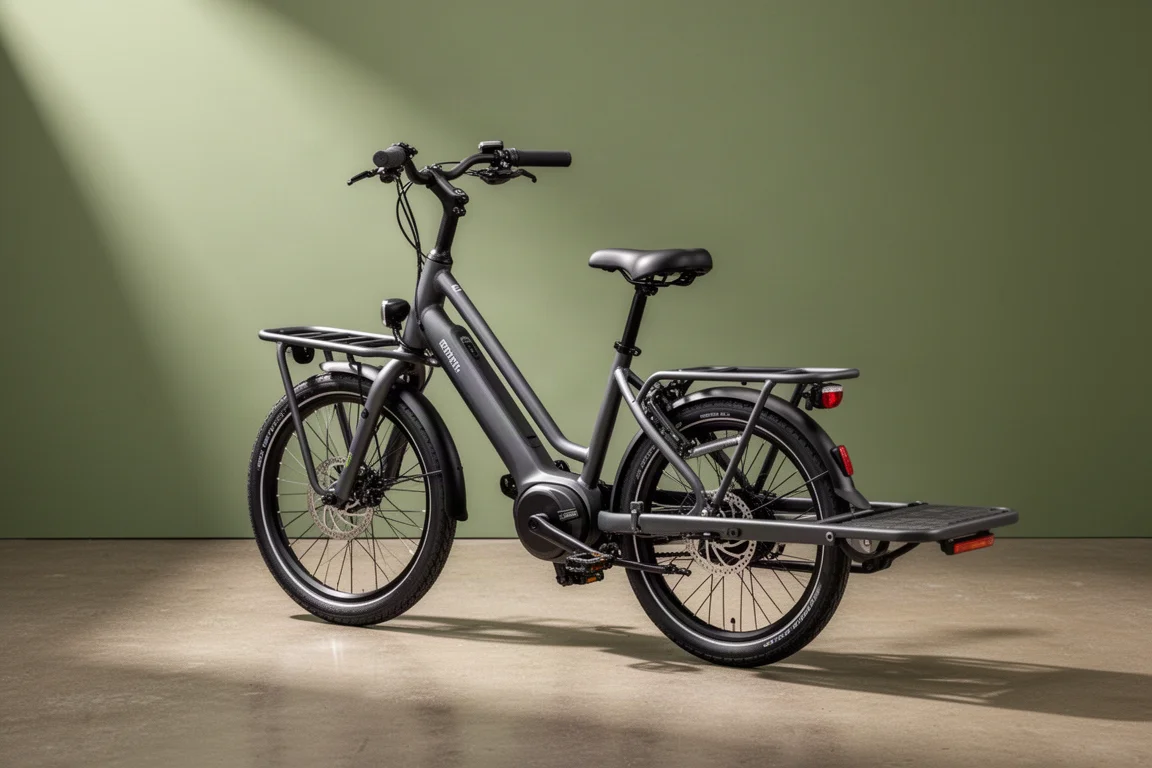
Tern GSD S10 Review: Three Years and 1,800 Miles on a Compact Cargo Bike
A long-term look at the Tern GSD S10, covering real running costs, the first service bill, and whether a compact cargo bike can genuinely replace a second car.