Cargo Bikes
Omnium Mini-Max WiFi Cargo Bike Review: An Electric Build for Commuting With a Dog
A practical look at an Omnium Mini-Max WiFi cargo bike built up as an electric commuter, covering the Bafang motor, the custom battery case, the Magura brakes, the Schwalbe tyres, and the dog harness setup.
Introduction
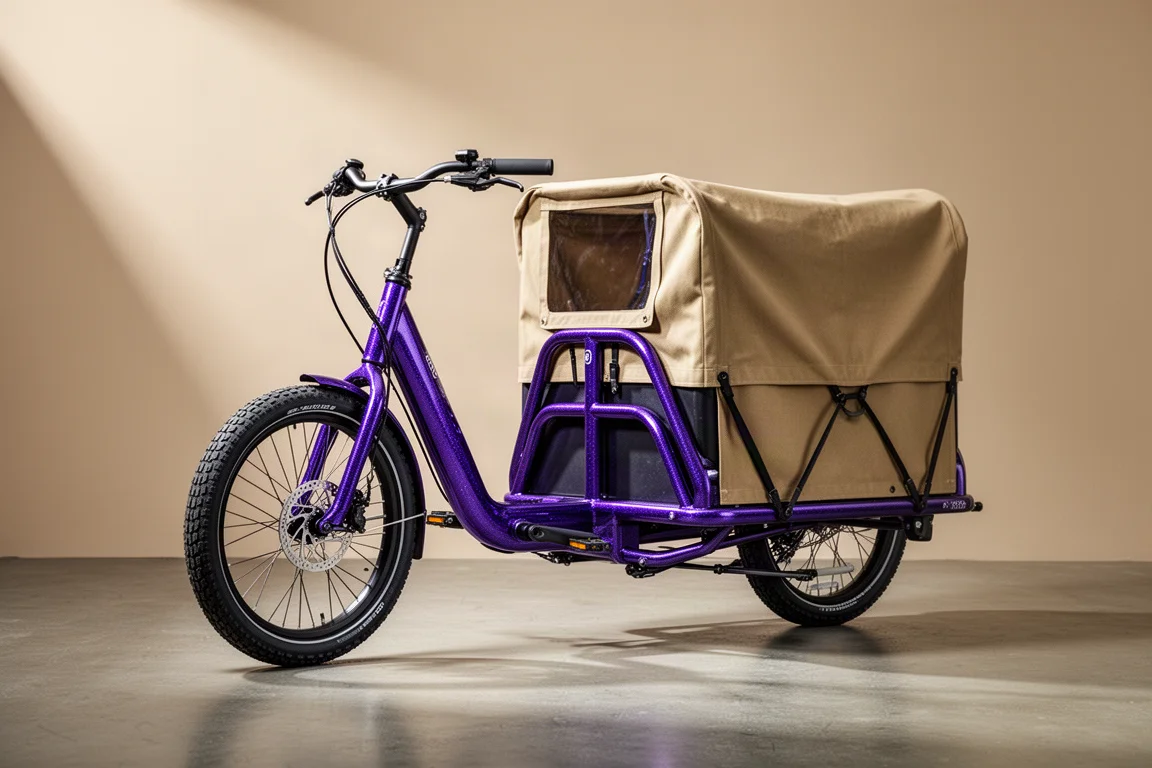
A cargo bike is simply a bicycle designed to carry cargo, and in this case the cargo is a dog. This Omnium Mini-Max WiFi has been built up as an electric commuter for a route of roughly 10 km each way over hilly ground, with a dog riding on the extended front platform.

The Mini-Max part of the name refers to the shorter front end. Omnium also makes a longer full size cargo bike, and the Mini-Max trims that front section down while keeping the load platform. The WiFi part is about clearance: it describes a frame that can take mountain bike tyres and mudguards, in this case 2.1 inch tyres with mudguards fitted and plenty of room left over.
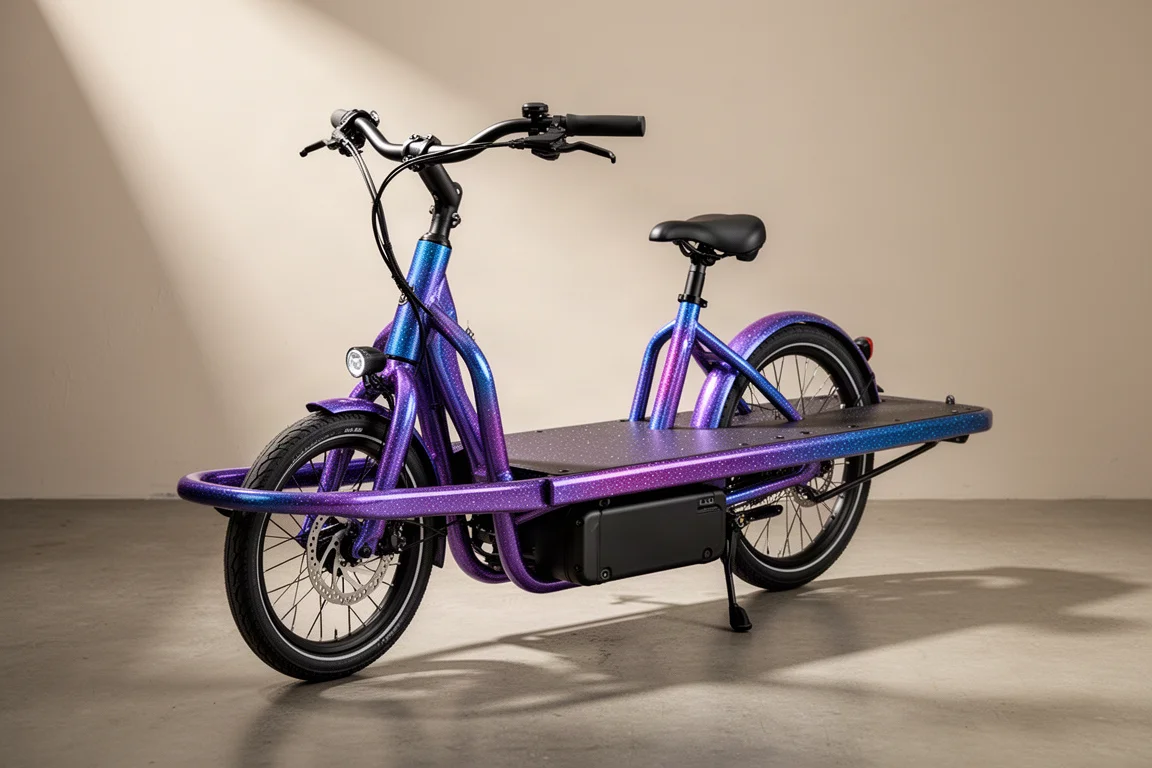
The frame here is the extra small size, finished in the colour Omnium calls blurple, a blue purple flip with glitter in the paint. It is a striking finish on a bike that is otherwise all function.
Who This Cargo Bike Is For
This is a bike for riders who need to move something more than themselves. In this build the something is a dog, but the front platform can be specified however the owner wants to use it: a seat for a child, or a crate for shopping.
Choosing a cargo bike over a trailer or a backpack comes down to stability and safety, particularly with an animal on board. A dog in a front platform that is bolted to the frame behaves very differently from a dog in a trailer behind the bike, and for a hilly commute the electric motor removes the worst of the effort.
Main Strengths: Stability, Power, and Dog-Friendly Design
The first thing that stands out is how settled the bike feels with a load up front. That is partly the frame layout and partly the sheer mass of the build, which makes it calm rather than twitchy.
The motor supplies a lot of assistance for a bicycle. It is a Bafang unit, a brand that is common in conversion builds, and although it is a 750 W motor it runs at around 400 W in this configuration. The battery is very large and sits in a case designed specifically for this bike, tucked under the cargo area. Between them, the motor and battery make a hilly 10 km commute straightforward even with a dog on the platform.
There is also a sensible fallback. The gearing was chosen so that the bike remains rideable if the motor fails or the battery runs out, which matters on a heavy cargo bike that would otherwise be a struggle to get home.
Motor, Battery, and Drivetrain Details
The Bafang motor family supports a throttle option, so the bike can be set up to run without pedalling. Throttle use is not legal in every market and the rules vary from country to country, so it is worth checking local regulations before specifying one.
The battery is the other headline component. It is a large pack in a custom 3D printed case that has been sealed so the whole assembly is waterproof. The case was designed from scratch for this build, which is one reason the project took a while to come together, and it is tucked away under the cargo section rather than bolted on as an afterthought.
The drivetrain is a deliberate mix. Shimano Deore shifters keep the cost sensible, because saving weight on a heavy cargo e-bike is not a meaningful goal. The rear derailleur is a Shimano SLX, chosen because it can handle a wide gear ratio, and it is paired with a 32 tooth chainring and an 11 to 46 tooth cassette. The chainset comes from a company called Lecky, which makes drive chain components for electric bike setups, and it was selected to get the chain line right.
That 32 by 11 to 46 spread is the reason the bike can still be pedalled up a hill without assistance.
Brakes, Tyres, and Cargo Setup
Stopping power got serious attention, and for good reason. The bike uses Magura four piston brakes, which effectively means two sets of pistons acting on a much longer pad, giving more contact area. On a road bike that would be overkill, but on a loaded cargo bike descending steep hills it is exactly the kind of margin you want.
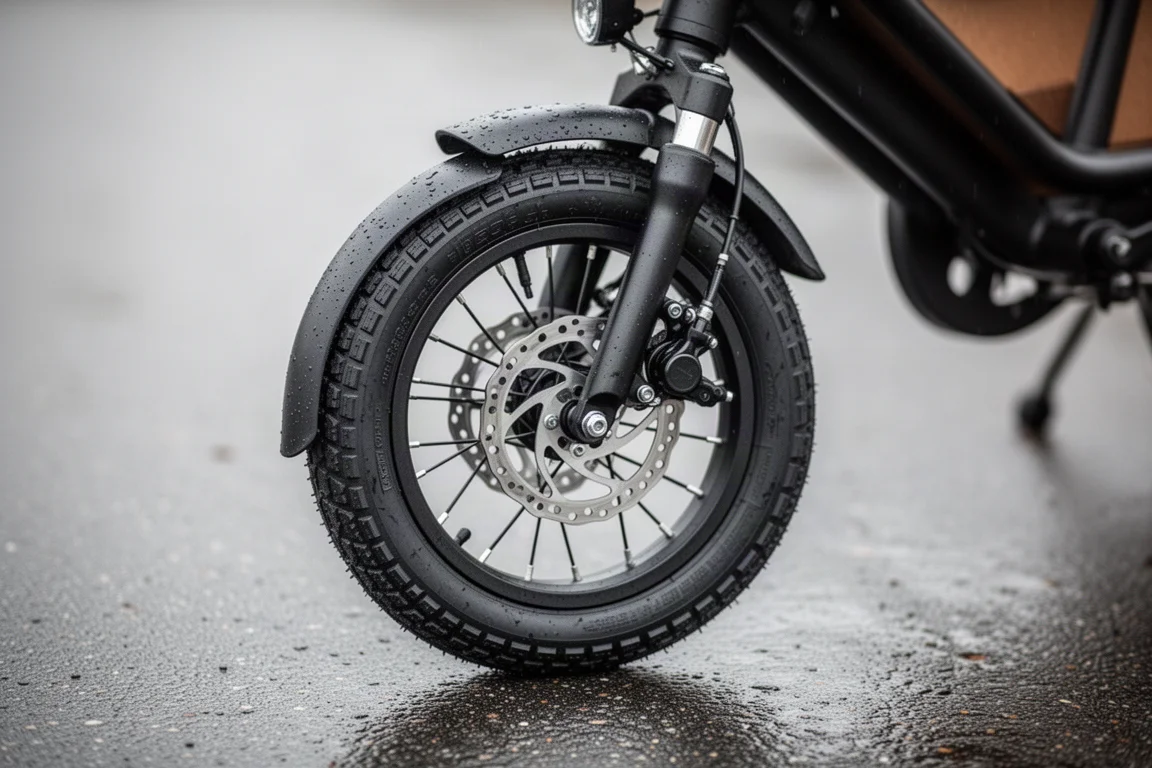
Tyres are Schwalbe at both ends. The 20 inch front wheel runs a 2.15 inch Schwalbe Big Ben Plus, and the rear uses a Schwalbe Marathon E-Plus at 2 inches. The reasoning was puncture protection and grip rather than aggressive tread: knobbly tyres were not wanted, but a tyre that resists punctures under load was essential.
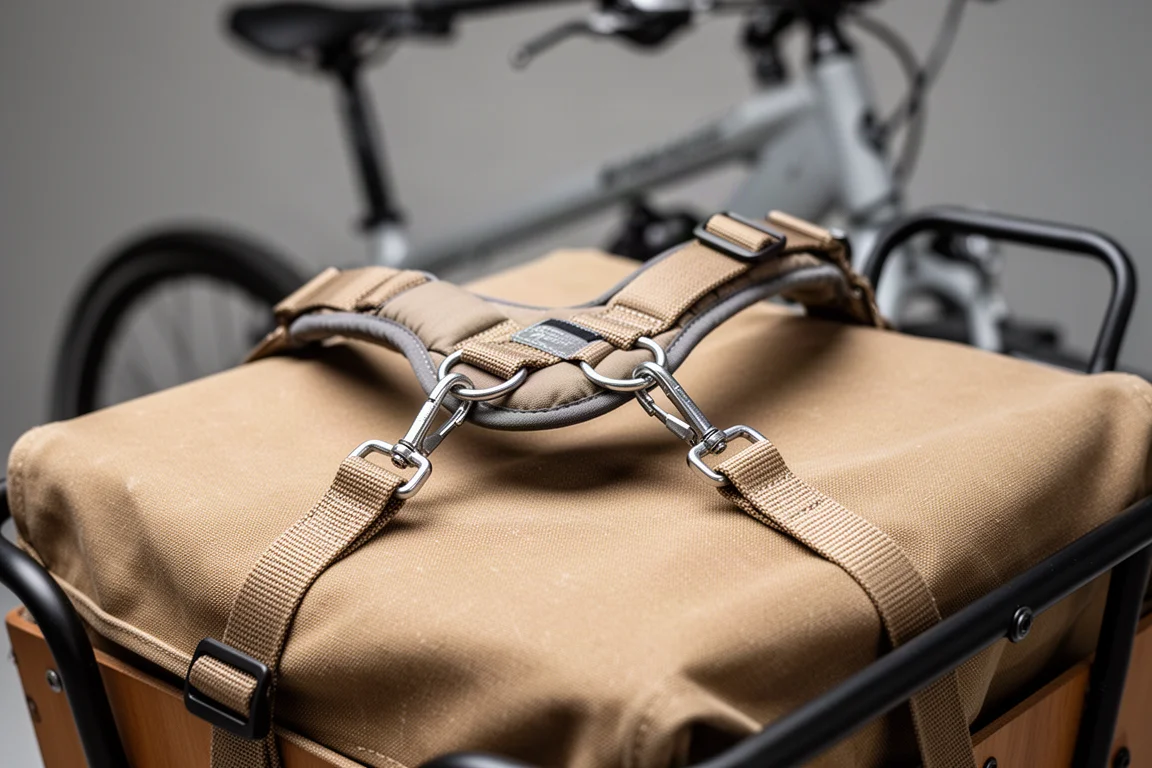
The cargo area itself has been extended. An extender plate lengthens the front section, and a custom made canvas cover spans it to give the dog a flat, supported surface. A custom three point harness completes the setup, with a clip at the chest and a clip at the back, both at set lengths. The dog can move freely but cannot fall off the side, jump off the front, or slide too far back.
Things to Consider Before Buying
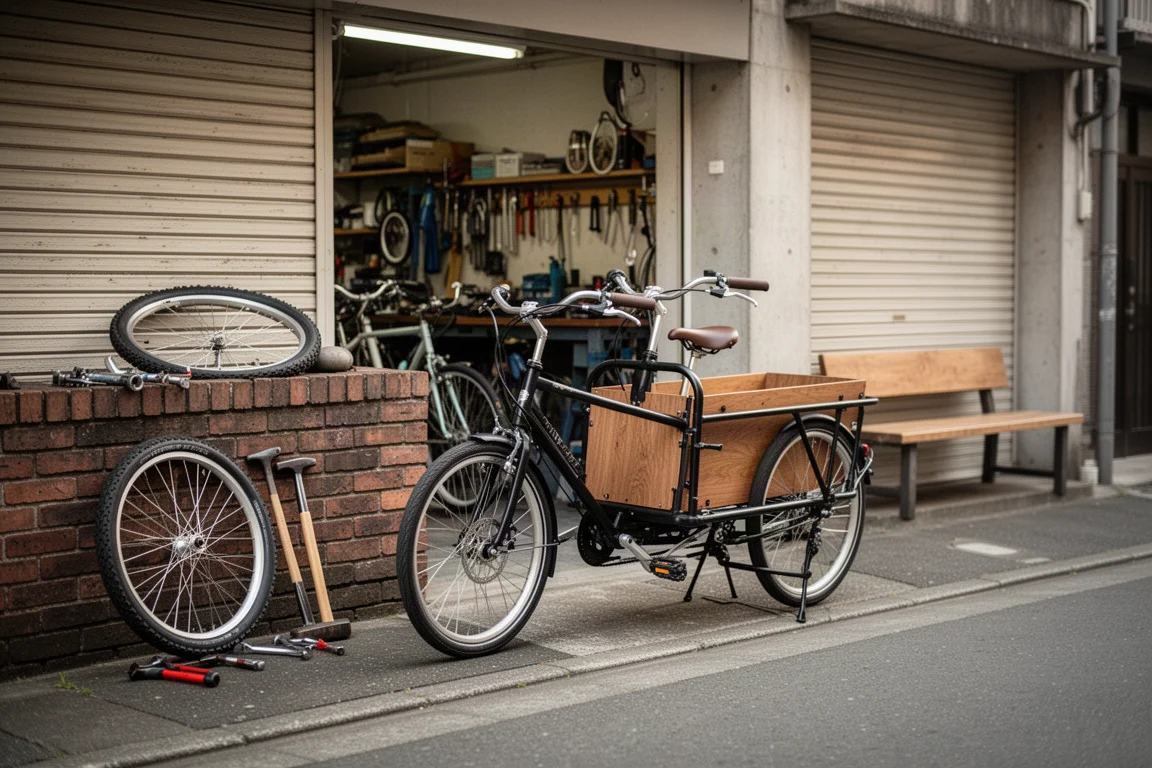
This particular bike is not an off the shelf model. The official electric version of the frame, the one with the large opening designed for a Bosch motor, was not available at the time, so a standard frame was converted instead. That means the specification depends heavily on the builder, and anyone considering a similar route should expect to work with a shop that knows cargo bikes well.
Weight is another factor. This is a heavy build, and the component choices reflect that: lightweight parts are not the point, and there is no benefit in paying for them.
The custom parts also add complexity. The 3D printed battery case, the extended cargo plate, the canvas cover, and the harness were all made or specified for this bike, which took time to arrange. That is the trade off for a setup that fits a specific rider, a specific dog, and a specific commute.
Finally, the frame is the extra small, so sizing and fit deserve proper attention, especially with a load sitting on the front platform.
Buying Advice
Start with the job the front platform has to do. A dog, a child seat, and a shopping crate each place different demands on the frame, the harness or mounting hardware, and the brakes. Deciding this first makes the rest of the specification much easier.
If your route is hilly and you are carrying a load, prioritise the motor, the battery capacity, and the brakes over weight and drivetrain tier. The wide gear range is worth keeping as well, because it gives you a way home if the electric assistance stops. And if you are considering a conversion rather than a factory electric cargo bike, choose the builder carefully, since the quality of the finished bike depends on the details they specify.
Conclusion
The Omnium Mini-Max WiFi makes a strong case for the cargo e-bike as a car replacement rather than a bike replacement. With a powerful motor, a large sealed battery, four piston brakes, and a front platform that can be configured around a passenger, a load, or a dog, it turns a hilly 10 km commute into something you can do without driving.
Product link
View more details for Omnium Mini-Max WiFi
This product is mentioned in the review. Check the specifications, options, and compatibility before buying.
View more details for Omnium Mini-Max WiFiFurther reading
Related Reviews
Cargo Bikes
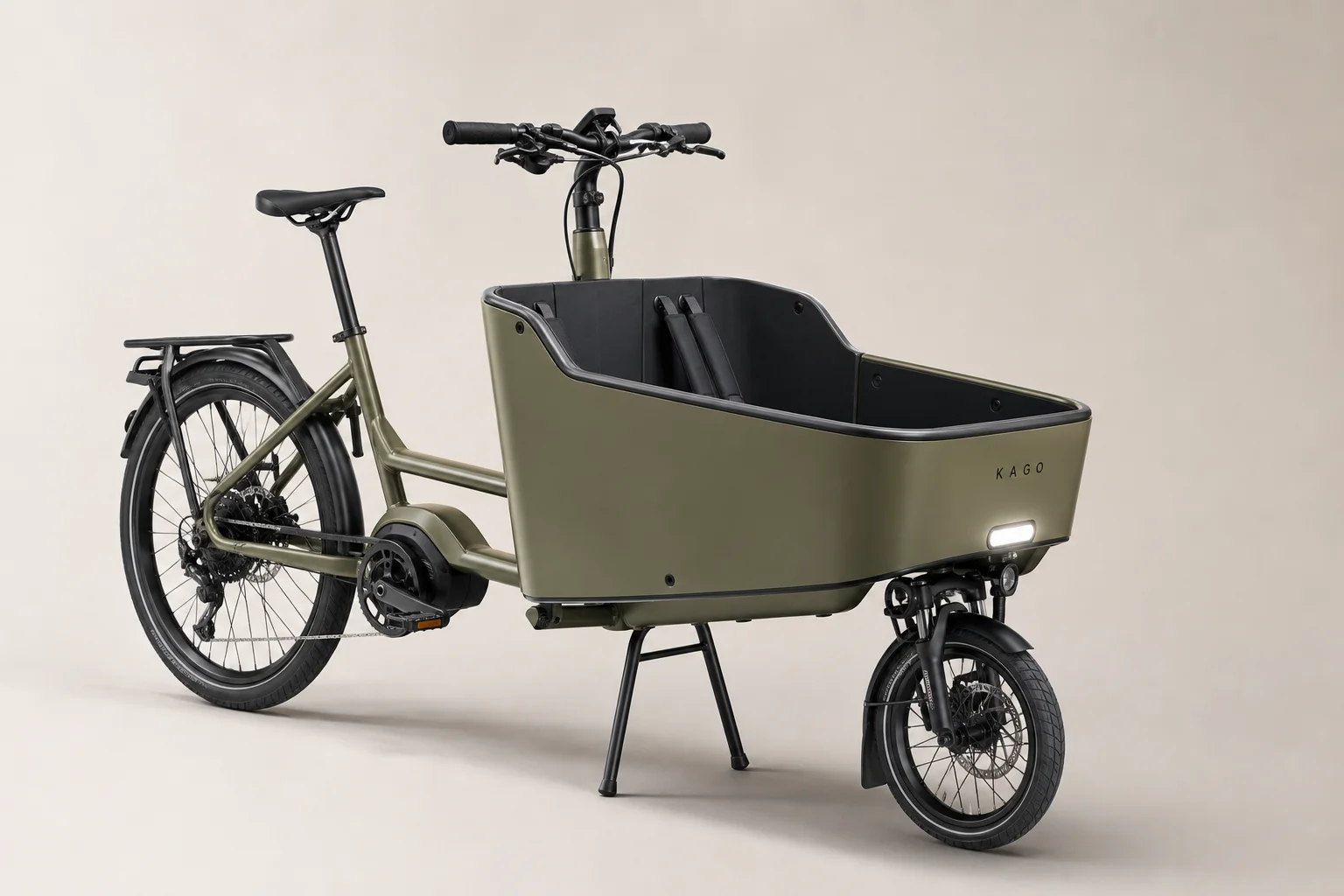
Kago Bike Review: A 121-Pound Cargo Hauler Built for the Future
The Kago is an ambitious electric cargo bike with automotive-grade safety engineering, a 600-pound capacity, and a price tag that reflects its ambitions. We tested it fully loaded down a steep hill.
Cargo Bikes
Omnium MiniMax Wi-Fi Review: A Custom Cargo E-Bike Built for the Daily Commute
A practical look at the Omnium MiniMax Wi-Fi cargo bike, including its Bafang e-assist conversion, hill-ready brakes and gearing, and the dog-friendly cargo setup.
Cargo Bikes
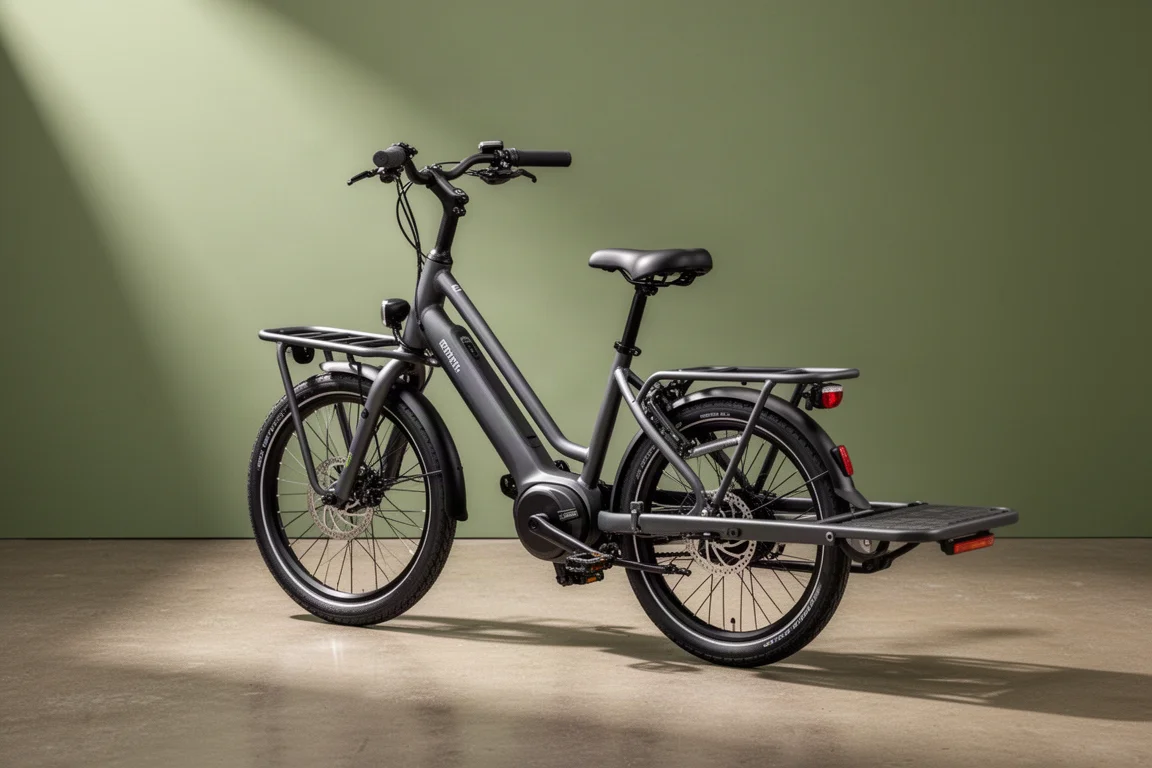
Tern GSD S10 Review: Three Years and 1,800 Miles on a Compact Cargo Bike
A long-term look at the Tern GSD S10, covering real running costs, the first service bill, and whether a compact cargo bike can genuinely replace a second car.