Automotive
Oil Additives Tested: Do They Improve Power, Fuel Economy, and Engine Protection?
Five popular oil additives tested for horsepower, fuel economy, cold flow, heat resistance, and wear protection. See which ones delivered and which fell short.
Introduction
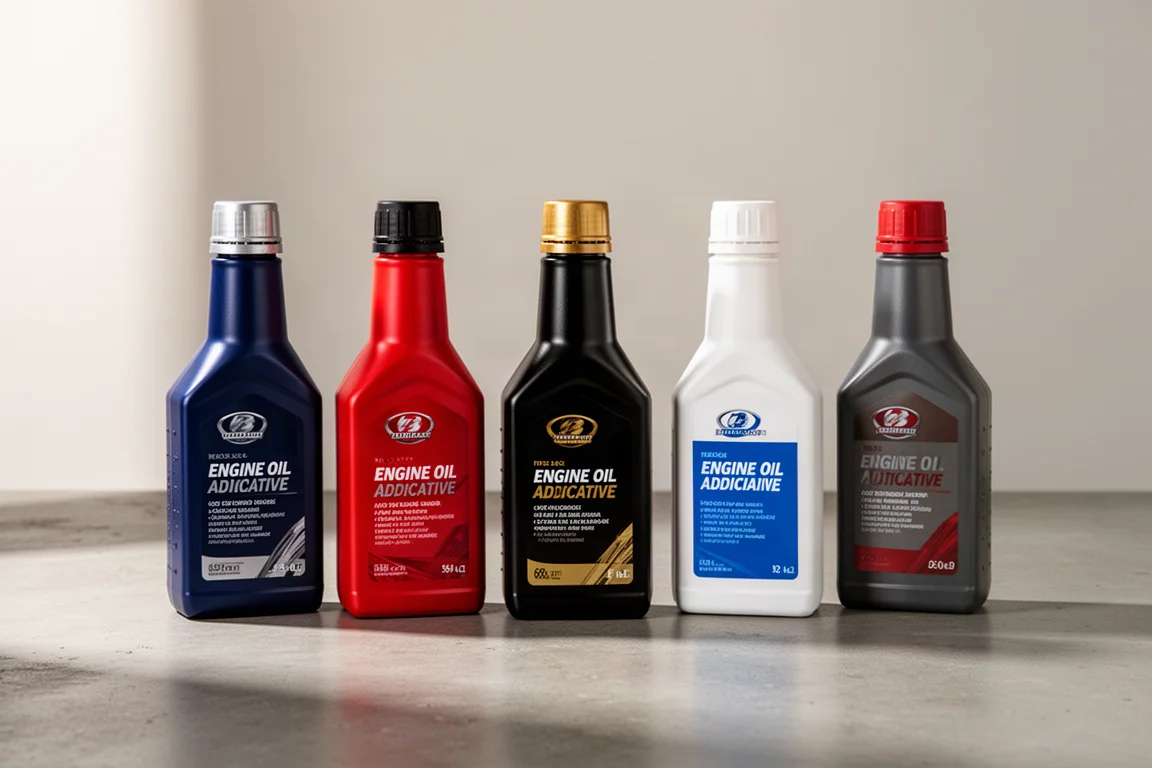
Oil additives are a popular way to try to get more out of an engine. Tens of thousands of people buy them every month, and the claims are bold: more horsepower, better fuel economy, and longer engine life. But do they actually work? To find out, five popular oil additives were put through a series of controlled tests measuring cold flow, heat resistance, fuel economy, acceleration, and wear protection. The results are surprising, and they show that not all additives are created equal.
How We Tested These Oil Additives
Each additive was blended into a high-quality 5W30 motor oil at the manufacturer’s recommended ratio. The blends were then sent to an independent oil testing lab for analysis. Testing covered oil flow at ambient temperature, flow after being frozen at -40 degrees, evaporation under high heat, real-world fuel economy and acceleration runs on a highway, and wear scar measurements using a lubricity tester.
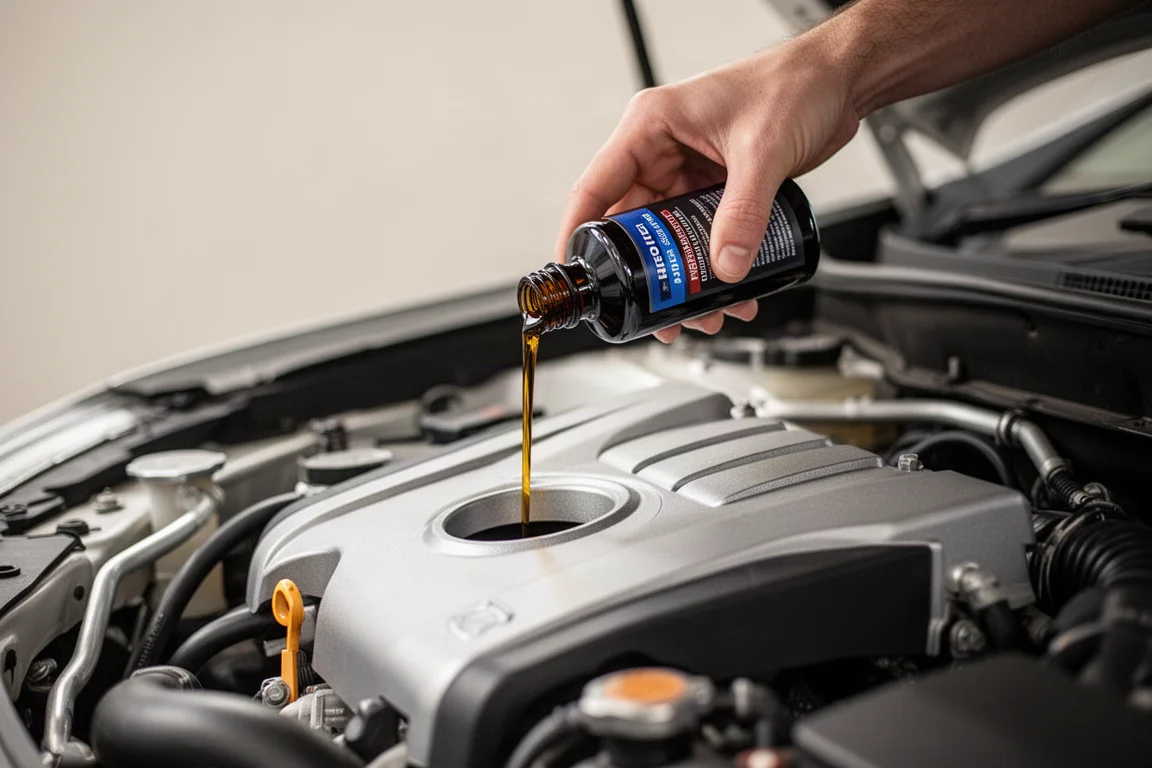
The goal was to see how each additive performed both when brand new and after exposure to the kind of heat an engine generates. This dual approach reveals whether the benefits hold up in real driving conditions or only in ideal laboratory settings.
Liqui Moly MOS2 Anti-Friction Engine Treatment
Liqui Moly MOS2 is an anti-friction engine treatment that claims immediate friction and wear reduction. One can treats up to 6.4 quarts of motor oil, and the manufacturer states it is safe for turbochargers and catalytic converters. It is made in Germany and costs around $11.
In the cold flow test, the Liqui Moly blend finished at 1.32 seconds, slightly slower than pure motor oil at 1.3 seconds. After heat exposure, it lost only 2.83 grams to evaporation, which was better than the motor oil’s 3.13 grams. In the lubricity test, the heat-exposed blend produced a wear scar of 5.44 mm, slightly larger than the motor oil’s 5.37 mm.
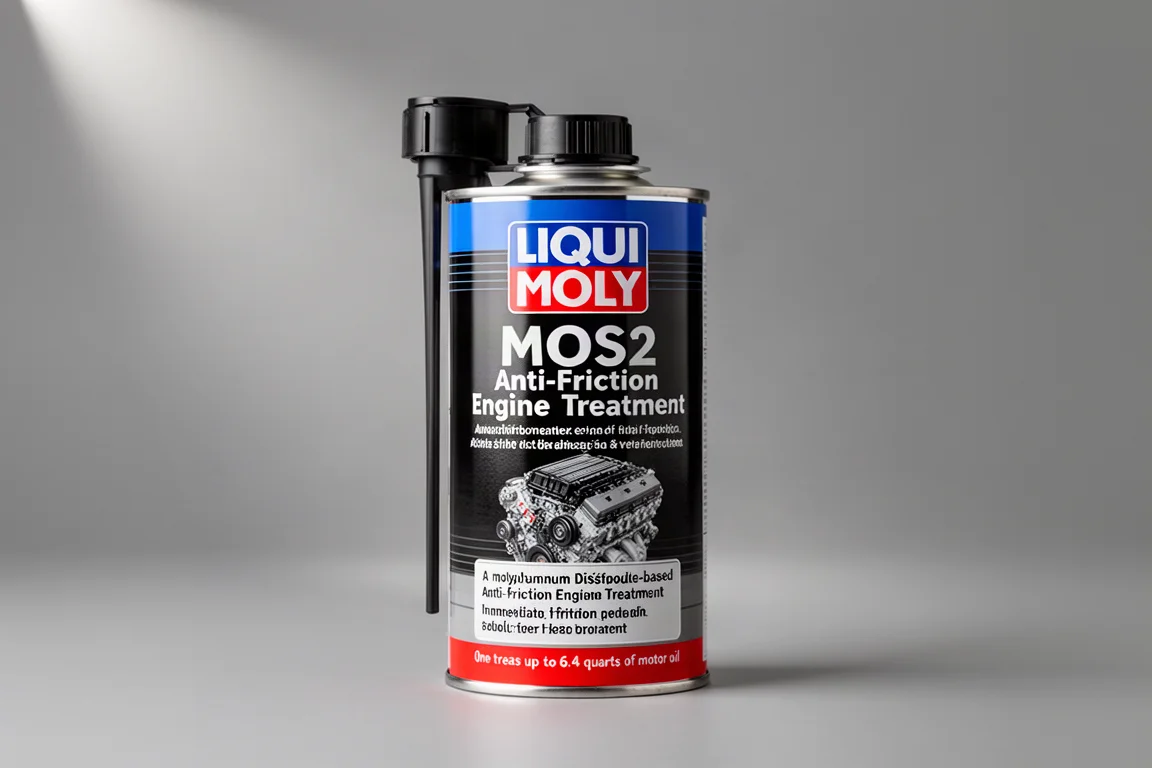
In real-world testing, the Liqui Moly blend showed no detectable difference in 0 to 60 times, with an 8.66 second run versus the 8.64 second baseline. Fuel economy came in at 16.86 mpg versus the 17.36 mpg baseline, though rain during the test may have affected the result. The engine did crank over easier with the additive, using about 124 fewer watts of energy.
Lucas Heavy Duty Oil Stabilizer
Lucas Heavy Duty Oil Stabilizer is one of the most popular additives on the market, with a 4.8 star rating from over 6,600 customers. It costs around $12 and claims to eliminate dry starts, seal worn cylinders, and cool and quiet engines. It is also supposed to make starting easier at any temperature.
The Lucas blend was noticeably thicker than the other products. In the ambient flow test, it took 2 seconds to flow, significantly slower than the motor oil’s 1.3 seconds. After freezing, it was the slowest of all products at just under 1 minute 54 seconds. In the heat evaporation test, it lost 3.15 grams, essentially matching the motor oil.
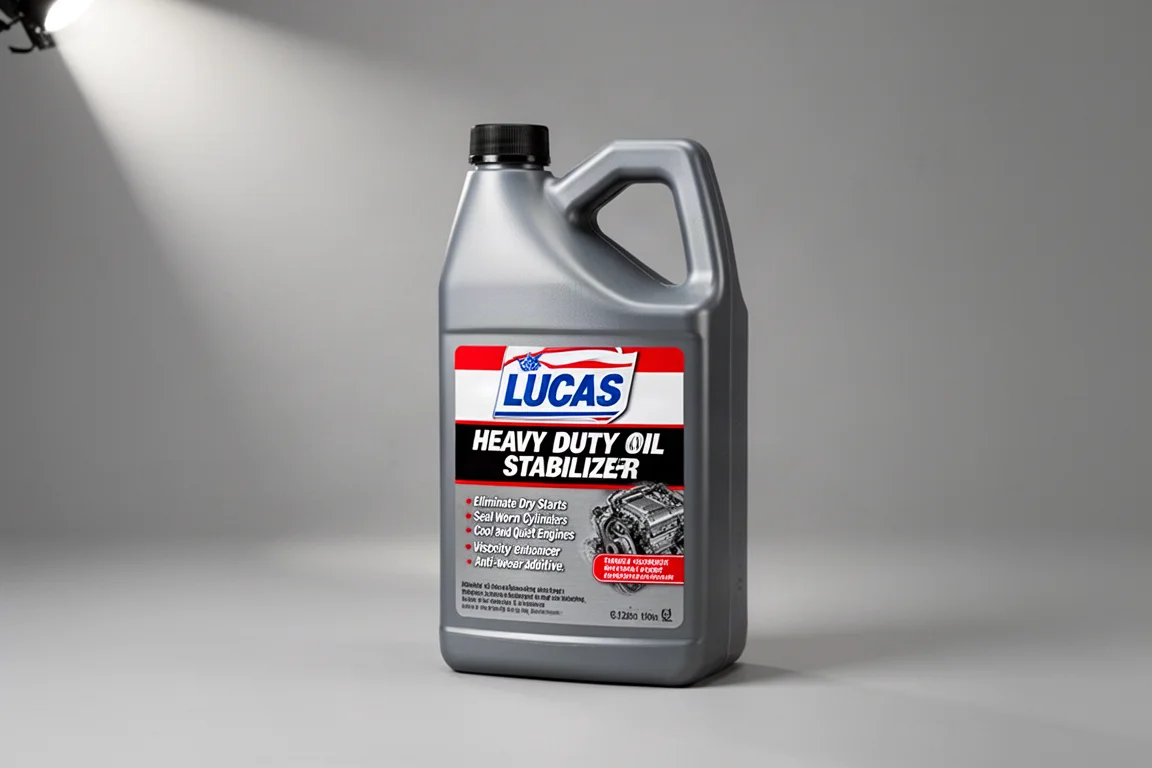
In the lubricity test, the Lucas blend tied the motor oil with a wear scar of 5.37 mm. The additive is mostly a viscosity enhancer rather than an anti-wear additive, which explains its performance in the flow tests. For drivers in cold climates, the increased viscosity could be a concern.
Bestline Engine Treatment
Bestline Engine Treatment uses what the manufacturer calls nano diamond technology. It costs around $25 and claims to lubricate with diamond nano particles, clean internal components, and reduce friction, temperature, and wear. It is made in the USA.
In the ambient flow test, the Bestline blend was the fastest at 1.27 seconds, slightly thinner than the motor oil. After heat exposure, it lost 4.77 grams to evaporation, about 41% more than the motor oil alone. This suggests the additive does not handle high heat as well as the others.
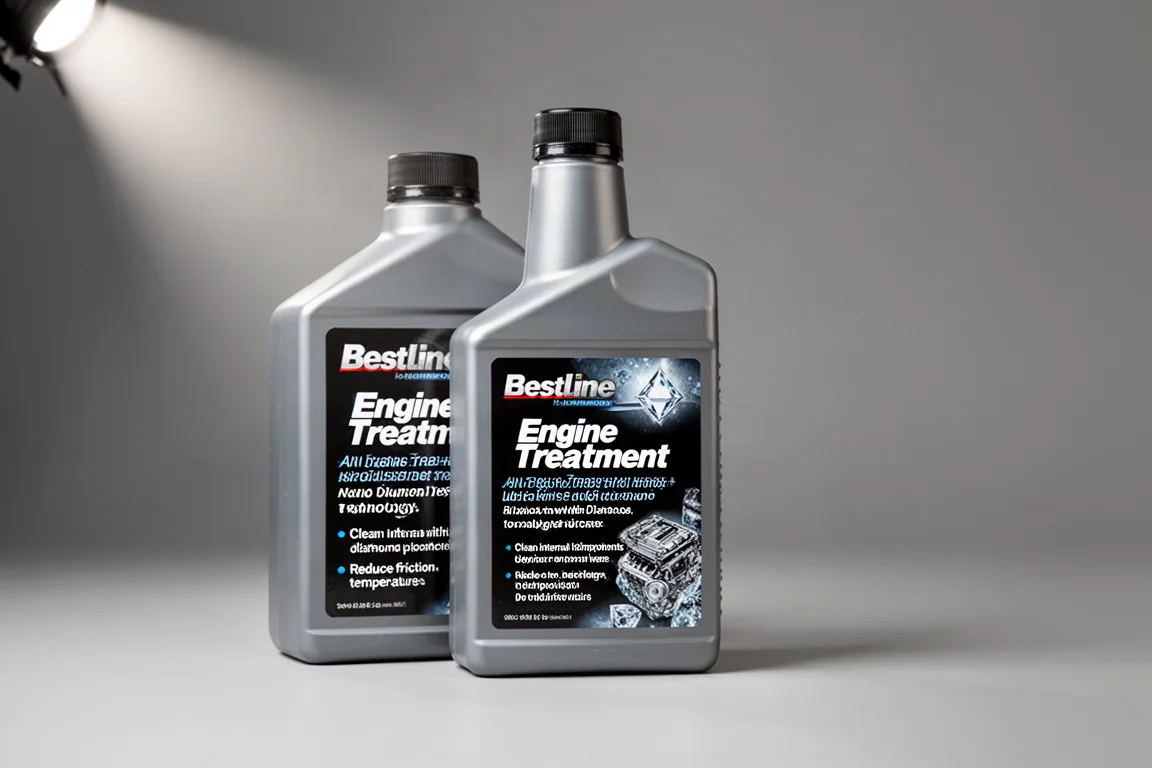
In the lubricity test, the brand new 100% Bestline produced an extremely small wear scar of 1.62 mm. However, when blended with motor oil and exposed to heat, the wear scar grew to 4.7 mm. It still outperformed the motor oil, but the margin narrowed considerably. In real-world testing on a Toyota 4Runner, fuel economy dropped from 23.42 mpg to 21.21 mpg, a loss of 2.2 mpg.
Prolube Oil Treatment
Prolube Oil Treatment costs around $39 per quart and has a 4.6 star rating. It claims to reduce maximum friction, increase fuel economy, lower oil temperatures, and prevent sludge and varnish. It is made in the USA and is meant to be used at every oil change.
In the ambient flow test, the Prolube blend finished at 1.32 seconds. After heat exposure, it lost only 3.06 grams to evaporation, slightly better than the motor oil. However, the heat caused significant damage to the additive. In the frozen flow test after heat exposure, the Prolube blend was the slowest at just over 2 minutes 8 seconds.
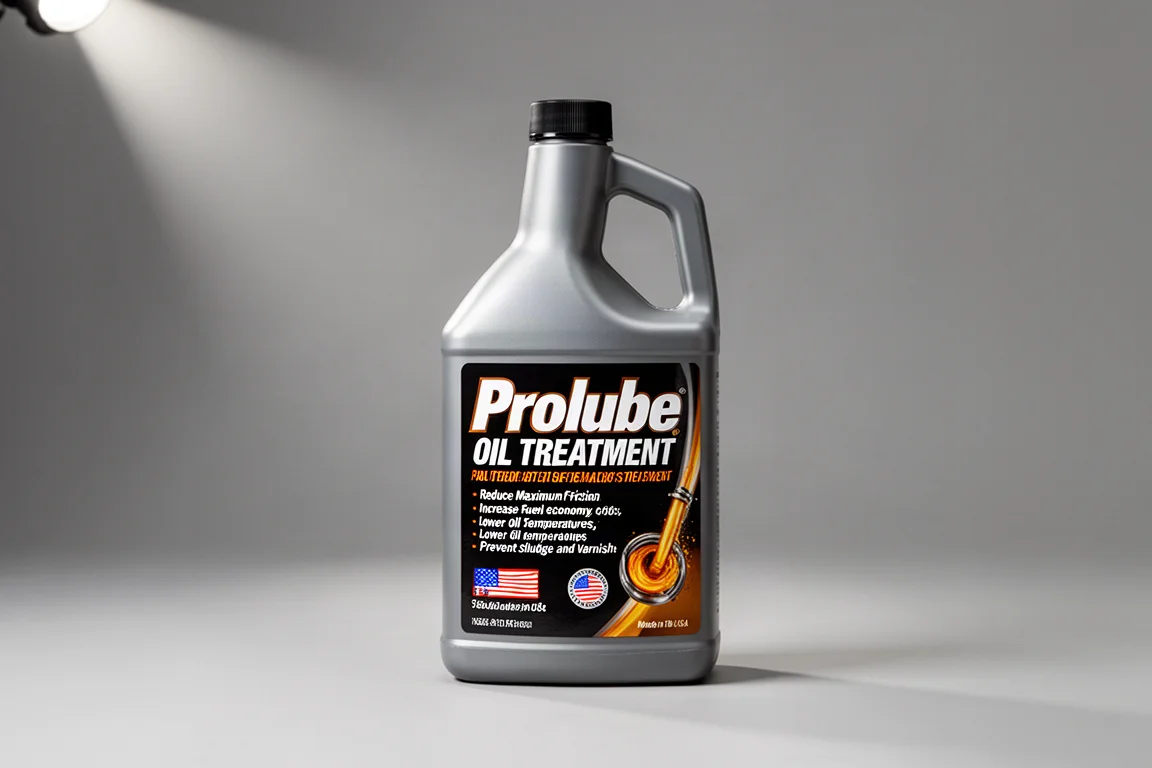
In the lubricity test, the brand new 100% Prolube produced a wear scar of only 2.08 mm. But when blended with motor oil and exposed to heat, the wear scar grew to 5.84 mm, larger than the motor oil alone. The active ingredient, oleic acid, has poor thermal stability, which explains this dramatic drop in performance.
In real-world testing on a 2020 Chevrolet Suburban, the Prolube blend improved fuel economy from 21.92 mpg to 23.4 mpg, a gain of about 1.5 mpg. The 0 to 60 time also improved from 7.7 seconds to 7.55 seconds. However, the heat-related concerns raise questions about whether these gains will last.
Arch Oil AR9100
Arch Oil AR9100 is the most expensive additive tested at around $40. It uses what the manufacturer calls nanol lubrication technology and claims to reduce wear and extend component life. It is made in the USA and is meant to be used at every oil change.
In the ambient flow test, the Arch Oil blend finished at 1.28 seconds, close to the motor oil. After heat exposure, it lost 3.42 grams to evaporation. In the frozen flow test, it finished at 57.5 seconds, close to the motor oil’s time of just over a minute.
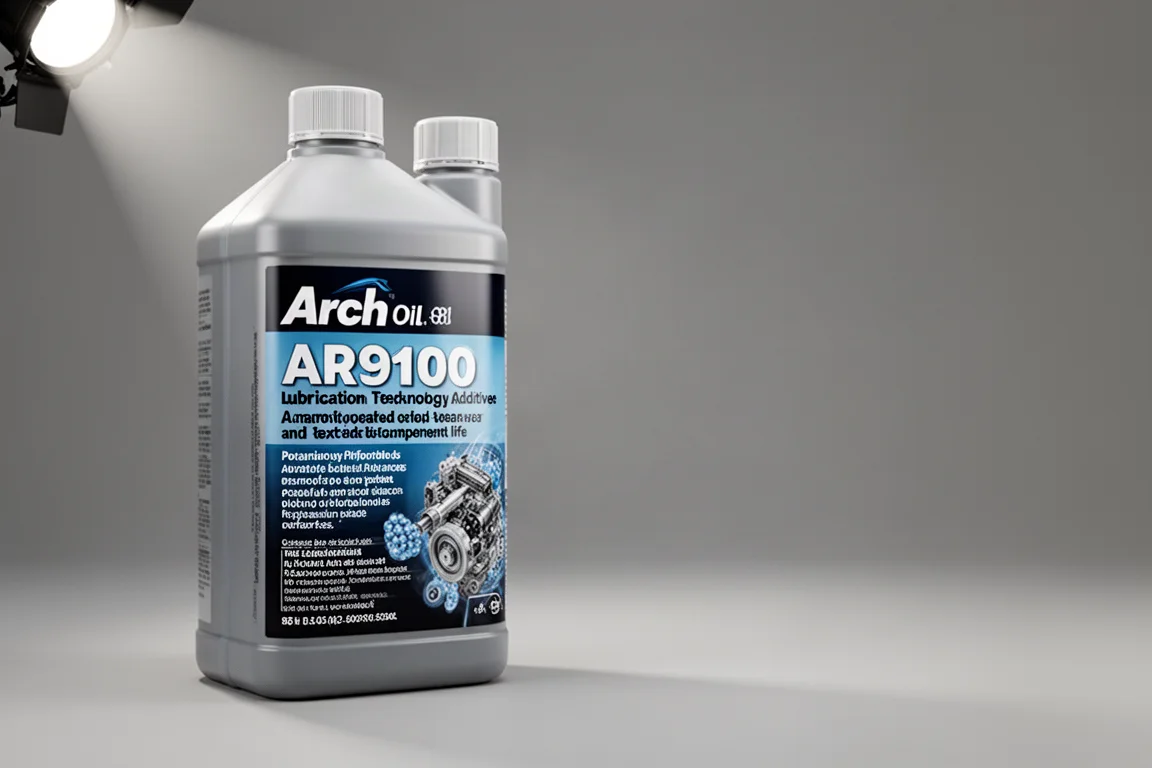
In the lubricity test, the brand new 100% Arch Oil produced the smallest wear scar of all products at 1.08 mm. However, when blended with motor oil and exposed to heat, the wear scar grew to 5.54 mm, larger than the motor oil. In a generator fuel efficiency test, the Arch Oil blend ran 15 seconds short of the regular motor oil’s runtime.
Cold Flow and Viscosity: What the Flow Tests Showed
The flow tests revealed significant differences between the products. At ambient temperature, most additives had a minor impact on oil flow. Bestline and Arch Oil thinned the oil slightly, while Liqui Moly and Prolube added a little viscosity. Lucas added quite a bit of viscosity, making the oil noticeably thicker.
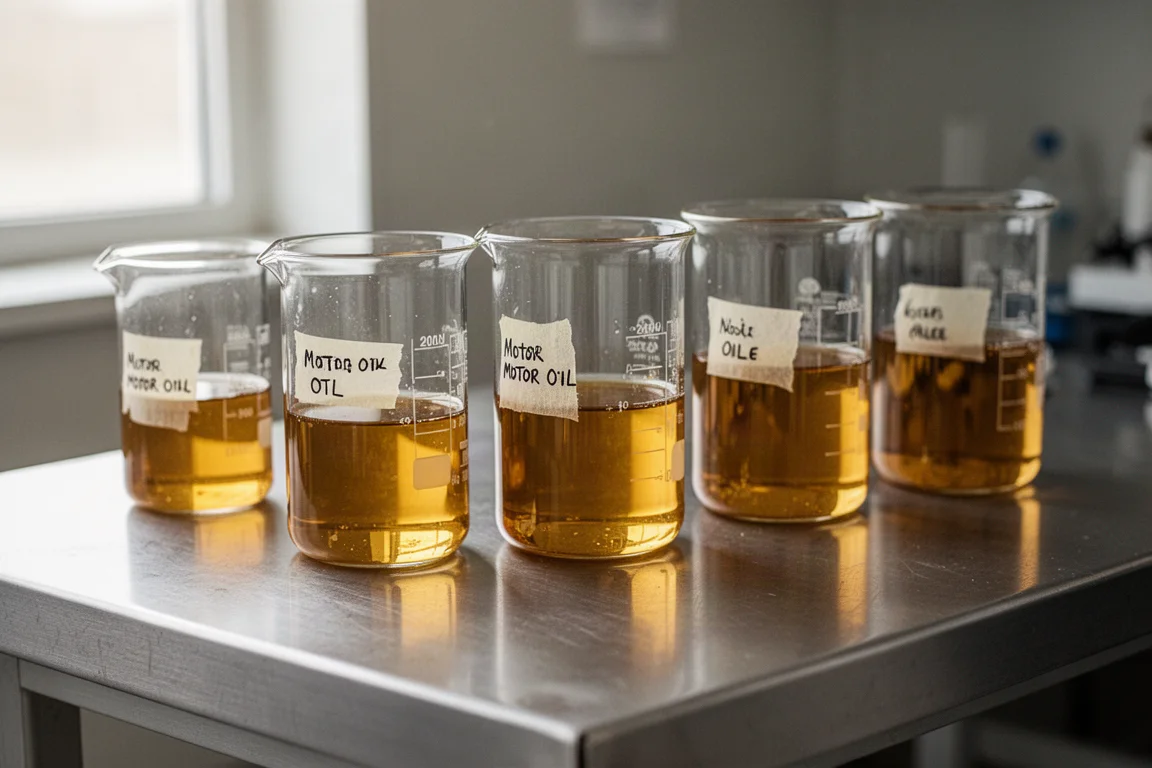
After freezing at -40 degrees, the differences became more pronounced. Bestline flowed fastest at 55.5 seconds, followed by Arch Oil at just over 55 seconds. Motor oil took about a minute and 2 seconds. Liqui Moly took a minute and 11 seconds, and Lucas was the slowest at just under a minute and 54 seconds.
After heat exposure, the results shifted. Bestline was still the fastest at 51.1 seconds, and Arch Oil was close to the motor oil at 57.5 seconds. Prolube struggled the most, taking just over 2 minutes and 8 seconds. This shows that heat can significantly damage certain additives, particularly Prolube.
Real-World Fuel Economy and Acceleration Testing
Real-world testing on three different vehicles produced mixed results. The Liqui Moly blend showed no detectable difference in acceleration, with a 0 to 60 time of 8.66 seconds versus the 8.64 second baseline. Fuel economy was slightly worse at 16.86 mpg versus 17.36 mpg, though rain may have played a role.

The Bestline blend on the Toyota 4Runner showed worse fuel economy across all three checkpoints, with an overall drop from 23.42 mpg to 21.21 mpg. The 0 to 60 time improved slightly from 8.24 seconds to 8.19 seconds.
The Prolube blend on the Chevrolet Suburban showed the most promising results. Fuel economy improved from 21.92 mpg to 23.4 mpg, and the 0 to 60 time improved from 7.7 seconds to 7.55 seconds. However, the heat-related degradation seen in the lab tests raises questions about whether these gains will last more than a few hundred miles.
Wear Protection: The Lubricity Test Results
The lubricity test measured wear scars on metal test pins under controlled conditions. When the additives were tested at 100% concentration, the results were very misleading. Arch Oil produced the smallest wear scar at 1.08 mm, followed by Bestline at 1.62 mm and Prolube at 2.08 mm. These results would suggest all three are excellent wear protectors.
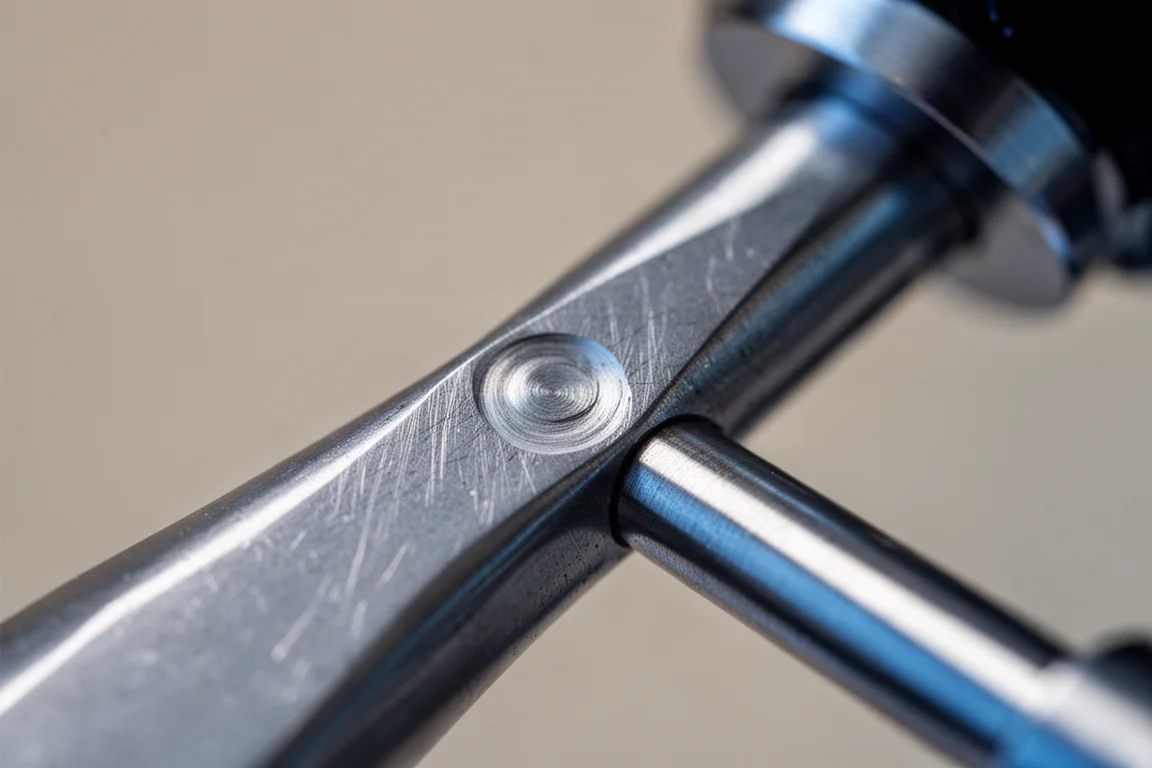
However, when blended with motor oil at the proper ratio and exposed to heat, the results were very different. Only Bestline outperformed pure motor oil, with a wear scar of 4.7 mm versus 5.37 mm. Lucas tied the motor oil at 5.37 mm, and Liqui Moly was close behind at 5.44 mm. Arch Oil produced a wear scar of 5.54 mm, and Prolube was the worst at 5.84 mm.
The oil analysis reports showed that Liqui Moly and Bestline increased the molybdenum content over pure motor oil, while Prolube was the only product that boosted phosphorus. Arch Oil was high in boron and potassium, consistent with its potassium borate friction-reducing technology. All products lowered the overall zinc content when substituted for a portion of the motor oil.
Overall Buying Advice
The testing shows that oil additives are best used as a band-aid for a specific problem rather than as a routine addition to a healthy engine. None of the products consistently improved fuel economy or acceleration across all tests, and several showed concerning behavior under heat.
For a healthy engine, a high-quality motor oil changed at regular intervals is the better choice. The 2003 Chevrolet Suburban used in testing has over 320,000 miles and remains in fantastic shape with regular oil changes and no additives.
If you have an engine with a specific mechanical issue, such as oil consumption or excessive wear, an additive may be worth trying. Bestline showed the most promise in the wear protection tests, even after heat exposure. Liqui Moly and Lucas performed reasonably well in the heat evaporation tests, though Lucas’s increased viscosity could be a concern in cold climates.
Conclusion
After extensive testing, the results are clear: oil additives are not a magic solution. When blended with motor oil at the proper ratio and exposed to real-world heat, only Bestline outperformed pure motor oil in wear protection. Lucas tied the motor oil, and Liqui Moly was close behind. Prolube and Arch Oil showed impressive results when brand new, but their performance degraded significantly after heat exposure.
The most honest conclusion is that a high-quality motor oil, changed regularly, is the best protection for a healthy engine. Oil additives may help with specific mechanical issues, but they are not a substitute for proper maintenance.
Further reading
Related Reviews
Automotive
Best Brake Parts Cleaner 2026: 14 Brands Tested for Speed, Cleaning Power, and Residue
We tested 14 brake parts cleaners for evaporation speed, grease removal, sludge breakdown, and residue to find the best value for your garage.

Automotive
Escort ZR6 Laser Jammers: A Hands-On Look at Features and Performance
The Escort ZR6 laser jammers offer compact heads and flexible integration, but the interface leaves room for improvement.
Automotive
LiPower Solid-State Car Battery Review: A Lighter, Longer-Lasting Upgrade
A practical look at the LiPower solid-state car battery, covering its specs, real-world performance, and how it compares to a traditional AGM battery.