Automotive
Best Brake Parts Cleaner 2026: 14 Brands Tested for Speed, Cleaning Power, and Residue
We tested 14 brake parts cleaners for evaporation speed, grease removal, sludge breakdown, and residue to find the best value for your garage.
Introduction
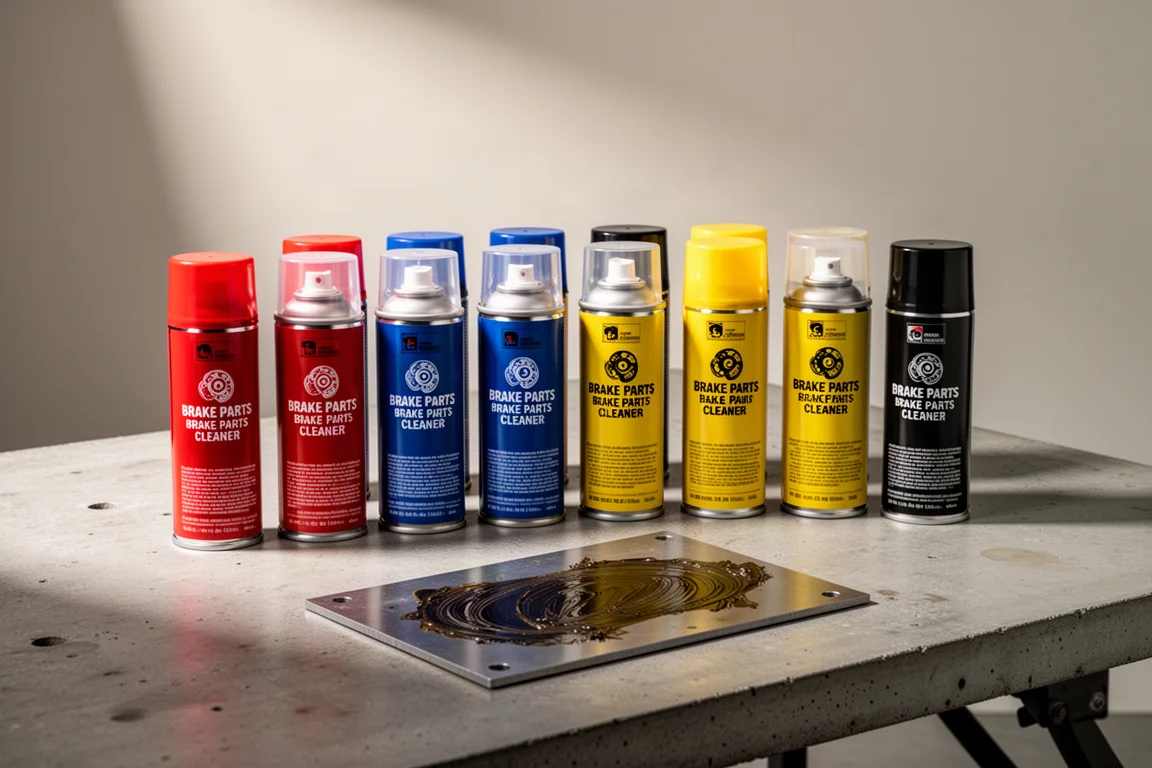
Brake parts cleaner is one of those products that gets used constantly in a garage, yet most people grab whatever is on sale without thinking about whether it actually works well. After testing 14 different brands, it becomes clear that there are massive differences in evaporation speed, cleaning power, and residue left behind. Some products finish the job in seconds while others take minutes, and some dissolve grease effortlessly while others just smear it around.
This guide breaks down the testing results across four key areas: evaporation speed, grease removal, sludge breakdown, and residue. The goal is to help you choose a brake parts cleaner that matches how you actually work in the garage, whether you need something fast-drying or something that prioritizes raw cleaning power.
How We Tested
Each product went through the same four tests to keep the results fair. The evaporation test measured how long a saturated paper towel took to dry after being dragged across a table. The grease removal test used a permanent marker circle covered with a layer of grease to see how many passes each cleaner needed to remove both. The sludge test used a nasty mixture of grease, motor oil, brake fluid, and sand on a steel plate, measuring how much weight was removed in eight seconds of spraying. Finally, the residue test applied each cleaner to a piece of glass and checked what was left behind after evaporation.
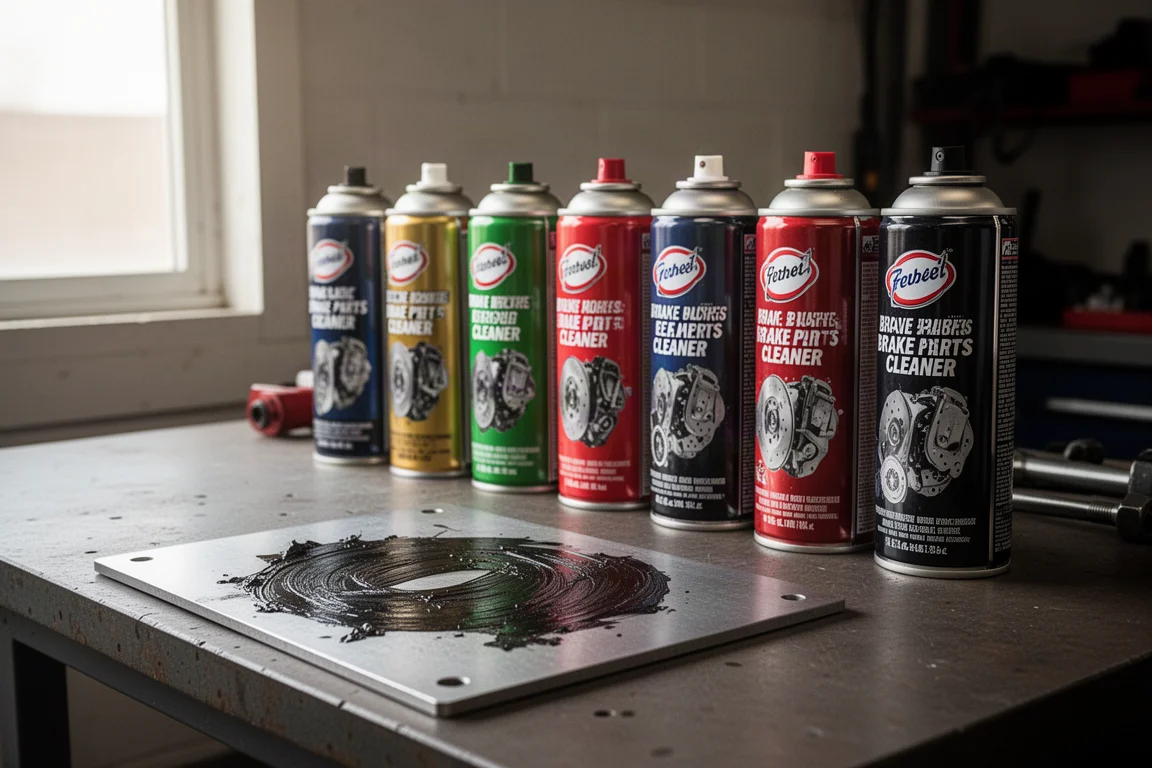
All products were purchased new for this testing, and a fresh can was used for the sludge test to ensure consistent spray pressure. Prices ranged from $4 to $23 depending on the brand.
Top Pick: Permatex Brake Parts Cleaner
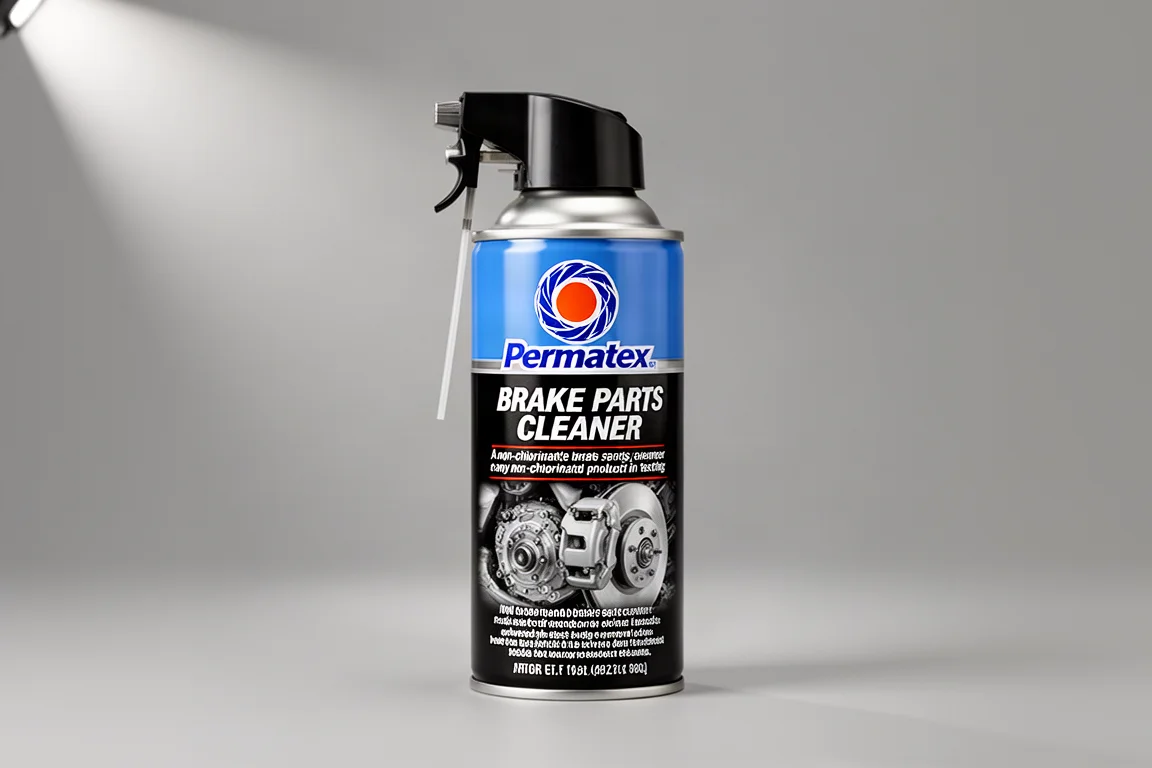
Permatex finished in a tie for fourth place overall, but it is the standout recommendation for most users. It is a non-chlorinated formula, which avoids the safety concerns associated with chlorinated cleaners. When evaporation speed and residue are removed from the ranking, Permatex tied with the chlorinated Gunk for first place with an average finish of second place.
The Permatex delivered the best sludge removal of any non-chlorinated product, removing 59.27 grams of sludge in eight seconds. That works out to 0.67 grams of sludge removed per gram of cleaner, the most efficient ratio in the entire test. It also tied for third place in the grease removal test, finishing in four passes. The main trade-off is evaporation speed, which was slow at 33.1 seconds, and it left behind more residue than some competitors.
Best Overall Non-Chlorinated: Lucas Brake Parts Cleaner
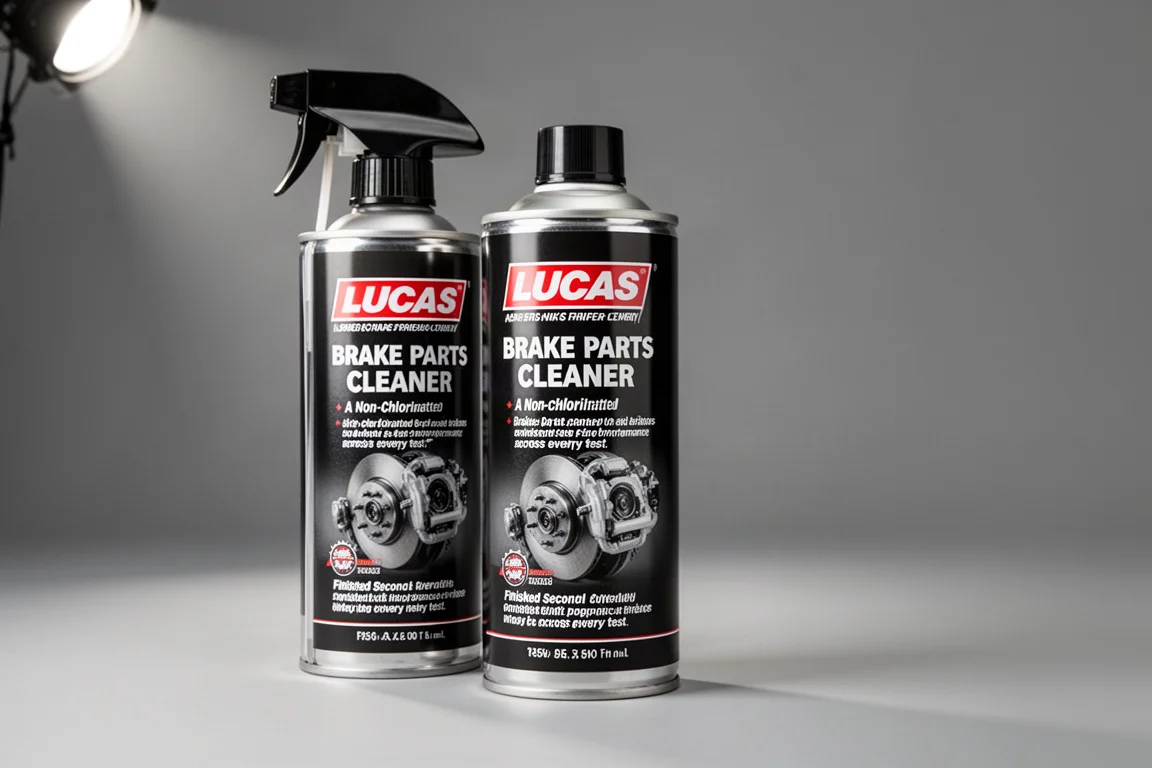
Lucas finished in second place overall with an average finish of 4.3 across all categories. It performed better than average in every single test, making it the most consistent non-chlorinated option. It was the fastest evaporating cleaner in the test at 8.3 seconds, tied with the Berryman for the lead before Johnson’s took over.
In the grease removal test, Lucas finished in five passes, removing both the grease and the permanent marker stain. It removed 37.22 grams of sludge in the eight-second spray test, good enough for third place. The residue left behind was less than the Permatex and the Johnson’s. At $13, it offers strong all-around performance without the safety concerns of chlorinated formulas.
Strong Value Pick: Johnson’s Brake Parts Cleaner
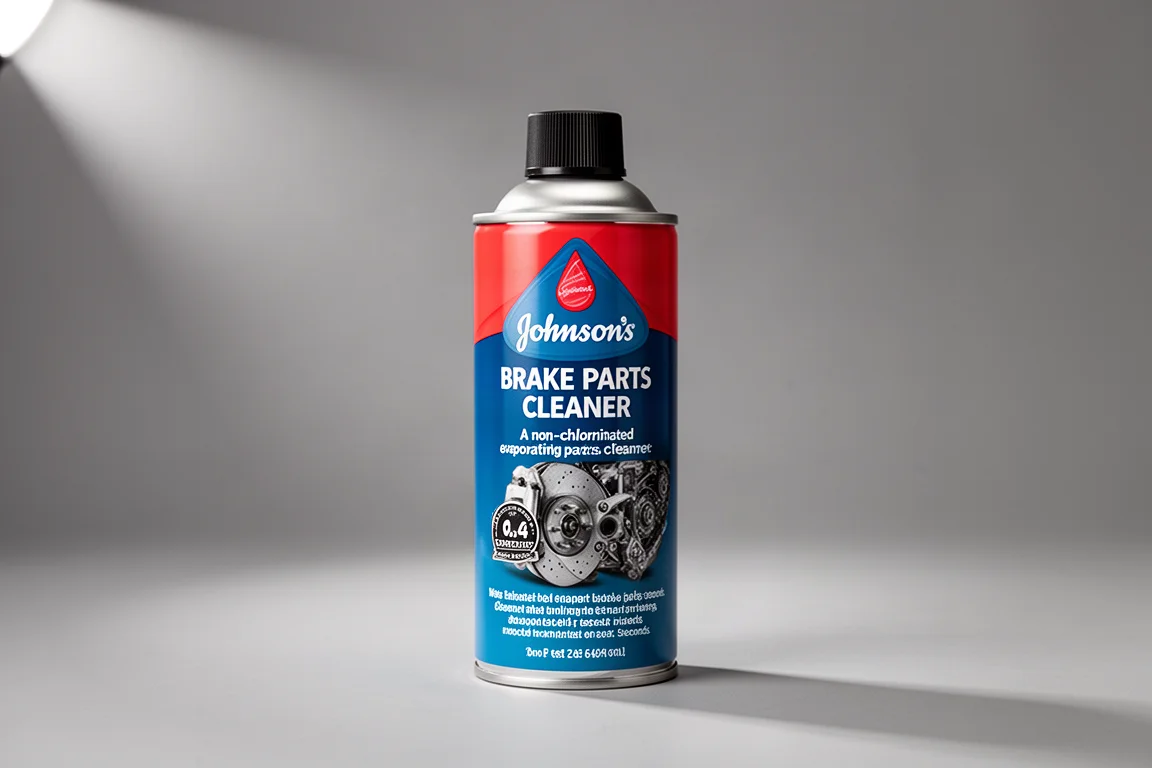
Johnson’s tied with Permatex for fourth place overall with an average finish of 4.8. It was the fastest evaporating cleaner in the entire test at 6.4 seconds, beating the Lucas by nearly two seconds. It also finished in a three-way tie for third place in the grease removal test, completing the job in four passes.
The Johnson’s removed 27.48 grams of sludge in the spray test, placing it in fifth position. It left behind a little more residue than the Permatex, but still performed well in that category. At $13, it is priced the same as the Lucas, making it a strong alternative if evaporation speed is your top priority.
Fastest Evaporating: Detroit Axle Brake Parts Cleaner
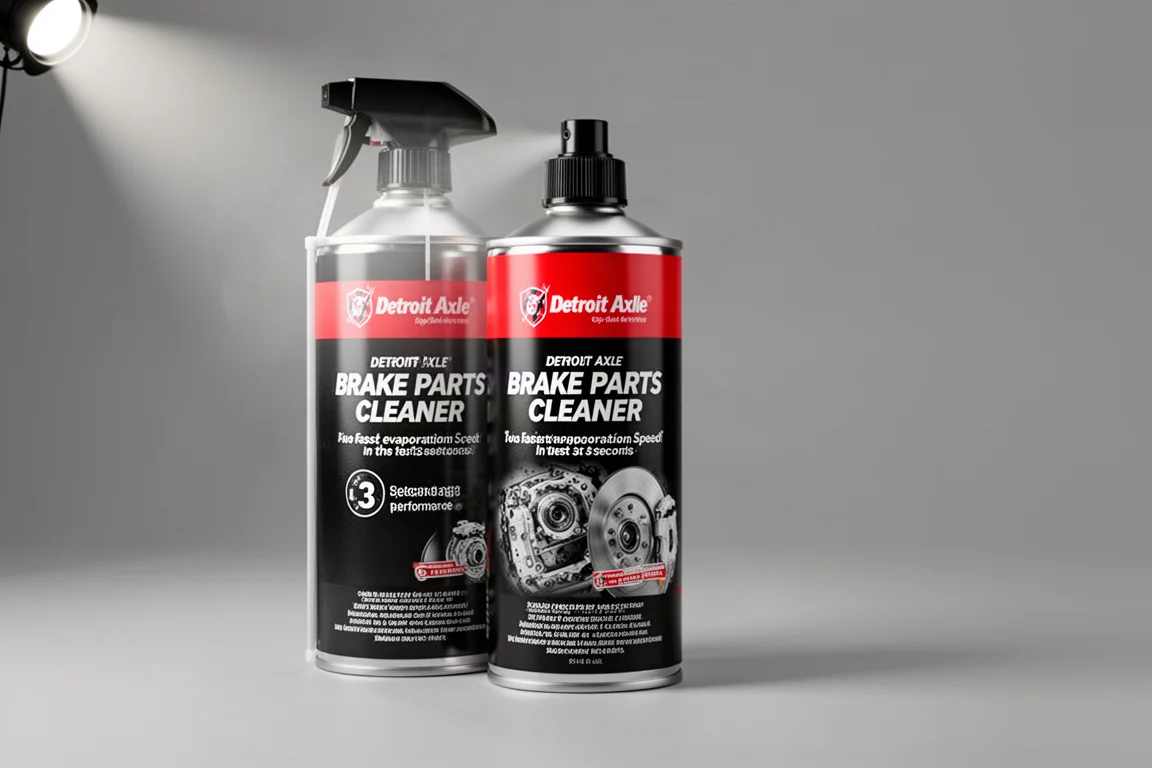
Detroit Axle was the fastest evaporating cleaner by a wide margin, finishing in just 3 seconds. That is more than twice as fast as the next closest competitor. It uses a 50-state formula and is made in the USA.
However, the fast evaporation came at a cost in the other tests. In the grease removal test, it took six passes to finish, and it smeared the grease more than most other brands. It also struggled with the sludge test, removing only 0.24 grams in eight seconds, the second-worst result. The residue left behind was about the same as the Johnson’s. At $19, it is one of the more expensive options, so it only makes sense if rapid drying is your primary requirement.
Grease Removal Test
The grease removal test combined a permanent marker circle with a layer of grease on a Formica surface. Each cleaner was applied to a folded paper towel and dragged across the surface, with the towel rotated after each pass to find a fresh section.
The chlorinated CRC and the chlorinated Gunk came out on top, removing the grease in just three passes. However, neither contains acetone, so the permanent marker stain remained. The non-chlorinated CRC, Permatex, and Johnson’s tied for third place at four passes, and all three successfully removed the marker stain as well.
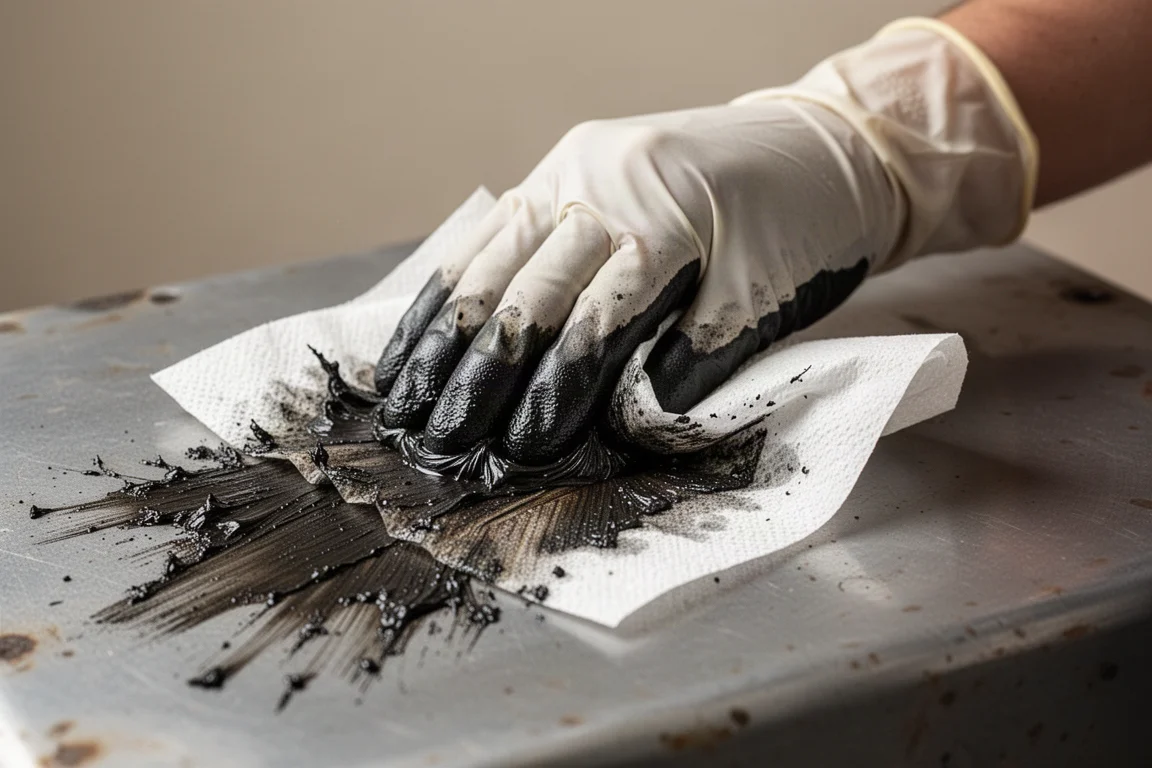
The Berryman took eight passes, while the Gum Out and Penray both stopped making progress after nine passes with grease and marker still visible. The Super Tech finished in six passes, and the Sprayway, Lucas, and 3M all finished in five passes.
Sludge Breakdown Test
The sludge test used a mixture of grease, motor oil, brake fluid, and sand applied to a steel plate. Each cleaner was sprayed for exactly eight seconds, and the weight difference was measured.
The chlorinated Gunk came out on top, removing 75.01 grams of sludge. The non-chlorinated Permatex finished in second place with 59.27 grams, followed by the chlorinated CRC at 58.56 grams. The non-chlorinated CRC removed 28.2 grams, the Lucas removed 37.22 grams, and the Johnson’s removed 27.48 grams.
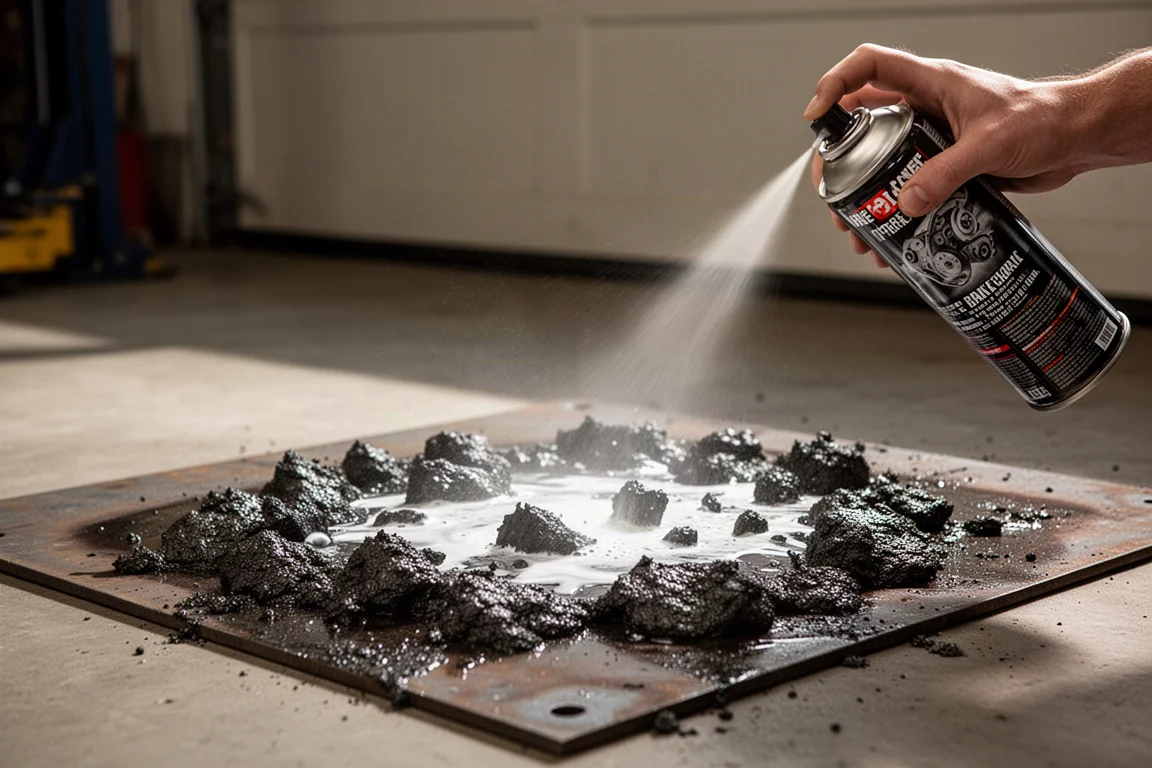
At the other end of the spectrum, the Gum Out removed less than half a gram, the Super Tech removed 0.28 grams, and the Penray removed just 0.17 grams. The Detroit Axle removed 0.24 grams despite being the fastest evaporating product.
Residue Test
Each cleaner was applied to a piece of glass and allowed to evaporate completely. A dark background and powder were used to make any residue visible.
The chlorinated Gunk performed the best, leaving behind just one tiny spot. The chlorinated CRC was close behind with a rating of 1.5. The Sprayway and Lucas tied for third place, both leaving very little residue. The non-chlorinated CRC and Penray left behind a very thin layer, while the Gum Out left behind quite a bit of residue with an oily feel.
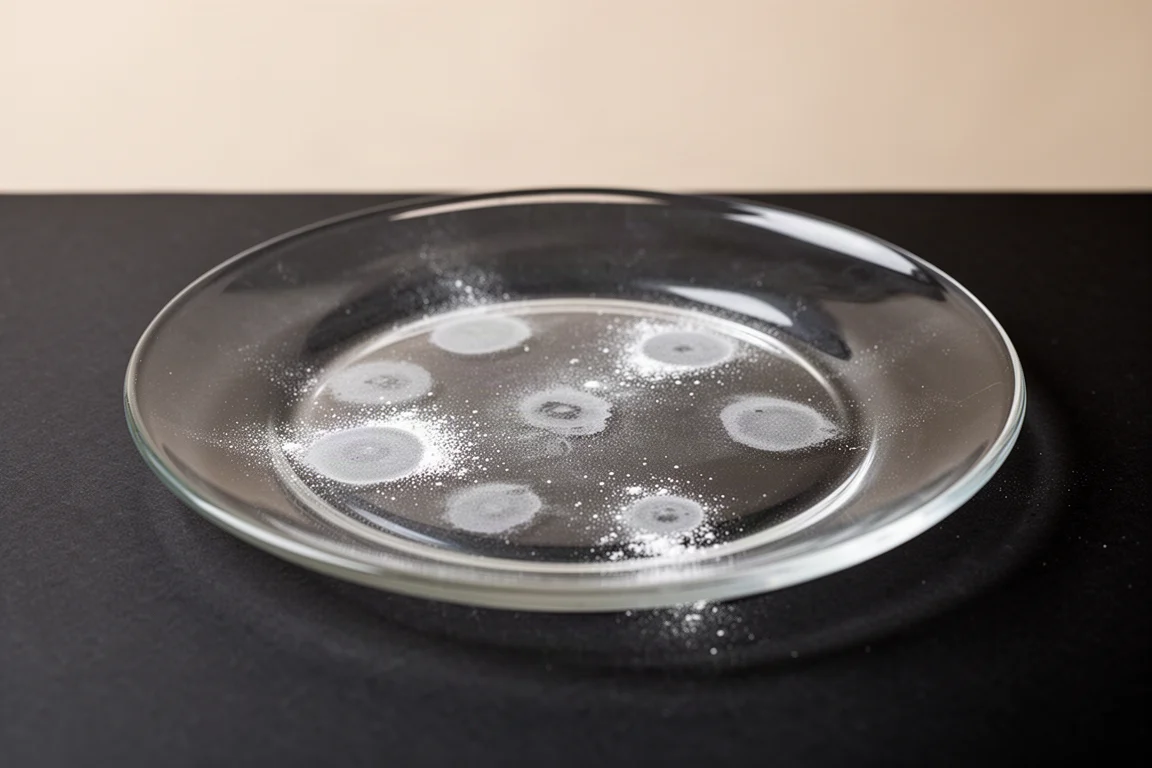
The Super Tech and Berryman left behind moderate residue, while the Permatex left behind more than the Sprayway but less than the Johnson’s. The Detroit Axle and 3M both left behind more residue than the chlorinated CRC.
Buying Advice
If you want the best balance of cleaning power, safety, and value, the Permatex is the clear choice. It is non-chlorinated, which avoids the risk of hydrogen chloride and phosgene gas formation when exposed to heat. It delivered the best sludge removal of any non-chlorinated product and tied for first place when evaporation speed and residue were removed from the ranking.
The Lucas is the best option if you want consistent performance across every category. It is non-chlorinated, evaporates quickly, cleans grease well, and leaves minimal residue. The Johnson’s is a strong alternative if evaporation speed matters most, as it was the fastest drying product in the test.
The Detroit Axle is only worth considering if you need the absolute fastest evaporation, but its cleaning power is significantly weaker than the competition. Chlorinated products like the Gunk and CRC performed well in cleaning tests, but the safety concerns make them harder to recommend for regular use.
Conclusion
The testing revealed dramatic differences between brake parts cleaner brands. The chlorinated Gunk and CRC cleaned the fastest, but their slow evaporation and safety concerns are significant drawbacks. Among non-chlorinated products, the Permatex, Lucas, and Johnson’s all delivered strong results across the board.
For most garage use, the Permatex offers the best combination of cleaning power, safety, and price. The Lucas is the most consistent all-rounder, and the Johnson’s is the fastest drying non-chlorinated option. Choose based on your priorities, but any of these three will serve you well.
Further reading
Related Reviews
Automotive
Escort ZR6 Laser Jammers: A Hands-On Look at Features and Performance
The Escort ZR6 laser jammers offer compact heads and flexible integration, but the interface leaves room for improvement.
Automotive
LiPower Solid-State Car Battery Review: A Lighter, Longer-Lasting Upgrade
A practical look at the LiPower solid-state car battery, covering its specs, real-world performance, and how it compares to a traditional AGM battery.
Automotive
Oil Additives Tested: Do They Improve Power, Fuel Economy, and Engine Protection?
Five popular oil additives tested for horsepower, fuel economy, cold flow, heat resistance, and wear protection. See which ones delivered and which fell short.