Mountain Bike Suspension
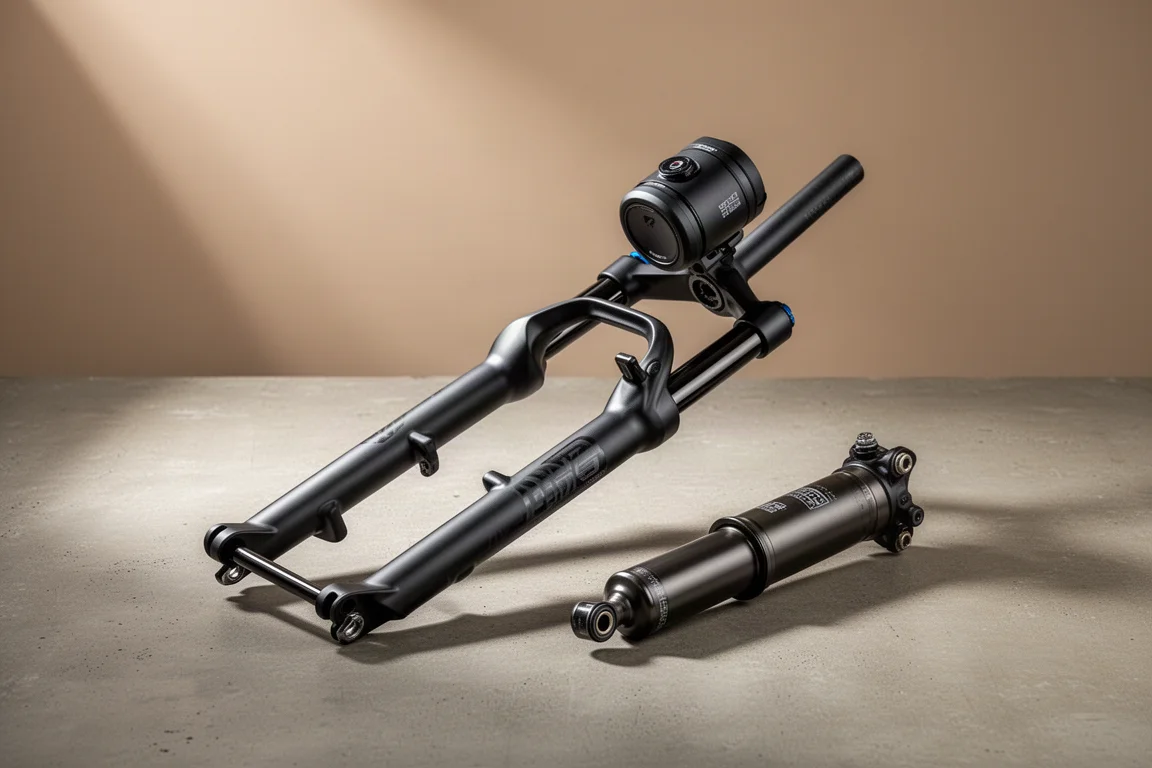
Öhlins XC Suspension Reviewed: RXC 34 M1 Fork, TXC1 and TXC2 Air Shocks
A practical look at Öhlins' cross-country suspension line: the RXC 34 M1 fork and the TXC1 and TXC2 air shocks, covering specs, setup options and early ride impressions.
Introduction
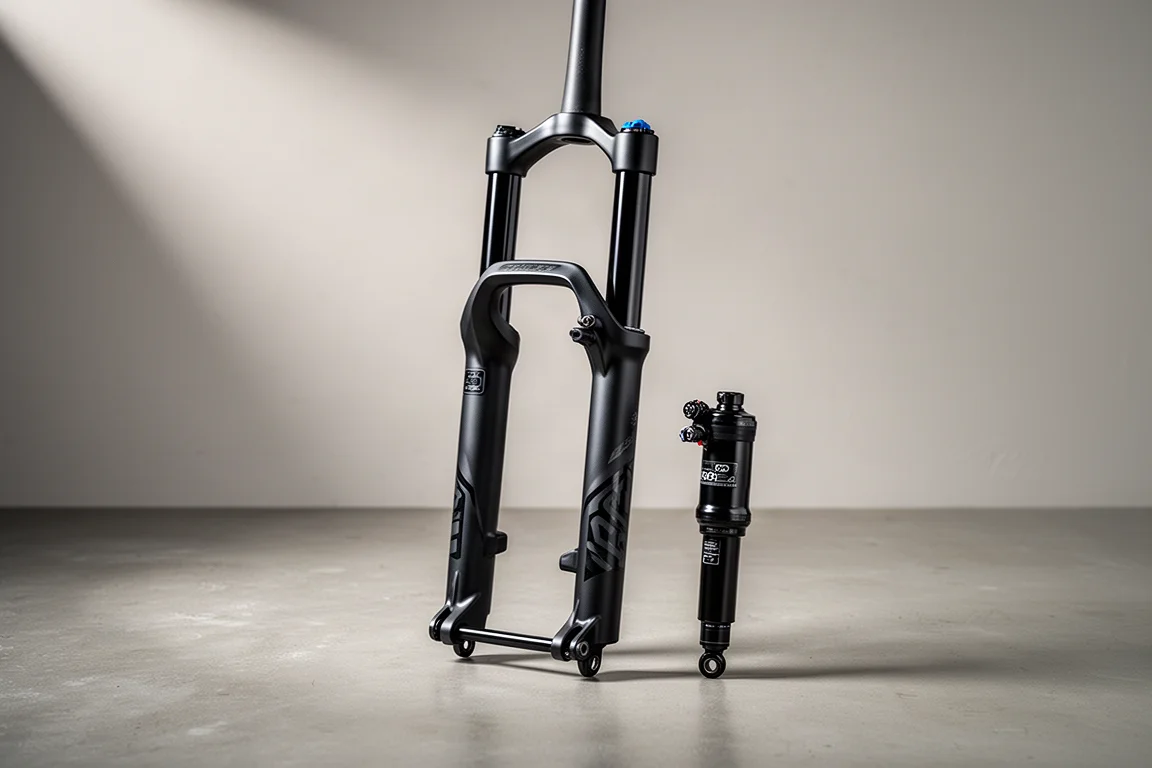
Öhlins built its reputation in motorsport, with more than 300 titles to its name, and the Swedish brand has been steadily translating that experience into mountain bike suspension. The new RXC 34 M1 fork and the TXC1 and TXC2 air shocks complete the line-up: purpose-built cross-country race products designed to work together as a matched system rather than as a collection of separate parts.
This guide walks through what is genuinely new, which unit suits which kind of bike, and what an initial ride reveals about how the fork and shocks behave on real trails.
What Sets the Öhlins XC Range Apart
The range draws on the racing success of the brand’s downhill and enduro components, and several new technologies appear across the fork and shock line-up.
The rear shocks use serial shim stacks, while the fork pairs an updated two-chamber airspring with the option of a one-piece carbon CSU or an alloy version. Proven technology carries over as well: the shocks retain the brand’s established damper architecture, and the fork runs a new lightweight single-tube damper that is claimed to be roughly 100 grams lighter than the damper used in the burlier fork.
Weight and tuneability were clearly priorities throughout. Öhlins quotes a claimed 1,496 grams for the 100 to 120 millimetre variant of the carbon fork, which puts it within a few grams of the benchmark cross-country forks in this travel class, and the alloy version is quoted at 1,598 grams.

The practical theme running through the whole range is adjustability that owners can actually use. Volume spacers, on-bike stroke and air can changes, and a choice between remote and manual controls mean these units can be tuned around a rider’s bike and terrain rather than the other way around.
Öhlins RXC 34 M1 Fork
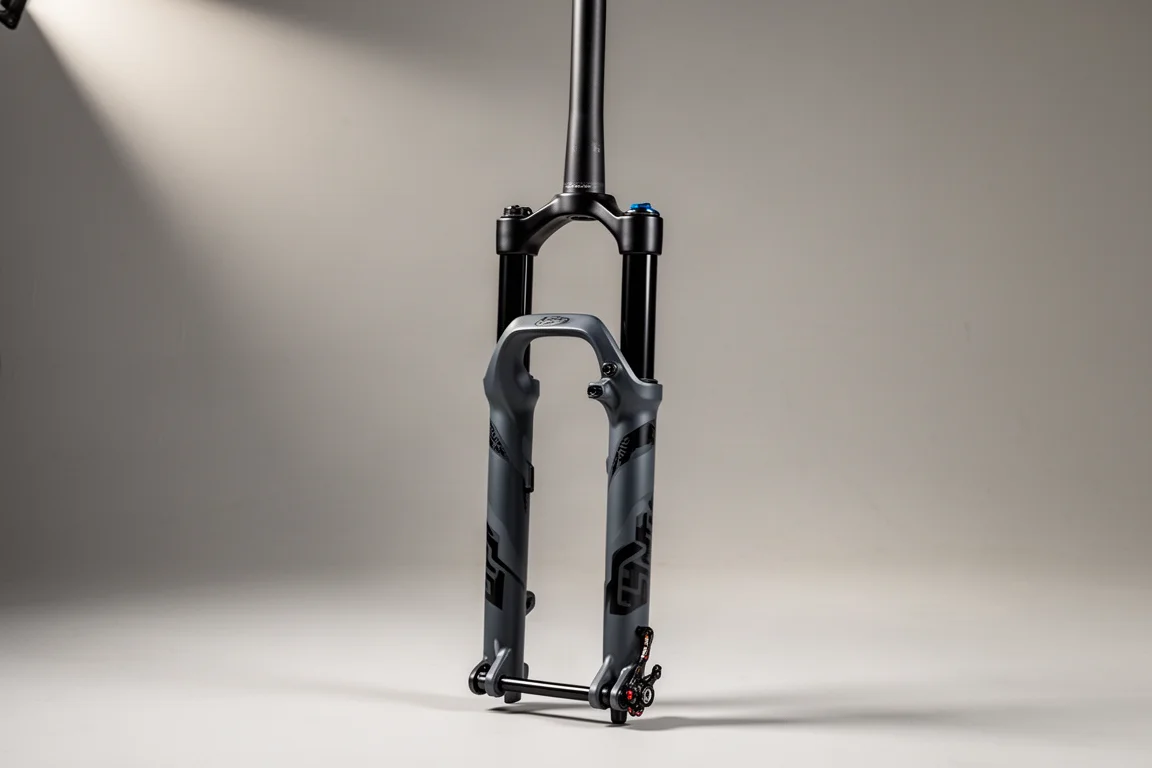
The RXC 34 M1 takes the basic chassis of the RXF34 M2 downcountry and trail fork and optimises it for cross-country racing. It keeps the chunky lower legs with the brand’s signature floating axle and the broad 34 millimetre stanchions, which is a large part of why the fork feels as planted as it does.
The airspring has been redesigned around an updated two-chamber layout. Both chambers are adjusted through a single air valve, and both can be tuned with volume spacers: up to five spacers in the positive chamber to adjust progressivity depending on travel, and up to seven in the negative chamber to shape the initial feel over small bumps. Riders can choose 110 or 120 millimetres of travel with either the carbon CSU or the alloy CSU, and both can be taken to 130 millimetres with a separate aftermarket airspring.
The one-piece carbon fibre CSU drops a claimed 102 grams compared with the alloy version. A fixed 100 millimetre travel race version sheds a further 20 grams for riders who count every one. The damper offers three ride modes, open, pedal and lockout, with 12 clicks of rebound adjustment at the bottom of the right fork leg on both the remote and manual versions.
The fork is also unusually upgrade-friendly. Because it shares its basic chassis with the brand’s burlier fork, the new damper and airspring are backwards compatible, and the more adjustable damper from that fork can be fitted into the RXC 34 M1 chassis for riders who want a highly tunable lightweight downcountry build.
Öhlins TXC1 Air Shock
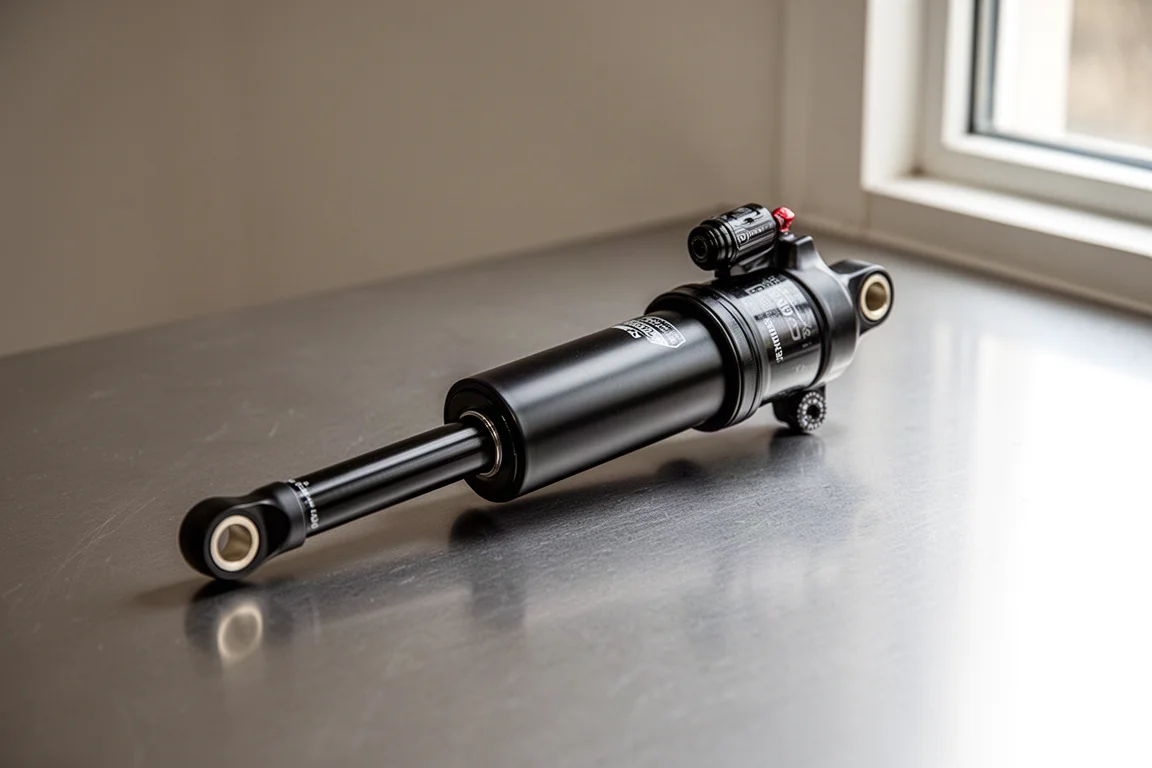
The TXC1 is the lighter of the two new air shocks, with a claimed 245 grams in the smallest size. That low figure comes from a slimmer body and a smaller air can than the TXC2.
The smaller air can makes the TXC1 more progressive, which lines it up neatly with the relatively linear suspension kinematics found on cross-country race bikes. Both shocks share the same Twin Tube damper design, which the brand describes as the only true cross-country shock using that layout. The closest comparison, a twin tube inline shock from another manufacturer, is more than 100 grams heavier, and at this level of racing every gram matters.
Like the fork, the TXC1 has three ride modes so the front and rear can be matched. It ships remote-only as standard, with a kit available separately to convert it to manual operation. Rebound offers 12 clicks of adjustment, but it requires a three millimetre allen key rather than being tool-free, which is worth remembering if you like to tweak settings mid-ride. Air can volume and shock stroke can both be adjusted without removing the shock from the bike, and the spacers come in the aftermarket box.
Öhlins TXC2 Air Shock
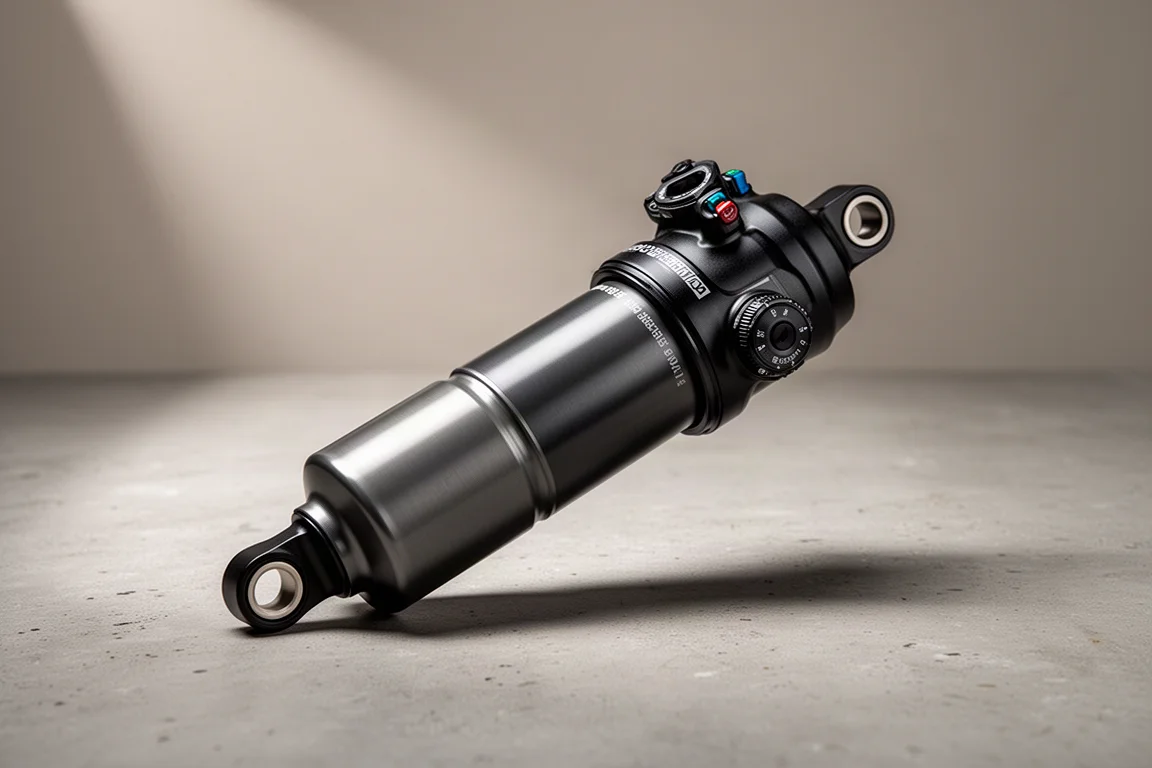
The TXC2 uses a bigger body and a larger air can, which makes it a little more versatile and more resistant to heat build-up. The trade-off is weight: it is heavier than the TXC1, which is the price of that extra capacity.
That larger air can suits short travel downcountry bikes, or race bikes with more progressive kinematics where a smaller can would feel overly firm. The chassis is not the only difference. The manually adjusted version of the TXC2 gets 16 clicks of low-speed compression adjustment for the open setting, while remote versions do without that extra adjustment and run a fixed low-speed compression setting when open.
Everything else is shared with the TXC1: the same Twin Tube damper, the same three ride modes, the same 12 clicks of rebound adjustment requiring a three millimetre allen key, and the same ability to change air can volume and stroke without pulling the shock off the bike. Unlike the TXC1, the TXC2 can be bought with either a remote or a manual lockout from the start.
Remote Lockout, Dampers and Setup
For riders who want to change settings on the fly, Öhlins offers a handlebar-mounted remote that controls the fork and shock together, in the same spirit as a twin-lock system. The remote has a separate mount for a dropper post, so you can run your own dropper lever rather than being locked into a proprietary one, which is a genuinely thoughtful detail.
The remote and manual routes lead to different tuning ceilings. Remote versions run a fixed low-speed compression setting in the open mode, while the manual crown-top adjuster on the fork adds 40 clicks of low-speed compression adjustment, and the manual TXC2 adds 16 clicks of its own. Riders who want to fine-tune the open mode rather than simply switch between three modes should look closely at the manual option.
Setup is friendlier than it often is at this end of the market. Fork and shock volume spacers are included in the aftermarket box, and both shocks can be adjusted for air can volume and stroke without being removed from the bike.
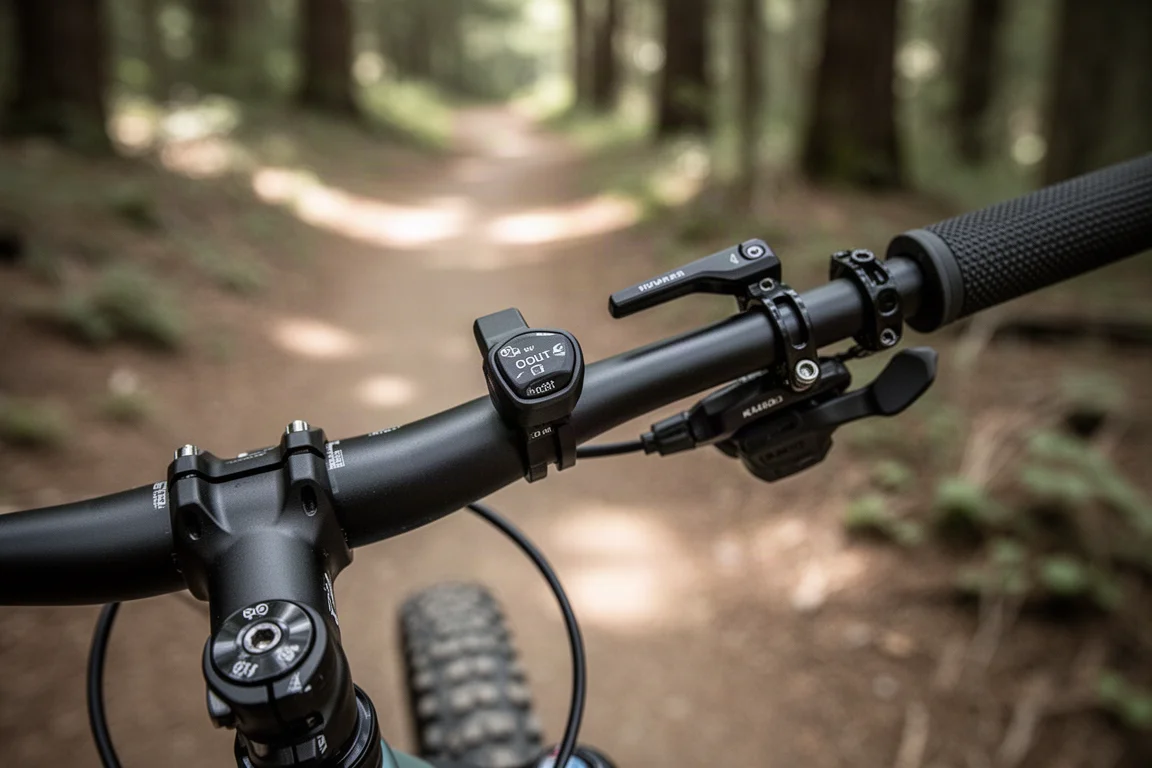
It is also worth knowing that the fork and shock are designed as a system: the three ride modes line up across both ends, so a single remote lever moves the whole bike between open, pedal and lockout in one action.
First Ride Impressions
An initial three-hour test ride took place in Sweden on a purpose-built cross-country course, using a Specialized Epic EVO fitted with the RXC 34 M1 carbon fork and the TXC2 air shock, both hooked up to the remote lockout lever.
The fork made an immediate impression. Sharing its lower legs with the trail fork gives it a very stiff and precise feel, and it stayed on track when launching off drops and driving into rock gardens, pointing exactly where it was aimed. Damping control and comfort were both excellent: supple enough over smaller bumps, with plenty of support in turns and when the bike got nose heavy on awkward low-speed drops.
The rear shock took more tinkering. On the first loop it rode a little deep in its stroke on rougher, flatter sections despite a fairly modest 28 percent sag. It felt impressive pointed downhill, with a wonderfully supple feel, but it produced a lot of pedal strikes on the rocky climbs and flat, pedally sections, and it lacked the crisp, efficient feel that a fast cross-country bike usually wants. Rather than lose the excellent small-bump compliance by experimenting with volume spacers, going two clicks faster on the rebound adjuster was enough to help the bike ride higher in its stroke, sit up livelier and respond exactly as expected, which felt much more in line with how a rapid but capable bike should behave.
Because that ride was short, on an unfamiliar bike and on trails ridden for the first time, it is not a complete verdict on either unit. The manual, non-remote versions are particularly interesting given the extra low-speed compression adjustment they add.
Buying Advice
Start with the bike and the terrain rather than the spec sheet. The RXC 34 M1 is the obvious pick for cross-country racing, and the carbon CSU version is the one to choose if the claimed 102 gram saving matters more than the price difference. The alloy version shares an identical chassis and is quoted at a still competitive 1,598 grams, so it makes sense for riders who would rather put the saving elsewhere. The backwards compatibility with the brand’s burlier fork also makes this a fork that can grow with a rider’s ambitions.
For the rear, the decision comes down to kinematics and conditions. The TXC1’s smaller, more progressive air can matches the linear feel of cross-country race bikes and is the lighter option. The TXC2’s larger can is the more versatile choice for short travel downcountry bikes and race bikes with more progressive kinematics, and it resists heat build-up better on long descents.
Then decide how much control you want at your fingertips. A remote keeps the fork and shock locked together in one motion and suits racers who want to switch modes without leaving the bar. Manual adjusters add low-speed compression tuning in the open mode at both ends, which suits riders who would rather dial in a setting and leave it.
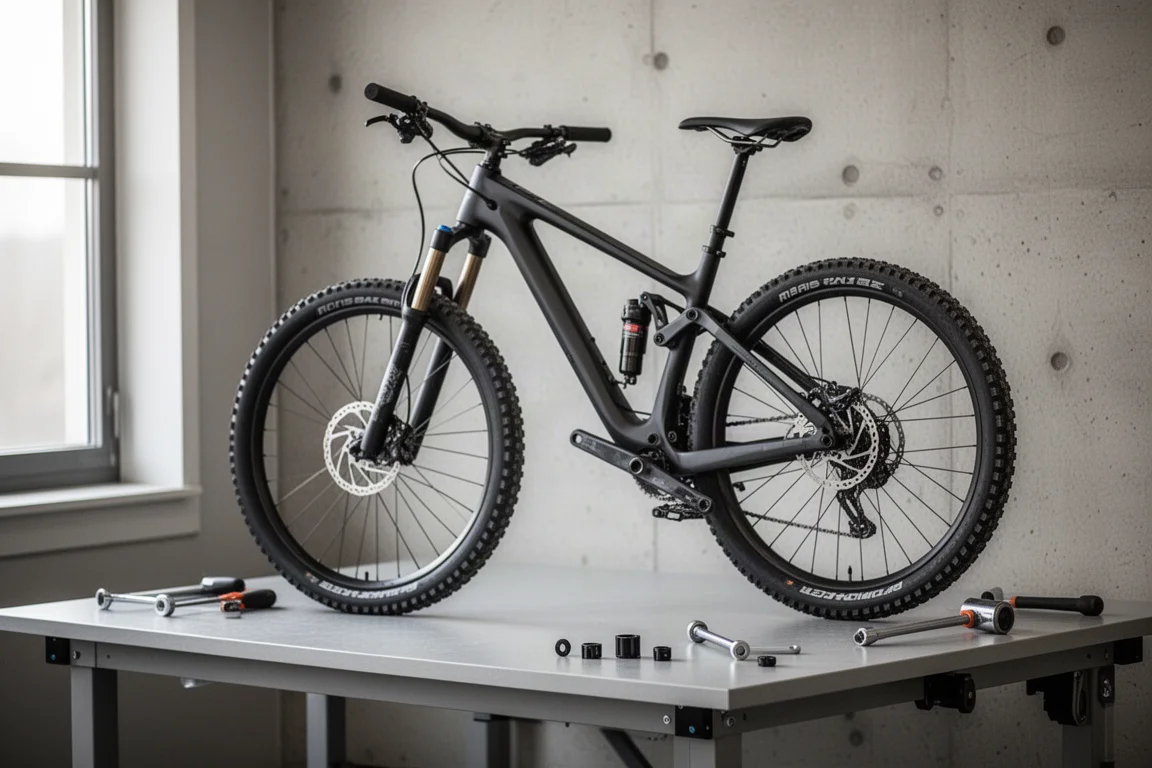
One practical caveat on the shocks: rebound changes need a three millimetre allen key rather than being tool-free, so carry one if you like to adjust on the trail.
Conclusion
Öhlins has arrived at cross-country racing with a coherent, well thought-out system rather than two isolated products. The RXC 34 M1 brings a stiff 34 millimetre chassis, a redesigned two-chamber airspring and a range of genuinely useful tuning options, while the TXC1 and TXC2 split the rear shock duties cleanly between a light, progressive race option and a bigger, more versatile one.
Early impressions of the fork are excellent, and the shock responds well once setup is dialled in. Riders building a fast cross-country or downcountry bike now have a third credible suspension platform to consider, and one that rewards time spent on setup.
Further reading
Related Reviews
Mountain Bike Suspension
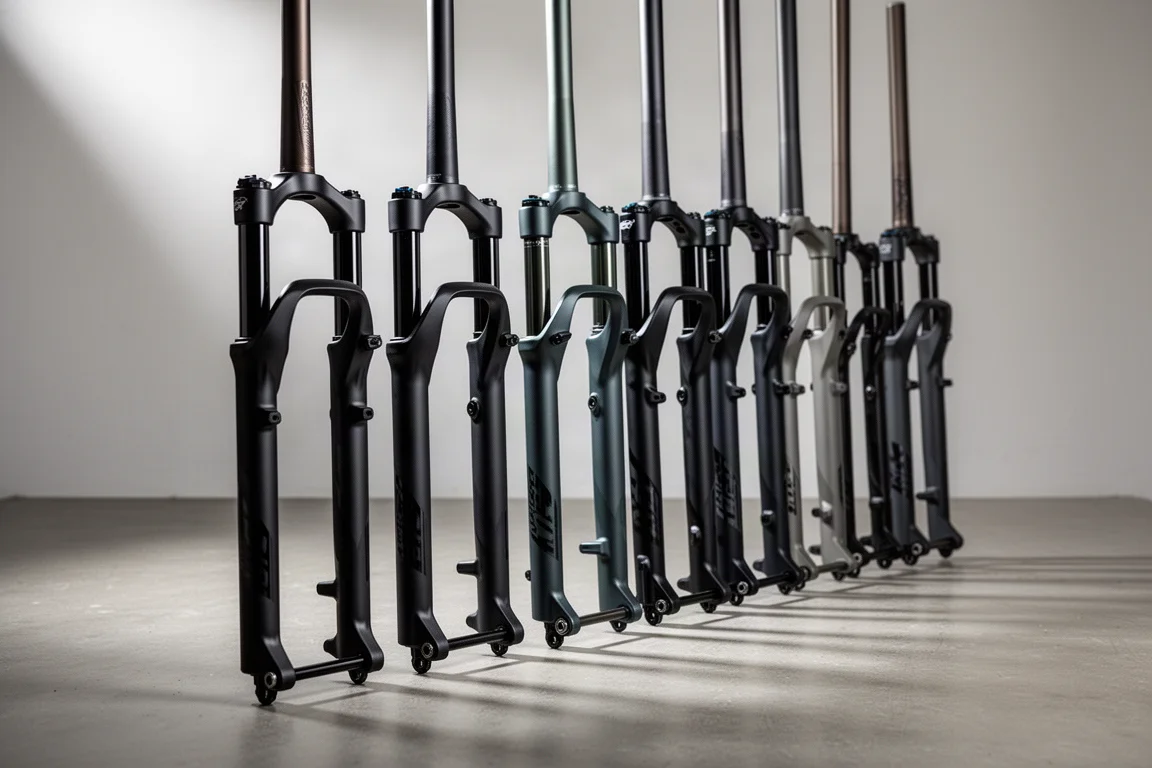
Best Enduro Mountain Bike Forks 2026: Eight Long-Travel Forks Compared
Eight 29-inch enduro forks from major brands, compared on chassis stiffness, spring feel, and damping control, with clear guidance on which suits which rider.
Mountain Bike Suspension
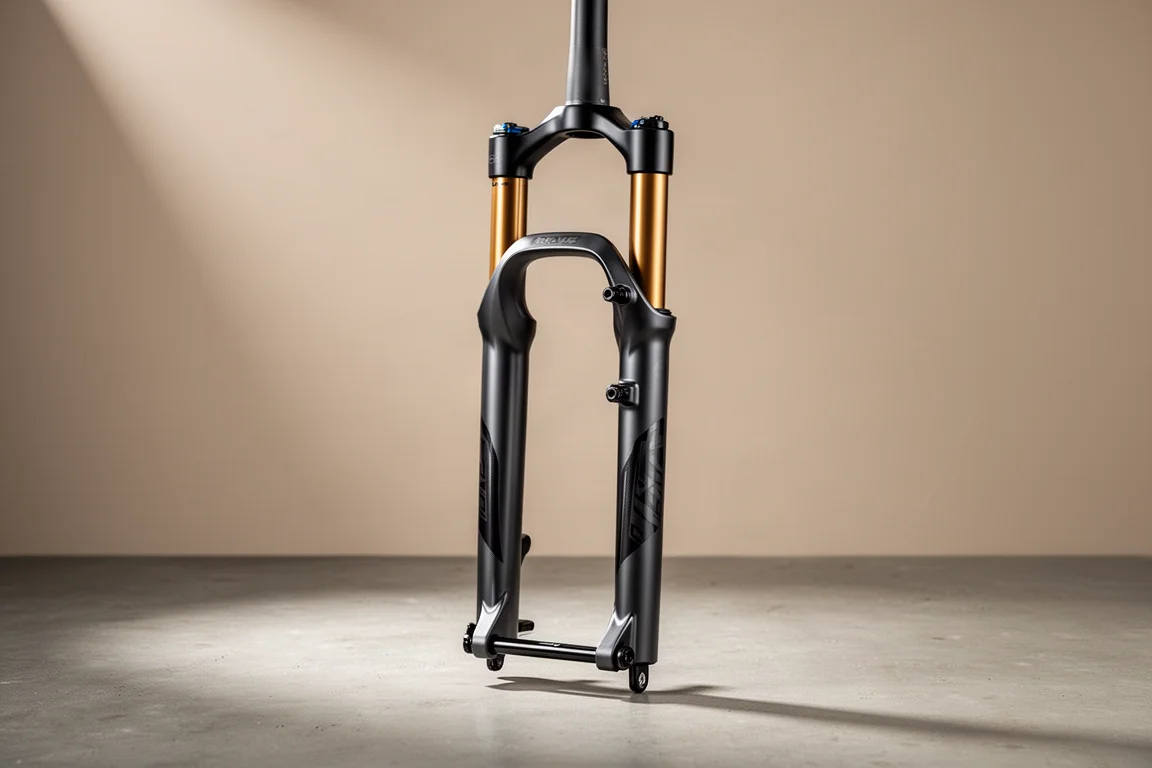
Fox 2025 Forks and Dampers: 32 StepCast, Grip SL, Grip X and Grip X2 Explained
Fox has replaced its FIT 4 and Grip 2 fork dampers with Grip SL, Grip X and Grip X2, and introduced a rear-arch cross-country fork. Here is what changed and which setup suits your riding.
Mountain Bike Suspension
RockShox Flight Attendant Cross Country Review: Wireless Suspension That Thinks for You
An electronic, wireless cross country suspension system that reads your effort and the trail, changing damping modes automatically. Here is what it does well and what to weigh up.