Emergency Communication
Ocean Signal rescueME PLB1 vs Garmin inReach and ZOLEO: Which Emergency Beacon Belongs in Your Pack?
A practical look at the Ocean Signal rescueME PLB1 and how it compares with the Garmin inReach and ZOLEO Satellite Communicator for off-grid emergencies.
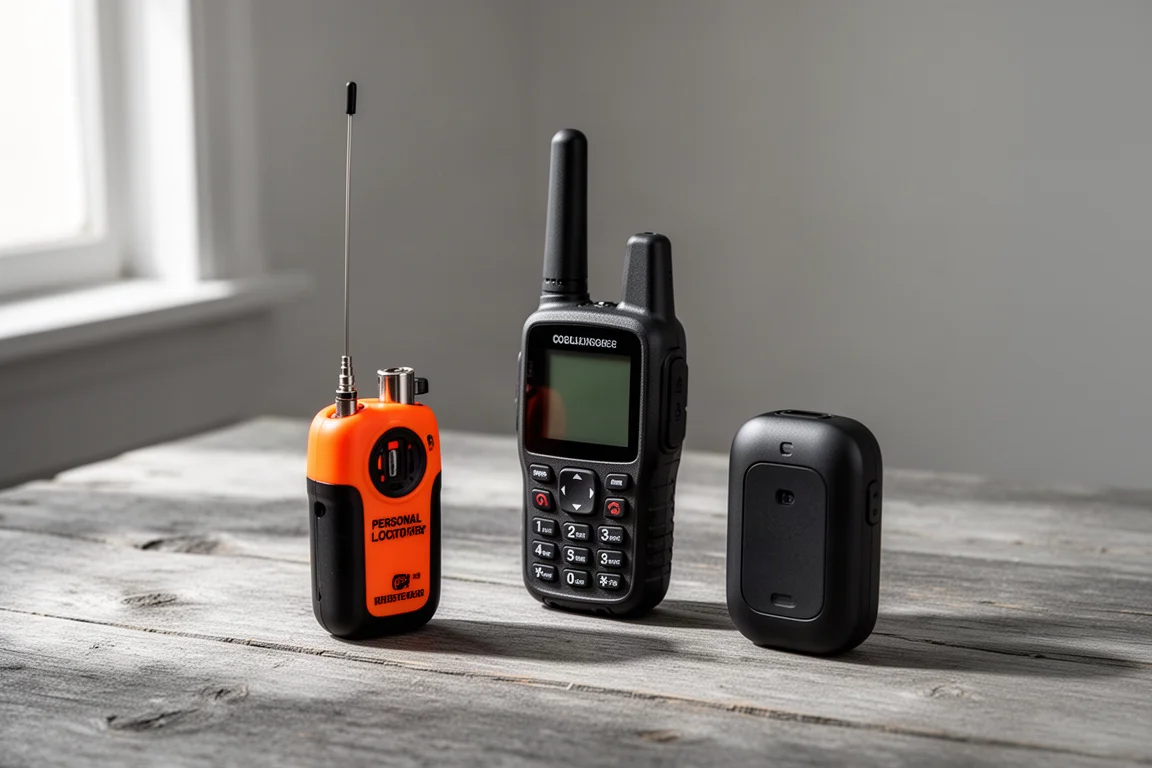
Introduction
A personal locator beacon answers one question: how do you call for help when there is no cell signal? On the Ocean Signal rescueME PLB1, the answer is a single button. Hold it for about a second and the device sends a distress signal to satellites, which relay it to government authorities who dispatch a rescue. There is no screen, no app, no pairing, and no monthly plan.
This guide covers the rescueME PLB1 in detail, from the stowed antenna to the sealed seven-year battery, and then places it next to two satellite communicators that solve a related problem in a different way: the Garmin inReach and the ZOLEO Satellite Communicator. All three can end up on the same search and rescue call sheet, but they ask very different things of you before and during an emergency.
How the rescueME PLB1 Works in an Emergency
The instructions are printed on the side of the beacon and repeated on the float pouch, which matters because the device may sit untouched in a pack for years. Activation starts with the antenna: pull it out of the body, stand the unit flat, and let the antenna point upward. A small spool control winds it back in when you are finished.
From there, a single red button does the work. Hold it in for about one second and the beacon switches on: a large strobe begins flashing, and a smaller status LED reports what the unit is doing.

Positioning comes next. The GPS antenna is separate from the transmit antenna, so the unit needs an unobstructed view of the sky rather than a clear line to the horizon. The beacon is listed with a 66-channel GPS receiver that supports satellite-based augmentation systems, which helps it settle on a usable fix.
Then the signal goes up, on the COSPAS-SARSAT system, an international effort dating back to 1982 and built so that anyone, anywhere, could raise a distress call. In the United States the system is known as SARSAT. The beacon transmits at 5 watts to three different classes of satellite: low earth orbit satellites, which are primarily weather satellites; medium earth orbit satellites such as the GPS, Galileo, and GLONASS constellations; and geostationary satellites parked over the equator, each carrying a SARSAT payload. Any of them can pick up the transmission, and there are many of each in orbit.
If a GPS fix is available, the beacon sends that position along with the distress call. If it cannot get a fix, the system still works: the low earth orbit satellites can estimate a position within roughly a five-mile radius from the characteristics of the signal alone.
On the ground, the message is routed by location. Signals received over land go to an Air Force response center, which contacts local search and rescue teams. Signals over water go to a Coast Guard response center. From that point the beacon keeps broadcasting for 24 hours or more, depending on battery life, which gives the satellites plenty of chances to catch the call.
The final part of a rescue happens close in. The strobe stays visible at night, and a homing beacon on 121 MHz gives rescuers a signal they can track with radio direction-finding equipment. What the PLB1 cannot do is talk back. There is no confirmation that the message was received, so the correct response after activation is to stay put and wait.
Ocean Signal rescueME PLB1: Design and Daily Carry
The rescueME PLB1 is small enough to disappear into a pack. It is roughly the size of a thick Zippo lighter, weighs about 116 grams, and handles like a light deck of cards.
Two design choices matter more than the raw dimensions. The antenna is wound inside the body, so it cannot snag and deploy by accident, and the distress button sits behind a spring-loaded door for the same reason. The unit ships with a small set of accessories: a float pouch that adds a layer of protection and makes the battery door harder to reach, a lanyard that clips to the housing, and a latch with adjustable rubber bands that mounts to a backpack strap, a pole, or similar gear. Some owners add a strip of electrical tape over the battery door as a further safeguard.
Registration, Testing, and the Seven-Year Battery
Registration comes before anything else. In the United States it is required by law, and it is a short online form: serial number, contact details, and a notes field where you can describe your experience level and any medical conditions. Updating those notes before a multi-day trip, or before hiking with friends who have their own medical considerations, takes a couple of minutes and gives rescuers better context if a distress call ever arrives.
Testing is equally simple. A dedicated test button checks the battery level and the internal workings of the unit, and the manual recommends running that internal test once a month. A quarterly check is a practical middle ground for many owners, while the GPS test is best reserved for once a year. Every test draws a little from the battery, so the schedule is a compromise between readiness and longevity.
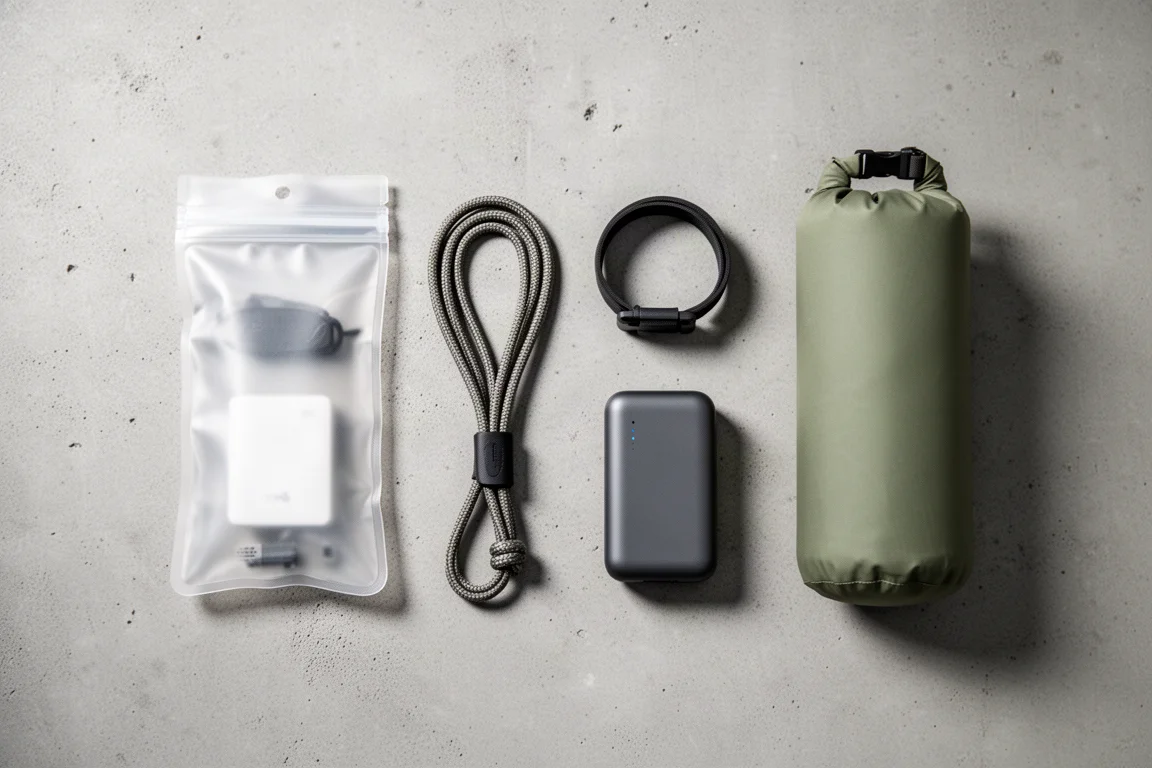
The battery itself is sealed inside and designed to last seven years. When that period ends, an authorized ACR or Ocean Signal dealer replaces it for around $150, runs a full set of checks, and typically replaces the rubber seals at the same time. Because there are no moving parts inside, the beacon comes back essentially as new. That service interval is also a natural moment to reconsider the hardware, since seven years is long enough that something better may exist by then.
Garmin inReach: Two-Way Communication
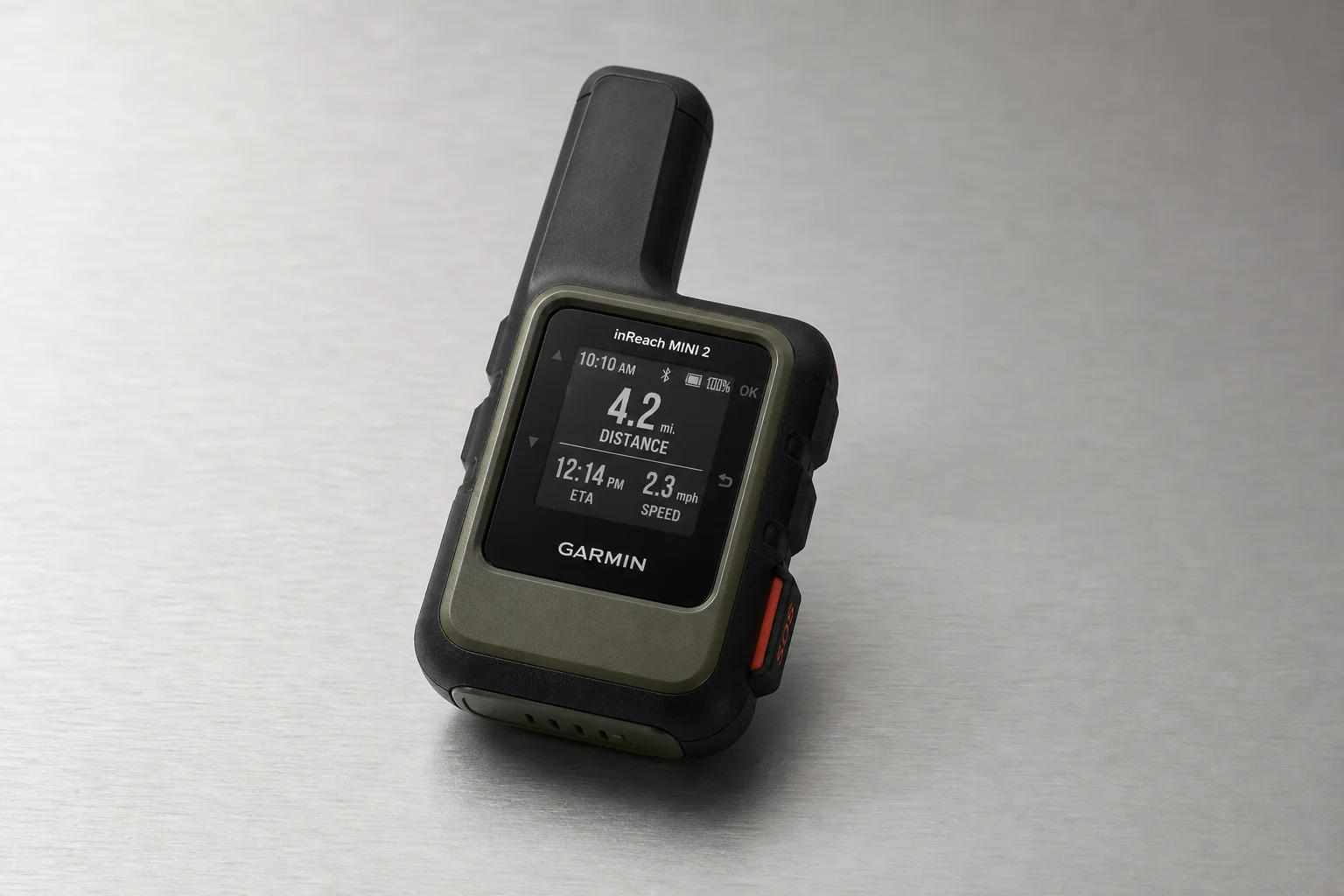
The Garmin inReach takes a different approach. Triggering its emergency function connects you to a dispatch organization, the IERCC, formerly known as GEOS. Instead of a one-way call for help, you get a conversation: dispatchers contact the rescue authorities, text you back, and can answer questions. If a forest fire changes your plans or you need guidance on how to evacuate, you can ask. The service can also notify your emergency contacts.
The inReach is not only for emergencies. It sends ordinary messages over satellite, so you can tell a partner that you will be late or that your route has changed, and weather forecasts and other services are available as well. That flexibility is the reason it tends to live somewhere accessible rather than buried in an emergency kit.
The trade-offs are the signal and the plan. The inReach transmits at 1.6 watts against the 5 watts of a personal locator beacon, and it runs on the Iridium satellite network, which offers worldwide coverage with very few failed messages. Battery behaviour varies by model and requires recharging over USB; heavy messaging drains the pack, so a USB power bank is worth carrying if you plan to use it often.
ZOLEO Satellite Communicator
The ZOLEO Satellite Communicator belongs to the same family as the inReach. It is a subscription-based messenger that carries two-way text over satellite, and message delivery has proven dependable in the same way, with failures being rare.

The practical difference from a personal locator beacon is the same in both cases. A satellite communicator asks for a monthly plan, similar to a cell phone plan with an allowance for messages and tracking, and in exchange it gives you information and a way to coordinate. A PLB asks for nothing after the purchase and gives you a single, powerful distress call.
Practical Considerations Before You Buy
Who ultimately pays for a rescue is a complicated question with no single answer, but the rescue itself comes from the same authorities whether the call arrives from a beacon or from a communicator.
A few technical differences are worth weighing. The PLB1 broadcasts at 5 watts, transmits to three classes of satellite, and keeps transmitting for 24 hours or more. It also requires no charging, because the battery is sealed and rated for seven years. A satellite communicator needs a monthly plan and regular charging, and its messaging drains the battery faster the more you use it.
Some people carry both. A beacon in the bottom of the pack as an emergency item, paired with a communicator somewhere more accessible for everyday messaging, is a sensible arrangement: the beacon is the last resort, and the communicator handles everything that is not an emergency.
Which Option Fits Your Needs
If the goal is the simplest possible safety net with no ongoing commitment, the rescueME PLB1 is the straightforward answer. Buy it, register it, test it on a schedule, and leave it in the pack. The hardware runs roughly $300 to $400 depending on the sale, and there is nothing else to pay.

If you want to communicate rather than simply call for help, a satellite communicator such as the Garmin inReach or the ZOLEO is the better fit. Two-way messaging is genuinely useful when a situation is ambiguous, when you need information, or when you want to reassure family without triggering a rescue. The cost is a monthly plan and more attention to charging.
If you cannot decide, there is no rule against carrying both. The two categories overlap only at the moment of an emergency; the rest of the time they do different jobs.
Conclusion
The Ocean Signal rescueME PLB1 is a single-purpose device, and that is its strength: a one-button distress call to a global satellite system, a 24-hour transmission window, a strobe, and a 121 MHz homing beacon, with no subscription and a battery rated for seven years. The Garmin inReach and the ZOLEO Satellite Communicator trade that simplicity for two-way conversation and a monthly fee. Choose the beacon if you want a permanent emergency item in your pack, choose a communicator if you want to talk, and choose both if you want the reassurance of each.
Further reading
Related Reviews
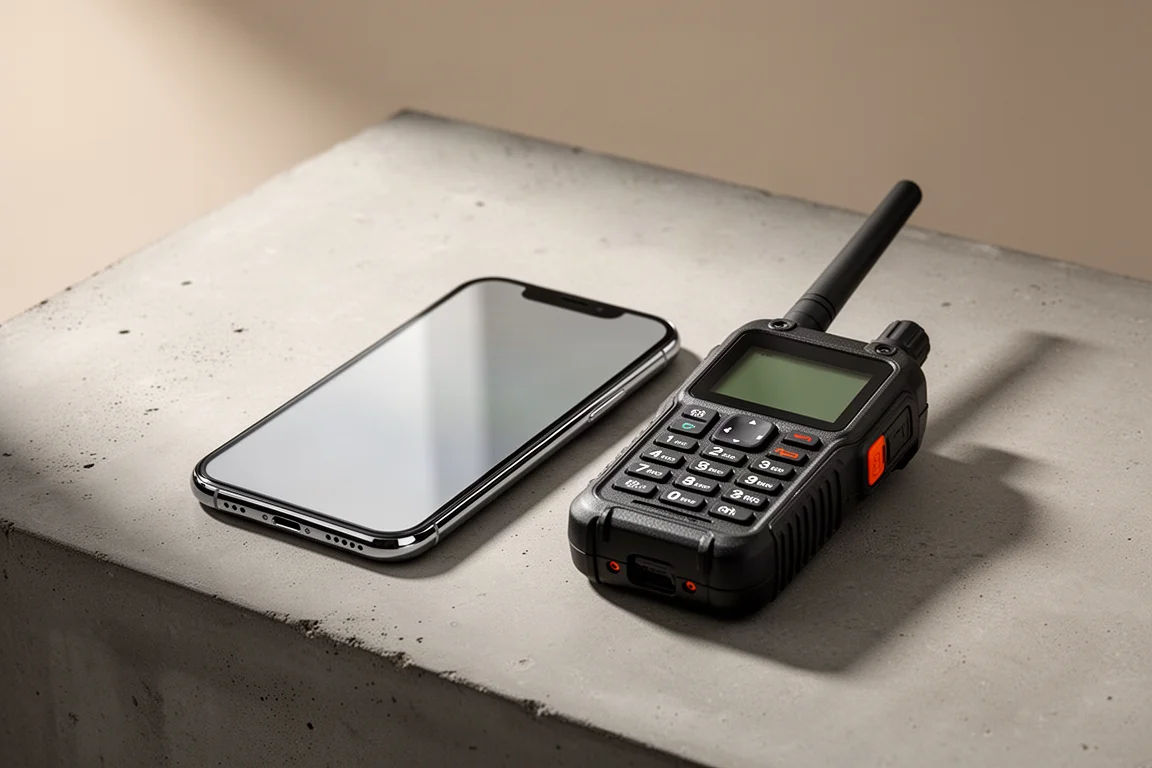
Emergency Communication
iPhone 14 vs Garmin inReach: Satellite SOS Compared
A practical comparison of iPhone 14 satellite SOS and Garmin inReach for backcountry emergencies, coverage, messaging, battery life, and subscription costs.

Backpacking Gear
Building a 10 lb Base Weight: An Ultralight Backpacking Gear List
A practical walkthrough of the ultralight pieces behind a 10 lb base weight, from a 765 g pack and a roomy one-person tent to a full camp chair and a dependable water filter.

Road Bikes
10 New Road Bikes Worth Watching: Aero, Titanium, Steel and Endurance Standouts
A practical roundup of 10 new road bikes, from aero flagships chasing single-watt gains to titanium, steel and endurance platforms built for real roads.