Hi-Fi Speakers
O Audio Icon 12 Review: A Horn Speaker That Does Not Sound Like One
A Norwegian-built horn loudspeaker with a warm, refined balance, full bass, and a relaxed top end. Here is what to know about the O Audio Icon 12 before buying.
Introduction
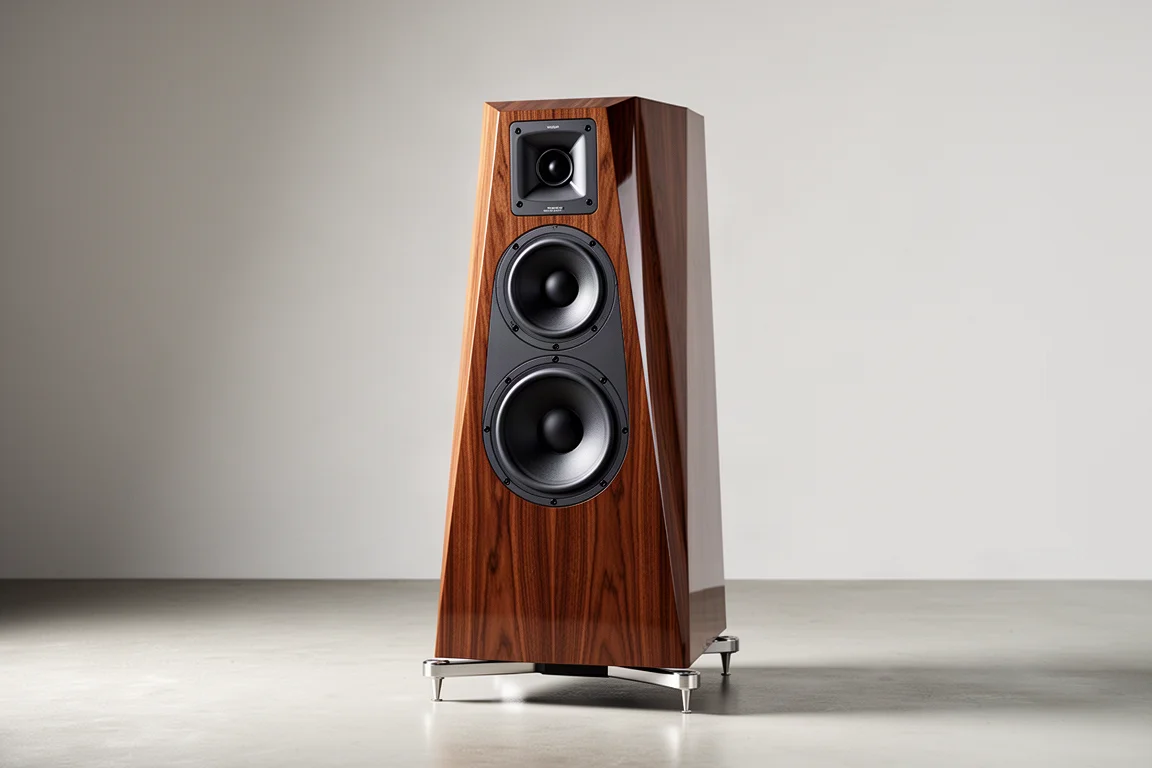
The O Audio Icon 12 is the middle model in a three-strong line of horn loudspeakers, and it is a ground-up remake of the brand’s first product, the Icon, which launched in 2015 and stayed in production until this year. Almost nothing of that original design survives in the Icon 12. What remains is a tall, angular floorstanding cabinet housing an in-house compression driver, an in-house 12-inch woofer, and a proprietary horn.
The most striking thing about it is how little it behaves like a stereotypical horn speaker. There is no forward, shouty edge here. The balance sits firmly on the warm side of neutral, the bass is full and physical, and long listening sessions pass without fatigue.
It also has real shove. The speaker pushes air into the room rather than merely filling it, and it stays composed as the volume climbs.
Who the O Audio Icon 12 Is For
This is a speaker for listeners who want the dynamic ease and immediacy of a horn-loaded design without the aggressive upper midrange that often comes with it. It suits people who play a wide range of material, from quiet acoustic recordings to dense, compressed rock and reggae, and who value a sound that stays sweet over long sessions.
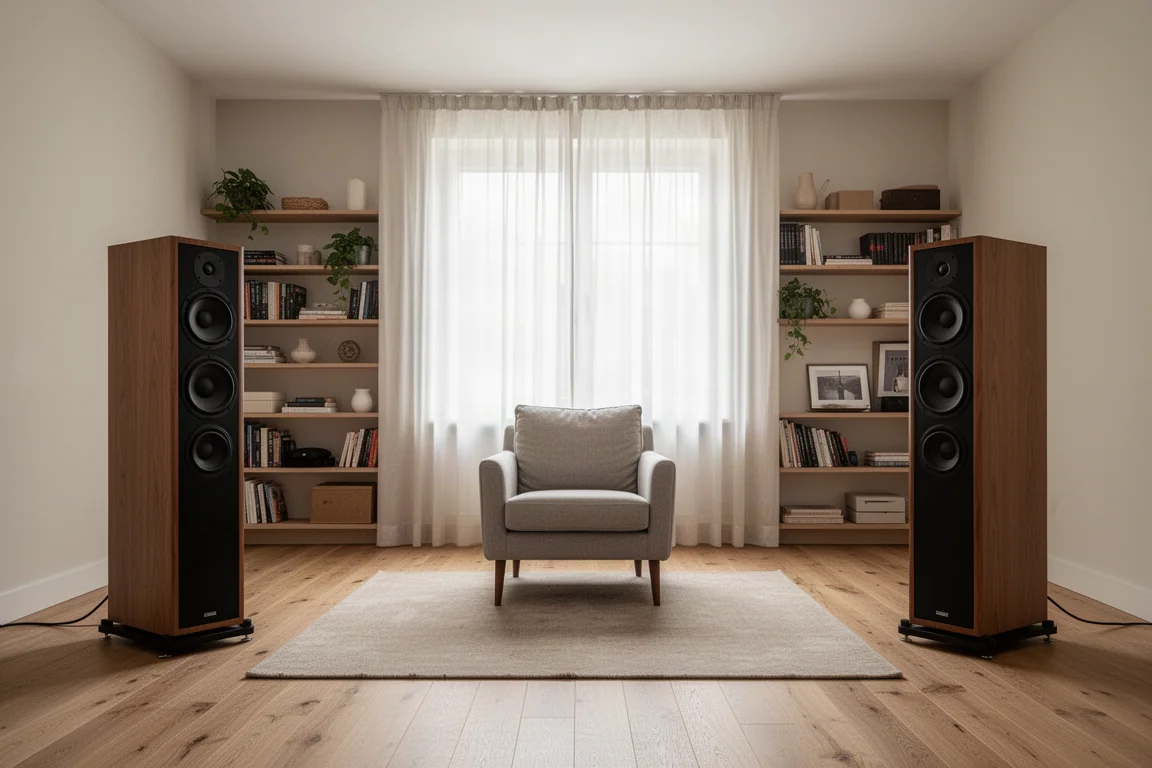
It is equally a speaker for anyone who wants a large, beautifully finished object in the room. The cabinet is unlike most floorstanders, built around extreme angles, and it looks considerably better in person than photographs suggest.
It is not, however, a compact or inexpensive proposition, and it rewards a room that can give it some breathing space.
Design, Finish, and Setup
The Icon 12 stands 44 inches tall and weighs 120 pounds. Its cabinet is deliberately angular, a shape chosen to minimise internal standing waves, and it is available in three high-gloss finishes: white, black, and walnut. The walnut version has a deep, polished surface that reflects the room around it.
Both drivers are designed and manufactured in house in Norway. A 3.4-inch compression driver feeds the proprietary Quad Vertex horn, while a 12-inch woofer handles the lower registers. The crossover is first order and sits at 900 Hz. At the back there is a single set of high-quality binding posts, with no provision for bi-wiring. Impedance is rated at 8 ohms, which is friendly for a wide range of amplifiers, and sensitivity is a high but not extreme 92 dB.
The speaker is ported, with two bass ports on one side panel. That layout gives some flexibility. If the speakers sit close to a sidewall, the ports can be turned to fire inward toward each other, while in open space they can fire outward.
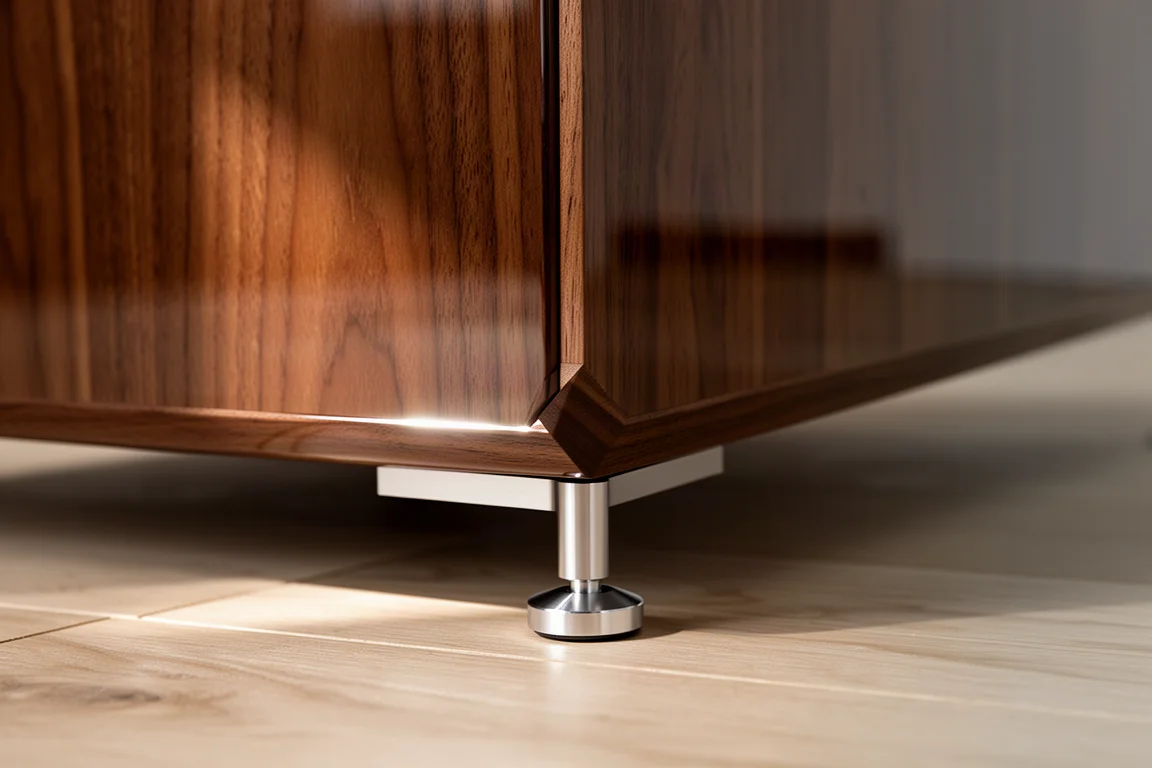
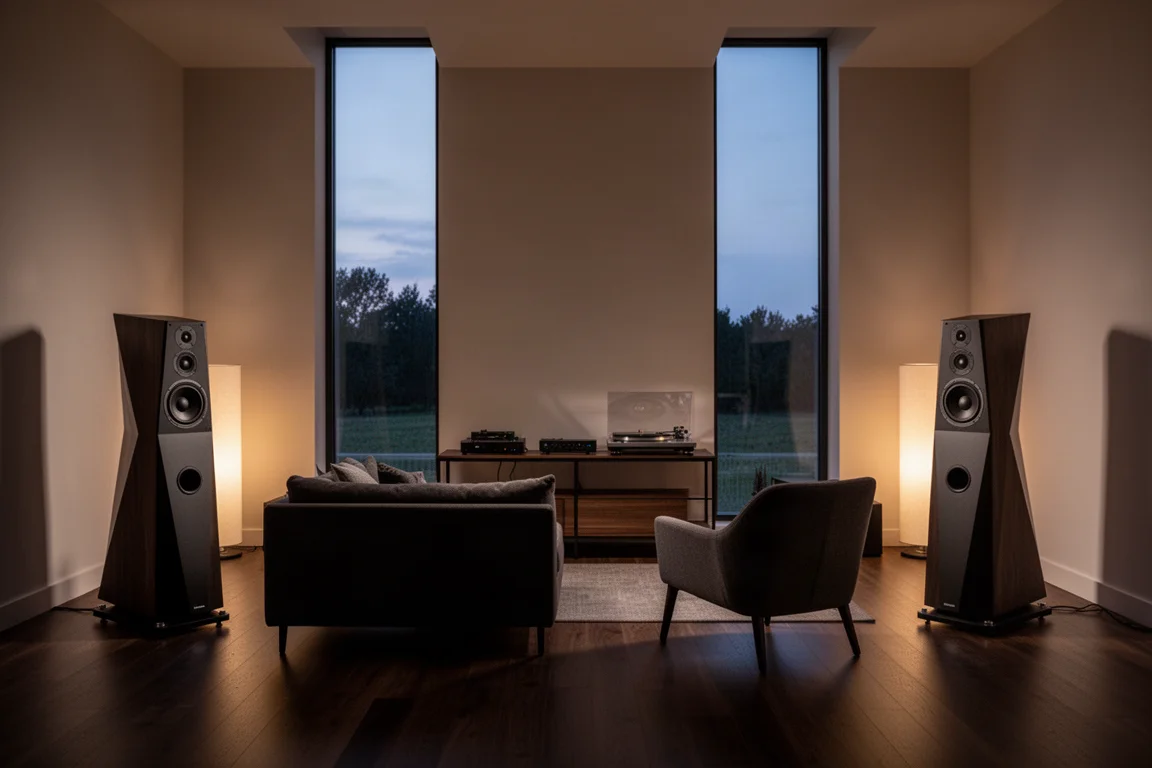
Setup is straightforward. Placing the speakers roughly 10 feet apart centre to centre, with the listening position about 10 feet from each one, forms an equilateral triangle, and toe-in can be adjusted to taste. Leaving around 3 feet of space behind the cabinets helped the soundstage open up. The aluminium and stainless steel outrigger feet keep the tall cabinet stable.
Sound Quality: Warm, Refined, and Easy to Live With
The overall character is warm, sweet, and relaxed rather than analytical. Detail is plentiful, but it is presented without etching. The soundstage is one of the speaker’s strongest qualities: it projects well beyond the physical positions of the cabinets, with convincing depth and a clear sense of space around individual instruments.
Bass is full and weighty, and the speaker handles difficult low-frequency material without congestion. Percussive detail comes through cleanly, and dense mixes stay legible instead of collapsing into a wall of sound.
Dynamics are handled with composure. A solo piano recording played at realistic levels showed no hardness or graininess, and the speaker tracked the quiet shading of the playing as carefully as the loud passages. Vocals benefit from the same treatment, with nuance and phrasing coming through clearly rather than being flattened into a shout.
Volume is not a problem. The Icon 12 simply gets louder without a sense of strain, and it stayed comfortable even when peaks were pushed past 90 dB. It also proved undemanding of amplifier power: an 18-watt-per-channel design into 8 ohms drove it successfully.
Dynamics, Scale, and Headroom
Against a much larger horn-loaded floorstander such as the Klipsch La Scala AL6, which stands around 41 inches tall, is roughly 26 inches deep and weighs close to twice as much, the Icon 12 gives away some ground. The bigger speaker has more dynamic contrast between loud and quiet passages, a more powerful low end with additional texture and low-level detail, and more air and sparkle in the top octave.
What the larger speaker also does is expose more of the flaws in ordinary recordings. The Icon 12 takes the opposite approach. Its top end is softer and more relaxed, which flatters imperfect material and keeps the listening experience easy.
In exchange for that lost scale, the Icon 12 gains in imaging. Its sense of spaciousness and depth is the stronger of the two, and it is the more refined and forgiving speaker overall. Listeners who want maximum physical presence and dynamic punch will prefer the larger design. Those who want a speaker they can listen to for hours with anything they own will prefer the Icon 12.
That trade-off is the heart of the decision. The Icon 12 is dynamically alive, just not as relentlessly so as the biggest horn designs, and it aims for a broad, comfortable appeal rather than outright impact.
Things to Consider Before Buying
The Icon 12 sells for $23,400 per pair in the USA, and that price applies to all three finishes. It is sold through dealers rather than direct, and distribution covers most but not all of the world, so availability varies by region.
Size and weight are real considerations. At 44 inches tall and 120 pounds each, the speakers need a solid floor, room to breathe, and a second pair of hands on moving day. Sensitivity is high at 92 dB, but not as high as some horn designs, so very low-powered amplifiers should still be chosen with care.
The side-mounted ports also mean placement matters. Decide in advance whether the cabinets will sit near a sidewall or in open space, because that determines which way the ports should face. Finally, there is no bi-wiring option, which keeps setup simple but removes one avenue of experimentation.
Buying Advice
The Icon 12 makes the most sense for listeners who have the space, the budget, and a preference for warmth over clinical precision. It is a speaker that makes almost everything sound good, and it never becomes tiring, which matters more than any single specification over years of ownership.
Before committing, consider the room as carefully as the speaker. Give the cabinets a few feet behind them, keep the listening triangle roughly equilateral, and be prepared to adjust toe-in until the image locks in. Pairing with a quality amplifier is straightforward thanks to the 8-ohm impedance, and there is no need for enormous power.
Buyers who prioritise maximum dynamic contrast and a more revealing top end should also listen to larger horn-loaded designs. Buyers who want a refined, forgiving, beautifully built horn speaker that disappears into long evenings of listening will find the Icon 12 does exactly that.
Conclusion
The O Audio Icon 12 is a horn loudspeaker that does not sound like one, and that is meant as praise. Its warm balance, full bass, expansive soundstage, and complete lack of listening fatigue make it an easy speaker to recommend to anyone shopping in this tier. It gives up some dynamic scale to the biggest horn designs, but it gains in refinement, imaging, and day-to-day usability. For the right room and the right listener, it is a compelling piece of high-end audio.
Product link
View more details for O Audio Icon 12
This product is mentioned in the review. Check the specifications, options, and compatibility before buying.
View more details for O Audio Icon 12Further reading
Related Reviews
Hi-Fi Speakers
1723 THX Tower vs 1528 Bookshelf: Which Speaker Fits Your Room?
Two speakers at roughly the same price, built very differently. How the 1723 THX tower and the 1528 bookshelf compare on construction, bass, power needs, and sound.
Hi-Fi Speakers
Acoustic Energy AE 300 Review: Deep Bass From a Compact Standmount
A two-way standmount with real wood veneer, surprising low-end weight, and a warm, easygoing character. Here is what to know before buying.
Hi-Fi Speakers
Acoustic Energy AE1 40th Anniversary Review: A Modern Take on a British Classic
A compact standmount that revives a 1980s favorite with all-new parts, a warm mid-centric balance, and a price of £1,499 per pair.