Hi-Fi Amplifiers
NVA P50SA Mark II and M600 Monoblocks Review: A Purist British Amplifier Stack
A detailed look at NVA's top passive preamplifier and its matching monoblocks, covering sound character, setup demands, comparisons, and who should buy the pair.
Introduction
NVA is a British manufacturer that sells direct and builds everything at its own facility in Durham, England. Its products follow a purist line: keep the signal path short, remove anything that is not strictly needed, and spend the money on parts and construction instead. The P50SA Mark II passive preamplifier and the M600 monoblocks sit at the top of that range, and together they come to around £3,500.
That is a serious outlay, and it buys almost nothing in the way of features. There is no remote control, no display, and no tone adjustment. What it buys instead is transparency, natural tonality, and a level of timing precision that is rare around this price. This review covers what each unit does, how the pair performs together, and the setup conditions that let them show what they can do.
What Makes the NVA Design Different
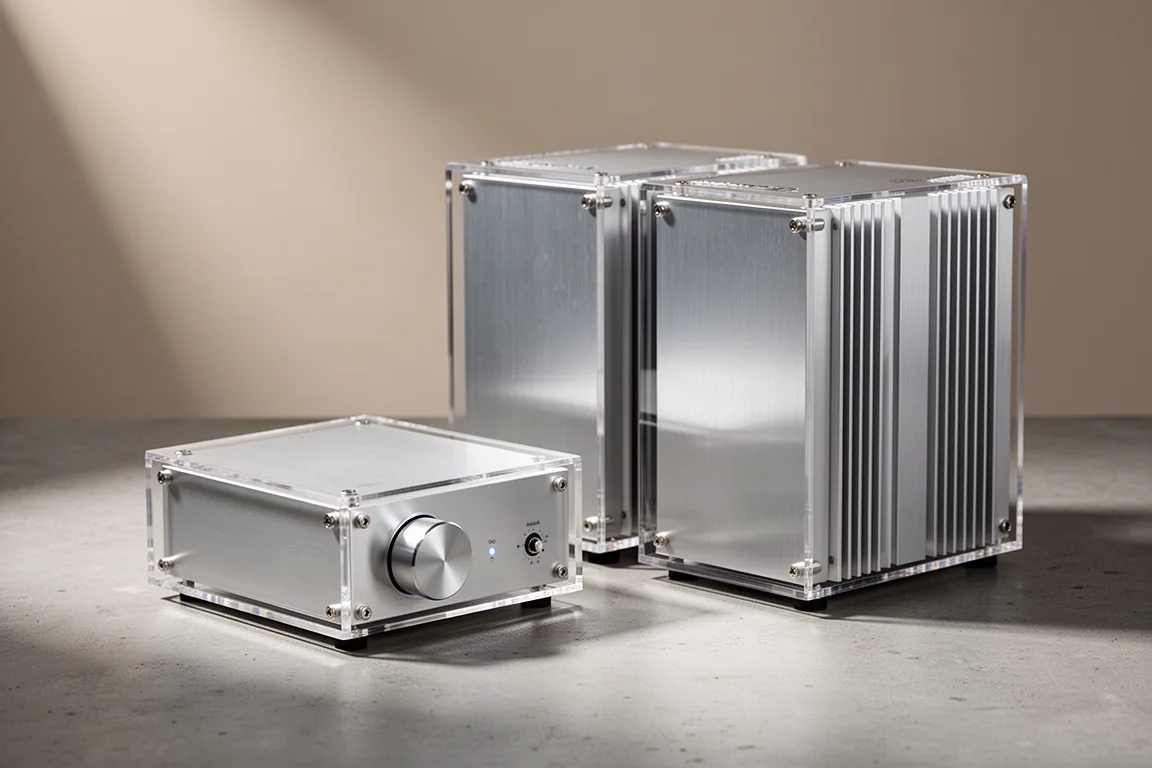
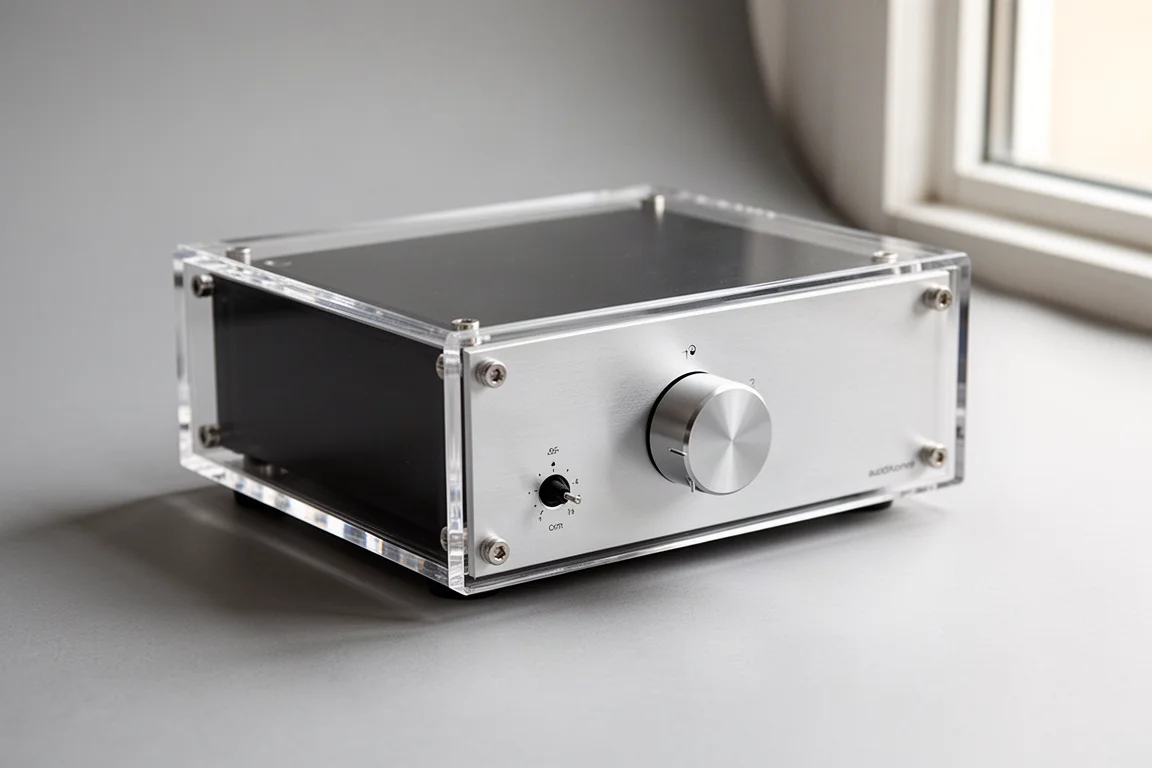
NVA’s approach starts with the casework. Both the preamplifier and the monoblocks use acrylic rather than aluminium, and components are bonded rather than screwed together. The reasoning is that fewer metal parts reduce stray eddy currents that can interfere with sound quality. The acrylic preamplifier case comes from a manufacturer that also supplies display cases to the British Museum, which says something about the standard of finish.
Because NVA sells directly through its own website rather than through dealers, prices stay lower than the component quality might suggest. The entry-level P50 Mark II passive preamplifier is £405, while the SA version reviewed here is £830. The M600 monoblocks are £2,650 for the pair.
NVA P50SA Mark II Passive Preamplifier
The P50SA Mark II is a passive design, which means there is no gain stage between your sources and the power amplifiers. It measures 250 by 210 by 70 mm, or 9.8 by 8.3 by 2.8 inches, and its front panel carries only a volume control and an input selector. Where the standard P50 Mark II uses a conventional volume potentiometer, the SA version substitutes a 23-step attenuator built from Audio Note high-precision resistors, and that single change accounts for most of the price difference.
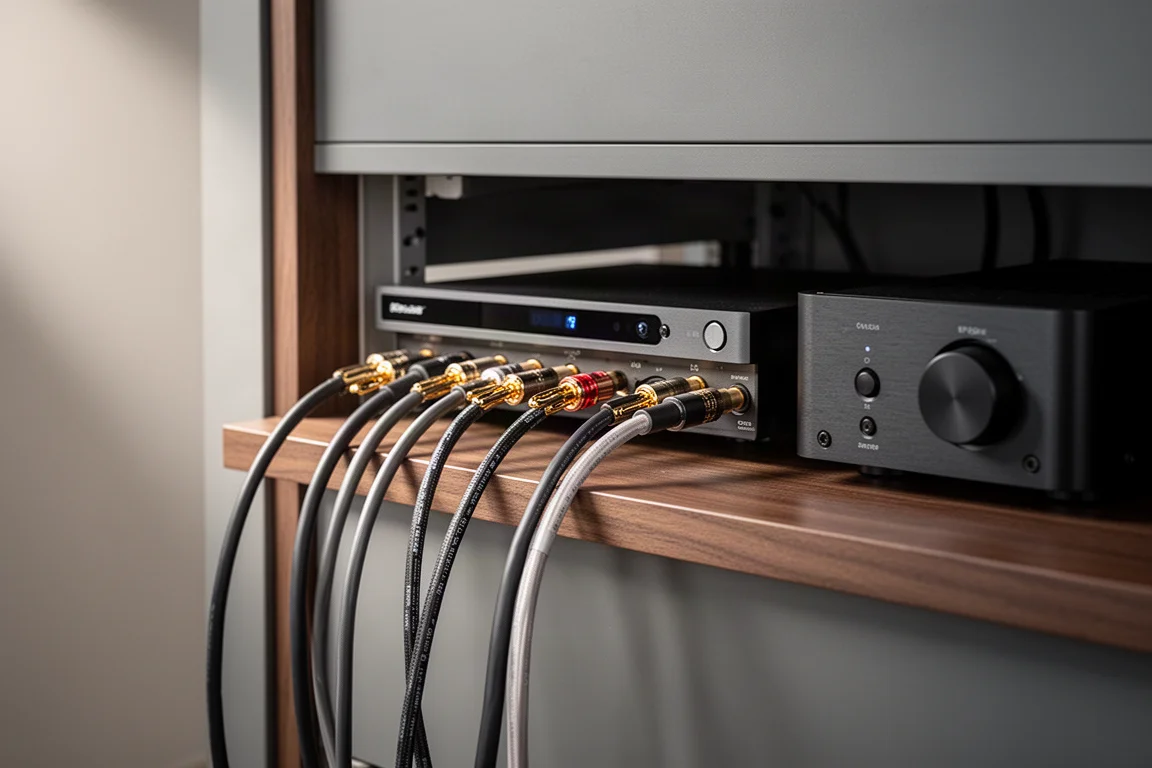
Connectivity is straightforward and generous in the ways that matter. There is a direct input that bypasses the selector, four further line inputs, one of which can be part of a loop for recording devices, and three sets of RCA outputs. That last point is significant: with three outputs, bi-amping or even tri-amping suitable speakers becomes a practical option rather than a workaround.
What you will not find is a remote control or a display. Every control is manual, and every listening session starts at the front panel.
NVA M600 Monoblocks
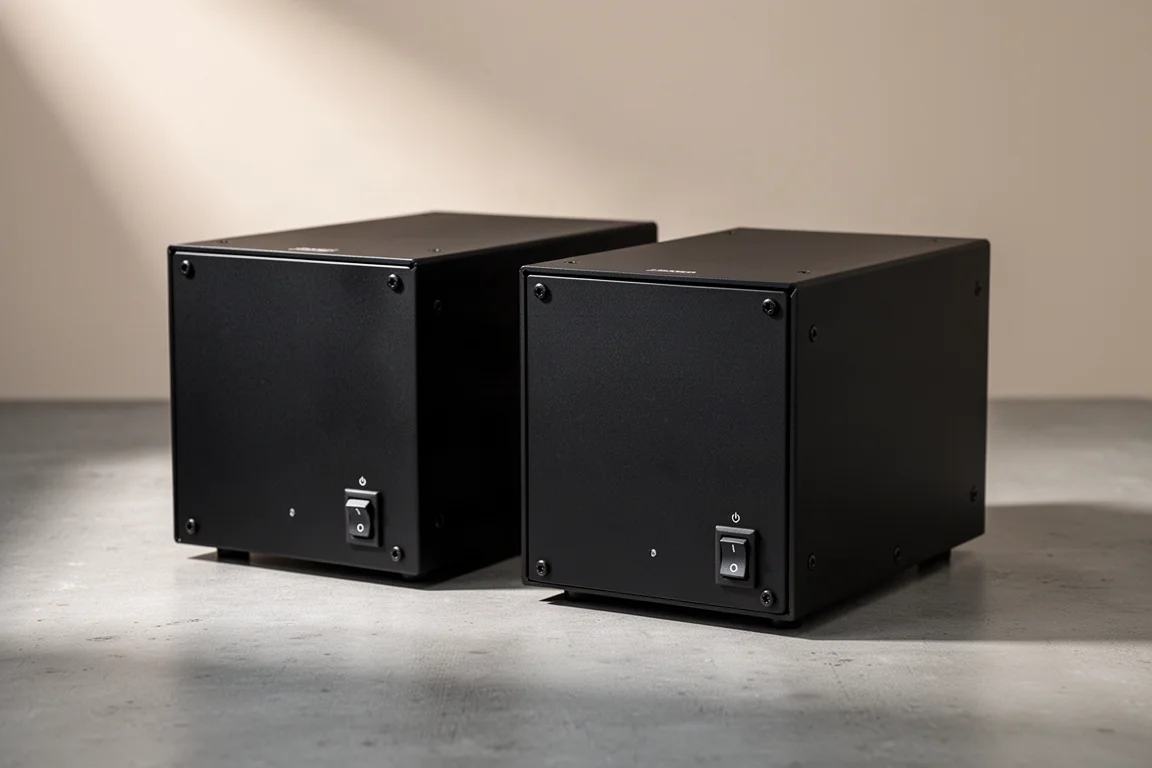
The M600s are the top of NVA’s power amplifier range at £2,650 per pair. Each unit delivers 80 watts into an 8 ohm load, up from the 35 watts per channel of the smaller S80, and each one measures 240 by 240 by 160 mm, or 9.4 by 9.4 by 6.3 inches, at 9 kg or 19.8 pounds. The front panel shows only the logo and an LED to indicate that power is on.
The rear panel is just as spare: a toggle switch for power, one set of speaker posts that accept banana plugs only, and a single RCA input. Inside, NVA uses Vishay capacitors throughout, and each monoblock carries two 150 VA toroidal transformers, one for the input stage and one for the output stage. The aluminium heat sinks are bonded to the acrylic case, which is why the internals are not accessible with a screwdriver.
How the Stack Sounds Together
The most obvious change compared with the smaller NVA combination is in the bass. With much more substantial power supplies behind them, the M600s clean up low frequencies that the 35 watt design could not fully control. The stack also plays louder, and instruments and transients are better separated from one another.
Beyond that, the character is consistent with what makes the NVA approach distinctive. Bass definition is excellent, mid-range clarity is a genuine strength, and the tonality stays natural rather than warm or forward. High frequencies have a beauty and grace that is hard to find at this price. Imaging is precise within a wide and deep sound stage, and the sense of space between performers, and between individual notes, is the quality that stands out most. You hear the beginning, the middle, and the decay of notes as separate events.

Dynamics are good but not the headline. This is a stack that rewards close listening rather than sheer scale, and it is happiest when the system around it is quiet and resolving.
How It Compares With Other Amplifiers
At around £3,500 the combination competes with amplifiers costing considerably more. The Accuphase E-280, at just under £5,000, is the closest match in character: it shares the same wonderful sense of timing and is even more impressively finished, but it carries a slight leanness in the mid-range that the NVA pair does not. The Yamaha AS2200, at just under £3,000, is superb value as a fully balanced integrated amplifier with a detailed presentation, and it shows some of the same leanness.
Where the NVA stack is weakest is bass impact. The Hegel H190 delivers greater slam on kick drums, snares, and toms, although it does not match the NVA pair in other areas. The Exposure 21 preamplifier and 18 Super monoblocks deliver more dynamic fireworks and a warmer, richer tone that some listeners will prefer, even though that warmth is a distinct coloration.
Moving further up the price ladder does not automatically buy better sound. Amplifier stacks costing roughly twice as much share the NVA’s superb detail, natural tone, and precise timing, yet they can sound dynamically polite beside it, and some more expensive combinations pull out similar detail while sounding comparatively synthetic through the mid-range.
Matching Equipment and Setup
The passive design is the single most important thing to understand before buying. Because there is no active gain stage, you do not get the 10 to 12 dB of boost that many preamplifiers provide. With low-sensitivity speakers rated around 84 to 85 dB, and regular listening above 85 dB, you may run out of dynamic headroom. With reasonably efficient speakers, or more moderate listening levels, this is not a concern.
Partner equipment needs the same level of detail and timing, or the preamplifier’s transparency will simply expose the weak link. Digital front ends that suit the stack include the Auralic Altair G1.1 at £2,699 and the Gustard R26 at around £1,600, which sounds almost identical while giving up the display and the proprietary app. On the speaker side, compact floorstanders such as the Neat Elites at £3,500 have the all-round ability and small footprint to work well in tighter rooms.
The absence of a remote control is worth weighing up honestly. If you adjust volume frequently from your listening seat, this is a real daily compromise rather than a technical footnote.
Buying Advice
Buy the P50SA Mark II and M600 monoblocks if your priority is sound quality per pound and you are comfortable with a manual, feature-free setup. The stack makes the most sense with speakers of reasonable efficiency and a source that can resolve detail, and it rewards listeners who care about tone, timing, and imaging more than about bass slam or convenience features.
Look elsewhere if you need a remote, if you listen loudly through low-sensitivity speakers, or if bass impact is the main attraction of your system. A powerful integrated amplifier will be easier to live with in those cases, and it will not ask you to think about gain or headroom.
For everyone else, the pair represents a focused, well-executed answer to a simple question: how much performance can you get when nothing else is allowed to get in the way?
Conclusion
The NVA P50SA Mark II and M600 monoblocks are a purist’s amplifier stack in the truest sense. Every design decision and every part goes toward sound quality, and the result is bass definition, mid-range clarity, natural tonality, and high-frequency refinement that is unmatched around this price. Dynamically, a little more bass punch would be welcome, and the lack of a remote will rule the combination out for some listeners. Those are narrow caveats on a stack that gets the fundamentals right and then some.
Further reading
Related Reviews
Hi-Fi Amplifiers
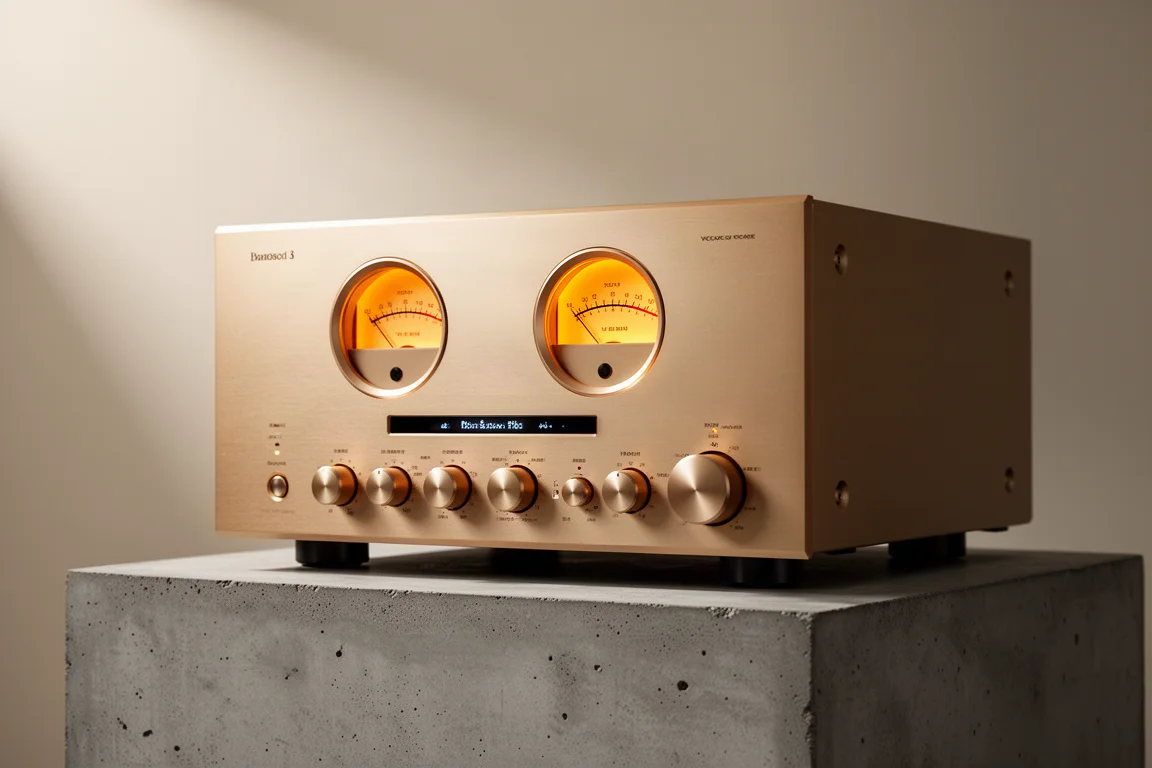
Accuphase E-280 Review: Entry-Level Accuphase With Flagship Attention to Detail
A close look at the Accuphase E-280 integrated amplifier, covering its champagne build, AAVA volume control, sound quality, and the speakers and sources that suit it best.
Hi-Fi Amplifiers
Advance Paris A10 Classic vs Yamaha A-S301: Two Integrated Amplifiers Compared
A practical comparison of a $350 integrated amplifier and a $2,500 reference model, covering the differences that matter and the ones that do not.
Hi-Fi Amplifiers
Affordable Chinese Amplifiers Worth Buying: Five Budget Hi-Fi Amps Compared
A practical look at five affordable amplifiers, what each one does well, and the trade-offs to weigh before you buy.