Camping Tents
NTK Cherokee GT Tent Review: Rain Performance and Seam Design
A close look at how the NTK Cherokee GT tent handles sustained heavy rain, which seams are protected, and what to seal before a storm.
Introduction
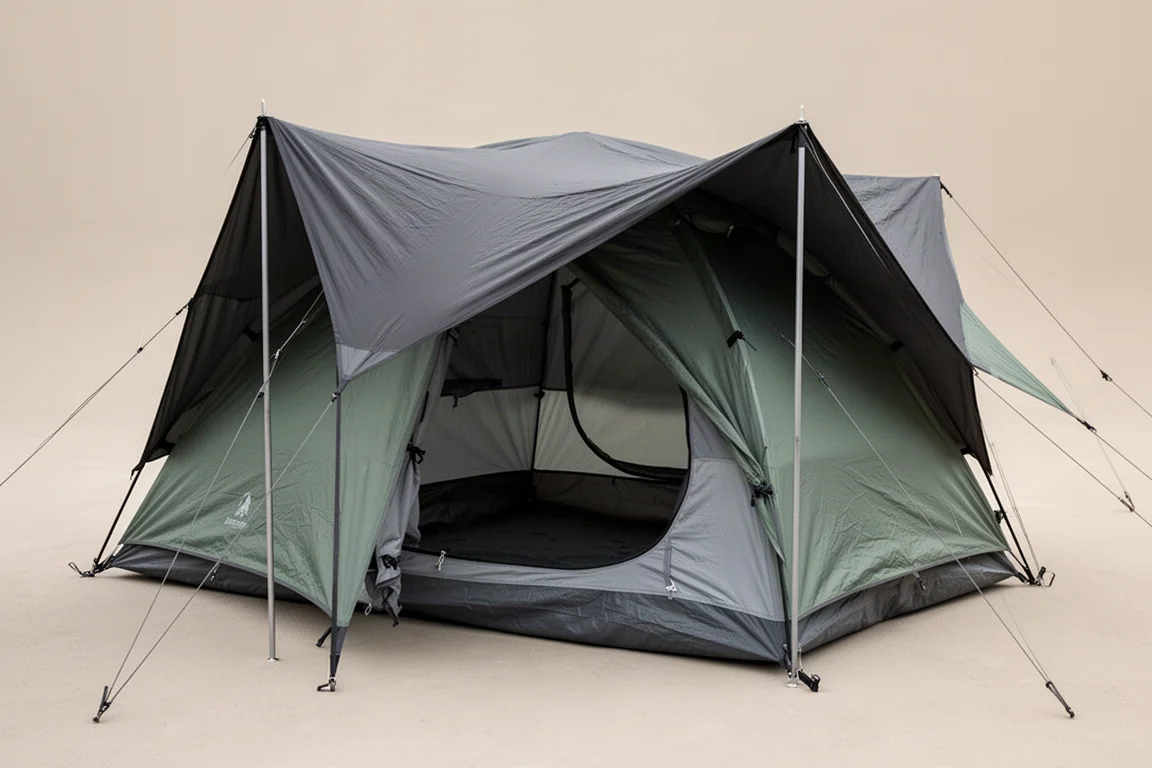
The NTK Cherokee GT is a camping tent built around a rainfly-and-bathtub-floor layout, and its rain behaviour is worth understanding before you commit to it for wet-weather trips. The design uses a mix of seam treatments: seams that sit under full rainfly coverage are left untaped, seams exposed to more direct rain are inverted, and only the rainfly seams carry taped sealing.
That approach matters because the tent body itself is not uniformly protected. Coverage varies from wall to wall, and the floor seam where the tent body meets the bathtub flooring is the one area that has shown the least resistance to prolonged heavy rain.
Who This Tent Is For
This tent suits campers who mostly ride out moderate rain and occasional downpours, and who are comfortable doing a small amount of preventative maintenance before a trip. The bathtub flooring extends up to about 10 inches, which gives the interior a useful buffer against ground water and splash.
It is less suited to anyone who expects to sit through hours of driving rain without touching up the seams first. The rainfly length is not consistent around the whole tent, and the wall with the shorter fly gives the inner body noticeably less shelter.
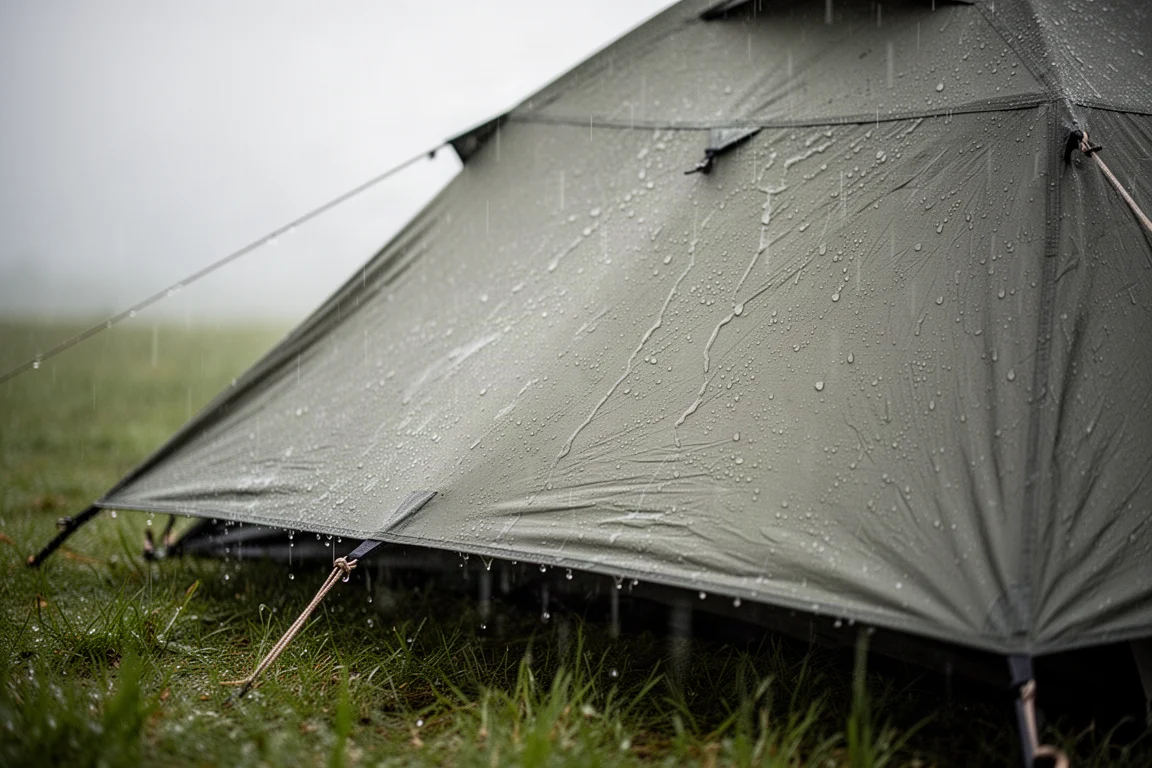
For fair-weather and mixed-condition camping, the fundamentals are sound. For storm-focused trips, plan on sealing work as part of setup rather than as an emergency fix.
Main Strengths
The strongest part of the design is the rainfly on the long-coverage wall. In sustained hose testing, that fly shed water almost completely, with runoff dripping straight to the ground and never reaching the inner tent body. After 45 minutes of concentrated heavy rain on that side, the entire wall stayed dry, and even the untaped inverted seam at the bathtub flooring held without leaking.
Seam treatment is deliberate rather than uniform. Seams with less rainfly protection, including the tent body to bathtub flooring seam, the vertical seams, and the door seams, are inverted to push water away. Mesh wall seams sit under full rainfly coverage and are left untaped or inverted because they see far less direct rain. Only the rainfly seams are taped.
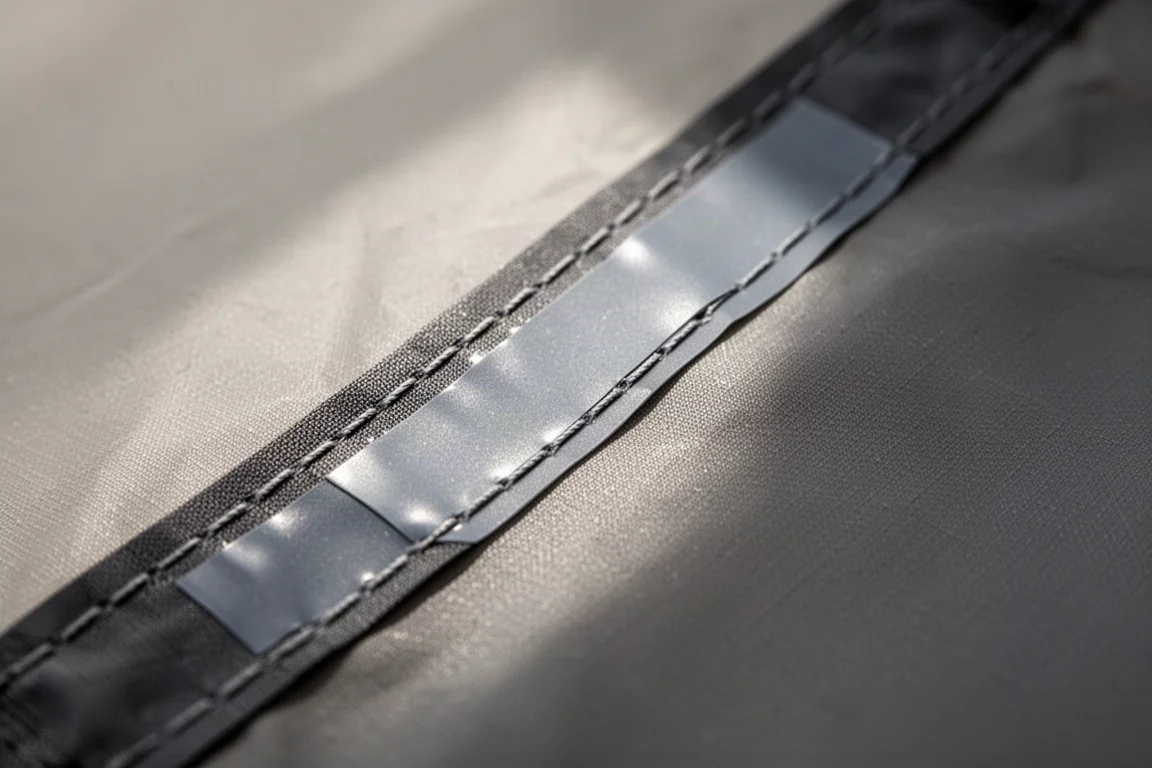
That layered approach means the tent performed well without any additional waterproofing applied beforehand, holding up to 30 minutes of genuinely heavy rain from a concentrated source before any moisture appeared inside.
Things to Consider Before Buying
The main weakness shows up on the wall with the shorter rainfly. It still blocks most of the water, but smaller droplets run across the inner grey tent body, and the seam between the tent body and the bathtub flooring tends to trap water. That is where leaking begins, typically around the 30-minute mark under concentrated heavy rain.
By 45 minutes, the untaped bathtub flooring seam was soaked along almost its entire length and was passing water into the tent. The rest of the fabric, including the grey wall material near that seam, stayed dry. So the failure is localised rather than a general fabric problem, which makes it a manageable issue if you address it early.
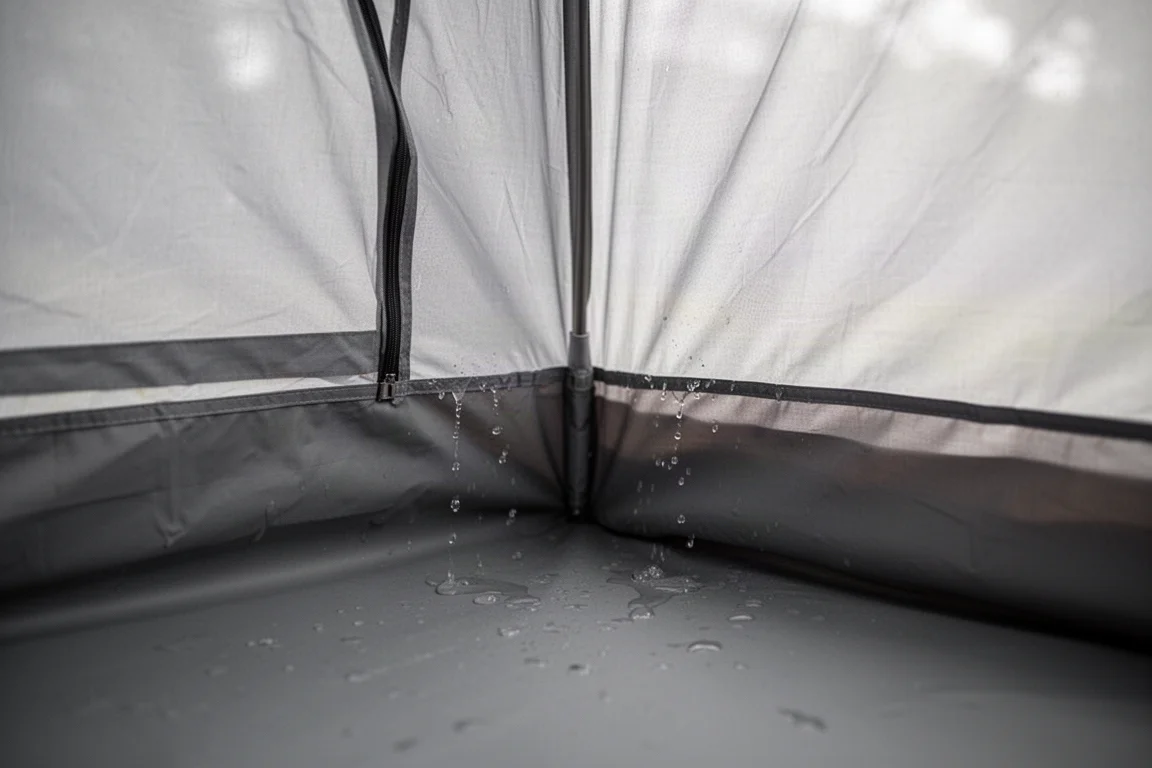
The flooring seam is also not taped, and that is a design choice worth weighing. It is the single detail most likely to decide whether a wet night stays comfortable.
Buying Advice
If you already own this tent and expect serious rain, seal the bathtub flooring seam before you go. That one step addresses the exact point where water entered during testing, and it is far easier to do at home than in a downpour.
If you are still choosing, look at NTK models with more rainfly protection, such as the Colorado, which offer broader coverage over the tent body. The Cherokee GT remains a reasonable option for campers who want its layout and are willing to prepare it properly, but a tent with fuller fly coverage will need less attention when the weather turns.
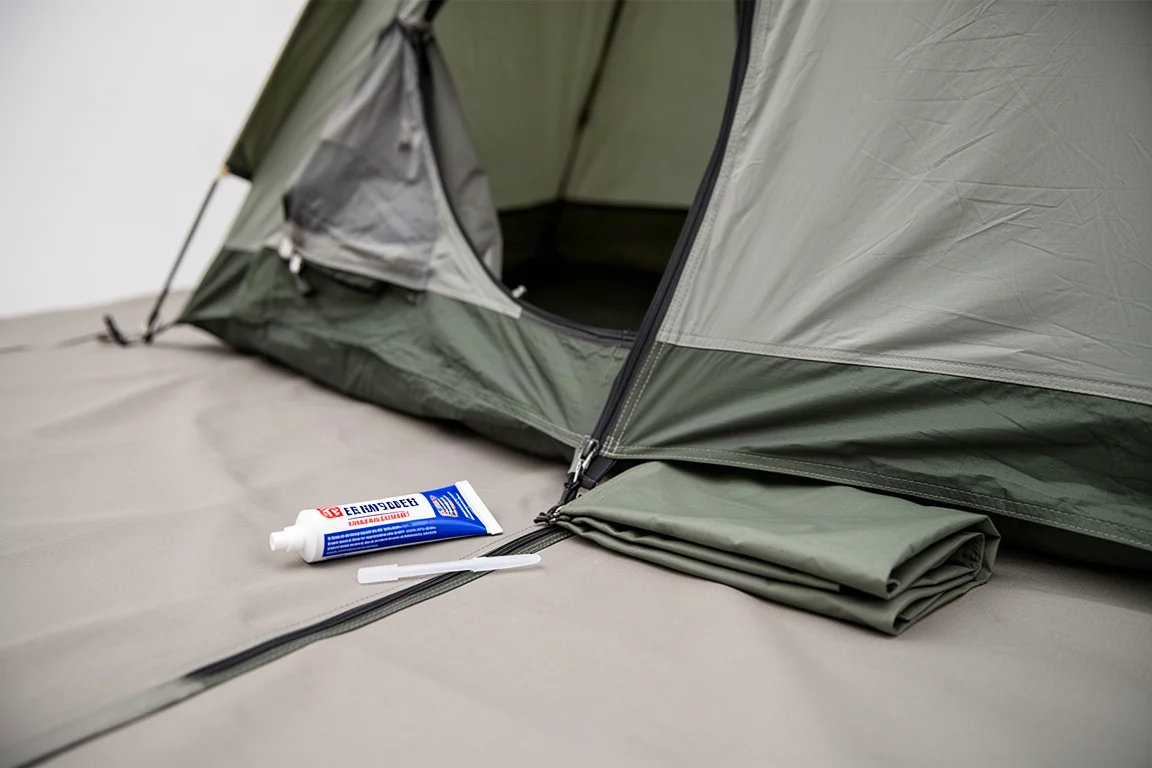
Weigh the trade-off honestly: this tent rewards a little preparation, and the payoff is a dry interior through the rain it was designed to handle.
Conclusion
The NTK Cherokee GT handles heavy rain well in the areas its rainfly covers properly, and its inverted seam strategy works where it is applied. Its weak point is the untaped bathtub flooring seam under the shorter fly, which begins leaking after roughly half an hour of concentrated heavy rain. Seal that seam, or choose a model with more rainfly coverage, and the tent makes sense for wet-weather camping.
Product link
View more details for NTK Cherokee GT Tent
This product is mentioned in the review. Check the specifications, options, and compatibility before buying.
View more details for NTK Cherokee GT TentFurther reading
Related Reviews
Camping Tents
3F UL Gear Taiji Two-Person Tent Review: Field Waterproofing Results and Buying Advice
The Taiji pairs an attached fly with a removable inner, but sustained rain exposed untaped vent seams that need sealing before this shelter can be trusted.
Camping Tents
3FUL Gear Lanshan 2 Pro 4-Season Review: A Sub-$200 Single-Wall Trekking Pole Tent
An early look at the 3FUL Gear Lanshan 2 Pro 4-Season, covering its straightforward pitch, generous interior space, and the condensation and seam-sealing questions that come with any single-wall shelter.

Camping Tents
Alps Mountaineering Lynx 1-Person Tent Review: Big Value in a Small Budget Tent
A close look at the Alps Mountaineering Lynx 1-Person Tent, covering real interior dimensions, materials, setup time, ventilation limits, and who should buy it.