Camping Tents
NTK Cherokee GT 6-Person Tent Review: Room, Setup, and Rain Performance
A close look at the NTK Cherokee GT 6-Person Tent, from a 13-minute solo pitch to standing height, sleeping layouts, and how the rainfly behaves in heavy rain.
Introduction
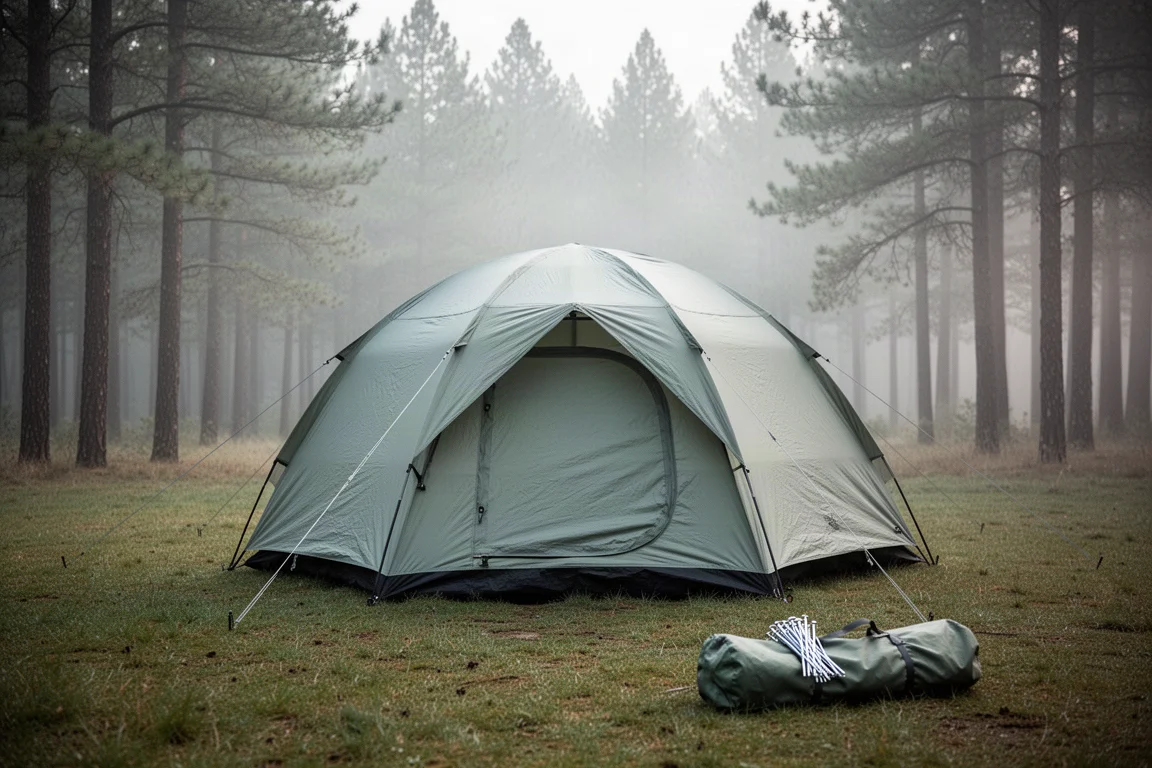
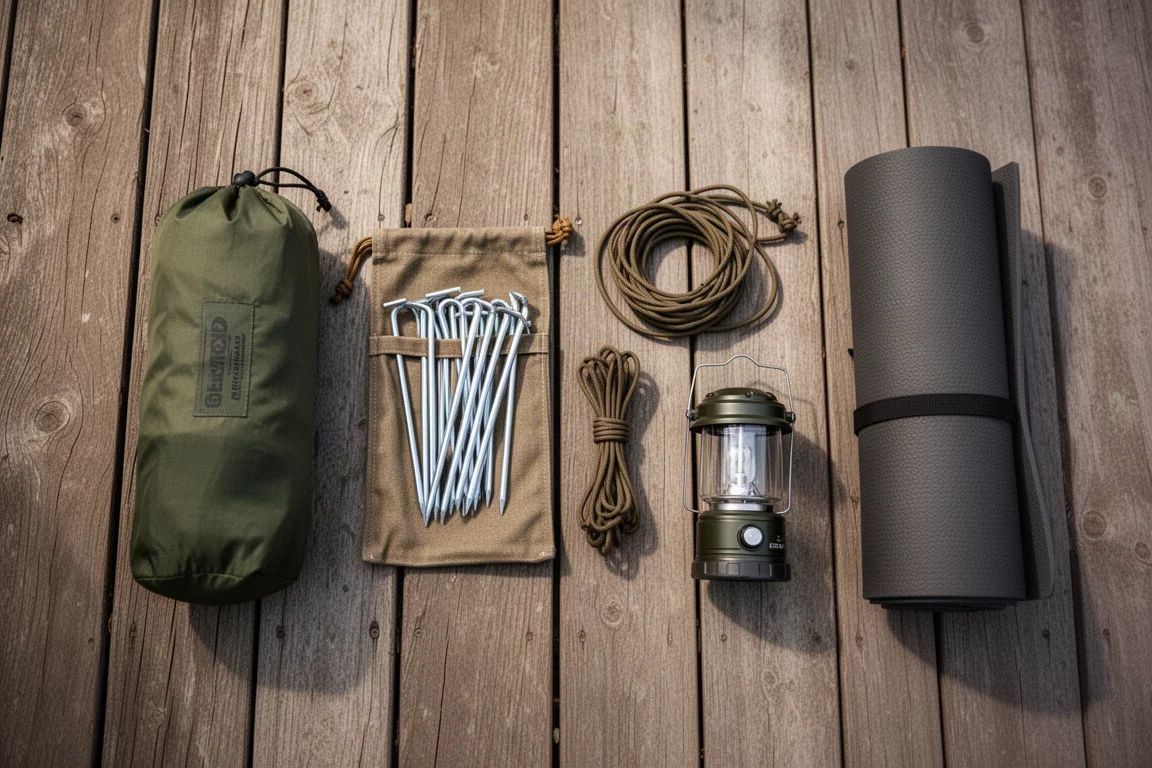
The NTK Cherokee GT 6-Person Tent is a dome-style camping tent built for drive-up trips where living space and a straightforward pitch matter more than pack weight. It arrives as a complete kit: a polyester carry bag, the tent body, a rainfly, fiberglass poles in their own case, and stakes and guylines in a second case.
Pitched by one person, the full setup takes about 13 minutes, and taking it down and packing it away takes roughly 10 minutes. Packed, the whole kit measures about 26 by 12 by 8.5 inches and weighs slightly over 15 pounds, which puts it firmly in car camping territory.
Who This Tent Is For
This tent makes the most sense for campers who park close to where they sleep. Four people on two near-queen-sized air mattresses get the most comfortable version of the layout, with leftover floor space for bags and gear. Six people can sleep inside on regular sleeping pads, but only shoulder to shoulder, and the outer positions are the tightest spots on the floor.
The interior peak height is about 70 inches, which is enough to stand upright at the center with a few inches of headroom, and enough to stand on a fairly thick air mattress. That height is concentrated at the middle of the tent, though. Two small steps back from the center and your head reaches the roof.
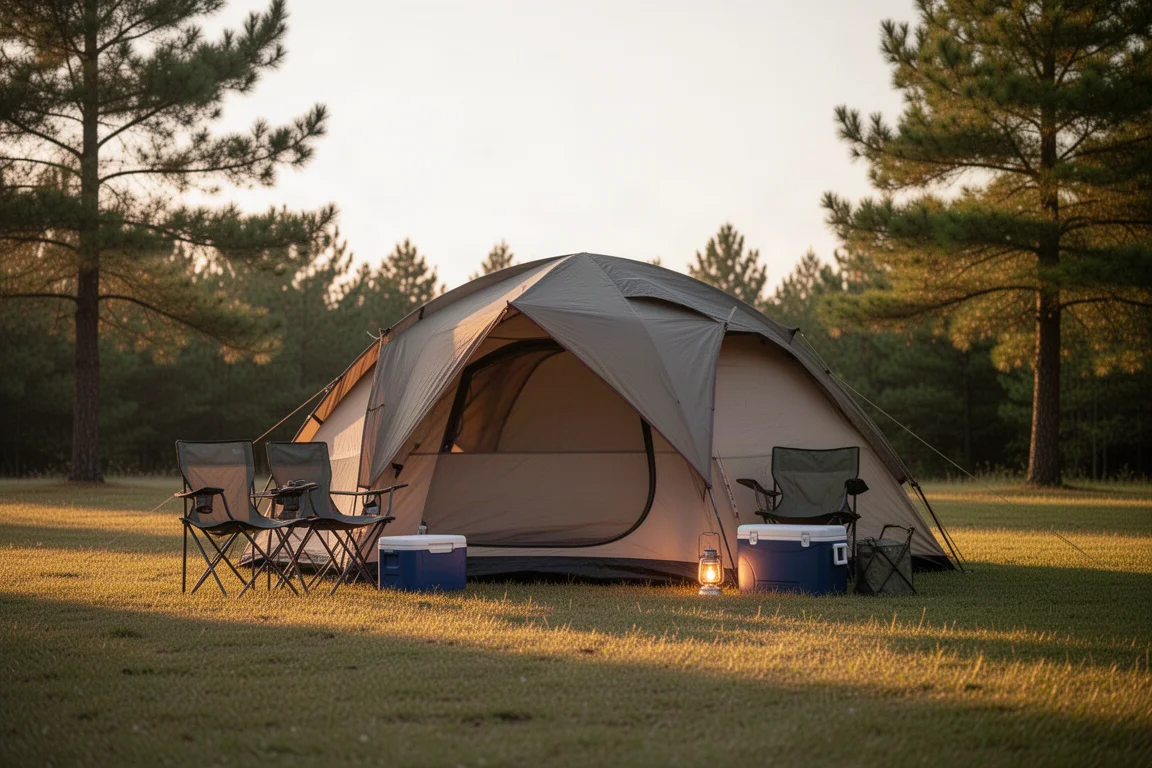
It also suits anyone who usually sets up camp alone. The pitch is manageable for one person, and the color-coded poles take most of the guesswork out of assembly.
What Comes in the Box and How Setup Works
Out of the carry bag you get the tent body, the rainfly, two white fiberglass poles and one red fiberglass pole in a pole case, plus stakes and guylines in a separate pouch.
Setup starts by laying the tent body on the ground and sliding the two white fiberglass poles through the two blue sleeves that run across the center of the tent. Staking the four corners lightly at this stage makes a solo pitch noticeably easier. Prop one pole up first, seating both ends into the pins at each corner, then do the same with the second pole, adjust the pole sleeves, and attach all eight pole clips around the body.
The rainfly goes on next. Unfold it, spread it out upside down, and slide the red fiberglass pole down its center, securing it into the small red pockets at each end and the two straps between them. Drape the rainfly over the tent using that pole, position one end over the front door, and secure the four S-hooks to the four rings at the tent corners. Straps along each pole can be tied to align the fly. Finally, attach the four guylines to the orange loops on the outside of the rainfly, guy the tent out, and stake down the two vents at each side of the width.
Taking the tent down is the reverse of the same process, and the full take down and pack up took about 10 minutes. Everything fit back into the carry bag easily, even though the bag does not expand.
Interior Space, Height, and Sleeping Layout
Inside, the floor measures about 9 feet 7 inches in length and about 9 feet 7 inches in width, with a peak height of roughly 70 inches at the center. Standing under the peak leaves a few inches of clearance, and the tent is stable enough to stand and move around on a thick air mattress.
Six regular sleeping pads fit across the floor, with a small strip of space left over for a bit of gear. It is a tight arrangement, though, especially for anyone sleeping at the sides, where an arm or a head reaches the wall. Two almost queen-sized camping mattresses are the more comfortable option and sleep four people, with noticeably more room left for storage.
There is a catch worth knowing before you buy bedding. Both of those mattresses were slightly smaller than a true queen, and the fit was already very snug with hardly any wiggle room, so two actual queen beds will not fit in this tent.
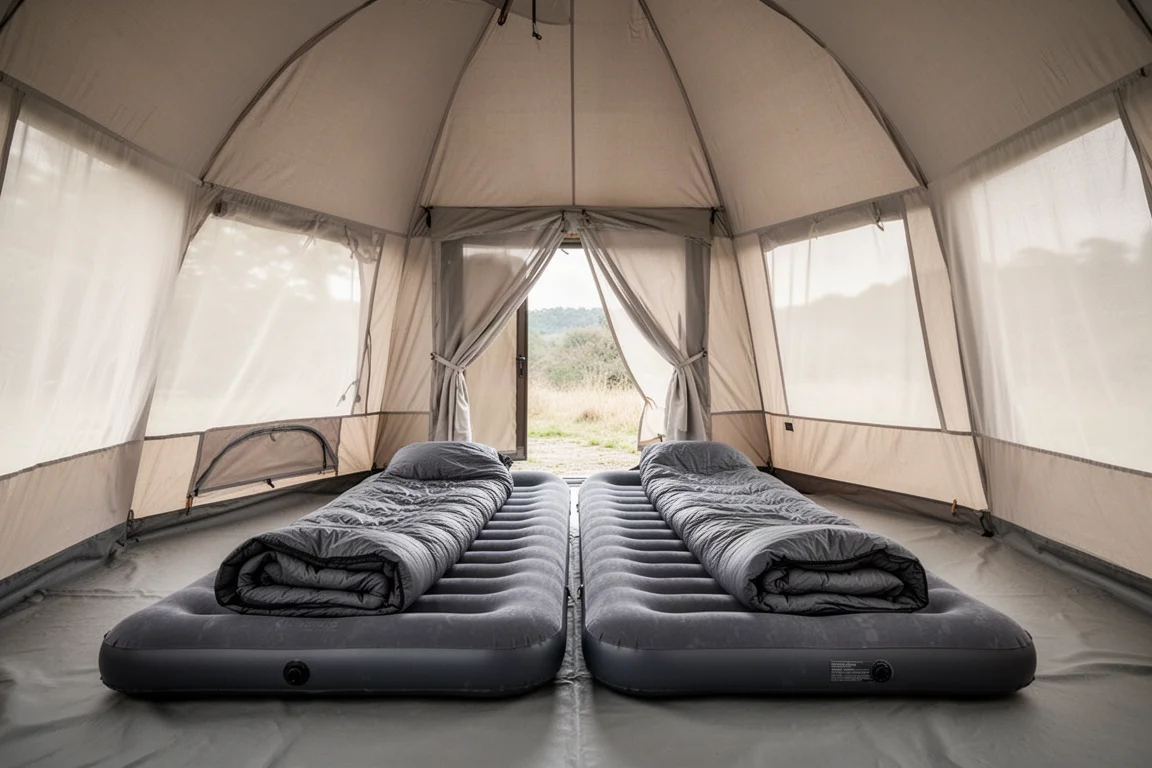
Access is through a single door on the front length of the tent. It measures about 51 inches long and 43 inches wide, and about 55 inches from the ground to the top of the door, so most adults will duck on the way in and out. Two latches hold the door fabric open, and two orange zippers close it up.
For storage, there are two pockets inside, each about 16 by 8 inches and each split into four compartments, giving eight small stashing spots. A lantern loop sits at the very top of the tent, and a single e-port with a zippered closure sits at the bottom, reachable from the front right side under the rainfly.
Main Strengths
Setting this tent up alone is genuinely practical. From laying out the body to staking the last vent, the whole pitch runs about 13 minutes for one person, and take down and pack up add roughly 10 minutes on top. The carry bag does not expand, but everything still went back in without a fight.
Standing room is the second clear win. At about 70 inches of peak height, an adult can stand upright under the center with a few inches to spare and even move around on a thick air mattress, which makes changing clothes and reorganizing gear far easier than in a low-profile dome.
Rain protection is solid where the rainfly is generous. The rainfly carries a 2,500 mm waterproof rating, the body is made of 68D polyester taffeta, and the polyethylene floor uses a bathtub design that rises about 10 inches up the walls. On the wall covered by the long section of rainfly, 45 minutes of concentrated heavy spray left the fabric dry, and even the un-taped inverted seam where the floor meets the body stayed sealed.
Smaller details hold up too. The seams are double-stitched with no loose threads, the zippers are decent quality and did not snag on the window, the fiberglass poles are color coded, and the carry bag is a decent polyester build.
Ventilation with the rainfly removed is generous as well. The door plus four mesh panels, two larger walls and two smaller ones, keep air moving through the tent on a hot day.
Rain Protection and Ventilation
The rainfly is not symmetrical, and that shapes the whole weather story. One long side drapes well past the tent body and sheds water cleanly to the ground. The opposite side is noticeably shorter.
With a hose concentrated on that shorter side, most of the water still missed the inner tent, but smaller droplets ran down the grey inner wall. After about 30 minutes, the seam between the tent body and the bathtub floor appeared to be trapping water. By the 45-minute mark, that un-taped seam was soaked, and water was working into the tent along most of its length.
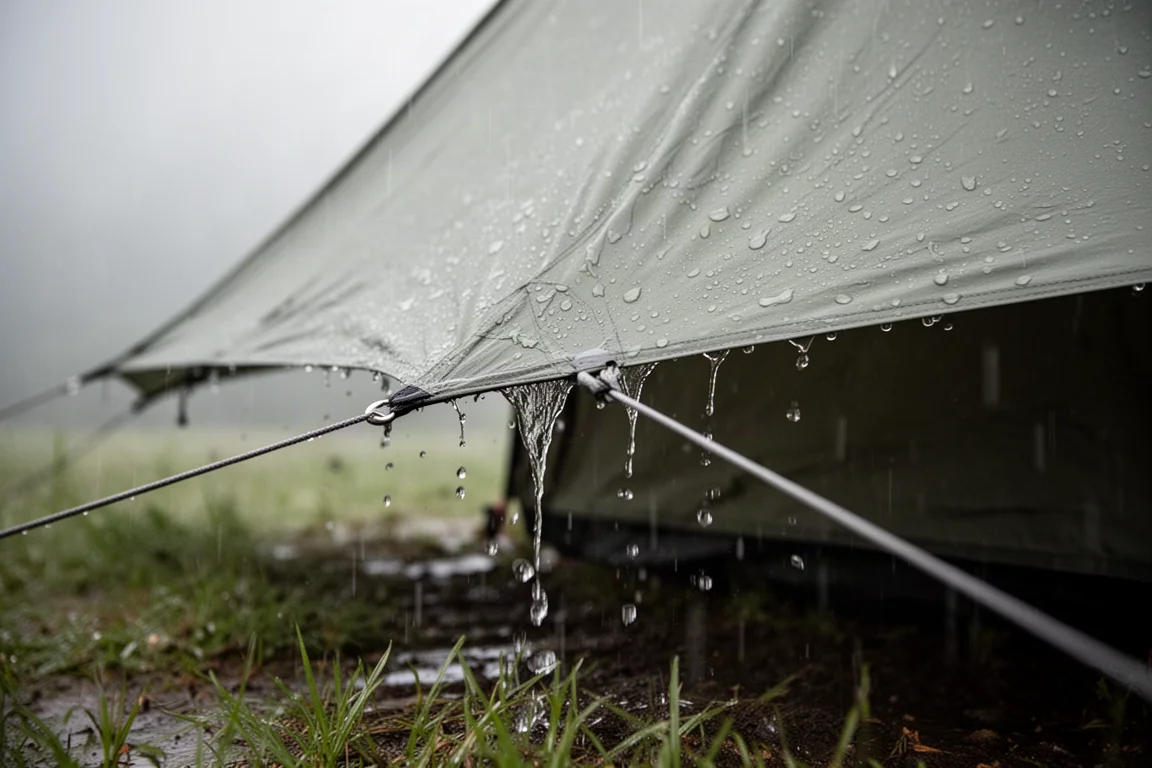
Ventilation follows a similar pattern of trade-offs. With the rainfly in place, the four mesh walls become four vents. The small mesh panel above the door and the small one at the back moved a good amount of air, while the two larger mesh walls delivered less than their size suggests. Because the rainfly is long, it can only be staked out about nine inches from the body at most, and from inside it sits almost flush against the mesh, which limits airflow in wet weather.
Removing the rainfly entirely from the outside transforms the airflow on a hot day, but privacy drops considerably once it is off.
Things to Consider Before Buying
The window takes some getting used to. It doubles as the door’s privacy layer, so closing up for the night means unzipping the window first and then zipping the door shut. Door and window zippers are the same orange color, which makes them harder to tell apart in low light.
The rain cover around the door also gets in the way of the zipper. From the outside you have to hold it clear while zipping, and from the inside you have to push the door fabric aside.
Rainy-day ventilation is the biggest compromise. Larger or additional vents would help, and there is unused space on the back wall where a second window would fit. As it stands, the two large mesh walls sit close to the rainfly and move less air than their size suggests.
Sleeping six is possible but not luxurious. Six regular pads fit only shoulder to shoulder, with a small strip of floor left for gear, and the outer positions are the tightest.
The un-taped bathtub floor seam is worth knowing about before a wet-weather trip. It held up on the well-protected wall but leaked along most of its length on the side with less rainfly coverage after 45 minutes of heavy rain. The mesh is standard mesh rather than no-see-um or micro mesh, and some seam holes are slightly larger than others, although the stitching itself is clean and double-stitched throughout.
Finally, at slightly over 15 pounds packed, this is a car camping tent rather than something to carry on a long hike.
Buying Advice
If you want a roomy six-person tent that one person can pitch in about 13 minutes, stand up inside, and sleep four comfortably on two large air mattresses, the Cherokee GT delivers on all three. It is a sensible choice for families, weekend car campers, and anyone who values headroom and simple assembly over low pack weight.
Campers who expect sustained, heavy rain should weigh the rainfly coverage carefully. The long side sheds water very well, but the shorter side is where water found its way in during testing. If wet-weather confidence is the priority, an NTK model with more rainfly protection, such as the Colorado, is worth a look instead. The Coleman Sundome 6-Person Tent is also worth comparing, since it offers a similar level of rain protection and was a little less expensive, while the Cherokee GT adds better ventilation and a window at the back.
Whichever way you lean, measure your sleeping setup first. Two mattresses that were each slightly smaller than a true queen already filled the floor very snugly, so anything larger simply will not fit.
Conclusion
The NTK Cherokee GT 6-Person Tent covers the fundamentals well: a solo pitch in around 13 minutes, roughly 70 inches of standing height at the peak, a 2,500 mm rainfly, and a bathtub floor that rises about 10 inches. It sleeps four comfortably on two large air mattresses, and six only shoulder to shoulder.
The trade-offs are specific rather than deal-breaking: a window that has to be opened before the door can be closed, a rainfly that sits close to the mesh on wet days, and a bathtub floor seam that is not taped, which showed itself on the side with less rainfly coverage. If those points match the way you camp, this is a straightforward, roomy tent to set up and live in.
Product link
View more details for NTK Cherokee GT 6-Person Tent
This product is mentioned in the review. Check the specifications, options, and compatibility before buying.
View more details for NTK Cherokee GT 6-Person TentFurther reading
Related Reviews
Camping Tents
3F UL Gear Taiji Two-Person Tent Review: Field Waterproofing Results and Buying Advice
The Taiji pairs an attached fly with a removable inner, but sustained rain exposed untaped vent seams that need sealing before this shelter can be trusted.
Camping Tents
3FUL Gear Lanshan 2 Pro 4-Season Review: A Sub-$200 Single-Wall Trekking Pole Tent
An early look at the 3FUL Gear Lanshan 2 Pro 4-Season, covering its straightforward pitch, generous interior space, and the condensation and seam-sealing questions that come with any single-wall shelter.
Camping Tents
Alps Mountaineering Lynx 1-Person Tent Review: Big Value in a Small Budget Tent
A close look at the Alps Mountaineering Lynx 1-Person Tent, covering real interior dimensions, materials, setup time, ventilation limits, and who should buy it.