Audio Cables
NRG Cables Review: Handcrafted Power and Speaker Cables Explained
A practical look at NRG's handcrafted Canadian power and speaker cables, covering 4N copper conductors, high-copper custom connectors, real-world handling, listening notes and buying advice.
Introduction
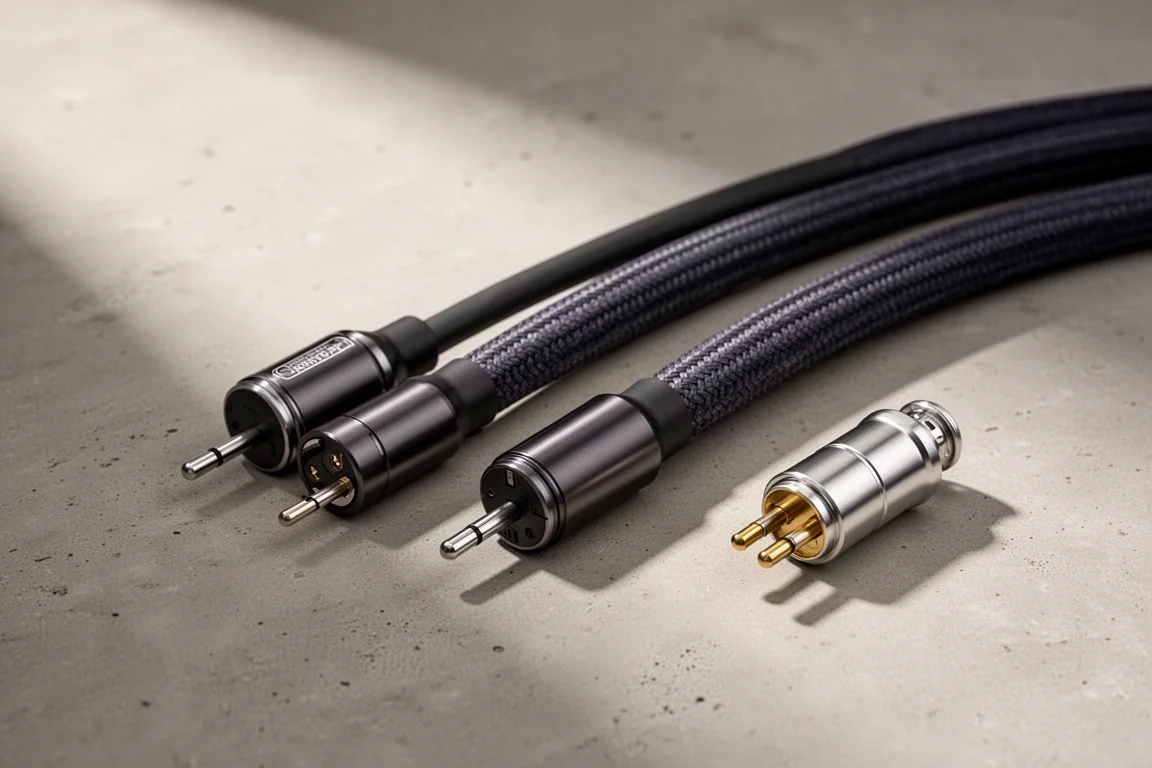
NRG is a small cable maker based in Canada, and its range covers two things most listeners eventually think about: power cables and speaker cables. Both are handcrafted in Winnipeg by a single designer, and both sit at a price point that is far more approachable than the flagship cables from the better known names in high-end audio. The interesting part is not the price, it is the reasoning behind the design. Every choice, from the copper grade to the connector alloy to the jacket, is explained in specific terms rather than left as a vague claim about better sound.
That level of explanation is rare. When many manufacturers are asked why a cable is built a certain way, the answer tends to be that they experimented and it sounded better, with no account of how they got there. NRG goes the other way and documents its thinking in detail, which makes the product easier to evaluate on its own terms.
What Makes NRG Cables Different
The conductors use 4N copper, which means copper that is 99.99 percent pure. The maker’s argument is that pushing beyond 4N is largely a marketing exercise and that 4N is as pure as a conductor realistically needs to be for high fidelity.
The connectors are the real differentiator. Pure copper is a soft metal that will not hold a shape, so the industry generally uses metal alloys with only a modest copper content. NRG uses custom plugs with a copper content of 97 to 98 percent, with the remainder made up of other metals so the plug keeps its form. The intent is to stop the connector from acting as a bottleneck between a high-purity conductor and the equipment.
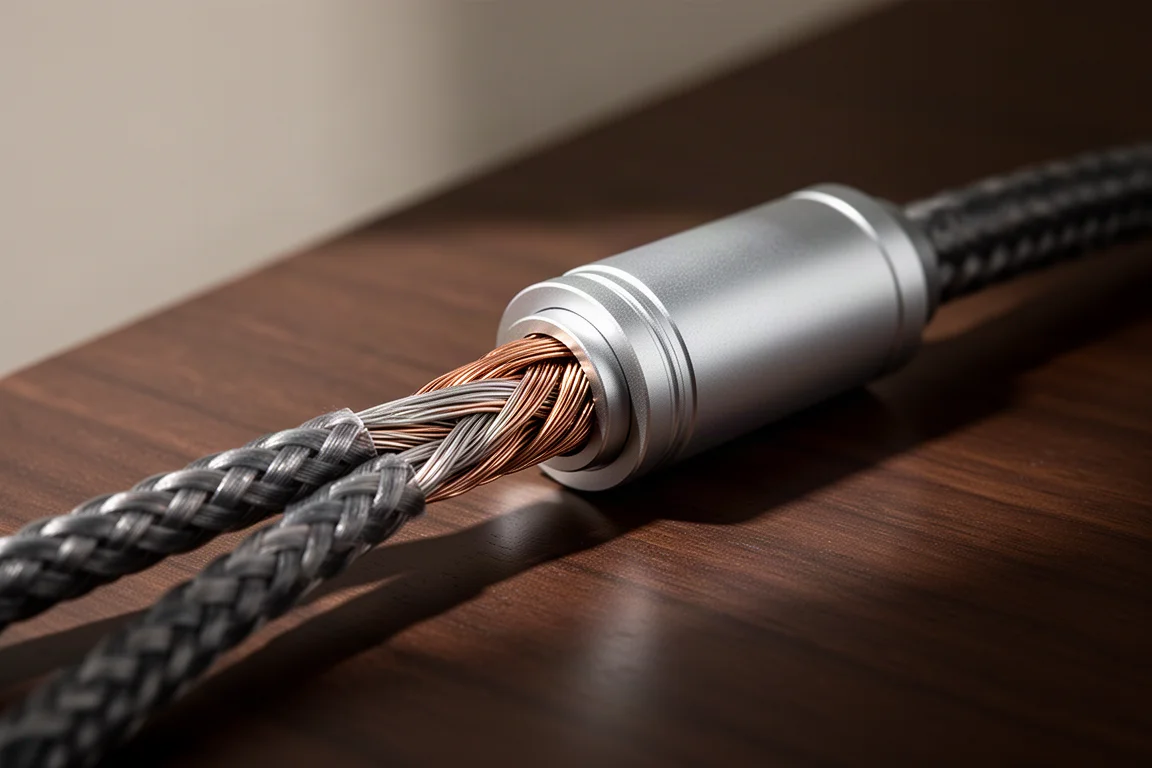
Around the conductors, Teflon is used as the dielectric, a material that is widely used in high-end cables. Vacuum and air are better dielectrics in theory, but they are not practical in a finished cable. Generous insulation keeps the conductors separated and reduces the influence of EMI and RFI, and the jacket incorporates vibration control as well. Connector housings are aluminium and carry a carefully crafted in Canada marking, and the cables are offered in a range of jacket finishes and colours so they can be matched to a room.
NRG Power Cable: Cleaner Power Across the Chain
The power cable is intended to be used across an entire system rather than in one position. In listening sessions it was fitted to the source, the preamplifier and the power amplifier at the same time, which makes the collective character of the cable easier to hear than swapping a single cable and guessing at its effect.
The first thing that stood out was the bottom end, which opened up with better texture and control, as though a restriction had been removed. The background became darker, which made imaging and layering easier to follow without thinning the sound out. The presentation stayed full and robust rather than lean or bright, and the high frequencies gained airiness a little later. In informal switching comparisons against stock cables, the NRG power cables were preferred roughly seven times out of ten, a margin that is not statistically significant but was consistent enough to be noticeable.
Fitting the cable to the source and fitting it to the amplifier produced a similar character rather than two different effects, and the improvements accumulated when the whole chain was fitted. Despite the heavy gauge, the cable stays flexible, and the connector holds firmly without sagging in the socket.
NRG Speaker Cable: Depth and Texture at the Speaker End
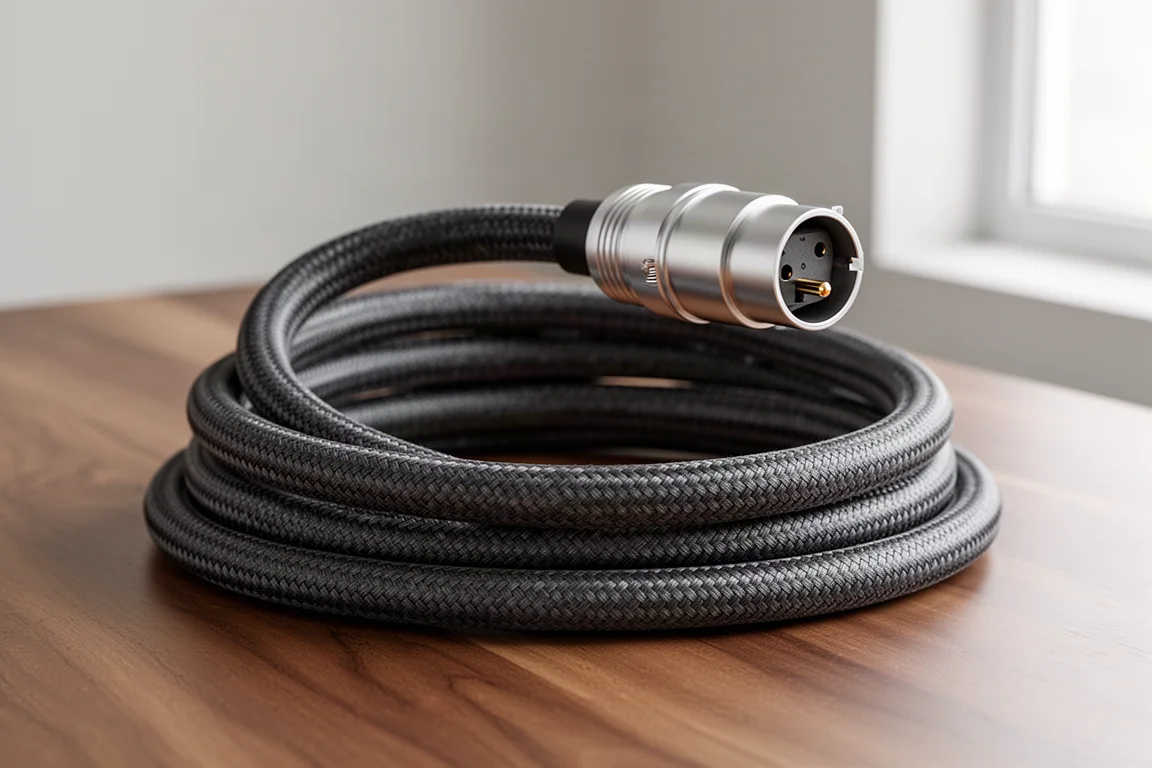
The speaker cable was tested in two configurations: with stock power cables elsewhere in the system, and with NRG power cables in place. Even with stock power cables, it added depth to the soundstage, more airiness, and a more open bottom end. In the room used for listening, the speaker cable appeared to contribute more than the power cable did.
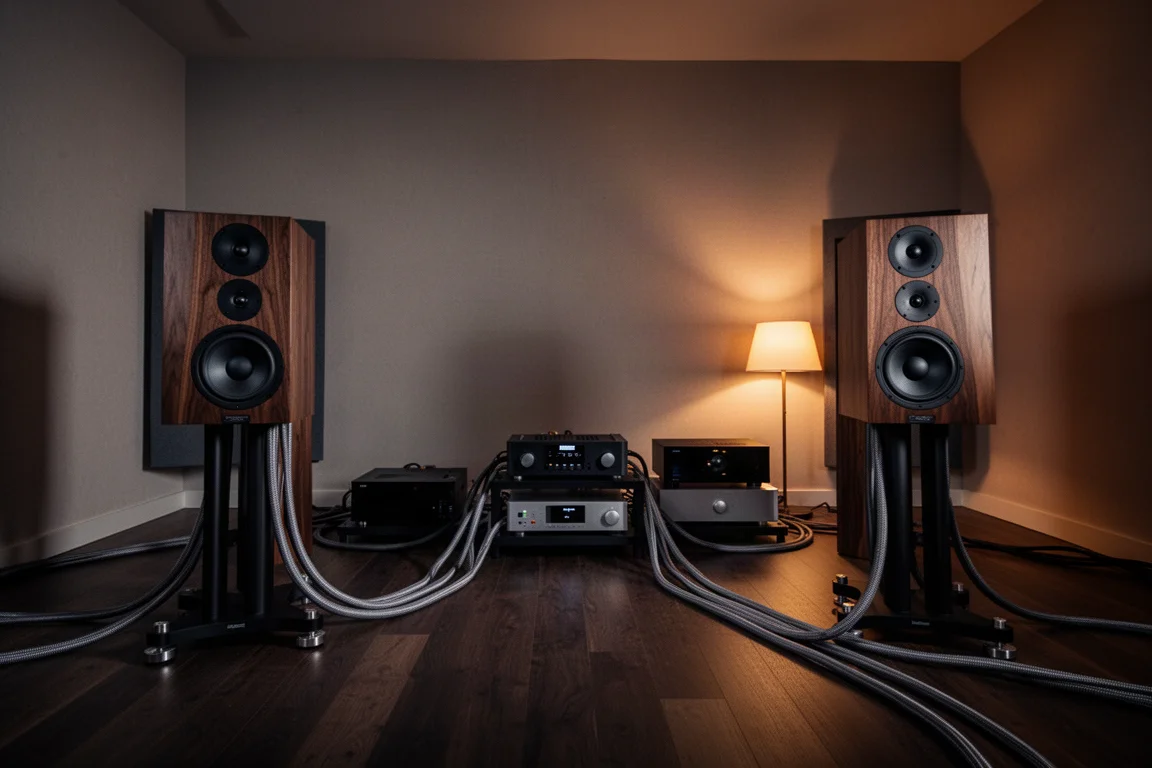
Combining both cable types brought a further step forward. The low end became more atmospheric and the system as a whole sounded more effortless, with the same music simply easier to follow rather than transformed into something unfamiliar. As with the power cable, the thick gauge does not translate into stiffness, and the terminations hold their position without pulling on lighter speakers.
Build Quality and Everyday Handling
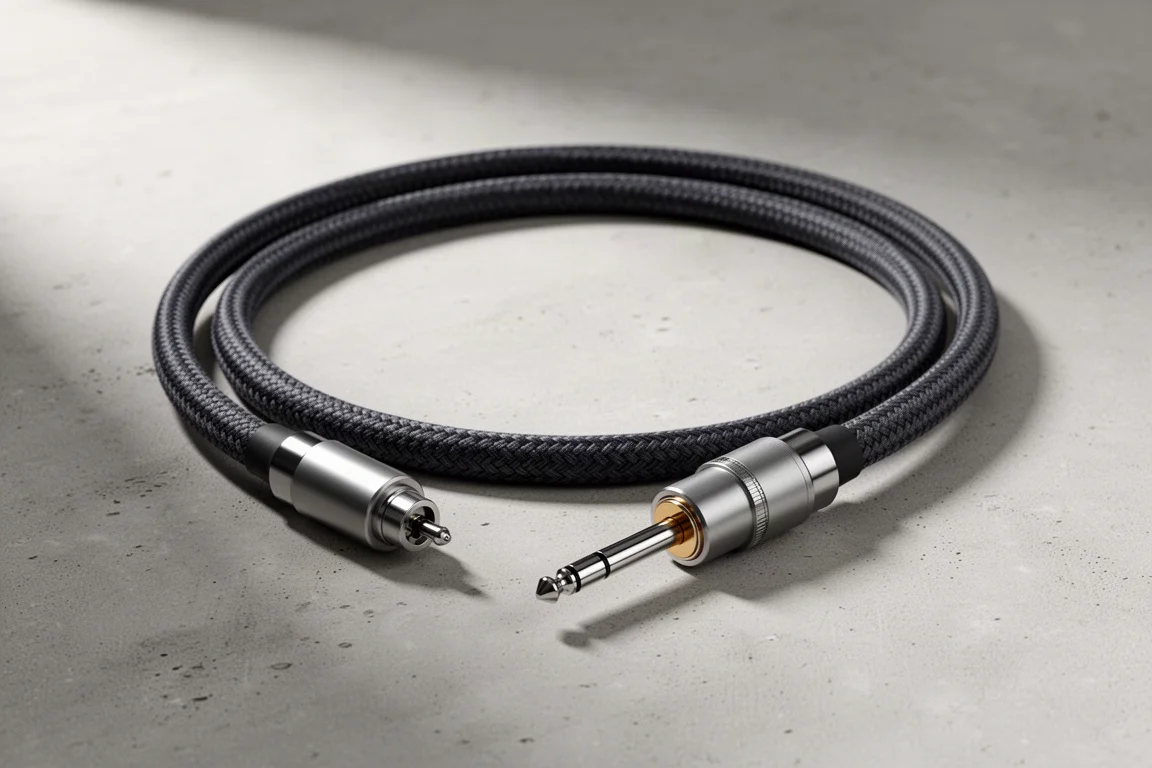
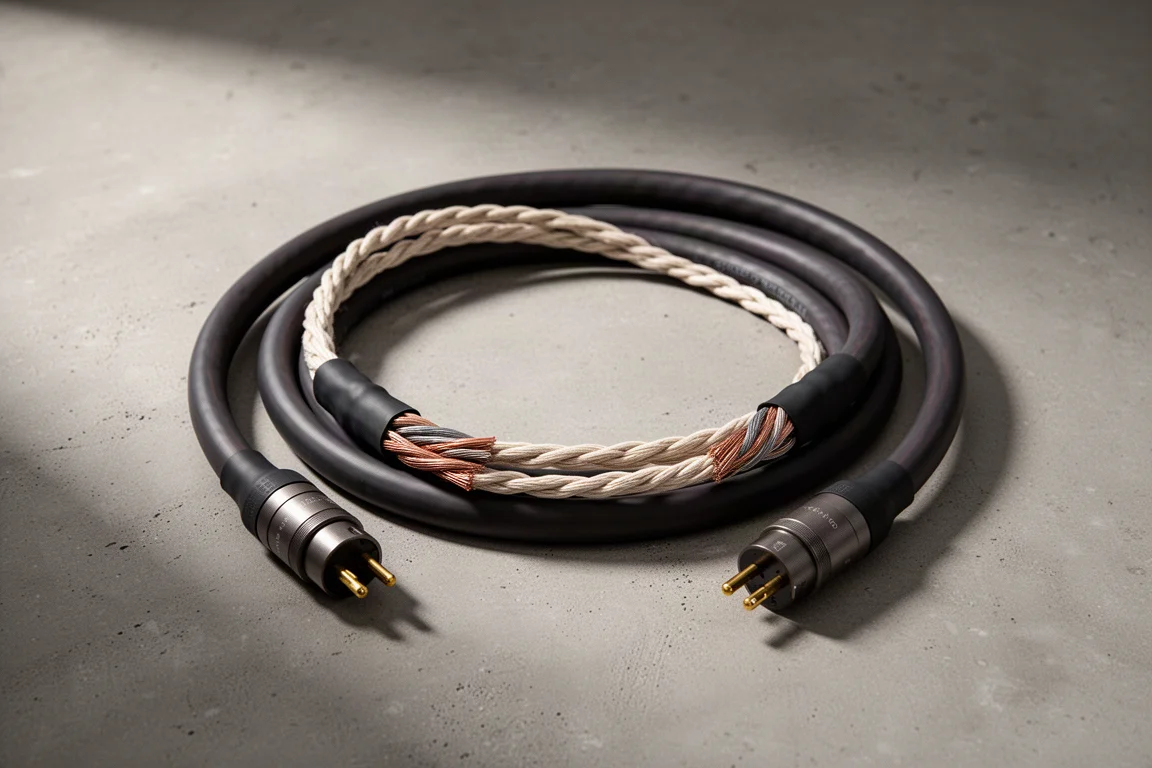
Both cables carry more conductors and more insulation than typical stock cables, which makes them genuinely thick. The usual penalty for heavy gauge is stiffness and awkward routing, and that is where the spiral construction pays off: the cables remain flexible and are easy to dress behind a rack or along a skirting board.
Weight distribution matters just as much. Connectors hold firmly in sockets without dragging them down, and the speaker ends release cleanly rather than snagging and lifting a light cabinet. The aluminium housings give the cables a high-end appearance, and the handcrafted Canadian marking is a considered touch. Taken together, the design choices read like the work of someone who lives with the cables rather than only measuring them.
Listening Notes: What the Cables Bring to a System
The same character differences appeared across a wide range of equipment: Class D amplification, tube gear, sensitive and less sensitive speakers, single-driver and coaxial designs. That consistency matters, because it suggests the cables are not tuned to flatter one particular system.
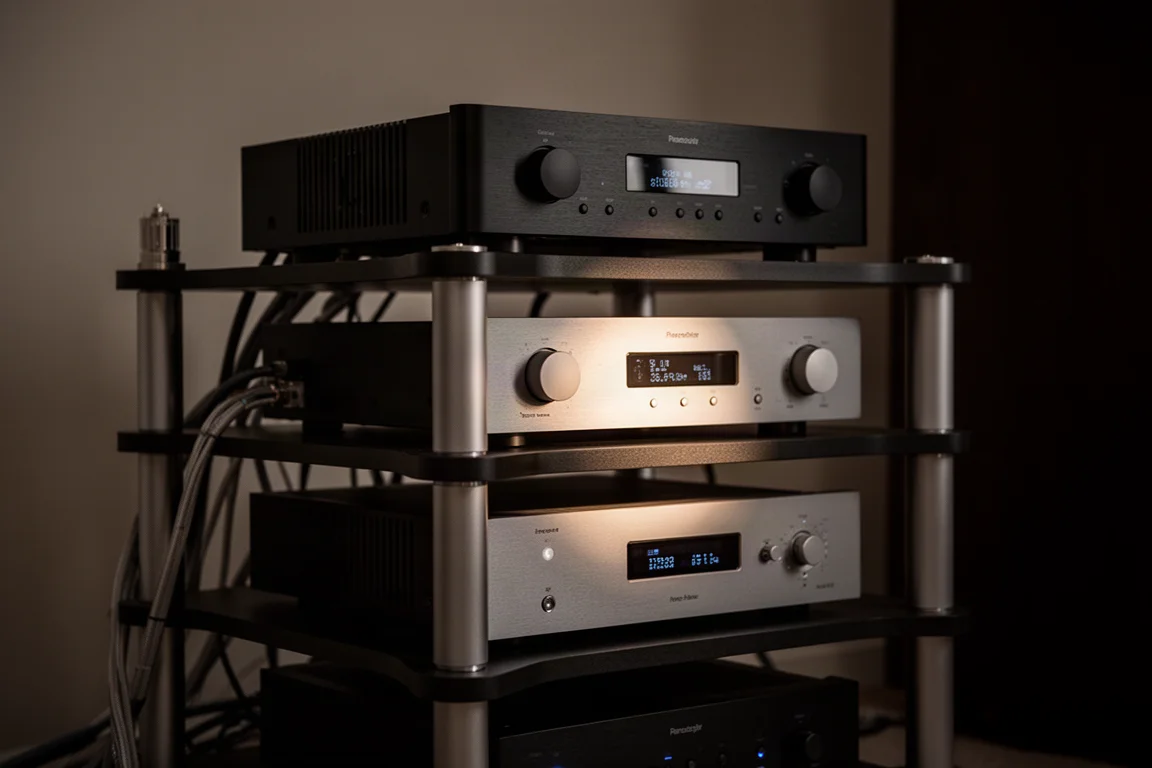
The order of impressions was fairly consistent. The bottom end opened up first, then the soundstage grew wider and deeper, then the space between instruments became blacker and easier to read, and finally the highs gained a little more air. The improvement was broad rather than a trade-off, which is not always the case with more expensive cables that sharpen one area while giving something up elsewhere.
One caveat is worth stating plainly. The differences were easiest to hear in a treated room with the speakers pulled well out from the wall. In an untreated room with speakers close to the boundary, the same changes may be far less obvious.
Value, Warranty, and Support
NRG backs its cables with a 60-day money-back guarantee and a lifetime warranty, which is a strong commitment from a small maker. The cables are affordable relative to high-end audio cables, and they compare well against cheaper well-measuring alternatives that do not look anywhere near as refined. The range of jacket finishes and colours also means they can be matched to a room rather than simply hidden behind furniture.
Buying Advice
These cables make the most sense for listeners who want to upgrade a whole chain at once rather than audition a single cable in a single position. If stock cables are already on hand, keeping them for back-to-back comparisons is the most practical way to judge the change in your own room.
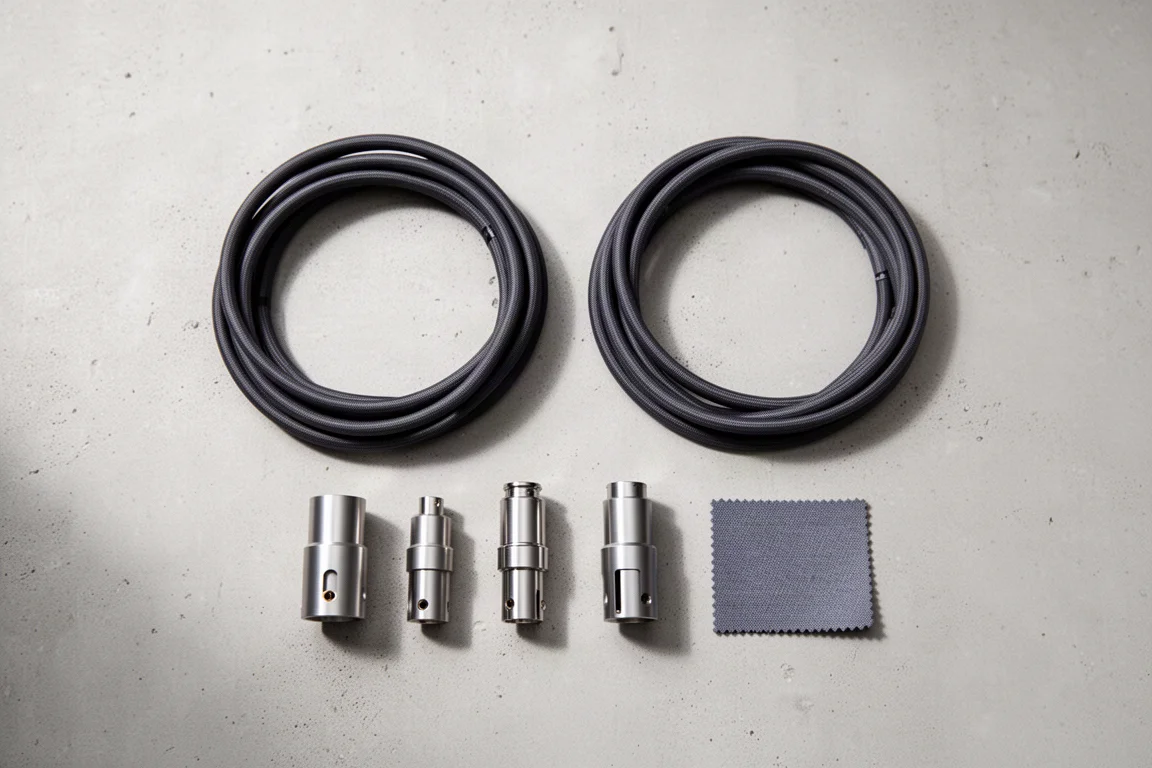
They also suit anyone who wants cables that are easy to handle: flexible, stable in the socket, and finished well enough to leave visible. And for listeners who remain skeptical about cable sound, the build quality and appearance alone are reasonable at this price.
Conclusion
NRG takes an unusual approach for a small cable company: explain the engineering, keep the price approachable, and stand behind the product with a long guarantee. The power cable and the speaker cable share the same construction philosophy, and in listening they delivered a darker background, a more open low end and a more layered soundstage without thinning out the presentation. For listeners building a system around clarity and full-bodied tone, both are worth a closer look.
Further reading
Related Reviews
Audio Cables
AudioQuest NRG Z3 Review: A Premium Power Cable in a Level-Matched Blind Test
The AudioQuest NRG Z3 is a heavy-duty AC power cable at a premium price. Here is what a level-matched blind comparison revealed about its bass, treble, and midrange character.
Audio Cables
GR Research Power Cable Review: What It Changes and What It Does Not
A long-term look at the GR Research power cable, its noise-rejecting geometry, the soundstage effects reported over months of listening, and the practical details worth weighing first.
Hi-Fi Audio
Accuphase C-57 vs Allnic H-7000V: Two High-End Phono Stages Compared
A fully balanced solid-state phono stage with a pitch-black noise floor meets a tube design built for well-loved records. Here is how to choose between them.