Insulated Jackets
Norrøna Trollveggen 800 Down Jacket Review: Warmth Built for Cold, Dry Mountains
A close look at the Norrøna Trollveggen 800 Down Jacket: hydrophobic 800 fill down, a recycled downproof shell, box wall construction and a feature set aimed at cold mountaineering.
Introduction
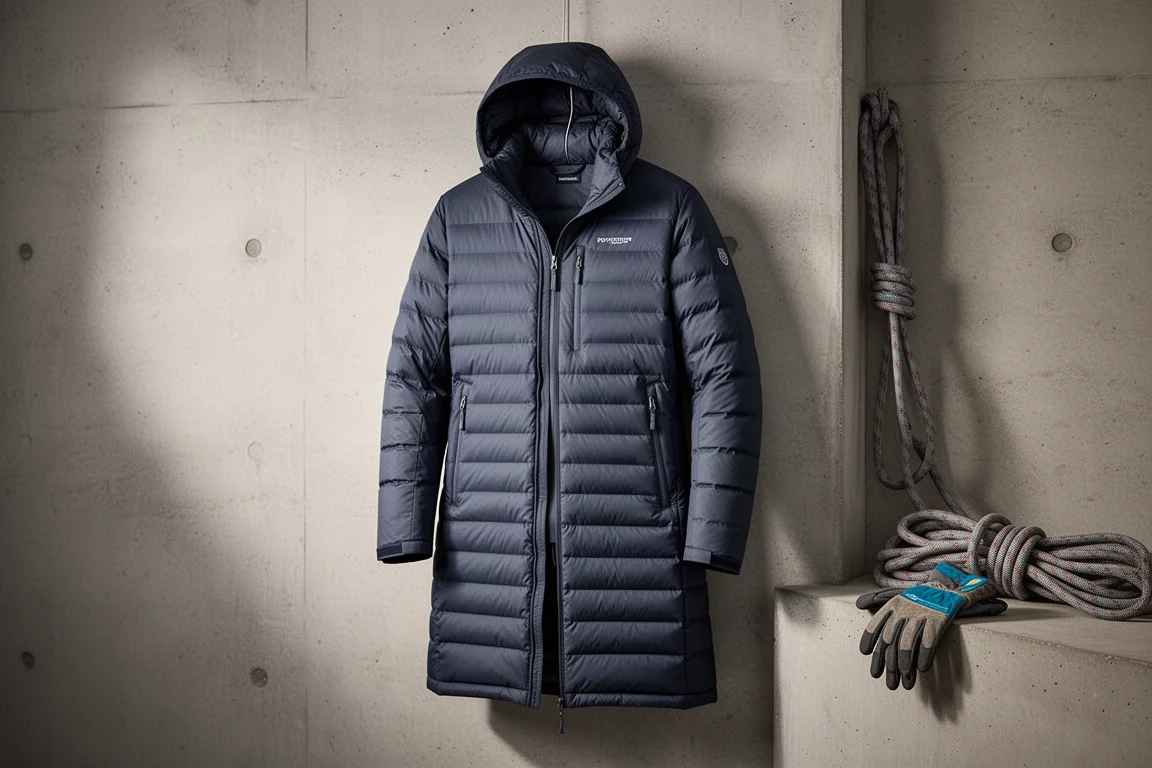
Norrøna has been building outdoor gear since 1929, which makes it one of the oldest names in the industry, and it remains a family-owned Norwegian company. It was also the first brand to name its jackets after mountains, a convention much of the industry has since adopted. The Trollveggen 800 Down Jacket sits squarely in that tradition. Trollveggen, or the Troll Wall, is one of the largest rock faces in Europe, and its name carries Norrøna’s climbing range.
This jacket is built for genuinely cold places. It holds just under 300 g of 800 fill down, treated to resist moisture, wrapped in a recycled nylon face fabric, and finished with a feature list that reads like a checklist for high, exposed days.

The short version: this is a warm, long-cut down jacket that performs best in cold, dry conditions and is honest about where its limits sit. The sections below explain what that means in practice, from loft and warmth through to fit, pockets and the hood.
Who This Jacket Is For
Trollveggen is Norrøna’s climbing range, and this jacket is designed around cold mountaineering and higher peaks. The same qualities translate well to other cold, static situations. A winter trip to see the Northern Lights, a long belay, or any day spent standing around in freezing air rather than generating your own heat is exactly the kind of use where a jacket like this earns its place.
It is worth being clear about what it is not. Bouldering on a mild day would be overkill, and you would be carrying more jacket than the conditions ask for. If your winters are wet rather than cold, synthetic insulation is the more sensible tool, and Norrøna builds those as well. This jacket is at its best when the air is cold, crisp and properly Baltic.
Warmth and Loft: How the 800 Fill Down Performs
Fill power is widely misunderstood, so it helps to be precise. The number does not describe how warm a jacket is. It describes how well the down lofts, or how much volume a given weight of it can fill. At 800 fill, this jacket sits high on the scale without reaching the very top, and that is a practical advantage: less down is needed to fill the same space, which keeps overall weight down and lets the jacket compress tightly when it is pushed into the bottom of a pack.
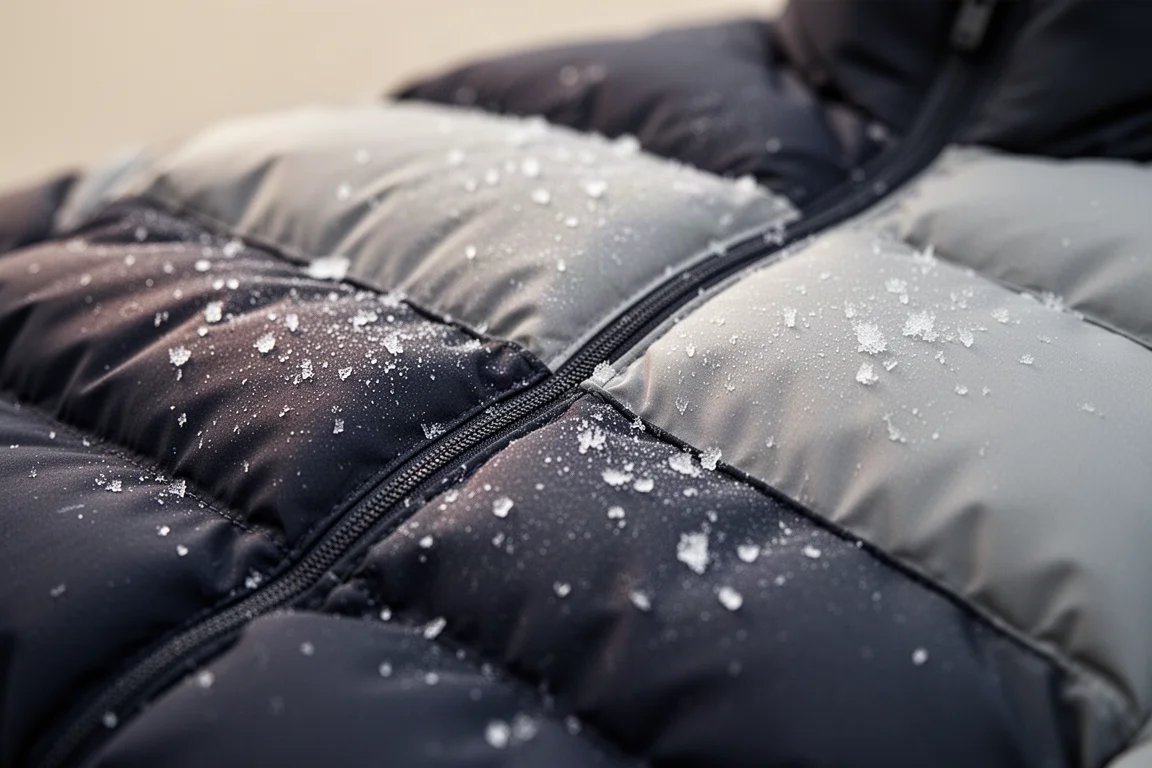
The down here is also hydrophobic, treated with a PFC-free DWR finish. Wet down clumps, stops lofting and stops providing warmth, so a durable water repellent treatment buys useful time by keeping moisture at bay. It will not make a down jacket suitable for the wettest winter conditions, where a synthetic layer remains the smarter choice, but it does extend the range in which this jacket stays comfortable and warm.
Shell Fabric, Weather Resistance, and Certification
The face fabric is 100% recycled nylon, and it is described as downproof. That sounds like a technicality until you consider that down feathers are sharp at a micro scale, and their tips will work their way through a weaker fabric over time. A robust face fabric keeps the fill where it belongs.
The same fabric brings a second benefit: weather resistance. Showers and snow will run off it, which matters on changeable mountain days. It is not a waterproof membrane jacket, and in sustained heavy rain the down will eventually collapse and lose its warmth. What it will do is shrug off considerably more weather than a typical down jacket.
Certification is part of the picture too. The down is RDS certified and the face fabric is bluesign approved. Box wall construction, meanwhile, is what keeps cold spots from forming between the baffles, so warmth is distributed evenly across what looks like a fairly simple jacket.
Fit, Sizing, and Practical Details
The jacket weighs 830 g in total. That is not the lightest figure on the market, but it is impressive for a jacket of this size and cut. A size Large is genuinely spacious for a 6’4” frame, and the overall length is generous, with extra coverage at the back. That added length contributes to the weight, and it also means your whole core stays covered and warm.

Storage and adjustment are well thought out. There are two chest pockets and two hand-warmer pockets, plus a two-way main zip. Inside, a small zip pocket keeps a phone warm enough to keep working in cold temperatures, and a large bungee mesh pocket is sized for a water bottle, which matters on high routes where a frozen bottle is useless. Pull cords on the hem let you cinch the jacket down and trap heat, while the storm hood fits over a climbing helmet without complaint. A one-handed pull cord cinches the hood neatly when you are not wearing a helmet.
The cuffs are simple bungee elastic. They stretch enough to pull gloves through, and they feel plush against the skin when you are not wearing them.
Things to Consider Before Buying
- Weight: at 830 g this is not a featherweight piece, and the long cut is part of the reason.
- Water resistance: the shell sheds showers and snow, but there is no waterproof membrane. For sustained wet conditions, synthetic insulation is the better answer.
- Warmth ceiling: the jacket is warm enough that it becomes overkill in mild weather or during high-output activity.
- Sizing: the cut is long and the sizing is generous, which suits taller frames particularly well.
Buying Advice
Buy this jacket if your use case involves real cold: cold mountaineering, higher peaks, or long periods standing around in freezing air. It is the kind of piece that makes a Northern Lights trip far more pleasant, and it holds up as a warm layer for winter travel where the weather is more crisp than wet.
If your winters are dominated by rain and wet snow, put the budget toward a synthetic insulated jacket instead and keep this one for the dry cold. If you are between sizes, the generous fit and the longer back give you some room to move, though trying the jacket on in person remains the surest way to judge the length and the hood.
Conclusion
The Trollveggen 800 Down Jacket is a well-executed cold-weather piece. Just under 300 g of hydrophobic 800 fill down, a recycled downproof shell, box wall construction and a genuinely useful pocket and hood layout add up to a jacket that is warm, weather-resistant and easy to live with in the conditions it was designed for. It is not the lightest and it is not waterproof, and those two facts should shape how you decide. For cold, dry mountain days and freezing stationary hours, it is a confident choice.
Product link
View more details for Norrøna Trollveggen 800 Down Jacket
This product is mentioned in the review. Check the specifications, options, and compatibility before buying.
View more details for Norrøna Trollveggen 800 Down JacketFurther reading
Related Reviews
Insulated Jackets
Aerogel vs Down Insulation: Two Aerogel Jackets Compared
Aerogel is the lightest solid on record, but two aerogel jackets measured against a comparable down jacket tell a more complicated story about warmth.
Insulated Jackets
Arc'teryx Atom LT vs Decathlon Trek 50: Does the Premium Synthetic Jacket Earn Its Price?
A side-by-side look at two synthetic insulated jackets at very different prices, covering fit, weight, insulation, features, and warranty.
Insulated Jackets
Big Agnes Shovelhead Jacket Review: Does Treated Down Stay Warm When Wet?
A close look at the Big Agnes Shovelhead jacket and its bluesign approved, PFAS-free DownTek insulation, including what happened when it was soaked twice in near-freezing conditions.