Ski Resorts
Niseko United Review: Does Japan's Most Famous Ski Resort Live Up to the Hype?
Niseko United pairs world-class powder with an unusual four-resort layout. Here's what the mountain experience is really like, and who it suits best.
Introduction
Few ski resorts carry a reputation quite like Niseko. Located in western Hokkaido, Japan, Niseko United spans four distinct resort areas on a single massive mountain, and its near-mythical snow draws visitors from around the world. But does it actually live up to the hype once you look at the whole experience objectively?
We spent time breaking down the mountain experience, the unusual layout, the lift network, the crowds, and the logistics. Here’s the full picture.
The Snow
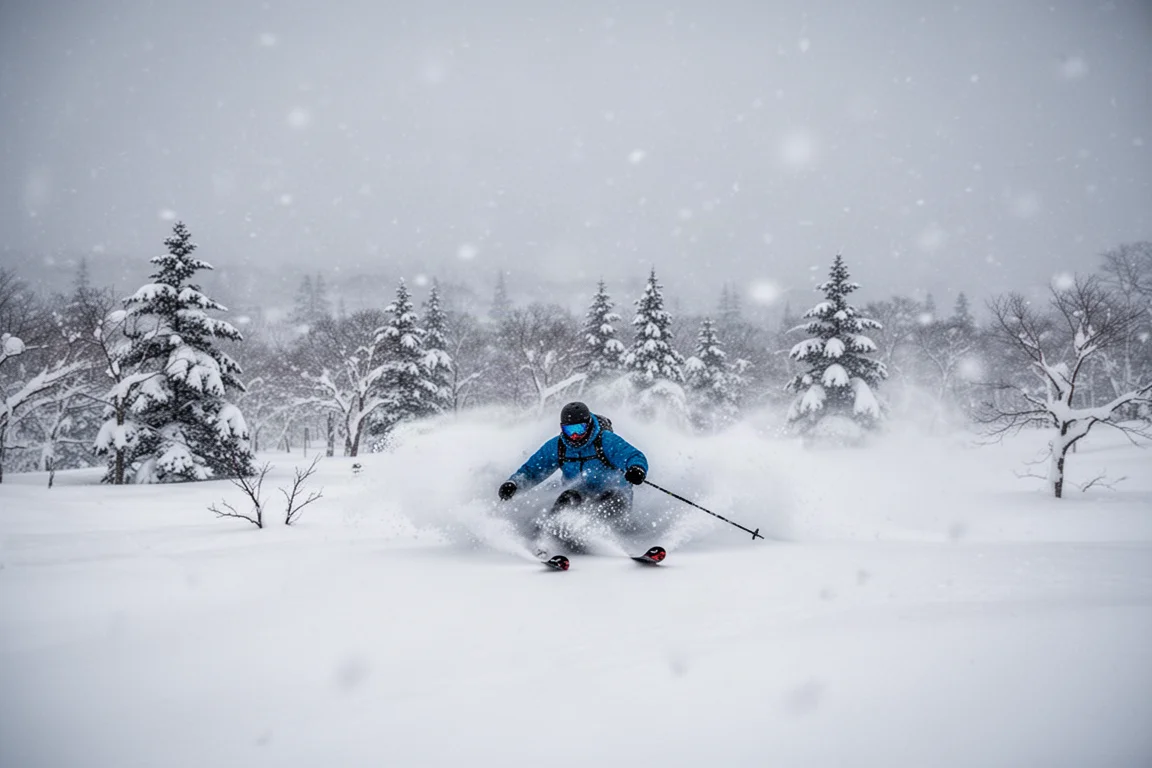
The single biggest defining factor of the Niseko experience is the snow. The resort’s western Hokkaido location sits directly in the path of cold Siberian air masses that pick up moisture crossing the Sea of Japan, producing near-relentless storm cycles through the core winter months. The result is over 500 inches of accumulation in a typical season, placing Niseko among the highest quantity and quality snowfalls anywhere in the world.
Niseko snow is not quite as ultra-dry as some of the colder interior regions of Hokkaido, but it remains very strong by typical visitor standards, comparable to or better than many prominent North American resorts. Stay for a few days between January and late February and you’re very likely to score at least one genuine powder day. December is a bit early for prime conditions but still strong by global standards, and March remains quite good, though fluctuating temperatures can make true powder days less consistent.
Terrain and Layout
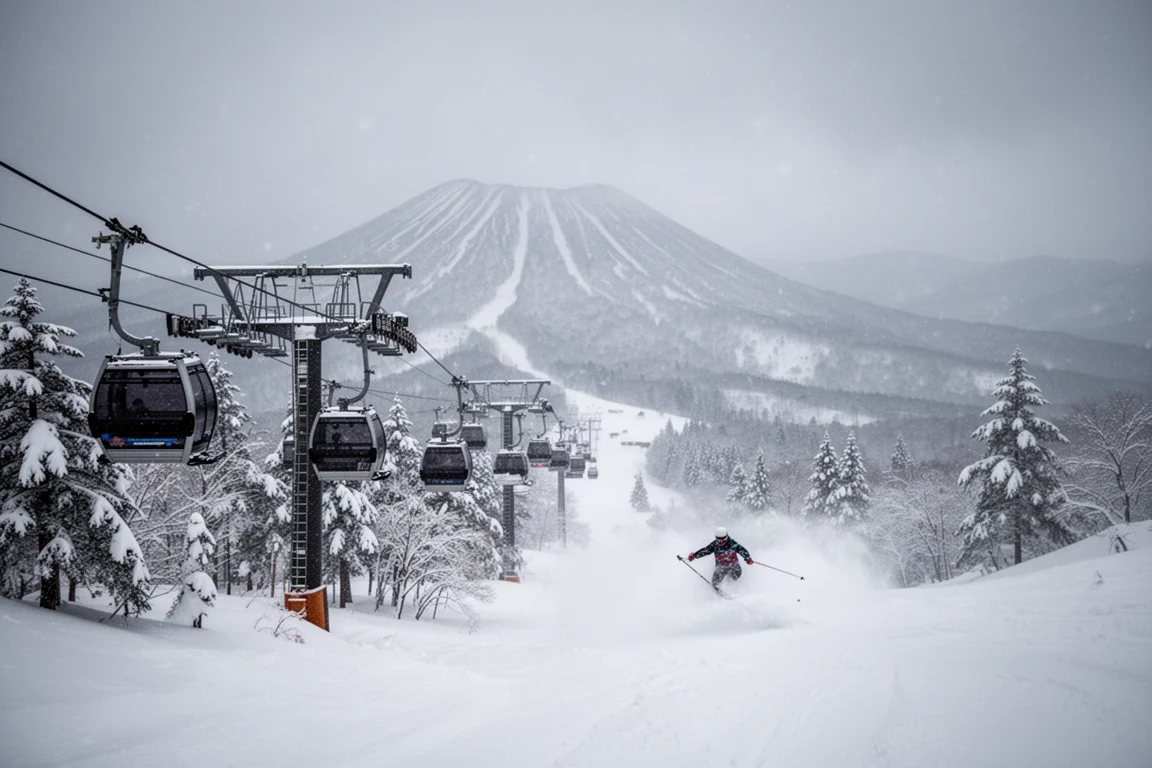
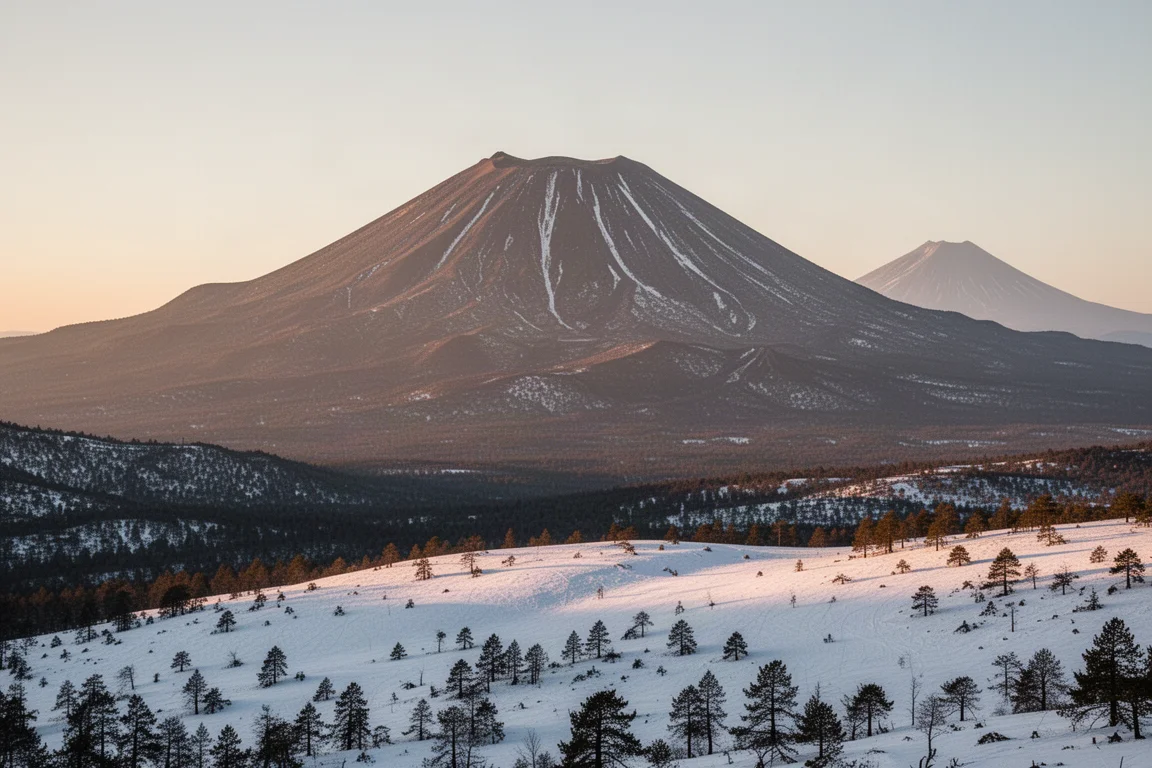
With a 1,900-acre inbound skiable footprint and a 3,000-foot vertical drop, Niseko is one of the largest ski destinations in Japan. All of the skiing sits on Mount Niseko Annupuri, a prominent peak that is, in fact, an active volcano, albeit one that hasn’t erupted in thousands of years. The volcanic layout produces a genuinely varied mix of terrain: below-tree-line cruisers, glades of varying widths, and above-tree-line snowfields that are rare in Japan.
Officially, the full footprint is called Niseko United, but it’s really four separate resorts run by independent entities. Annupuri is known for groomers and lower crowds. Niseko Village mixes groomers with introductory sidecountry terrain and a recently built learning area. Grand Hirafu is the biggest and most terrain-diverse of the four. Hanazono offers nice cruisers, glades, and the most contemporary high-end vibe.
One crucial detail: the only trail connections between the four resorts are in the upper mountain high alpine area. Near the bases, there’s no easy way to move between them, because the individual resorts face significantly different aspects, putting their base areas extraordinarily far apart. A topographical map is worth consulting before your visit, since the official trail map makes the resort look far more connected than it is on the ground.
Beginners will find enjoyable terrain in every zone, but the green runs are largely not interconnected, so you need to be intermediate or better to continuously ski the full footprint. Intermediate skiers, by contrast, get a much richer experience, including above-tree-line snowfields and solid introductory glades. Advanced riders have maintained black runs, extensive ungroomed terrain, and notably the Strawberry Fields gated glade zone at Hanazono, which is not regularly patrolled.
Lifts and Getting Around
Niseko’s lift network is mostly modern and, for anyone unfamiliar with Japan, unique. All the main out-of-base lifts are sheltered: gondolas at Annupuri, Niseko Village, and Grand Hirafu, and a bubble six-pack at Hanazono. In the exposed high alpine, service is entirely on slow lifts, including two single chairs, among the rare remaining one-person chairlifts in the world. The King Lift Number 4, unofficially known as the pizza box lift, is especially renowned and provides primary access to the popular G3 and G4 gates.
The layout’s Achilles’ heel is navigation. Getting to or from Annupuri requires riding one of the highest elevation lifts, which close around 3:30 in good weather. Transfers between other zones typically require multiple lifts, and the upper mountain connections can close mid-day during storms, potentially stranding you in the wrong base area. Staying within a single mountainside below the tree line, however, is generally easy.
Crowds and Lift Lines
Niseko is a known entity, and peak times get genuinely busy. Expect significant lift lines at all out-of-base gondolas and bubble lifts early in the day, especially at the King Gondola at Grand Hirafu and the Niseko Village Gondola. Inconsistent queue management makes it worse, with cabins often not loading to capacity even at the busiest times.
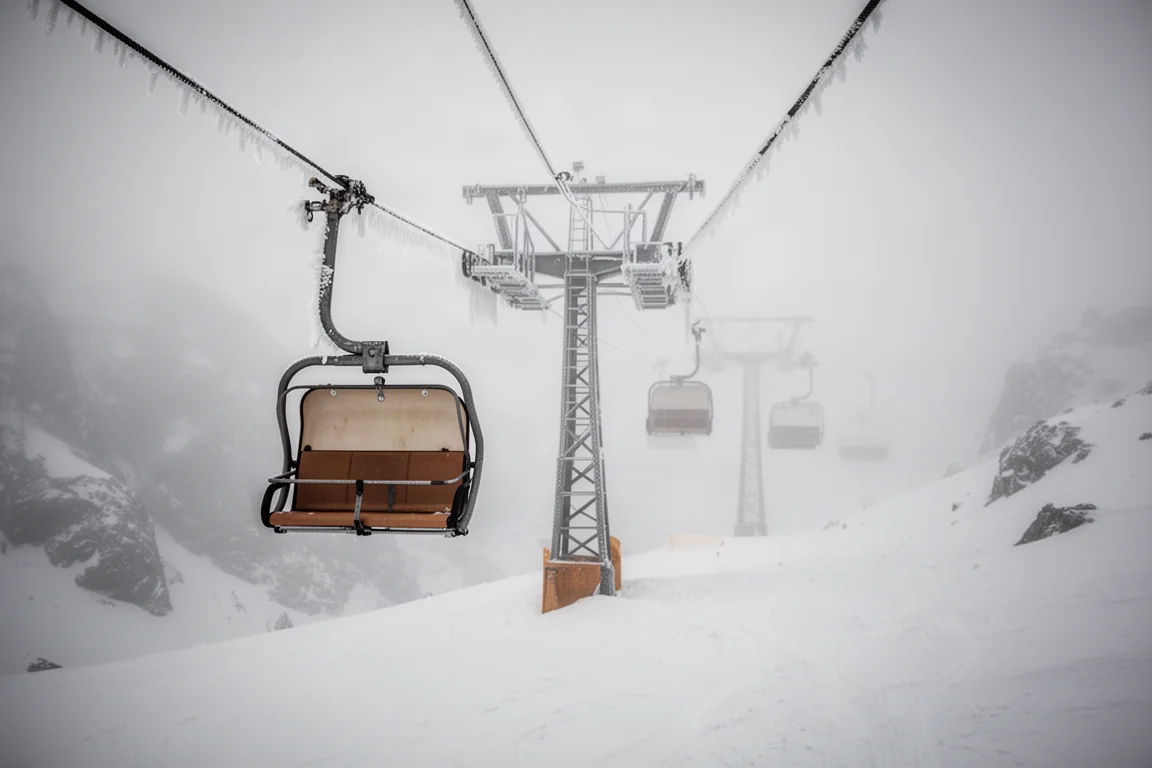
There are ways around the crowds. Annupuri and Niseko Village have slower but useful lift redundancies that bypass the gondola lines. At Grand Hirafu, the Ace lifts offer less crowded alternatives to the King lifts, and the Ace Pair Number 4 double chair reaches much of the same open bowl terrain as the pizza box lift with a fraction of the wait, plus a short hike to the G3 and G4 gates. Notably, the pizza box lift line disappears entirely when the backcountry gates close.
The Backcountry Gates
What Niseko is really famous for is its freeride and backcountry terrain, accessed through gates that open or close depending on weather and avalanche conditions. G11 is the resort’s one avalanche-controlled gate, while G1 through G10 lead into the true backcountry. Gates like G7 and G9 offer lower-angle lightly tracked glades, G1 and G8 access the Osawa bowl, G4 and G5 reach the lower east ridge, and the legendary G3 offers terrain off all sides of the volcano, including the highly favorable east ridge.
The G3 hike takes 15 to 30 minutes through a steep boot pack and an exposed, wind-blasted ridge, and it’s among the most crowded boot packs in the world. The summit gates close as early as 2:00 p.m. or earlier in bad weather, so late afternoon out-of-bounds laps aren’t realistic.
The most important thing to keep in mind: do not let the gates’ popularity obscure their danger. These areas are not patrolled or avalanche mitigated like regular resort trails, and they can contain unmarked cliffs, creeks, tree wells, and other terrain traps. Serious accidents happen every year at Niseko, in large part because access is relatively easy. Going in without proper equipment, a beacon, shovel, and probe, is highly risky. If you lack backcountry experience, hire a guiding service.
The Overall Experience
Niseko’s aesthetic is defined by its volcanic setting. Mount Niseko Annupuri has a broad, rounded profile, and the resort is quite scenic near tree line, where low-lying trees create distinctive slopes. On the clearest days you get excellent views of Mount Yotei, a near-perfectly symmetrical volcano across the valley. However, high snowfall often means poor visibility, and it’s entirely possible to spend an entire vacation without seeing much of the broader scenery.
The international popularity, particularly of Australians who live and work in Niseko over winter, means English is spoken extremely widely, and parts of the Hirafu base town can feel more like an Australian ski town transplanted into Japan than a traditional Japanese resort. On-mountain facilities are fairly strong by Japanese standards, with base lodge complexes and mid-mountain cafeterias in every zone, including small hidden ramen shops, though they get busy at lunch and run expensive. Night skiing is available, with the only sizable operation at Grand Hirafu.
Getting There and Staying
Most guests fly into New Chitose Airport, roughly two to three hours away depending on weather and transportation. Renting a car or taking a direct ski bus are the easiest options. Roads are well maintained but snowy and icy conditions are common, so a four-wheel-drive car with snow tires is highly recommended. Free parking is available at every resort base, with Hanazono and Annupuri the easiest and Grand Hirafu the most congested on powder mornings.
Lodging options are extensive. Grand Hirafu has the widest array of walkable hotels. Hanazono’s footprint is smaller but increasingly upscale, centered on the Park Hyatt and newer luxury developments. Niseko Village has large slopeside hotels including the Hilton and Ritz-Carlton, which are very nice but have been there for decades. Annupuri offers the most traditional Japanese-style accommodations, often somewhat more economical.
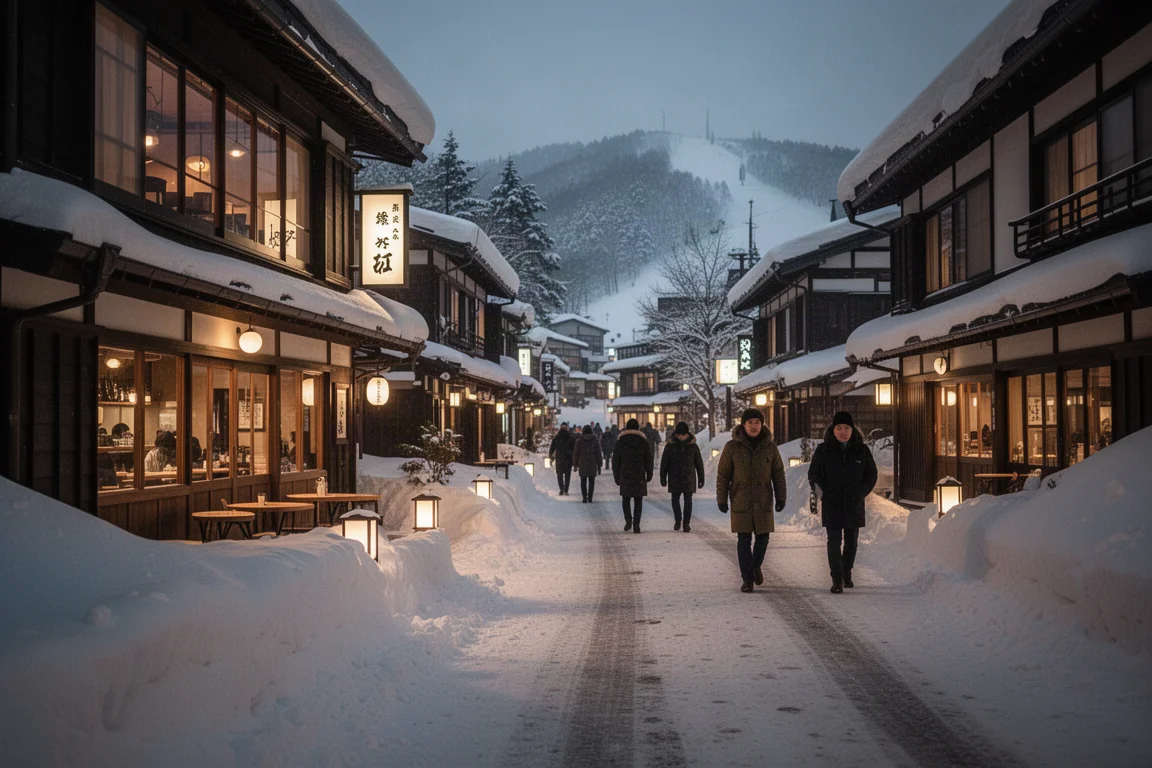
Once you’re in town, Niseko has one of the strongest food and nightlife ecosystems in the skiing world. Most bars and restaurants concentrate around Grand Hirafu, ranging from casual to fancy. Kutchan, the primary nearby town, offers more local-oriented establishments at somewhat lower prices, and downtown Niseko has its own lower-key restaurant scene. Reservations become extremely competitive during busy periods, especially for larger groups.
One-day all-mountain lift tickets cost about 12,000 yen, with discounted options for individual resorts or per-ride points-based tickets. Niseko is also on the Ikon Pass, with 7 days on the full pass, 5 days with holiday blackouts on the base pass, and 2 to 4 days on the Ikon Session Pass, plus 2 days on the Mountain Collective Pass.
How Niseko Scores
Across ten categories, Niseko earns a 10 for snow, a 7 for resiliency, a 7 for size, an 8 for terrain diversity, a 6 for challenge, an 8 for lifts, a 5 for crowd flow, a 7 for facilities, a 4 for navigation, and an 8 for mountain aesthetic, for an overall score of 70. The awkward four-mountainside layout is arguably its biggest weakness, but the resort holds its own against other fly-to destinations thanks to the exceptional snow, and many visitors will overlook its shortcomings simply because of the sheer enjoyment of the powder skiing.
Conclusion
Niseko isn’t the biggest mountain in the world, and it has real logistical quirks, but it generally delivers on the exceptional core-season snow it’s known for. If world-class powder is your priority and you can plan around the layout and the crowds, Niseko United is absolutely worth the trip.
Product link
View more details for Niseko United
This product is mentioned in the review. Check the specifications, options, and compatibility before buying.
View more details for Niseko UnitedFurther reading
Related Reviews

Ski Resorts
Alyeska Resort Review: Alaska's Largest Ski Resort, Worth the Journey?
A deep look at Alyeska Resort: heavy snowfall, expert terrain, an Icon Pass connection, and the trade-offs of a near-sea-level mountain in the Last Frontier.

Ski Resorts
Bear Valley Ski Resort Review: Northern California's Quiet Sierra Alternative to Tahoe
A lesser-known Sierra resort with over 1,300 skiable acres, surprisingly strong expert terrain, and crowd levels Tahoe can only dream of. Here is what to know before you go.

Ski Resorts
Colorado Ski Resorts Ranked: The Best Destination Mountains for Overall Experience
A ranked guide to Colorado's destination ski resorts, covering terrain, snow, logistics, crowds, and cost so you can pick the right mountain for your trip.